Why this hill mattered
The hill could threaten Nafplio as effectively as protect it. Artillery placed here during the Venetian siege of 1686 demonstrated the danger to the lower town. Building a fortress removed that vulnerability and added a commanding position above the older defenses of Akronafplia and the harbor. From the ramparts, the relationship between inland approaches, urban ground and sea is unusually clear.
A fortress made in stages
Construction began in 1711 under the Venetian administration, with Antonio Giancix and Pierre de la Salle associated with the design. The great project was still recent when the Ottomans captured it in 1715. Ottoman work completed or altered parts of the enclosure, so the monument should not be read as an untouched Venetian design. Greek forces led by Staikos Staikopoulos took the fortress in November 1822; later Greek use included imprisonment.
What to notice
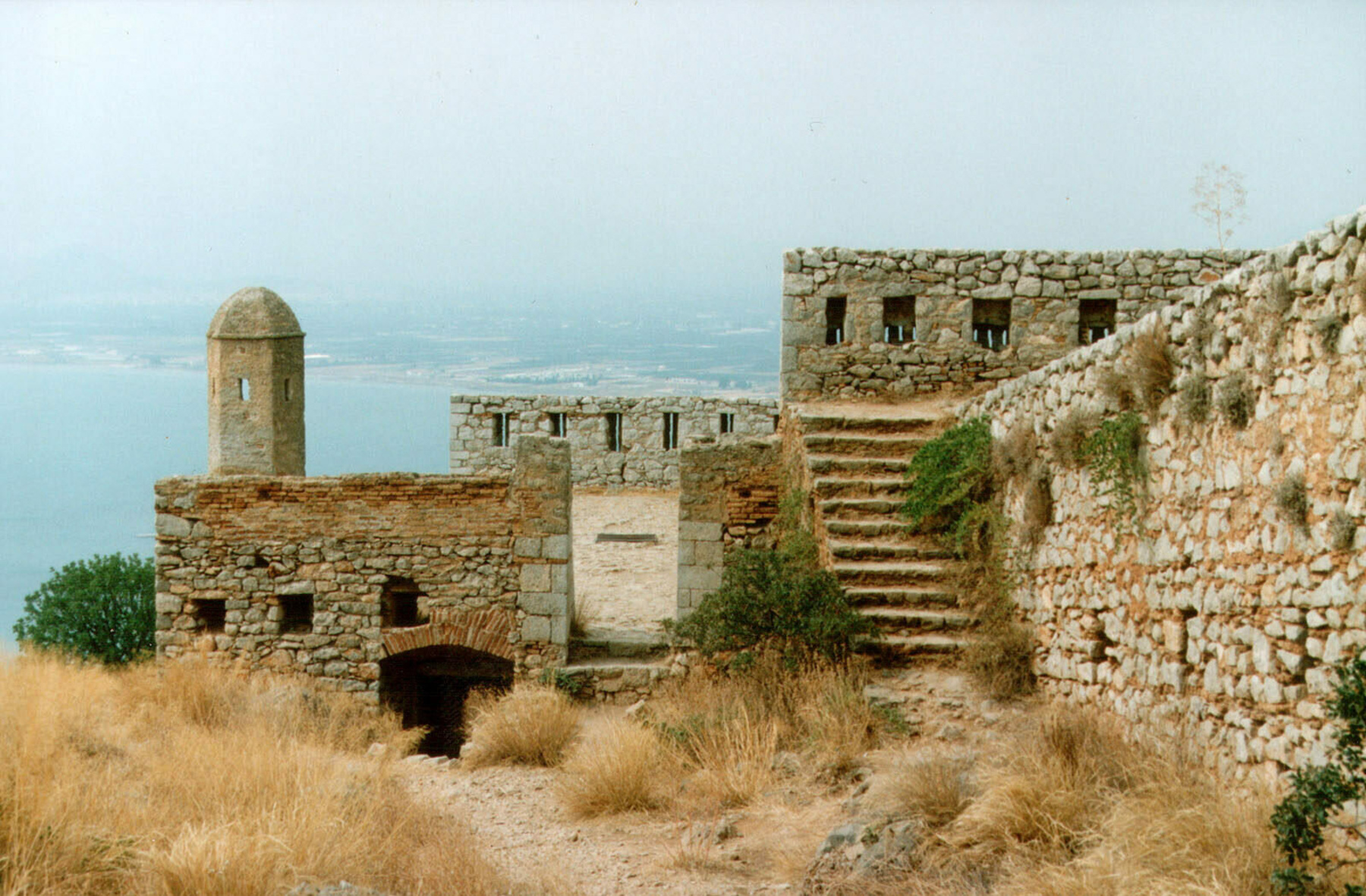
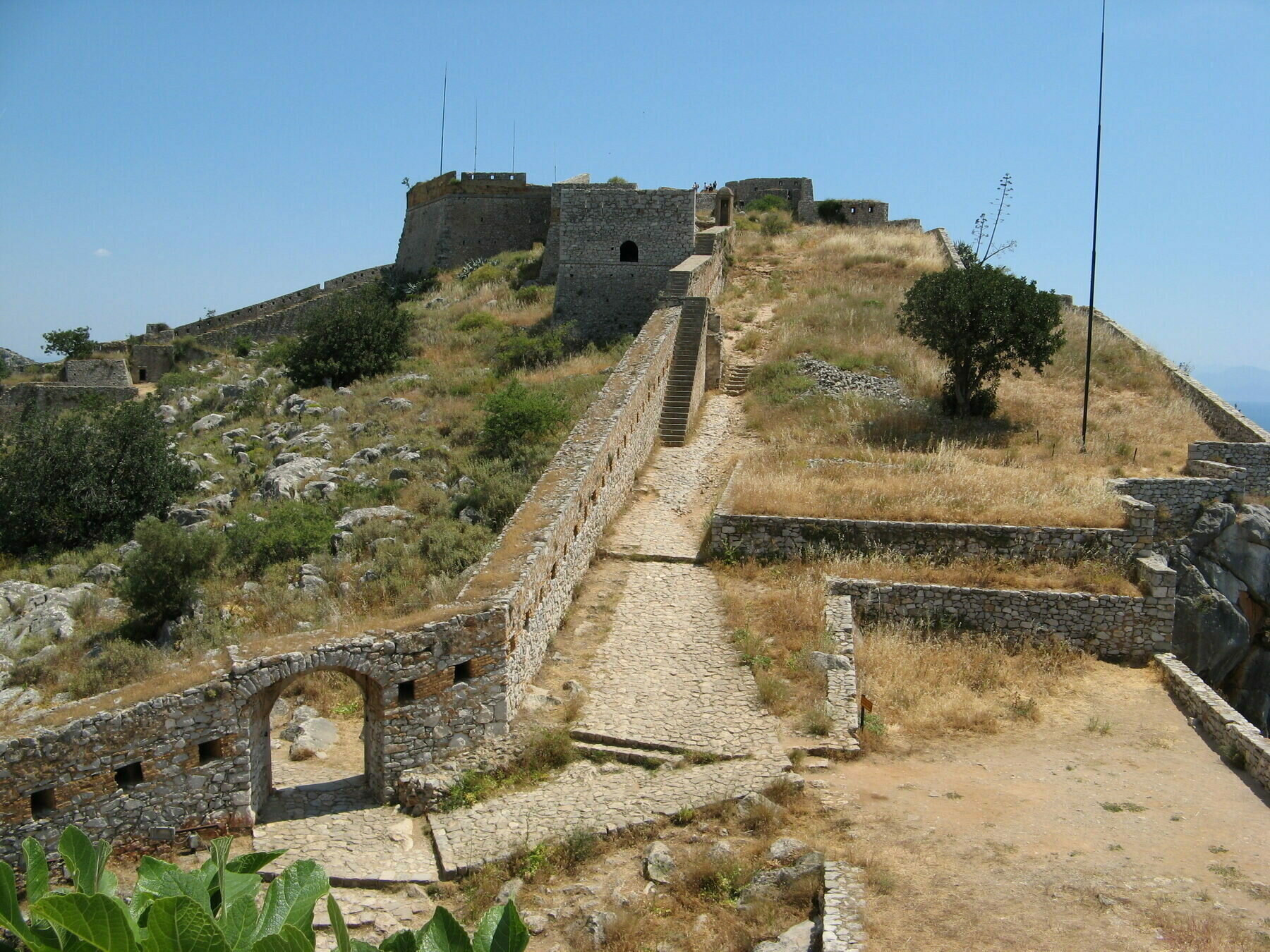
Follow the changes of level between the bastions rather than expecting a single courtyard castle. Agios Andreas, with its church and Venetian lion relief, forms an important center, while the more independent Miltiadis bastion shows how a garrison might continue resisting after another sector fell. Look for water storage and protected accommodation alongside the gun positions. The surviving spaces explain both military power and the practical demands of residence.
Prison memory and the stairway
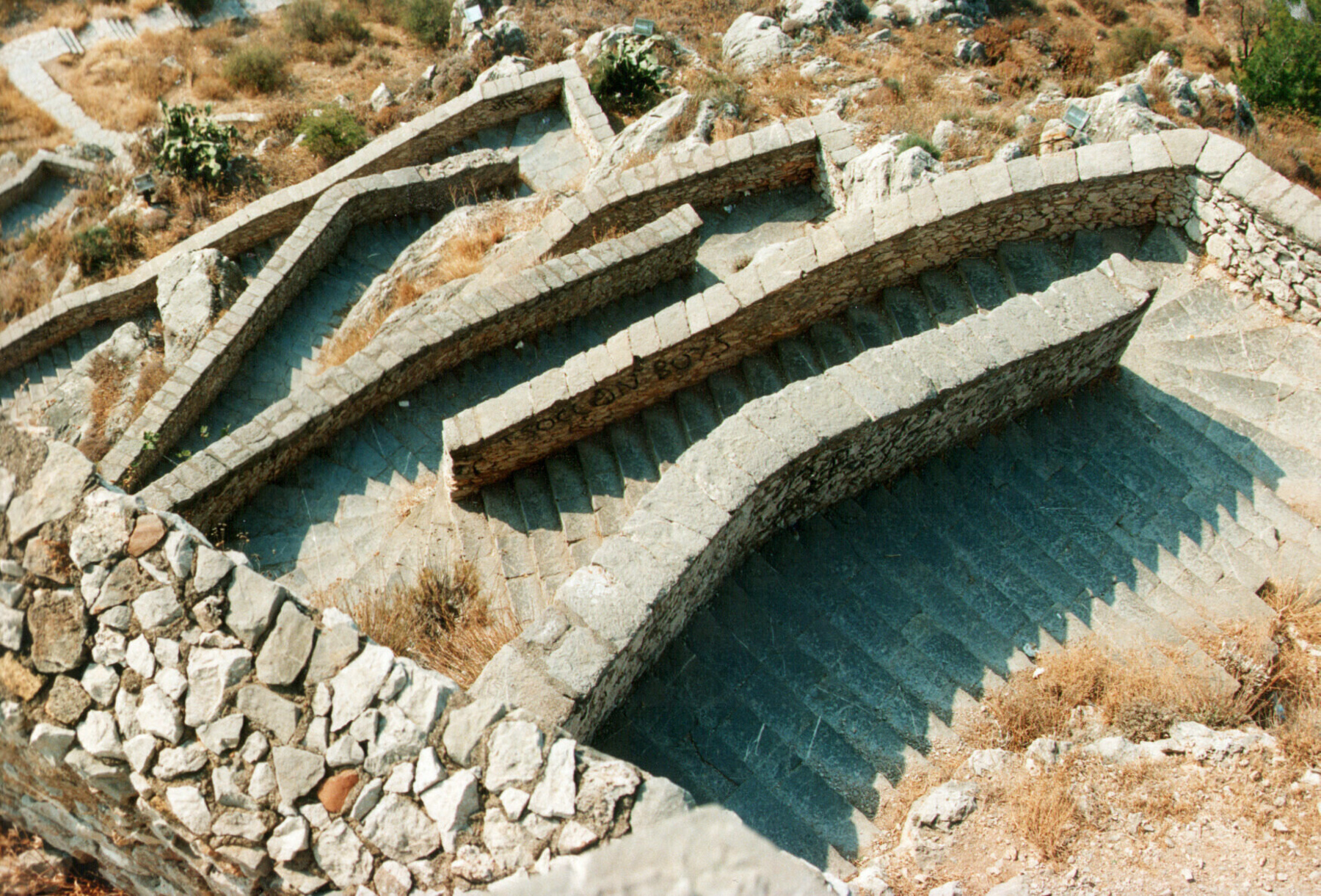
The small chamber traditionally associated with Theodoros Kolokotronis gives the fortress a powerful place in national memory, but the traditional identification should not stand in for the history of the whole prison. The familiar staircase from town was reconstructed in the nineteenth century. Its celebrated step count is less useful to a visitor than the reality of a long, steep ascent.
Planning a visit — November 2026
The Ministry describes an entrance beside the road and parking area at the Epaminondas bastion, and another reached by the stairway from town. Choose the approach to suit your mobility and the weather; a road approach does not make every internal level step-free. Confirm current opening arrangements with the archaeological service and allow time for uneven surfaces, exposed terraces and the return journey. Combine the visit with the wider Nafplio account rather than treating the view as a substitute for the town.
Images