Chios
Avgonima
Avgonima is a stone-built hill village in western Chios, with narrow lanes and a compact central square. Its value is in the settlement as a whole rather than in a single monumental castle.
Explore individual fortresses, monasteries and historic sites. Browse Places for whole settlements and wider destination accounts.
Chios
Avgonima is a stone-built hill village in western Chios, with narrow lanes and a compact central square. Its value is in the settlement as a whole rather than in a single monumental castle.
Skiathos
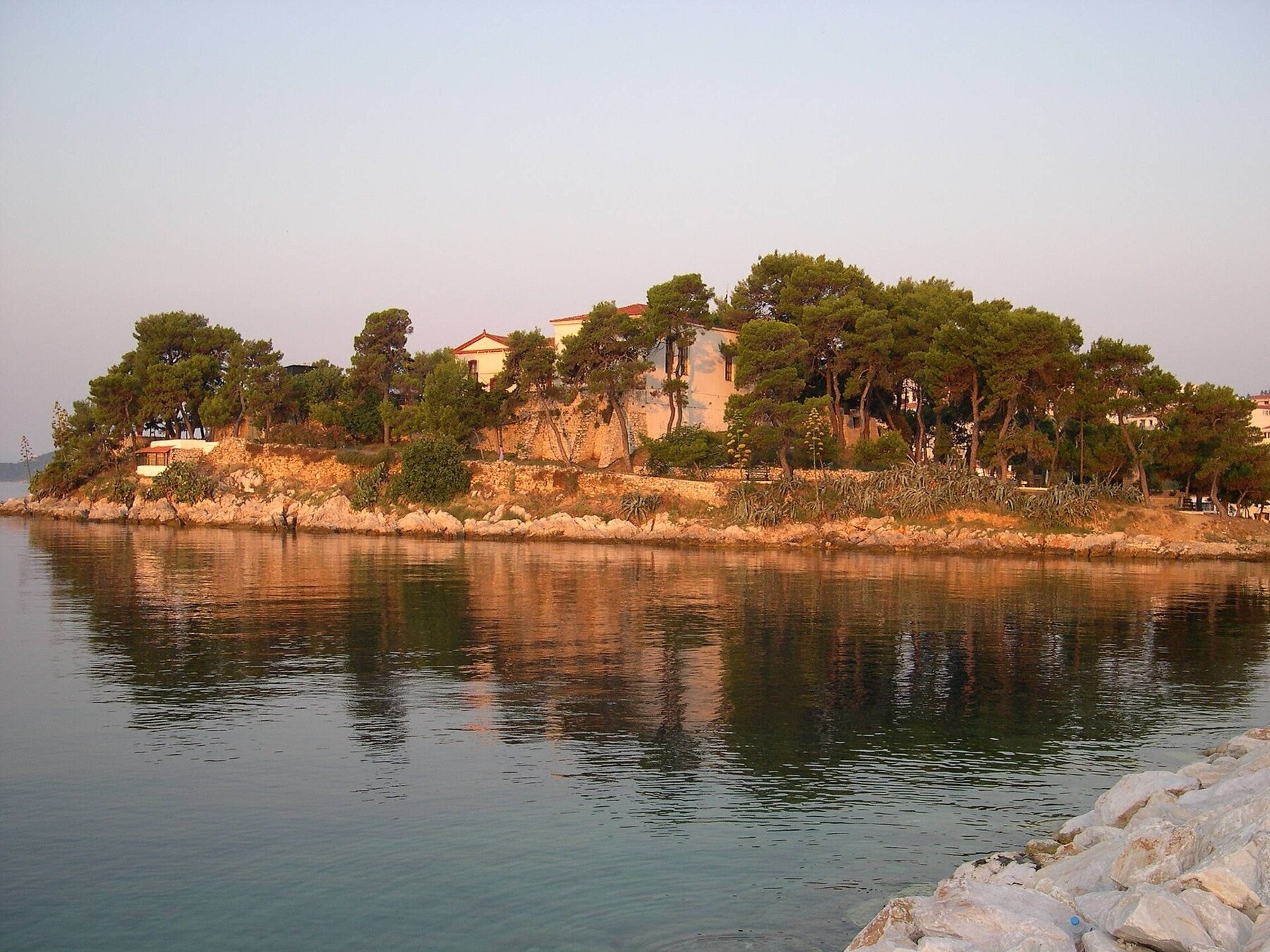
Bourtzi is the wooded peninsula between Skiathos Town’s old and new harbors. Medieval fortification and later cultural uses make it a distinctive part of the modern waterfront.
Nafplio
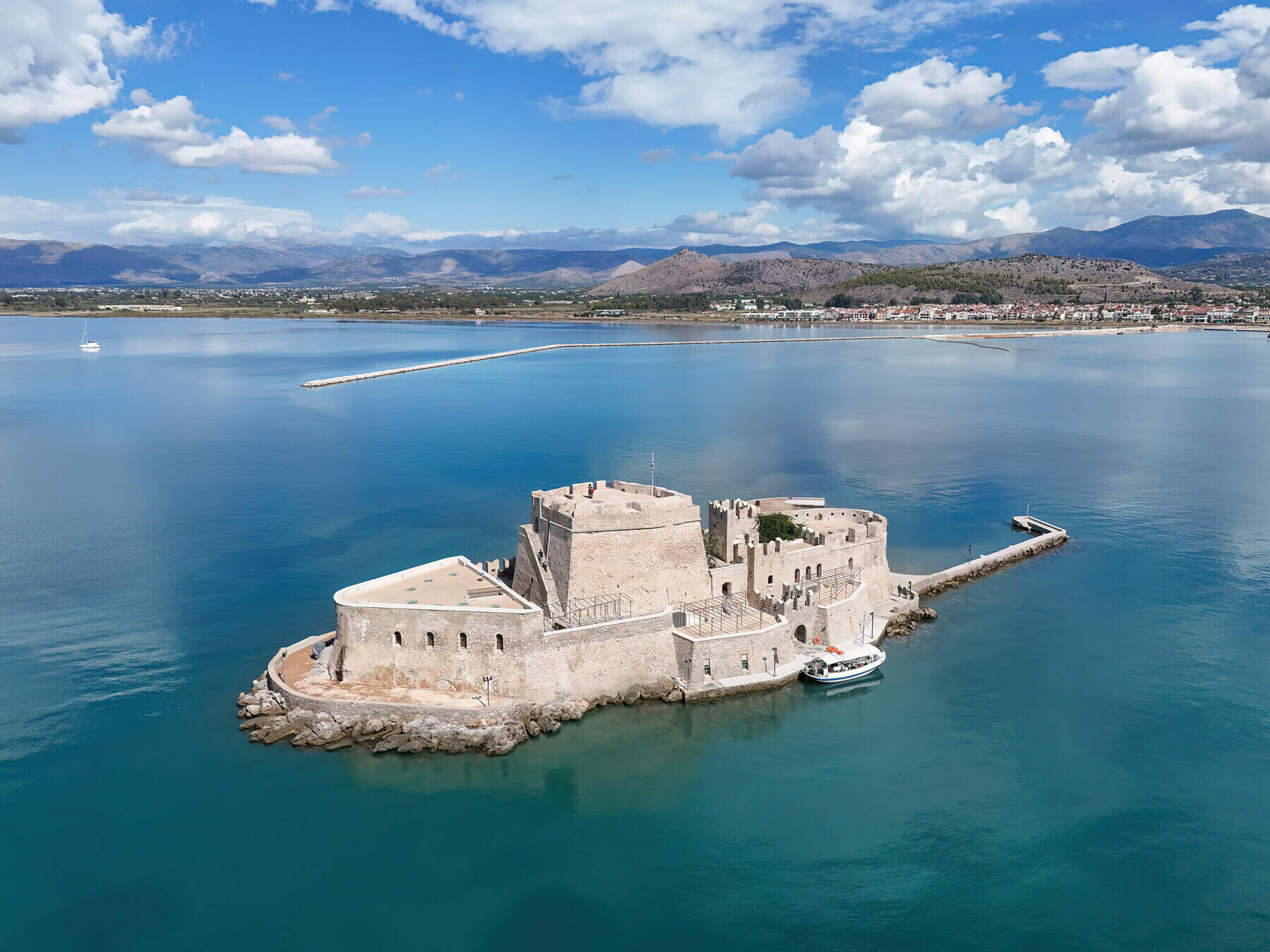
Bourtzi is Nafplio’s sea fortress, occupying the small islet of Agioi Theodoroi in front of the town. Its compact walls once helped control the harbor; later uses included accommodation for executioners and a twentieth-century hotel. Restored rooms and terraces preserve that changing history rather than presenting a purely medieval interior. A visit makes sense alongside the shoreline defenses and the higher fortresses above Nafplio.
Kythira
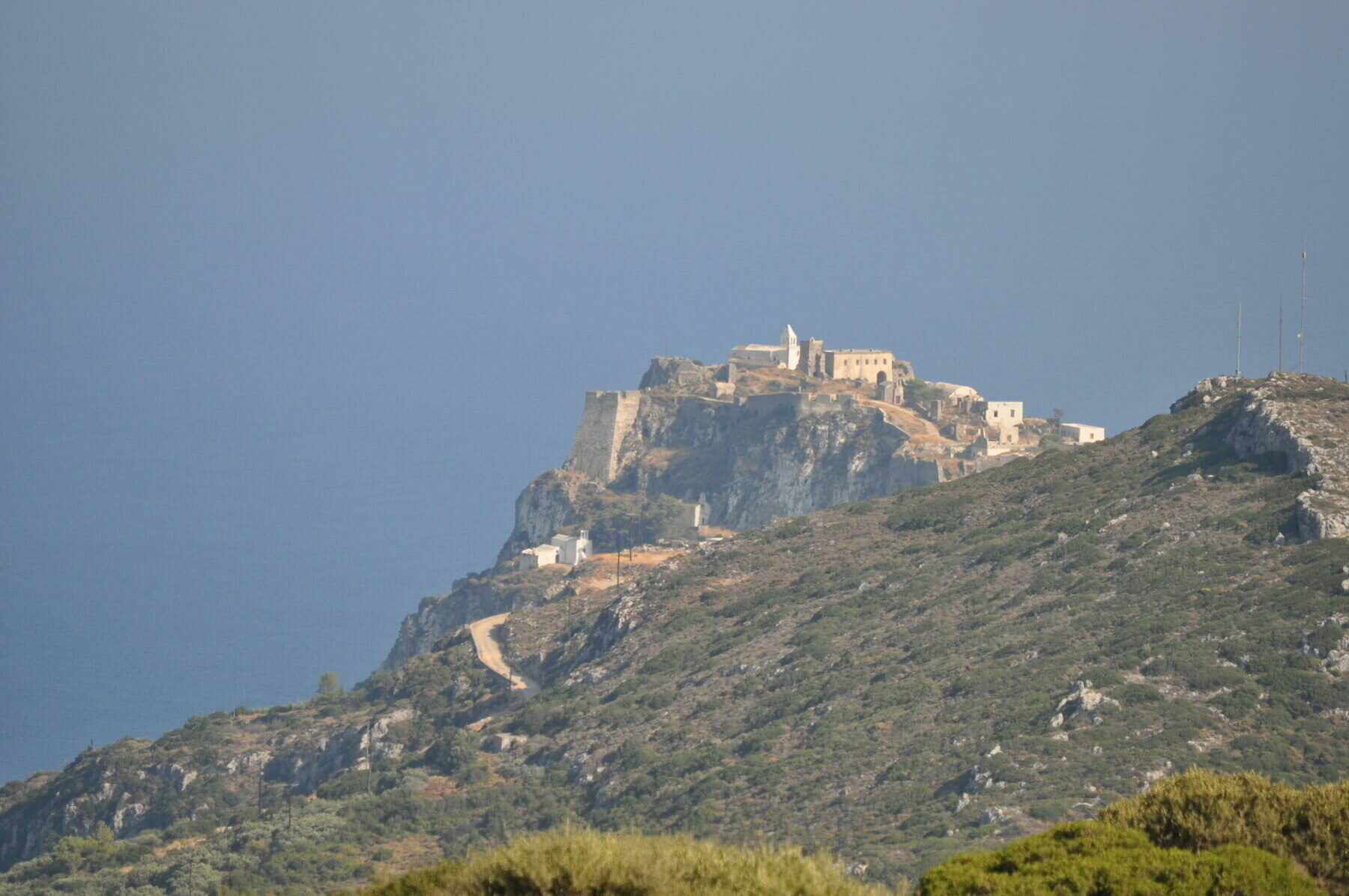
The Castle of Chora crowns the ridge above Kythira’s capital and Kapsali. Its walls enclose the remains of a small inhabited and administrative world: houses, churches, storage and water supplies, not just military positions. The views explain its commanding location, while the buildings within reveal how authority and everyday life shared the same defended ground.
Pythagoreio
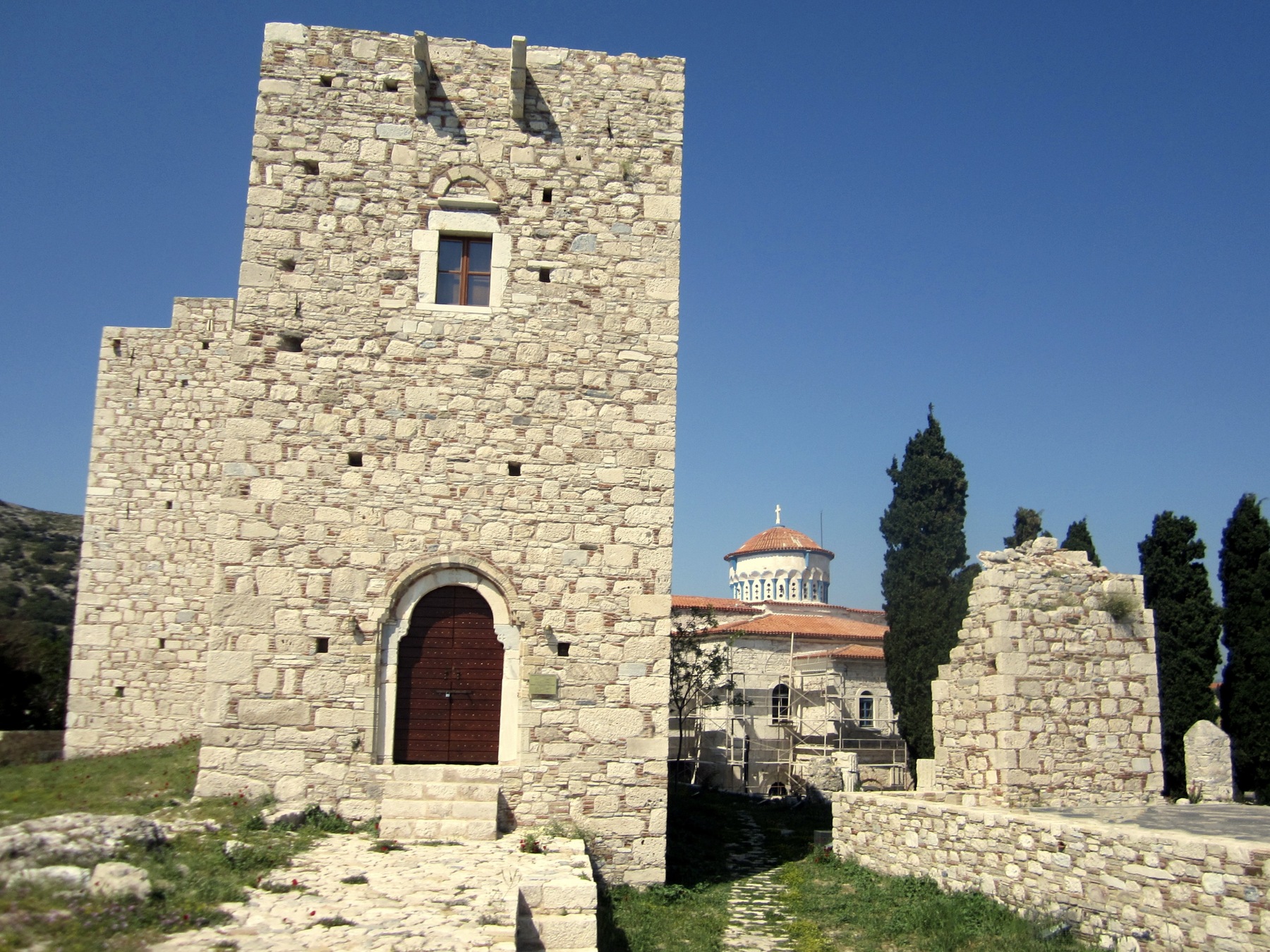
The castle hill above Pythagoreio harbor brings together medieval defenses, the tower associated with Lykourgos Logothetis and the Church of the Transfiguration. It is a place of successive reuse rather than a single nineteenth-century construction. The enclosure belongs within the ancient and modern harbor town, while its tower and church preserve a particularly strong memory of the Samian struggle for independence.
Molyvos
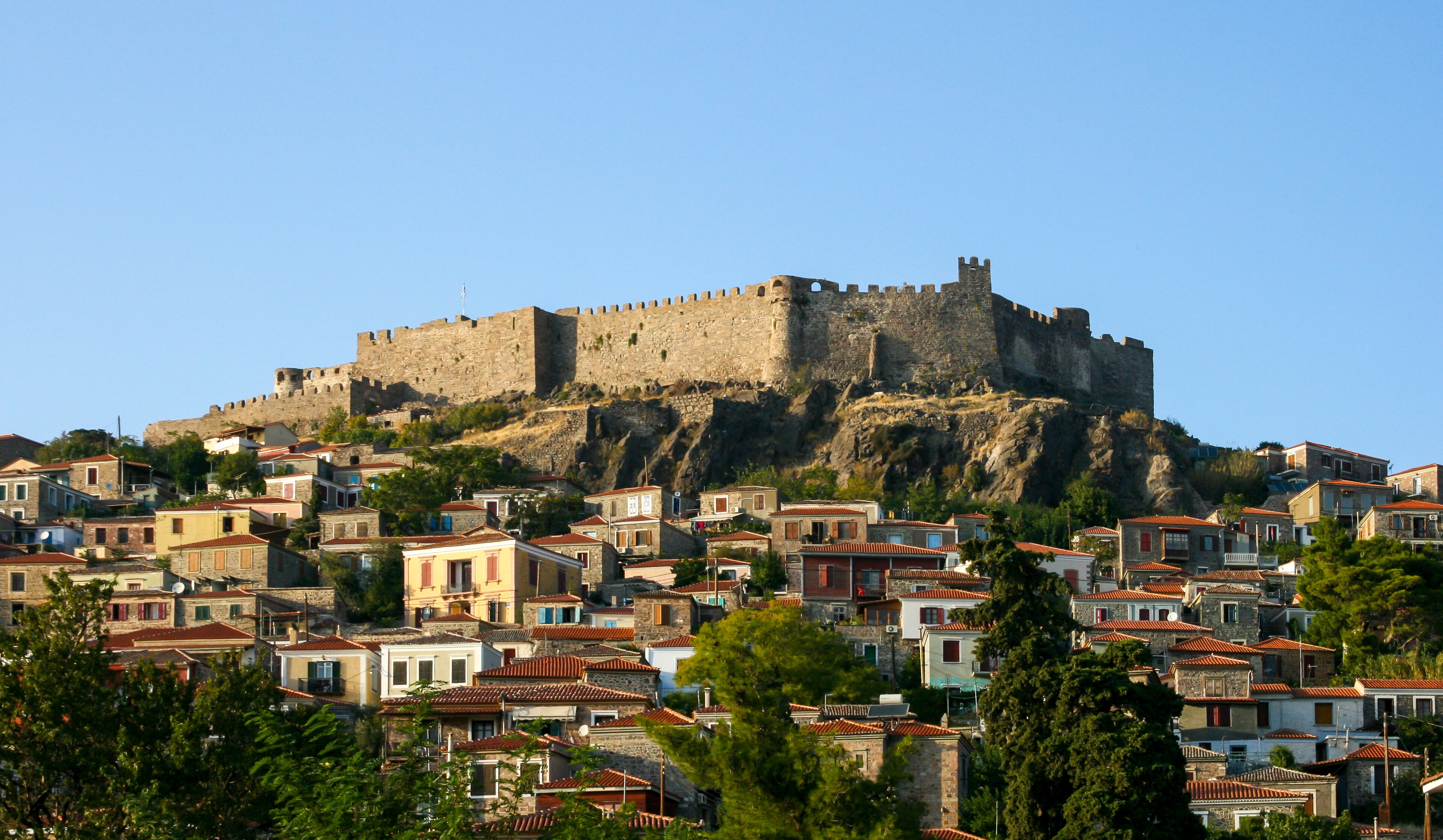
The castle above Molyvos combines a defended hilltop with an archaeological collection interpreting ancient Methymna and the wider settlement. It belongs to a landscape extending from the upper town to the harbor.
Myrina
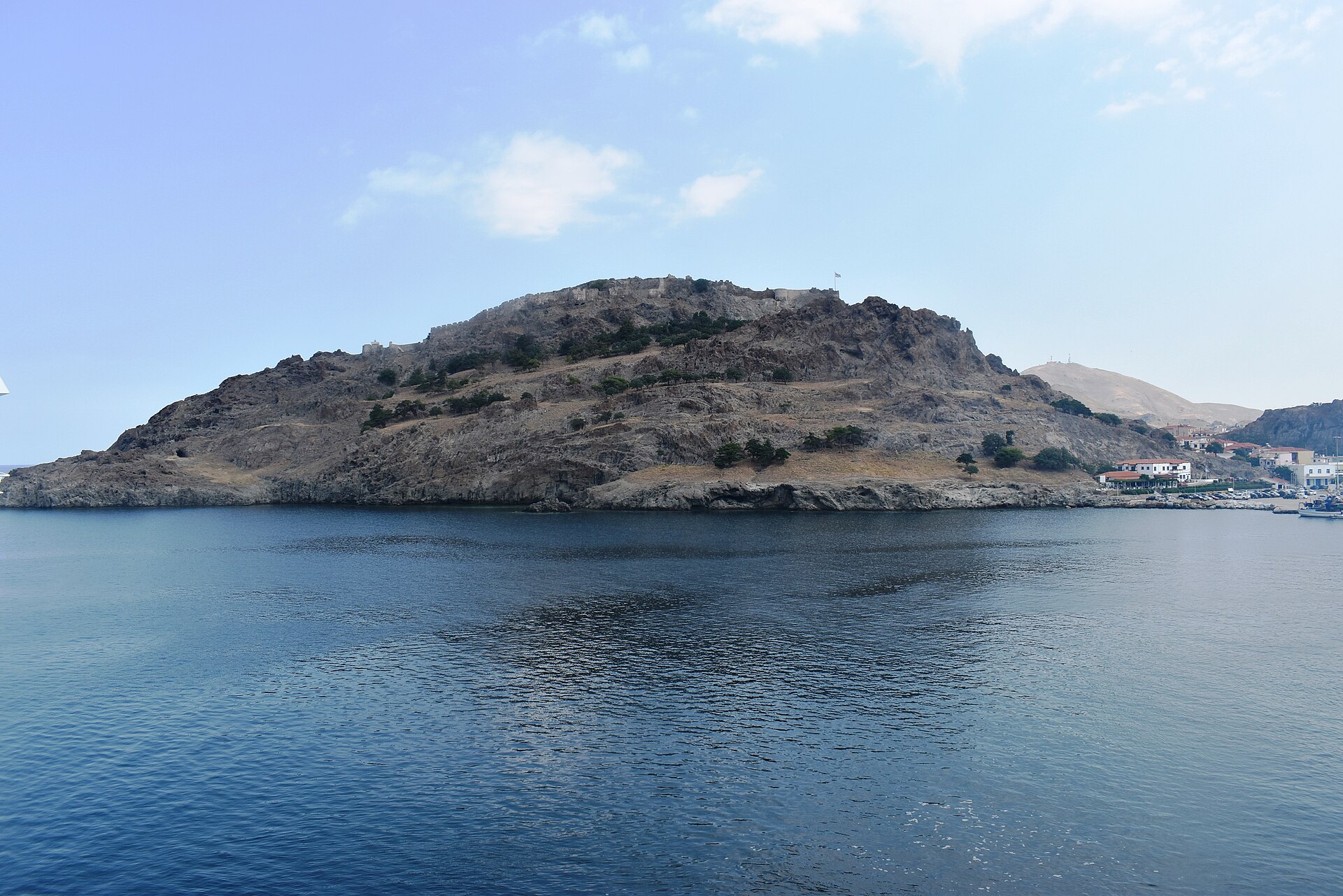
Myrina Castle encloses a rocky promontory between two waterfronts. Behind the skyline lie the remains of an occupied fortress, where housing, military buildings and water supplies mattered as much as the outer walls.
Chios
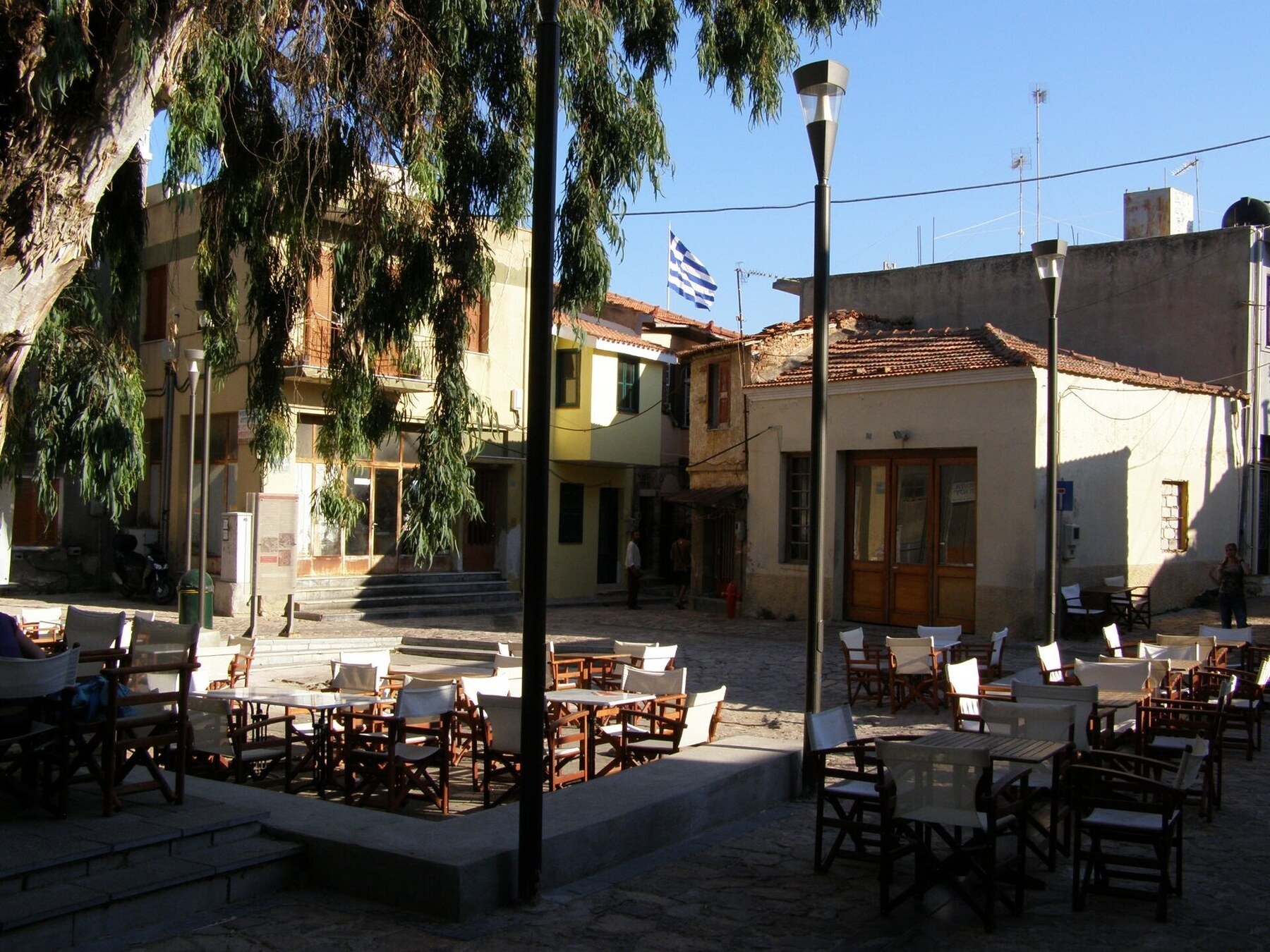
Chios Castle is the inhabited fortified quarter beside the town’s harbor. Its gates, walls and streets preserve the meeting of defense, administration and ordinary urban life.
Thessaloniki
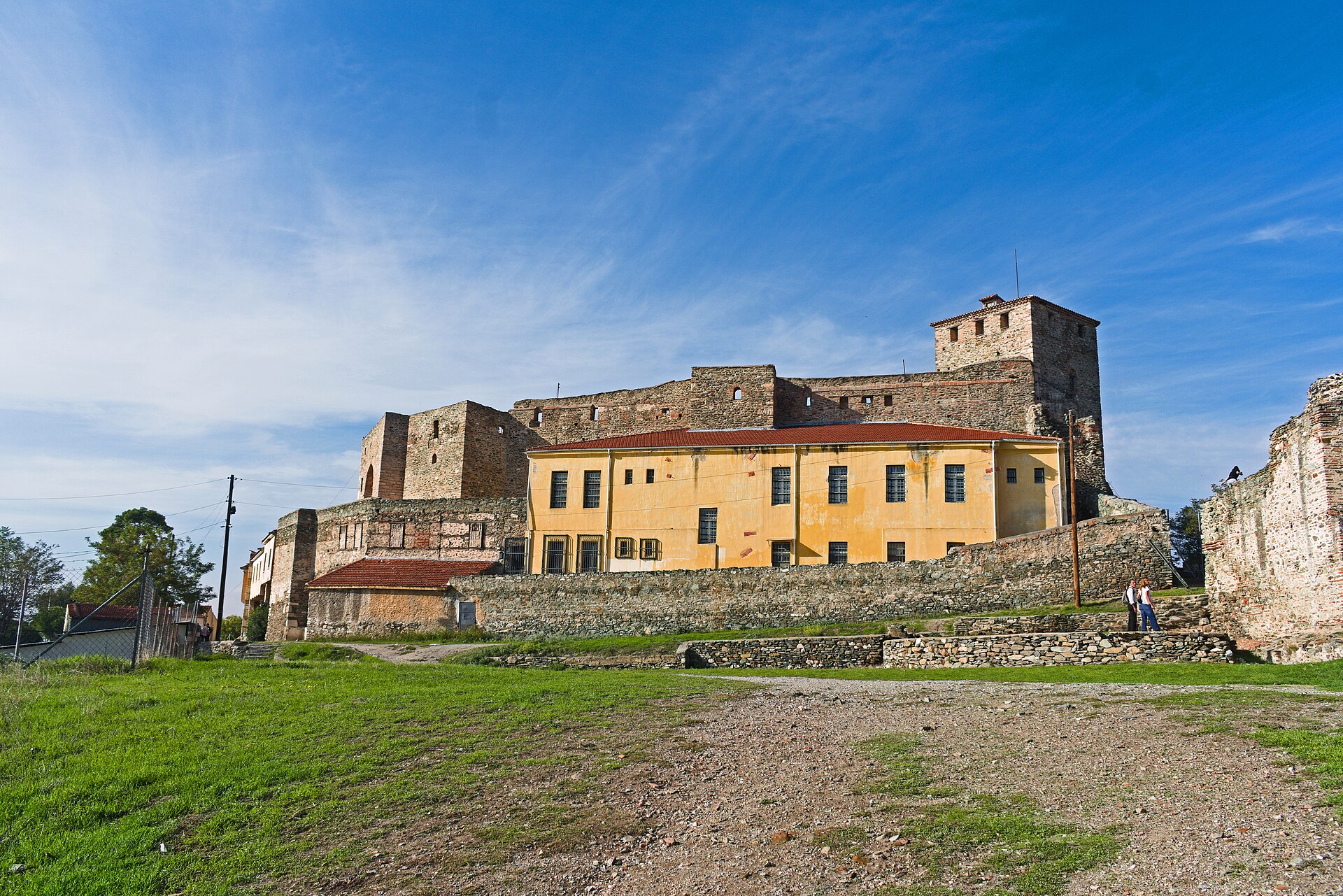
The Heptapyrgion, also known as Yedi Kule, occupies the northeastern height of Thessaloniki’s Acropolis enclosure. Its defensive towers and walls surround a second, very different landscape of prison buildings. The visit brings medieval military space and modern confinement into close contact. Understanding both is essential: this is neither the whole Acropolis nor simply a scenic viewpoint above the city.
Kythira
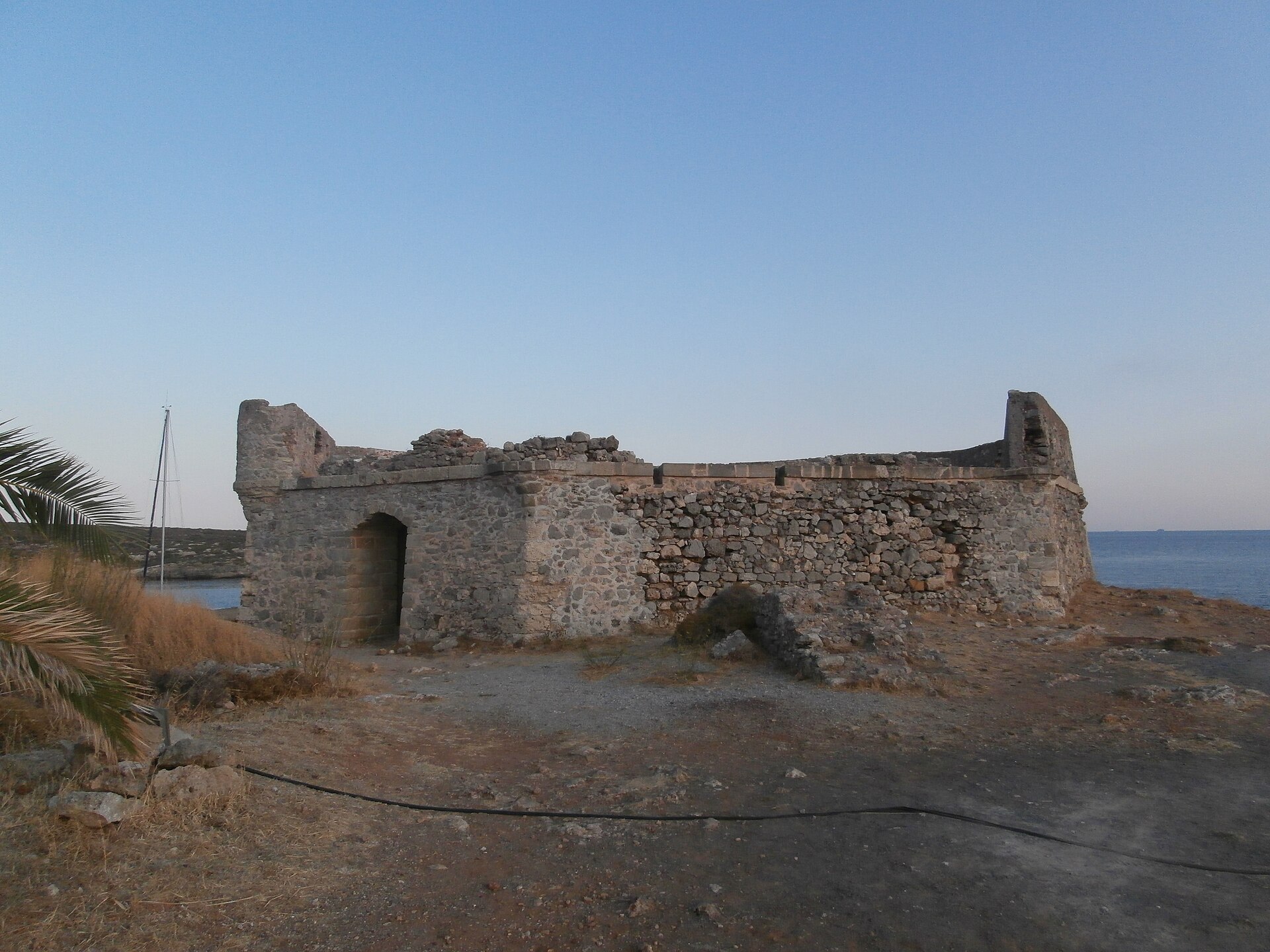
The Kastello stands at the edge of Avlemonas, where a small Venetian fort faces the harbor and the eastern approaches to Kythira. Its low, compact enclosure offers a close-scale contrast with Chora’s elevated castle. It is best understood as part of the working coastline: a defended point beside a sheltered village harbor, rather than a miniature version of the island capital.
Skiathos
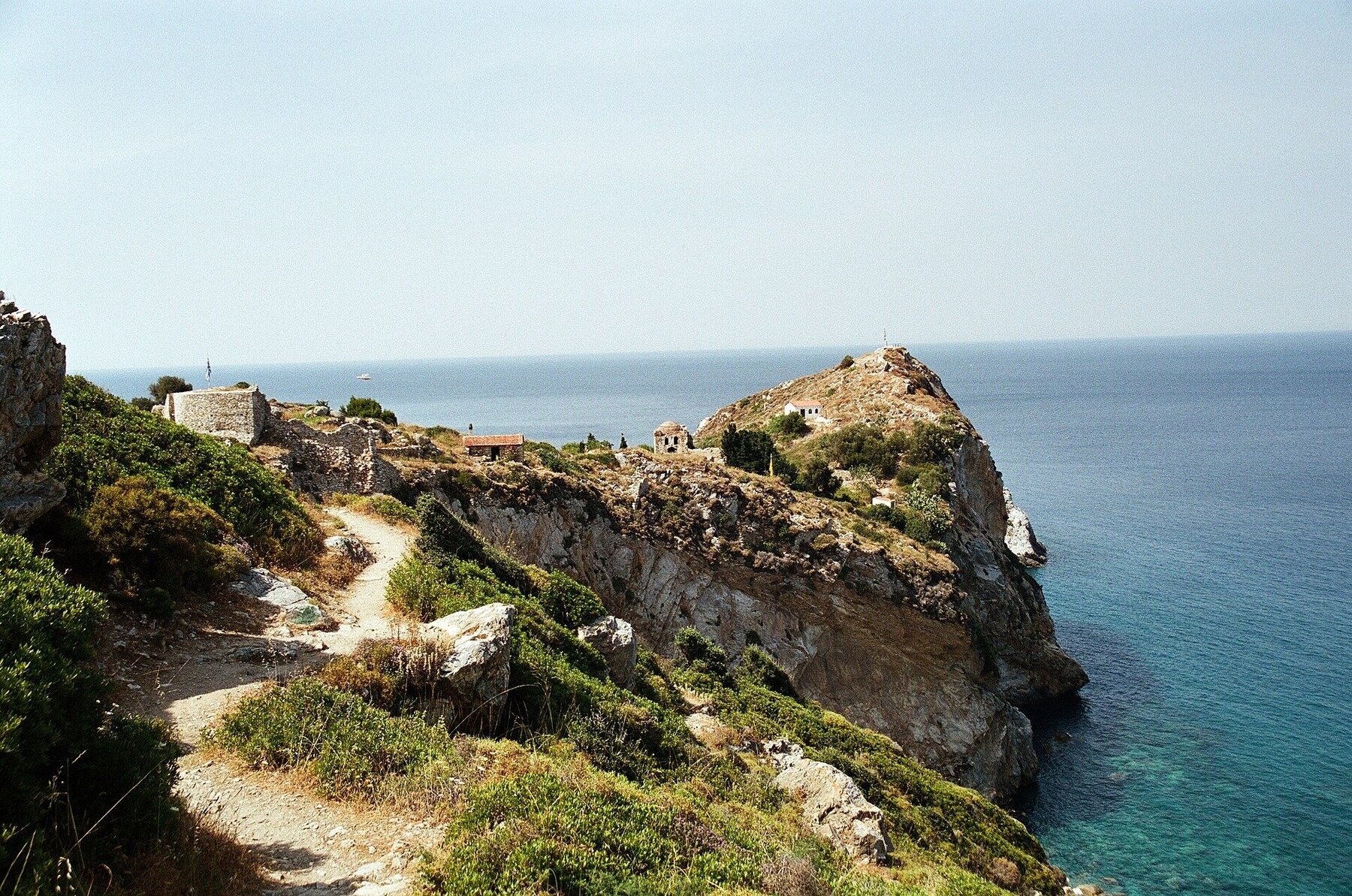
Kastro occupies a narrow rock on the northern coast of Skiathos, where sea cliffs and a defended landward approach once sheltered the island’s principal settlement. Houses, churches, walls and a restored entrance make it possible to read a community’s response to maritime insecurity. Its significance is also literary: the abandoned town remained alive in the memory and stories of Alexandros Papadiamantis.
Kavala
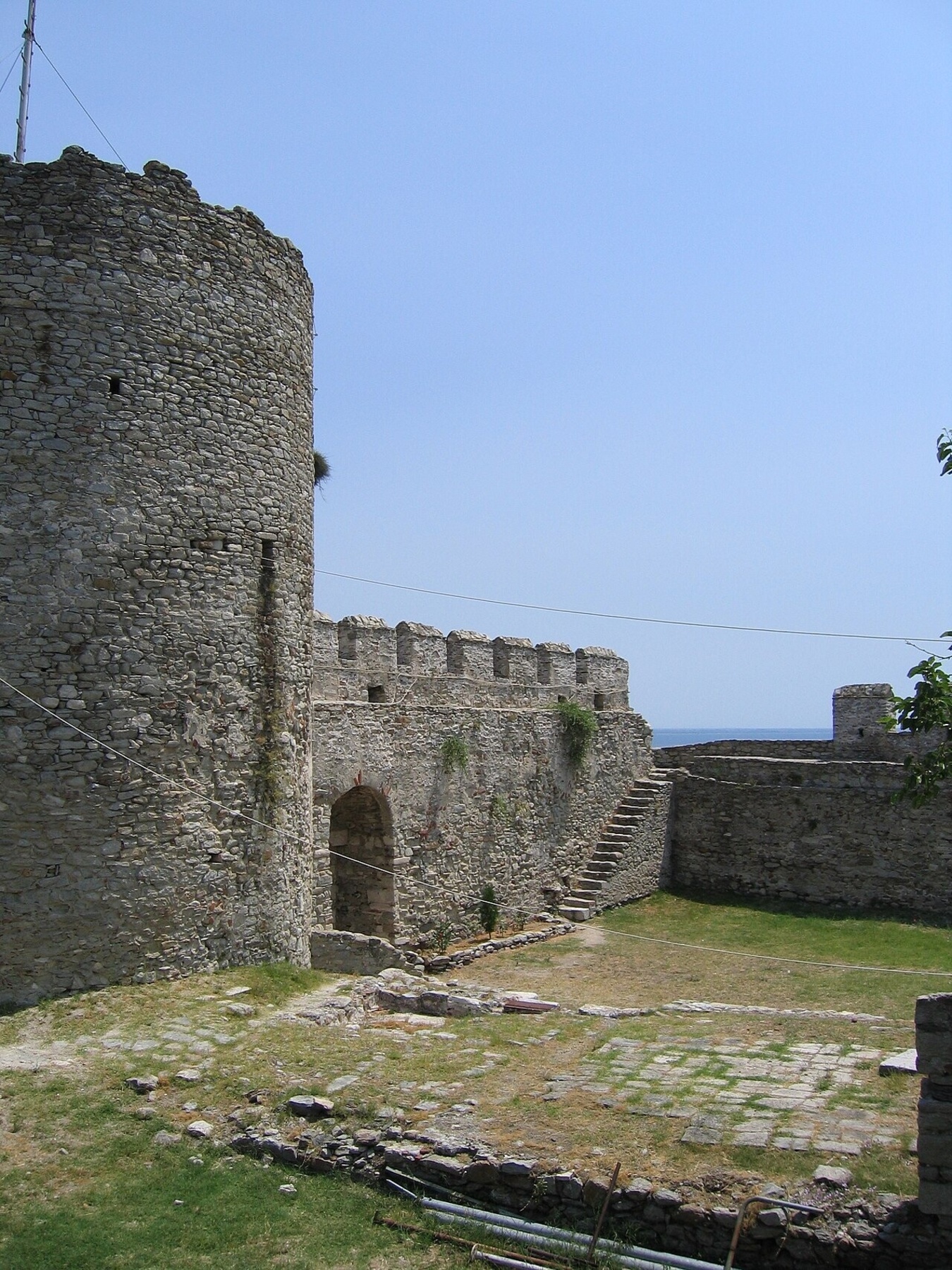
Kavala Fortress crowns the Panagia peninsula above the harbor. Its inner spaces and commanding position explain the citadel’s role within the larger fortified town.
Psara
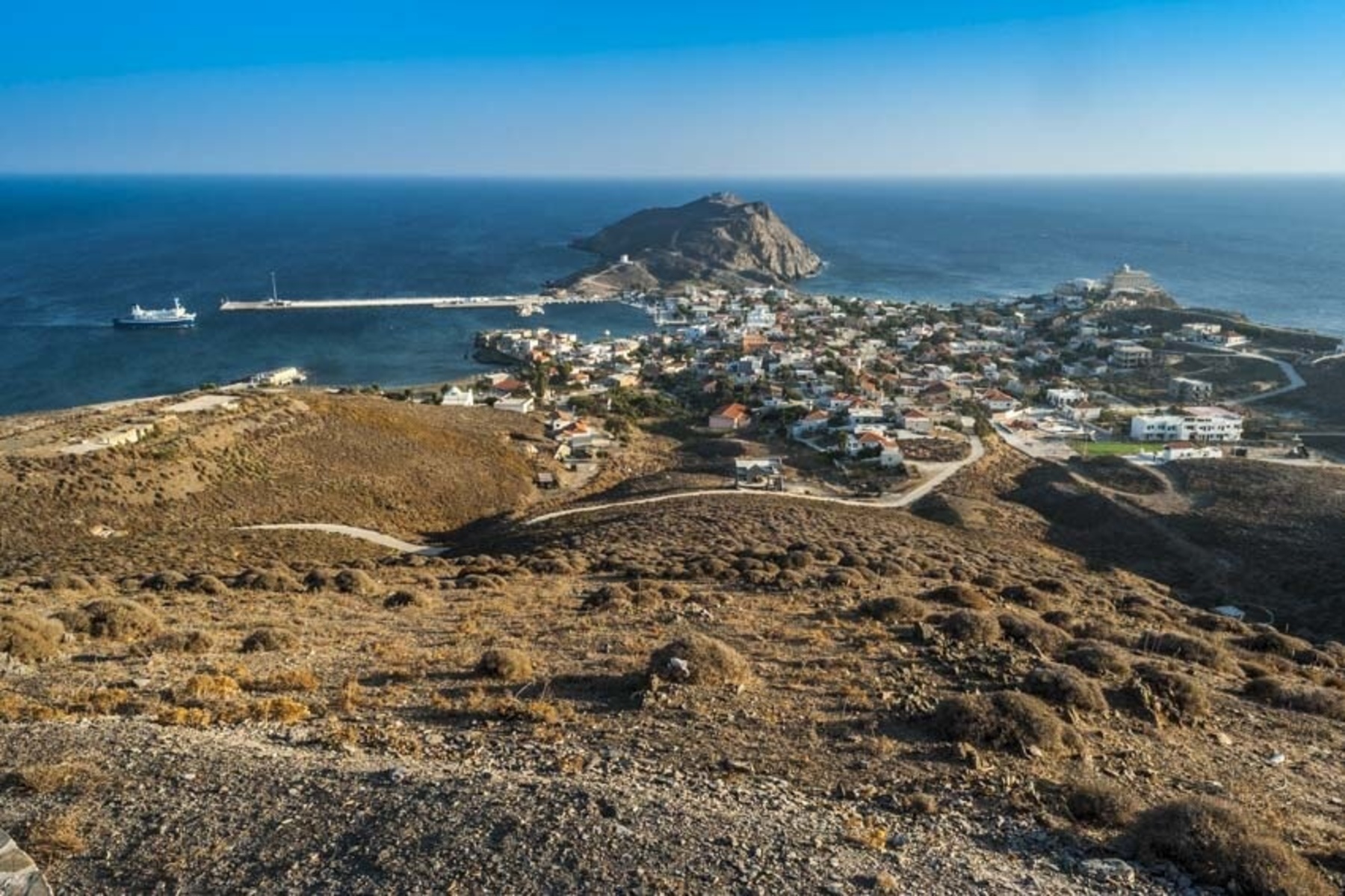
Mavri Rachi, the Black Ridge, is a memorial landscape above Psara associated with the island’s final resistance and destruction in 1824. The hill connects the catastrophe with later remembrance rather than offering the remains of a conventional intact castle.
Chios
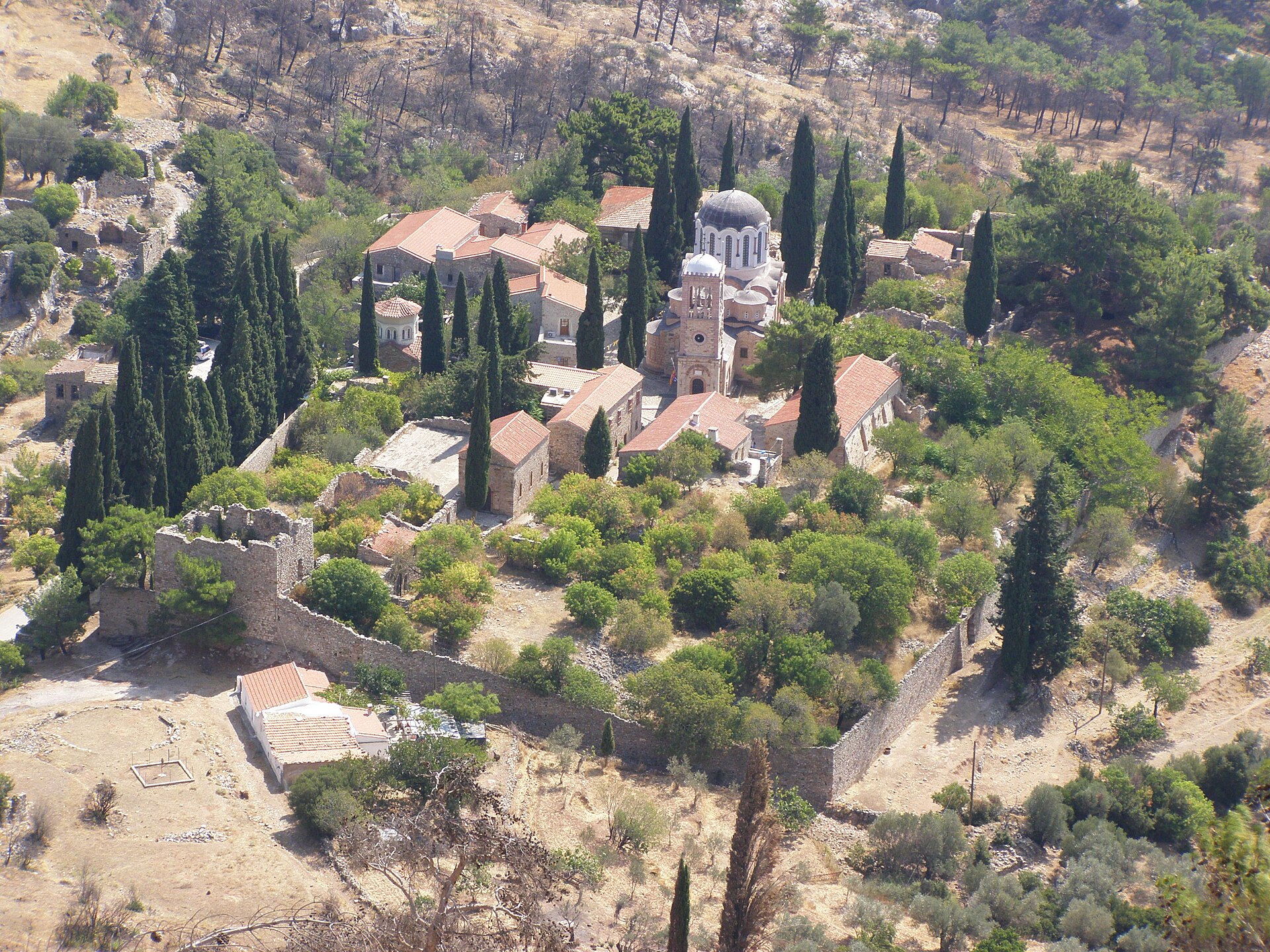
Nea Moni stands in the hills of central Chios, an enclosed monastery whose church preserves one of the great surviving ensembles of Byzantine mosaic art. Imperial patronage, communal monastic life, destruction and restoration all belong to its history. The visit rewards attention to the spaces around the church as well as the images within: refectory, water supply, cells and memorial places explain how this religious community lived and endured.
Corfu
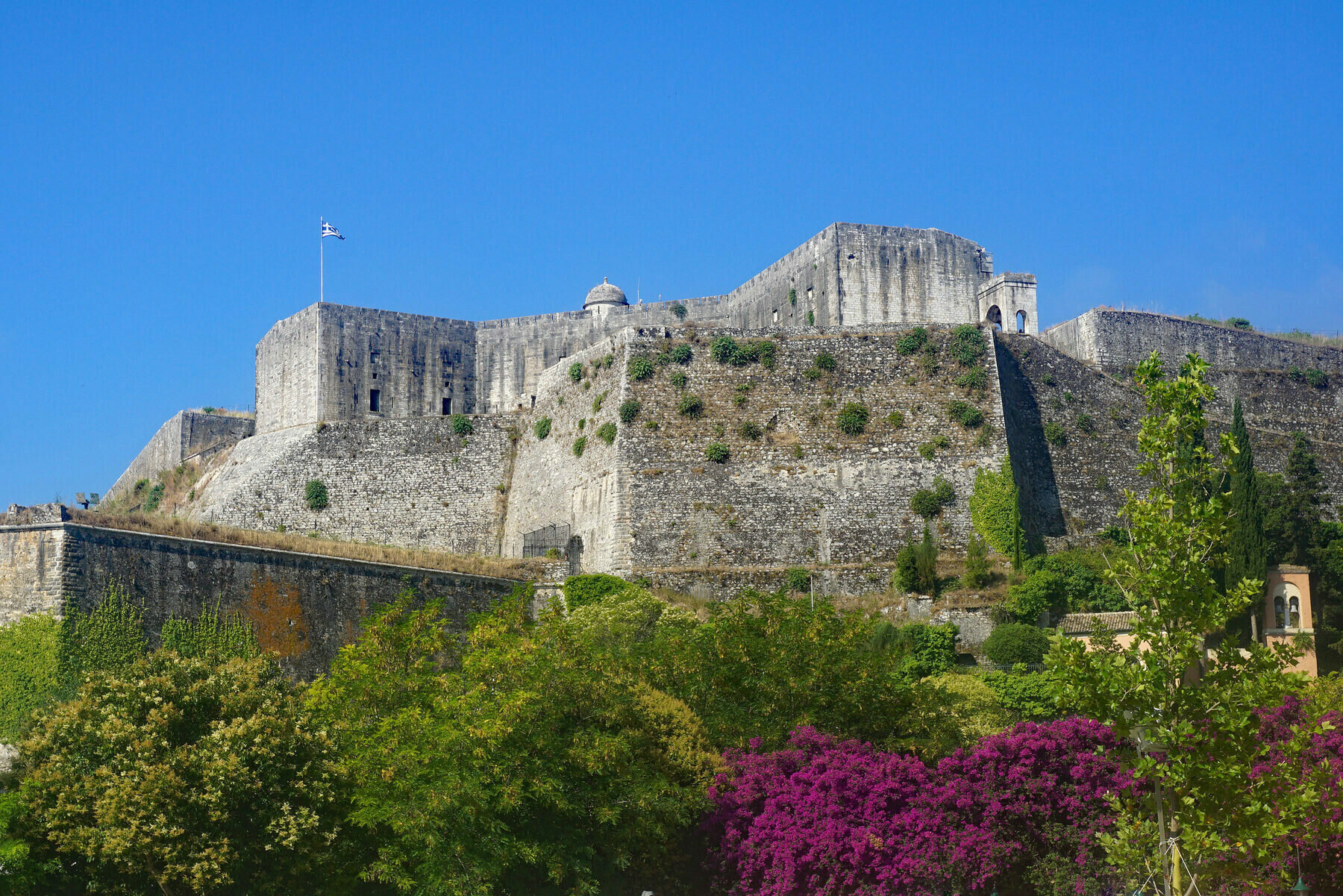
The New Fortress rises on Agios Markos hill at the northwestern side of Corfu Town. It was built to protect the expanding town and harbor beyond the older peninsula fortress. Powerful bastions, defended entrances and later alterations make it a different encounter with Corfu’s military past: a landward stronghold tied to the growth of an inhabited city.
Corfu
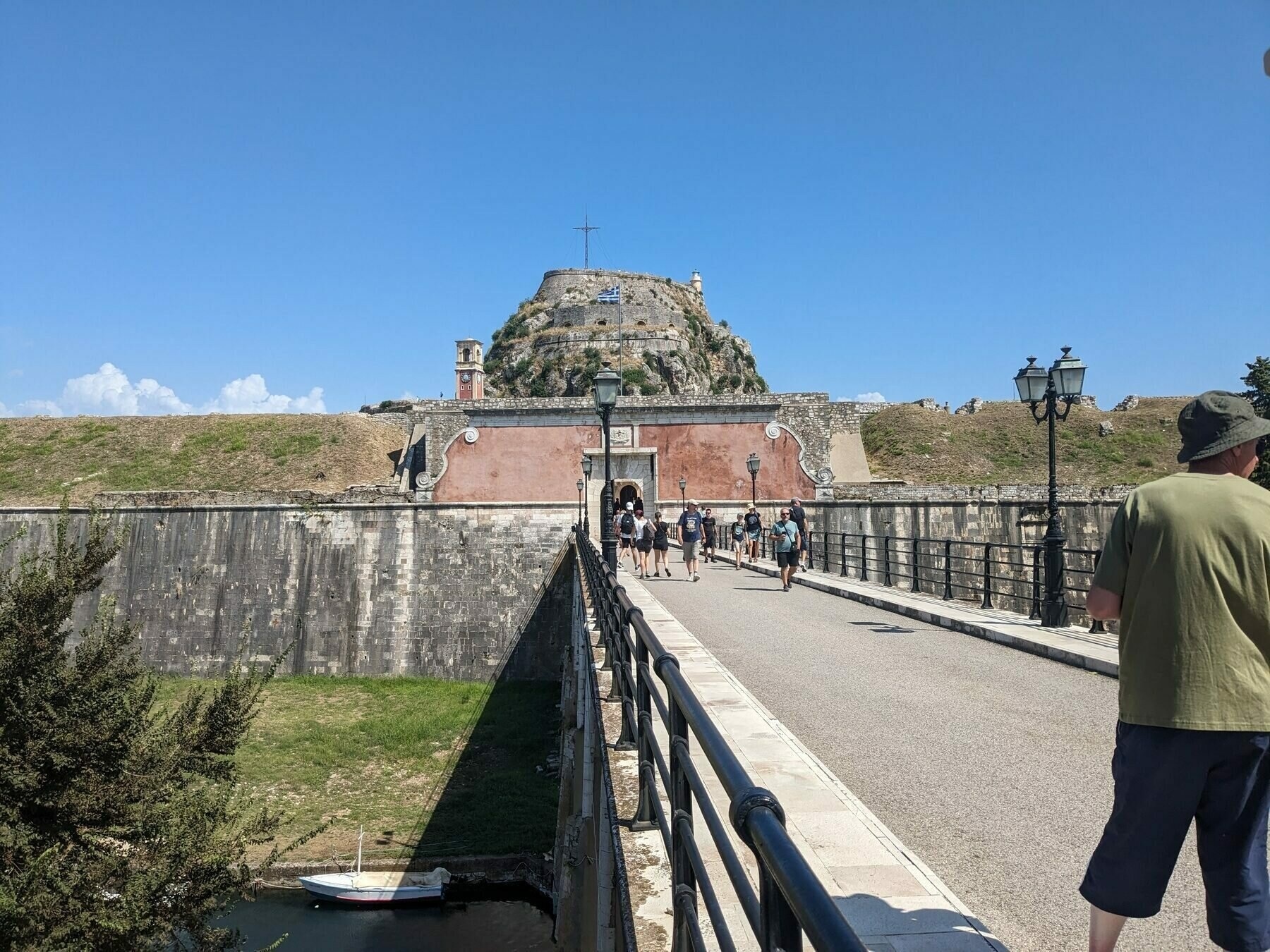
The Old Fortress occupies the rocky peninsula at the eastern edge of Corfu Town, separated from the streets and Spianada by a sea moat. Byzantine occupation, Venetian defenses and later military and civic uses all survive within the enclosure. Crossing the bridge introduces a landscape of gates, slopes, barracks and religious buildings whose history extends well beyond a single siege or ruler.
Nafplio
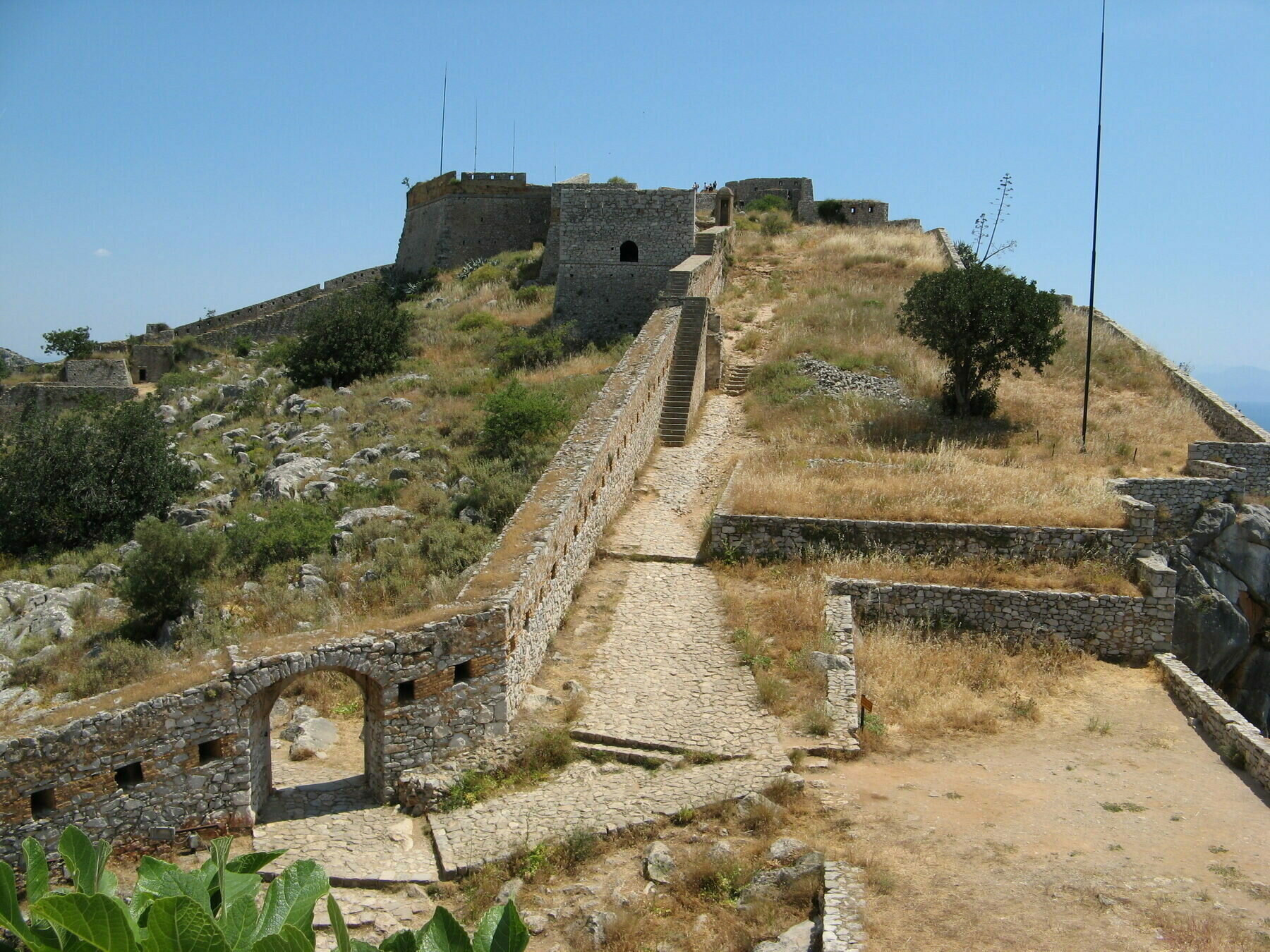
Palamidi rises above Nafplio as a fortress of separate bastions, terraces and defended passages. Built during the last years of Venetian rule and completed and adapted under later rulers, it turned the hill overlooking the town into its strongest artillery position. The enclosure rewards close attention as well as panoramic views: cisterns, gates, barracks and a small church reveal the work of sustaining a garrison on this exposed height.
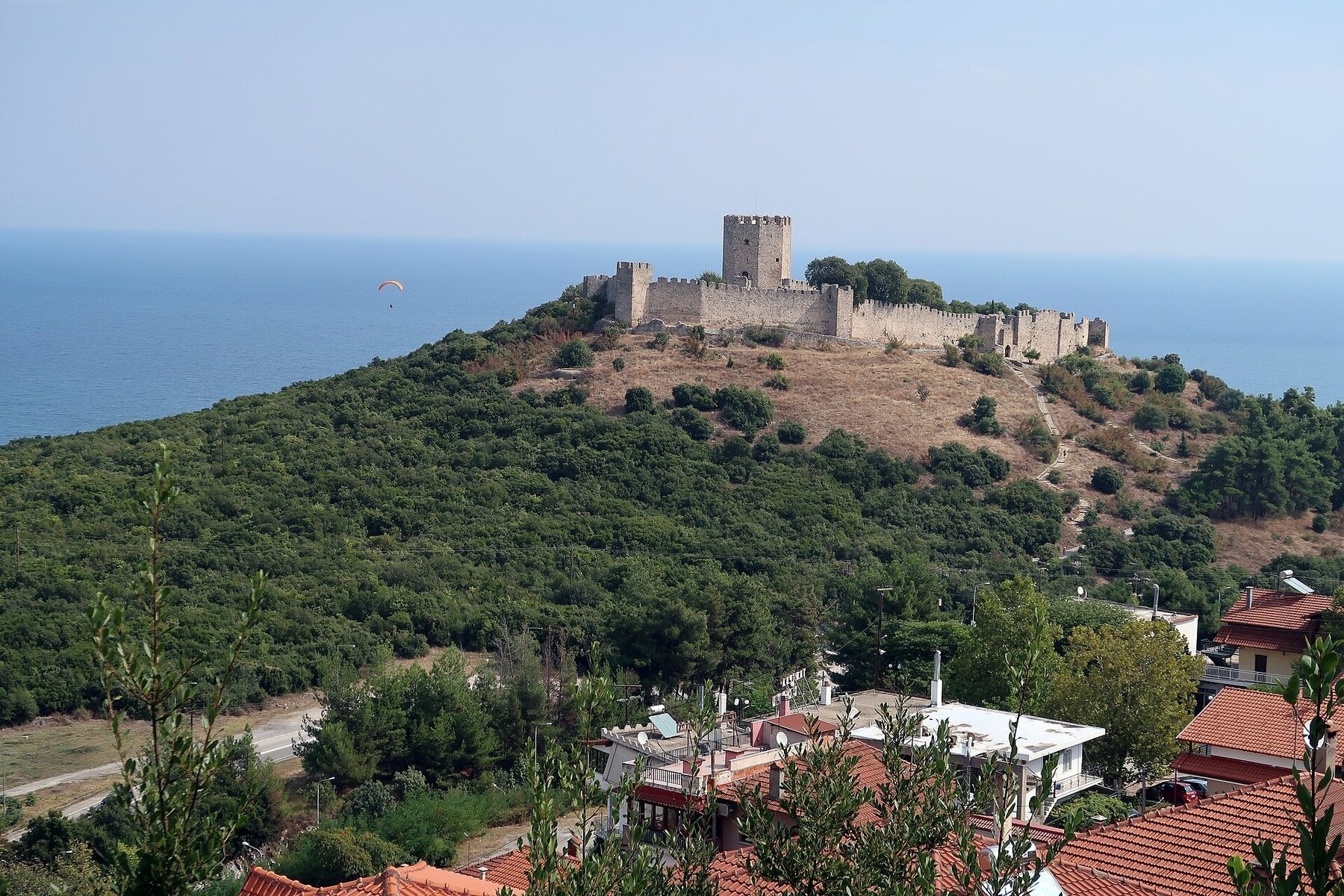
Platamon
Platamon Castle commands the coastal corridor beneath Mount Olympus. Its enclosure and polygonal keep are best understood with the passage between Thessaly and Macedonia in view.
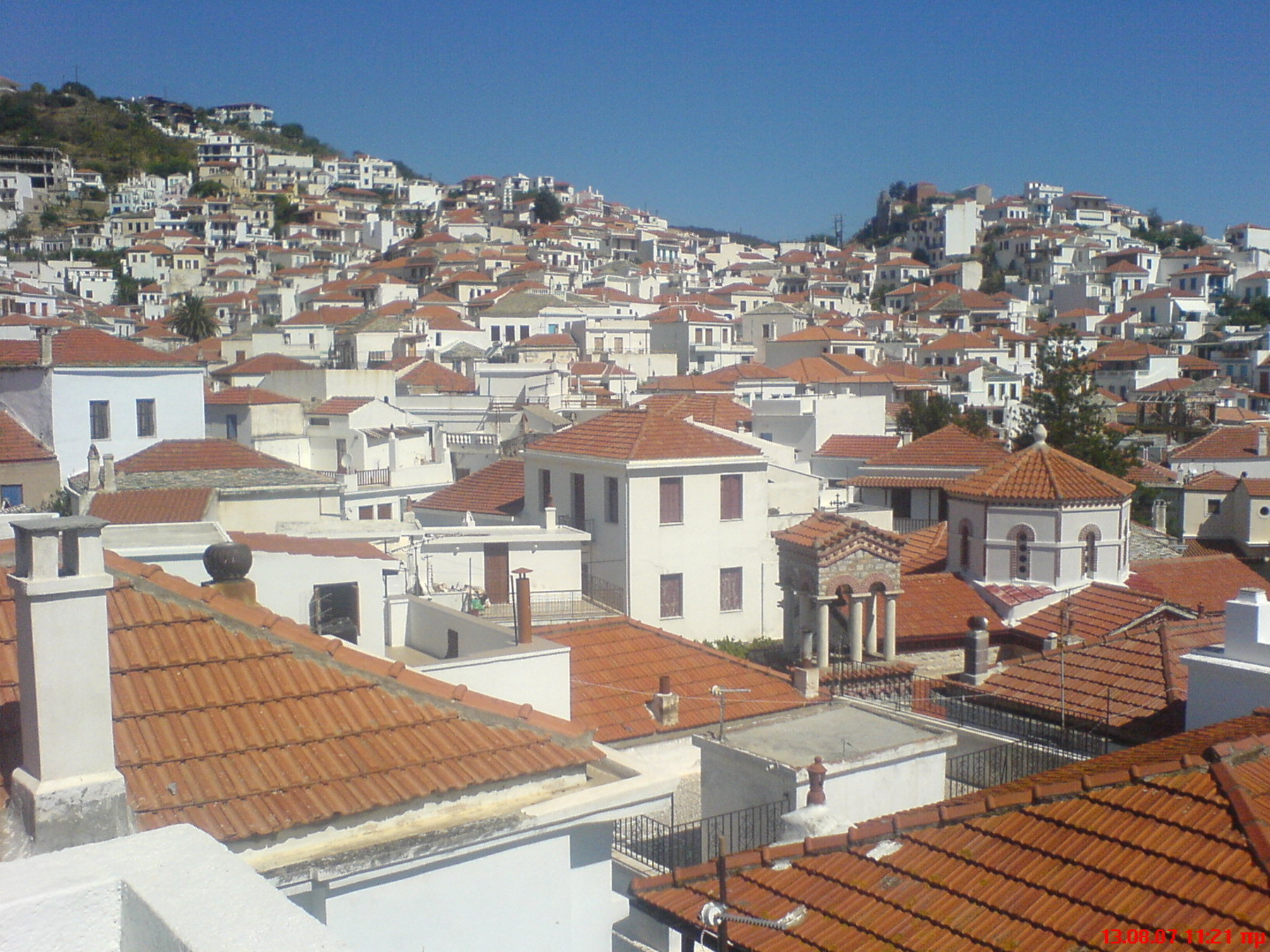
Skopelos
Skopelos Kastro occupies the upper edge of Chora above the harbor. Fragmentary walls remain woven into a living town of lanes, houses and churches rather than enclosing an untouched medieval complex.
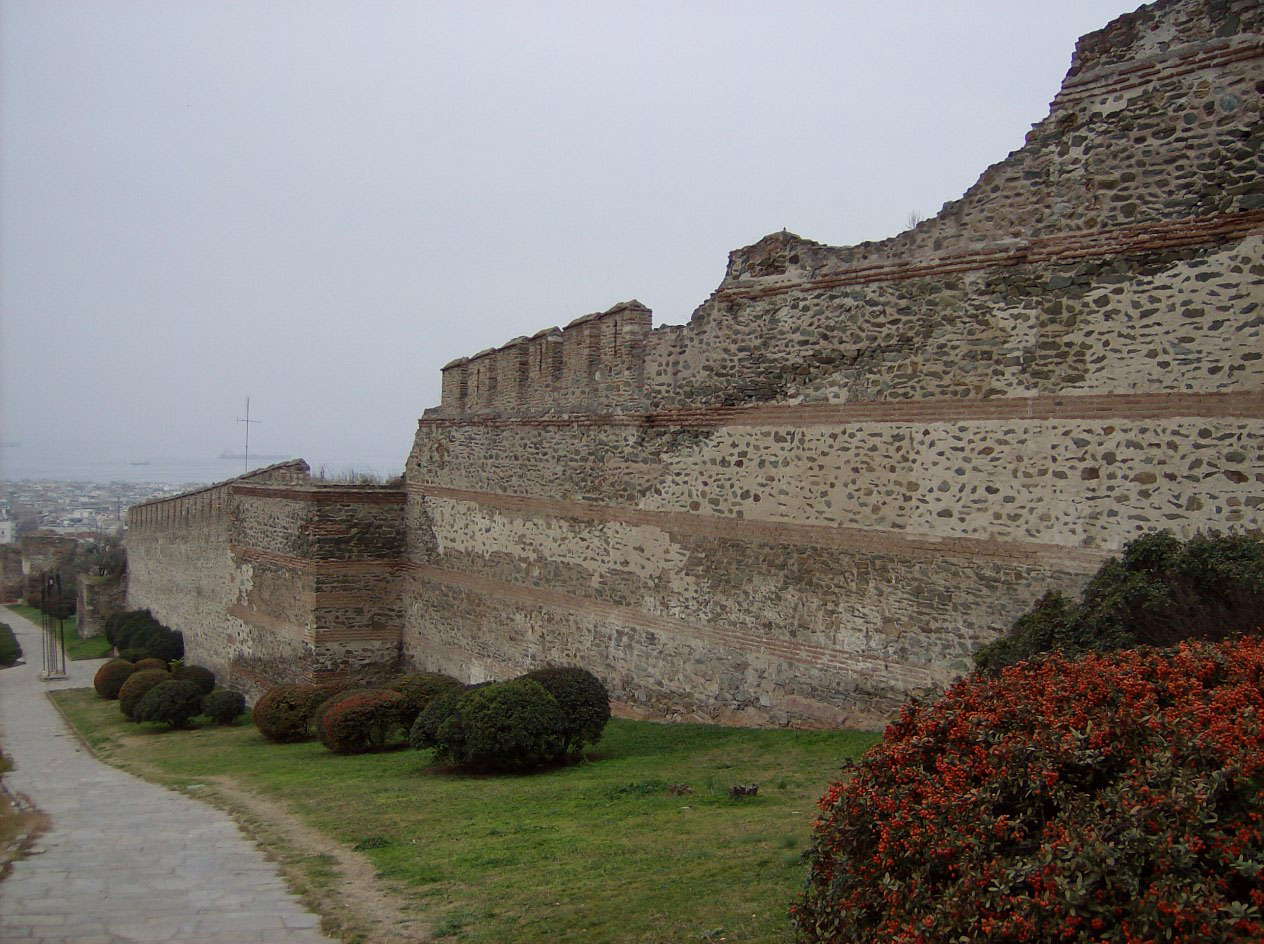
Thessaloniki
Thessaloniki’s surviving walls climb from the lower city toward the Upper City and the enclosed Acropolis. Towers, gates and long stretches of masonry preserve the outline of a defended metropolis, while gaps and excavated remnants recall the circuit that has been lost. This is a landscape to read in sections among streets and houses, not an uninterrupted rampart walk.
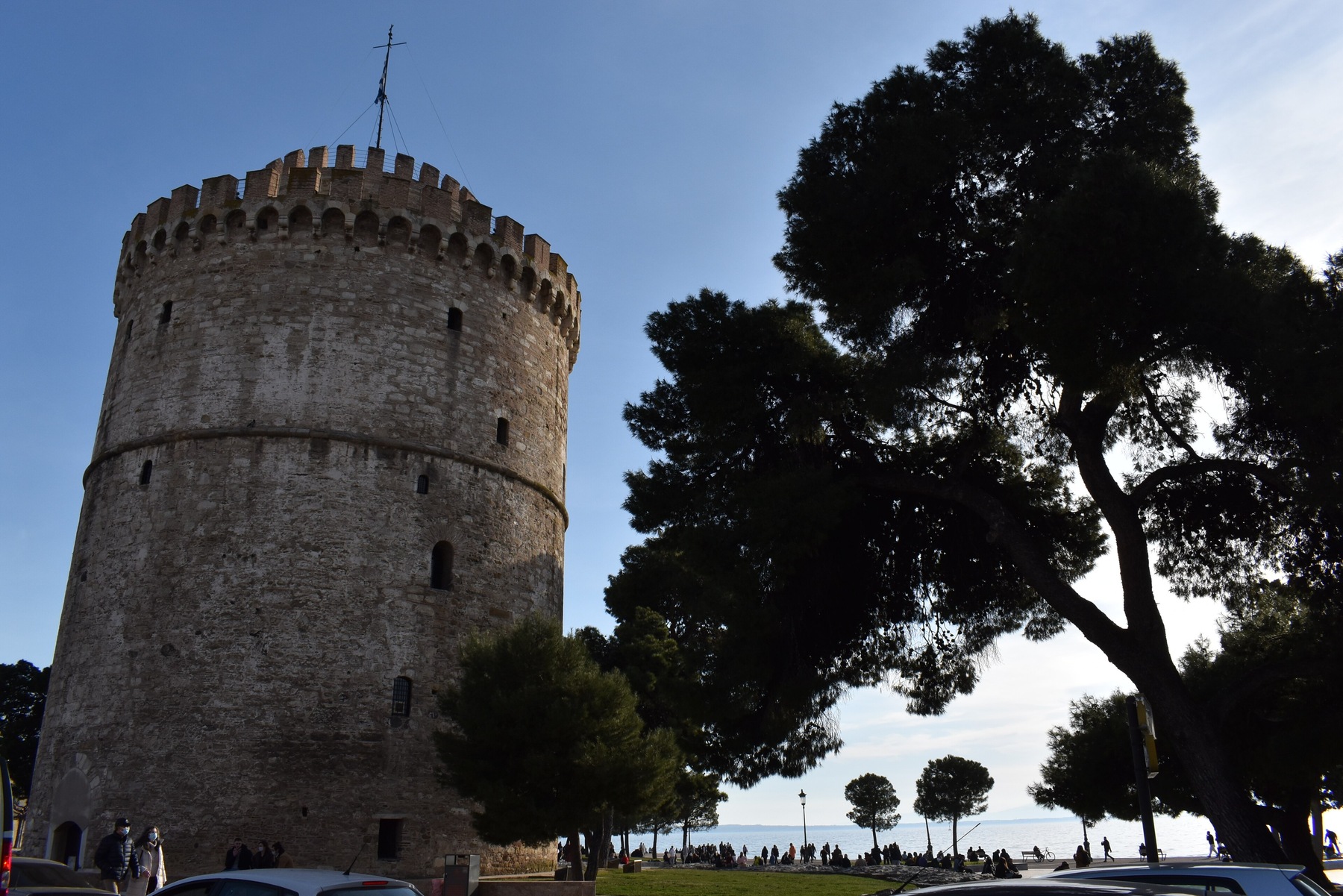
Thessaloniki
The White Tower stands beside Thessaloniki’s waterfront where the eastern land defenses once met the sea walls. The surviving Ottoman tower replaced an earlier Byzantine structure and later served as a prison. Today its exhibition introduces the history of the whole city. Its familiar silhouette is most rewarding when understood alongside the vanished seaward circuit and the much longer history presented inside.