An imperial foundation on an island
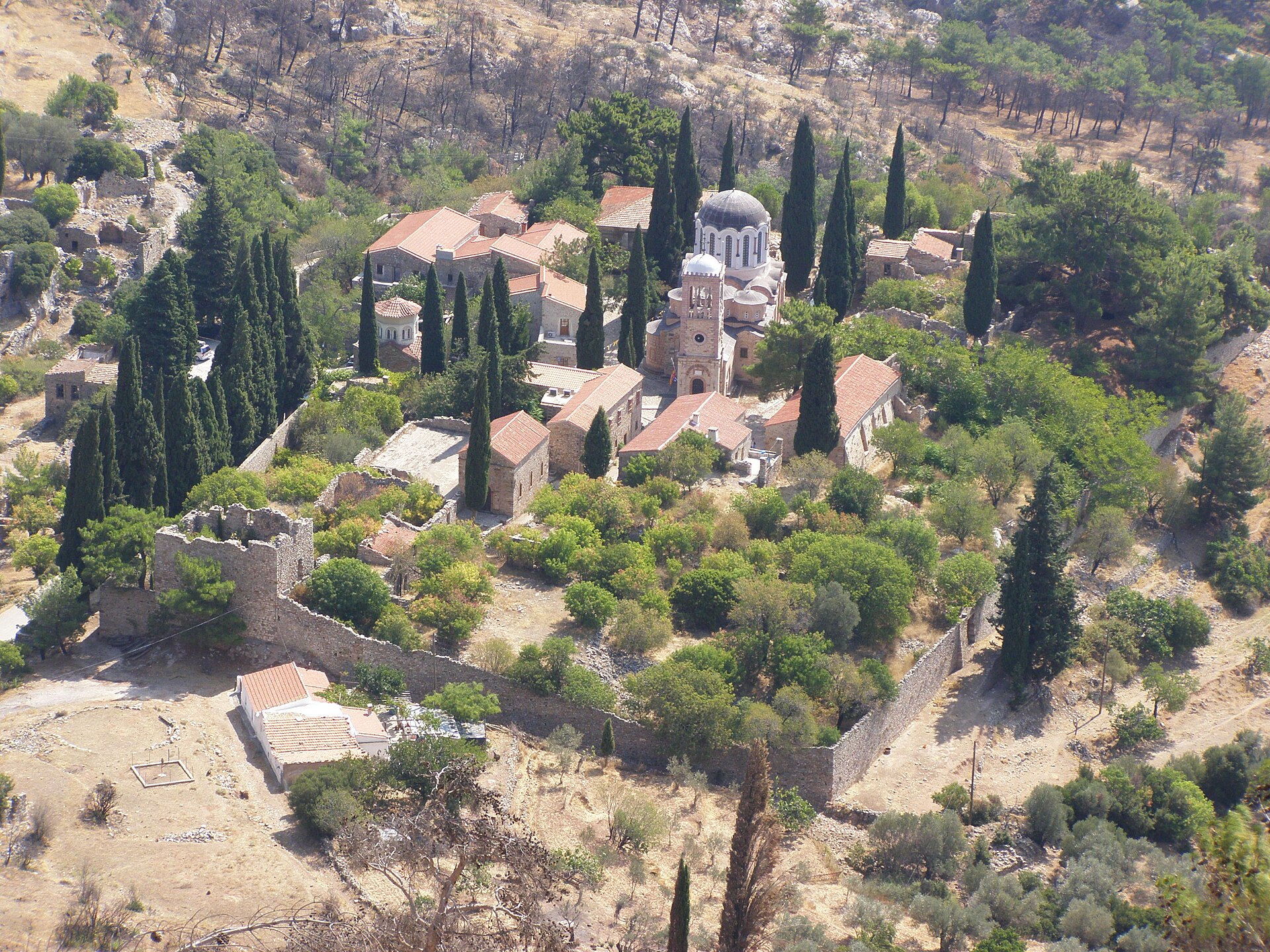
The monastery developed in the middle of the eleventh century with the support of Emperor Constantine IX Monomachos and the imperial family. Its architecture and decoration connect Chios to the culture of Constantinople, while its island setting gave that patronage a local institutional presence. The foundation’s importance is recognized through its inclusion with Daphni and Hosios Loukas in a serial UNESCO World Heritage property.
The katholikon and its space
The main church, or katholikon, is an example of the octagonal insular type. Its central space is organized around the transition to the dome, creating a different spatial experience from a simple longitudinal hall. Move slowly through the entrance spaces into the church and notice how architecture directs the eye upward and inward. Not everything visible is untouched eleventh-century work: loss and rebuilding form part of the building’s present appearance.
Looking at the mosaics
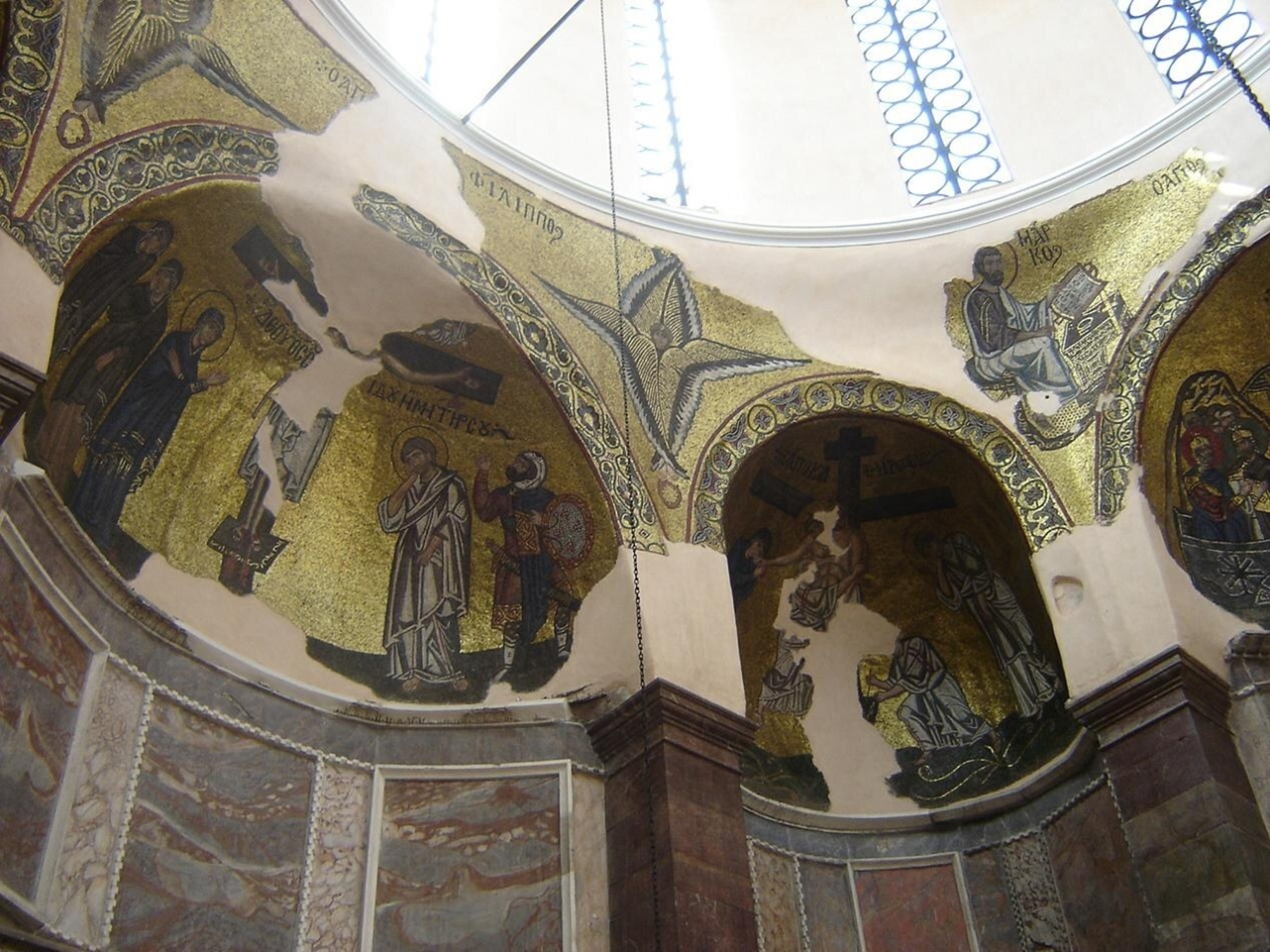
The surviving mosaics use gold grounds, strong gestures and expressive faces to give sacred figures and narrative scenes an immediate presence. Their value lies not simply in rich materials but in the relationship between image, light and the changing surfaces of the church. The ensemble is a major witness to Middle Byzantine art; missing portions and later interventions should be understood alongside what survives. Allow time for close looking within the limits set by worship and conservation.
Beyond the main church
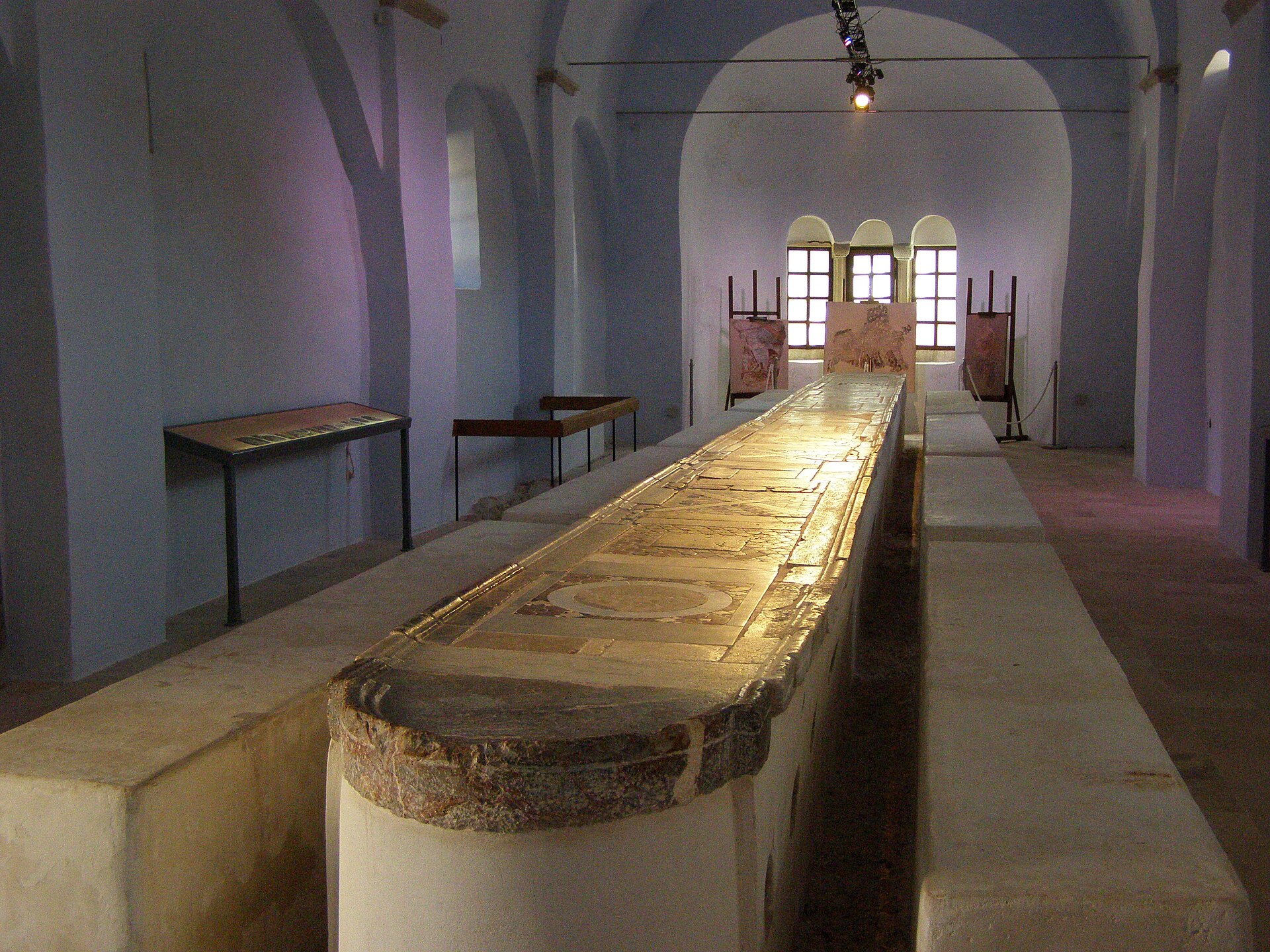
The enclosure contains the remains and buildings of a working monastic community. The refectory, with its long table, gives communal meals a tangible setting, while storage and water infrastructure recall the daily work behind the church’s ceremonial life. The monastery’s collection and smaller chapels add other scales of religious experience. Openings of these spaces may differ; the grounds, church and collection should not be assumed to share one unrestricted visiting arrangement.
Destruction, memory and restoration
The catastrophe of 1822 and the earthquake of 1881 deeply affected the monastery. Memorial spaces preserve the memory of those who sought refuge here, while repairs changed parts of the church and surrounding buildings. The place therefore holds both an exceptional artistic achievement and a history of damage and recovery. Looking only for a pristine medieval interior would miss that continuity.
Visiting from Chios — November 2026
Nea Moni is an inland visit, often combined with Avgonima and Anavatos. Check current church and collection access separately and allow a quiet visit rather than a rapid stop for photographs. Respect the religious character of the site, any dress guidance and restrictions on photography or close approach to decoration. The wider Chios guide supplies the island’s historical setting; this monastery deserves time for its own architecture, art and landscape.
Images