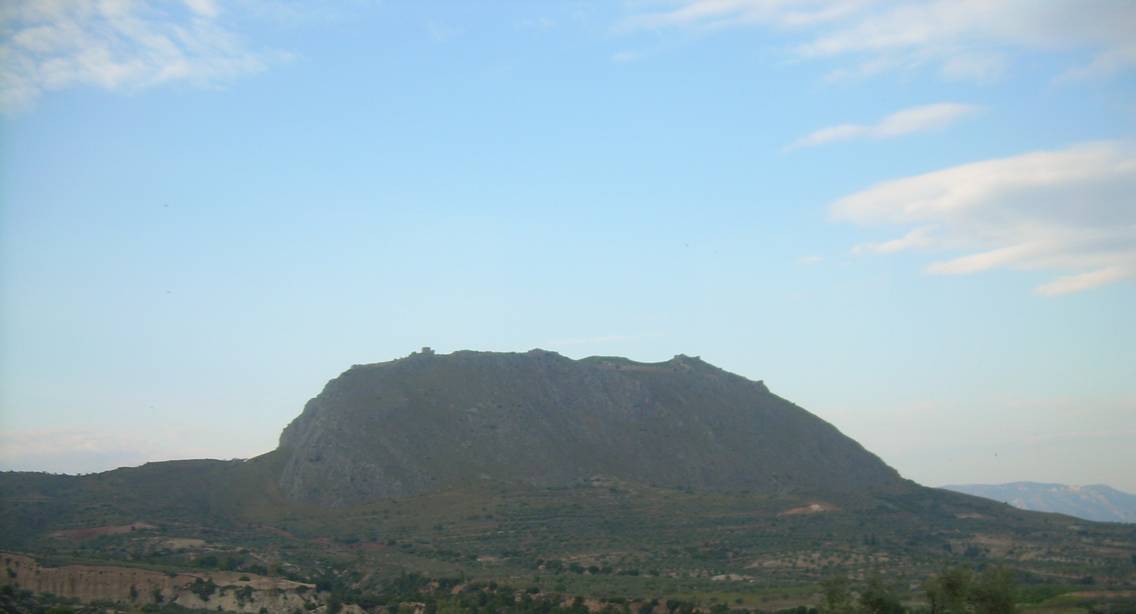
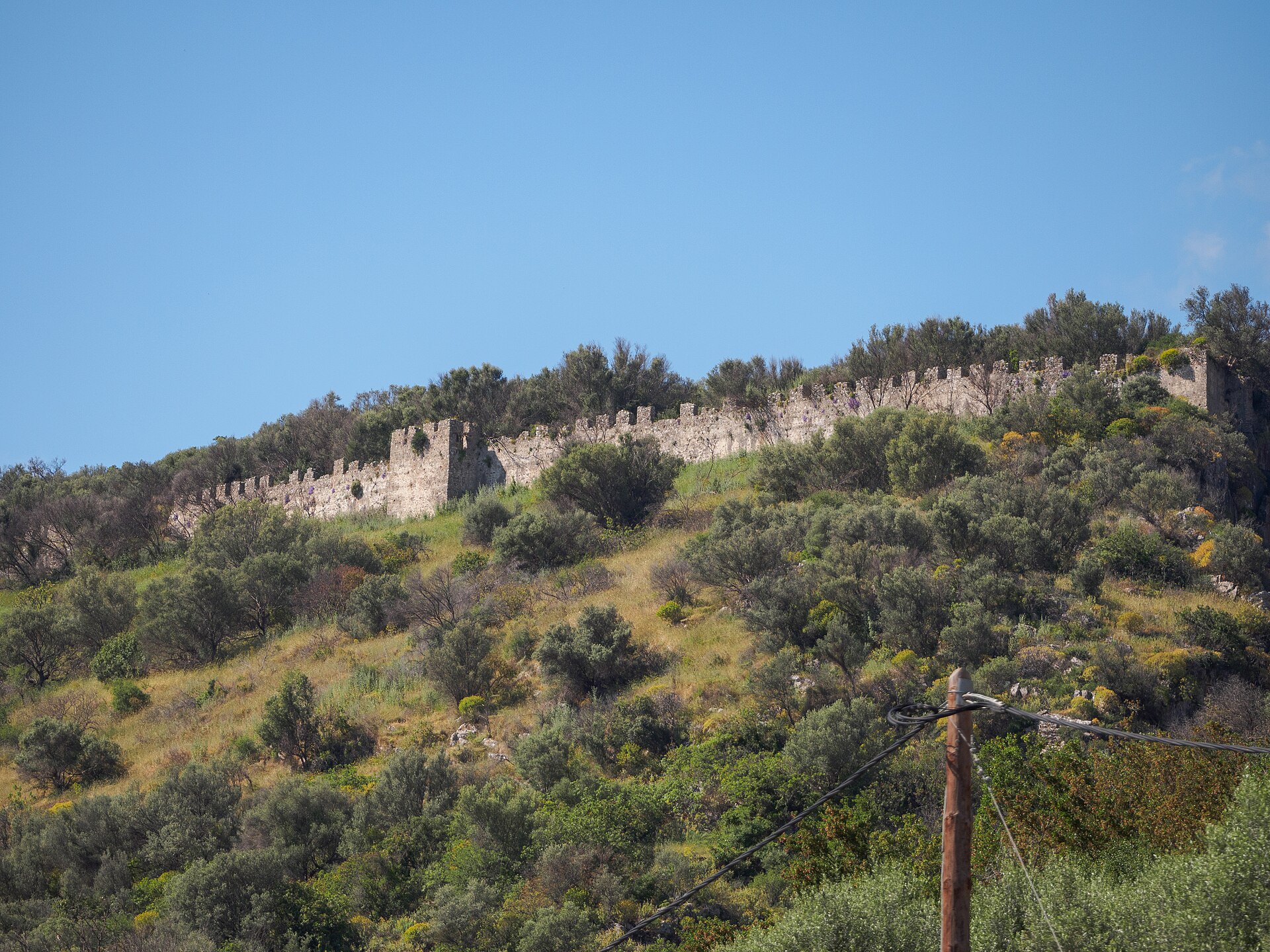
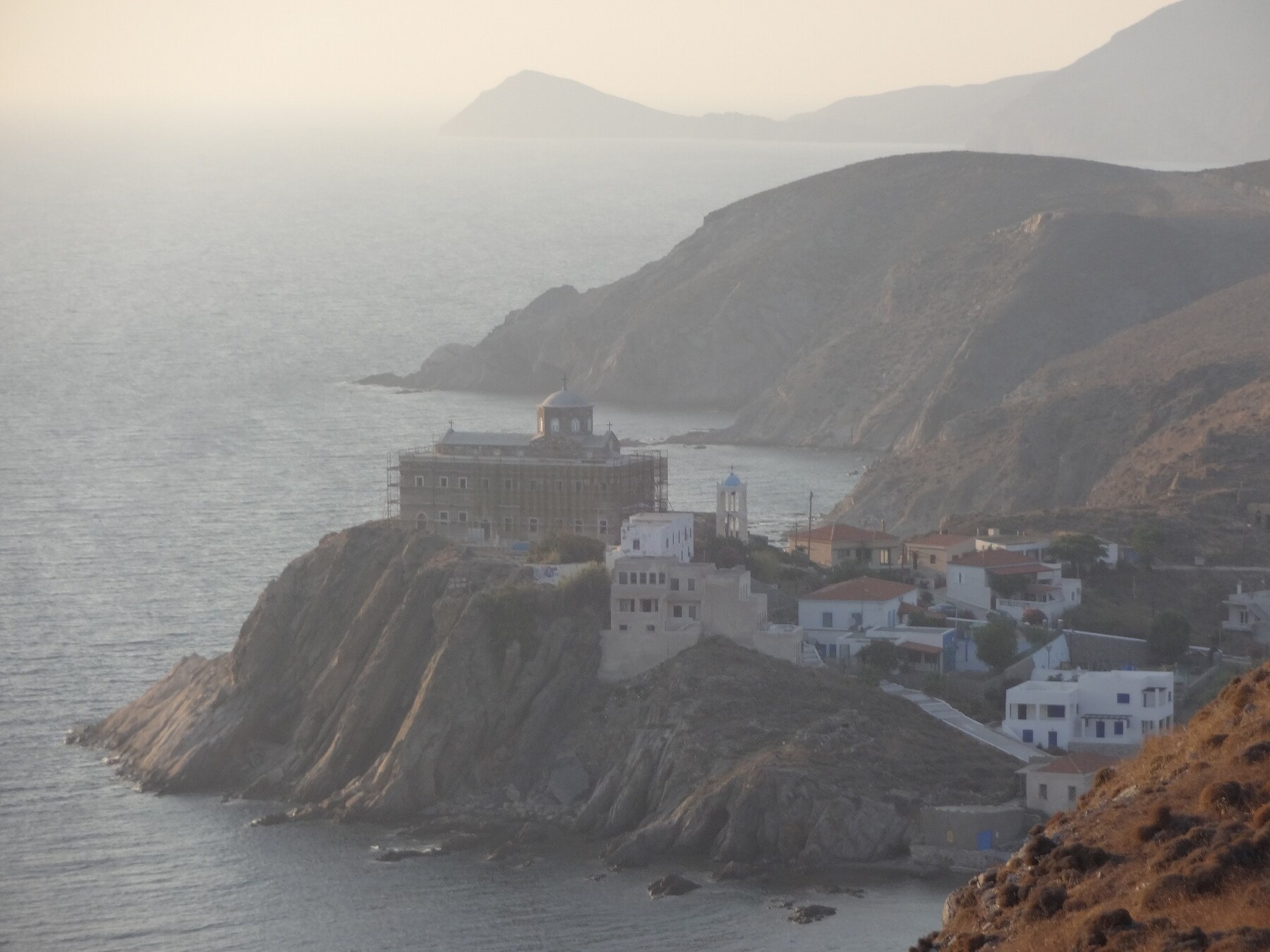
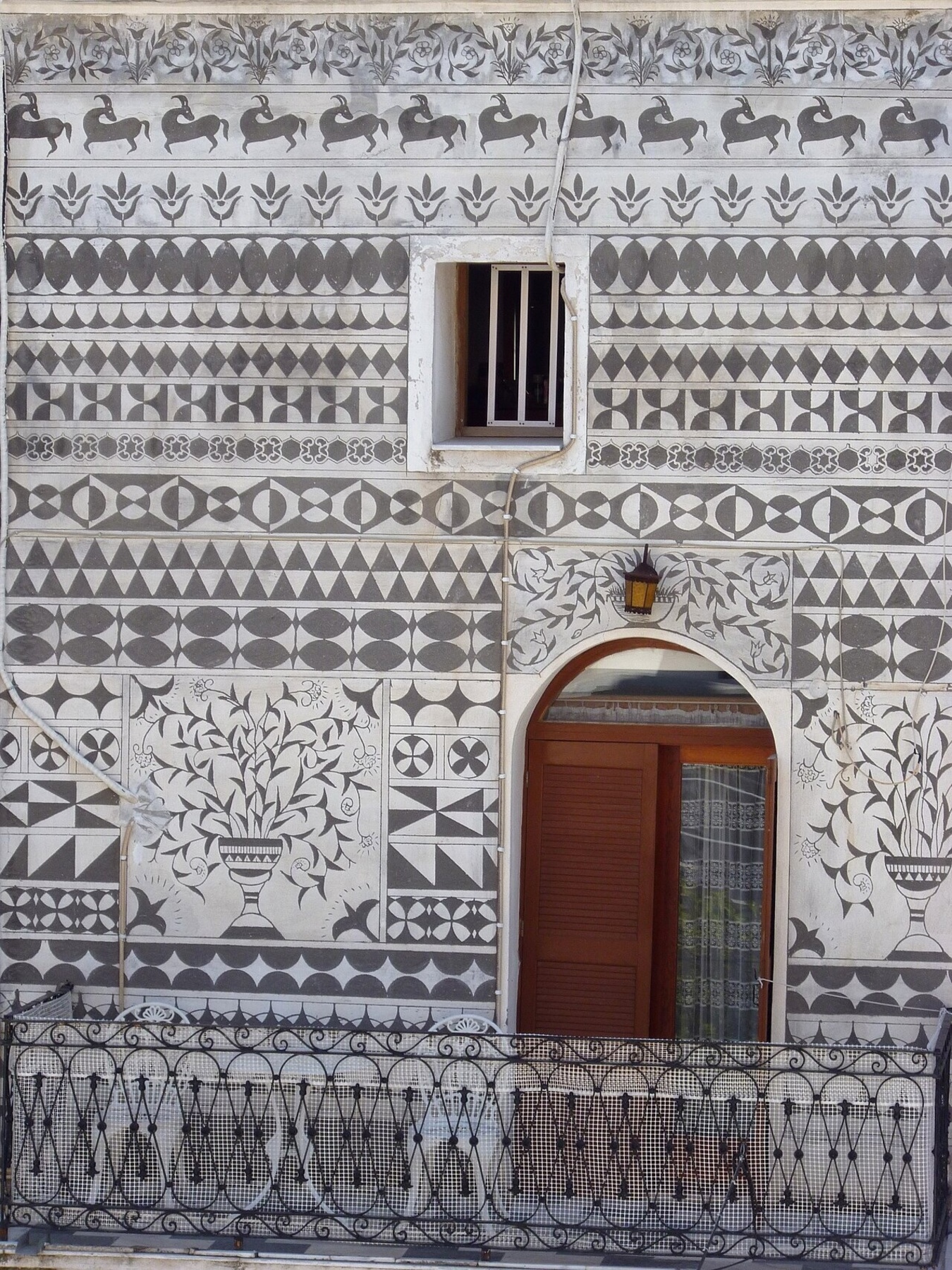
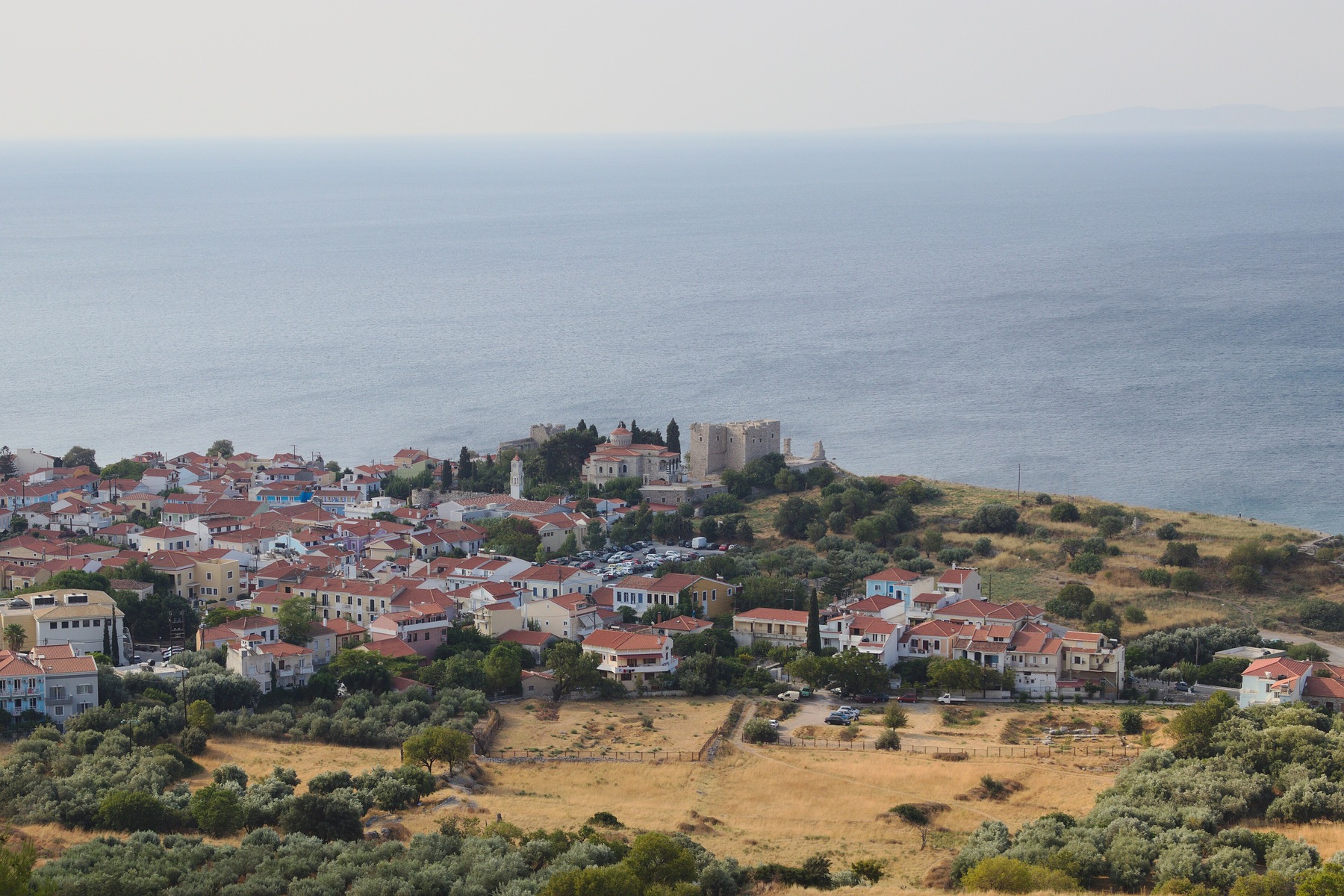
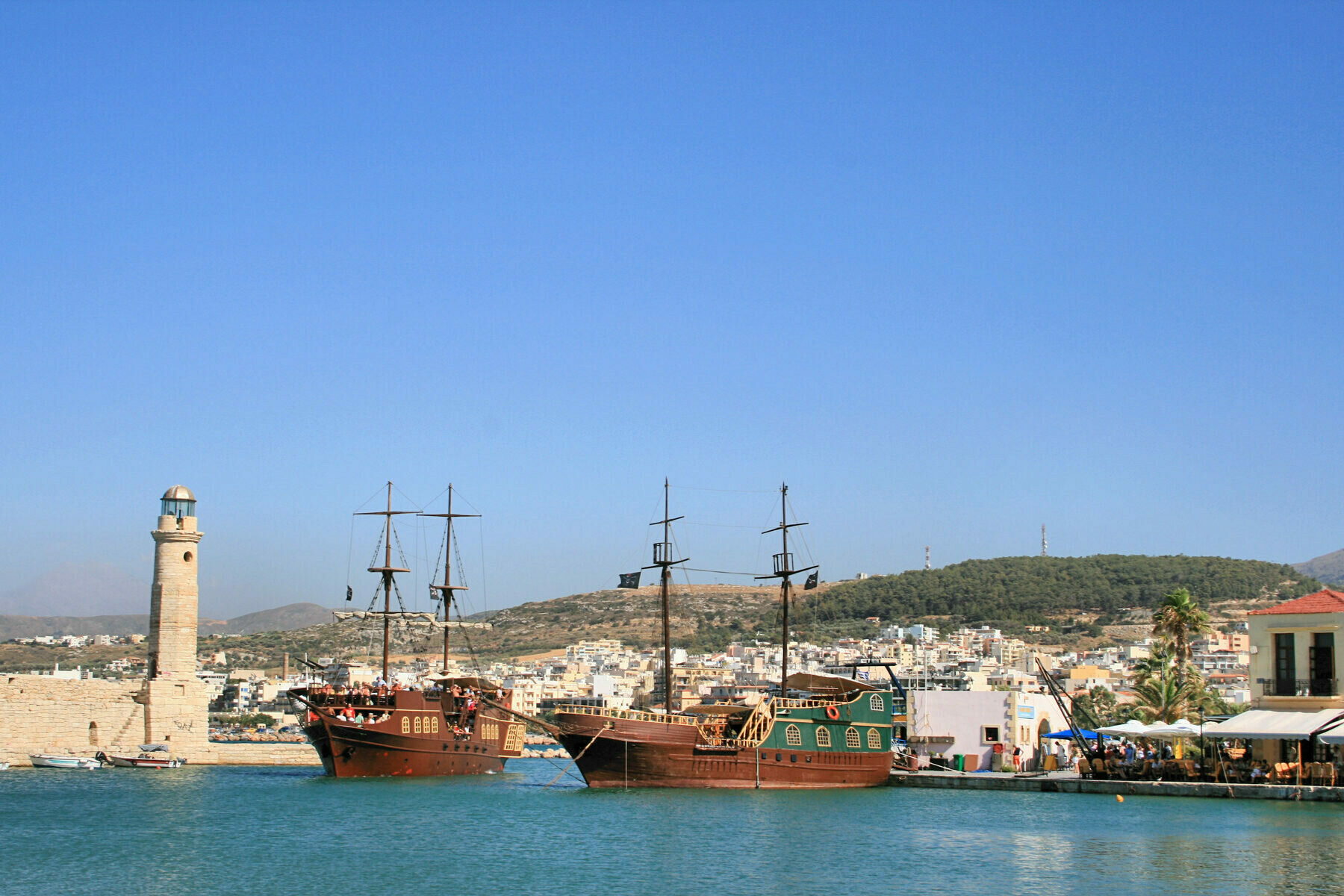
Acrocorinth is the mountain stronghold above ancient Corinth: a defensible height with its own springs, gates and long-lived settlement, not simply a lookout over the city below. From its walls, garrisons could watch approaches across the Isthmus between the Corinthian and Saronic gulfs. The place endured because its terrain was difficult to attack and its water made a prolonged stay possible. The ruins record several lives of the mountain: a sanctuary above the ancient city, a Byzantine citadel, a Frankish frontier stronghold, and an Ottoman and Venetian town whose people lived among the defenses.
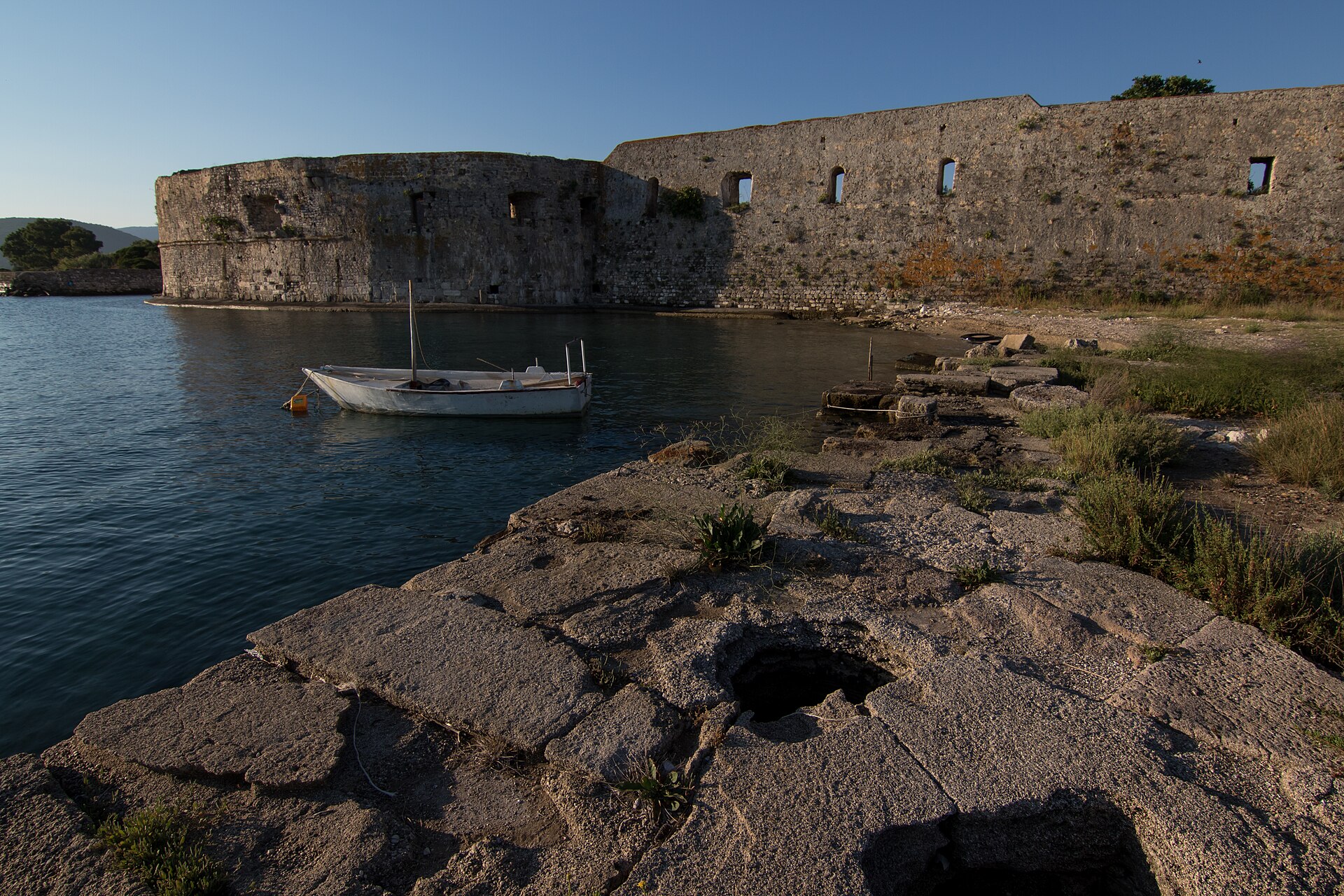
Agia Mavra occupies the low coastal crossing at the entrance to Lefkada. Its broad enclosure records a transformation from a medieval strongpoint into an inhabited Ottoman fortress and, later, a military complex serving a town that had moved outside its walls. Water, passages and the changing settlement are as important as the bastions. The surviving shape is principally the outcome of Ottoman and Venetian adaptation, rather than an intact castle left by its first Frankish lord.
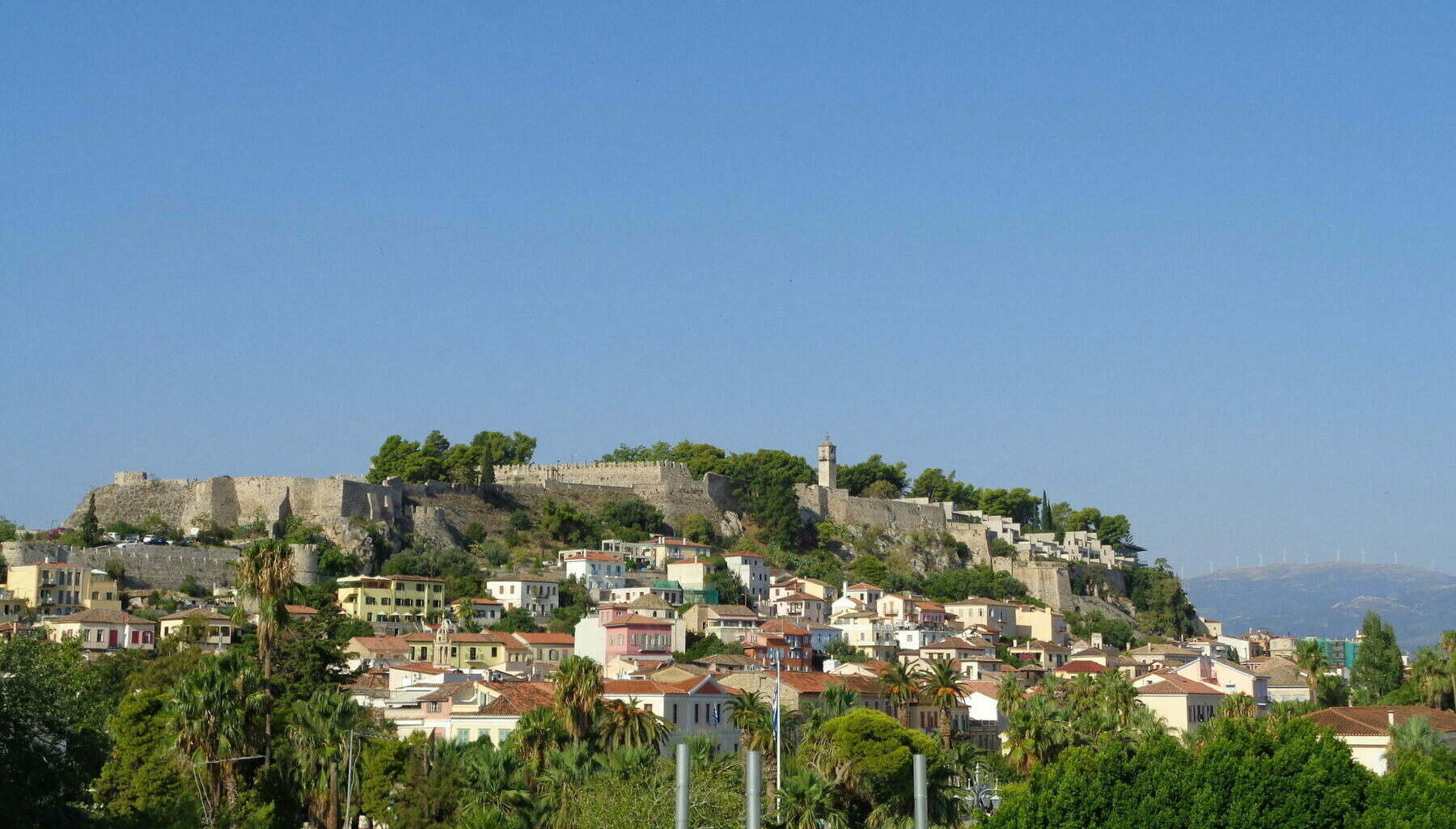
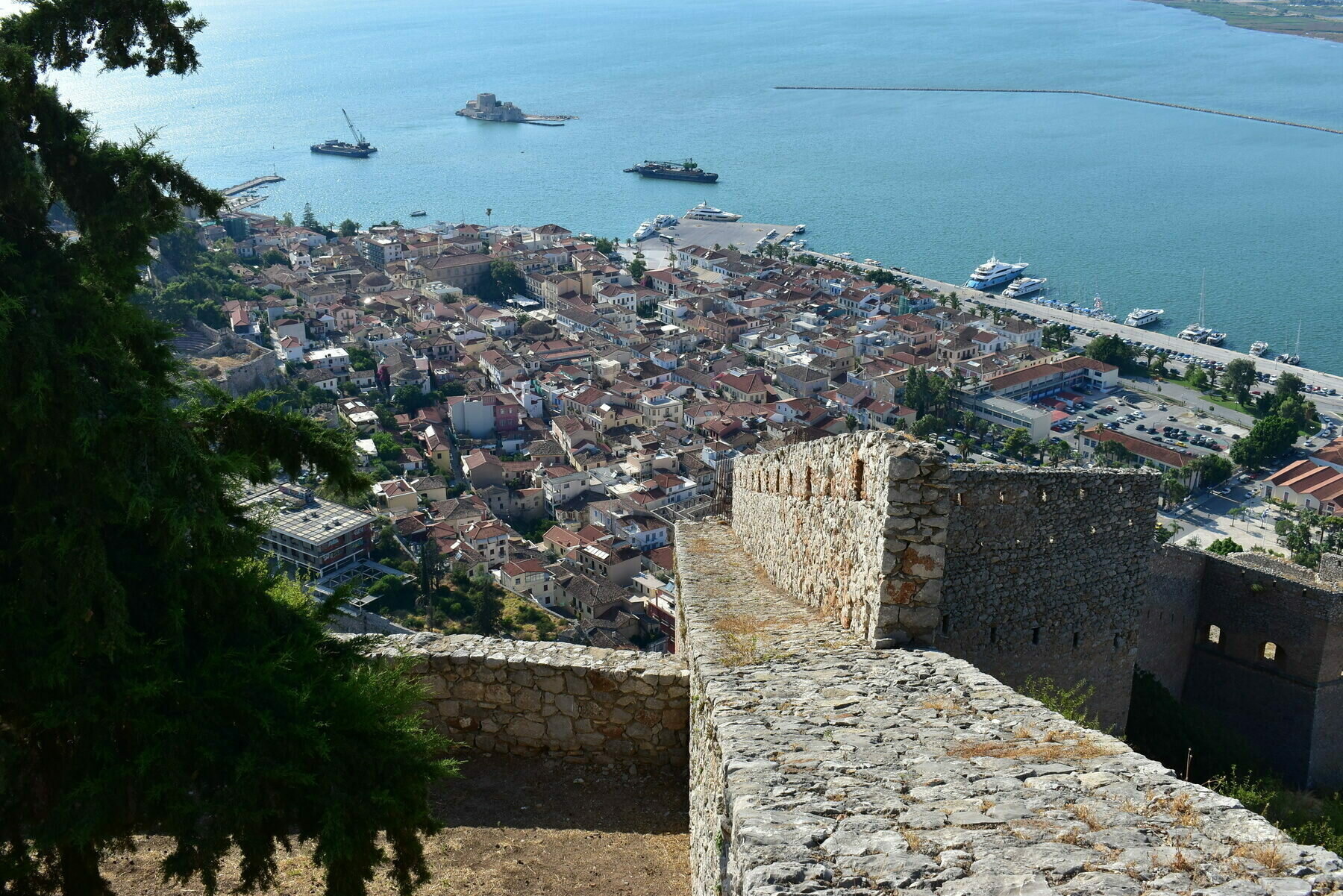
Akronafplia is the rocky peninsula rising directly above Nafplio’s old town. Long before Palamidi became the city’s dominant fortress, this height enclosed its settlement and guarded the harbor. Ancient masonry, medieval divisions, Venetian artillery works and later military remains survive among major modern alterations. Exploring it reveals how Nafplio changed from an elevated fortified town into a lower port city, and how defense, imprisonment and tourism successively reshaped the same ground.
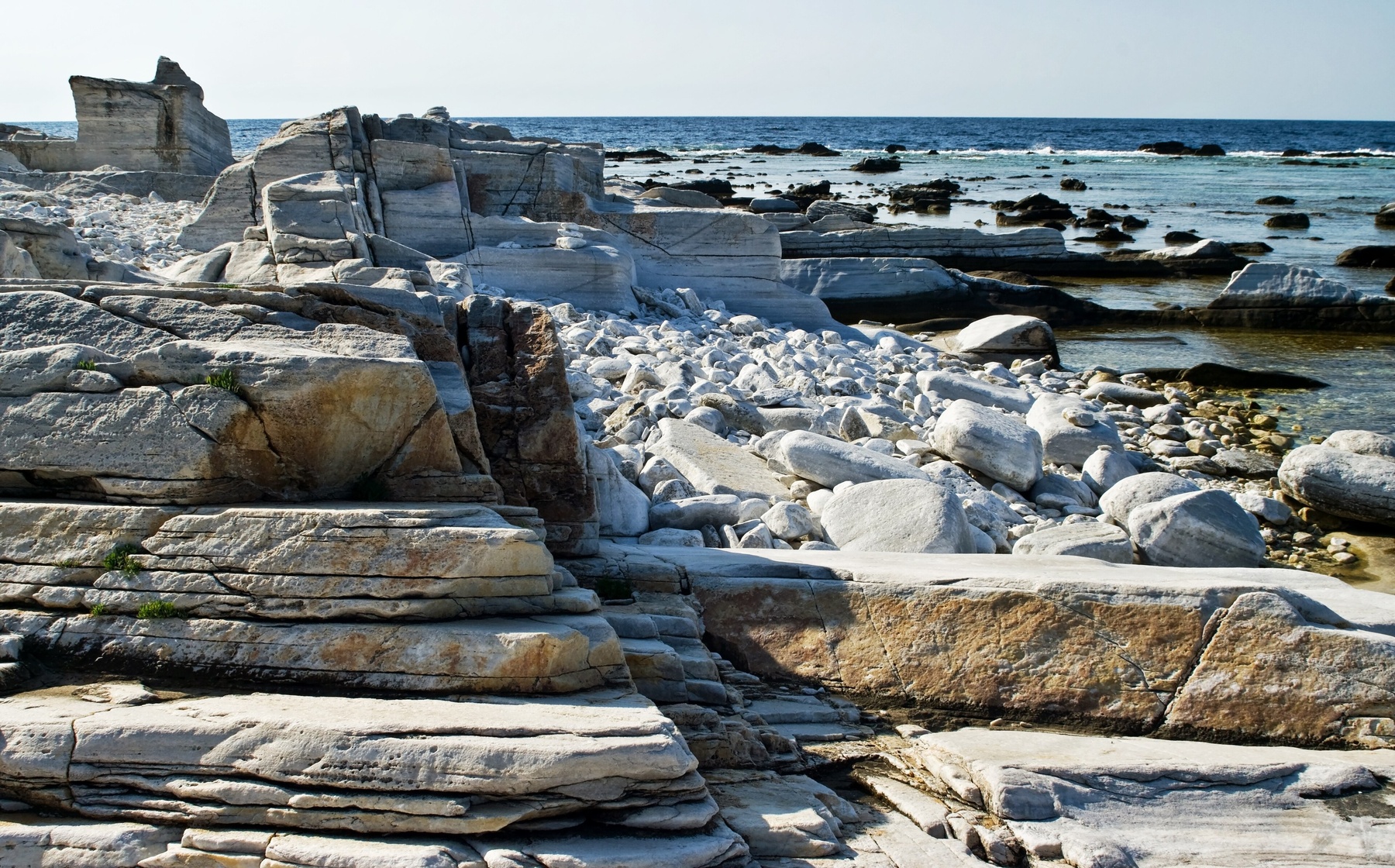
Aliki is one of the most complete ancient quarry landscapes in Greece. On a small peninsula in southeastern Thasos, marble was extracted from the Archaic period through Late Antiquity, while ships loaded stone directly from workings cut to the water's edge. Beside the quarries stood a coastal sanctuary used by sailors and quarry communities, and in Late Antiquity a double basilica transformed the sacred topography again. Quarry faces, unfinished blocks, inscriptions, sanctuaries, basilicas and sheltered coves make Aliki an exceptional place to understand the economic, religious and maritime systems behind Thasos's celebrated marble.
Alonissos adds a third distinctive chapter to the Northern Sporades. Ancient Ikos developed around important Aegean sea routes; in the medieval period the population concentrated in the defensible hilltop Chora, where a small castle or fortified enclosure protected the settlement from raiding. After the destructive earthquakes of 1965, many inhabitants moved to Patitiri, while the Old Village was gradually restored. Today the island is equally renowned for the National Marine Park of Alonissos Northern Sporades and its Mediterranean monk seals.
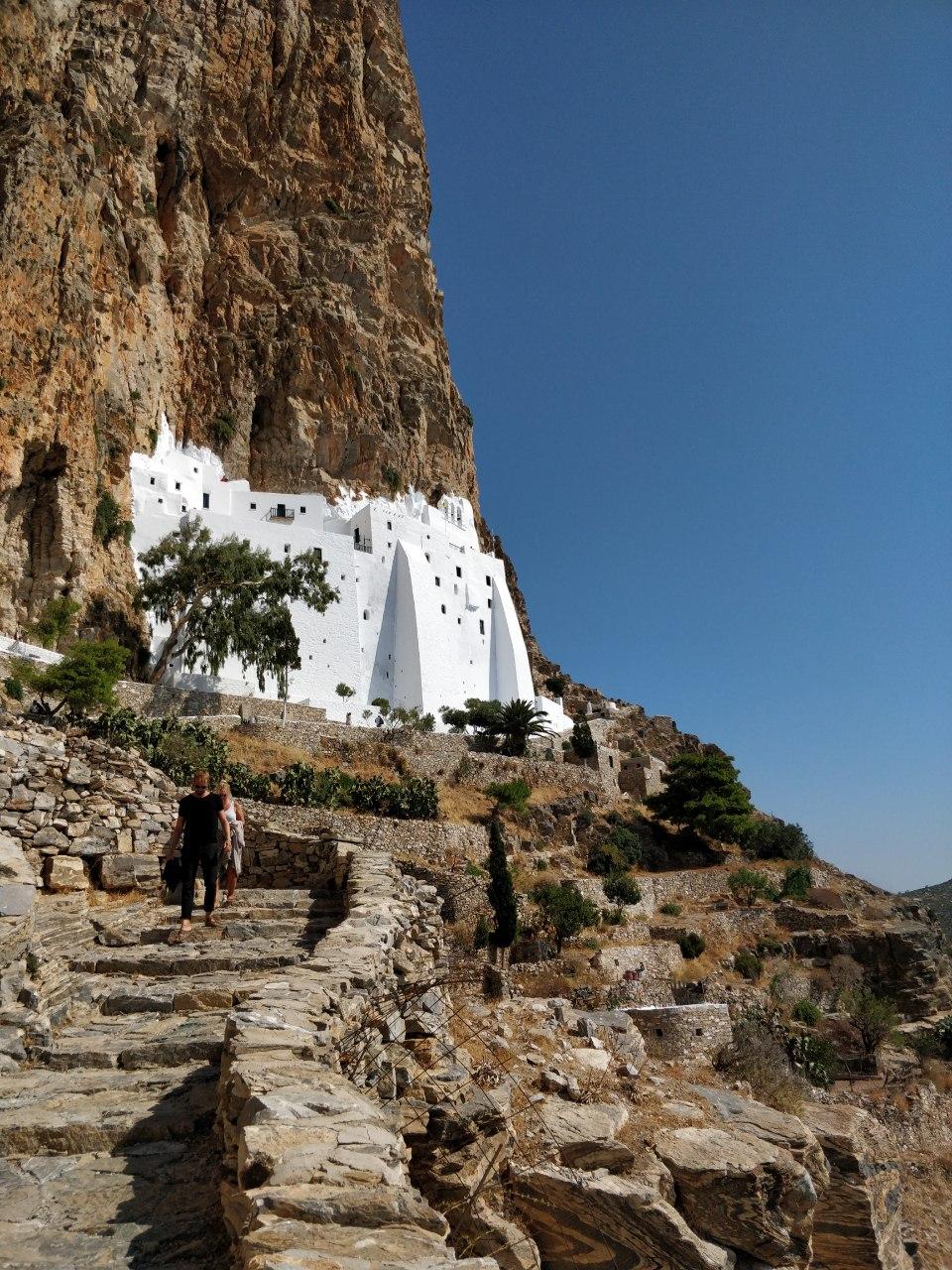
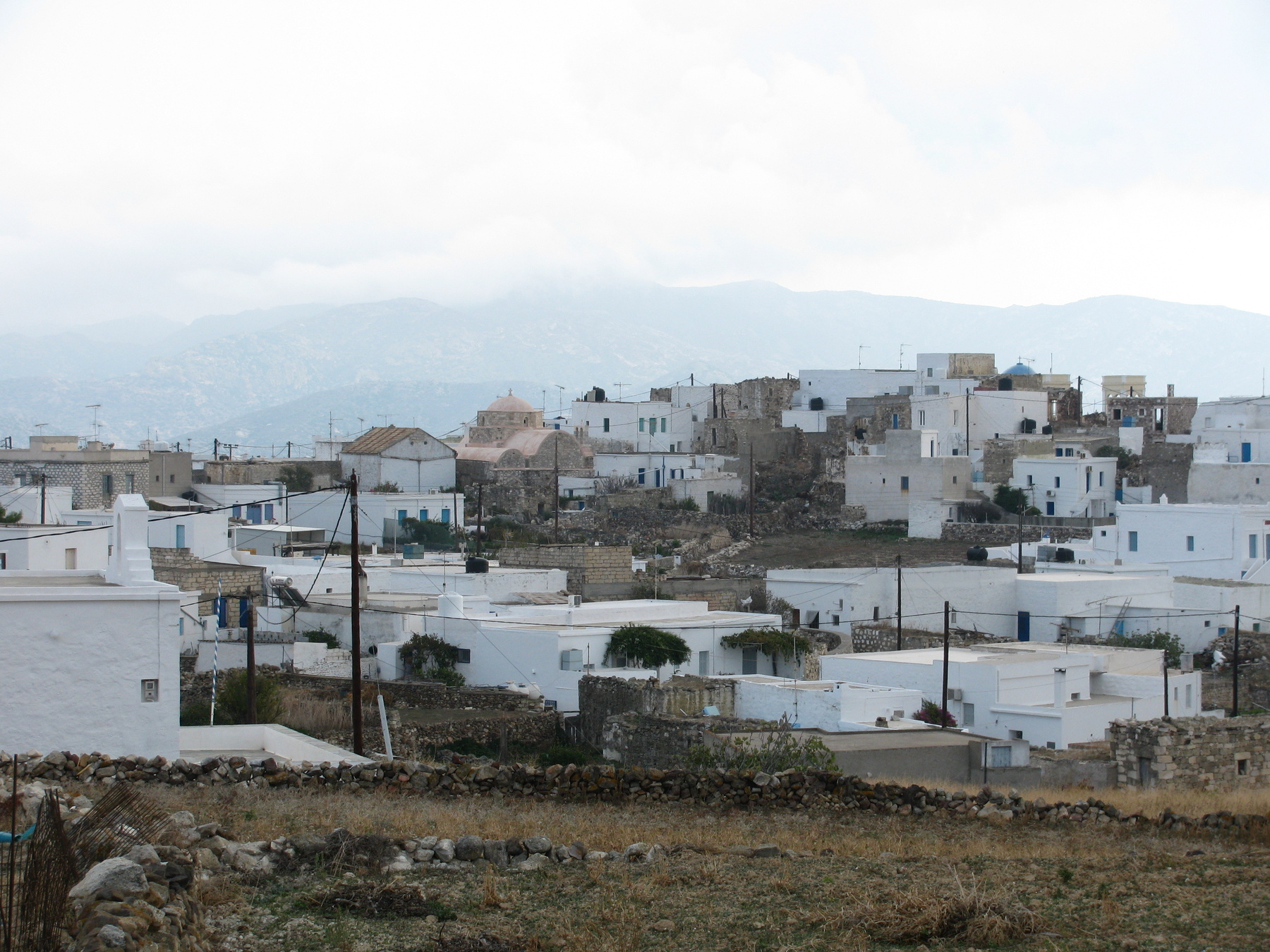
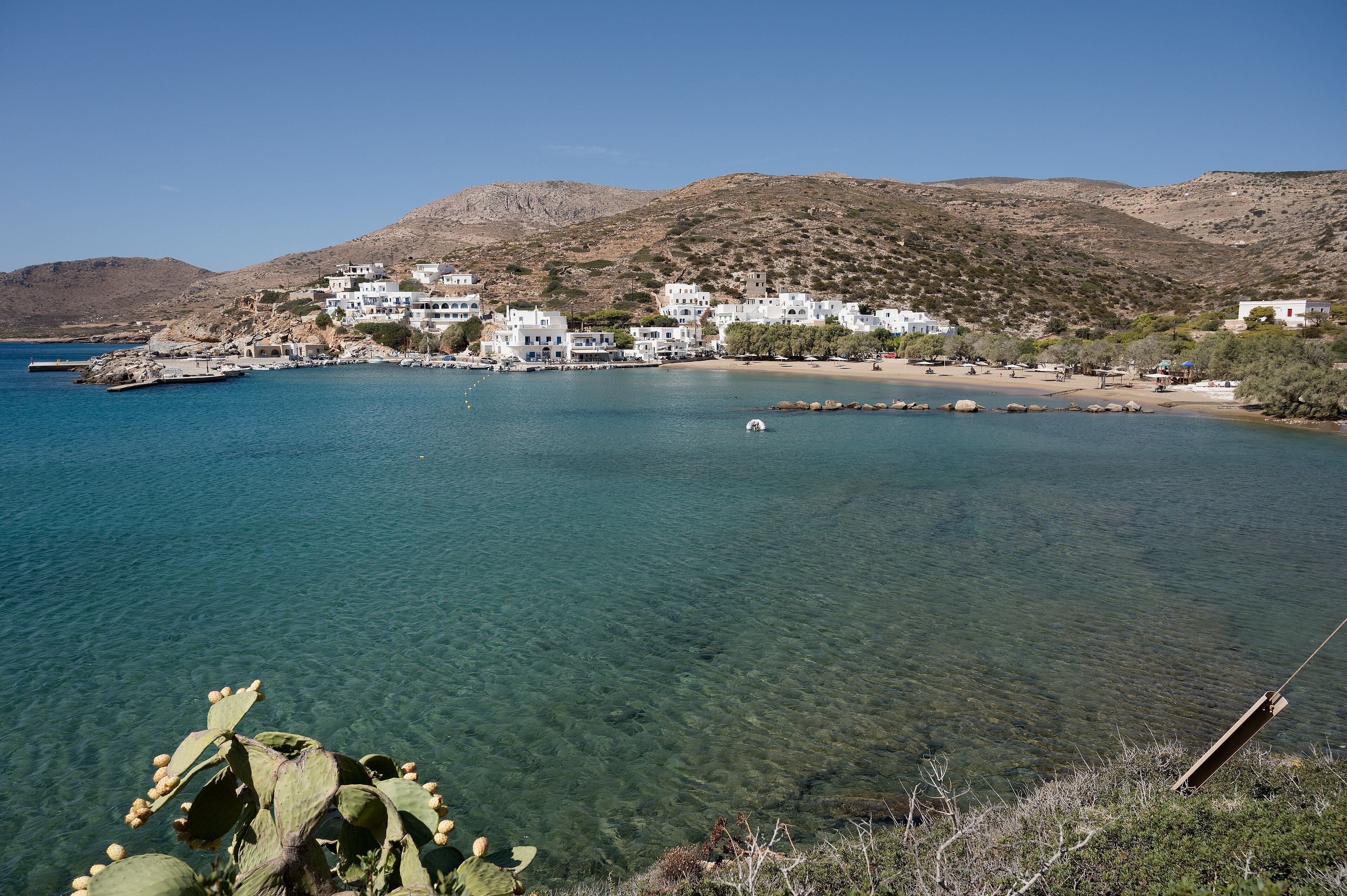
Amorgos is a long, mountainous eastern Cycladic island where Early Cycladic sculpture, the ancient cities of Minoa, Arkesine and Aigiale, a dense network of classical towers, Byzantine Chora, Venetian fortification and the cliff monastery of Hozoviotissa form an unusually continuous cultural landscape. Historic paths, terraces, ports, churches, festivals and a strong maritime identity remain central to life on the island.
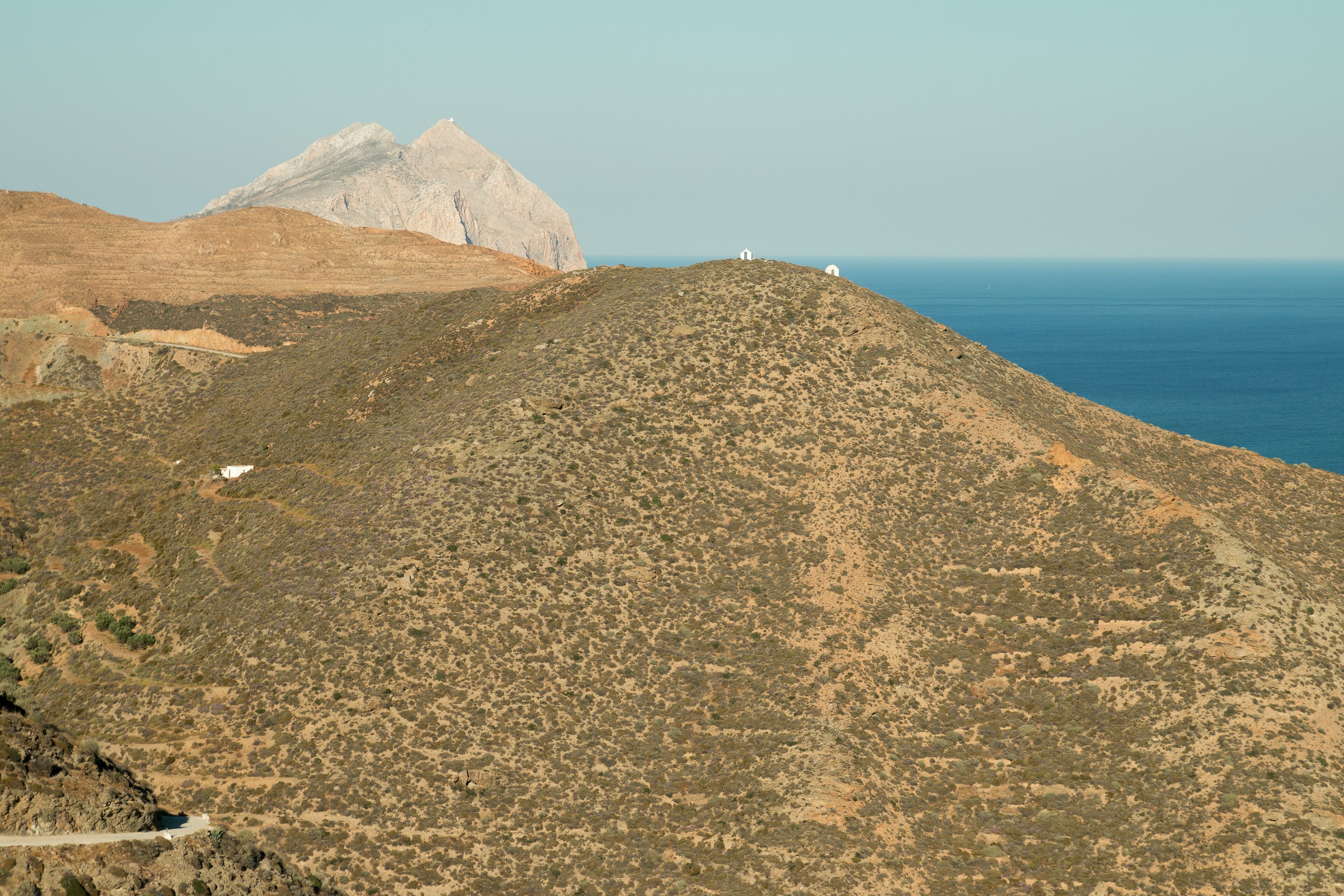
Anafi is a remote southeastern Cycladic island whose history is concentrated in a remarkably legible sequence: ancient Anafe at Kastelli, the sanctuary and sacred road of Apollo Aiglitis, Roman funerary monuments, Venetian Chora and its Kastro, the Kalamos fortress and twin Kalamiotissa monasteries, and a vernacular building tradition that later helped shape Athens' Anafiotika.
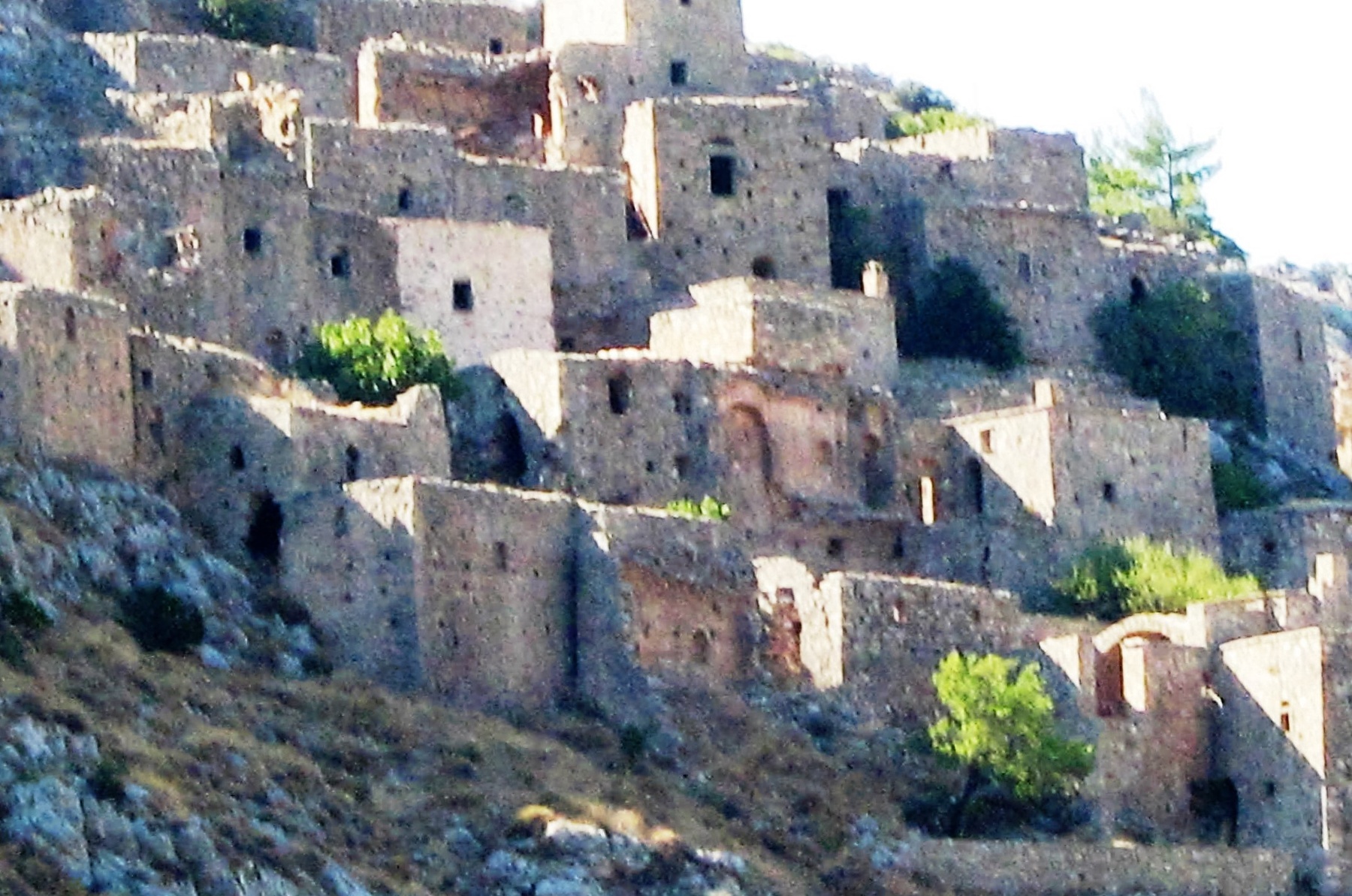
Anavatos is a largely deserted defensible settlement built into a steep rock in central Chios. Its enclosed nucleus, slope-bound Mesochori and post-1881 New Village preserve distinct phases of community life. Dense houses, constrained routes, churches, water storage, work spaces and communal buildings joined protection to everyday needs. The catastrophe of 1822 was a defining rupture, but occupation continued before earthquake damage and gradual depopulation reshaped the village. Conservation now forms part of the history visitors encounter.
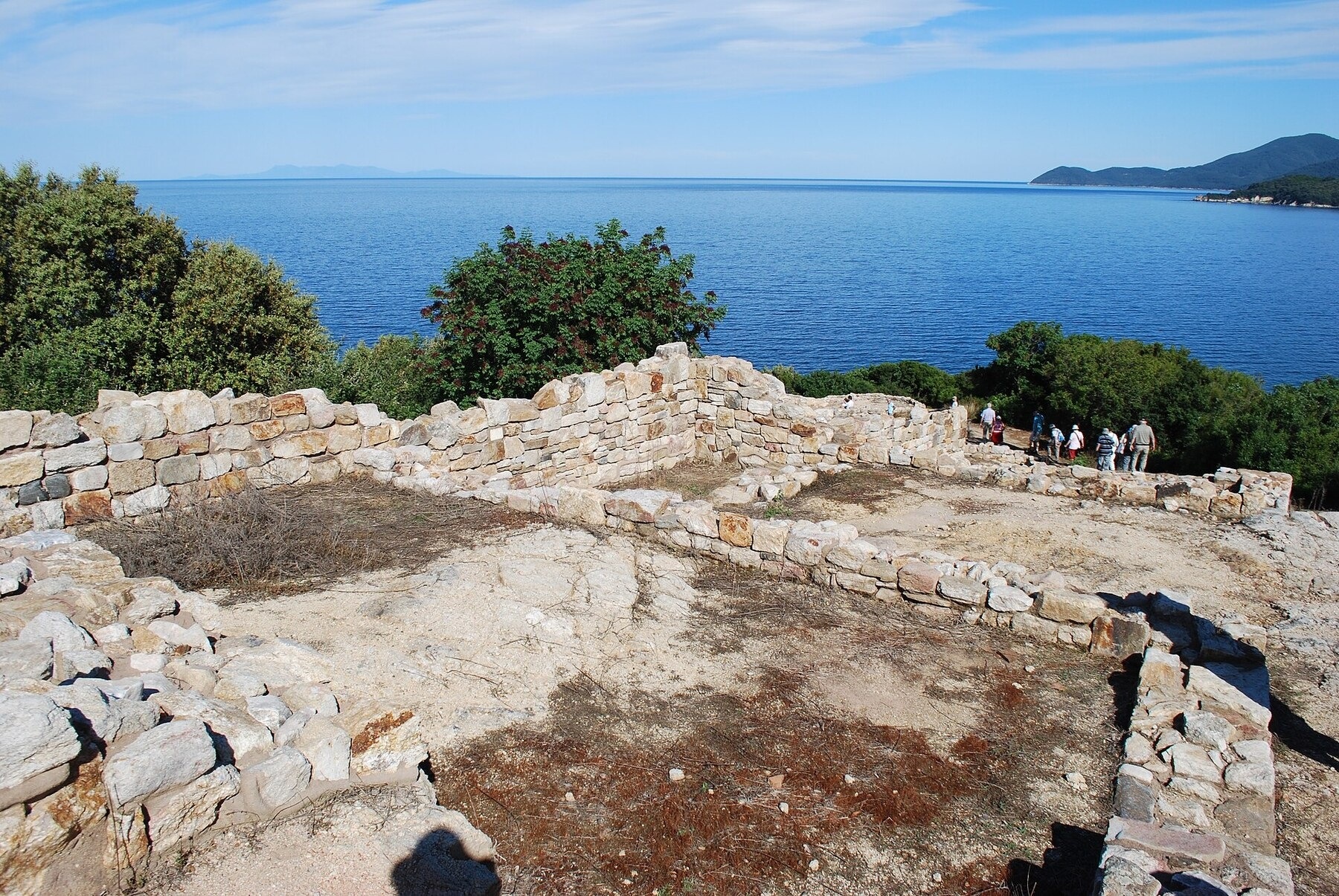
Ancient Stagira occupies two wooded coastal hills beside Olympiada, where walls, gates, streets, houses, public buildings, and sanctuaries preserve the form of an important northern Aegean polis. Founded by colonists from Andros in the seventh century BC, the city moved through the rival spheres of Persia, Athens, Sparta, and Macedon. Its fame rests above all on Aristotle, but the site is equally significant as a remarkably legible fortified city whose defenses and urban plan were repeatedly adapted to changing political and military conditions.
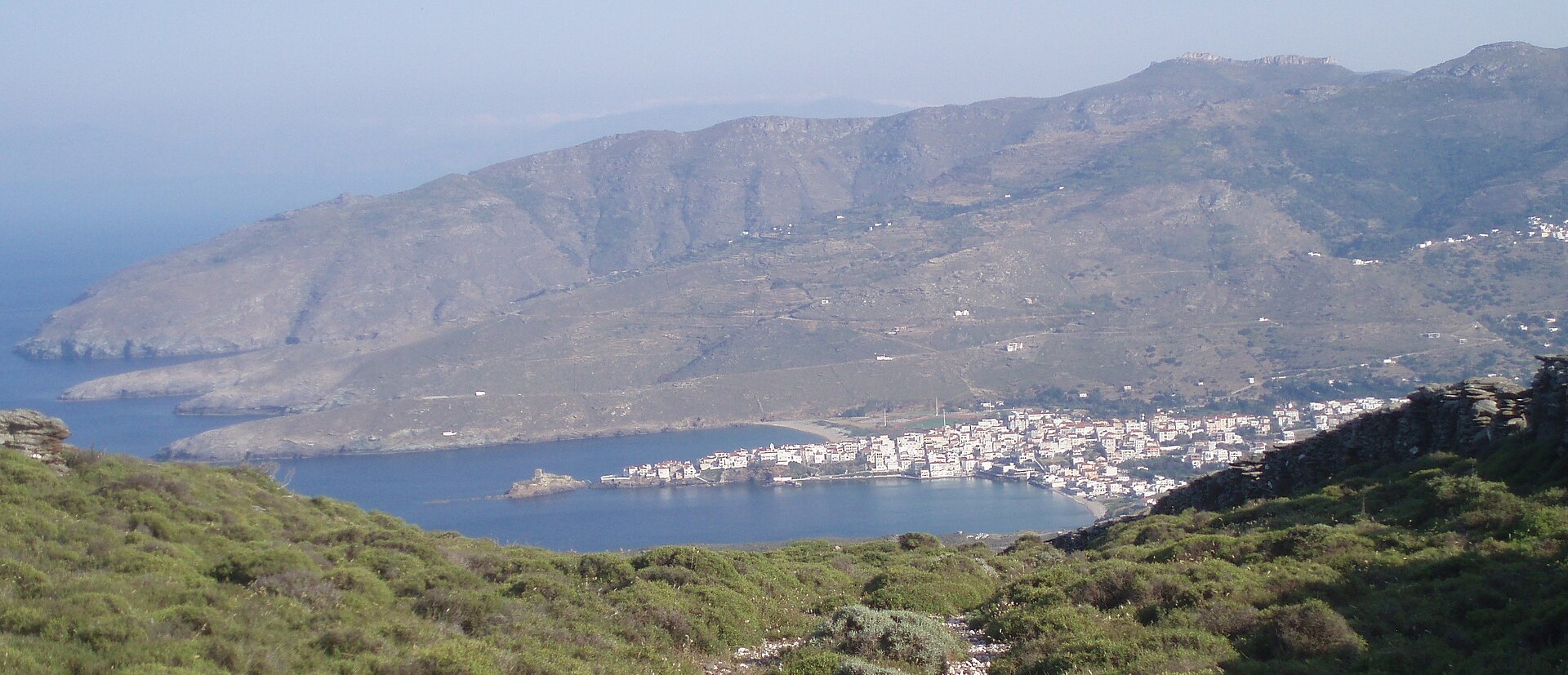
Andros is one of the most historically and environmentally distinctive islands of the Cyclades. The fortified Final Neolithic settlement of Strofilas preserves exceptional rock art; Zagora and Ypsili illuminate Geometric and Archaic urbanism; and Palaiopolis became the island's long-lived Classical and Roman capital. Byzantine prosperity based on silk and shipping left important churches and monastic foundations, while Latin rule produced major fortifications such as Kato and Epano Kastro. In the modern era Andriot shipowners helped shape Greek merchant shipping, financing the neoclassical mansions, museums and cultural institutions of Chora. Abundant springs, rivers, terraces, stone bridges and restored paths give the island a greener and more water-rich cultural landscape than most of the Cyclades.
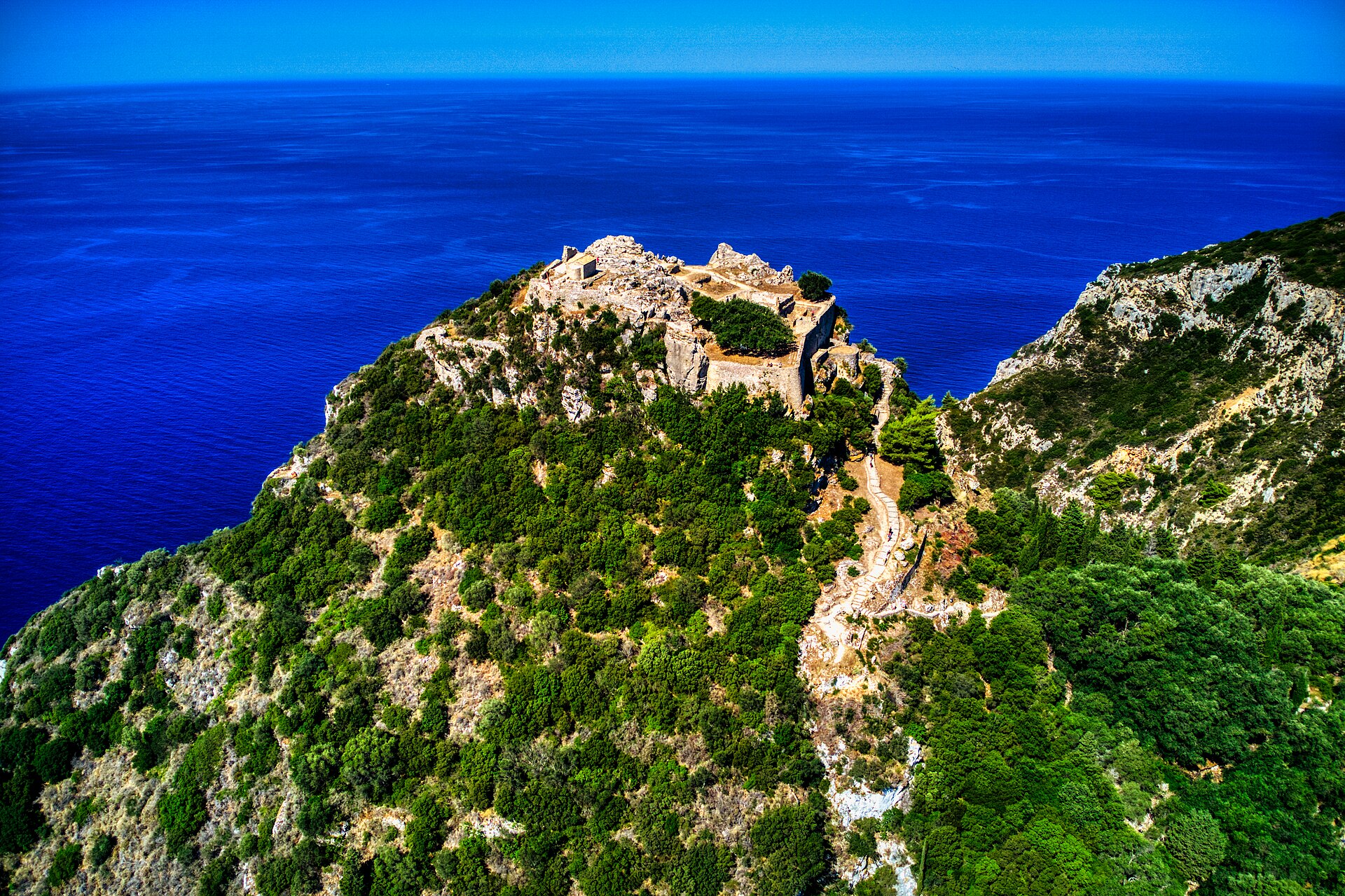
Angelokastro rises above the northwestern coast of Corfu, a compact refuge whose protection depended on steep rock as much as masonry. The approach, gate, cisterns and small religious buildings reveal how a commanding height could sustain defenders and people seeking shelter. Its origins remain debated, but its place in the island’s medieval and Venetian defensive landscape is clear. It offers a useful contrast with the much larger artillery fortresses of Corfu town.
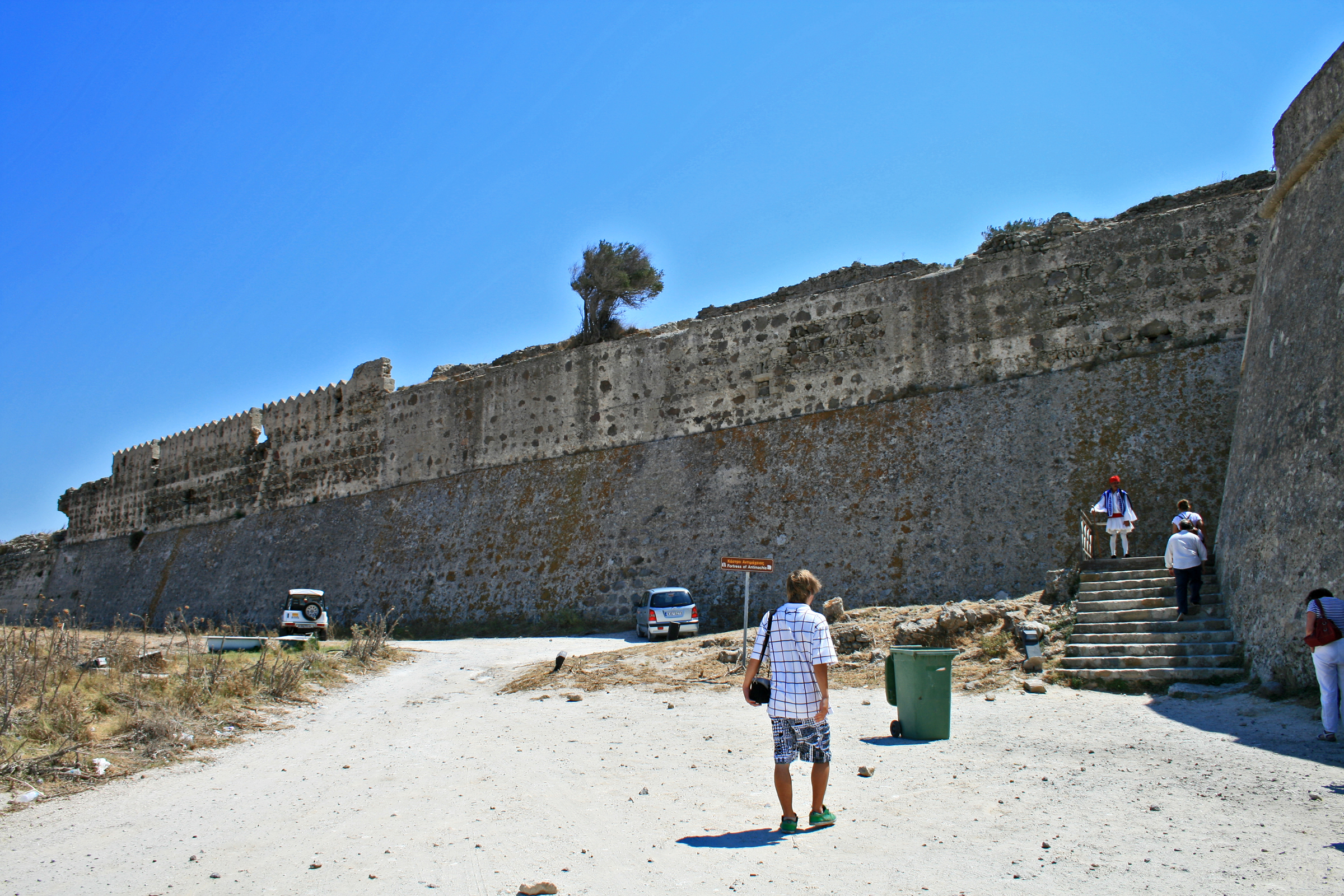
Antimachia is a historic inland village of central Kos whose landscape joins one of the island's principal Hospitaller refuge castles with a surviving rural culture of houses, churches, agriculture and windmills. The castle's plateau position and successful resistance during the Ottoman attack of 1457 explain its strategic importance, while the village's folklore house and working windmill carry the story from medieval defense into everyday Koan life.
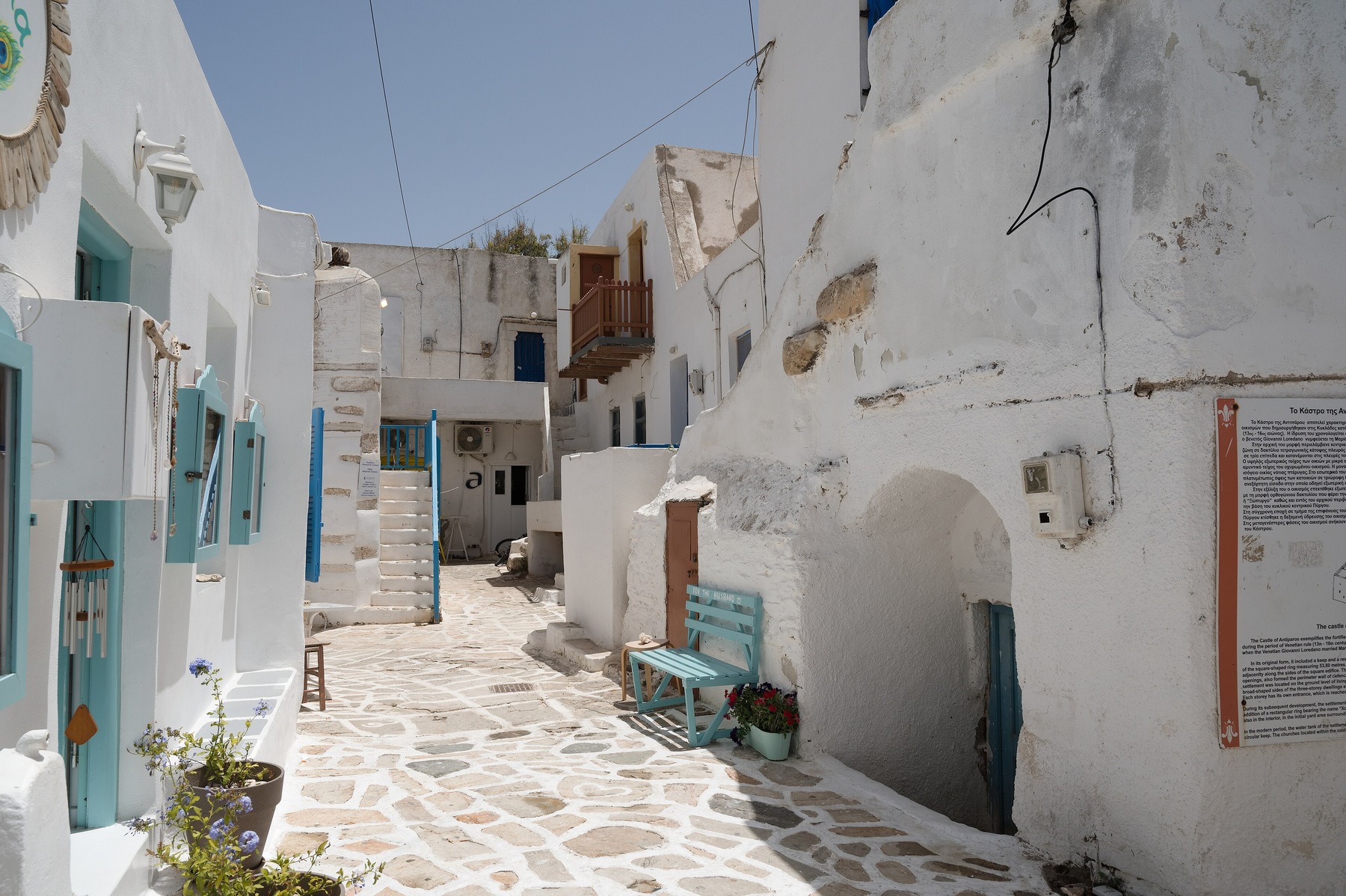
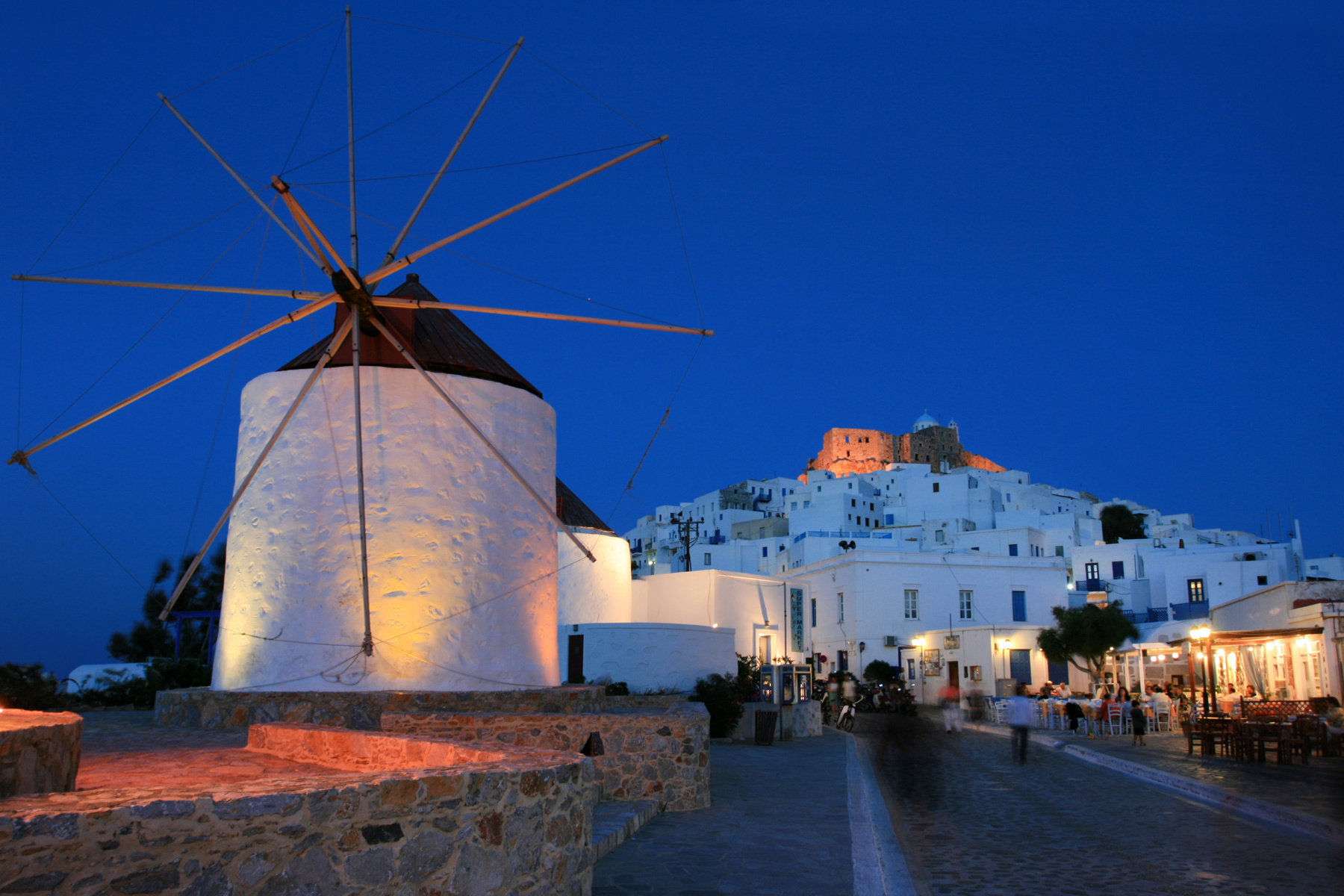
Antiparos brings together an inhabited medieval Kastro, a landscape of small farms and coastal settlements, a celebrated cave, and nearby islands with much older stories. At Saliagos, a Neolithic community worked stone and fished the surrounding waters; on Despotiko, a sanctuary linked the region to the wider Greek world. In Chora, homes formed a defensive perimeter around the Kastro, whose later growth remains visible within the living village.
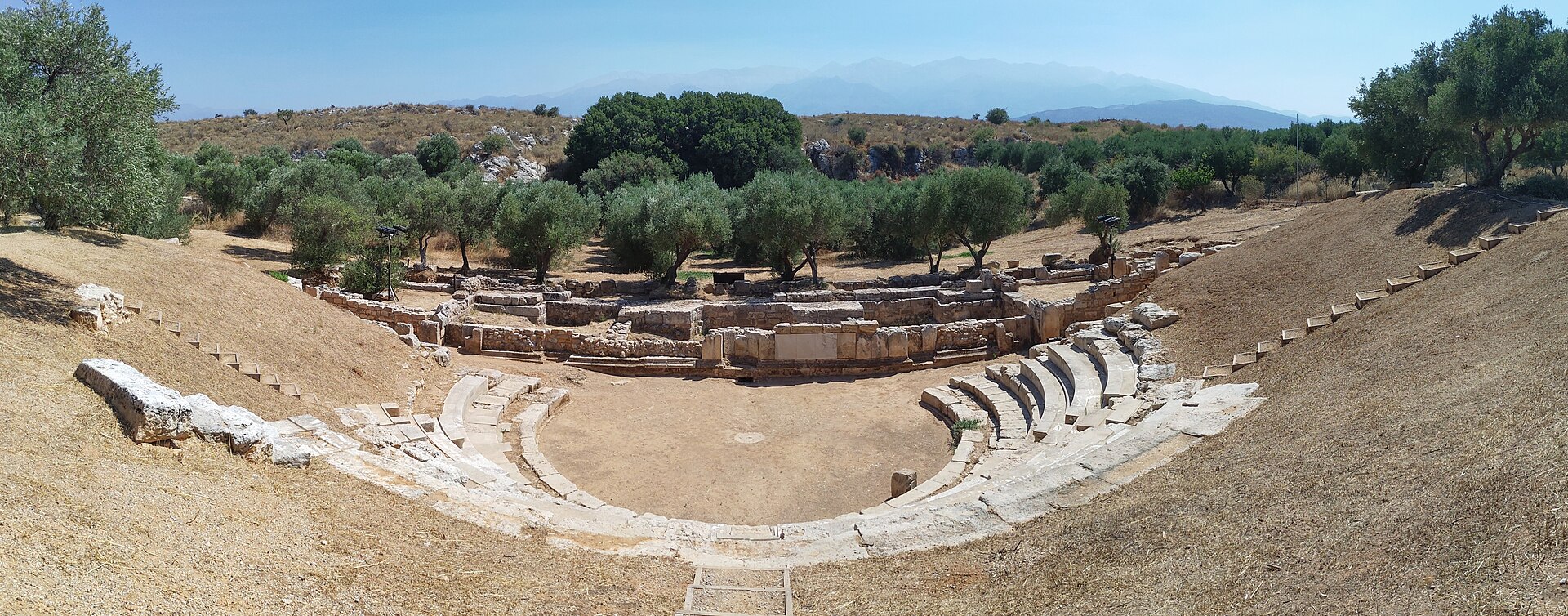
Aptera occupies a broad plateau above Souda Bay, where an ancient city’s walls, theatre, houses and monumental waterworks explain more than military advantage alone. Its prosperity depended on maintaining an urban community above the coast. Later monastic use changed the same ground, while nearby Ottoman defenses gave the bay-facing position another purpose. Reading these layers separately reveals how civic life, water management and strategic geography repeatedly met at this commanding site.
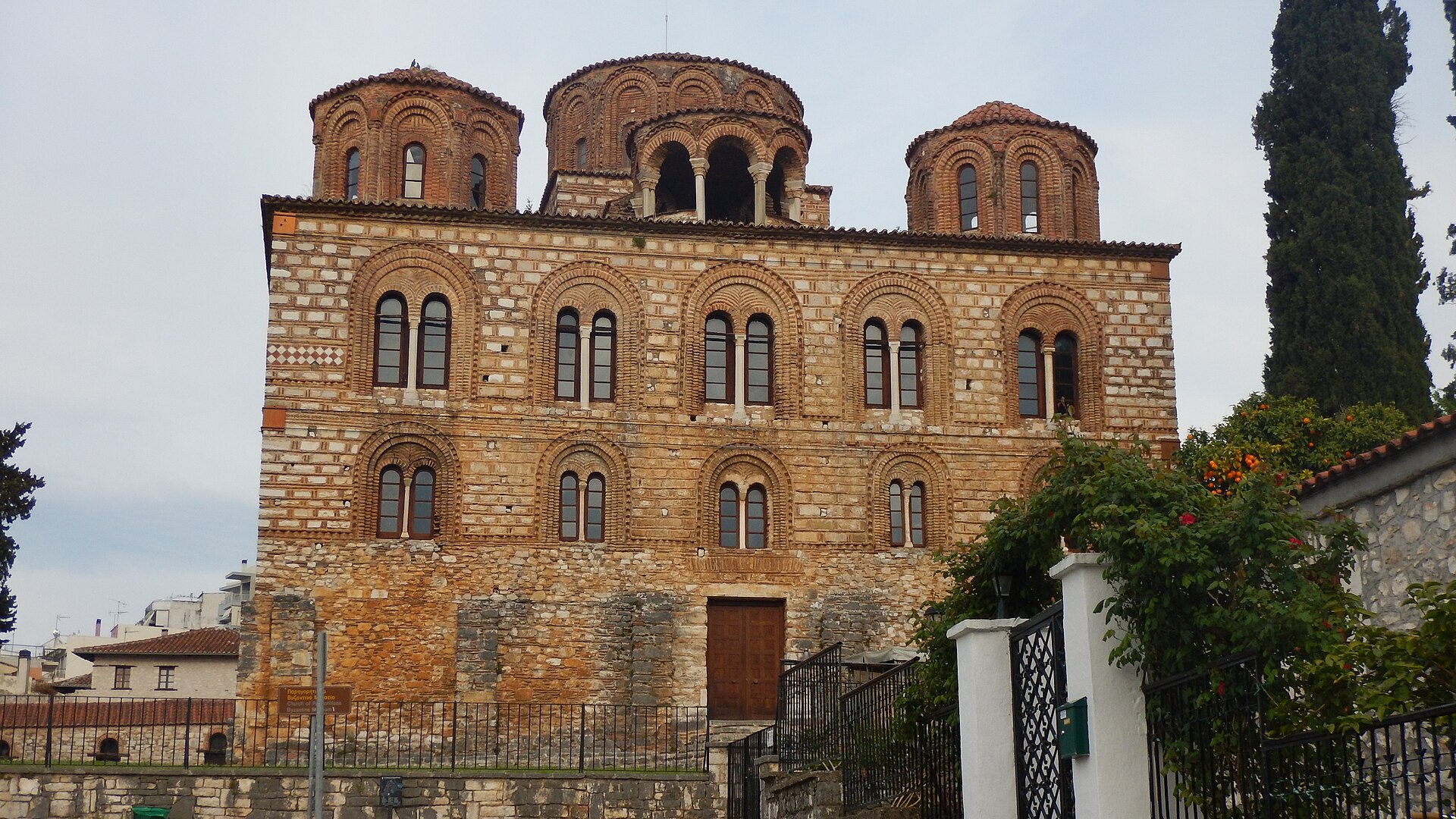
Arta brings the ancient city of Ambracia, a medieval Epirote capital and a living river town into the same urban landscape. Its castle is one part of that history: Byzantine churches, excavated remains, museum collections and the bridge over the Arachthos explain different kinds of authority, movement and community. The river has also changed course, so present views do not reproduce the medieval setting exactly. A visit works best by connecting the fortress to the city beyond its walls.
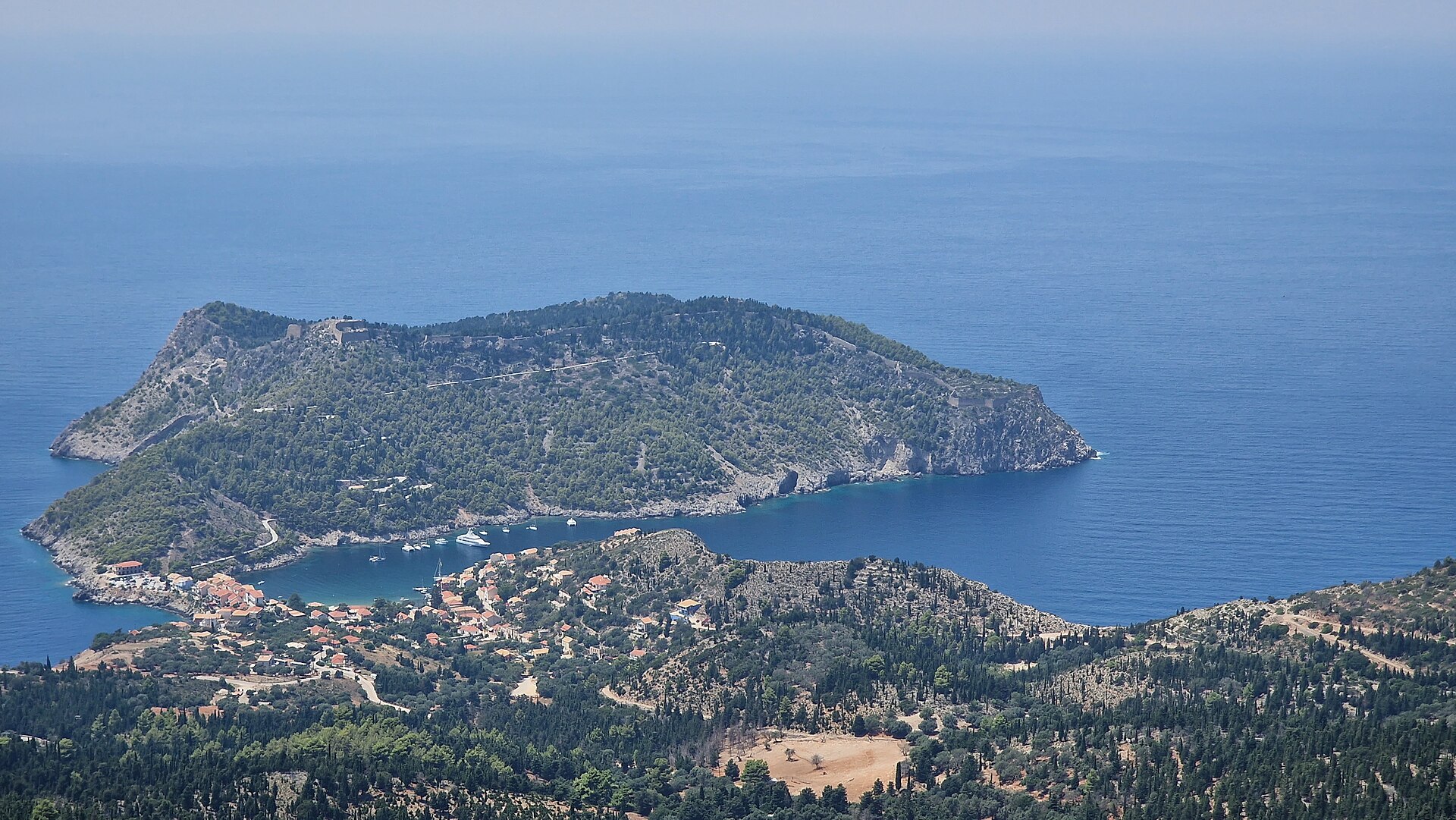
Assos pairs a small coastal village with a much larger fortified peninsula on northwestern Kefalonia. Venice intended the enclosure to shelter people and support a new urban center, yet the town that survived developed outside its walls. The contrast between an ambitious military plan and a modest inhabited waterfront is the key to the place. Gateways, bastions, ruined service buildings and the village below reveal different answers to the practical problems of water, access and settlement.
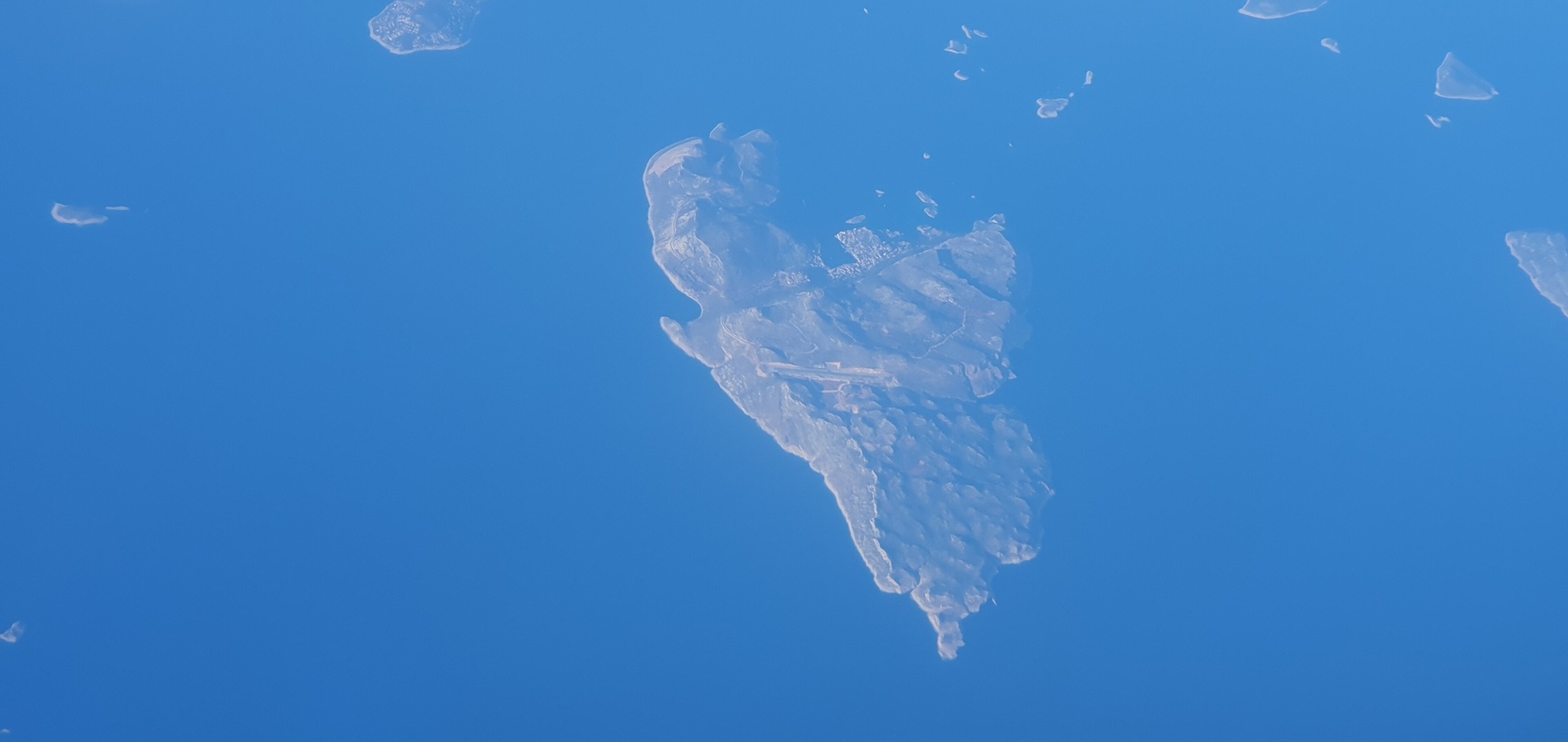
Astypalaia is a butterfly-shaped Aegean island at the meeting point of the Cyclades and Dodecanese, with a cultural landscape extending from prehistoric Vathy and the extraordinary ancient infant cemetery at Kylindra to Early Christian basilicas, the Querini castle-town of Chora, Ottoman-era island society and the modern Dodecanese. Its castle remains the dominant landmark, but the island's deeper significance lies in the long relationship between seafaring, fortified settlement, religious life and a strategic geography of sheltered harbors.
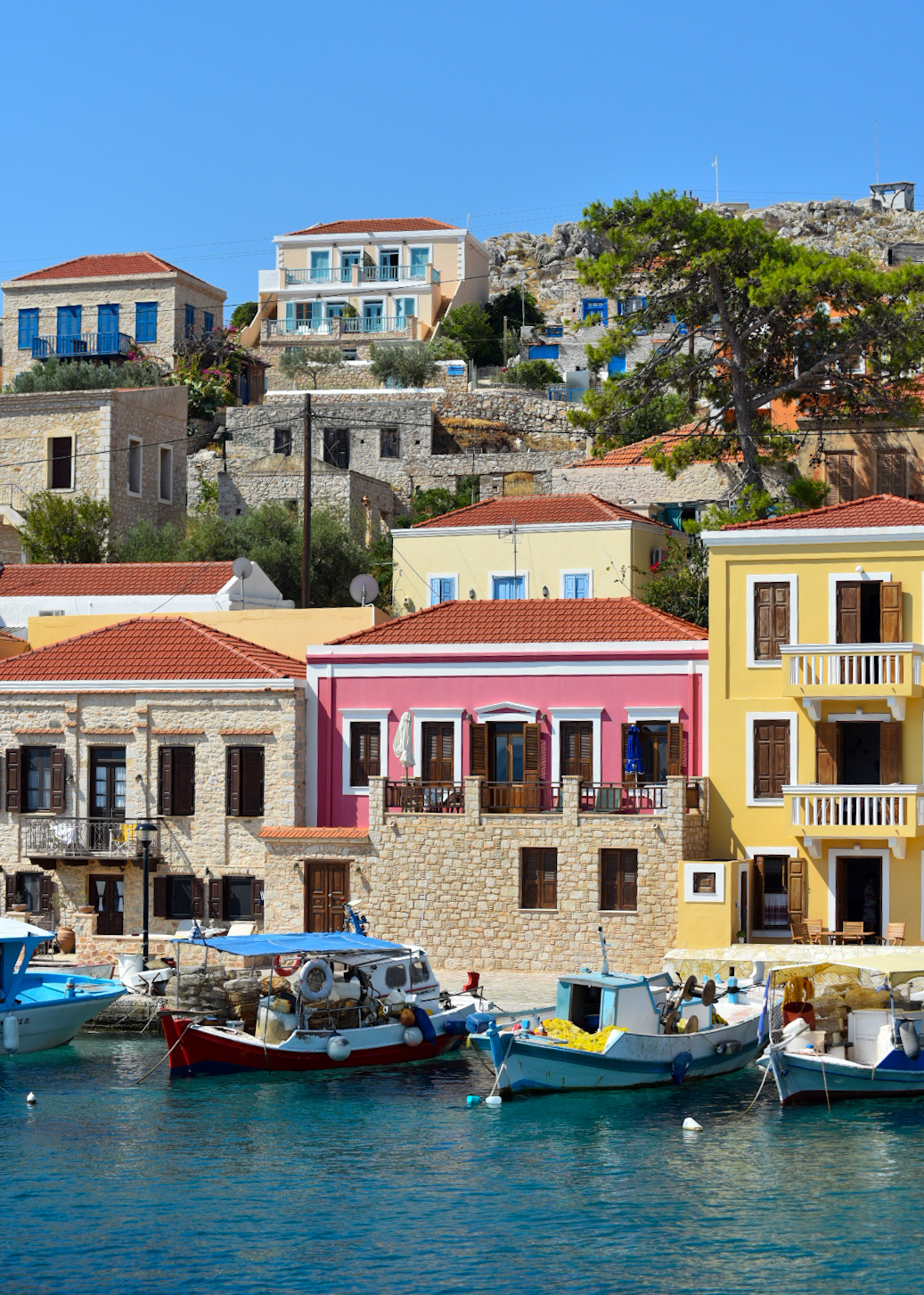
Chalki compresses an unusually legible island history into a small Dodecanese landscape: ancient remains and a Hospitaller refuge crown the heights above abandoned Chorio, while nineteenth-century shipping, trade and sponge diving drew life downhill to the neoclassical harbor of Nimborio. Churches, old paths, signal points and maritime houses preserve the relationship between defense, religion, mobility and the sea.
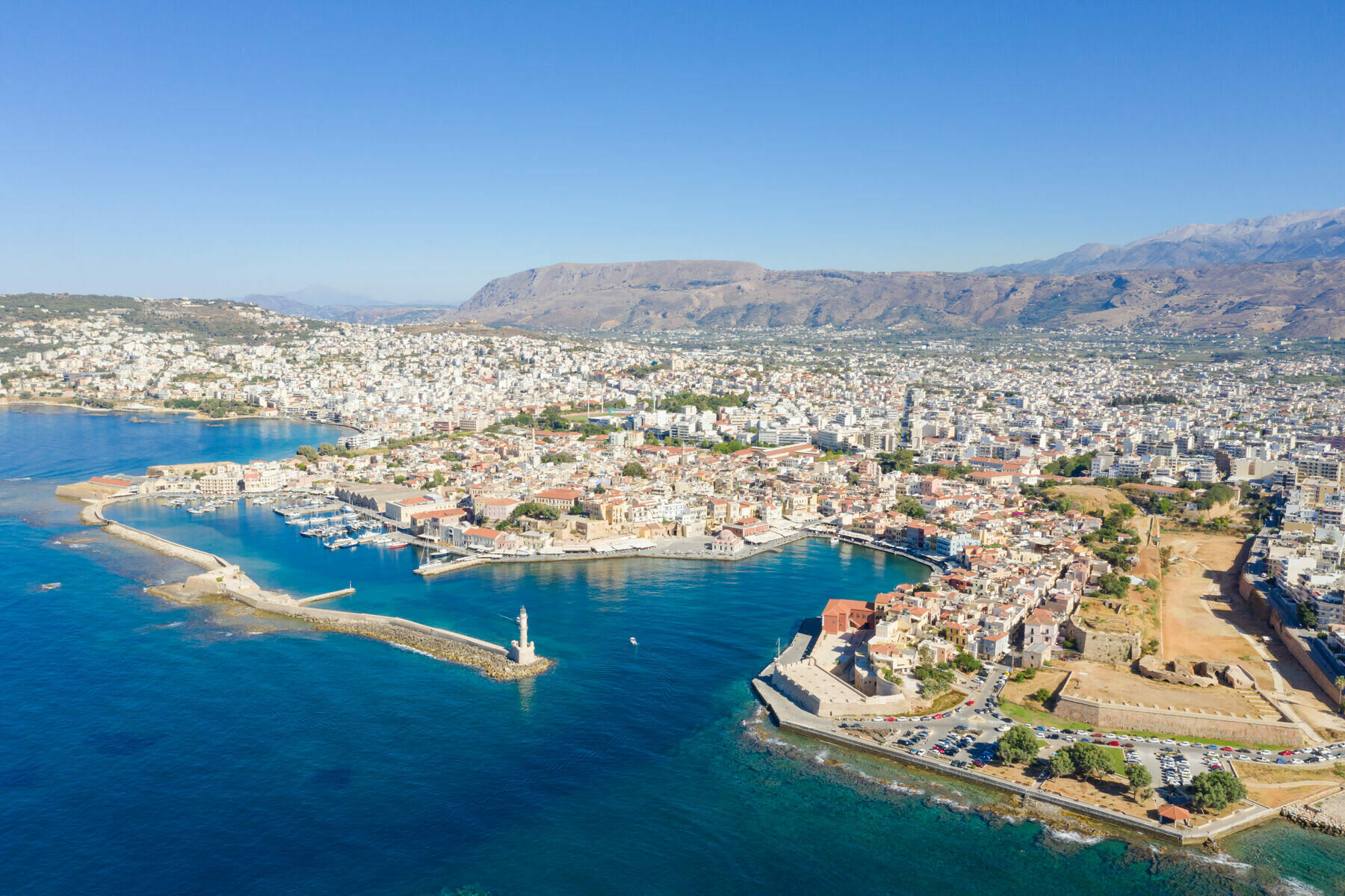
The harbor fortifications of Chania form one of the finest surviving maritime defense systems in the eastern Mediterranean. Centered on Firka Fortress, the harbor walls, the Venetian lighthouse, and the great arsenals (Neoria), the complex protected one of Venice's principal ports in Crete and served as a critical naval, commercial, and military hub for centuries.
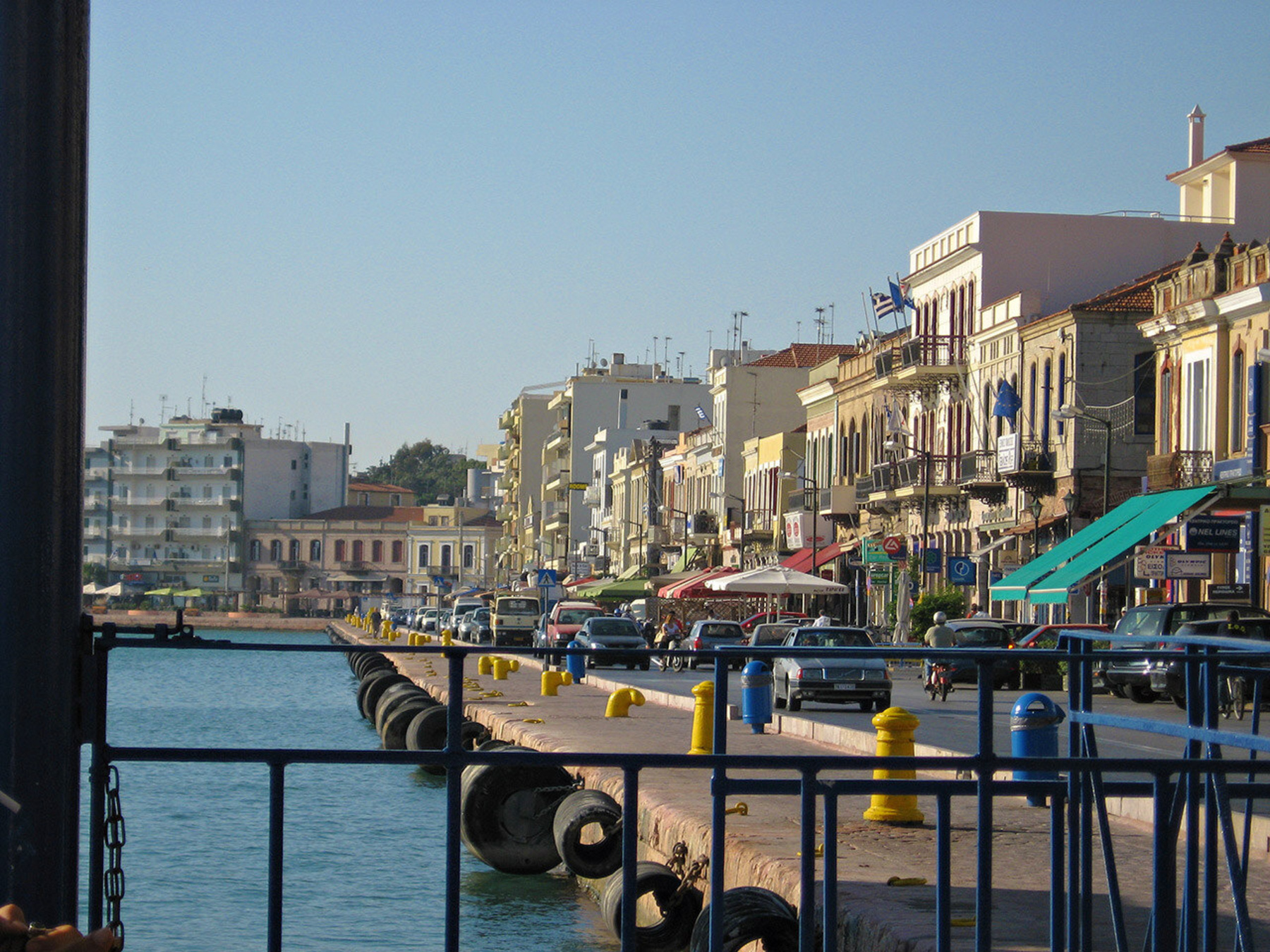
Chios has occupied a strategic position between the Aegean and the coast of Asia Minor since antiquity. Prosperity from maritime trade and the unique cultivation of mastic attracted Byzantine emperors, Genoese merchants, and Ottoman administrators, each leaving a distinct imprint on the island. Its medieval castle, UNESCO-listed Nea Moni, fortified mastic villages, and dramatic mountain settlements preserve an exceptional record of continuity from the Middle Byzantine period through the modern Greek state.
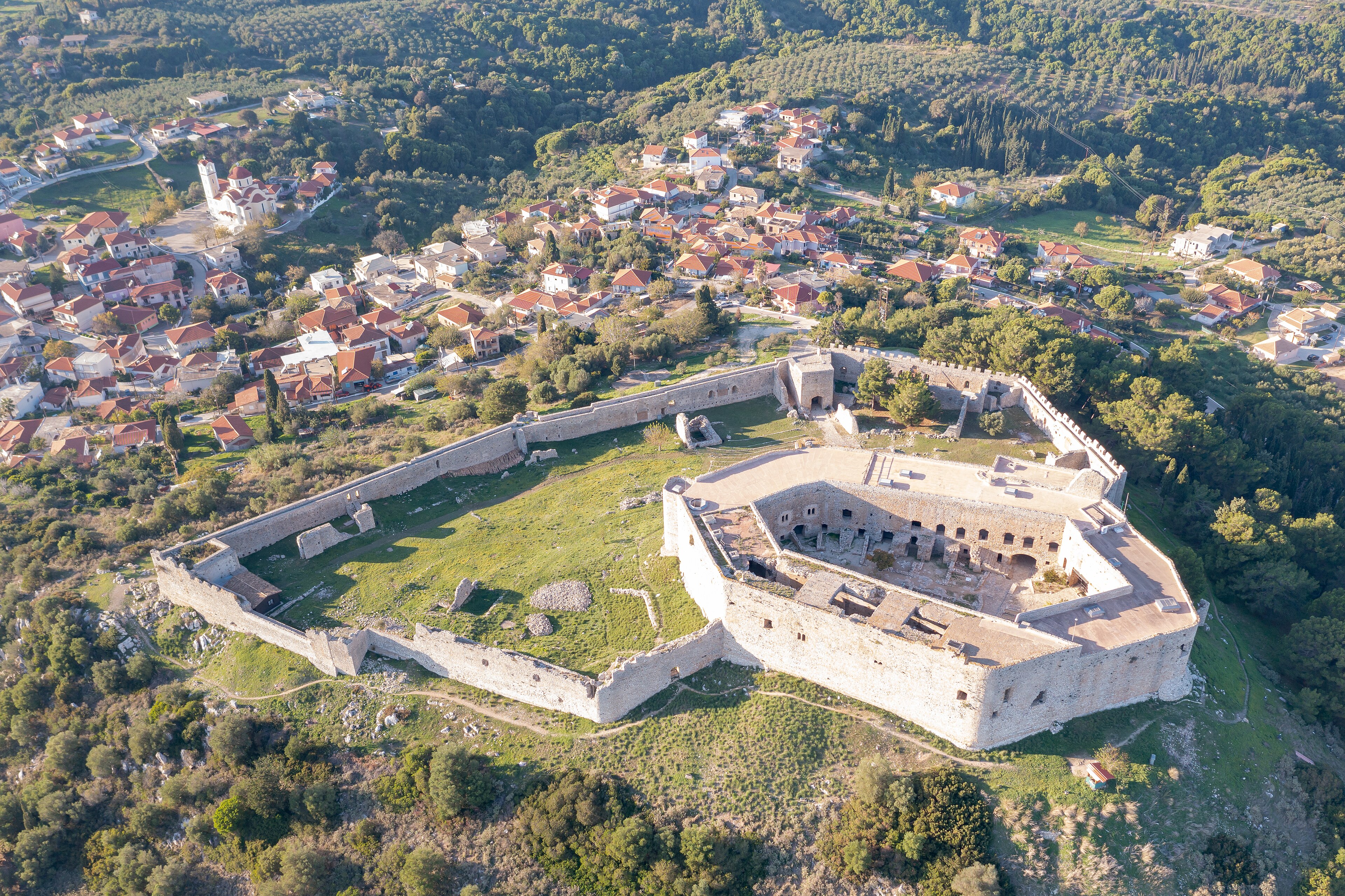
Built on a rare high point above the plain of Elis, Chlemoutsi began as a Frankish castle in the early 13th century and grew into a princely residence with a broad outer enclosure. Its courtyards, vaulted halls, chapel, gates, and rainwater cisterns reveal both the authority of Achaean rulers and the practical work of life on a hilltop. Nearby Andravida and the later port of Glarentza formed part of a regional landscape that changed over time. Ottoman and Venetian alterations, later damage, and modern conservation have all shaped the monument visitors see today.
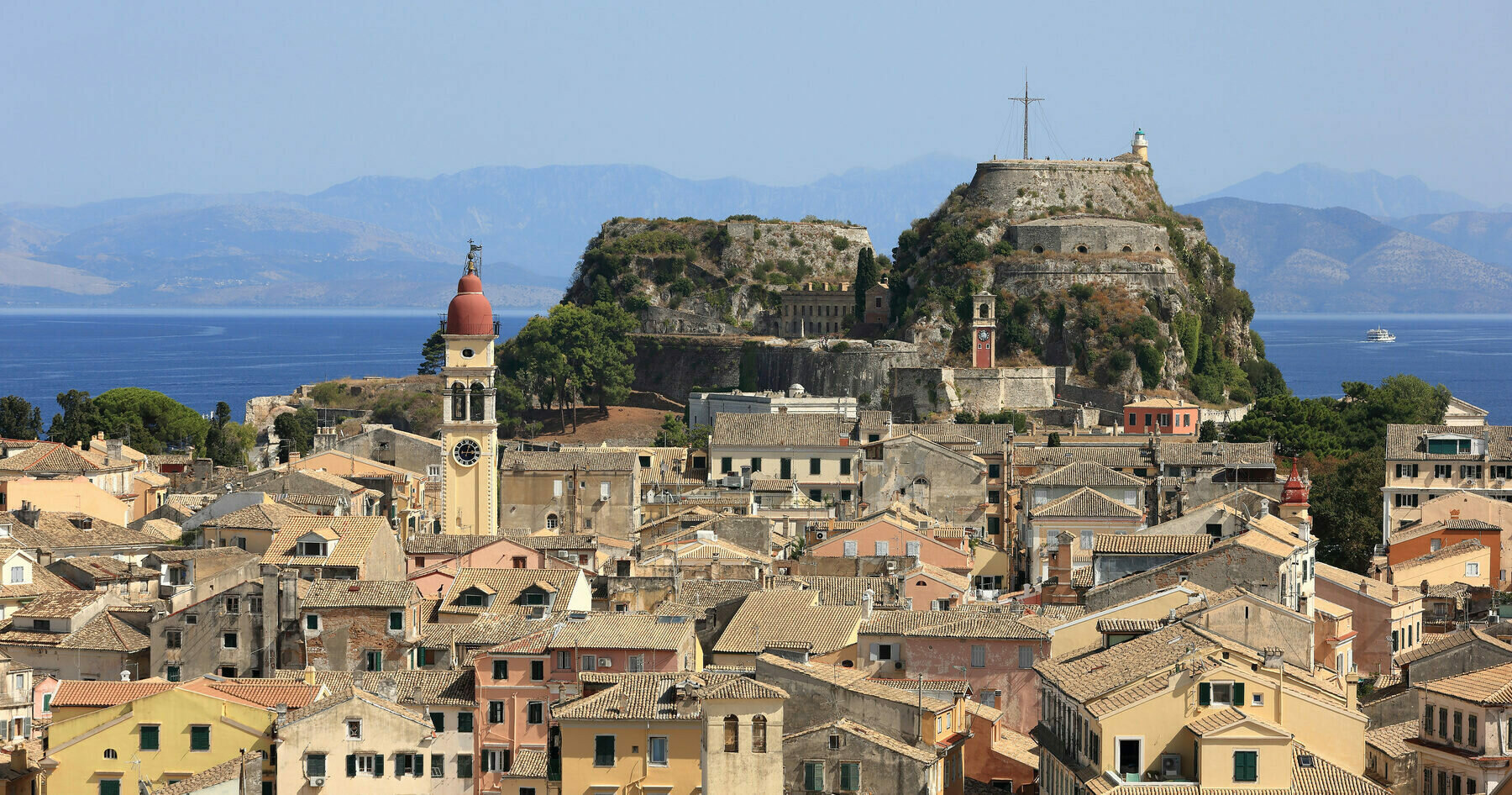
Corfu is an Ionian island whose historic capital, ancient sites, villages, religious institutions and cultivated landscapes tell connected stories. Venetian fortresses frame the town, but museums, churches, music and the countryside make its cultural identity much wider than its walls. Exploring both the capital and the island reveals successive Mediterranean connections and the continuing life of communities shaped by land and sea.
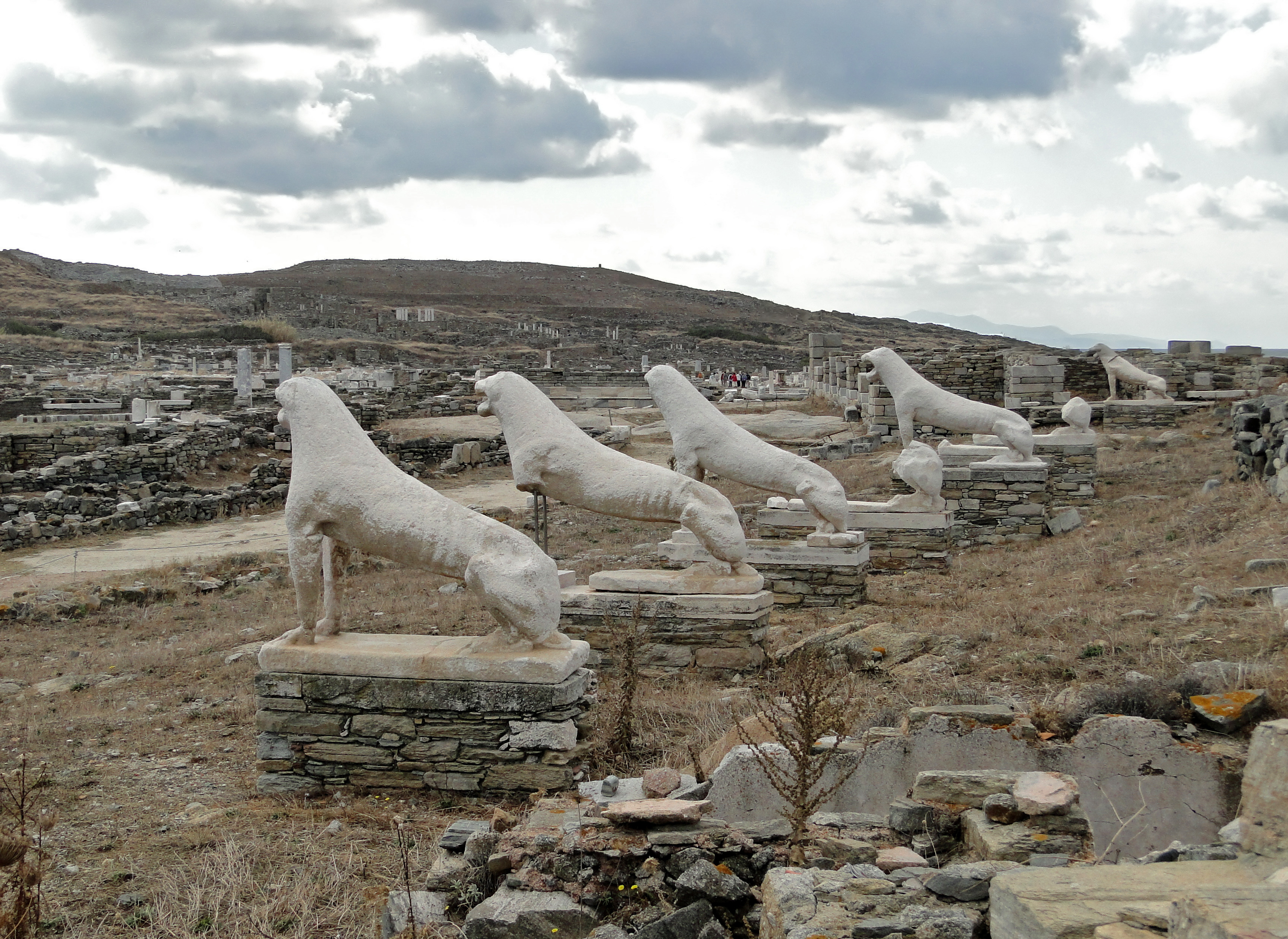
Delos is one of the Mediterranean's great archaeological landscapes: mythical birthplace and Pan-Hellenic sanctuary of Apollo and Artemis, first treasury center of the Delian League, capital of the Hellenistic Koinon of the Islanders and, after 167 BC, a vast free port whose houses, markets and sanctuaries preserve an extraordinary cosmopolitan society. UNESCO inscribed the island in 1990.
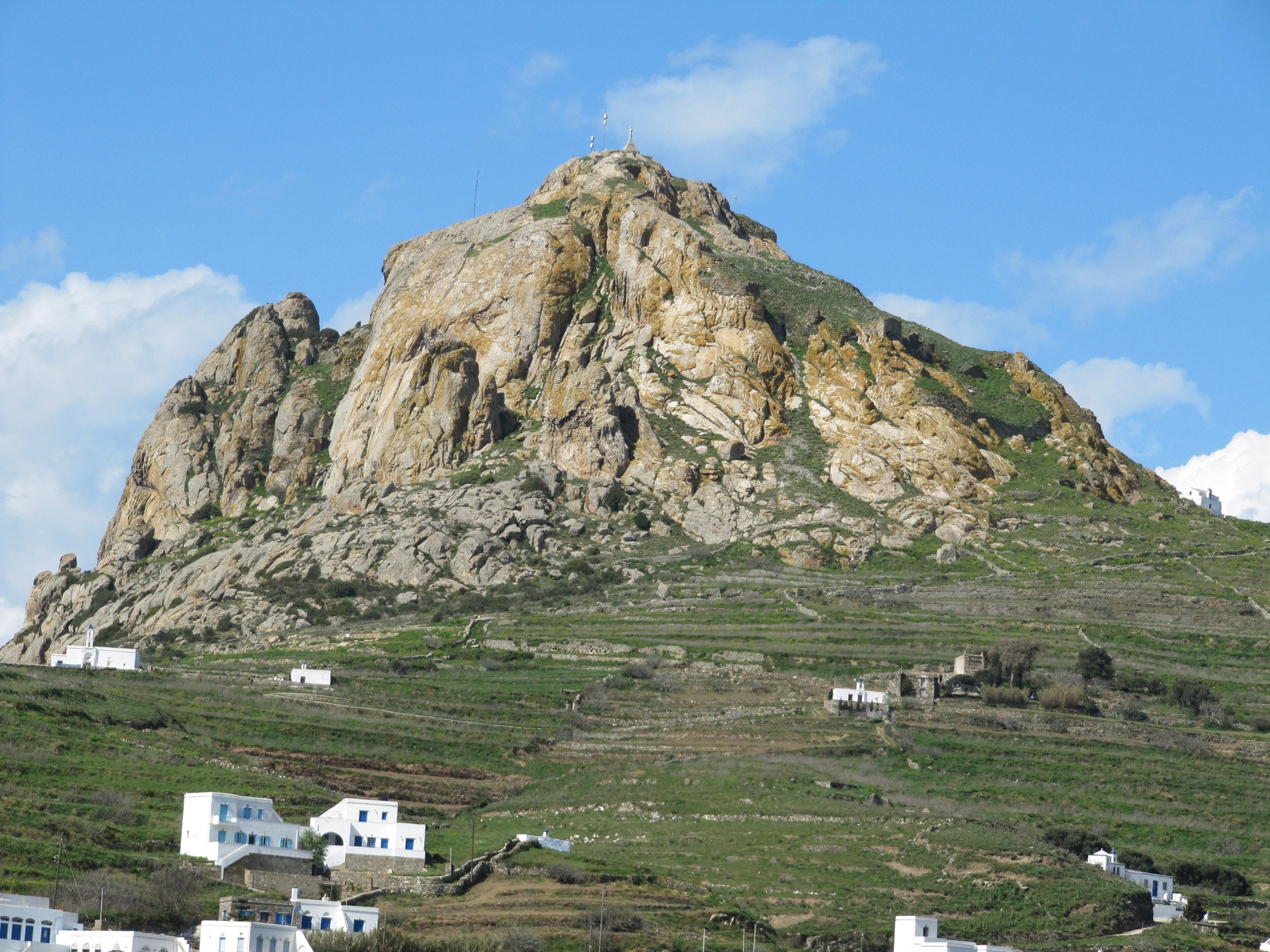
Exomvourgo is the great fortified rock of central Tinos, a site where prehistoric, ancient, Byzantine, Latin and Venetian defensive systems succeeded one another over nearly three millennia. At its foot, a Geometric settlement was protected by a massive Cyclopean wall; on the summit a Byzantine refuge evolved into the Castle of Saint Helen under the Ghisi after 1207 and then into one of Venice's strongest Aegean fortresses. The surrounding town became the island's political and ecclesiastical center until the Ottoman capture of 1715. Its ruins, gates, walls, churches and later Sacred Heart complex preserve the memory of Tinos's long inland capital without duplicating the broader island history.
Folegandros is a small but remarkably coherent Cycladic cultural landscape: Early Cycladic Kastelos, the ancient walled city at Palaiokastro, the ritual cave of Chrysospilia, Chora's continuously inhabited medieval Kastro, Panagia above the cliff, the dispersed farmsteads of Ano Meria, and a dense network of terraces and paths link three millennia of island life.
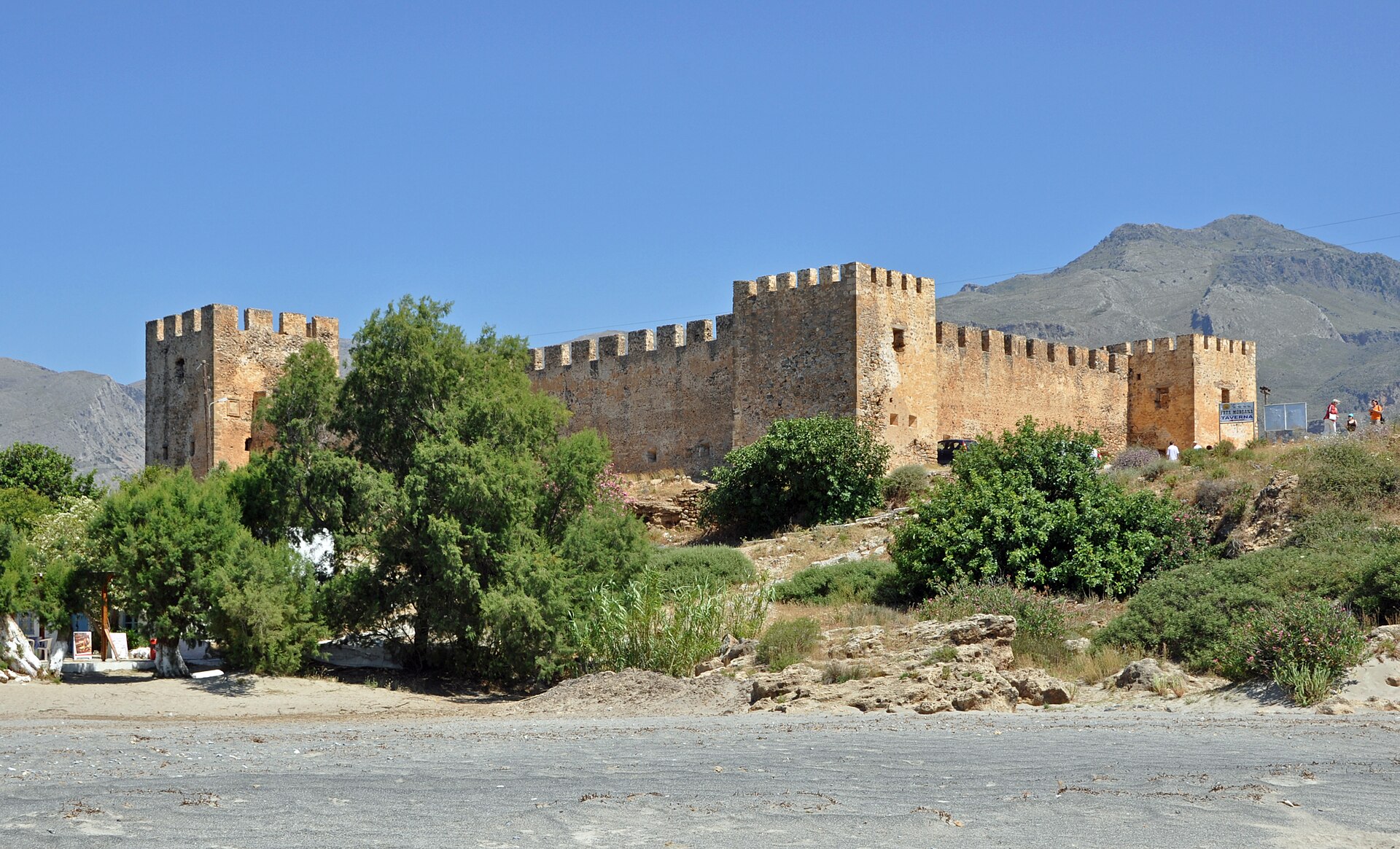
Frangokastello stands on the open southern coast of Crete beneath the mountains of Sfakia. Its rectangular enclosure and corner towers preserve the outline of a Venetian attempt to secure a difficult district, but its masonry also records later rebuilding. The battle of 1828 gave the fortress a powerful place in Cretan memory, subsequently expressed through the Drosoulites tradition. Coast, military authority and local remembrance are inseparable here, although they belong to different kinds of evidence.
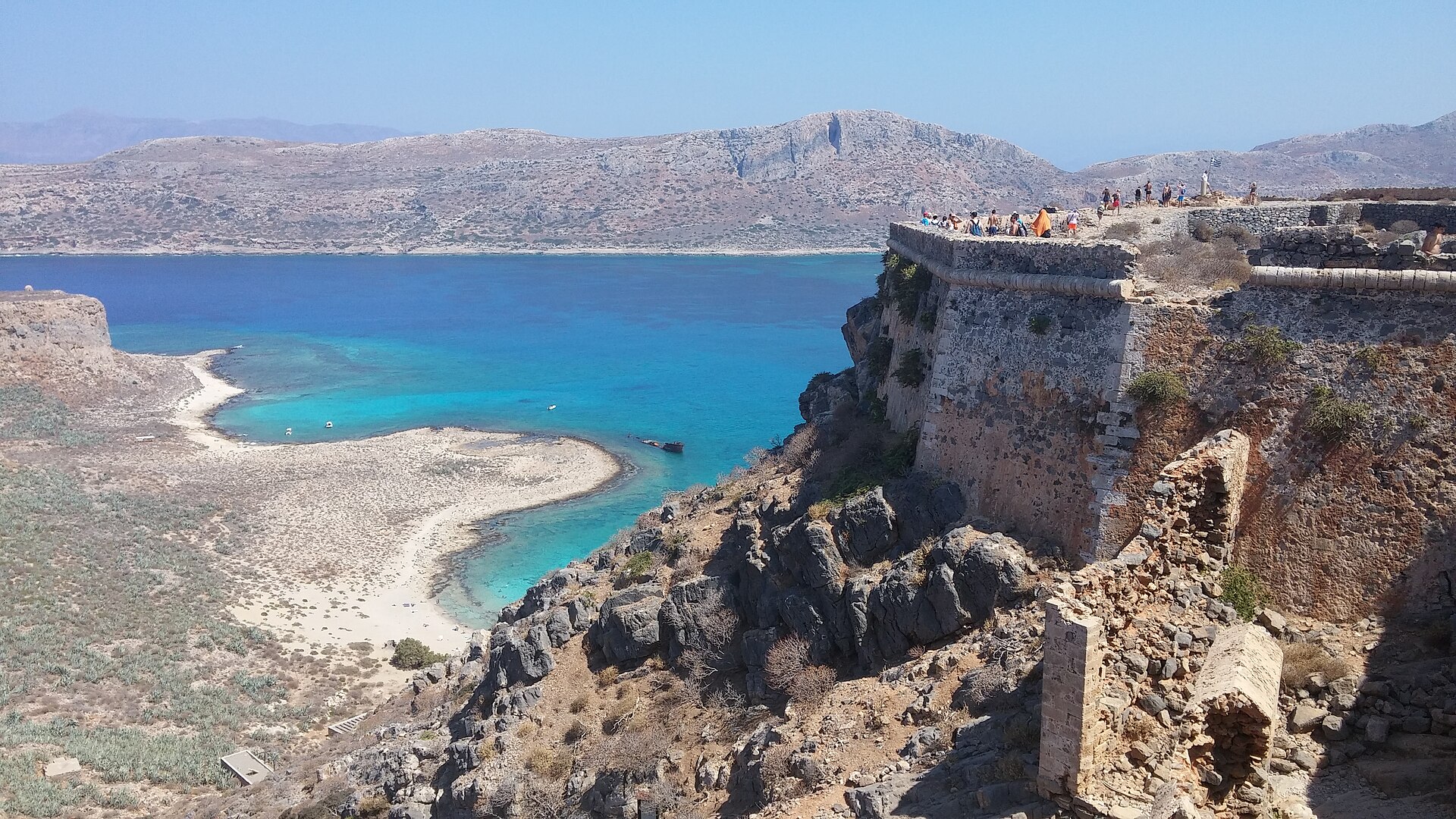
Gramvousa’s fortress rises above the landing on Imeri Gramvousa, off the northwestern tip of Crete. Venetian walls exploit an abrupt island height, while reservoirs and scattered buildings reveal the practical difficulty of maintaining a garrison there. Later revolutionary occupation and raiding gave the island a different reputation. The fortress belongs to a maritime landscape that also includes Agria Gramvousa and Balos, but these are distinct places rather than interchangeable names for one attraction.
Hydra is a compact Saronic island harbor whose amphitheatrical waterfront, stone captains' mansions, cannon-lined harbor mouth and car-free townscape preserve one of the strongest maritime identities of the Greek War of Independence. Enriched in the 18th and early 19th centuries by a powerful merchant fleet and its shipowning elite, the island contributed ships, captains and resources to the naval struggle of 1821, and today survives as one of Greece's most evocative preserved maritime towns, its history held in harbor bastions, family mansions and the Historical Archives Museum.
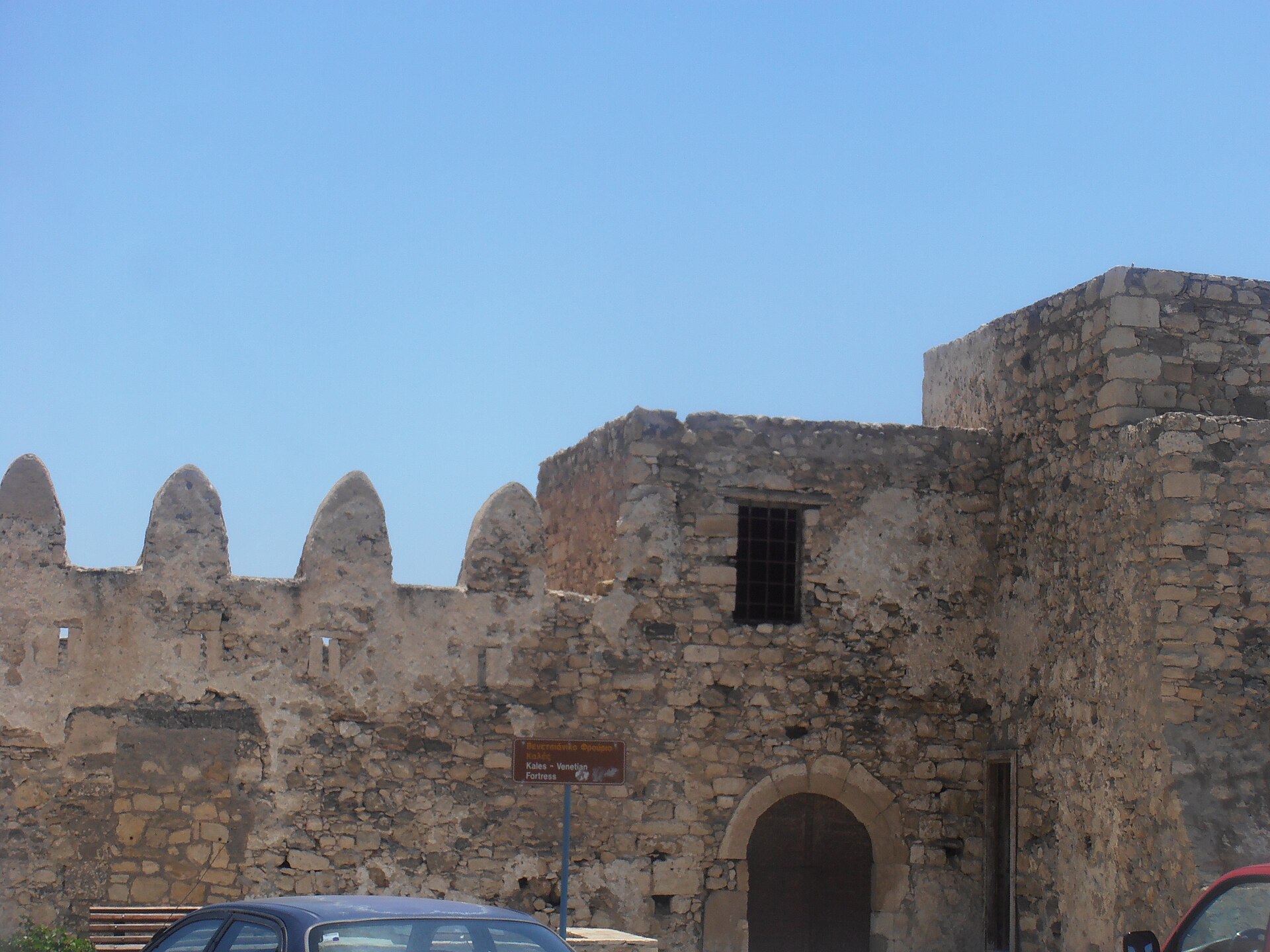
Ierapetra faces the Libyan Sea from the narrow eastern part of Crete. Kales guards the harbor edge, but the town’s history is also preserved in the remains of ancient Hierapytna, an archaeological collection housed in an Ottoman school, and the mosque, fountain and churches of the older quarters. These different places reveal a port whose civic and religious life repeatedly changed while its connection with the sea endured.
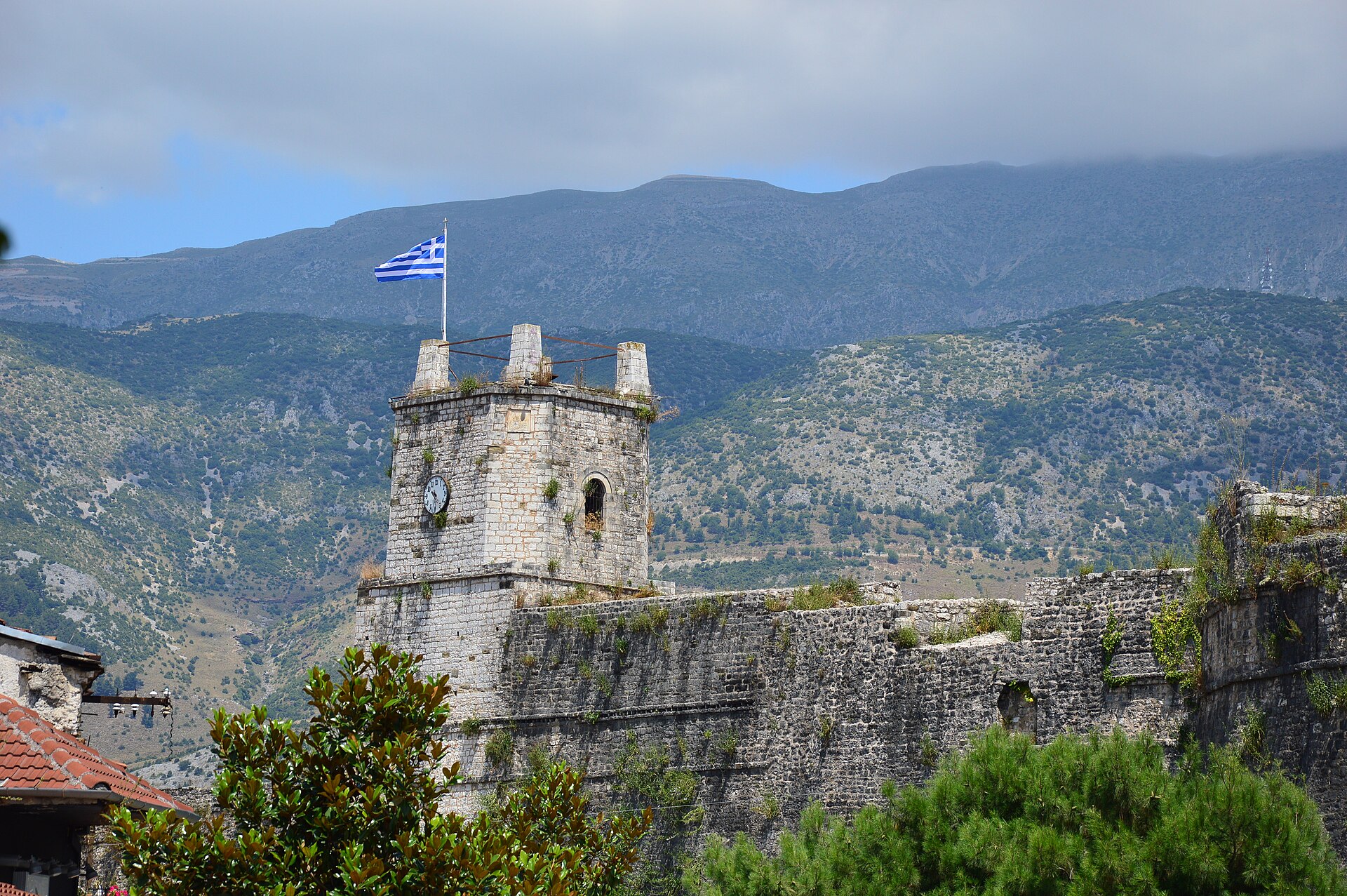
Ioannina is a lakeside city whose fortified peninsula forms the core of a much wider urban history. Byzantine towers, Ottoman mosques and administrative buildings, a Romaniote synagogue, craft traditions and distinct museums show how political power and everyday work shared the same landscape. Ali Pasha is a major part of the story, but neither the castle nor the city belongs to his period alone. The lake, old commercial streets and surviving communities give the monuments their wider meaning.
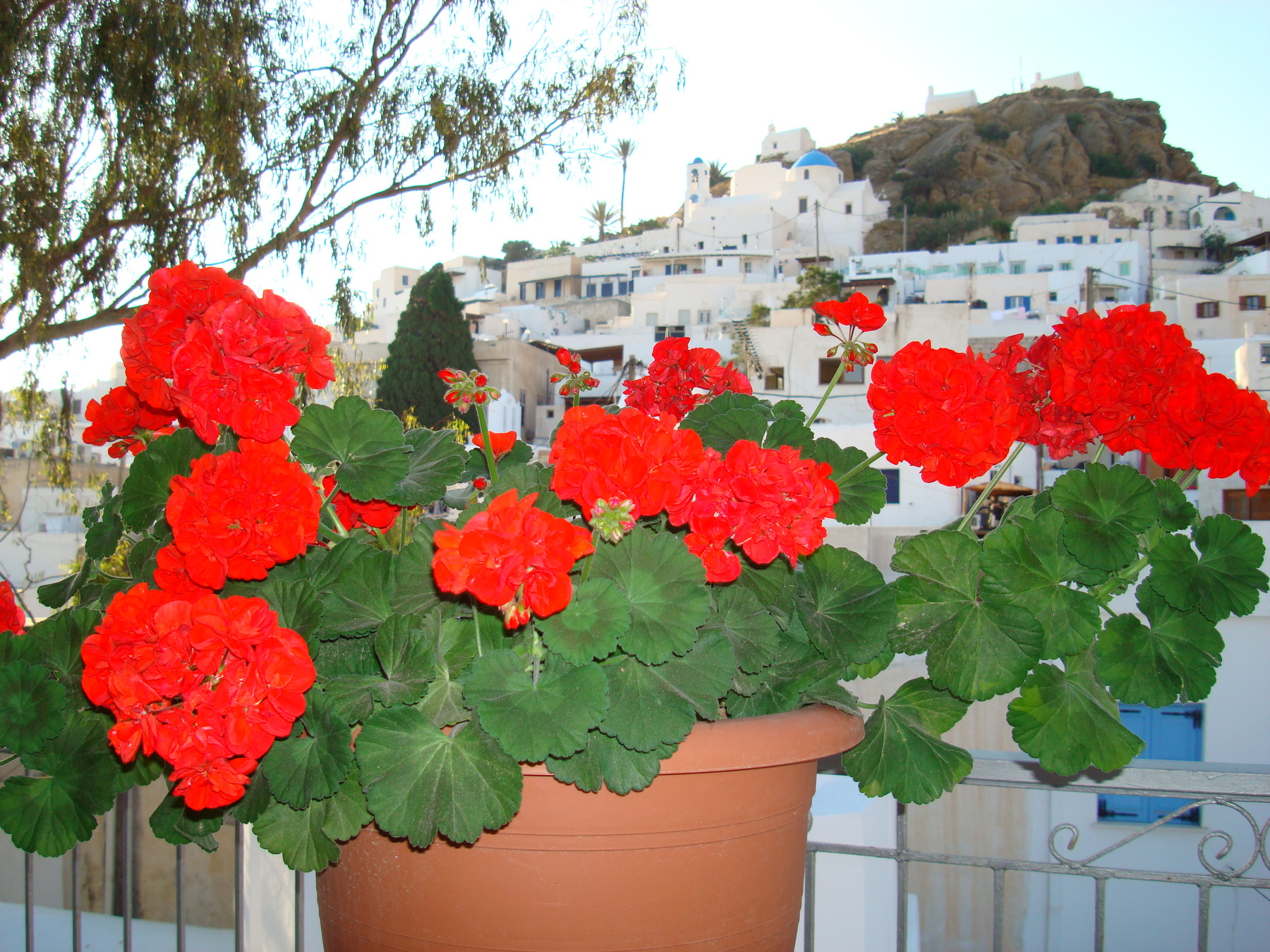
Ios is a historically layered Cycladic island whose significance extends far beyond its modern resort reputation. Skarkos preserves one of the best and most complete Early Cycladic settlements in the Aegean, while modern Chora rises directly over the ancient city, whose Archaic walls, Classical and Hellenistic repairs, public buildings and Roman infrastructure remain visible. Across the island, towers, sanctuaries, terraces and rural sites record an organized agricultural and defensive landscape. Ios also cultivated an unusually strong ancient association with Homer, reflected in literary testimony, local coinage and a month named Homereon, while the traditional tomb at Plakotos remains a place of memory rather than a securely identified burial.
Irakleion, the former Venetian Candia, was the principal fortified capital of Crete and one of the most important strongholds of the eastern Mediterranean. Its harbor fortress of Koules, massive Venetian walls, bastions, gates and urban fabric preserve the scale of a city designed to defend empire, commerce and sea lanes.
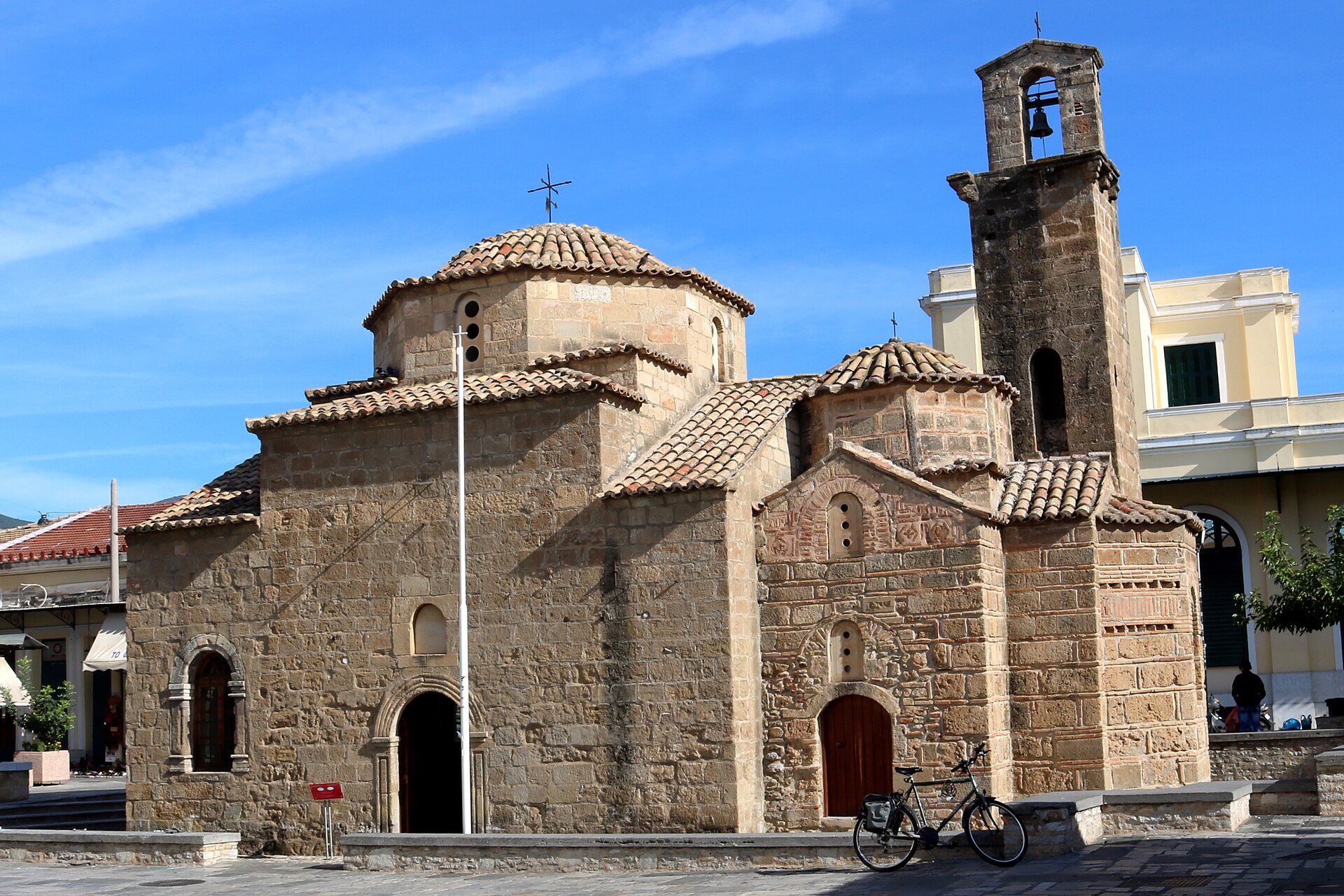
Kalamata extends from a castle and old town to a commercial center and waterfront shaped by the export of Messinian produce. Its medieval walls, churches, museum collections and memory of 1821 belong beside later streets, port infrastructure and contemporary cultural institutions. The city is more than its fortress: its history is also the movement of people and goods toward the sea, the damage and rebuilding of 1986, and the continuing place of craft, markets and performance in urban life.
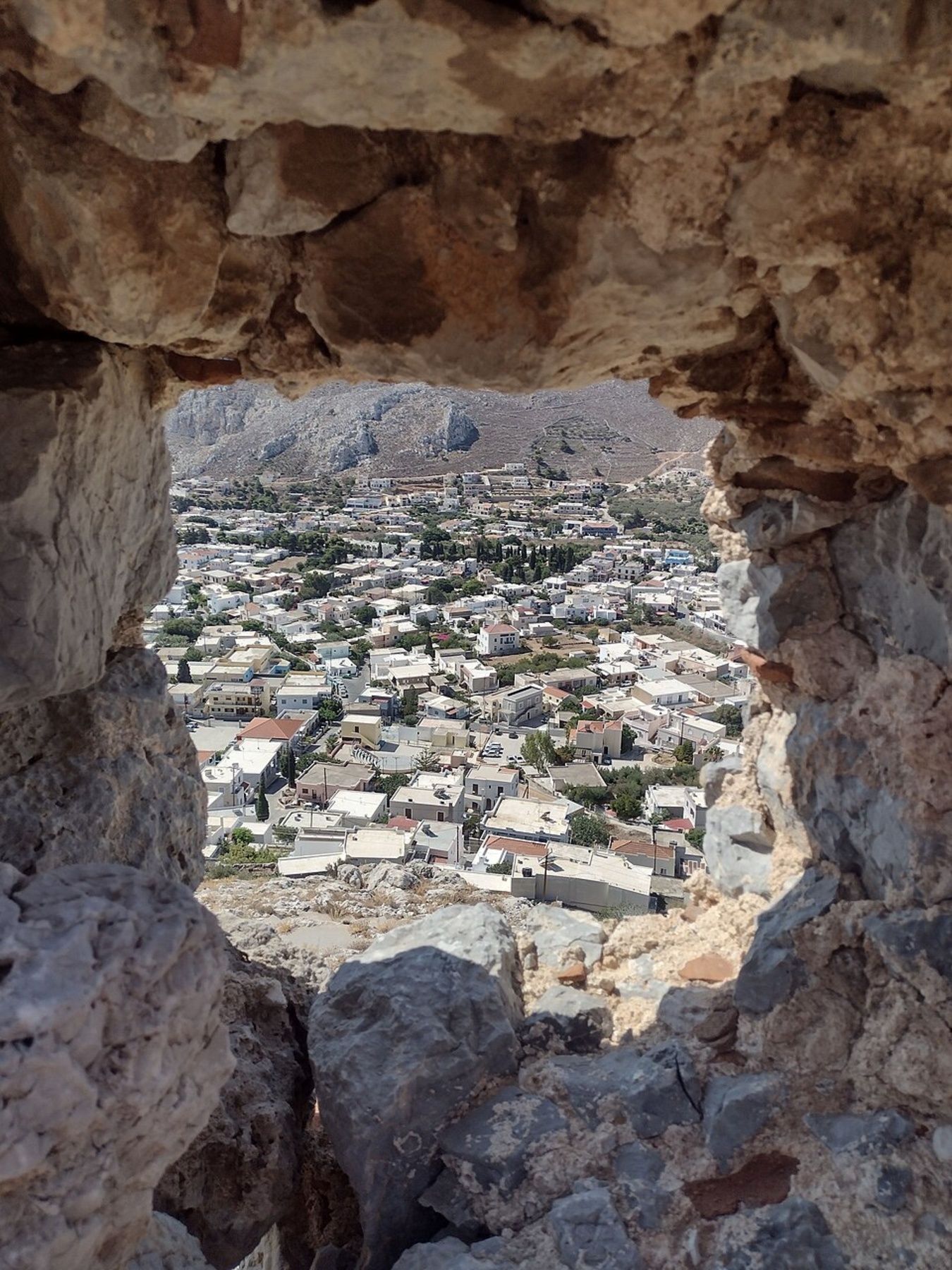
Kalymnos is a fortified and maritime island whose identity reaches from prehistoric caves and the sanctuary of Delian Apollo to the medieval Castle of Chora and the Hospitaller Castle of Chrysocheria. For centuries its people were renowned throughout the Mediterranean as sponge divers, developing a dangerous seafaring economy that shaped families, migration, music and museums. Since the late 1990s the island's steep limestone cliffs have created a second international identity: Kalymnos is now one of the world's best-known sport-climbing destinations, combining living maritime traditions with a remarkable defensive and archaeological landscape.
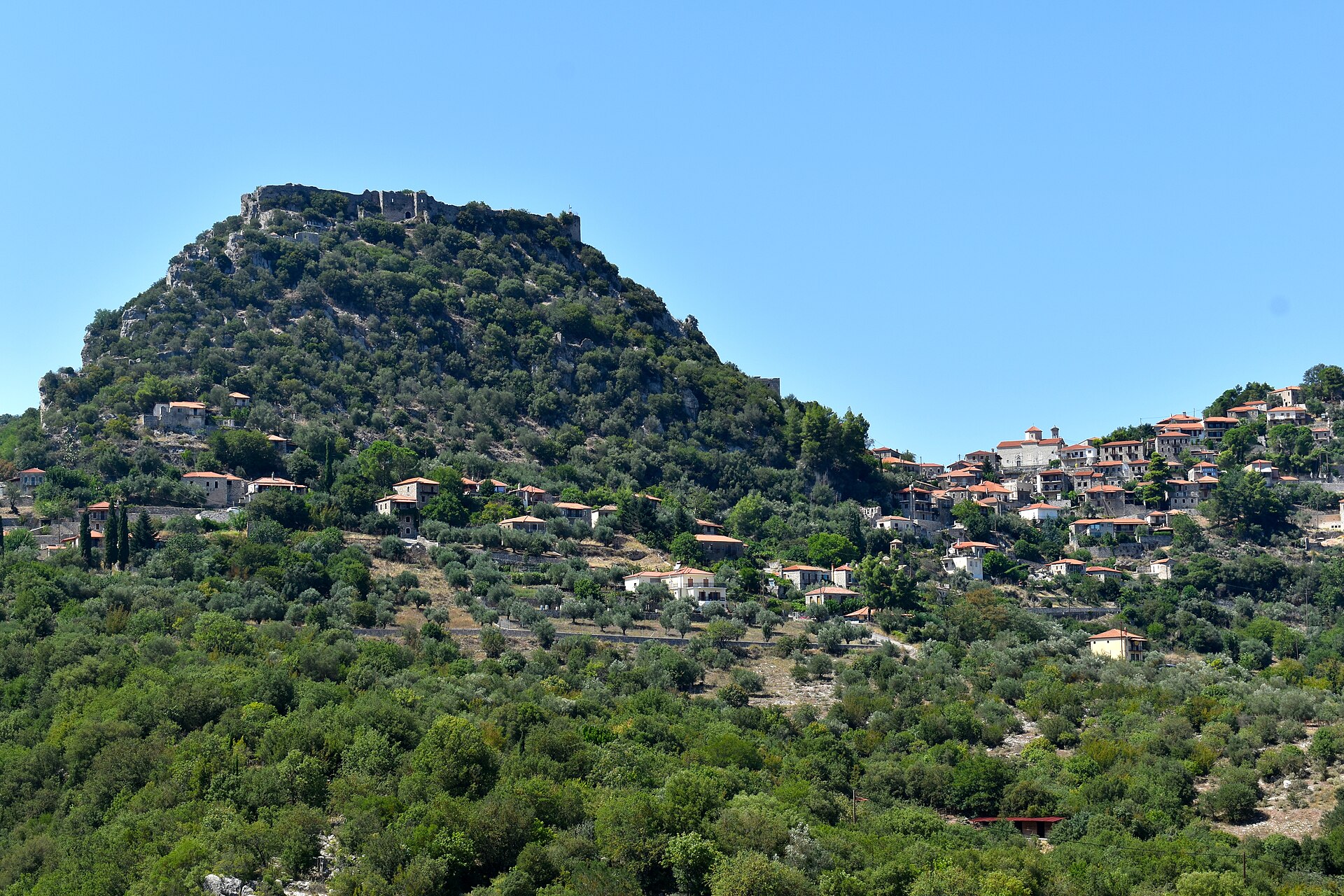
Karytaina is a stone-built settlement below a high medieval castle, overlooking routes through the Alfeios landscape. The fortress expresses Frankish lordship, but the village, churches, towers and crossings reveal a longer history of residence and regional exchange. Later use during the Greek Revolution added a new layer without erasing the castle’s medieval form. The most useful encounter connects the summit to the inhabited slopes and river country below.
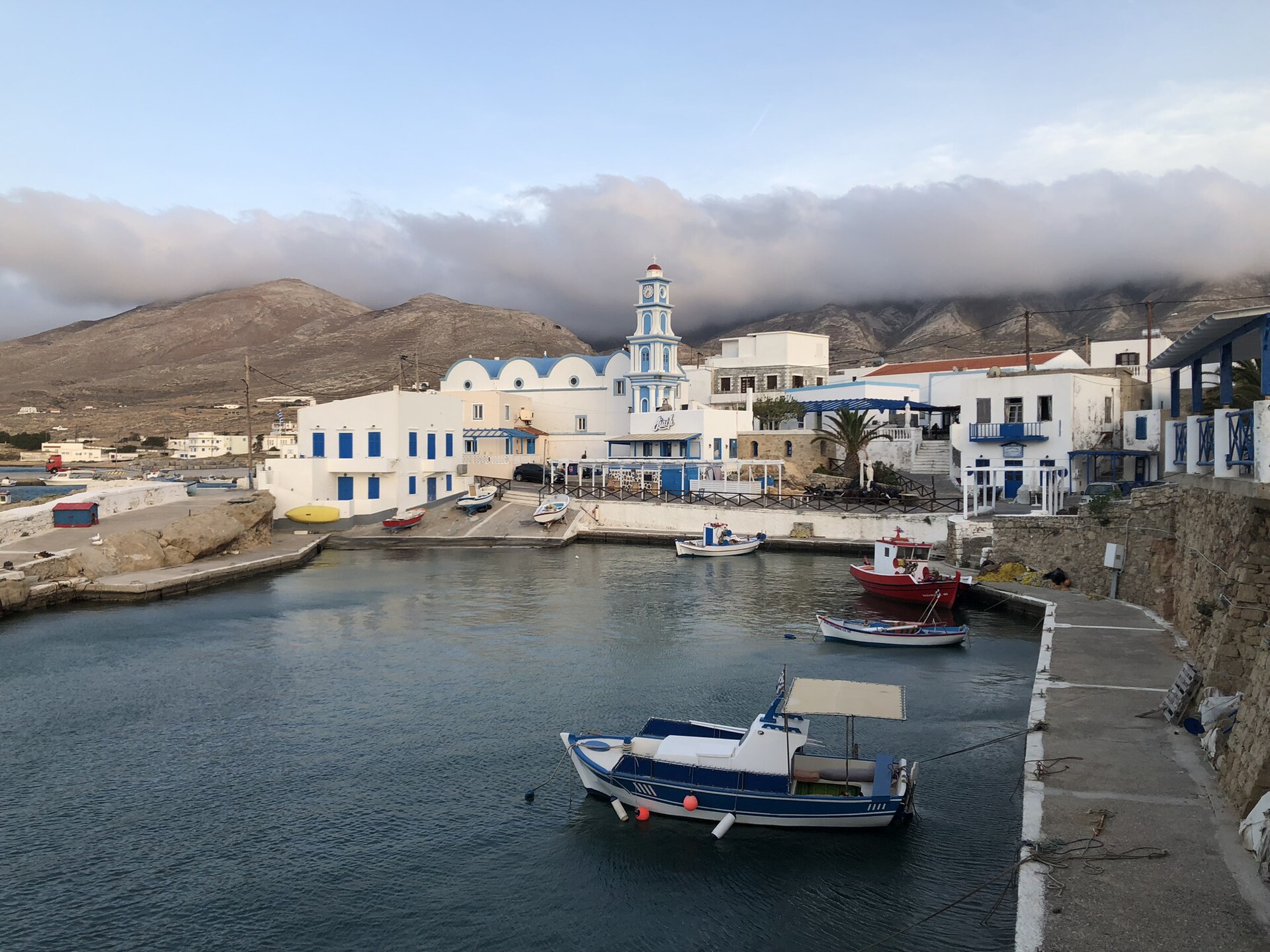
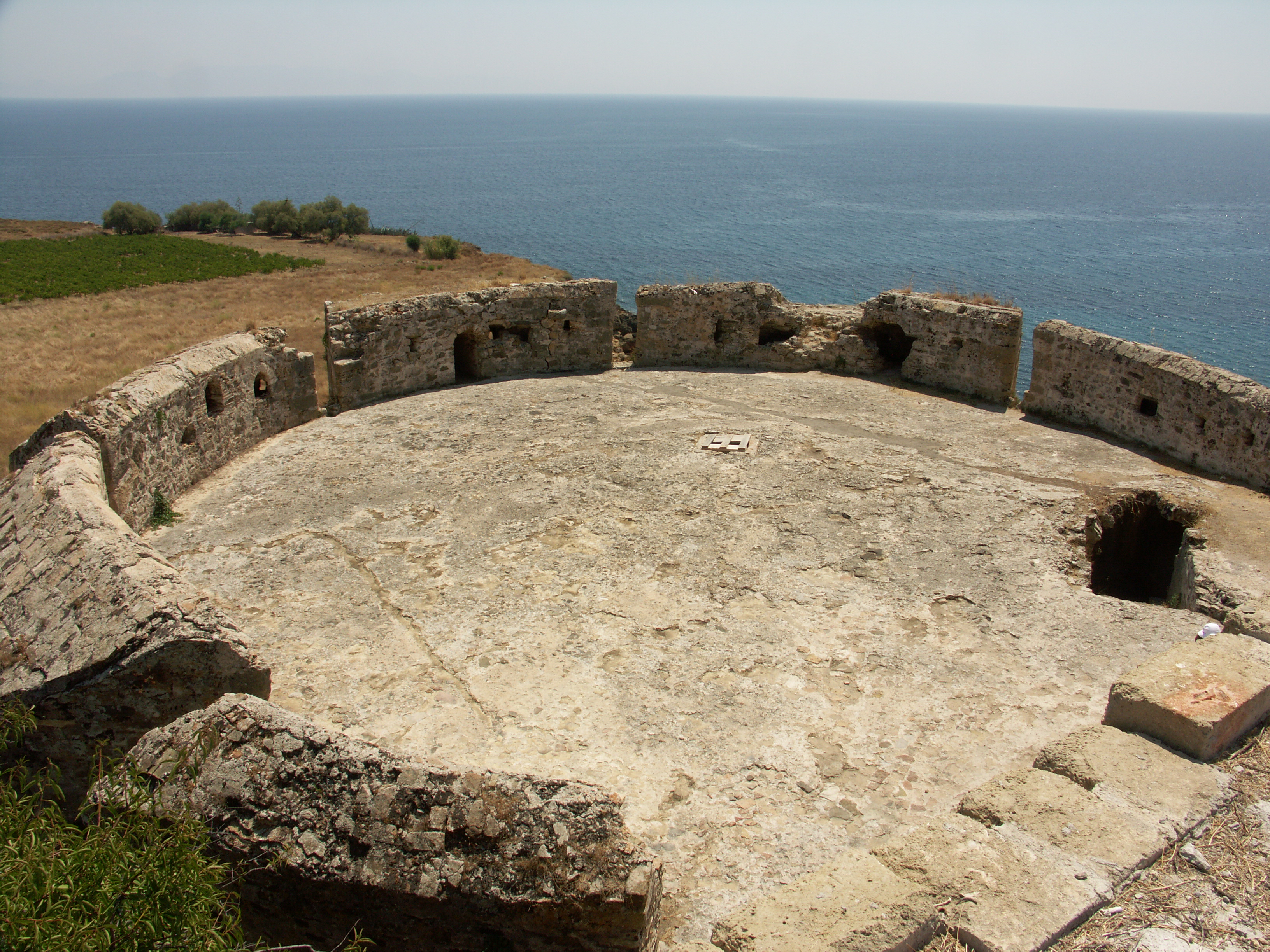
Kasos is the southernmost island of the Dodecanese, historically sustained by seafaring, shipbuilding and close connections with Crete and the eastern Mediterranean. Its defining modern historical event was the destruction of 1824, when an Ottoman-Egyptian force devastated an island whose ships and sailors had supported the Greek War of Independence. Fry, the capital and principal port, preserves the island's maritime orientation through its harbor, traditional neighborhoods, churches, archaeological collection and monuments to the Kasiot dead.
Kastelorizo, officially Megisti, is Greece's easternmost inhabited island and one of its most compact historical landscapes. Ancient fortifications and a Lycian-style rock-cut tomb recall its place beside the Anatolian coast; the Knights Hospitaller built the red-rock castle that gave the island its medieval name. Ottoman, French and Italian rule followed, while 19th-century shipping wealth created the colorful harbor mansions that still define the town. War, evacuation and fire devastated the settlement in the 1940s, but museums, restored houses, churches, the Blue Cave and nearby Ro preserve an unusually rich story of frontier life, commerce and identity.
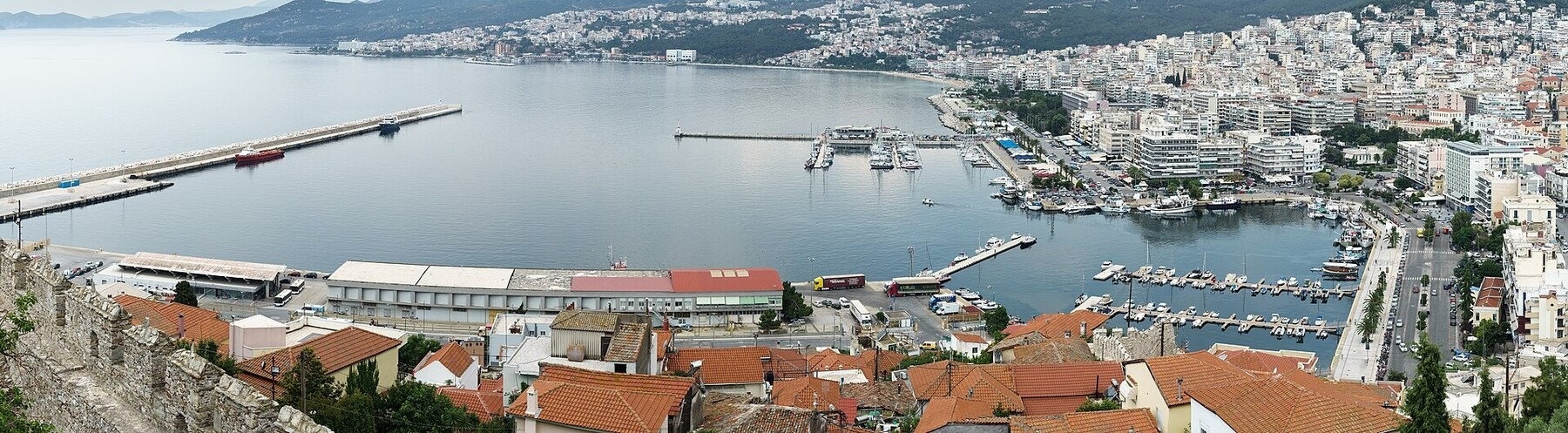
Kavala rises amphitheatrically above one of the northern Aegean’s most important harbors. The walled Panagia peninsula preserves the city’s medieval and Ottoman core, with the fortress at its summit, the Imaret and Muhammad Ali’s house on its slopes, and the Kamares aqueduct marking the transition to the modern city. Ancient Neapolis, Byzantine Christoupolis, Ottoman Kavala, and the tobacco port of the nineteenth and twentieth centuries remain visible in a compact urban landscape closely connected with Philippi and the Via Egnatia.
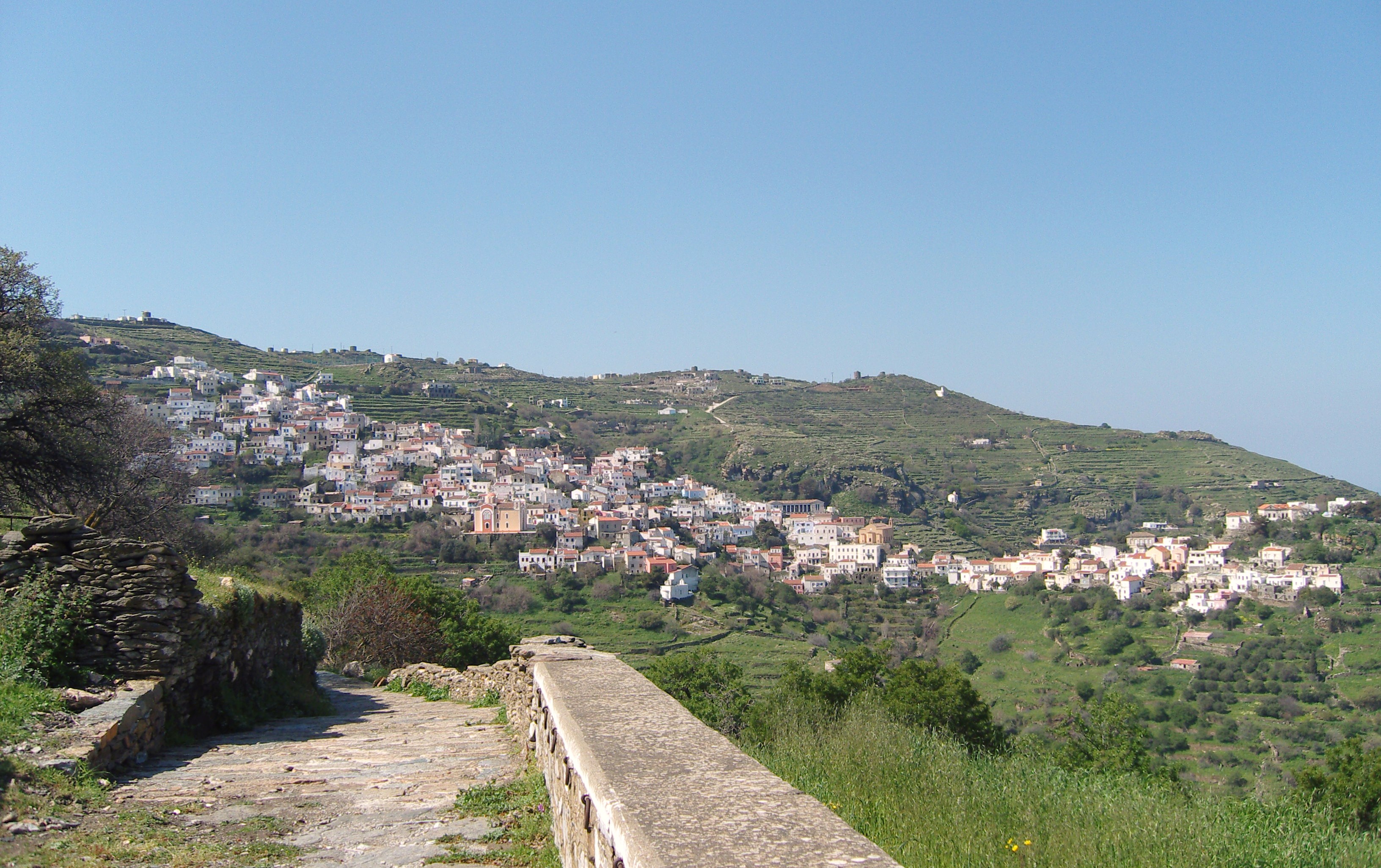
Kea (Tzia) is one of the Cyclades' richest archaeological and cultural landscapes: the fortified Bronze Age center of Agia Irini, the ancient tetrapolis of Ioulis, Karthaia, Korisia and Poiessa, the enigmatic Lion of Ioulis, classical towers, medieval Ioulida, monasteries, historic paths and the largest oak woodland in the Cyclades coexist with a living maritime and rural culture close to Attica.
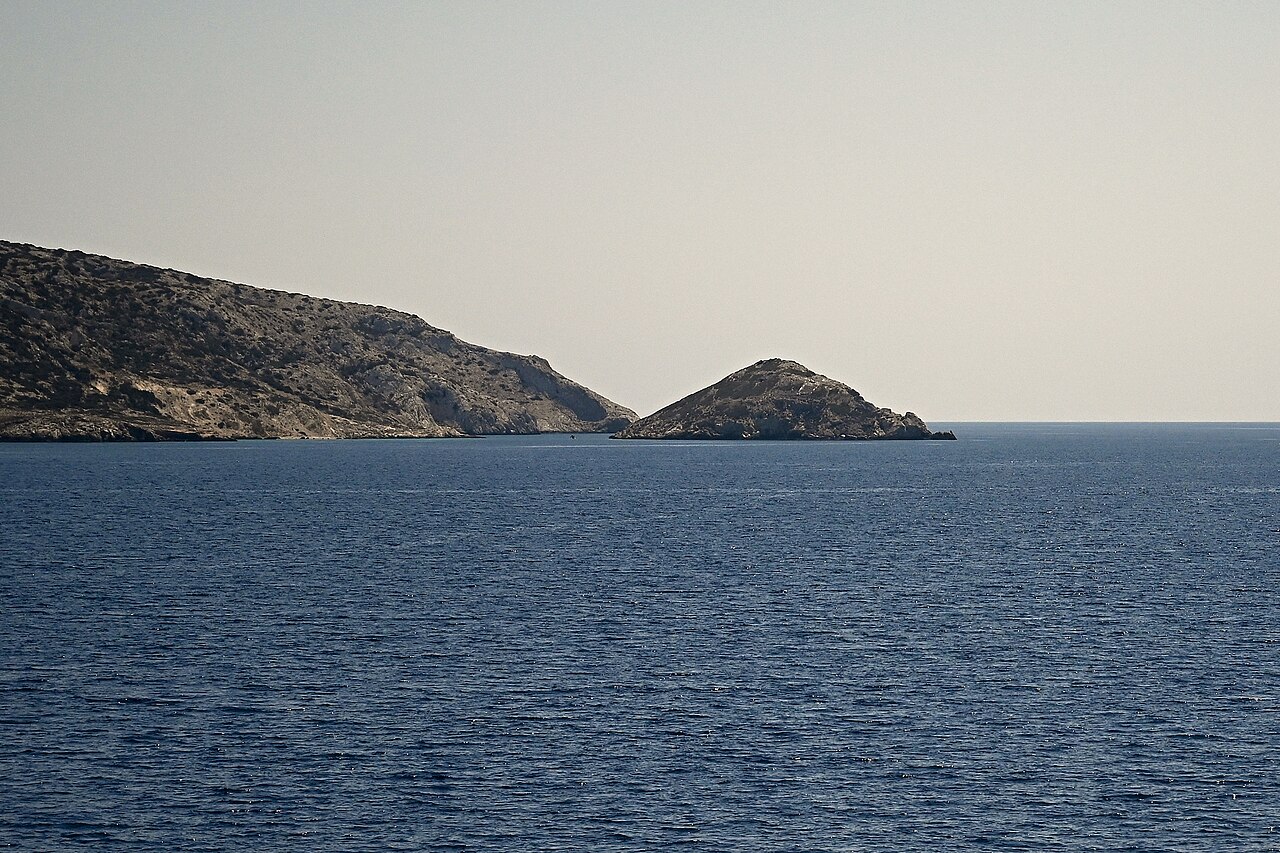
Keros is one of the most important prehistoric landscapes in the Aegean. At Kavos, deliberately fragmented marble figurines, vessels and pottery were deposited after being brought from elsewhere; nearby Dhaskalio developed monumental terraced architecture, intensive metalworking and long-distance exchange. Together they reveal an extraordinary Early Bronze Age center of congregation and production.
Kimolos is a small volcanic island of the western Cyclades whose history reaches from prehistoric settlement and the ancient city at Ellinika to a remarkable fortified Chorio shaped by piracy, Latin and Ottoman rule. Its cultural landscape combines the late-sixteenth-century Kastro, post-Byzantine churches, the archaeological record of an ancient polis, maritime settlements with rock-cut sirmata, historic mining and mineral extraction, windmills, agricultural terraces and the geological monument of Skiadi. Closely linked to neighboring Milos yet historically distinct, Kimolos also preserves an unusually well-documented ancient territorial relationship with Polyaigos.
Koroni’s castle crowns a peninsula on the western edge of the Gulf of Messenia, above a town that still lives within its walls. Its two enclosures, harbor-facing setting and cultivated ground show how defense, settlement and daily resources came together. Venetian expansion made Koroni an important port beside Methoni; Ottoman rulers later adapted the eastern defenses for artillery. Churches, a bath, cisterns and an aqueduct trace changing use inside the fortress, whose masonry records many phases rather than one builder.
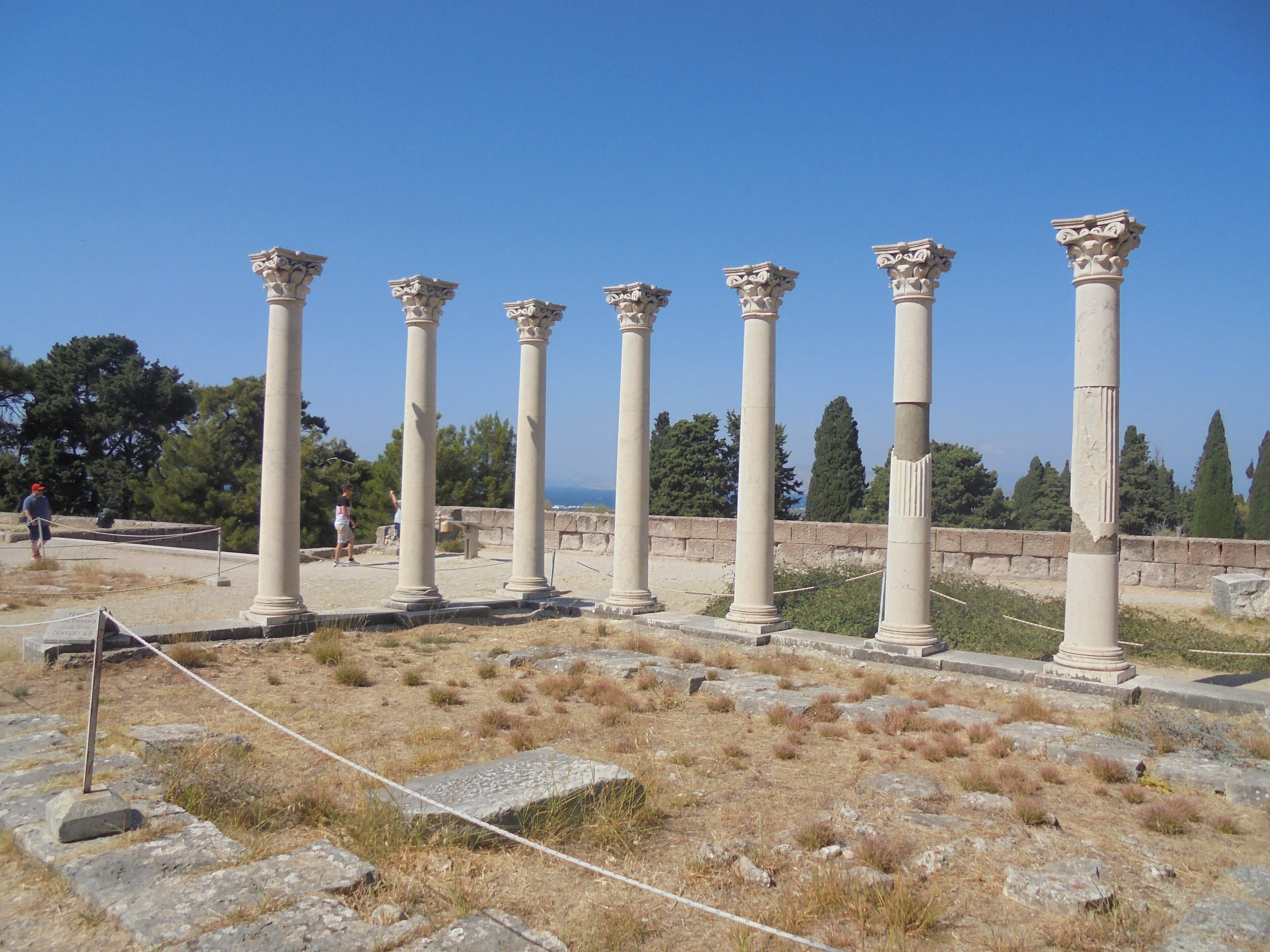
Kos is a fertile southeastern Aegean island where an exceptional archaeological landscape, the medical tradition of Hippocrates, an island-wide system of medieval fortifications, Ottoman monuments and Italian twentieth-century planning remain visible within a living agricultural and maritime society. Its importance comes from the interaction of harbor, sanctuary, city, productive countryside and fortified interior rather than from any single monument.
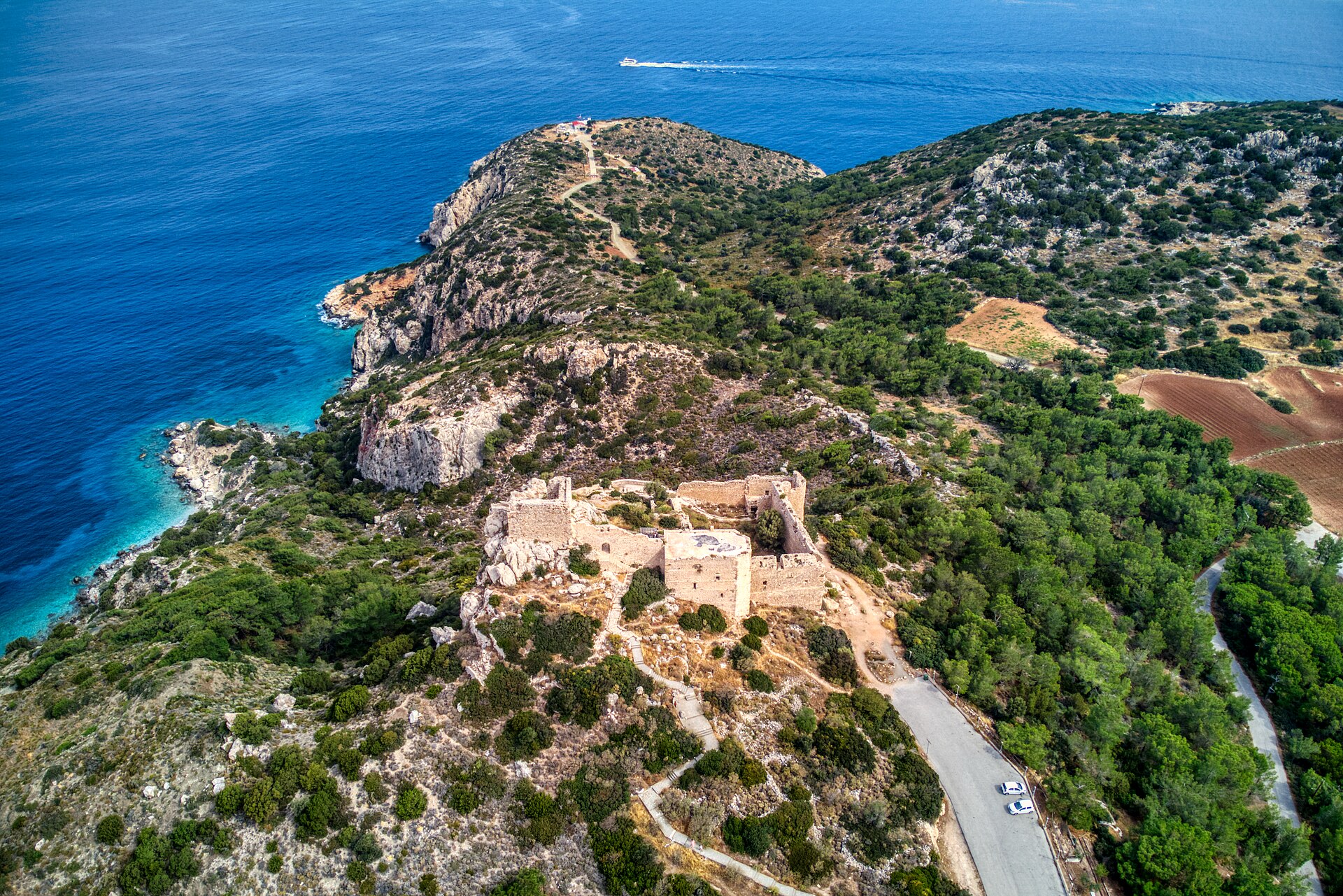
Kritinia joins a western Rhodian village to a separate castle height overlooking the sea toward Chalki and neighboring islands. The fortress preserves walls, towers and Hospitaller heraldry, making the late-medieval defense of a rural coast legible at close range. The village supplies a different scale of history: inhabited streets and local religious life beneath a conspicuous military landmark. Understanding their relationship is more useful than treating every part of the locality as one castle.
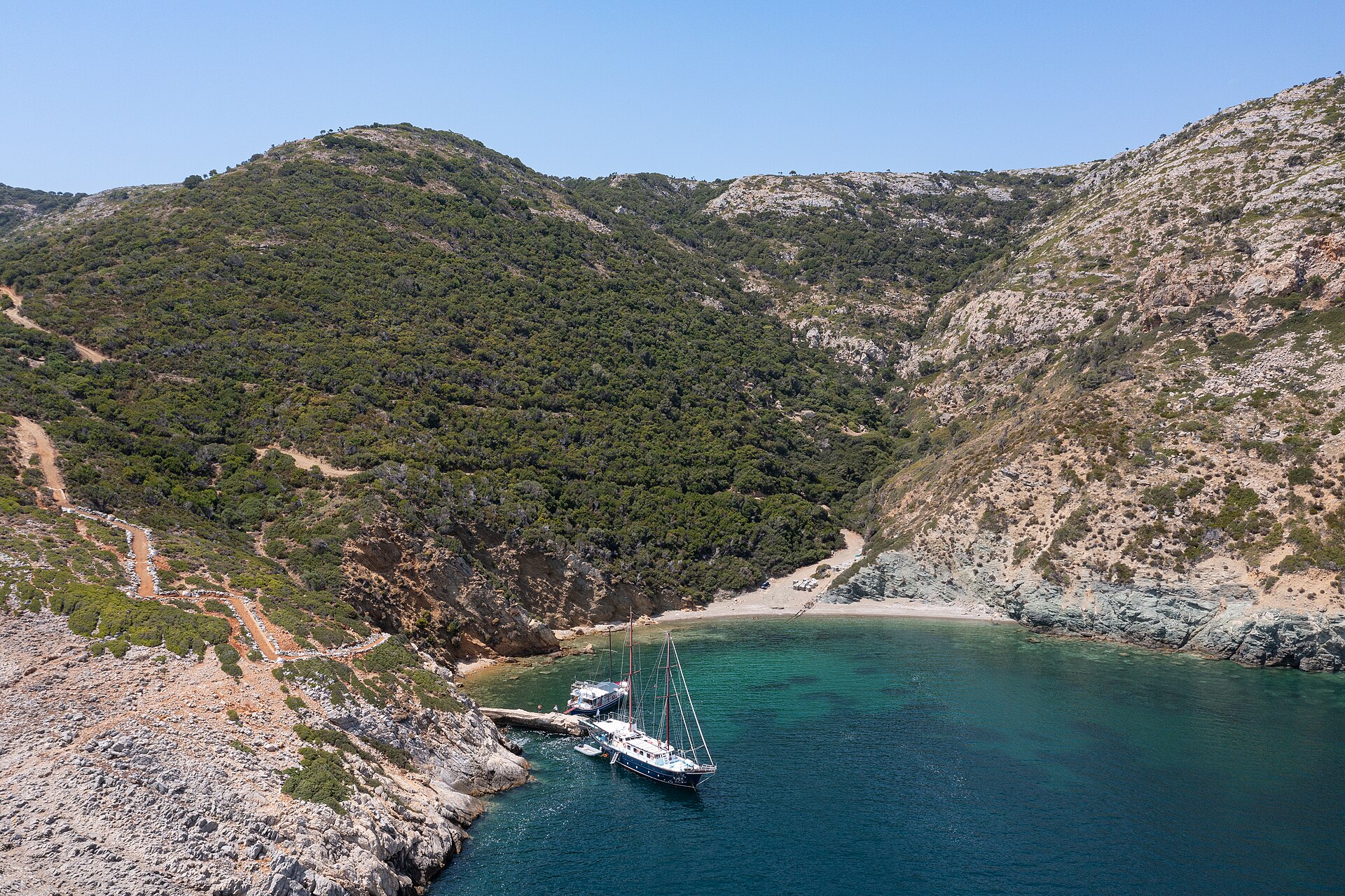
Kyra Panagia, also known as Pelagos, lies north of Alonissos in the Northern Sporades marine park. Its shrub-covered hills, deeply indented bays and monastery create a landscape with few buildings but a long human story. Archaeology at Agios Petros reveals prehistoric settlement and later maritime trade, while the monastery preserves a connection with Mount Athos. Understanding the island means holding those cultural histories together with the protection of its coast, sea and wildlife.
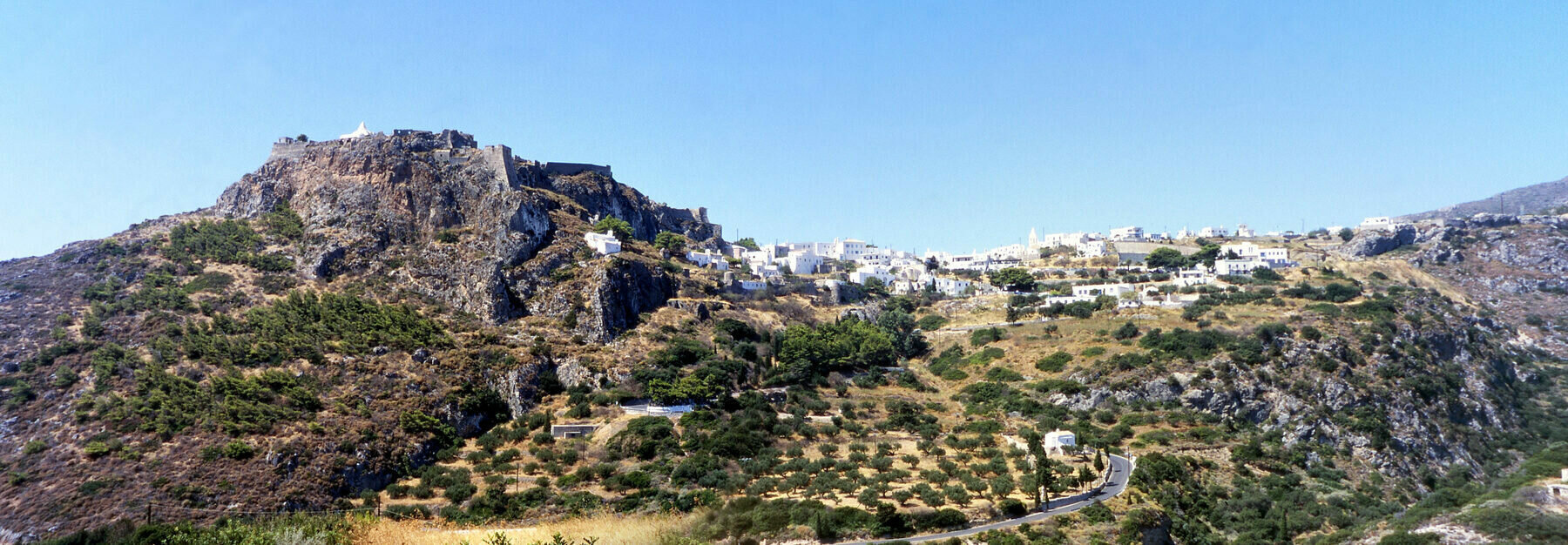
Kythira, also known as Tsirigo, combines a fortified southern capital with ancient archaeology, Byzantine religious heritage, inland villages and a landscape of mills, paths and coastal settlements. Chora’s castle is an important landmark, but the island’s history also survives in museums, churches, abandoned towns and the organization of work and water. Its position between the Peloponnese and Crete connected different seas and cultural traditions.
Kythnos adds an optional Cycladic castle stop to the return leg of Expedition I. Its principal monument is Kastro of Oria, a dramatic ruined medieval settlement on the island's northwestern heights, traditionally identified as the island's medieval capital from the early Byzantine period until its destruction and abandonment in the Ottoman era.
Lavrio is a historic harbor and mining town on southeastern Attica, combining ancient Laurion’s silver-mining landscape with modern marina, ferry, and yachting infrastructure.
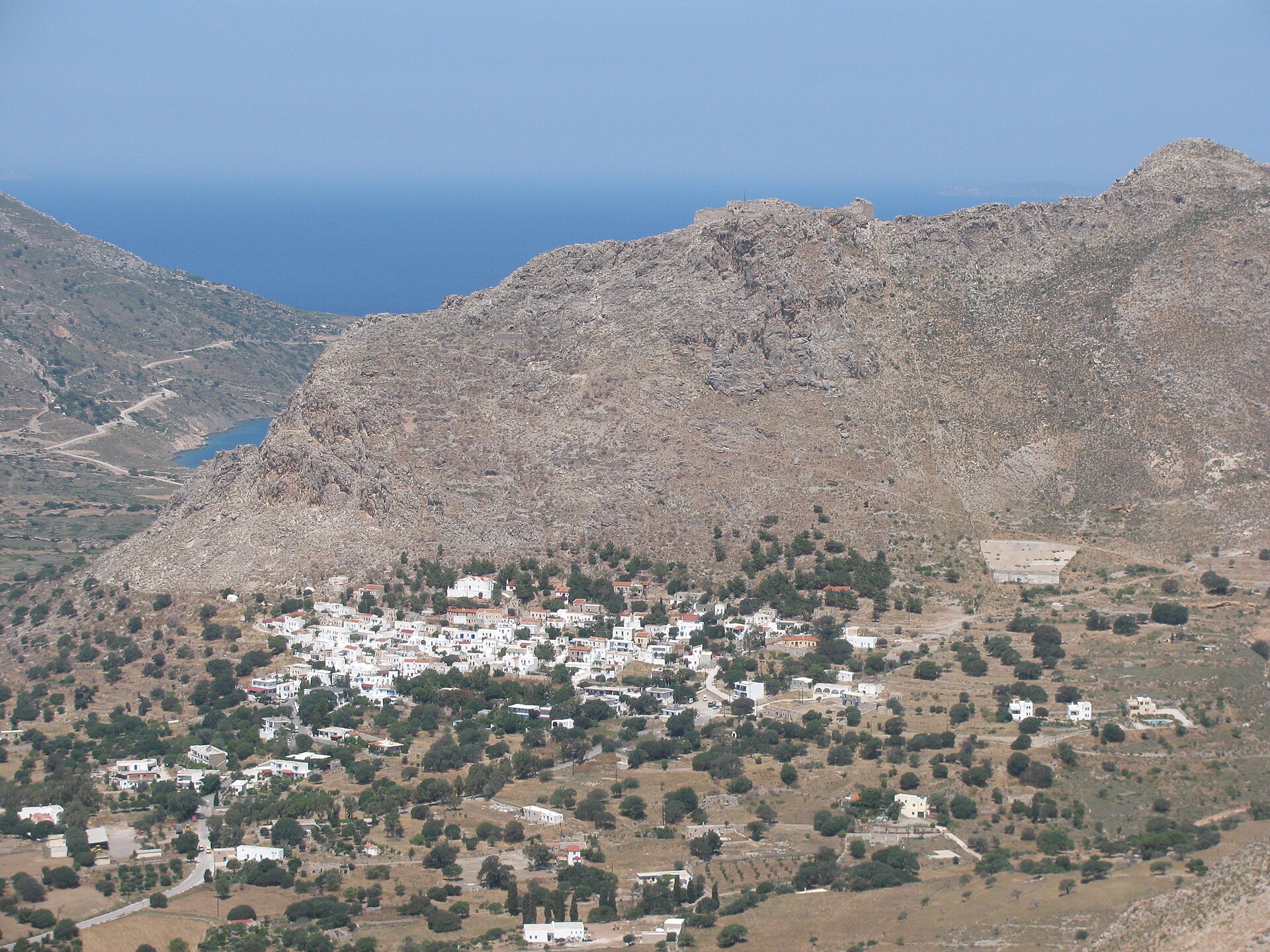
Leros is one of Greece's most layered defensive landscapes. Ancient acropoleis guarded the island long before the Byzantine Castle of Panagia and the Knights of St John dominated the heights above Platanos and Panteli. In the twentieth century Italy transformed Lakki—then Portolago—into a major naval and air base protected by coastal artillery, tunnels and batteries. The island became the focus of the fierce Battle of Leros in 1943. Today castles, gun positions, war museums, rationalist architecture, religious monuments and sites of political imprisonment preserve this unusually continuous military and cultural history.
Lindos rises from a whitewashed village to an acropolis where the sanctuary of Athena Lindia stands inside a later fortress. The approach joins ancient rock-cut sculpture, monumental stairs, medieval gateways and open views over the coast of Rhodes. Below, captains’ houses and the church of Panagia preserve another chapter of the town’s maritime prosperity. Its importance lies in this relationship between sacred summit, defensive stronghold and inhabited settlement.
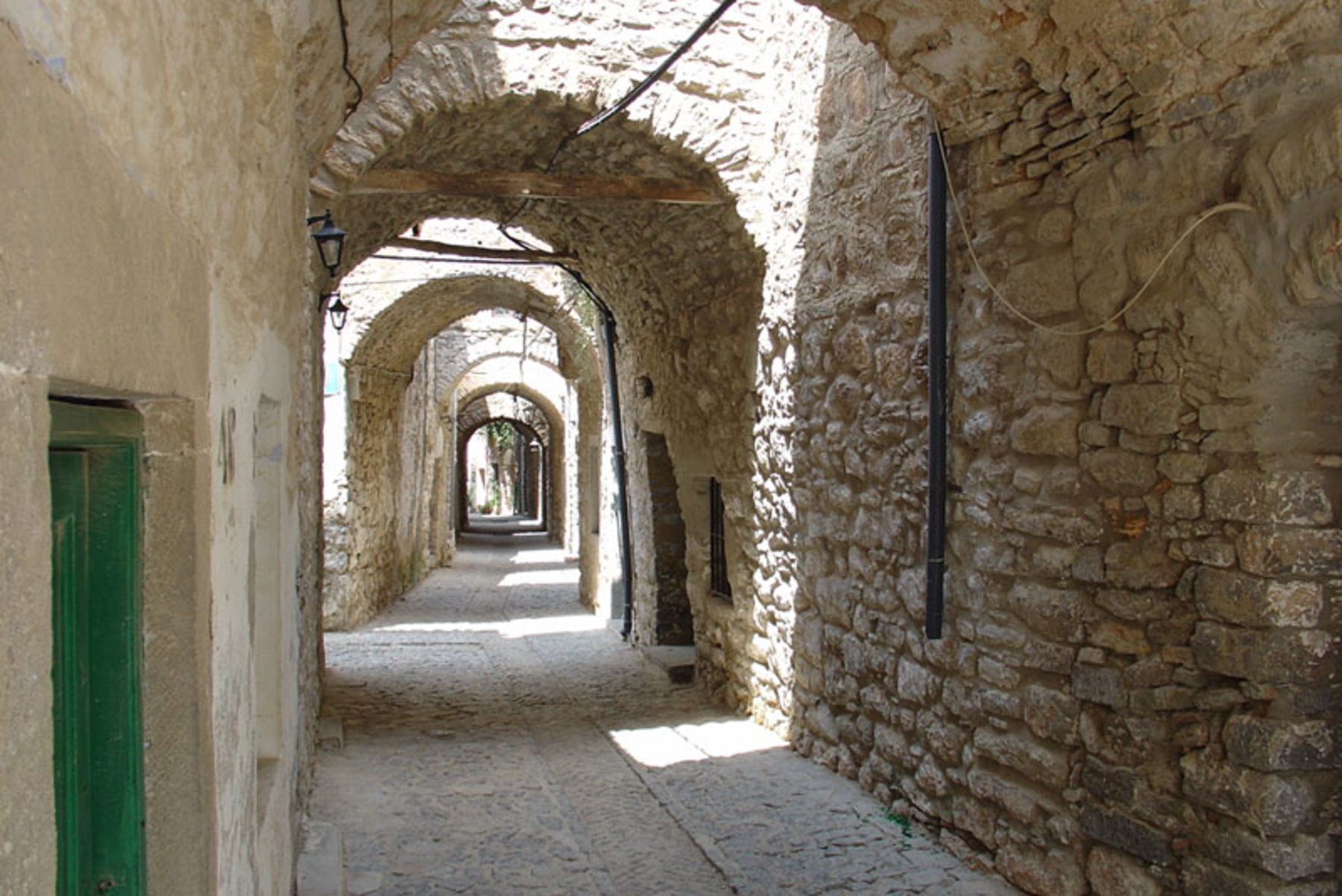
Mesta is one of the best-preserved medieval fortified villages of southern Chios and a defining example of the Mastichochoria, the mastic-growing settlements shaped by defense, commerce and communal life. Its polygonal plan, adjoining stone houses, vaulted alleys, controlled gates and former central tower transformed the village itself into a castle. Developed under Byzantine and especially Genoese influence, Mesta remained closely tied to the cultivation and protection of Chios mastic and survives today as a living historic settlement.
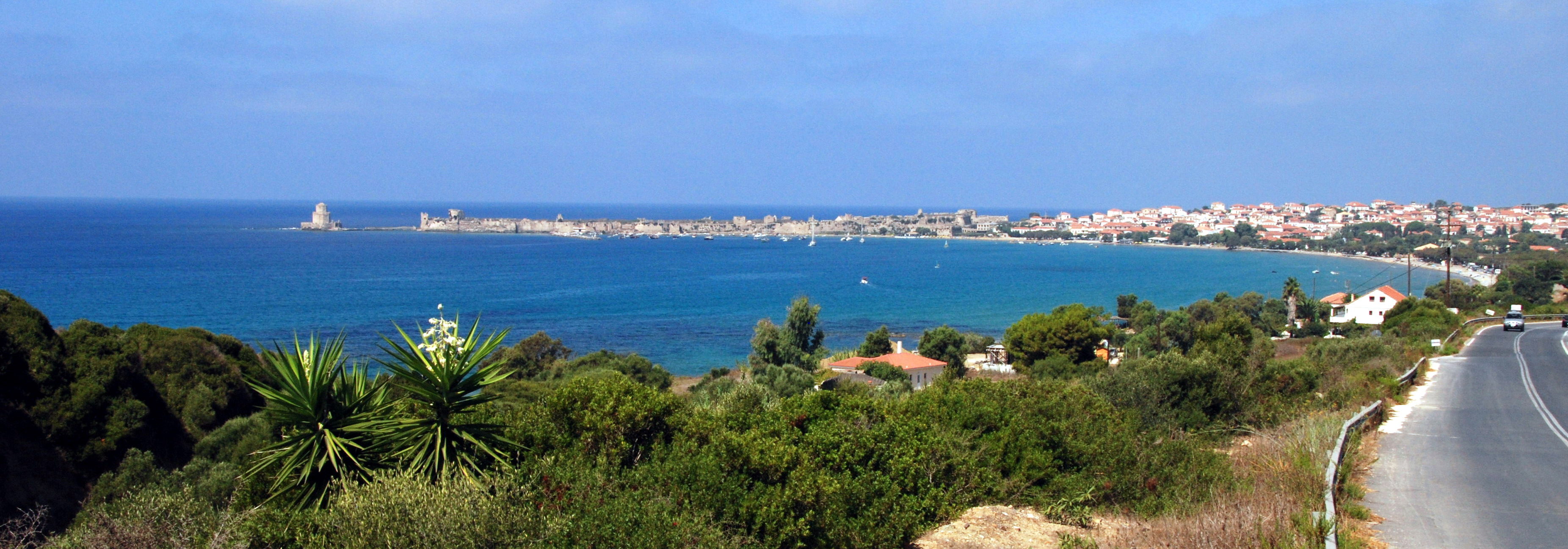
Methoni grew into a fortified port-town on a long cape beside a sheltered harbor. Its walled settlement, northern citadel and sea defenses changed as Venetian and Ottoman rule shifted, while the small Bourtzi guarded the harbor approach. The harbor and sea walls made Methoni a sea-oriented Venetian stronghold; the same coastal exposure now shapes conservation. The western wall’s 2026 protection proposals form one dated part of a wider urban, domestic, ecclesiastical and defensive landscape.
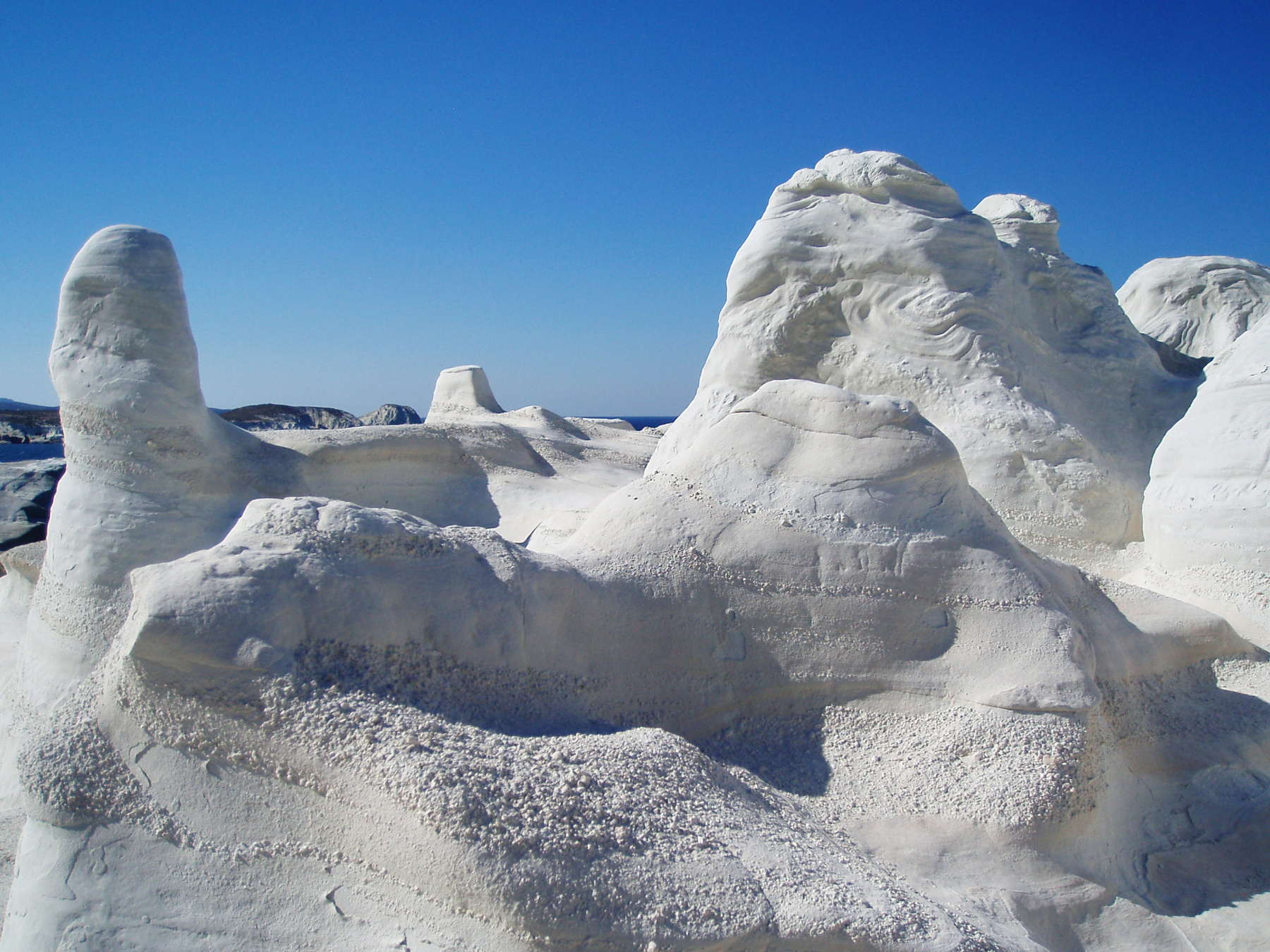
Milos is one of the Cyclades' most distinctive historical landscapes, created by volcanism and repeatedly transformed by human use of its minerals and harbors. Its obsidian circulated through the prehistoric Aegean for millennia; Phylakopi became a major Bronze Age center; ancient Melos is remembered both for its flourishing polis and its destruction by Athens in 416 BC. The Roman theatre, Early Christian catacombs, Aphrodite of Melos, Plaka and Kastro, fishing settlements with syrmata, and an industrial mining tradition extending from sulfur and manganese to modern bentonite and perlite make geology inseparable from the island's culture.
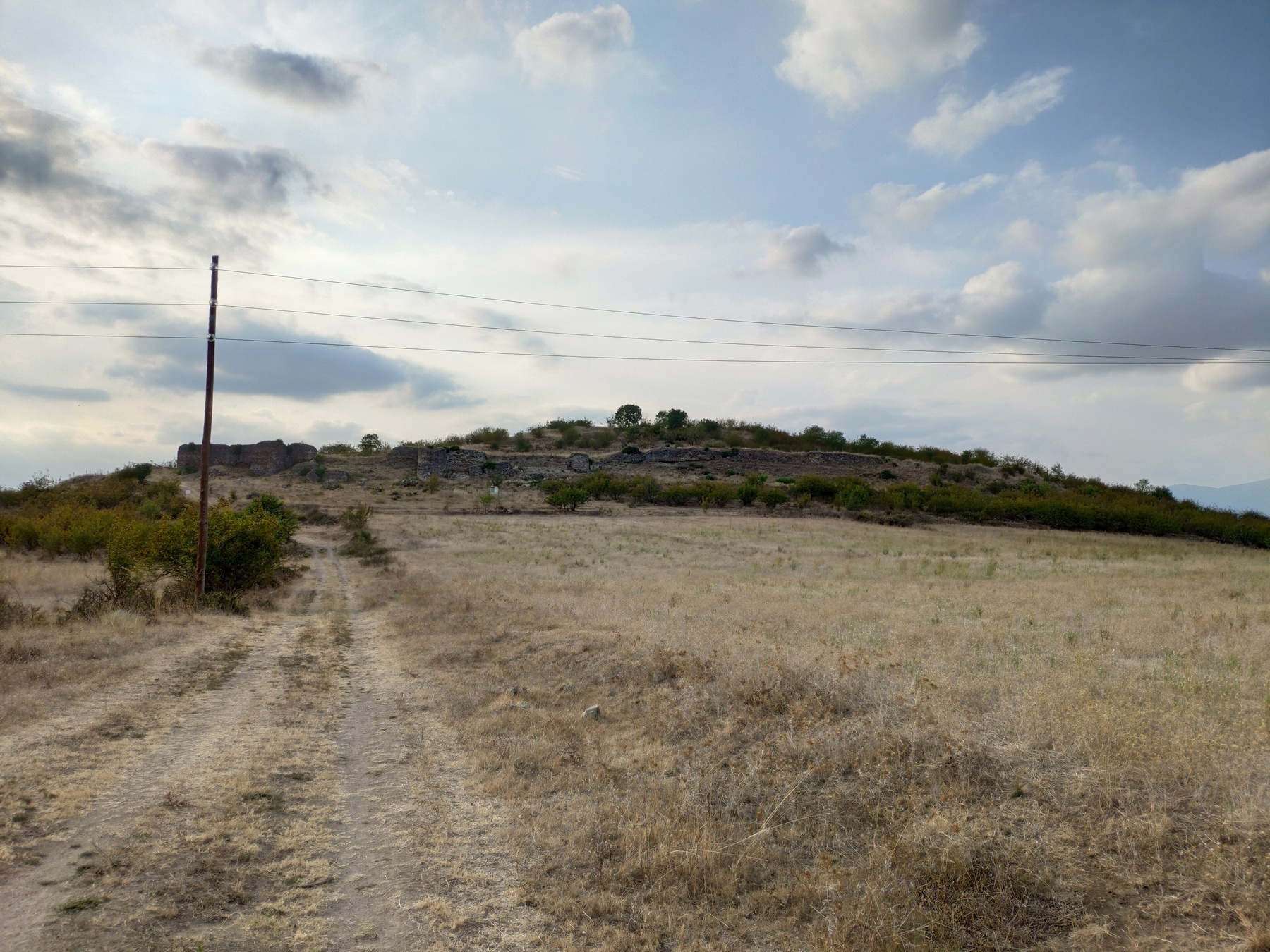
Moglena, also known as the Castle of Chrysi, is a fortified Middle Byzantine town in Almopia, Pella, about 1 km northwest of the modern village of Chrysi. Occupying a low hill beside the Almopaios River, it controlled the enclosed Almopia plain and became both an administrative center and an episcopal seat. Its history is closely tied to the Byzantine-Bulgarian wars, Basil II's siege of 1015, the Norman advance under Bohemond, the Komnenian recovery, and the political contests of the thirteenth century. Surviving walls, towers, an episcopal basilica and a funerary church preserve the form of a provincial castle-city rather than a simple isolated fortress.
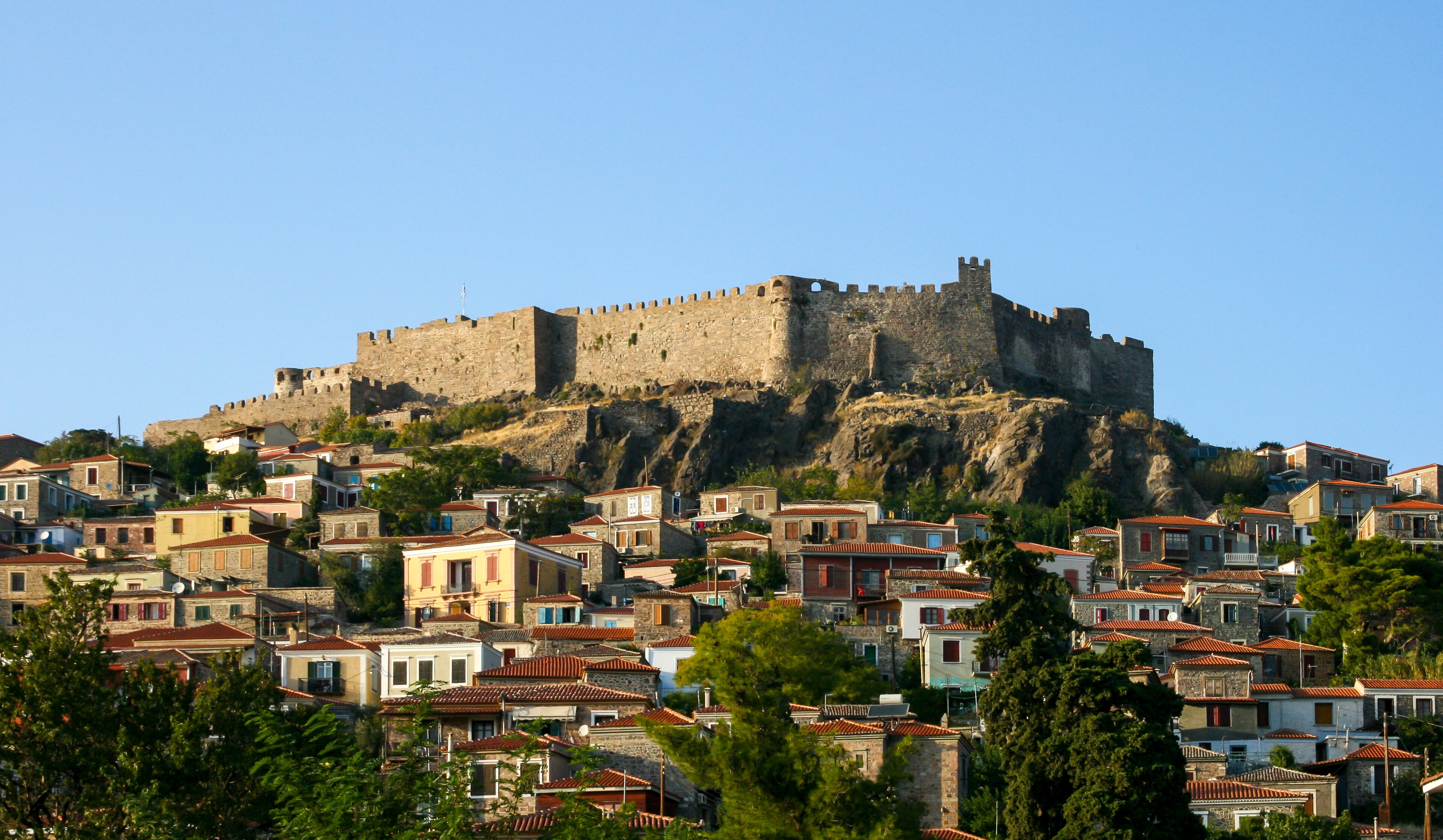
A hilltop castle above Molyvos and its harbor, with layered medieval defenses, wide sea views and a new archaeological collection tracing the history of ancient Methymna.
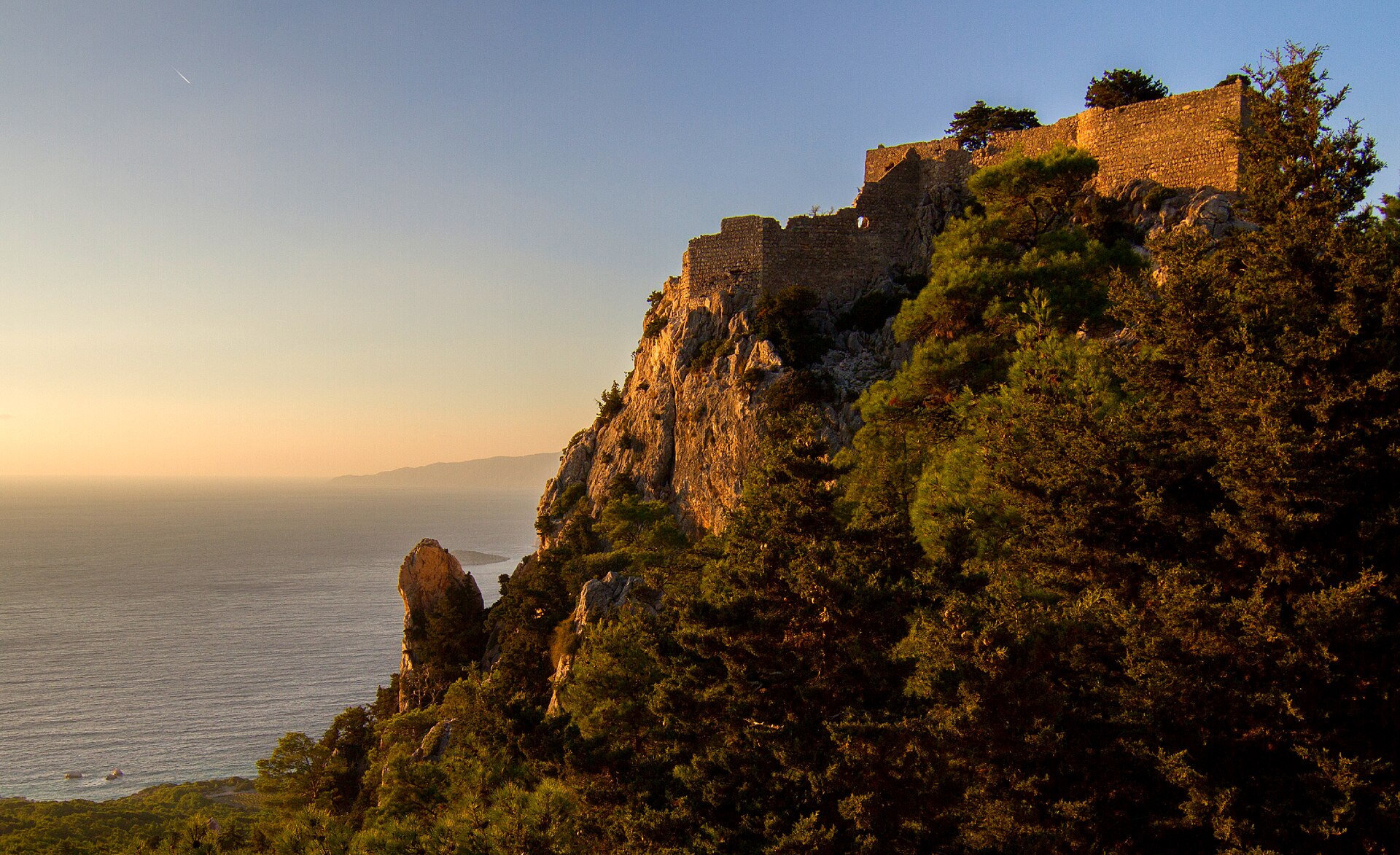
Monolithos is a western Rhodian village associated with a castle on a striking separate rock. The climb makes its defensive logic immediately apparent: a small enclosure gained protection and a wide sea outlook from difficult terrain. Broken walls and chapels now share the summit, while the village below belongs to a continuing rural landscape. The significance lies in the relationship between rock, refuge and habitation rather than in a large surviving military complex.
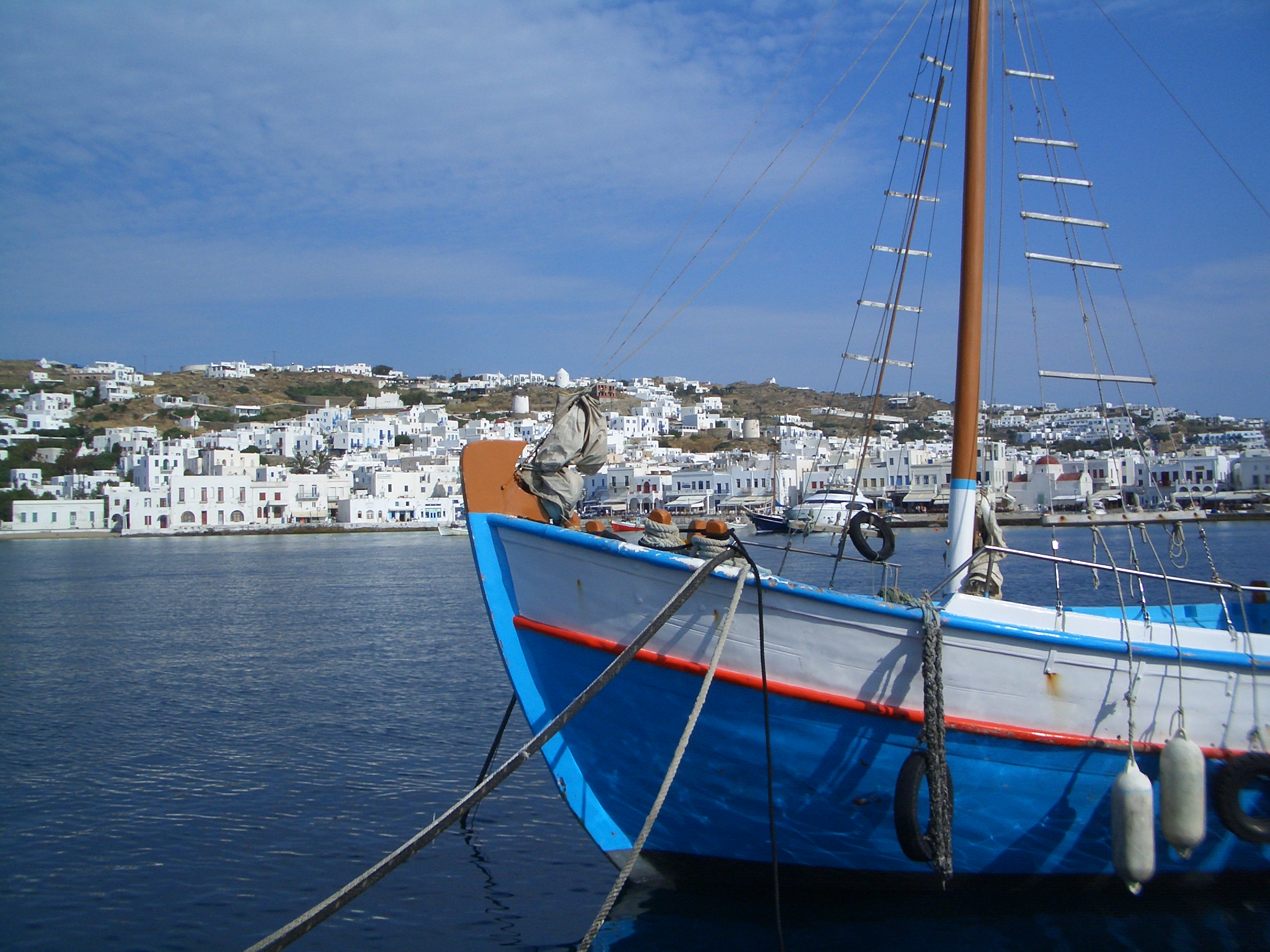
Mykonos is far more than its modern resort image. Its history reaches from the Late Neolithic settlement of Ftelia and a major Mycenaean tholos tomb to two ancient poleis, agricultural towers tied to Delos, a post-Byzantine and maritime Chora, hundreds of churches and chapels, windmills, monasteries, shipping, mining and the twentieth-century rise of international tourism.
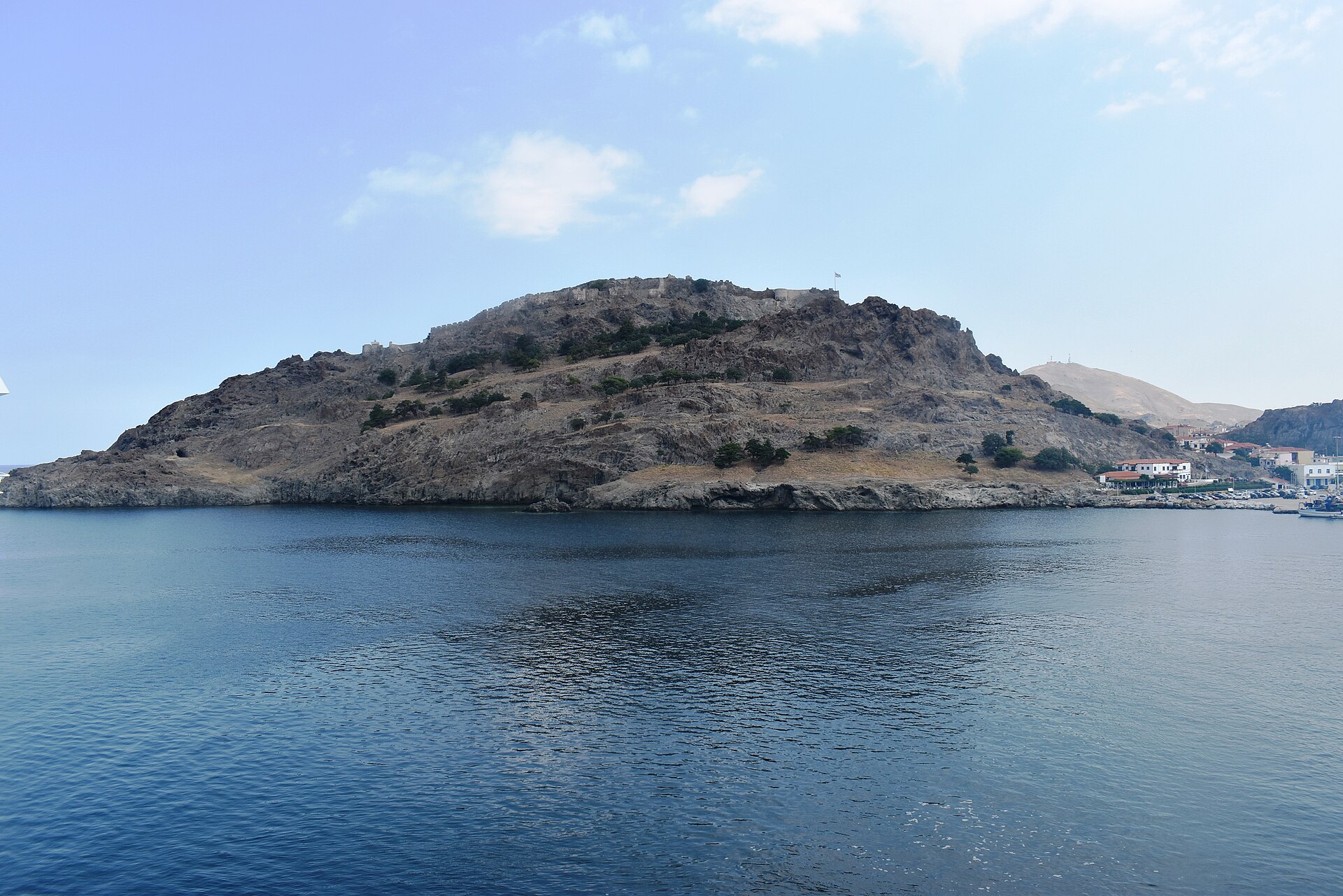
Myrina Castle occupies the steep promontory between the town’s two waterfronts. Its walls follow volcanic rock above the sea, enclosing gateways, towers and the remains of a settlement rather than a single monumental building. Byzantine, Venetian and Ottoman interventions shaped the fortress over centuries. The climb makes the relationship between town, harbors and defensive height unusually clear, while the archaeological museum below places the castle within the much longer history of Lemnos.
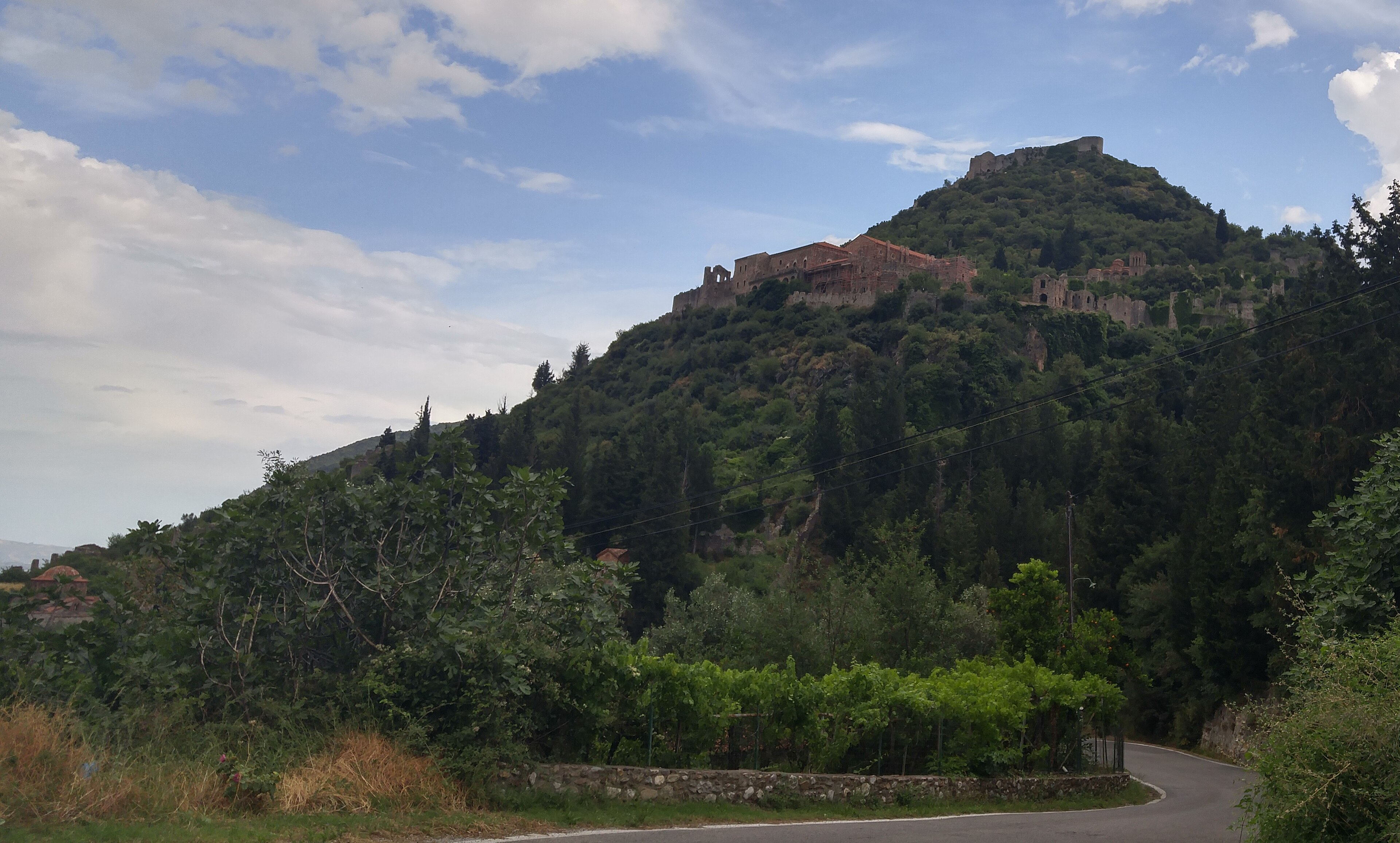
Mystras grew from a Frankish summit fortress into a Byzantine court and administrative city spread across the steep eastern slopes of Myzithra hill. Its citadel, palace, neighborhoods, churches, monasteries, streets, and water installations formed an interconnected urban landscape that continued to change under Ottoman and Venetian rule. Today, its surviving buildings and spaces reveal the relationships between defense, authority, worship, and everyday life, while also bearing the marks of later occupation, archaeological investigation, and conservation.
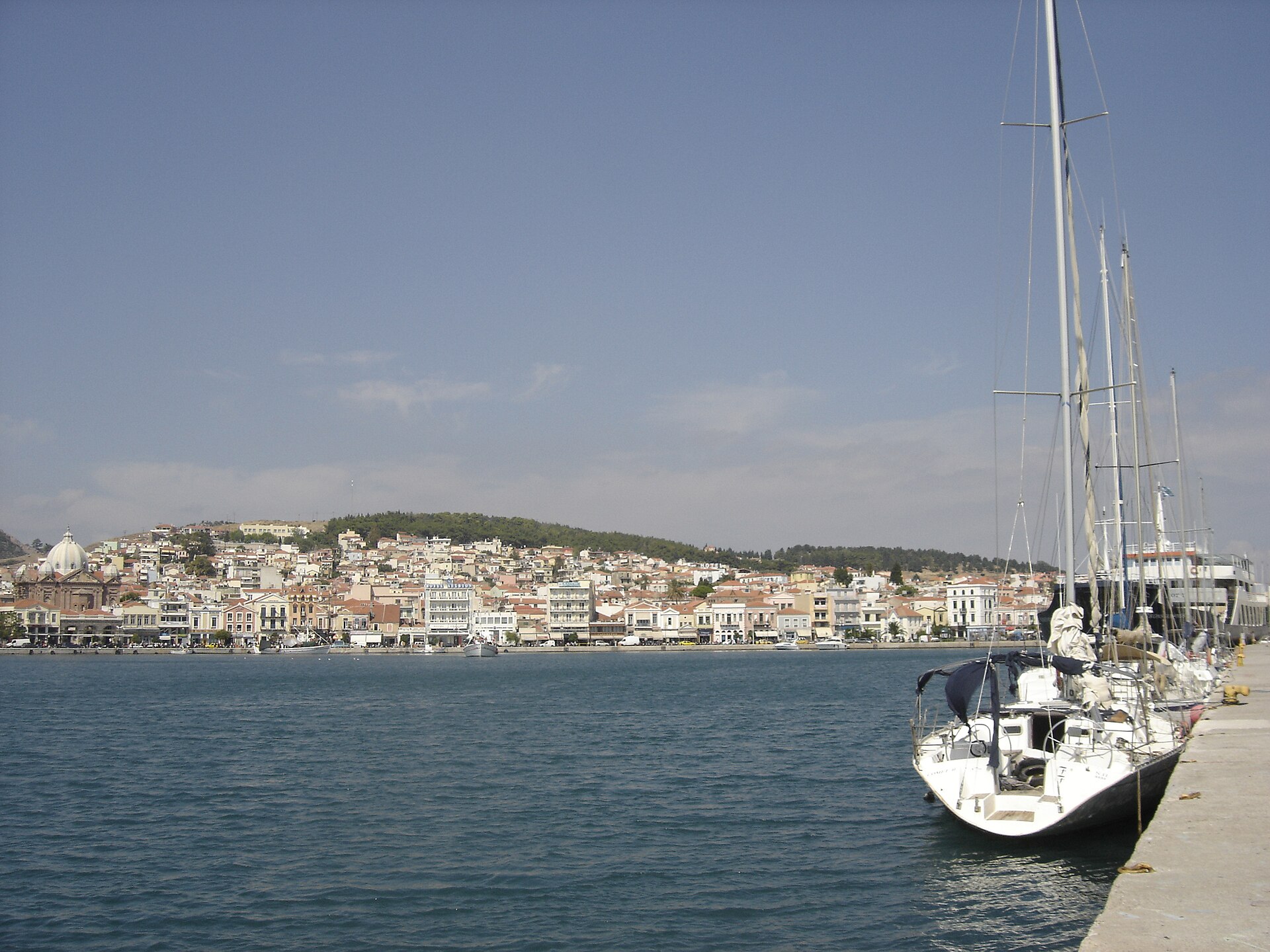
Mytilene developed around a peninsula and two harbors on the eastern coast of Lesvos. Its castle dominates the skyline, but the city’s history also survives in ancient waterfront engineering, Roman domestic mosaics, Ottoman religious buildings and modern museums. The changing relationship between fortification, trade and urban culture makes the city a place to read at several scales: shoreline, enclosed height, commercial streets and the distinct cultural institutions toward Vareia.
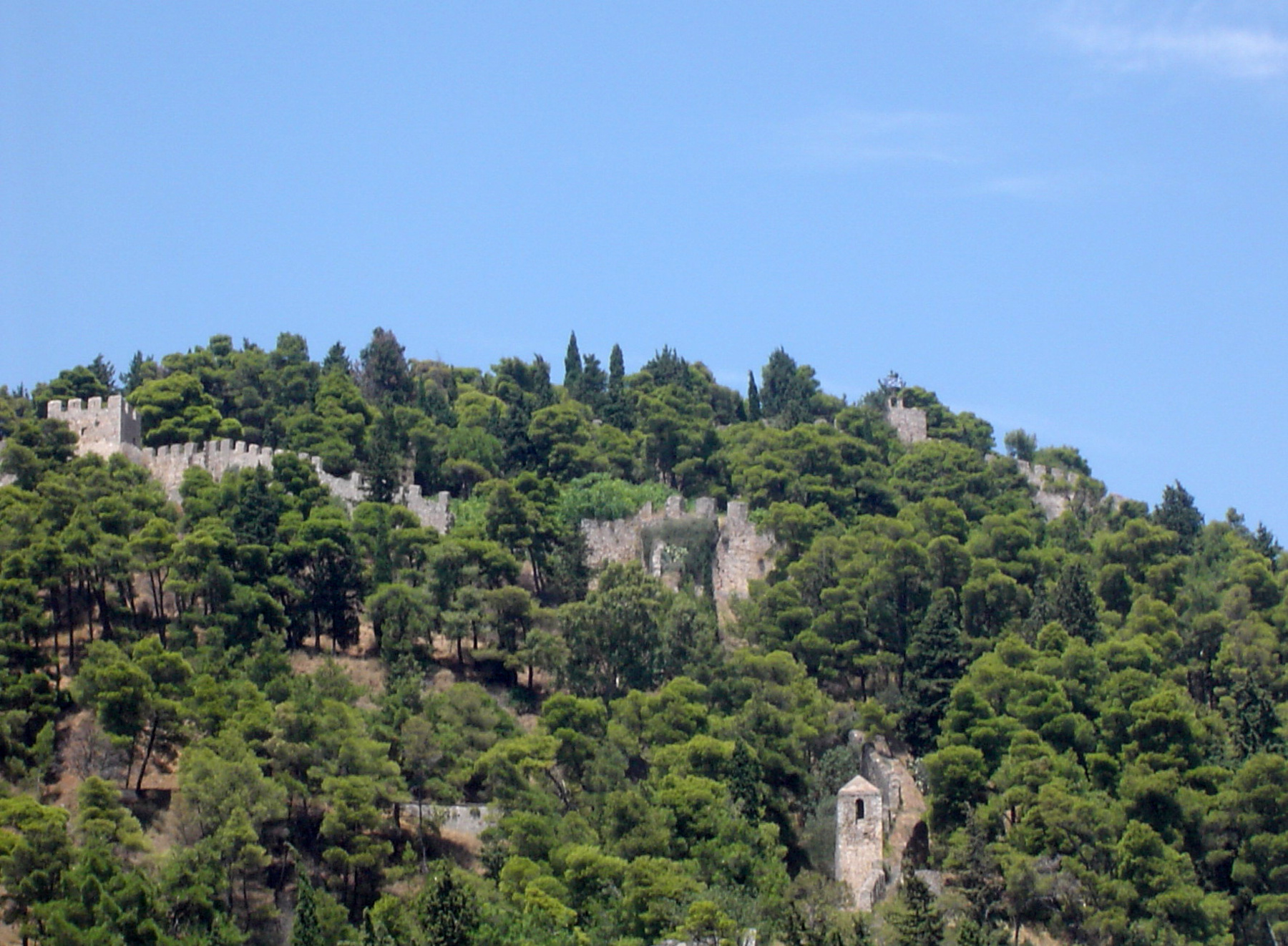
Nafpaktos Castle is not a single hilltop fortress but an entire fortified city descending from an ancient acropolis to a protected harbor. Byzantine defenses were enlarged dramatically under Venetian rule from 1407 to 1499, when walls, gates and artillery bastions enclosed the lower town and the harbor of Lepanto. Ottoman rulers then adapted the system to changing firearms and maintained Nafpaktos as an important naval and administrative center. Its five defensive tiers, surviving ancient and Byzantine masonry, Venetian bastions, Ottoman monuments and famous harbor make Nafpaktos one of the clearest examples in Greece of fortification evolving continuously with the city it protected.
Nafplio brings together an inhabited old town, a sheltered Argolic harbor and three striking defensive heights and islands. Akronafplia, Bourtzi and Palamidi explain how its protection changed, while streets, public squares and the Archaeological Museum connect the town to the wider history of the Argolid. Its revolutionary and early-state associations add another layer to a place best explored as a city rather than a collection of separate castles.
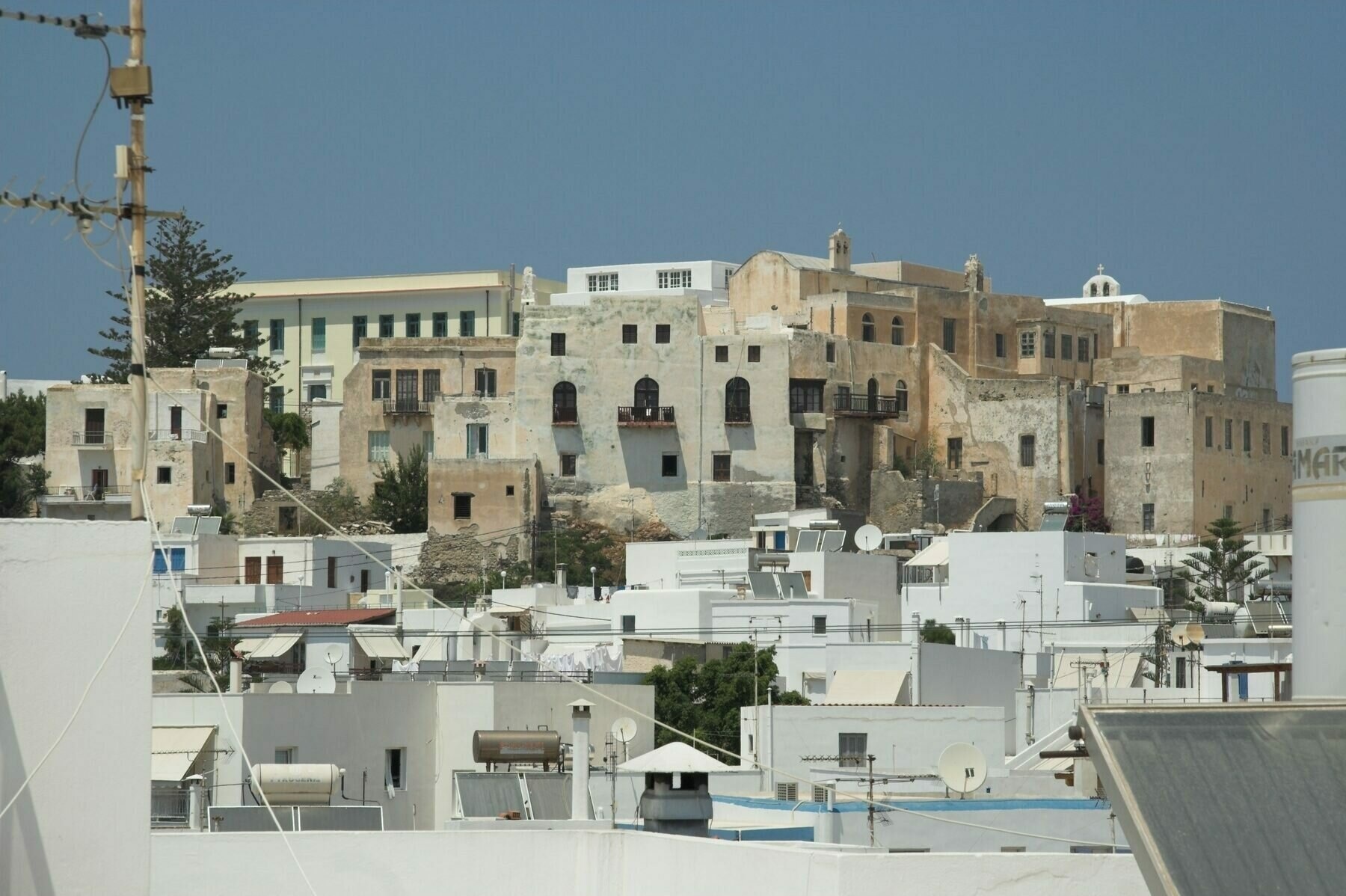
Naxos Chora combines two of the Cyclades' defining monuments: the ancient Portara on Palatia islet and the medieval Venetian Kastro at the heart of the old town. Together they frame the island's transition from ancient sacred landscape to the capital of the Duchy of the Archipelago.
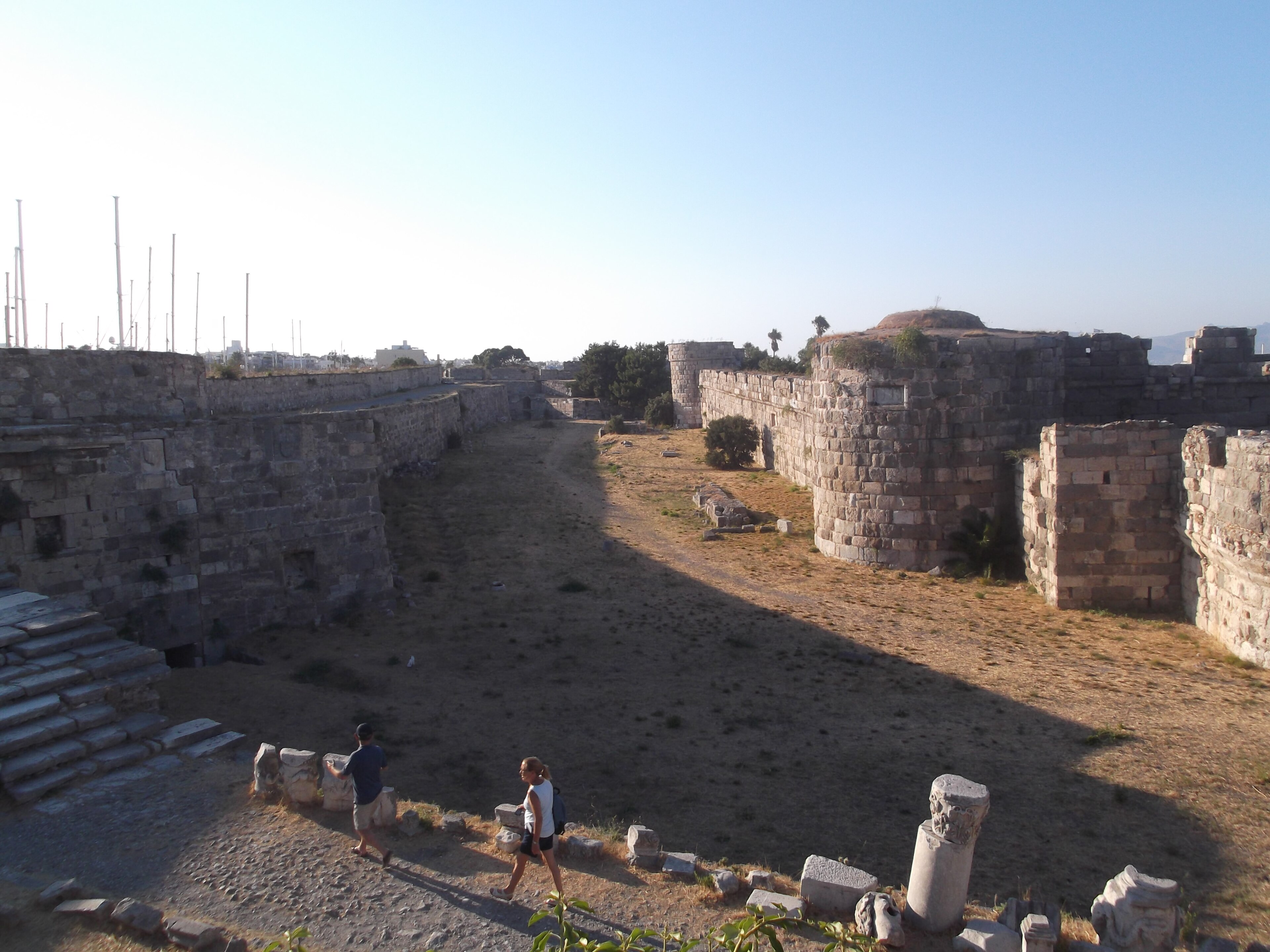
Neratzhia is the great Hospitaller fortress at the entrance to Kos harbor, where medieval military architecture is physically interwoven with the ancient city and the modern town. Its two defensive enclosures, artillery bastions, ancient spolia, bridge and moat preserve the transition from medieval castle to early modern gunpowder fortress, while Ottoman use, Italian restoration and the post-2017 conservation campaign reveal how every later regime reinterpreted the monument.
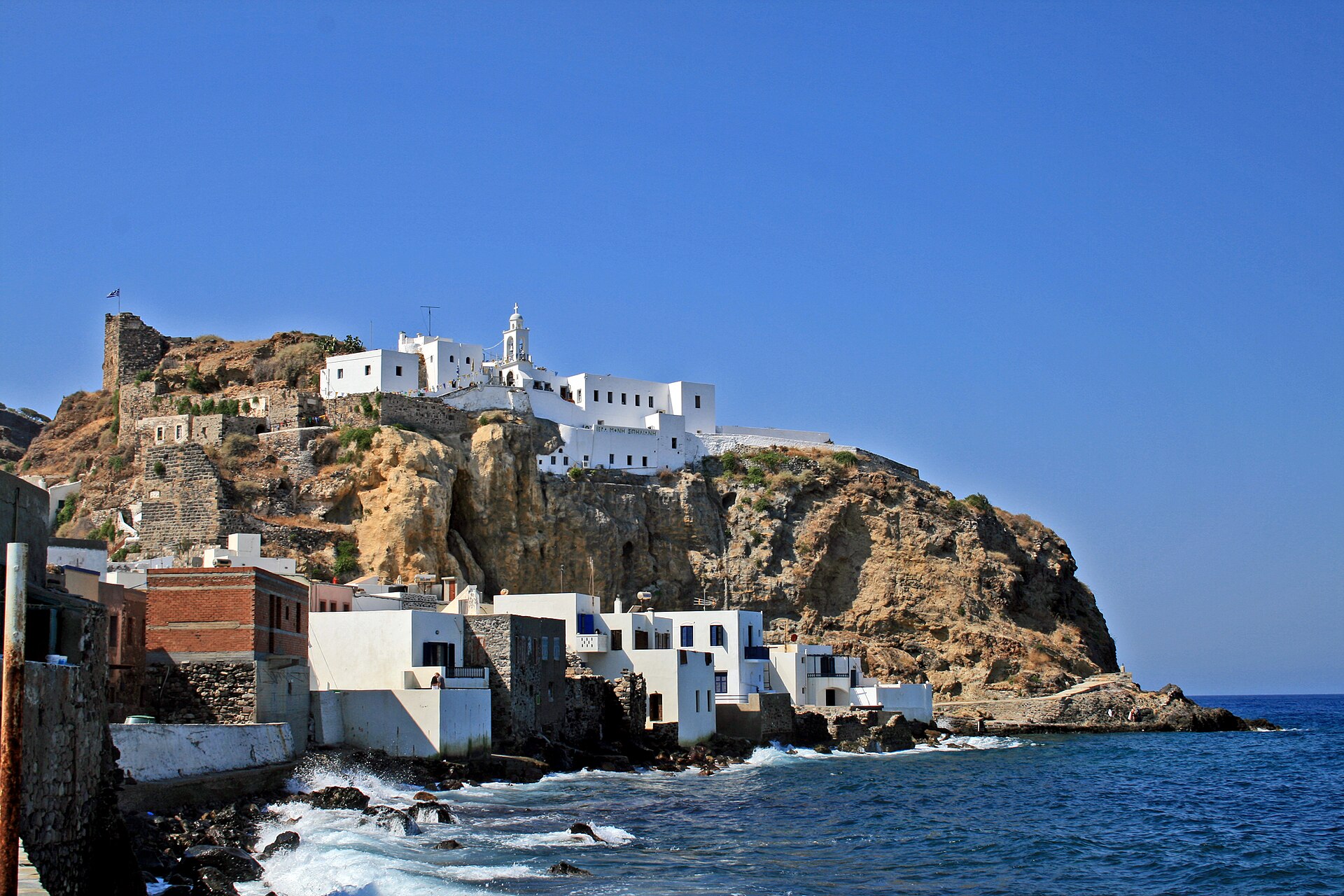
Above Mandraki, Nisyros preserves two very different encounters between settlement and defense: the dark volcanic-stone walls of ancient Palaiokastro and the medieval castle rock crowned by Panagia Spiliani. Together they connect the island’s fortified past with its living harbor town, monasteries and volcanic landscape. The ancient gateway and towers reward close inspection; the waterfront and hillside lanes reveal how daily life has continued around these commanding sites.
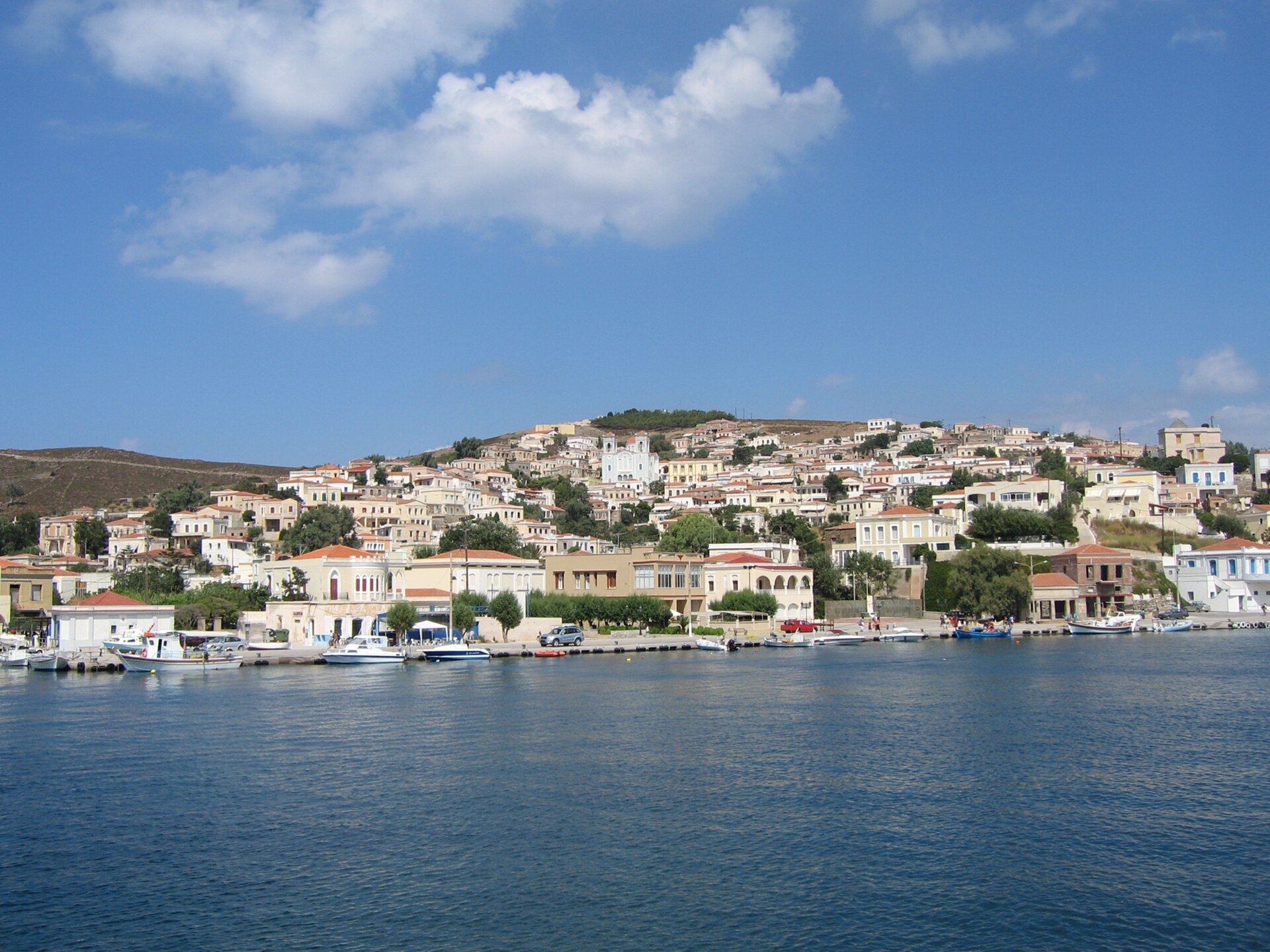
Oinousses is a small island group between Chios and the coast of Asia Minor, with a maritime influence far greater than its size suggests. The principal settlement climbs above the harbor in tiled-roof houses and narrow lanes, while its museum preserves the ships, paintings and family memories of generations at sea. Here the cultural story centers on seamanship, migration, education and island patronage. The waterfront, museum and living town offer complementary ways to understand that relationship.
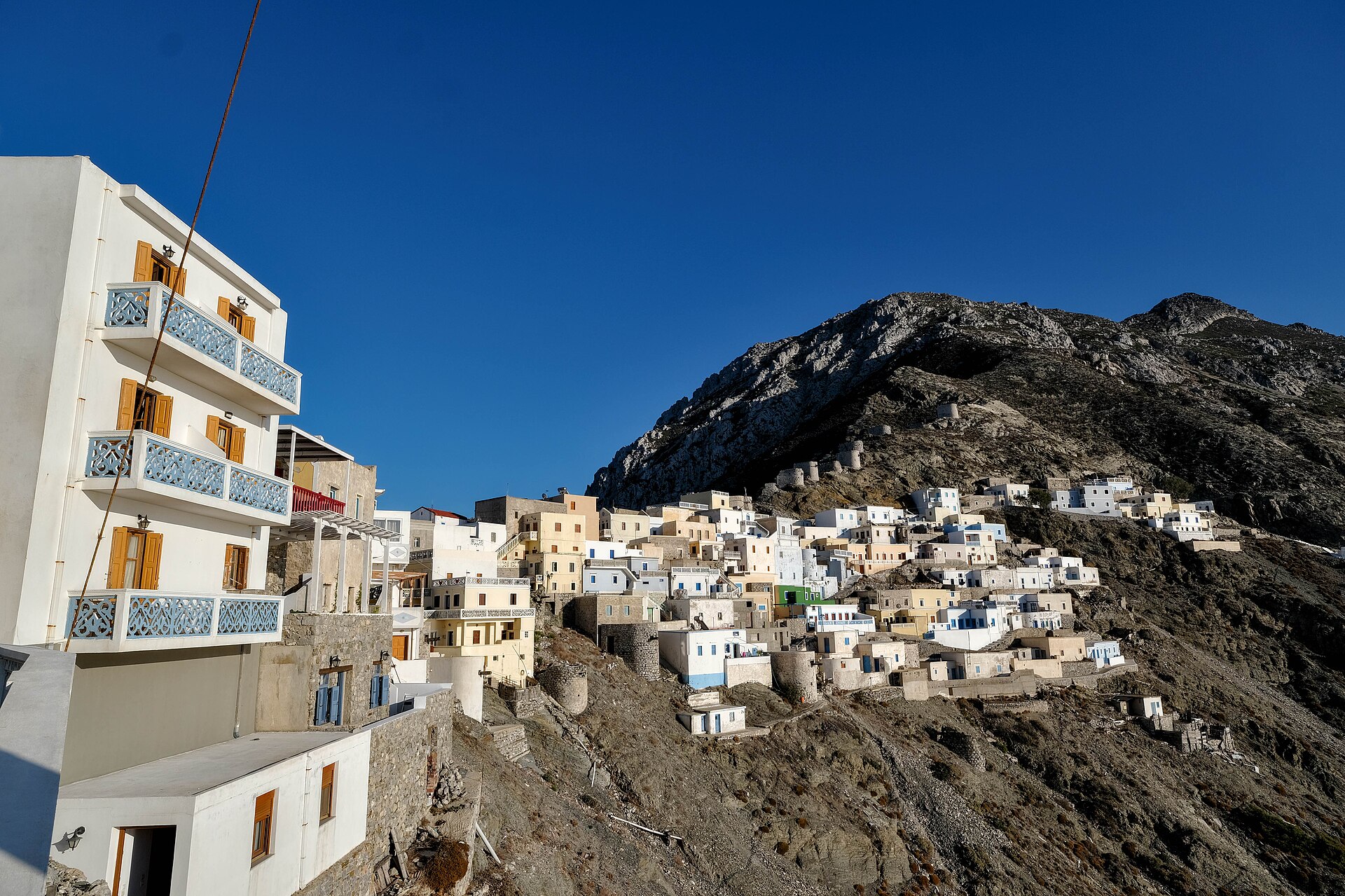
Olympos occupies a ridge in northern Karpathos, where closely grouped houses, churches and windmills overlook a rugged coastal landscape. Its significance lies in a community’s changing ways of working, worshipping and transmitting knowledge, rather than in an image of time standing still. Agriculture, household craft, music and migration connect the village to a wider world, while neighboring Avlona and the coastal settlement of Diafani have their own distinct roles.
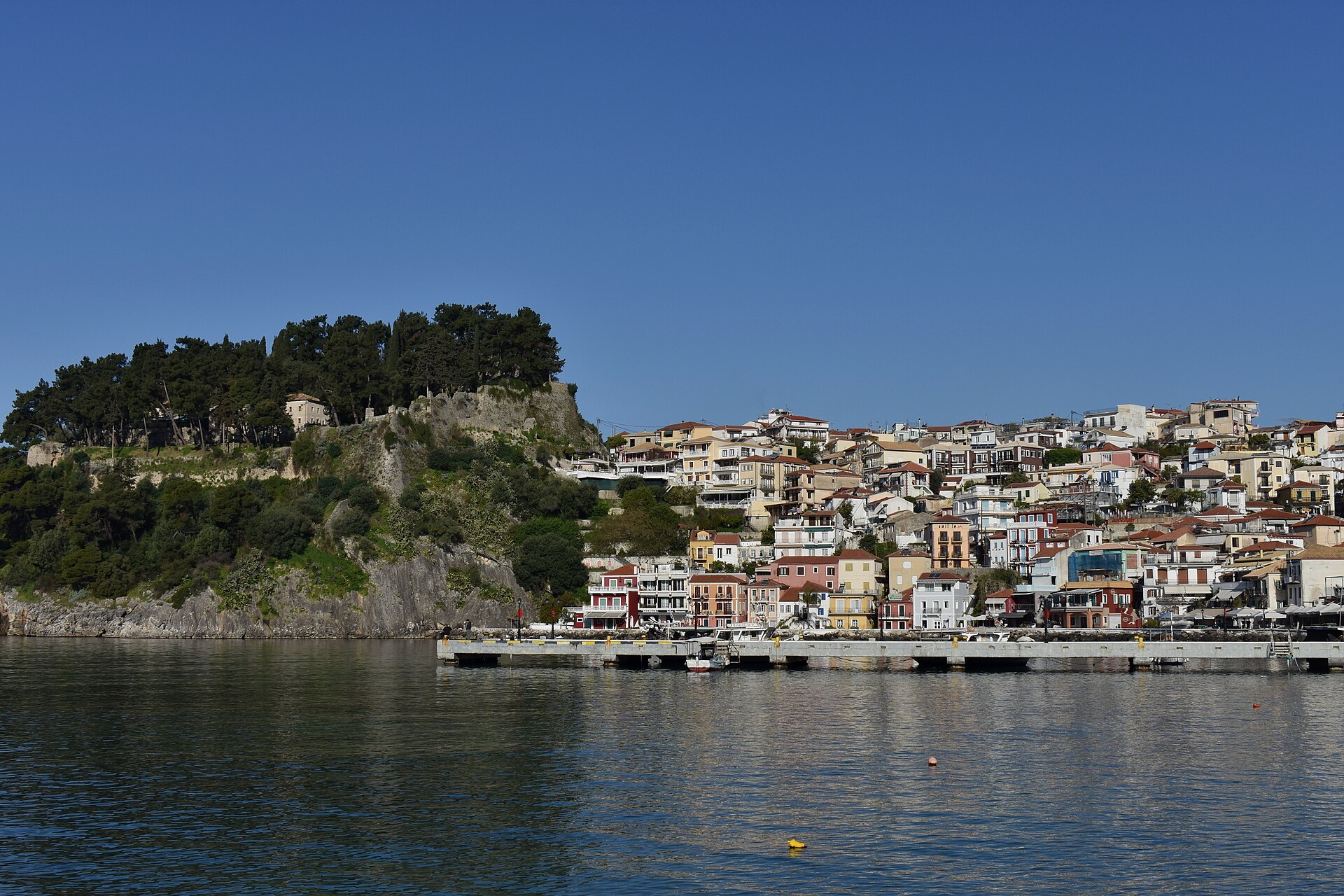
Parga’s colorful town rises between a waterfront bay and a fortified peninsula. Its history joins mainland Epirus to the Ionian islands through trade, protection and the memory of displacement. The castle is the strongest visual anchor, but houses, lanes, churches and the town’s cultural collections belong to the same story. Venetian and later Ottoman alterations are visible above a settlement whose relationship with Corfu was political and social as well as maritime.
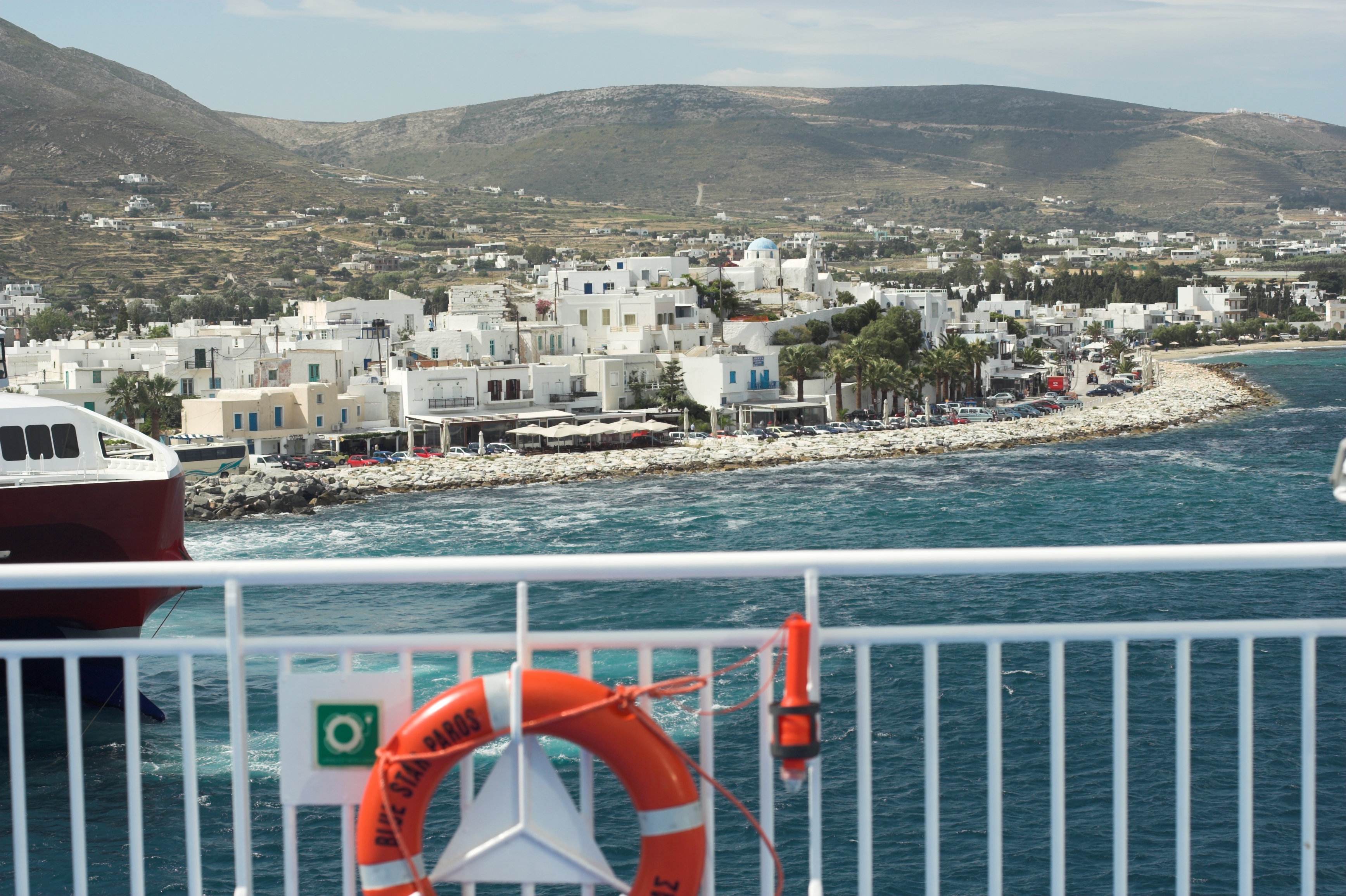
Paros is one of the Cyclades' most historically layered islands: a prehistoric settlement landscape, a wealthy Archaic polis enriched by luminous marble and sculpture, an Early Byzantine episcopal and pilgrimage center, a fortified medieval island with castles at Paroikia, Naoussa and Kefalos, and a maritime-agricultural society whose villages, harbors, churches and quarry landscape remain central to its identity.
Passava is a ruined fortress near the eastern approach to Mani, where a defended height overlooked movement between the Gytheio area and the peninsula’s interior. It is associated with the Frankish barony of Passavant and later Ottoman and Maniot conflict. The surviving enclosure and sparse internal remains make a small frontier strongpoint legible, but do not support a complete building history. Its interest lies in the relationship between a contested passage, a garrison and communities beyond straightforward territorial control.
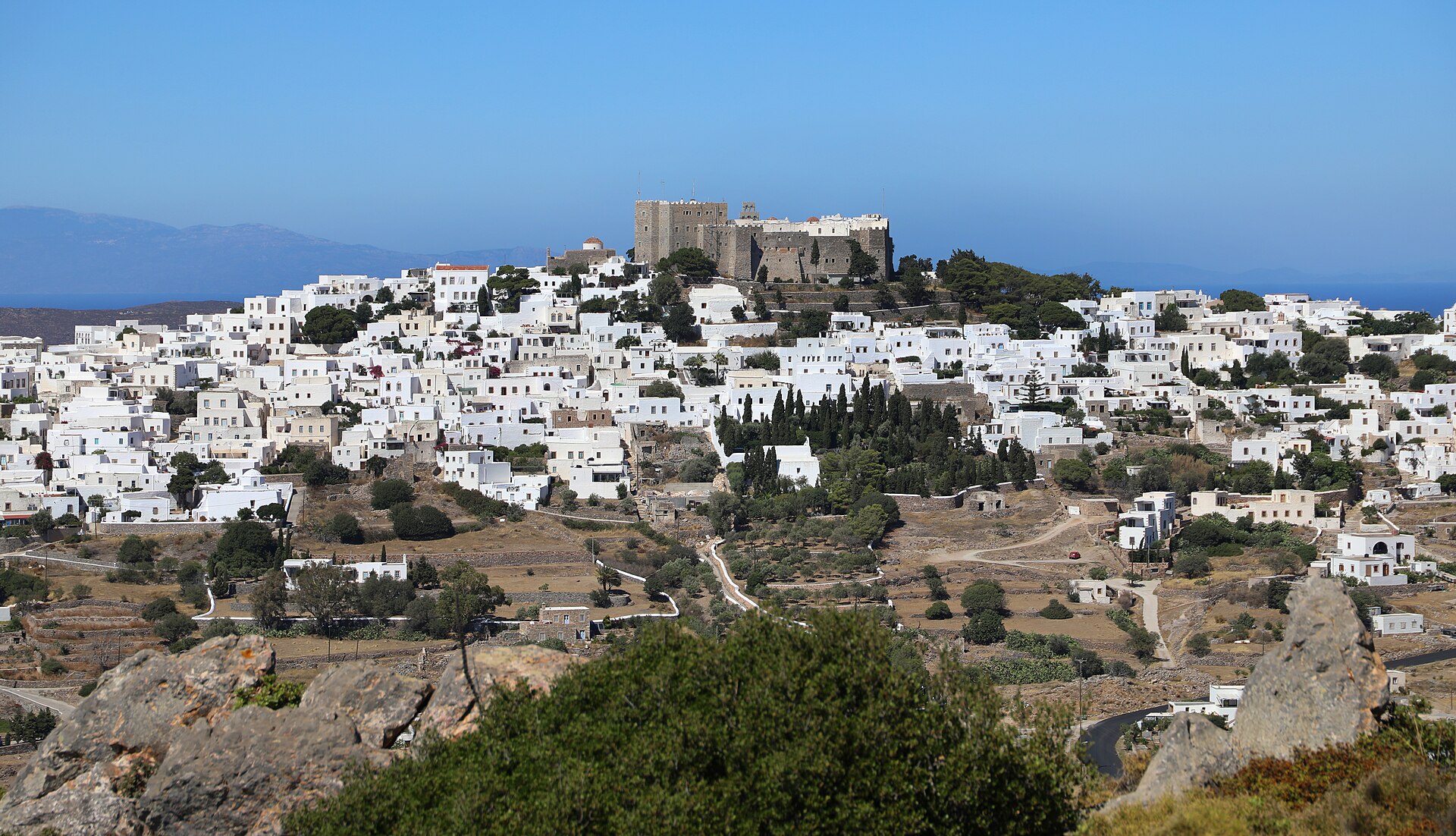
Patmos is shaped by the relationship between a hilltop monastery, the settlement gathered around it and the sea below. Saint John’s fortified enclosure dominates Chora, while the Cave of the Apocalypse lies on the slope towards Skala. Together they form a UNESCO World Heritage ensemble whose importance reaches beyond architecture: pilgrimage, manuscripts, education and maritime exchange have helped sustain the island’s culture. A visit rewards attention to houses and paths as well as the great religious landmarks.
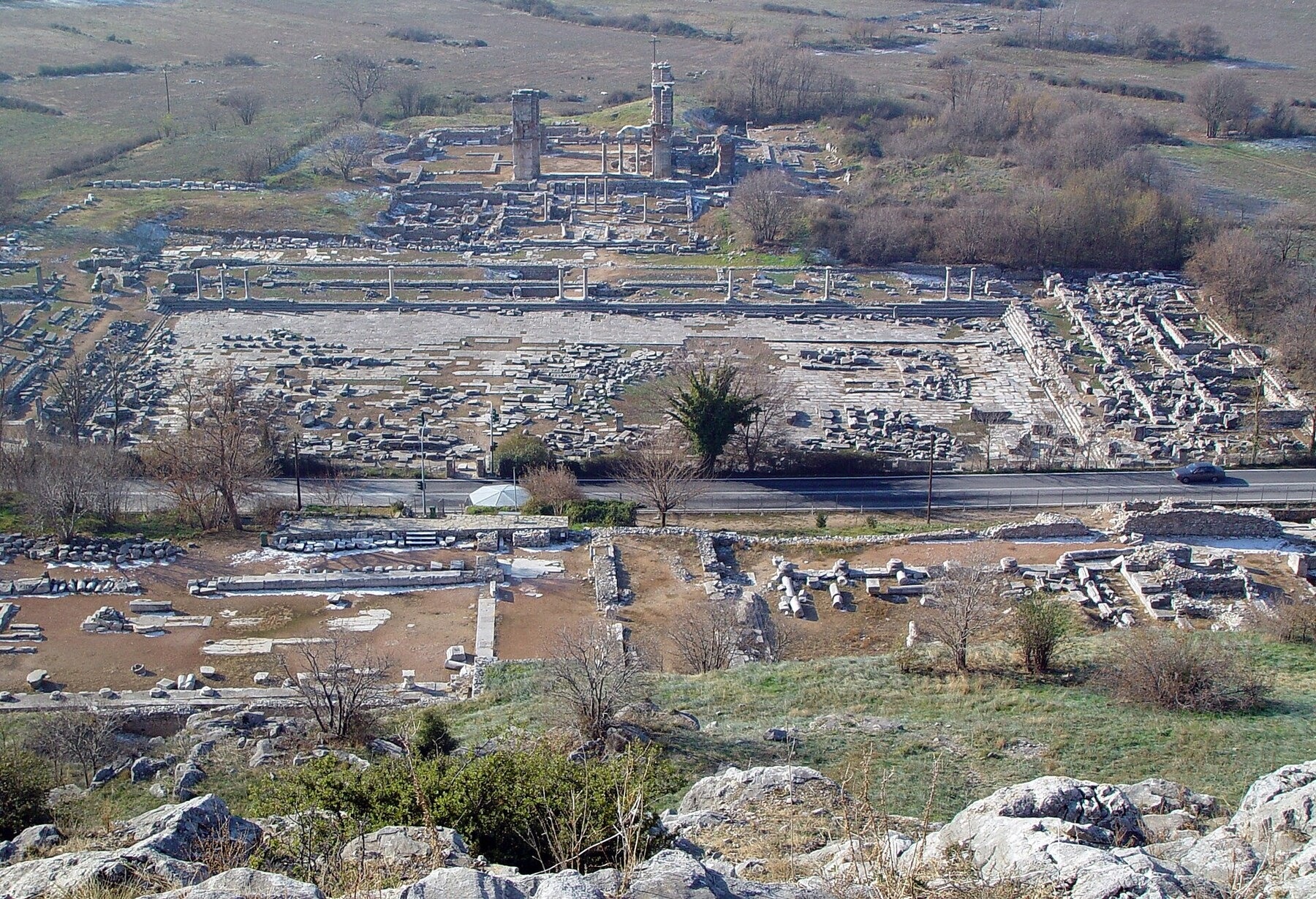
Philippi occupies one of the most consequential archaeological landscapes in northern Greece. Founded as Krenides and renamed by Philip II of Macedon in 356 BC, the city controlled fertile land, mineral resources, and the route later formalized as the Via Egnatia. The nearby battlefield of 42 BC helped end the Roman Republic, after which Philippi became a veteran colony reshaped in the image of Rome. In the first century AD, Paul established an influential Christian community here. Its theatre, forum, paved road, monumental basilicas, Octagon, walls, and acropolis reveal successive Macedonian, Roman, Early Christian, and Byzantine cities.
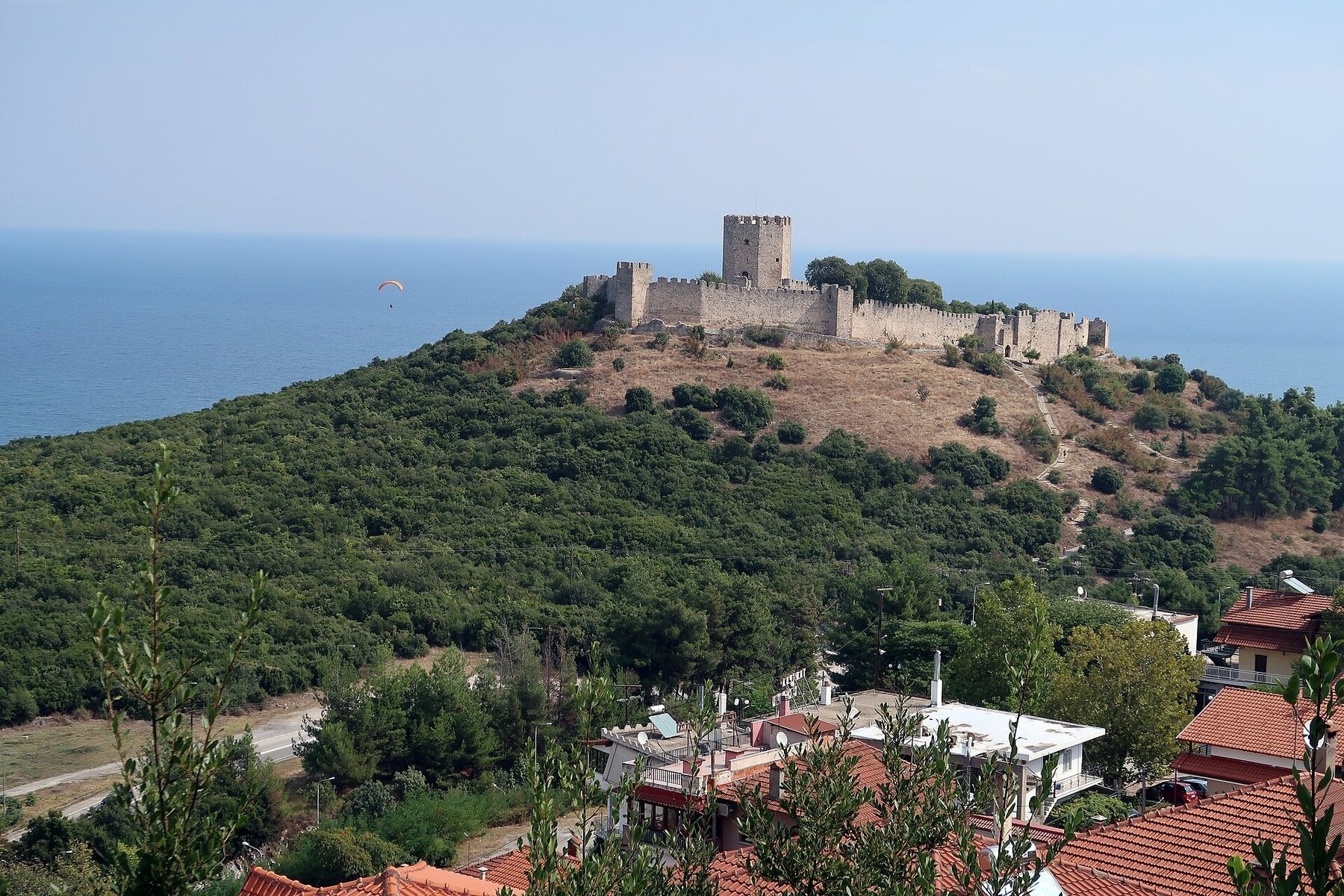
Platamon Castle occupies one of the most strategically expressive sites in Greece. From its hill above the coast, the fortress controls the constricted passage between the Tempe valley, southern Pieria, and the Macedonian plain. The surviving enceinte, inner acropolis, and imposing polygonal keep embody successive Middle Byzantine, Frankish, Late Byzantine, Venetian, and Ottoman phases. Beneath Mount Olympus and directly above the Aegean, the castle combines military architecture with an unusually legible landscape: roads, railway, shoreline, mountain passes, and maritime approaches all converge within view of its walls.
Psara is a small, rugged island whose influence on the Greek War of Independence far exceeded its size. Its prosperous merchant fleet, celebrated fireship captains, and destruction in 1824 made it an enduring symbol of naval resistance, sacrifice, and national memory.
Pyrgi is one of the mastic villages of southern Chios, where a compact medieval settlement meets an extraordinary tradition of decorated house fronts. Its xysta patterns make the streets memorable, but the village rewards attention beyond its façades: defensive planning, the domed Church of the Holy Apostles and the surrounding cultivated landscape tell connected stories of protection, worship and work. The nearby Chios Mastic Museum explains the skills and institutions behind the resin that helped shape this region.
Pythagoreio is a living harbor town over the ancient city of Samos, where maritime infrastructure, fortifications, public and religious monuments, water systems and later settlement form a connected archaeological landscape. Above the harbor, the Castle of Lykourgos Logothetis preserves the memory of Byzantine defenses, Genoese strengthening as described by the Ministry of Culture, and revolutionary-era reuse. The castle hill, its tower and the Church of the Transfiguration are important parts of the town’s story, but they belong within a wider urban fabric rather than standing for it alone.
Rethymno preserves one of the finest surviving examples of a Venetian provincial city in Crete. Dominated by the great Fortezza, its old harbor, Renaissance street fabric, civic buildings, churches and Ottoman monuments form a coherent fortified urban landscape between Chania and Irakleion.
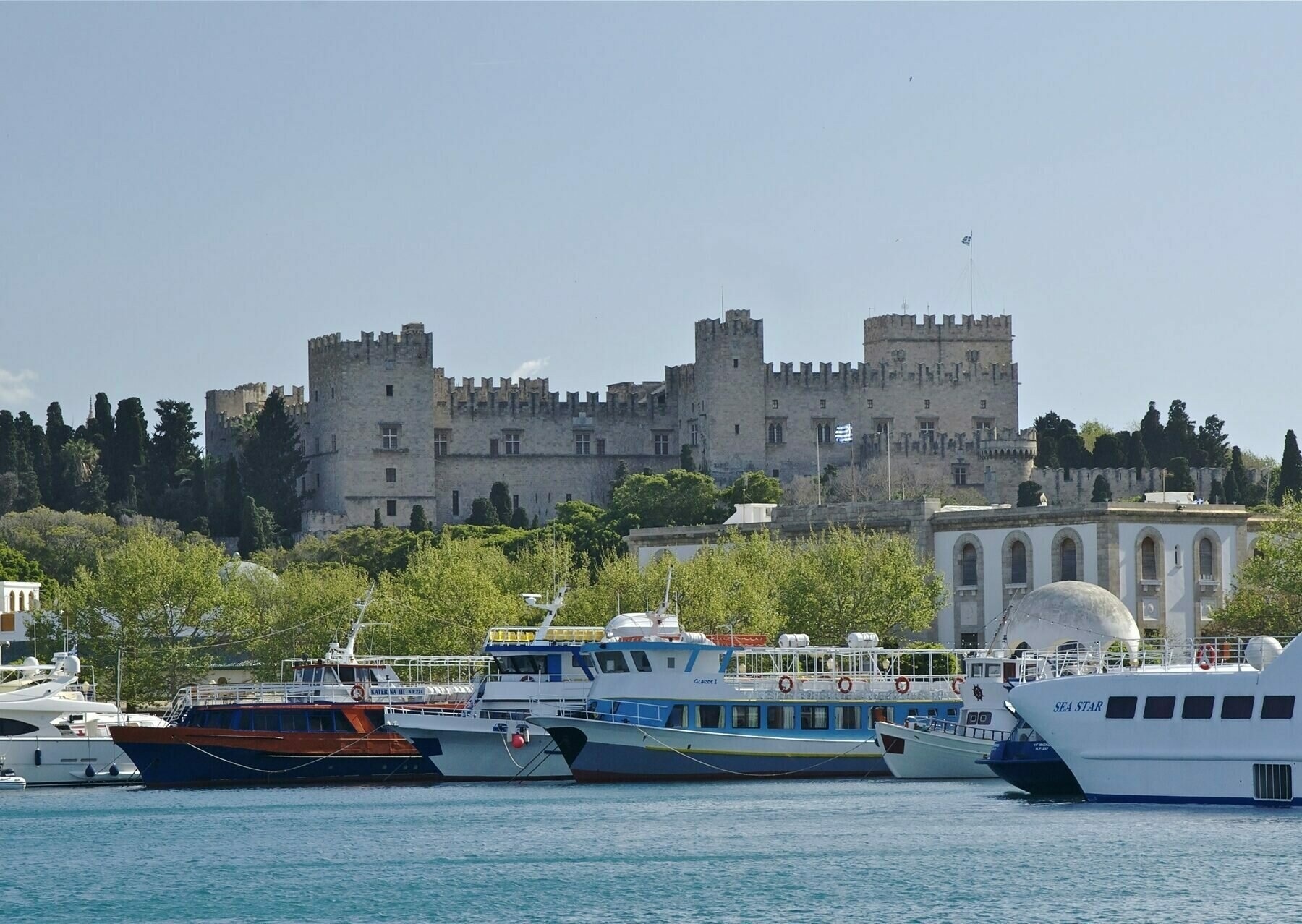
The Medieval City of Rhodes preserves one of the world's finest fortified urban landscapes while standing atop more than two millennia of continuous history. Founded as the great Hellenistic city of Rhodes, transformed into the capital of the Knights Hospitaller, and later reshaped by Ottoman, Italian, and modern Greek rule, it combines classical heritage, crusader military architecture, and a living urban fabric. Massive walls, harbors, palaces, churches, mosques, and ancient monuments together illustrate Rhodes' enduring role as one of the Mediterranean's greatest strategic crossroads.
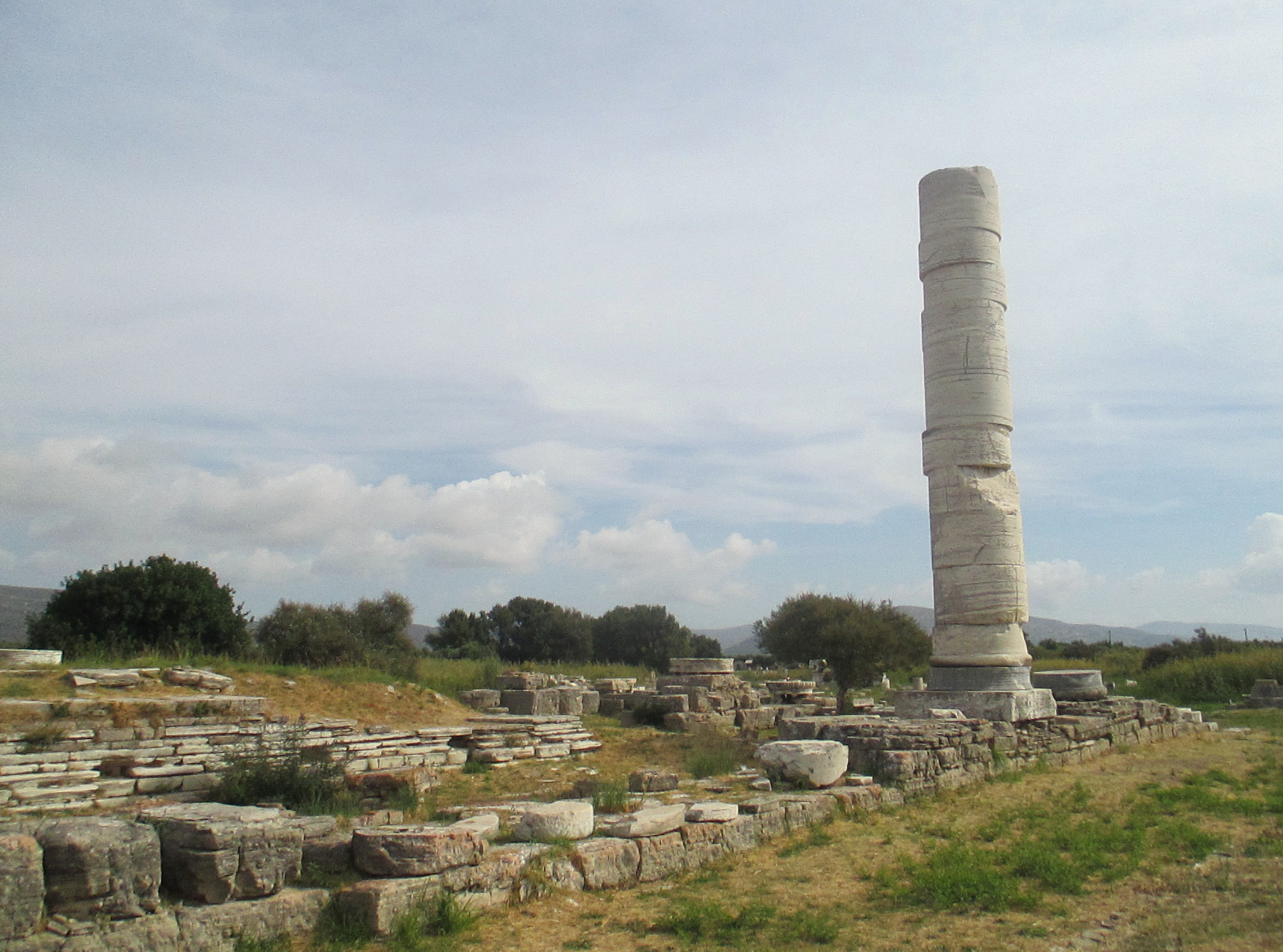
Samos is an eastern Aegean island where geography repeatedly produced exceptional connections with Ionia and the wider Mediterranean. Its Archaic city, Heraion, fortified harbor and Eupalinian tunnel document one of the Greek world's great centers of engineering, religion and maritime power. Yet Samos is equally a Byzantine and Ottoman island of resettled villages, a nineteenth-century autonomous principality, a landscape of monasteries and Muscat vineyards, and a modern society organized around Vathy, Karlovasi and Pythagoreion.
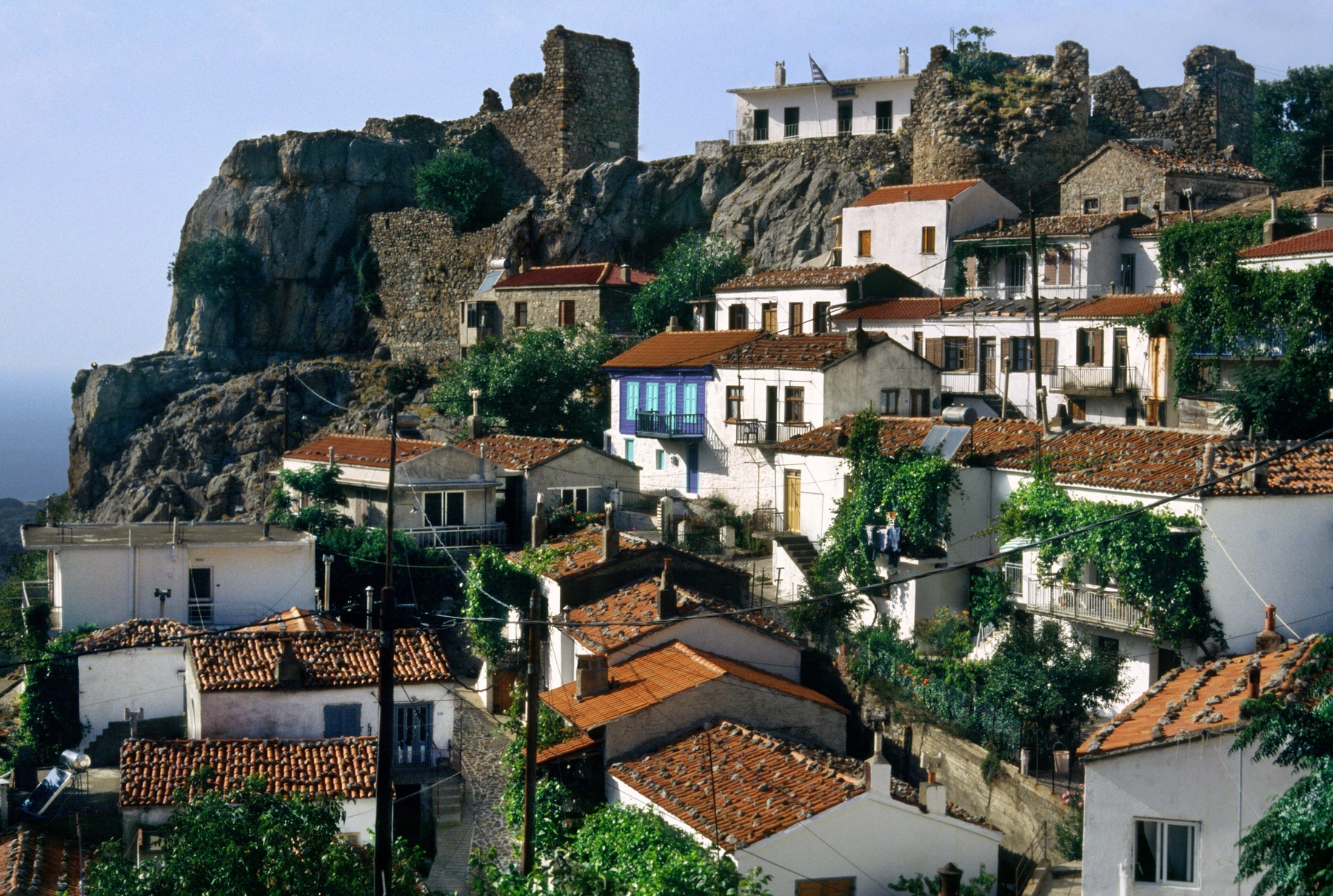
Samothraki is one of the most distinctive islands of the northern Aegean: a steep mountain rising directly from the Thracian Sea, crowned by Mount Saos and ringed by torrents, waterfalls and natural pools. Its Sanctuary of the Great Gods was an international center of mystery religion for more than a millennium and produced the celebrated Winged Victory of Samothrace. Byzantine and Gattilusi fortifications later guarded Paleopolis, Chora and strategic approaches. Today archaeology, medieval towers, traditional villages, thermal springs, hiking, waterfalls and a powerful mountain-and-sea landscape make the island a destination of exceptional historical and natural depth.
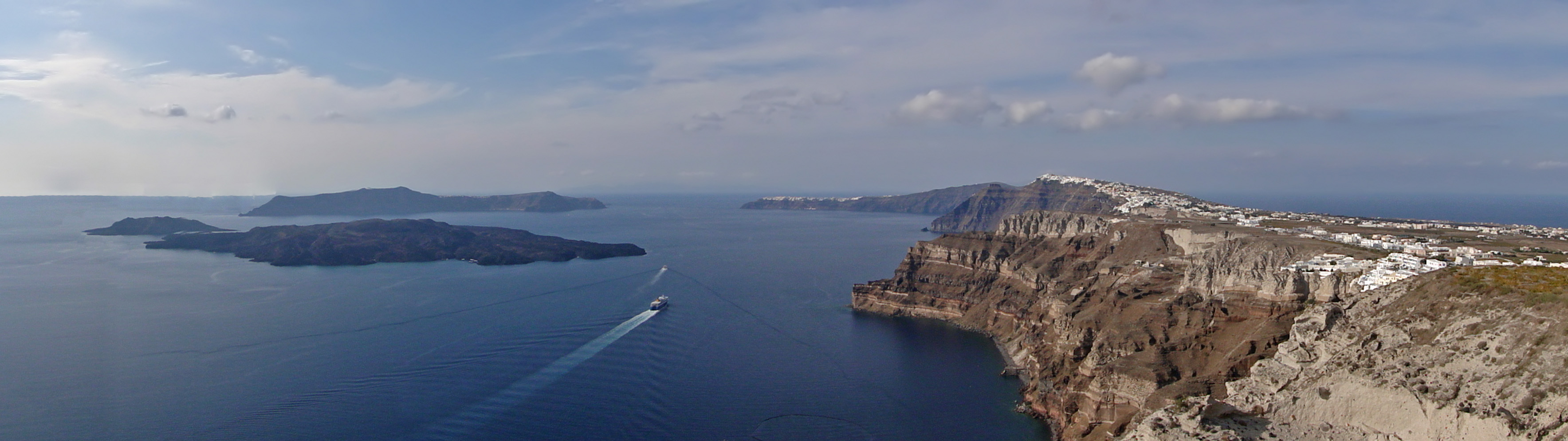
Santorini is a volcanic island group where geology and culture are inseparable: on the main island of Thira, Akrotiri preserves a sophisticated Bronze Age city buried by the great 17th-century BC eruption; Ancient Thera records Dorian, Hellenistic, Roman and Byzantine life; medieval kastelia organized defense; and cave houses, vineyards, wineries and caldera settlements embody centuries of adaptation to ash, wind, water scarcity, earthquakes and the sea.
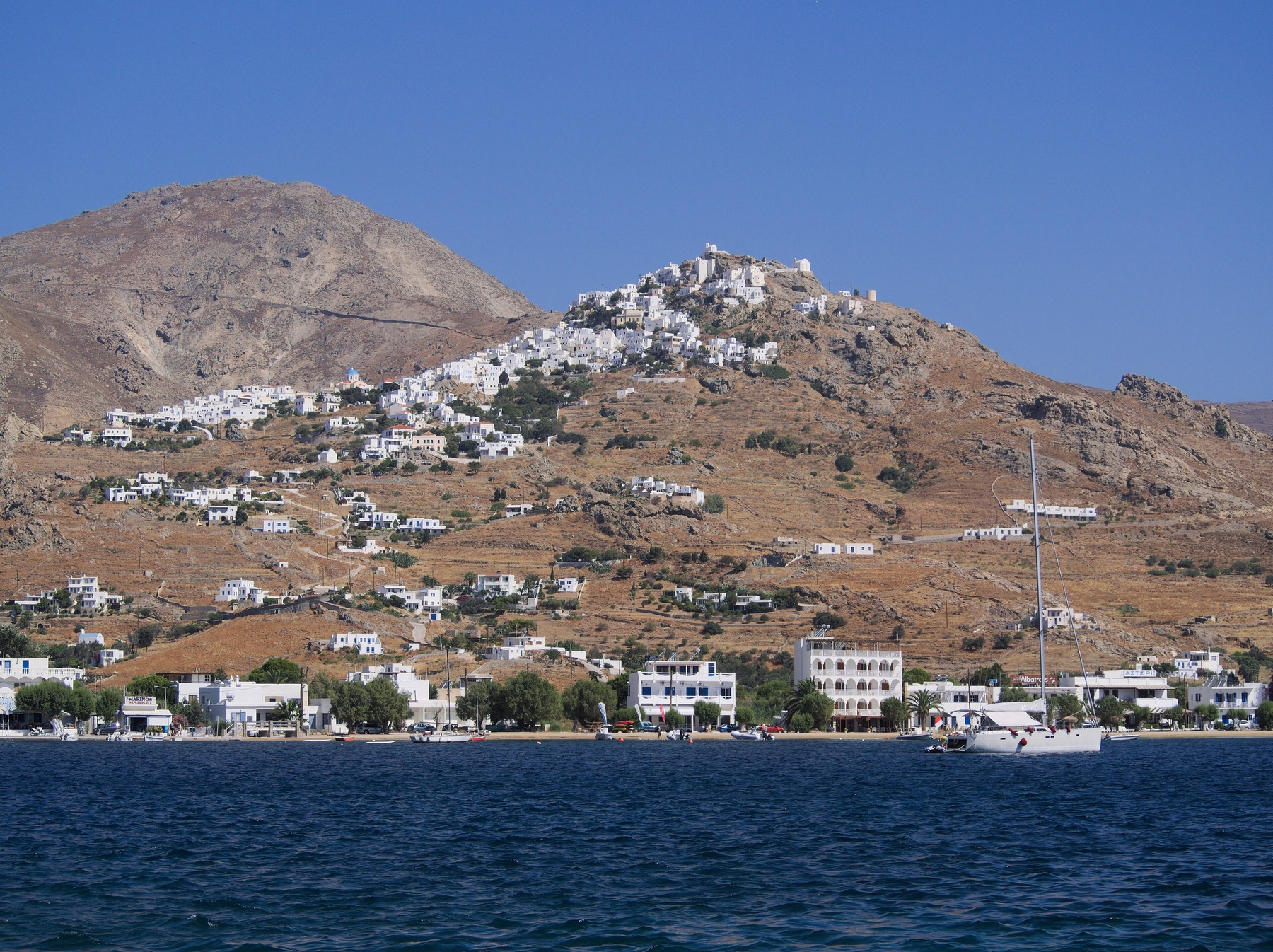
Serifos is a rugged western Cycladic island whose history is inseparable from metal, fortified settlement and maritime life. Ancient communities exploited copper and iron-bearing geology, while Chora developed as a defensible hill town crowned by a Venetian Kastro. Latin and Ottoman rule, the fortified Taxiarches monastery, and a dense landscape of churches and rural towers shaped the premodern island. In the nineteenth and twentieth centuries iron mining transformed the south and west, culminating in the violent miners' strike of 1916 at Megalo Livadi. Today the island's mining ruins, Chora, monasteries, towers, paths and harbors form one of the Cyclades' most distinctive cultural landscapes.
Sifnos is a western Cycladic island whose history combines prehistoric metallurgy, Mycenaean fortification, Archaic prosperity, a dense network of ancient towers, the medieval castle-town of Kastro, post-Byzantine religious culture, and living traditions of pottery and gastronomy. Ancient silver and lead resources helped connect the island to wider Aegean exchange, while later insecurity concentrated power in the fortified capital at Kastro. The island's villages, monasteries, ceramic workshops, terraces, footpaths and communal festivals preserve an unusually coherent cultural landscape extending far beyond its castle.
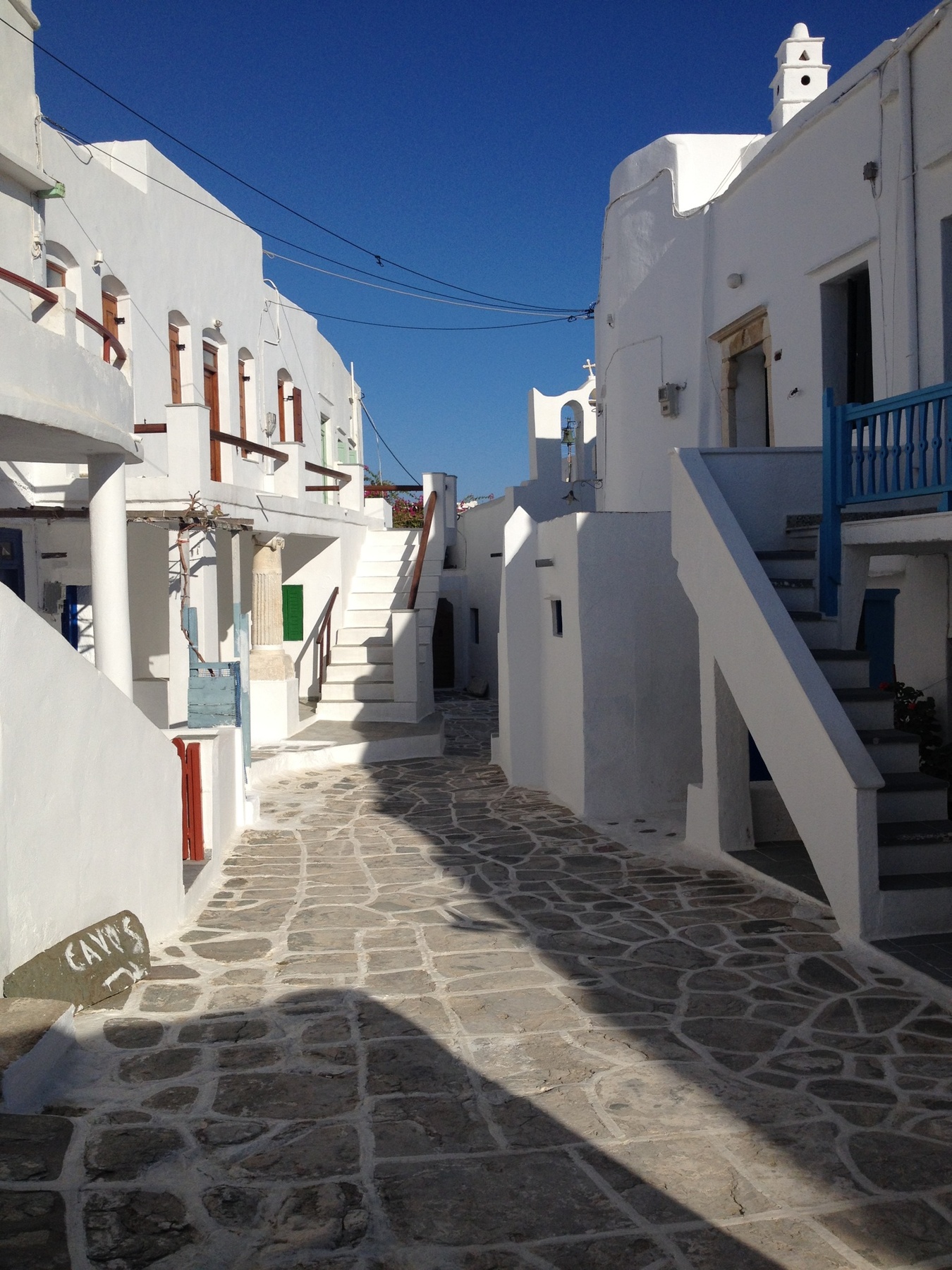
Sikinos is a small but exceptionally coherent Cycladic cultural landscape. The ancient city occupied the heights of Agia Marina; nearby Episkopi preserves a rare third-century AD Roman mausoleum converted into a Byzantine church; Kastro and Chorio form the historic hill settlement, while the fortified monastery of Zoodochos Pigi, dry-stone terraces, vineyards, chapels and old paths record centuries of adaptation to piracy, scarce resources and steep terrain.
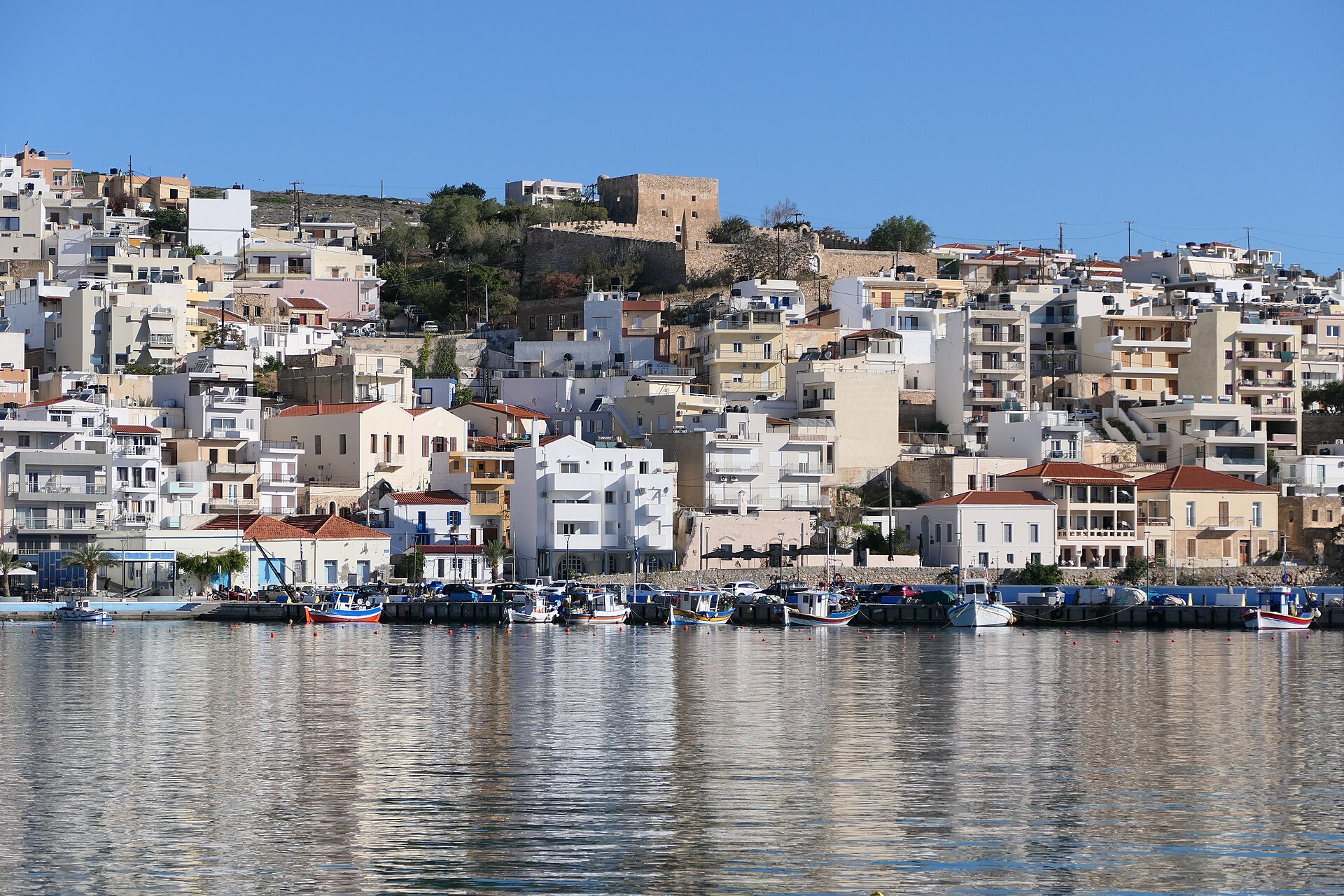
Sitia is a harbor town in eastern Crete whose hilltop Kazarma preserves only part of an earlier fortified settlement. Destruction and rebuilding interrupted the town’s urban fabric, while its archaeological museum connects today’s streets with a much older regional landscape. Fortress, waterfront, local cultural collections and the memory of Vitsentzos Kornaros together offer a broader account than a castle visit alone: a town repeatedly remade within a distinctive eastern Cretan hinterland.
Skiathos combines a lively Aegean port with two contrasting fortified landscapes and an unusually strong literary identity. Bourtzi, the wooded peninsula dividing the old and new harbors, preserves the memory of a medieval stronghold beside the modern town. On the island’s exposed northern coast, Kastro occupies a dramatic sea cliff where the population sought refuge from piracy for nearly five centuries. Monasteries, shipbuilding traditions, churches, pine-covered hills, and the house of Alexandros Papadiamantis complete a cultural landscape in which maritime insecurity, Orthodox faith, poverty, migration, and island resilience became both lived history and literature.
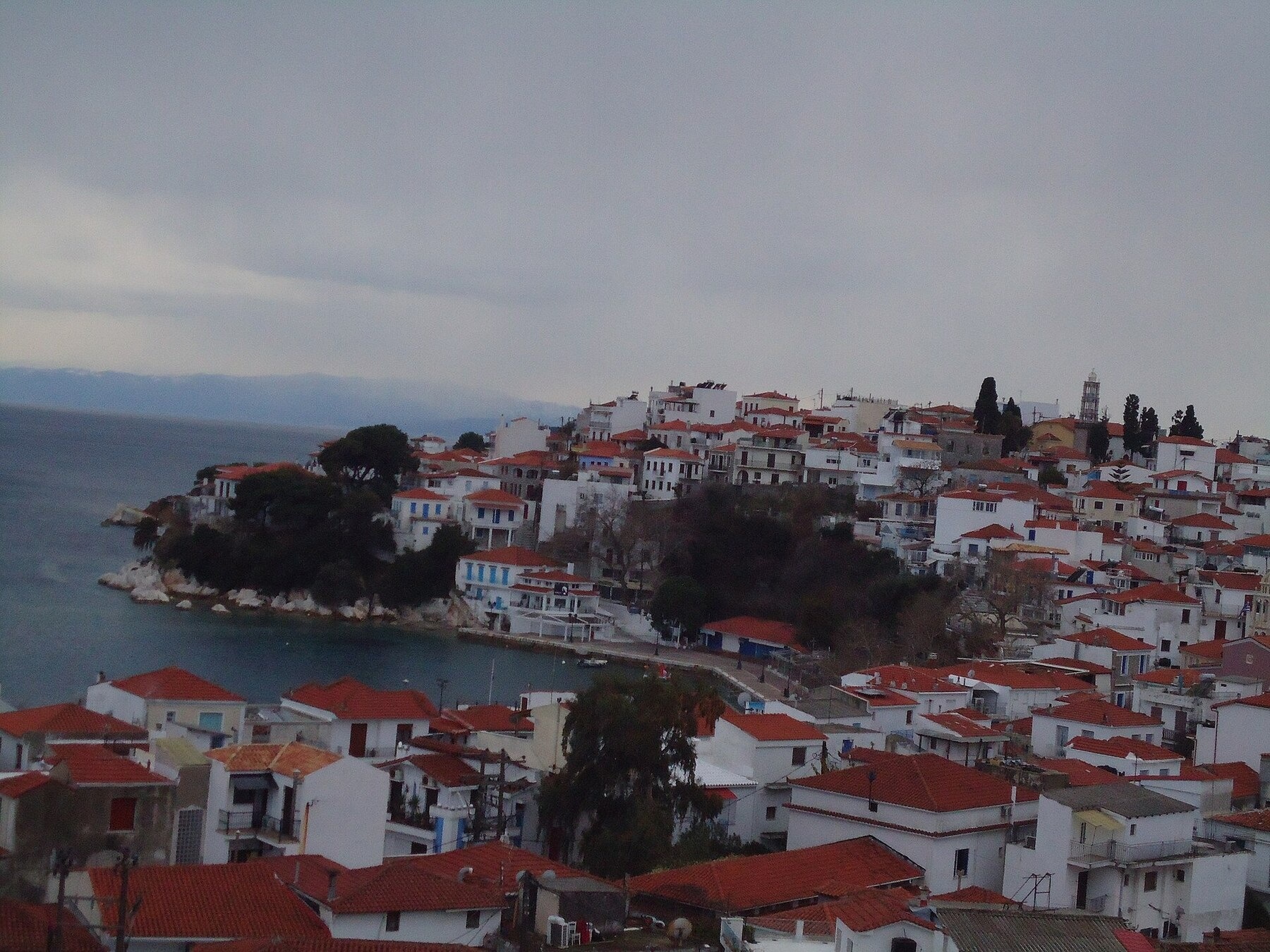
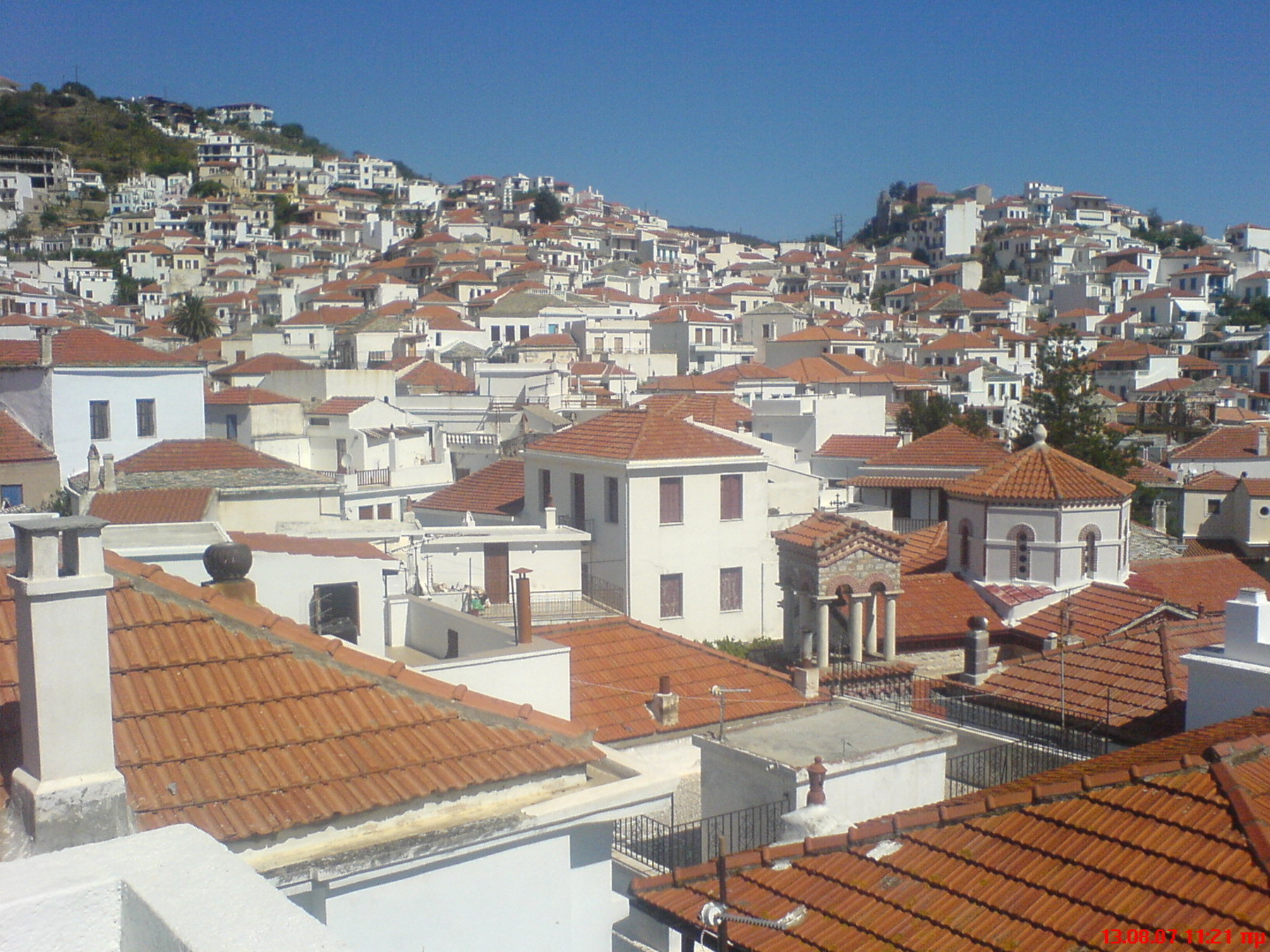
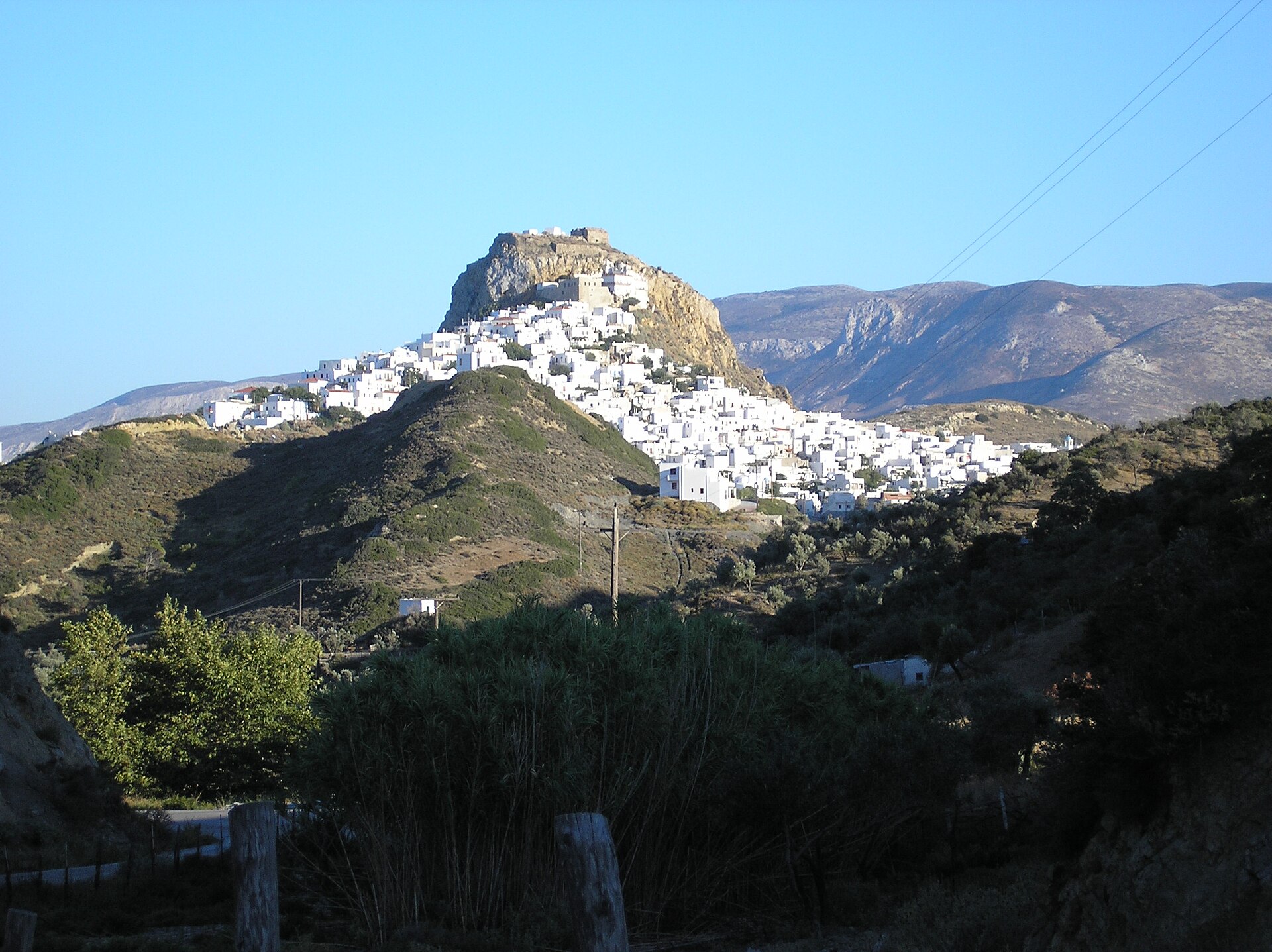
Skopelos combines a living Aegean castle town with the remains of ancient, Byzantine and Venetian fortifications. Above the harbor, the Kastro occupies the acropolis of ancient Peparethos, whose walls were reused by Byzantine defenders and strengthened under Venetian rule. The surviving walls, steep lanes, traditional houses and dense network of churches preserve the connection between fortified settlement and island community, while nearby monuments such as Episcopi reveal additional Byzantine and Venetian layers.
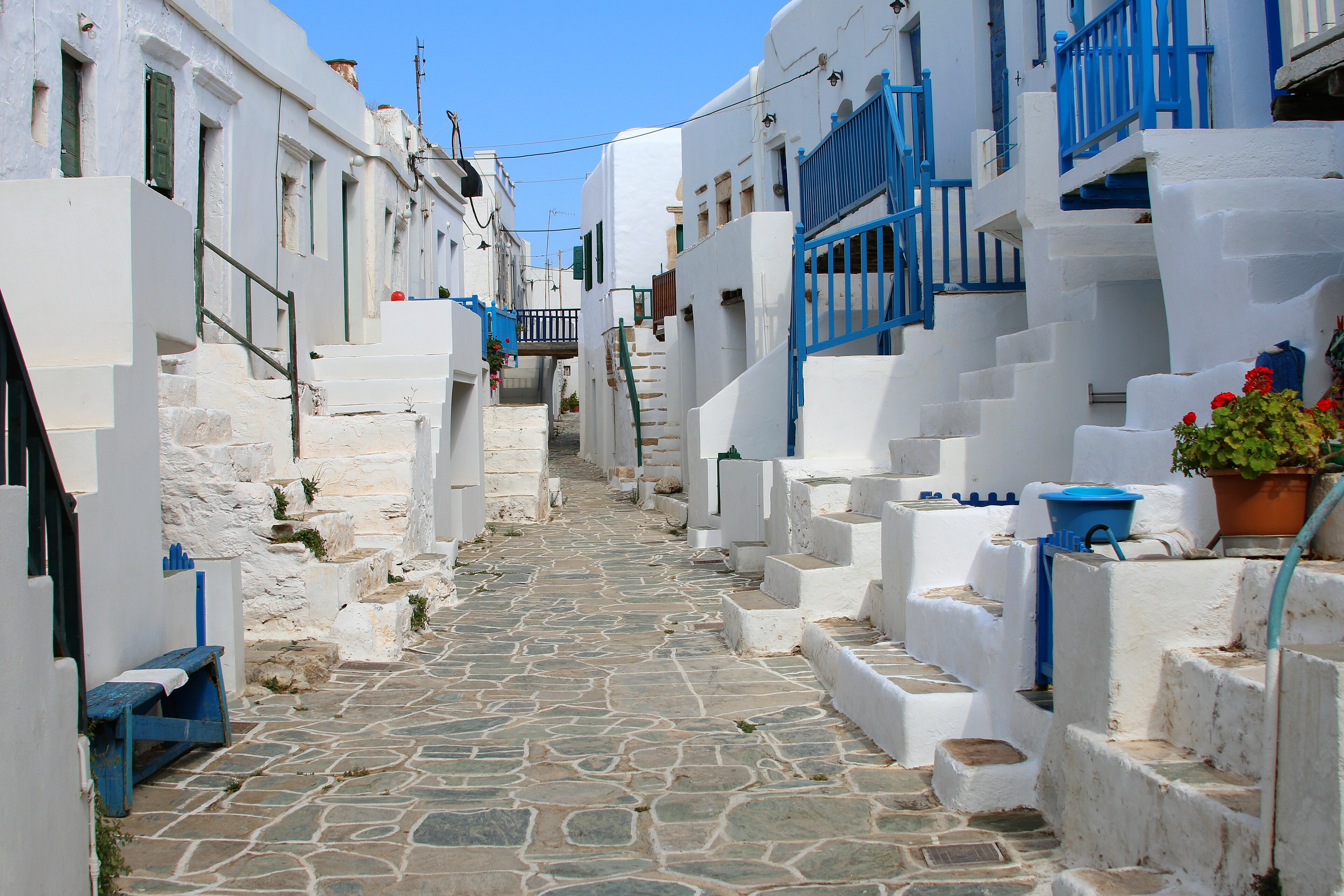
Skyros combines a dramatic hill town with prehistoric archaeology, distinctive crafts and a varied island landscape. Chora gathers below a fortified rock and the Monastery of Agios Georgios, while the museums connect ancient finds with the interiors and skills of Skyrian households. At Palamari, a coastal Bronze Age settlement reveals a much earlier world of exchange and defense. Beyond these monuments, Carnival traditions and the small Skyrian horse keep the island’s cultural identity closely tied to everyday life and the land.
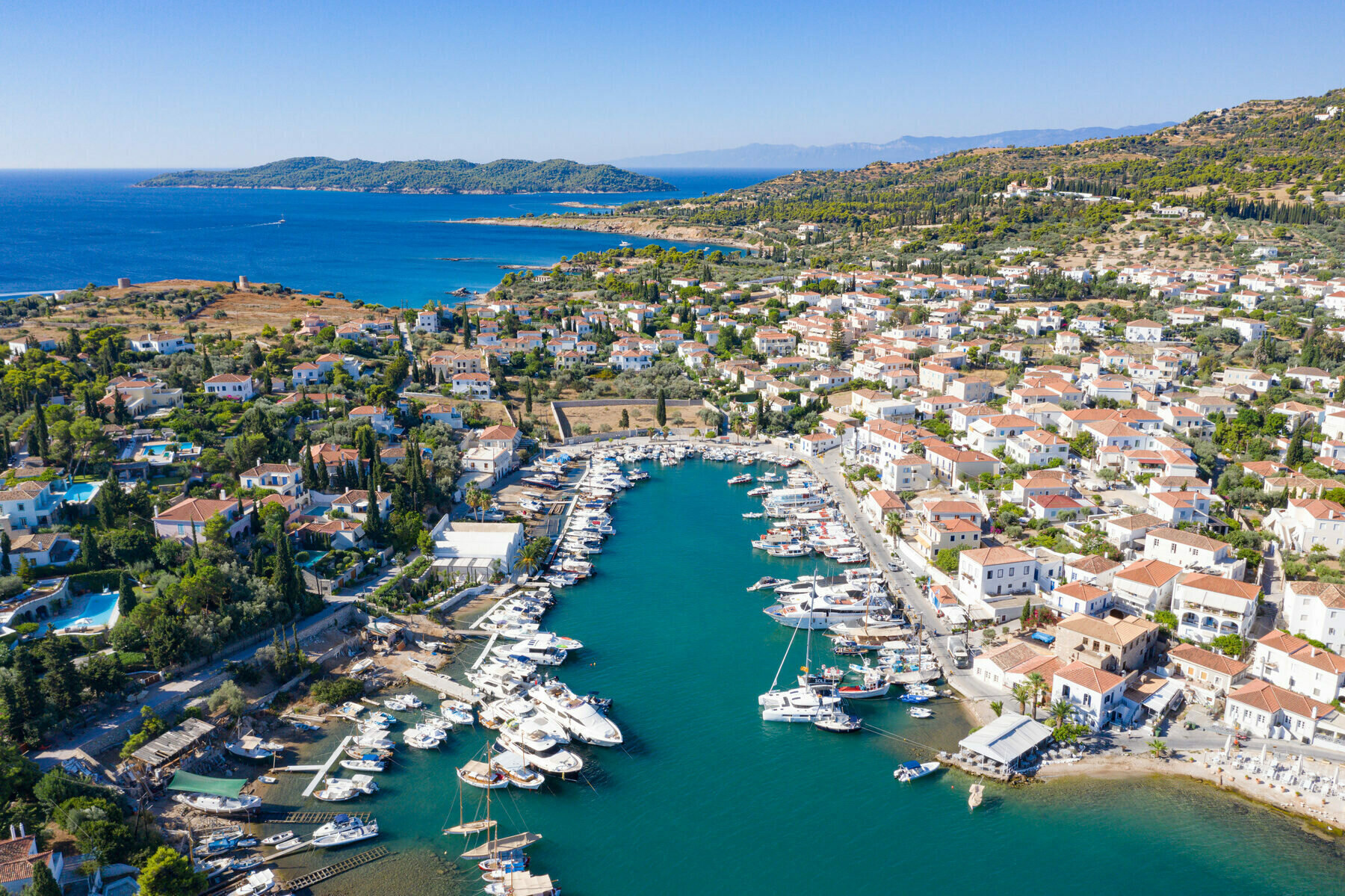
Spetses is one of Greece's great maritime islands, renowned for its wealthy ship-owning families, elegant neoclassical waterfront, and decisive contribution to the Greek War of Independence. Unlike the fortified medieval cities featured elsewhere in the Castles of Greece project, Spetses illustrates the rise of maritime commerce, naval power, and revolutionary leadership while preserving its historic harbors, captain's mansions, museums, and enduring seafaring traditions.
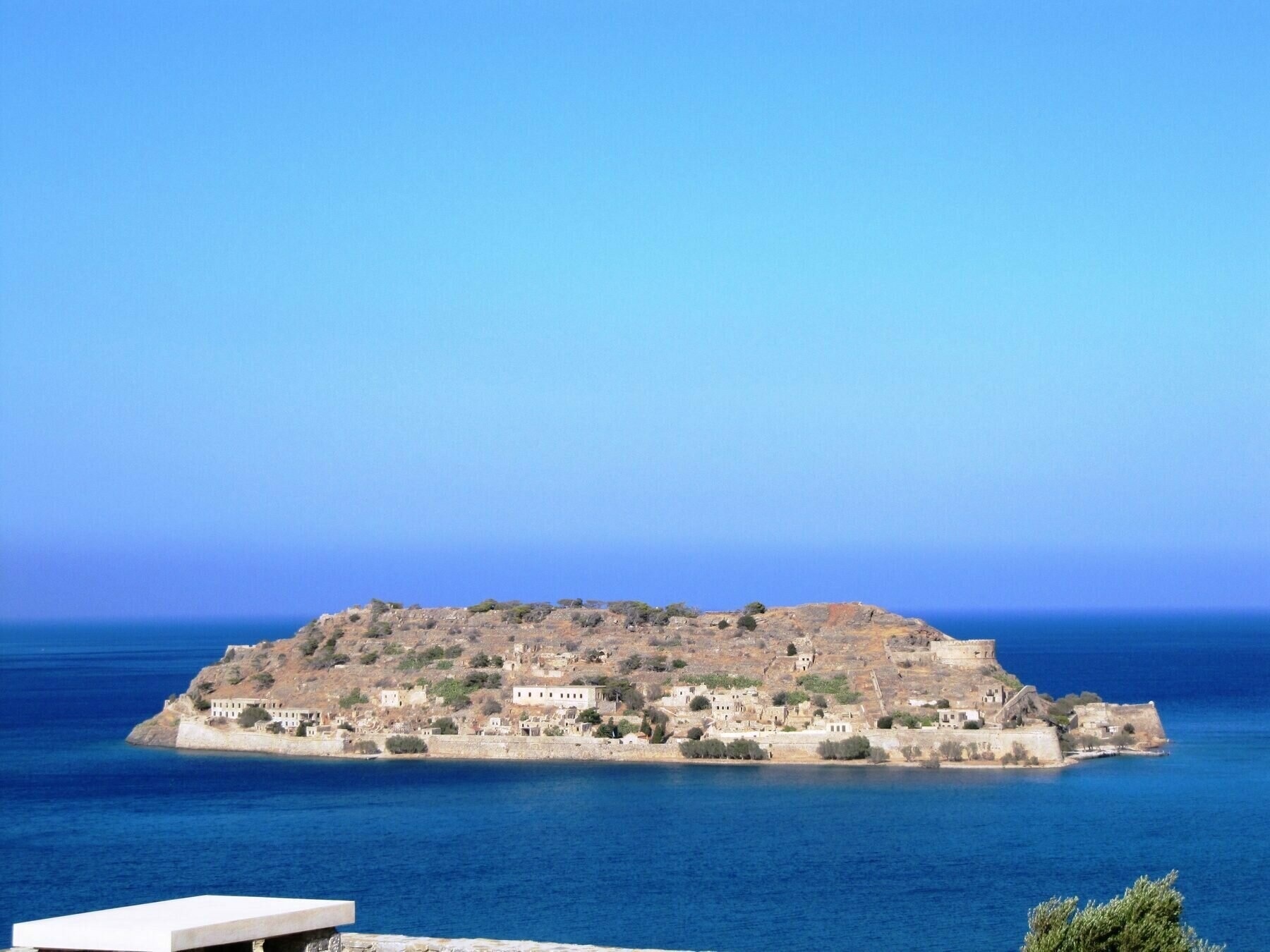
Spinalonga is one of the most compelling fortified islands in Greece. Built by Venice to control the entrance to the Gulf of Mirabello and the harbor of ancient Olous, it later became an Ottoman settlement and then Greece's national leper colony. Its walls preserve a rare sequence of military, civilian and social history within a single island citadel.
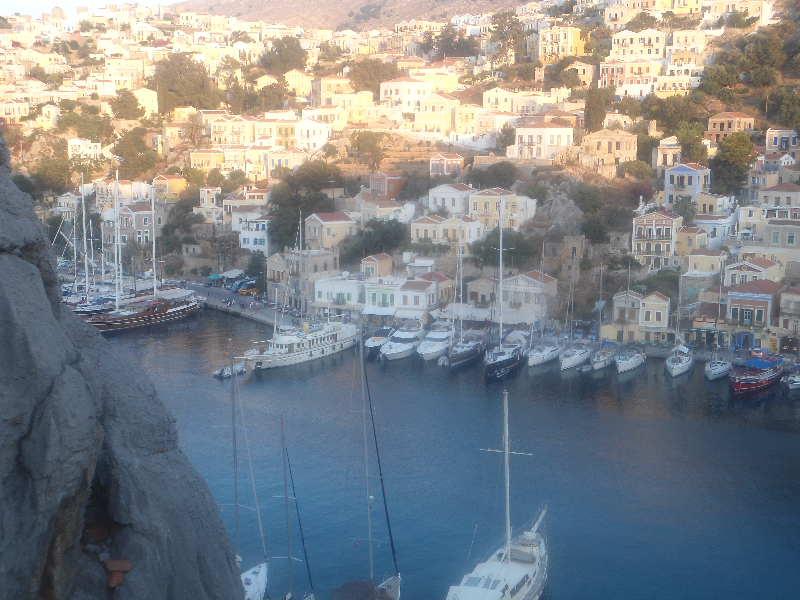
Symi is a maritime island whose steep terrain produced an exceptional dialogue between fortified Chorio and the harbor of Gialos. Ancient and Hospitaller defenses occupy the heights, while shipbuilding, sponge diving and long-distance commerce created the great neoclassical settlement below. Panormitis, island monasteries, wartime destruction and the 1945 Dodecanese surrender broaden the story from picturesque harbor to a cultural landscape of defense, seafaring, devotion and mobility.
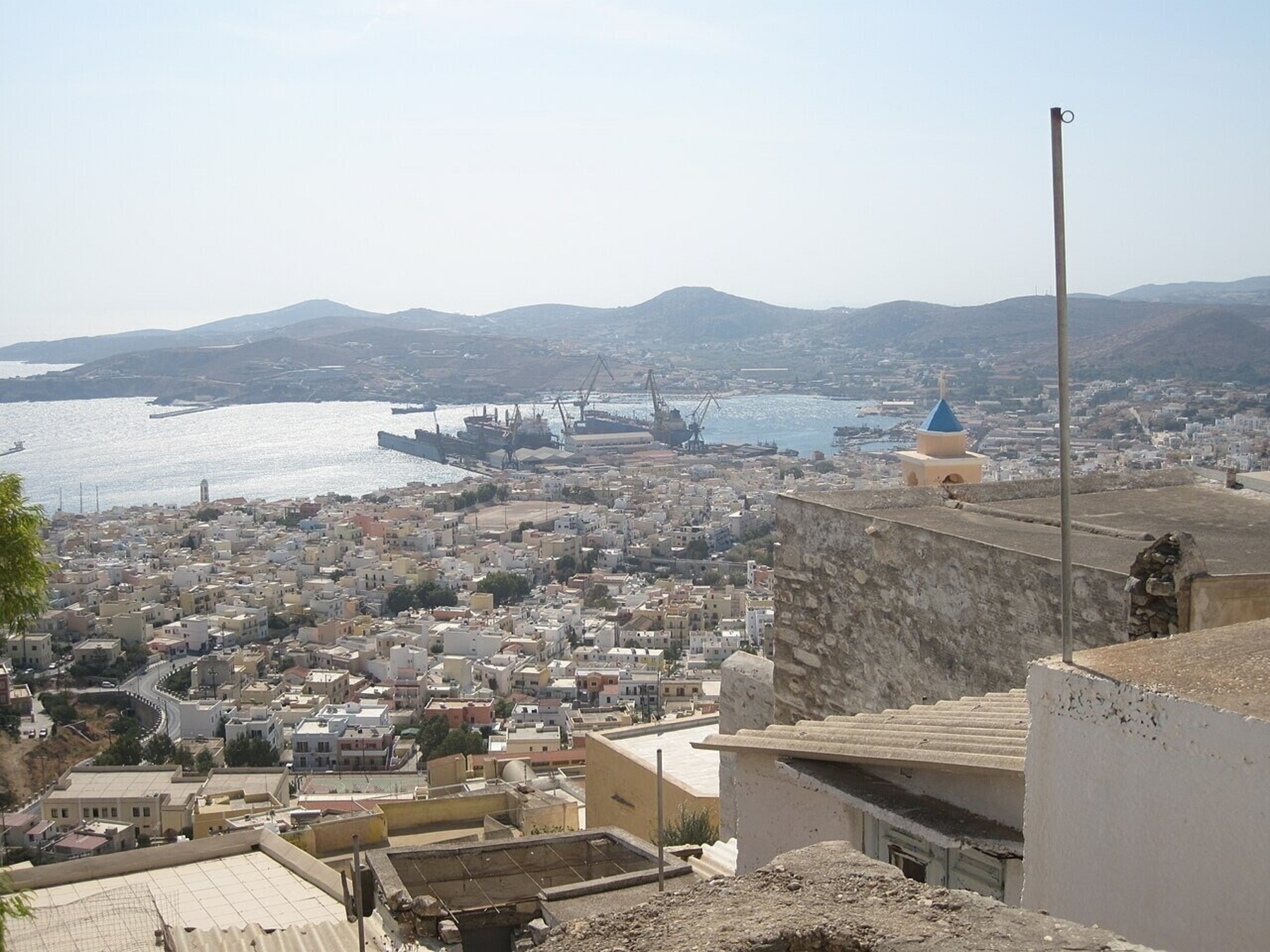
Syros is one of the most historically layered islands of the Cyclades. Early Cycladic Chalandriani and fortified Kastri belong to the defining archaeological cultures of the prehistoric Aegean; ancient Syros occupied the site of modern Ermoupoli, while another fortified city developed at Galissas. Medieval Ano Syros concentrated settlement behind strong walls and preserved a distinctive Catholic identity through Latin and Ottoman rule. After 1821, refugees and merchants created Ermoupoli, which became the leading commercial, shipbuilding, industrial and cultural city of the early Greek state. Neoclassical civic architecture, Orthodox and Catholic monuments, industrial heritage and the rebetiko tradition of Markos Vamvakaris make Syros an island where fortification, migration, commerce and culture remain exceptionally visible.
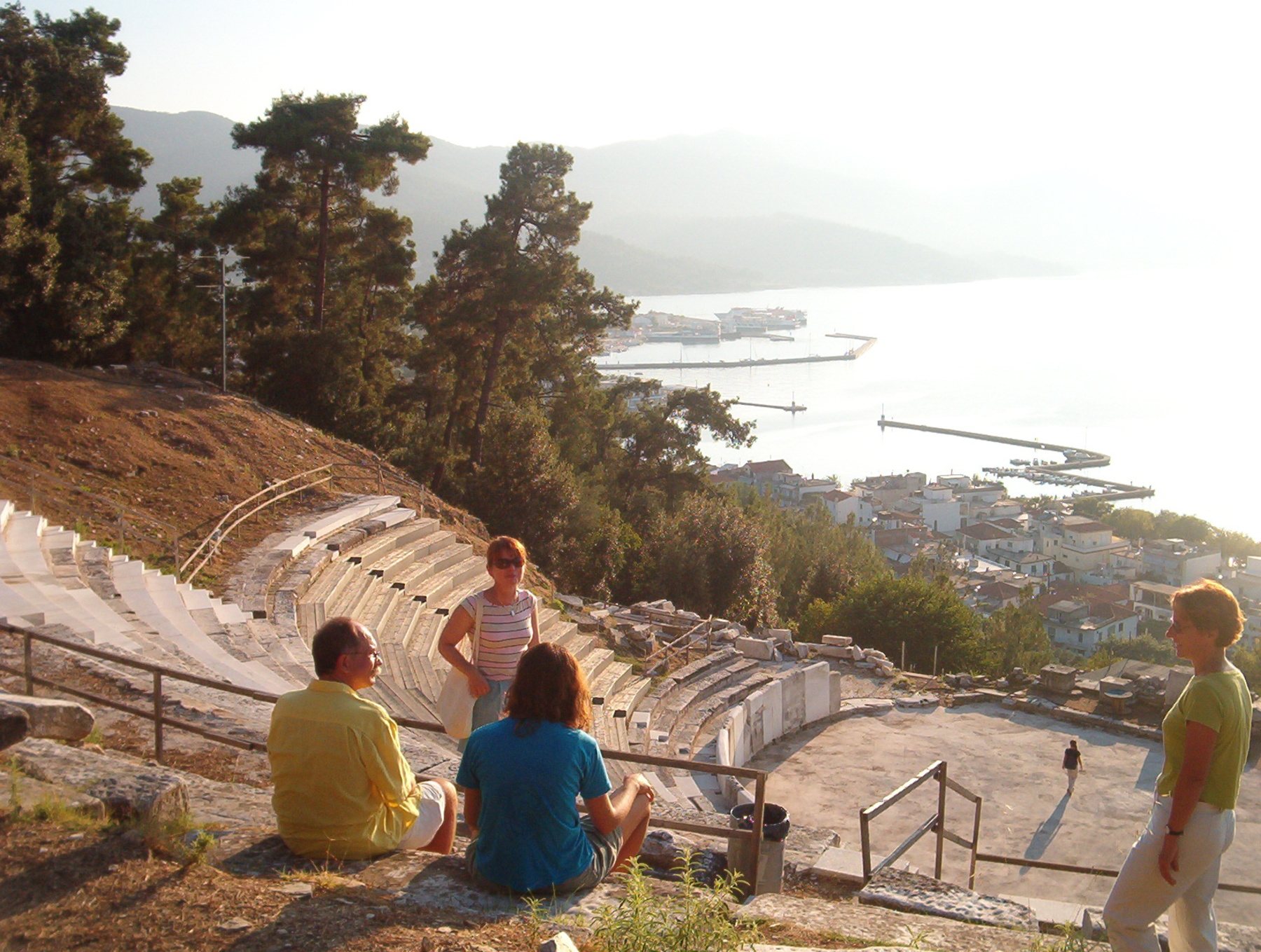
Thasos is one of the richest historical landscapes of the northern Aegean. The ancient city at Limenas preserves a major defensive circuit, agora, theatre, sanctuaries, acropolis and early Christian remains, while the quarries of Aliki reveal the island’s long role in the Mediterranean marble trade. Medieval insecurity pushed communities toward fortified mountain settlements such as Kastro and Theologos. Ottoman and Egyptian administration, modern mining at Limenaria, monastic traditions, forested villages and enduring crafts complete a cultural history in which natural resources, defense and maritime exchange are inseparable.
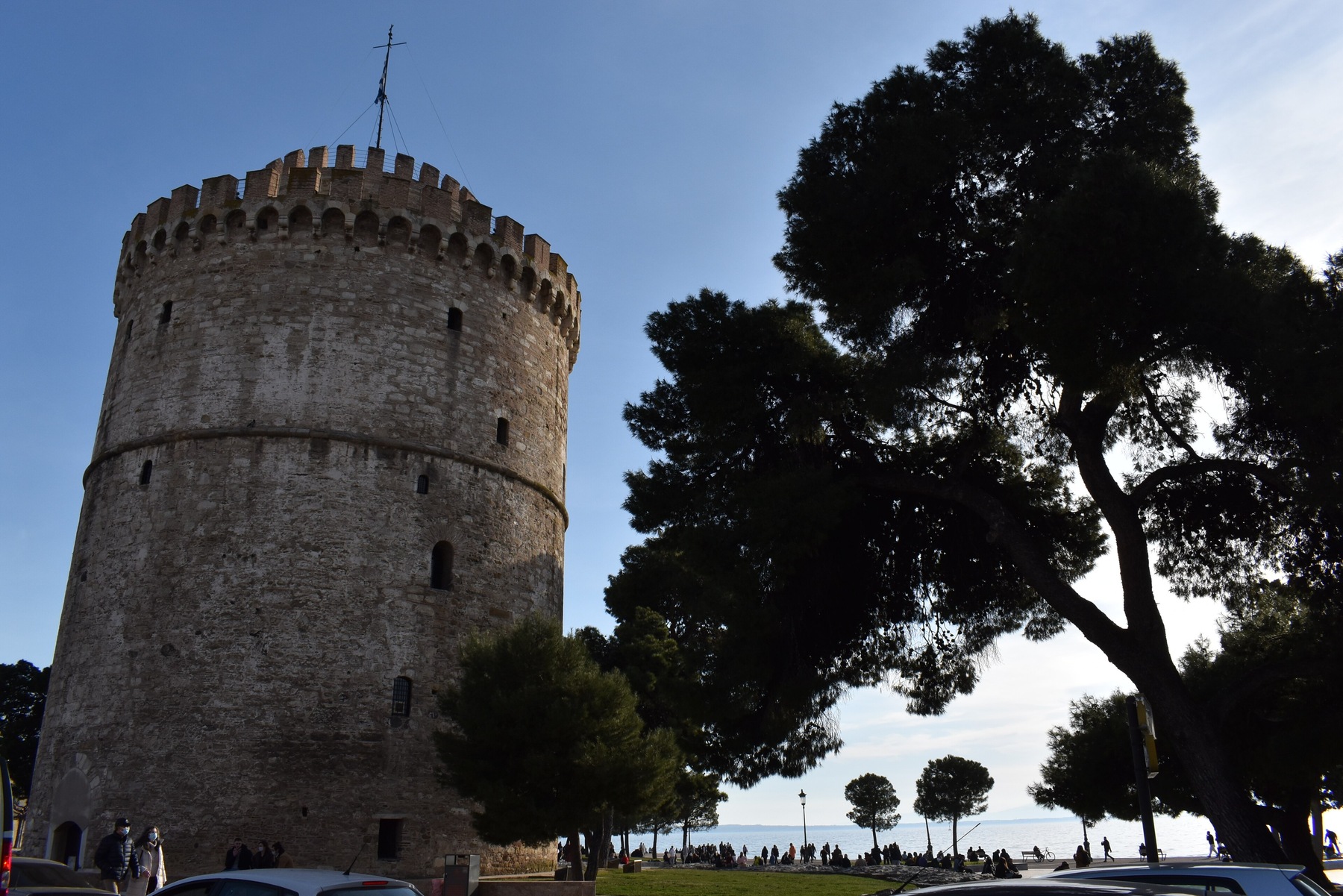
A great Aegean port where Roman imperial monuments, Byzantine churches and mosaics, Ottoman baths, Jewish memory and major museums meet a lively waterfront and the walls of the Upper City.
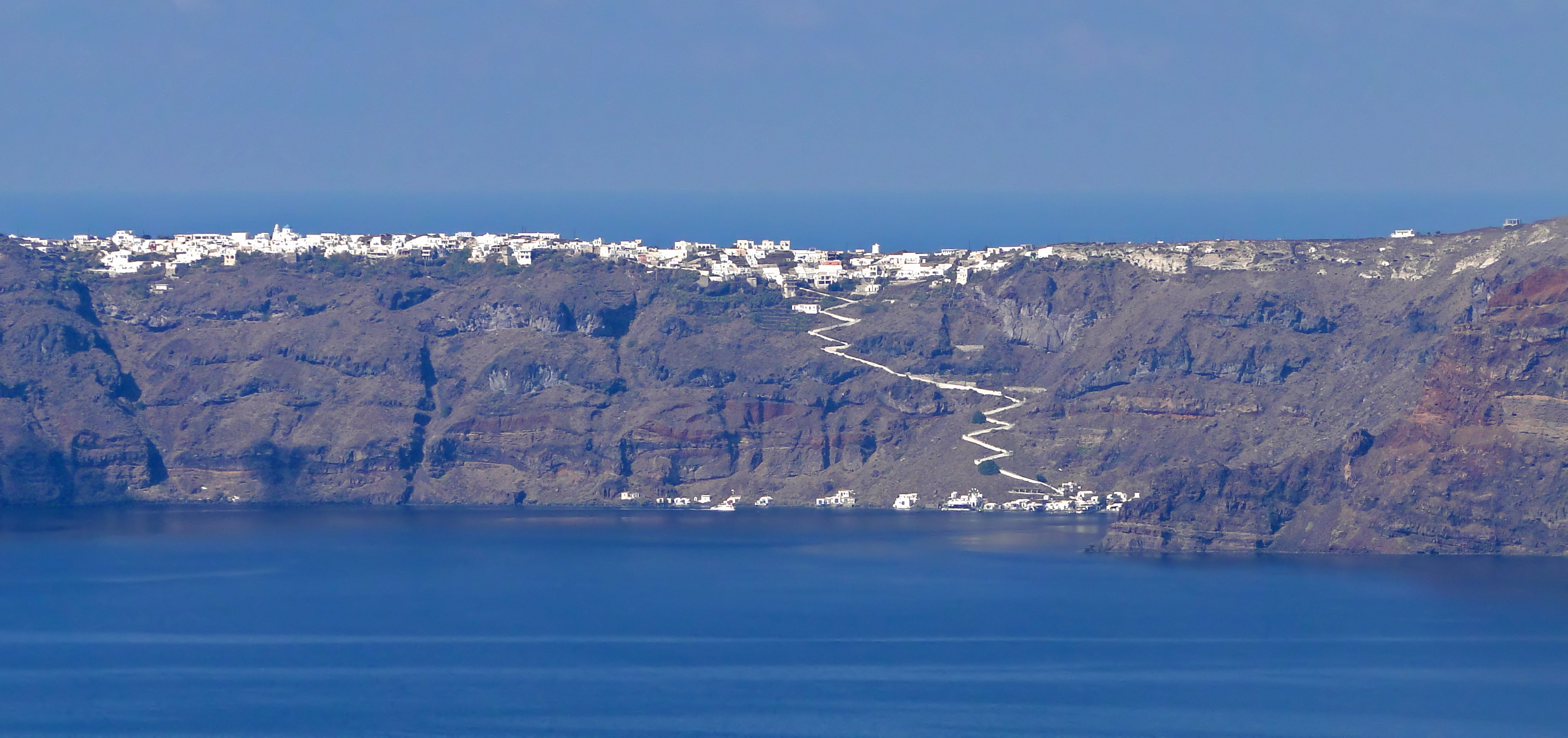
Thirasia is the quieter western counterpart of Thira: part of the same volcanic caldera, but historically distinctive for its Early–Middle Bronze Age settlement at Koimisis, the abandoned cave-village of Agrilia, Manolas and Korfos, dispersed farm architecture, kanaves, churches, terraces and a comparatively intact pre-tourism landscape.
Tilos combines an unusually rich natural record with a layered cultural landscape of ancient settlement, medieval castles, Byzantine churches and modern villages. Charkadio Cave preserves evidence associated with an endemic population of dwarf elephants, while the castle above Megalo Chorio incorporates an ancient acropolis and later defenses associated with the Knights of Saint John. Livadia is the modern maritime gateway; Megalo Chorio, Mikro Chorio, monasteries and a network of smaller fortified sites reveal how island communities adapted to insecurity, limited resources and changing Aegean powers.
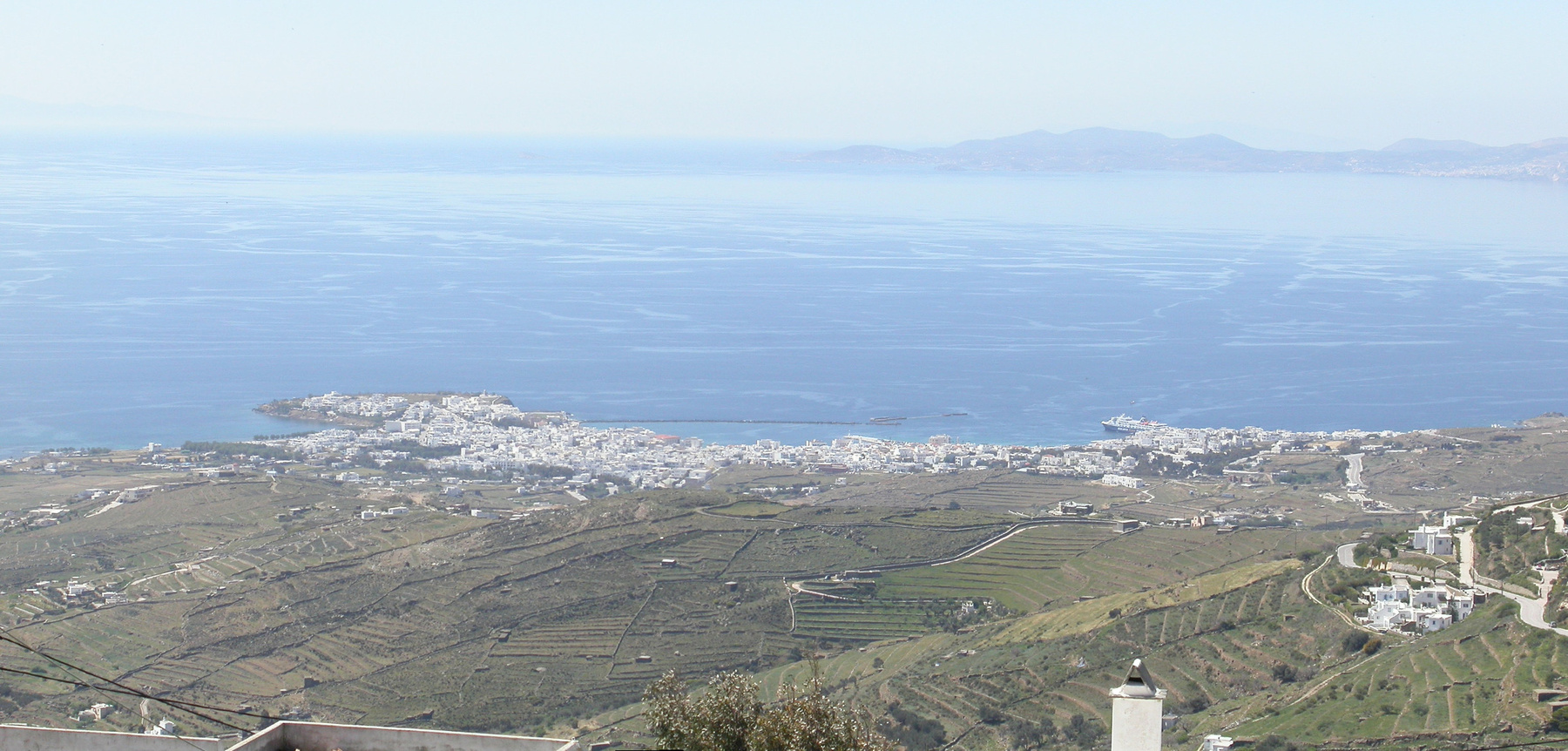
Tinos is a historically layered Cycladic island whose identity joins ancient maritime religion, a long Byzantine and Latin-Venetian past, Orthodox and Catholic communities, the national pilgrimage of Panagia Evangelistria, and an exceptional marble-working tradition. Beyond Chora, its villages, dovecotes, terraces, chapels, quarries and stonework form one of the Aegean's most distinctive cultural landscapes.
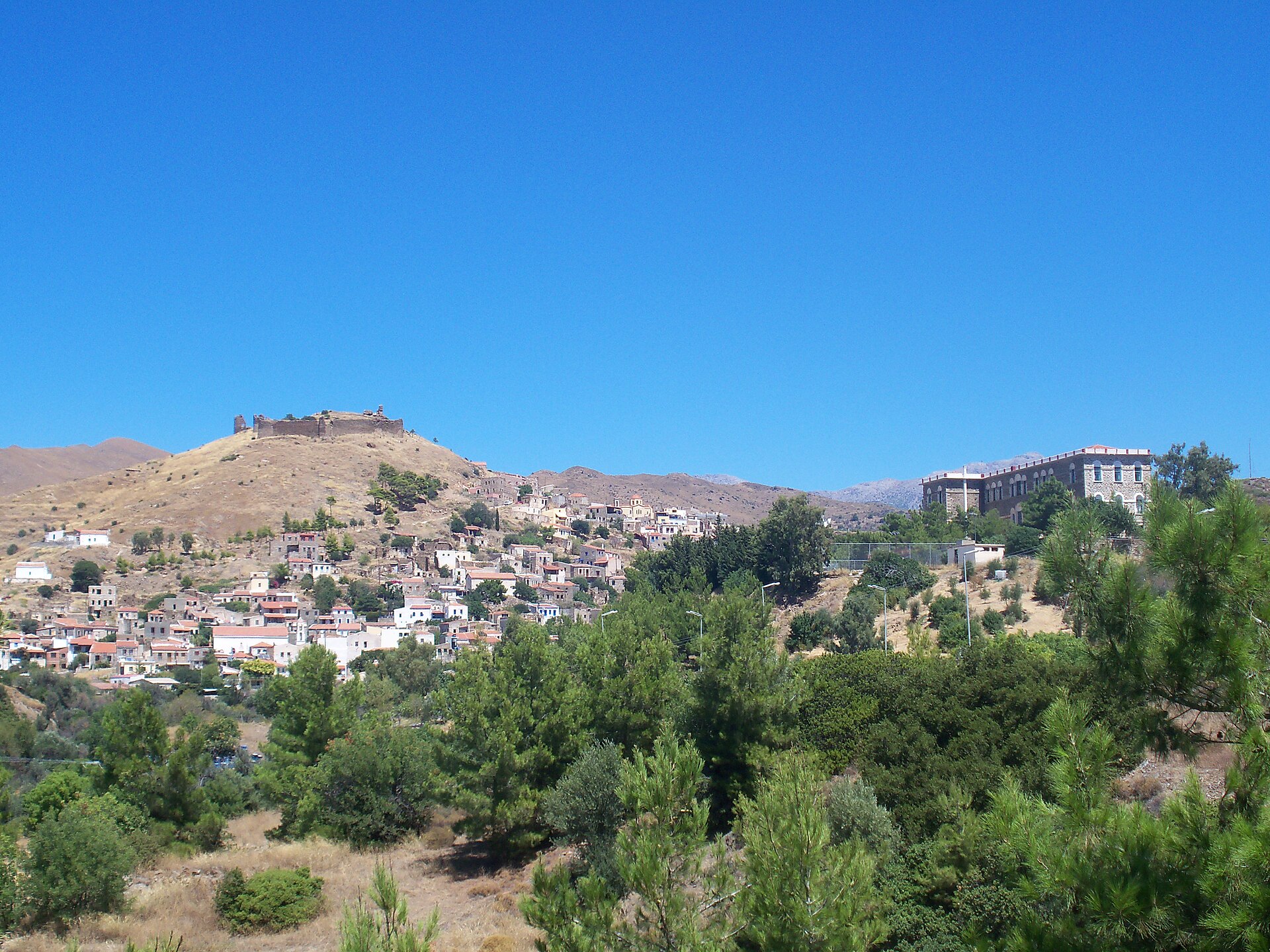
Volissos is the principal village of Amani in northwestern Chios, climbing toward a medieval castle above a productive valley and nearby coast. Its significance lies in the relationship between a defended height and an inhabited rural center. Village lanes, watermill routes, the archaeological collection’s wine-trade exhibition and the pilgrimage landscape of Agia Markella reveal livelihoods and memories beyond the fortification, while the castle gives that wider community a powerful visual anchor.
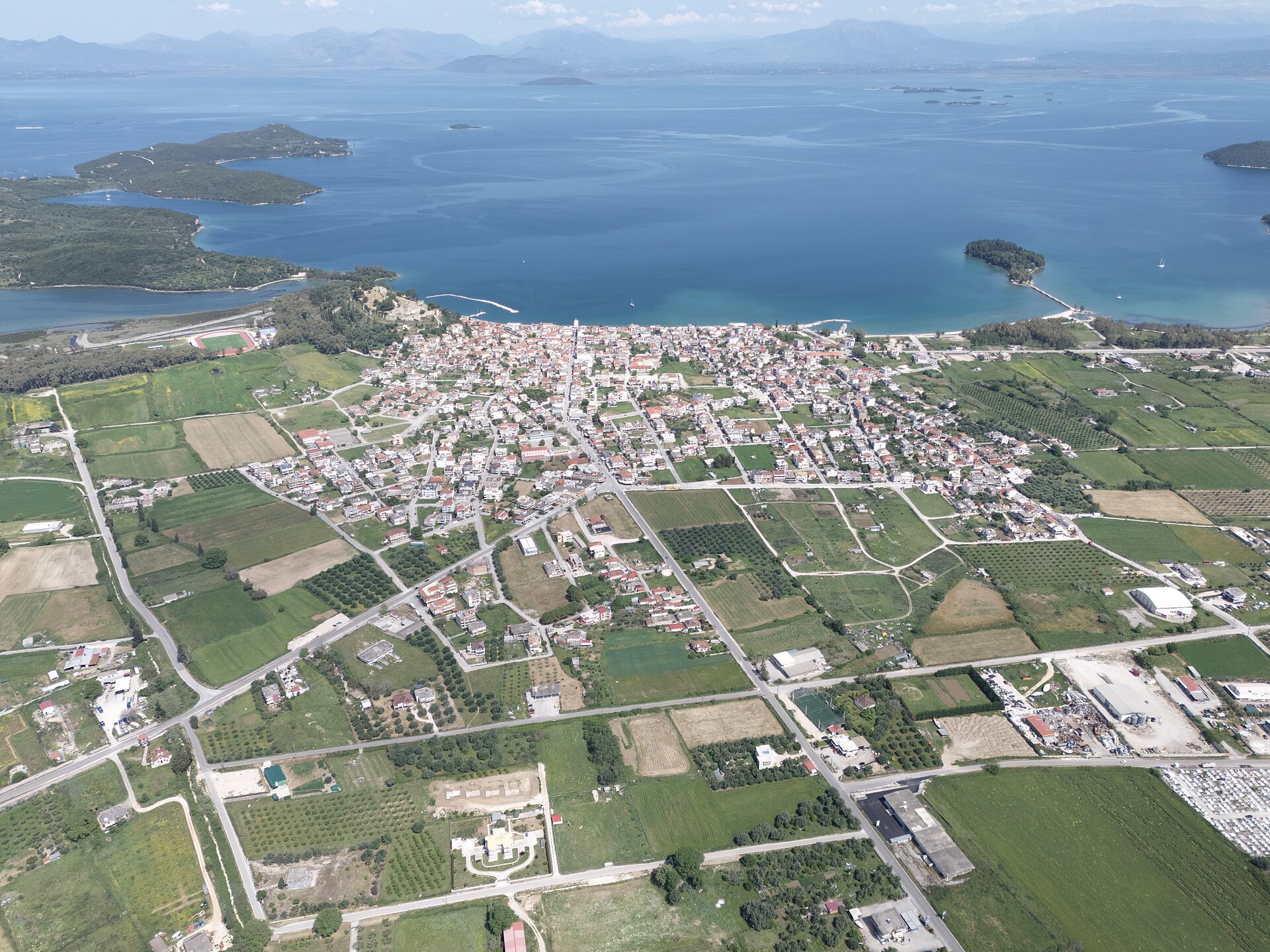
Vonitsa brings a gulf-side town, waterfront and fortified hill into one compact landscape. The castle protected a place of settlement and exchange rather than an isolated military lookout. Byzantine remains, Venetian artillery defenses and a later upper enclosure record successive ways of controlling the same position. Looking between the walls, town and Ambracian Gulf reveals how local production, coastal movement and competing Ionian powers gave this modest center a wider role.