Overview
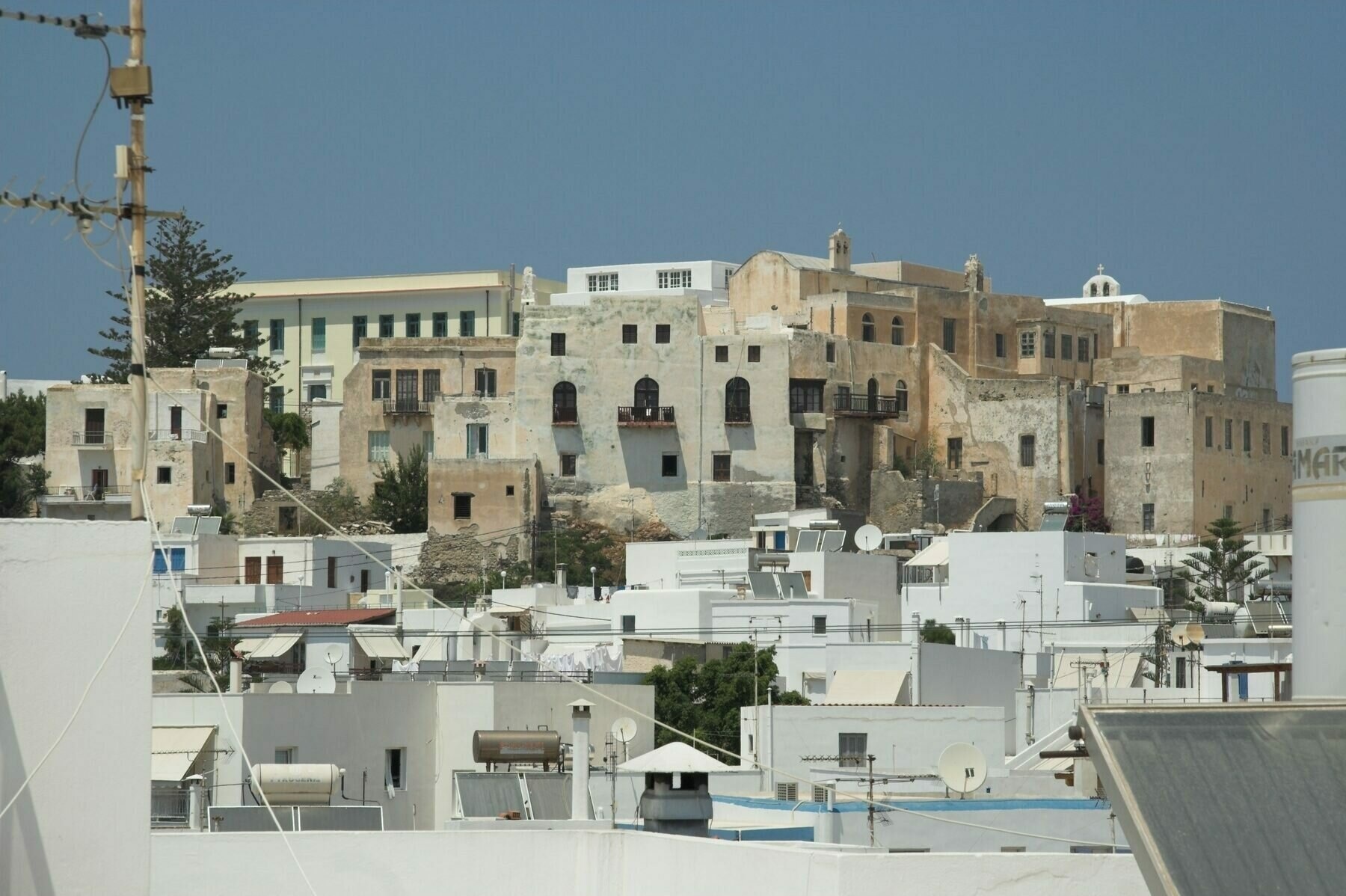
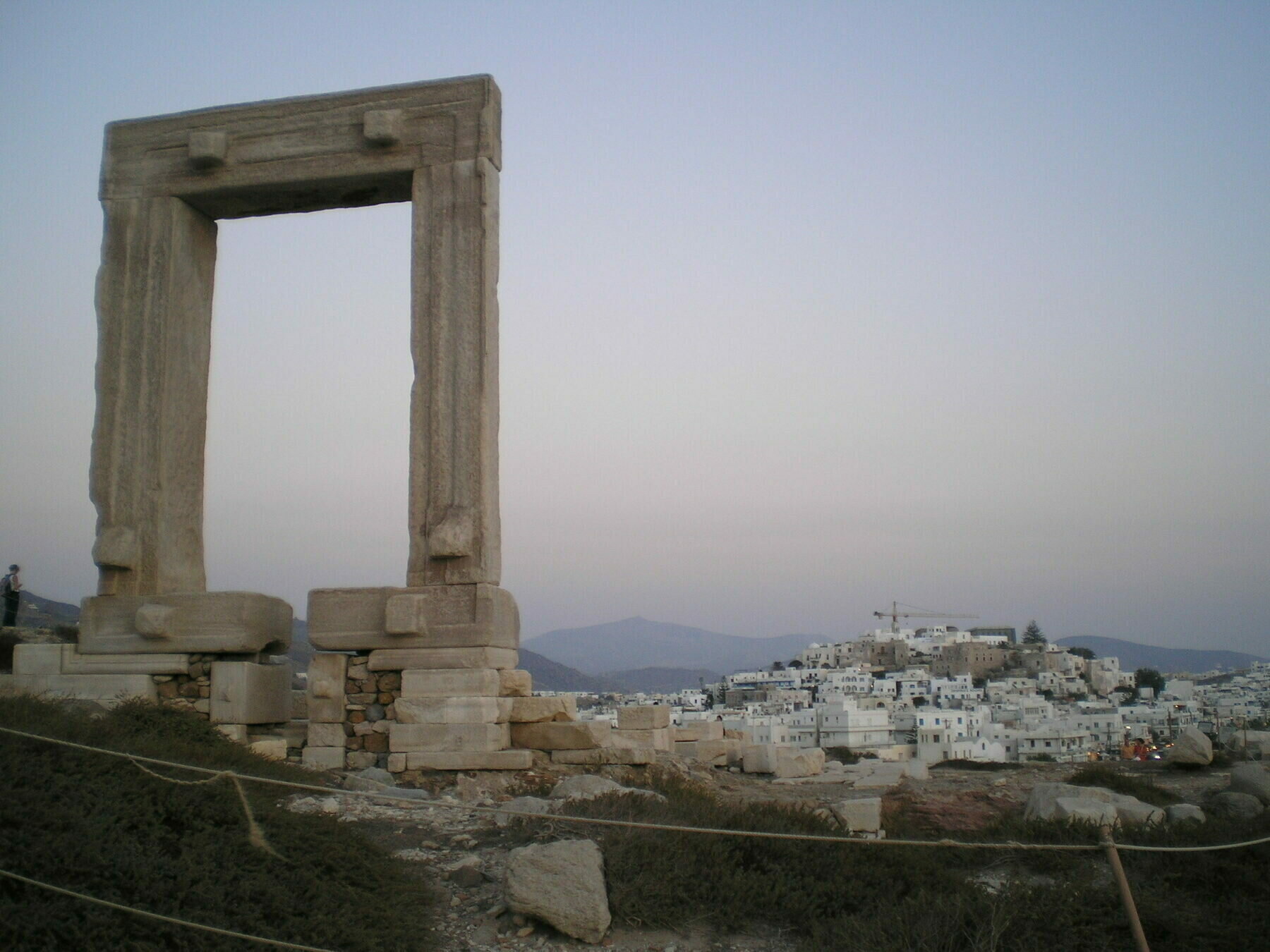
Naxos is one of the richest historical destinations of Expedition I. The Portara, the monumental marble gateway of an unfinished archaic temple, announces the island's ancient importance at the harbor entrance. Above the old town, the Venetian Kastro preserves the fortified aristocratic quarter created after the Fourth Crusade, when Naxos became the center of the Duchy of the Archipelago. The result is not a single castle, but a layered island capital where ancient, Byzantine, Venetian and modern Cycladic history meet within walking distance of the harbor.
Highlights
- Naxos Kastro
- Portara
- Ducal Palace
- Catholic quarter
- Old town streets
- Harbor views
- Cycladic urban fabric
Fortifications and archaeological sites
Naxos Kastro
fortified urban quarter
Venetian, 13th century onward
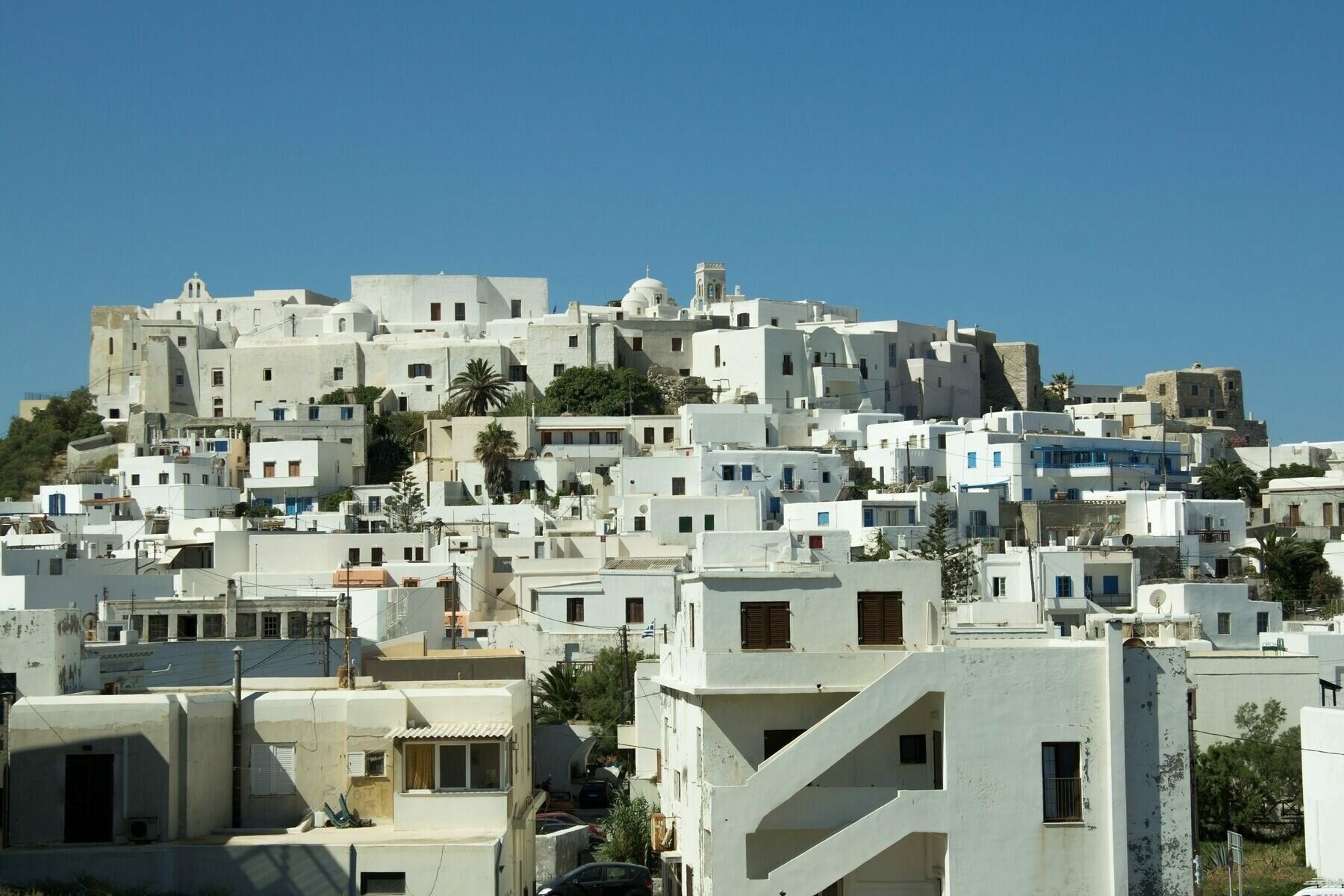
The fortified upper town established by the Venetians as the administrative and aristocratic center of the Duchy of the Archipelago.
Ducal Palace
residential and administrative monument
Venetian
The residence associated with the dukes and Latin elite of Naxos, forming part of the fortified Kastro quarter.
Catholic Quarter
historic urban quarter
Venetian and later
The Latin ecclesiastical and residential core within the Kastro, preserving the western medieval layer of Naxos Chora.
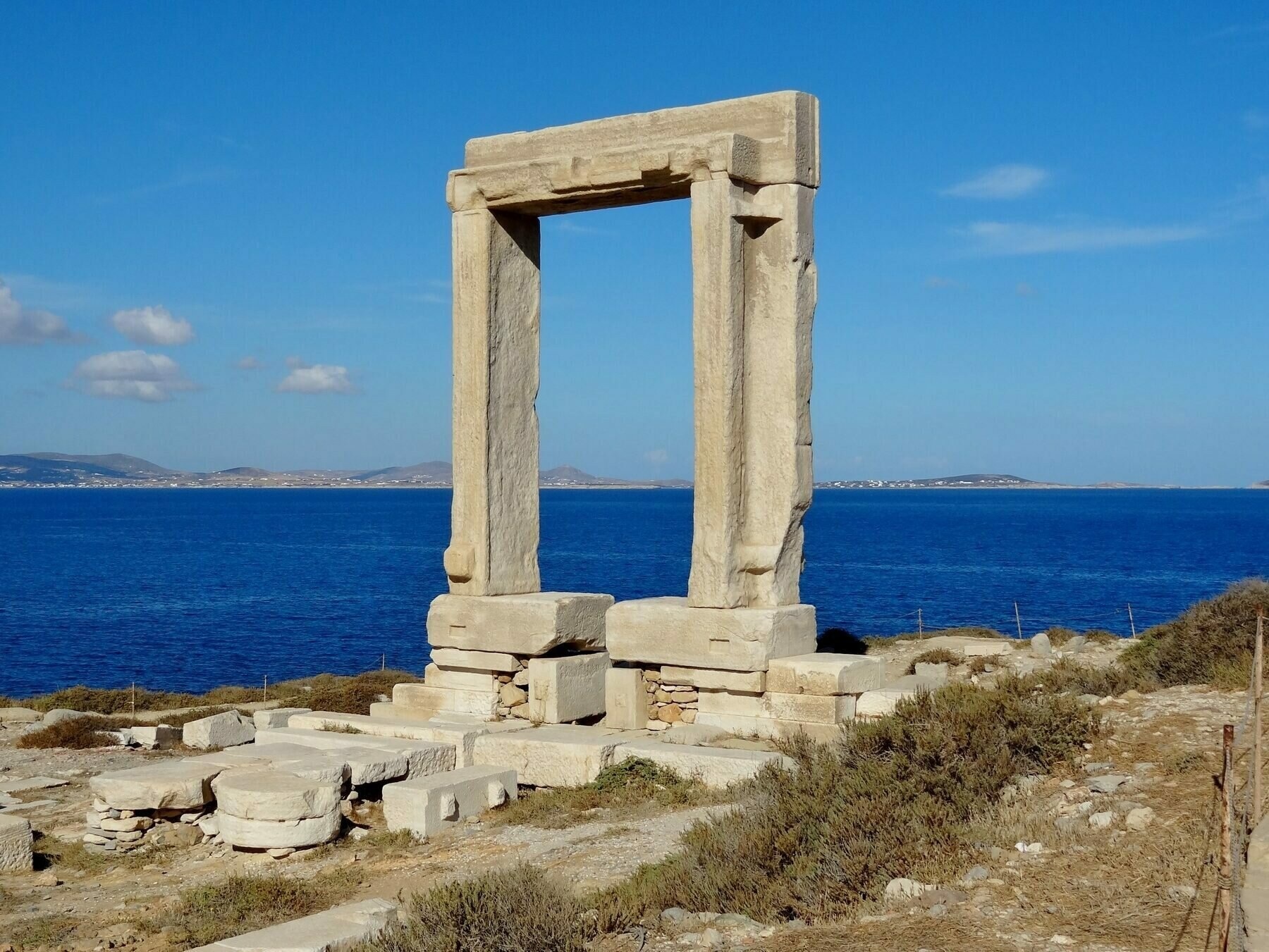
Portara
ancient temple gateway
Archaic Greek, 6th century BC
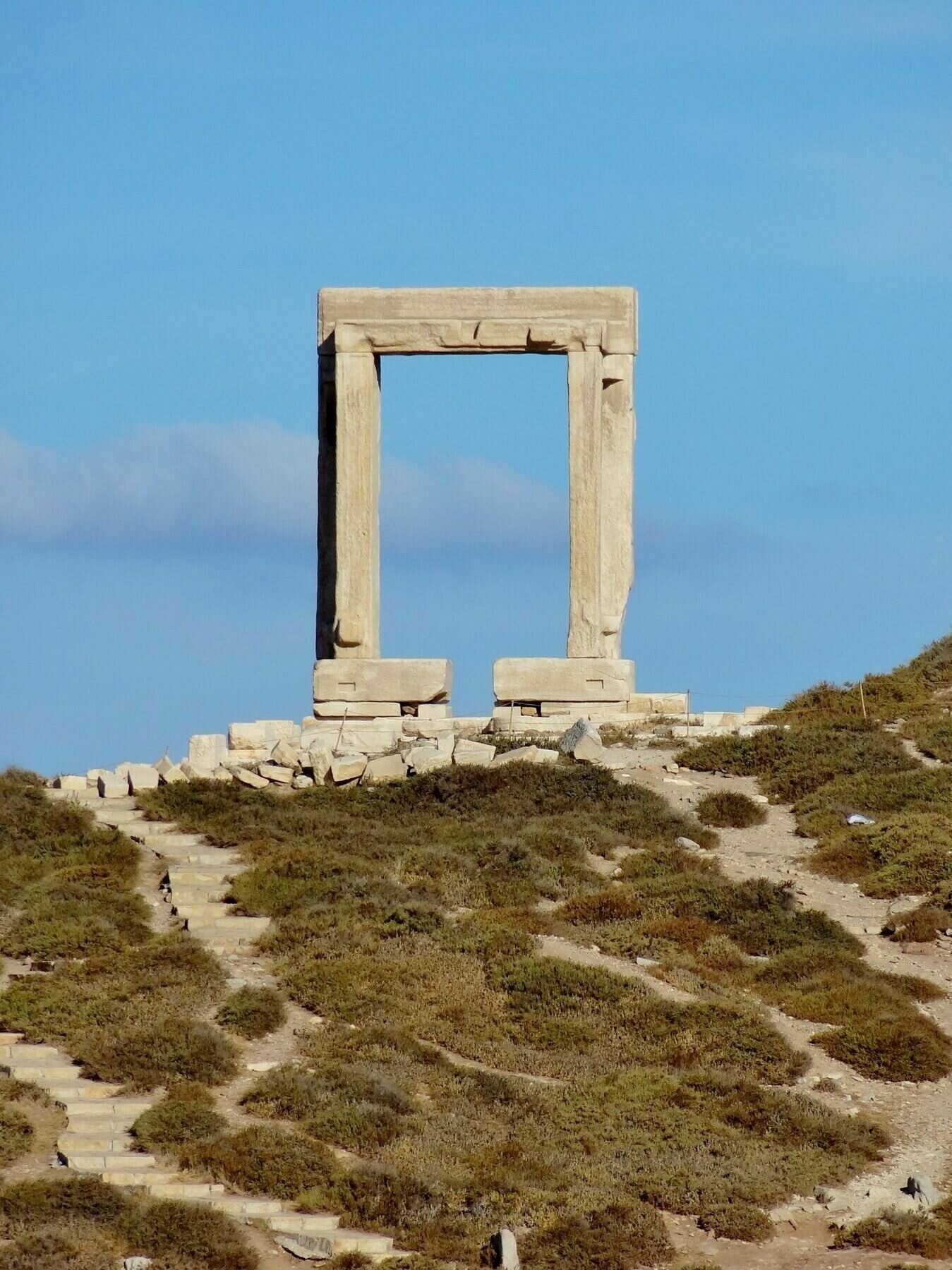
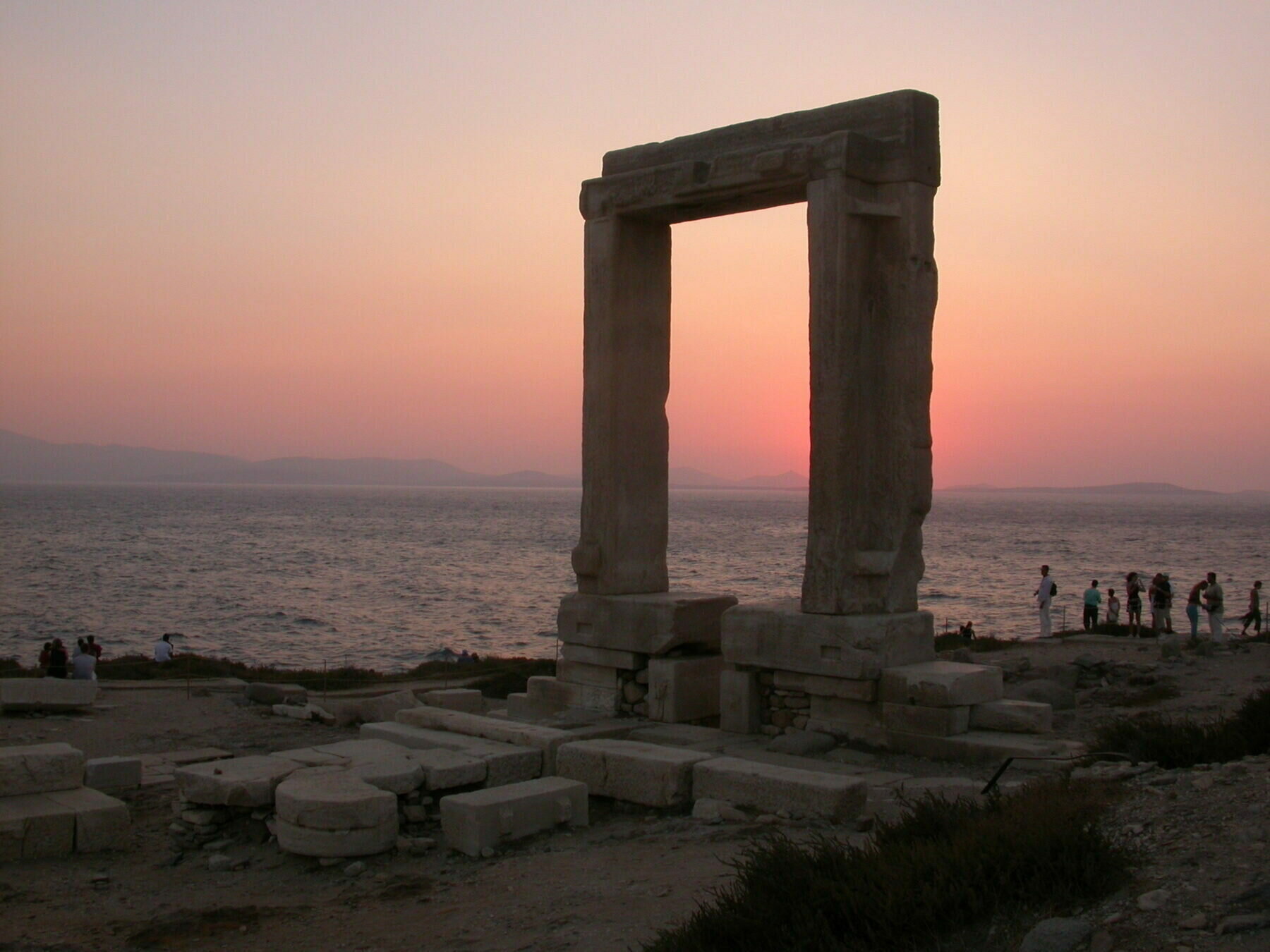
The massive marble doorway of an unfinished temple on Palatia islet, now the most famous landmark of Naxos harbor.
Overview
Naxos is one of the places where the wider scope of the Castles of Greece project becomes especially visible. The fortified Venetian Kastro is the central medieval monument, but it stands within a harbor town dominated visually and symbolically by the ancient Portara. The destination is therefore best understood as a layered historical landscape rather than a single fortress.
Strategic Setting
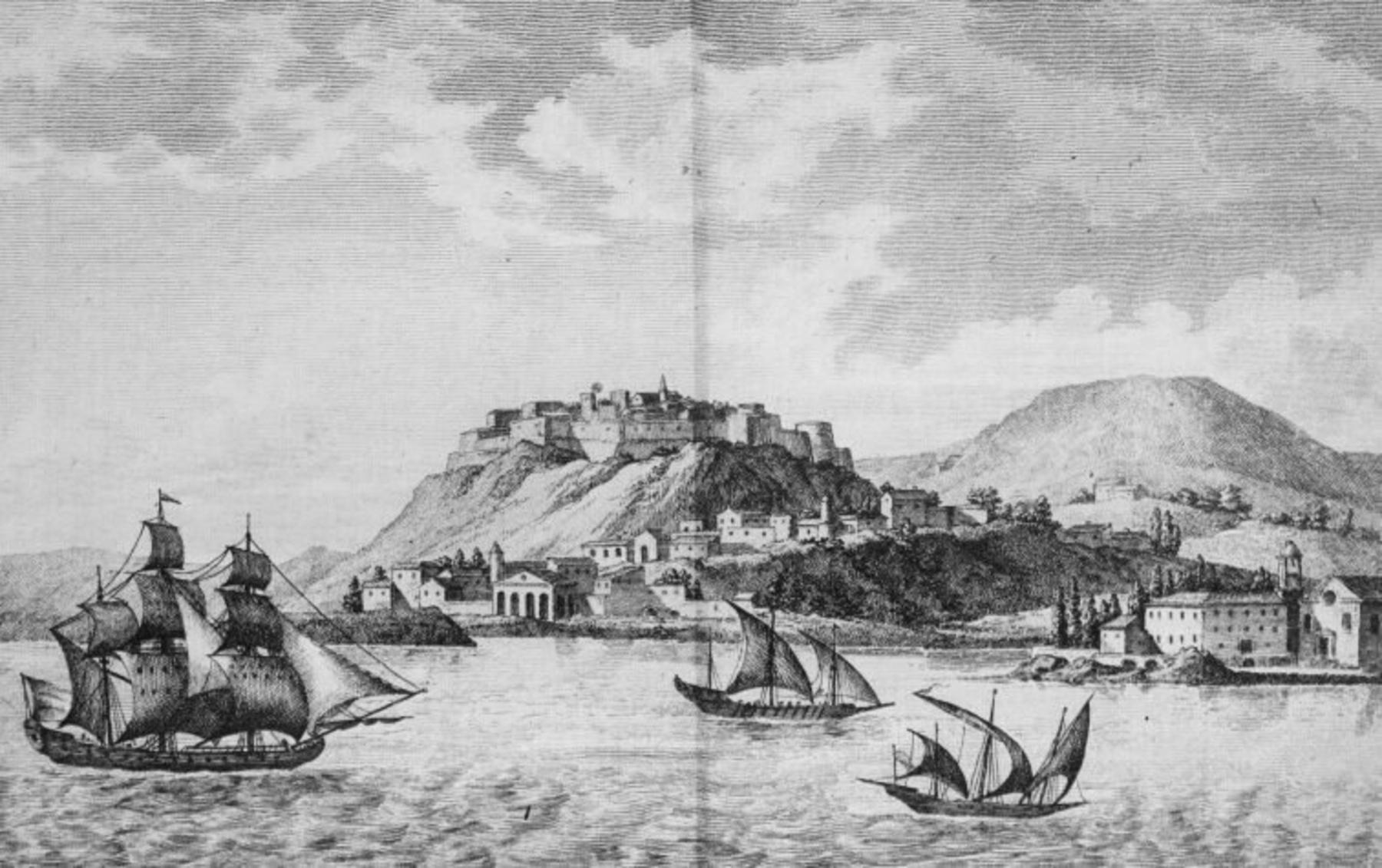
Naxos occupies a central position in the Cyclades and commands important routes through the central Aegean. Its harbor, fertile interior and island scale made it a natural center of power. For the Venetians, Naxos became the capital of a maritime island duchy; for Expedition I, it becomes the major Cycladic counterpoint to the fortified cities of Crete.
The Portara
The Portara stands on Palatia islet beside the harbor and is the most recognizable monument of Naxos. Although it is not a fortification, it is inseparable from the historical identity of the town. The massive marble doorway, usually interpreted as the remains of an unfinished archaic temple, links the harbor landscape to the island's ancient sacred and political history.
The Duchy of the Archipelago
After the Fourth Crusade, the Venetian Marco Sanudo established the Duchy of the Archipelago with Naxos as its capital. This made the island a political center of Latin rule in the Aegean. The Kastro became the fortified expression of this new order, housing the aristocratic, administrative and religious institutions of the duchy.
The Kastro
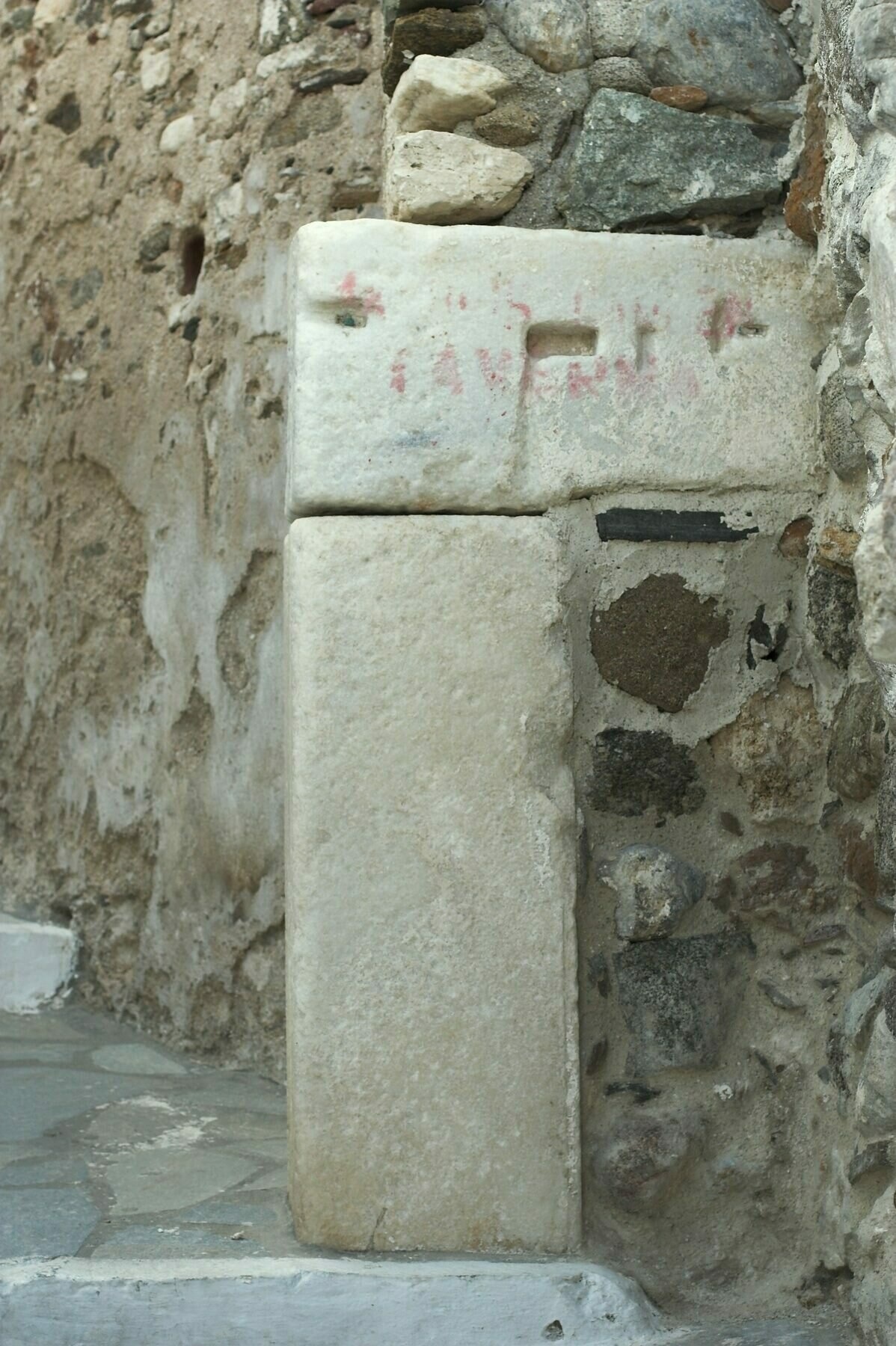
The Kastro of Naxos is a fortified urban quarter rather than a freestanding castle. Built into the fabric of the old town, it used walls, gates, residences and narrow passages to create a defensible aristocratic enclave. Its surviving street pattern and buildings preserve the atmosphere of a medieval Latin capital in the Cyclades.
Urban Fabric and Monuments
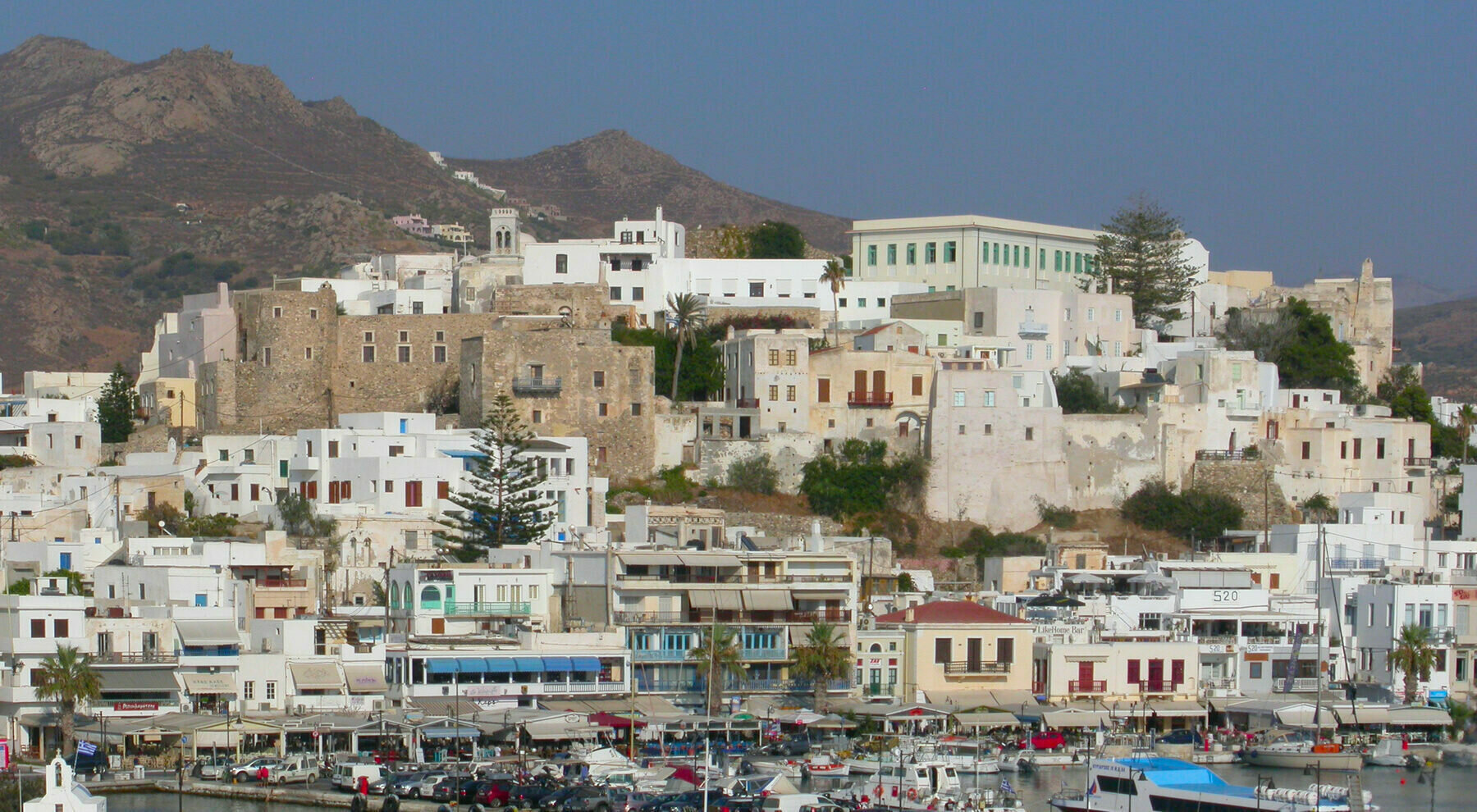
Within and around the Kastro are traces of Naxos's Venetian, Catholic, Orthodox and later Greek history. The Ducal Palace, Catholic quarter, old mansions, archaeological museum and surrounding streets show how political authority, social hierarchy and urban life were organized in the fortified town.
From Venetian Rule to Modern Naxos
Ottoman domination changed the political framework of Naxos, but the island retained many of the social and architectural features shaped during the duchy. The Kastro remained a visible reminder of Latin rule, while the harbor town continued to evolve as a Cycladic center of trade, agriculture and maritime life.
Visiting the Fortified Town Today
A visit to Naxos usually begins at the harbor, where the Portara frames the entrance to the town. From there, the route climbs through the old streets toward the Kastro, passing between Cycladic houses, Venetian mansions, churches and museum buildings. The experience is compact but historically dense, linking the ancient harbor monument to the medieval fortified town above it.
Why it Matters for Expedition I
Naxos marks the expedition's transition from Crete into the Cyclades. It shows how Venetian power in the Aegean could take the form not only of great bastioned harbors, but also of fortified island towns and aristocratic quarters. Alongside the Portara, the Kastro makes Naxos one of the most memorable historical stops of the return leg toward Syros and Lavrio.
Architecture
- Fortified urban quarter
- Venetian gates and walls
- Aristocratic residences
- Catholic ecclesiastical monuments
- Cycladic old town fabric
- Ancient harbor monument
Timeline
- Prehistoric and ancient periods Naxos develops as one of the most important islands of the Cyclades, with strong connections to early Aegean culture, trade and religious life.
- 6th century BC The monumental temple project on Palatia islet begins; its surviving marble gateway becomes known as the Portara.
- Byzantine period Naxos remains an important island settlement within the Byzantine Aegean, with older urban and religious layers preceding the Venetian Kastro.
- 1207 Marco Sanudo establishes the Duchy of the Archipelago, making Naxos its capital after the Fourth Crusade.
- 13th century onward The Venetian Kastro develops as the fortified administrative and aristocratic quarter of Naxos Chora.
- 16th century Ottoman power expands across the Aegean, gradually transforming the political status of the Cyclades.
- 1566 The Duchy of the Archipelago comes under Ottoman control, though Latin and local island elites continue to shape Naxos society.
- 19th century Naxos becomes part of the modern Greek state after the War of Independence.
- Present The Kastro, Portara and old town remain the defining historical landscape of Naxos Chora.
Expedition guides
Images
References
Related places
Related Stops
Topics
- Fortified Town
- Venetian
- Cyclades
- Duchy Of The Archipelago
- Ancient Greek
- Kastro
- Portara
- Urban Fortification
- Island Capital