Overview
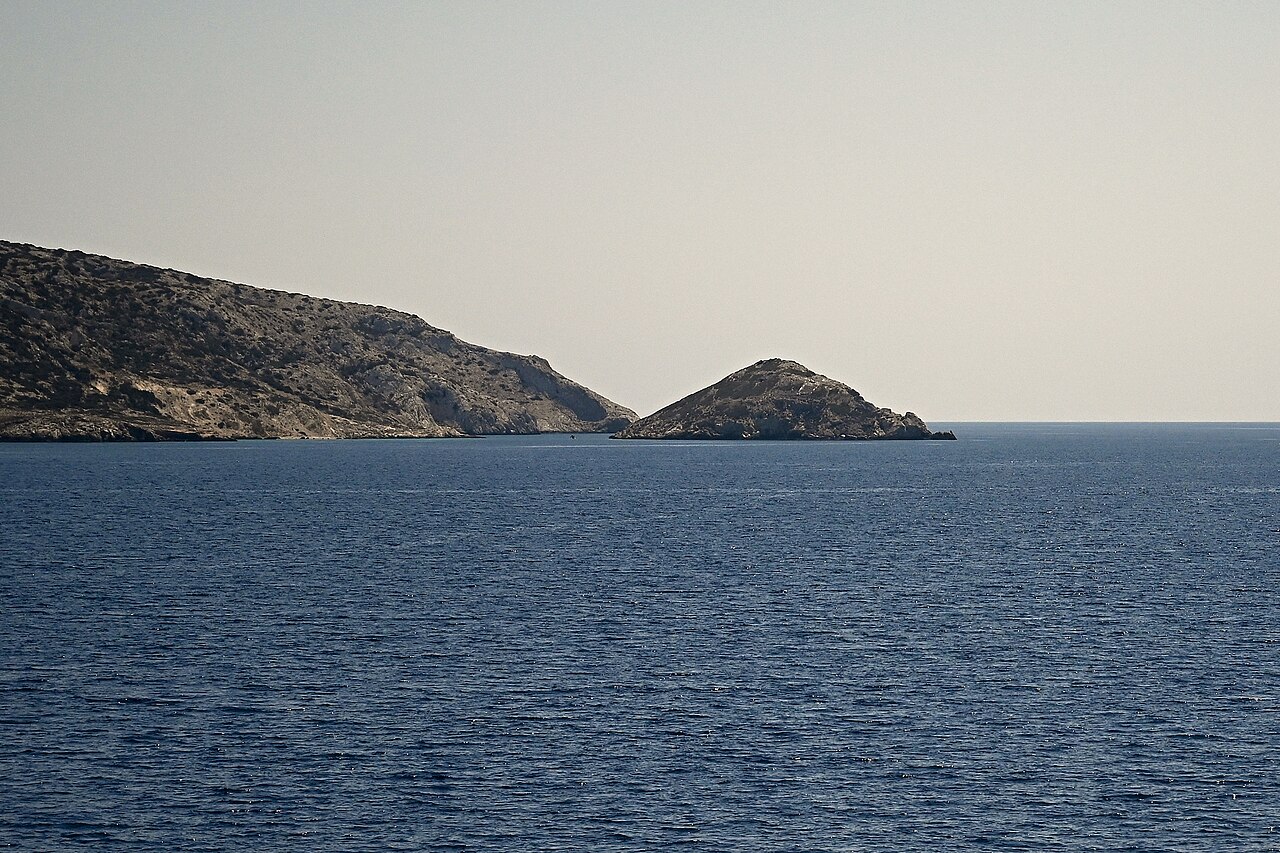
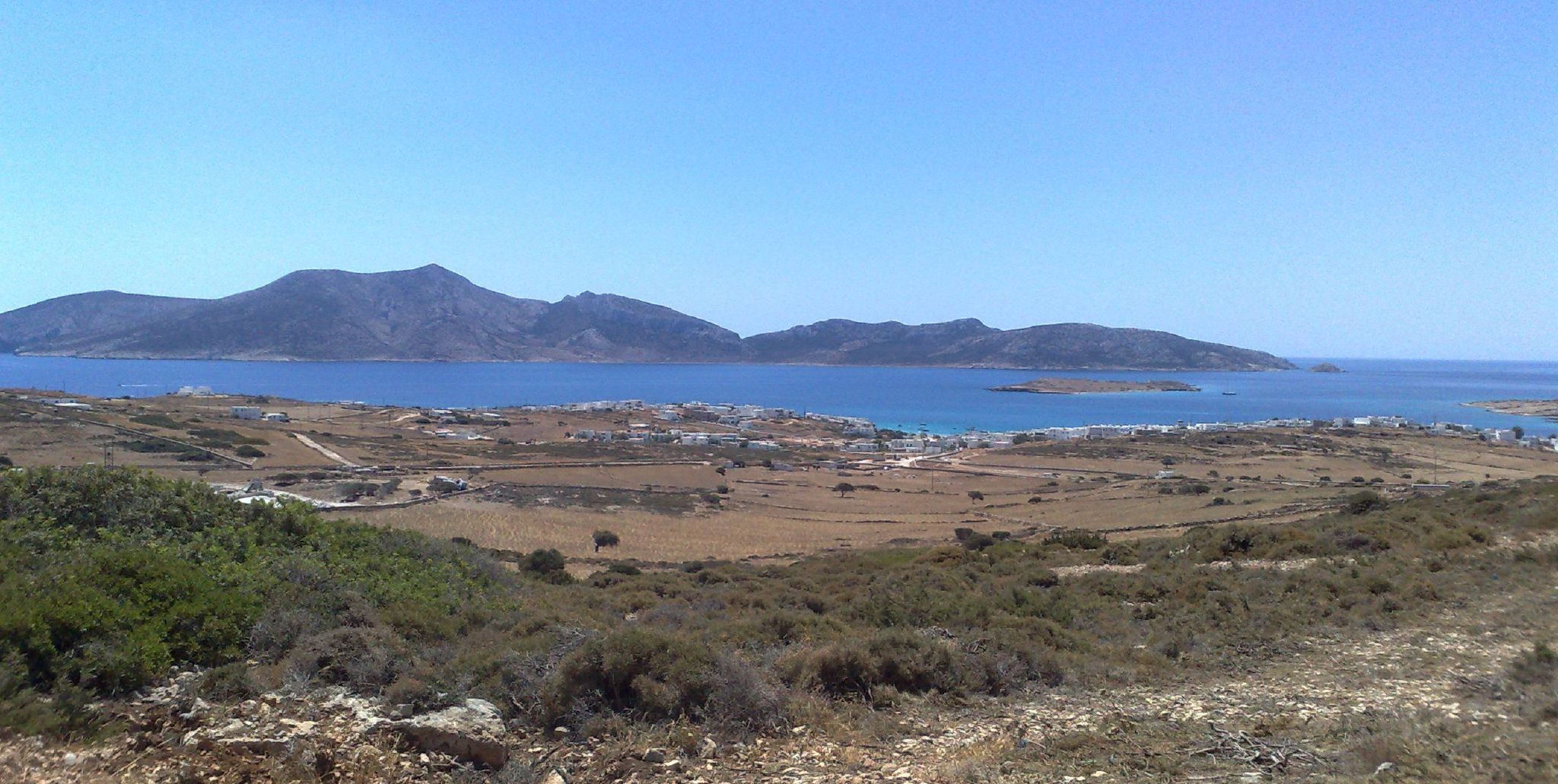
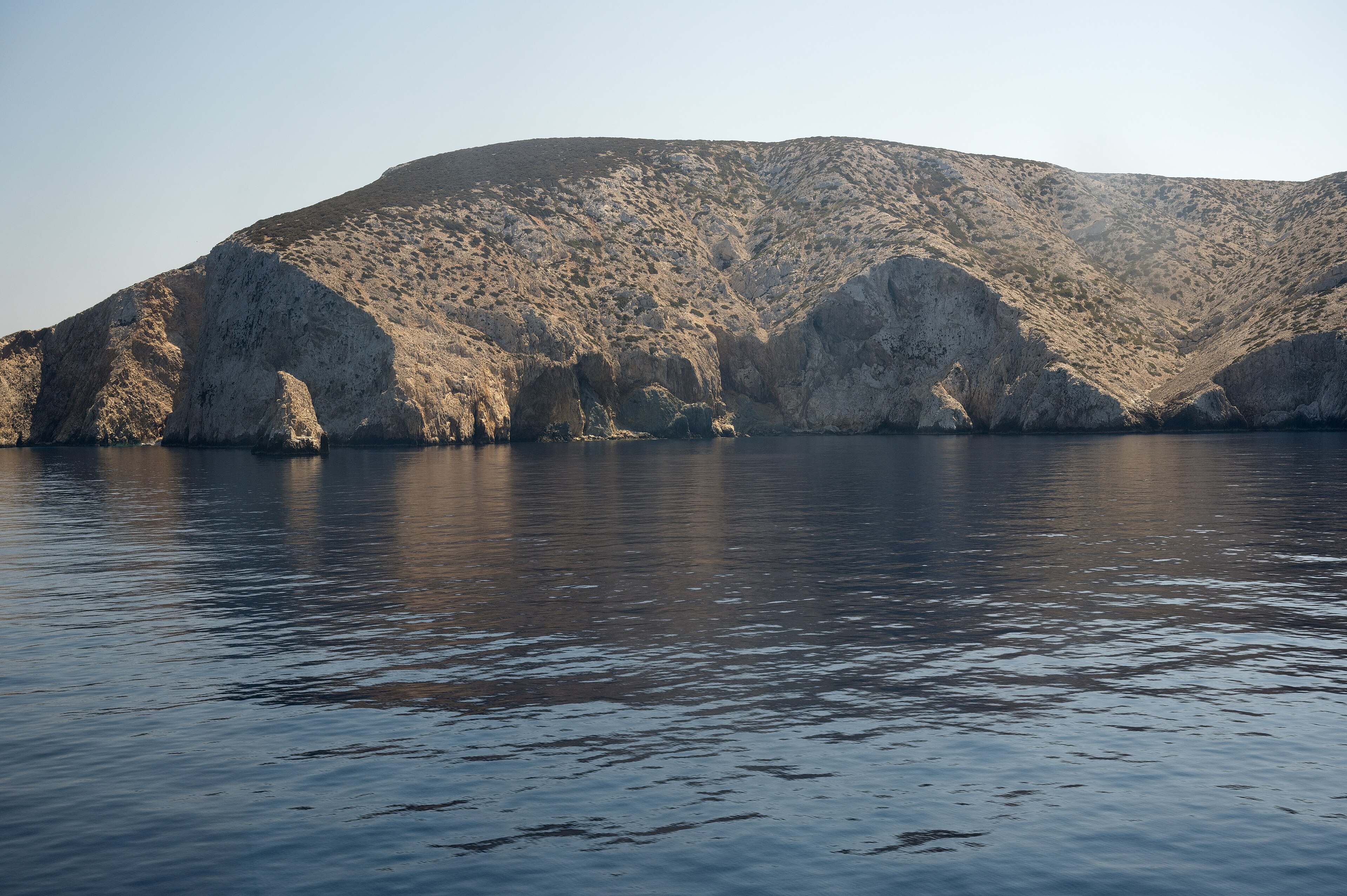
Keros, now uninhabited, lies in the Small Cyclades southeast of Naxos. Its archaeological importance is concentrated on the western coast at Kavos and on the adjacent islet of Dhaskalio, which in the Early Bronze Age was connected to Keros by a low causeway before sea level rose. Keros first became famous through exceptional Cycladic marble sculptures—including the celebrated harpist and aulos player—and through large quantities of deliberately fragmented figurines and marble vessels recovered at Kavos. Scientific excavation has shown that many fragments were already broken before they reached the island and that matching pieces are normally absent, implying that objects were fragmented elsewhere and selected parts carried by sea to Keros for deposition. The dominant interpretation sees Kavos as an early maritime sanctuary or center of congregation used by communities from across the Cyclades, although the Ephorate of Antiquities notes that alternative interpretations, including funerary associations, have been proposed. The picture became still more remarkable with excavation of Dhaskalio. From about 2750 to 2250 BC, steep natural slopes were reshaped by massive terraces supporting dense stone buildings, monumental entrances, pathways and an integrated drainage system. Fine building marble—estimated by the Keros Project at at least 10,000 tonnes—was transported from Naxos, while pottery, obsidian, metals and many other resources also arrived by sea. Specialized workshops produced copper and bronze objects, including daggers, alongside other crafts. Survey has shown that the complex belonged to a wider settlement and agricultural network involving Keros, Kato Koufonisi and southeastern Naxos. Keros is therefore significant not as a conventional ancient city but as evidence for new forms of maritime connectivity, coordinated labor, specialized production and shared ritual in the third millennium BC. Excavation and scientific study continue, with a new multi-season research programme returning to Dhaskalio in 2026.
Highlights
- Kavos
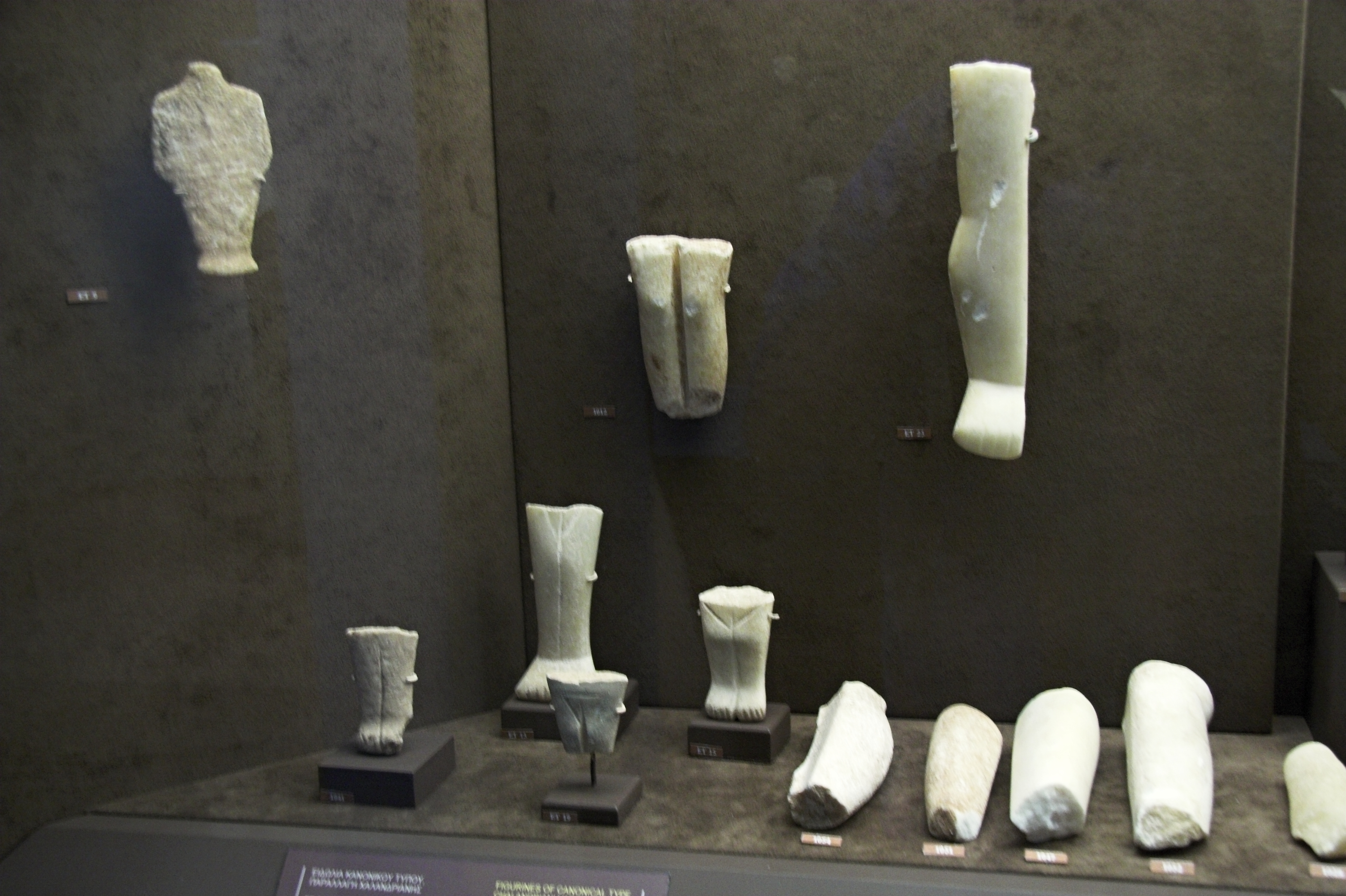
Two special deposits contain deliberately fragmented Cycladic figurines, marble vessels, pottery and obsidian brought to Keros through repeated structured deposition.
- Dhaskalio
A monumental Early Cycladic complex of terraces, imported marble buildings, planned circulation, drainage and specialized workshops on the islet beside Kavos.
- Cycladic figurines
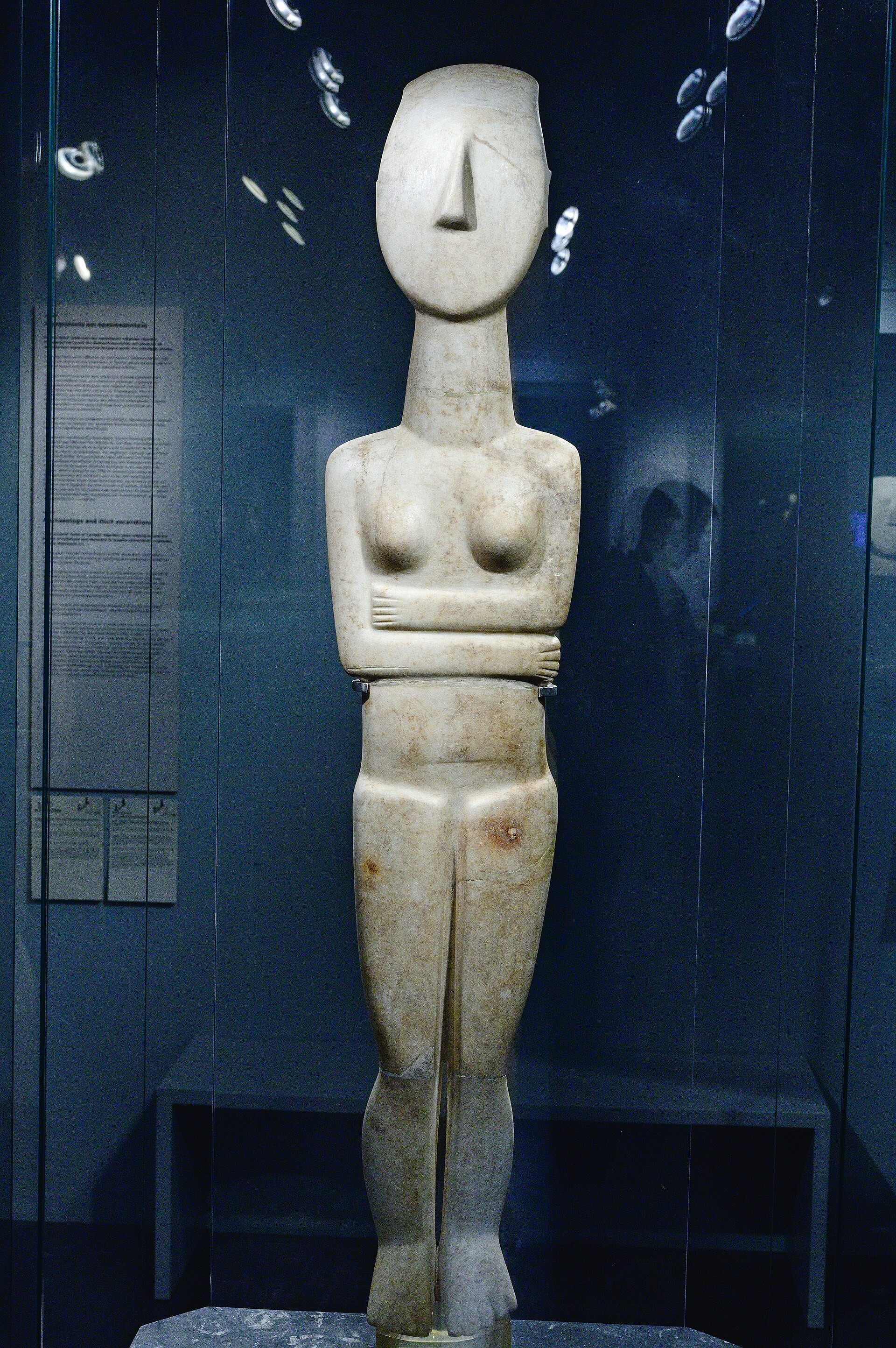
Keros transformed understanding of Cycladic sculpture by showing that figurines could be deliberately broken, transported and deposited as part of supra-regional social practices.
- Early metalworking
Dhaskalio preserves exceptional evidence for concentrated copper, lead and bronze working, including workshops, hearths and moulds for prestige objects such as daggers.
Strategic role
A supra-regional Early Bronze Age ritual, production and aggregation center whose Kavos special deposits and monumental settlement at Dhaskalio transformed understanding of Cycladic religion, seafaring, craft specialization, exchange and emerging social complexity.
Keros and Early Cycladic Archaeology
Keros became famous for deliberately broken marble figurines and vessels found at Kavos, but those deposits now form only one part of a much larger archaeological story. The island belongs to the Early Cycladic world of the third millennium BC, the same broad cultural horizon in which the canonical folded-arm marble figurine became one of the most recognizable forms of prehistoric Aegean art. The term 'Keros–Syros culture' itself reflects the importance of material from Keros in defining Early Cycladic II. Three exceptional sculptures associated with the island—the large marble head now in the Louvre and the seated Harpist and standing Aulos Player in the National Archaeological Museum—helped establish Keros's reputation long before the site's context was understood. Modern archaeology has shifted attention from isolated masterpieces to the social system that brought people, objects and raw materials to this remote island.
Special Deposit at Kavos
Fragments were brought to Keros after being broken elsewhere, indicating formal ritual practices and repeated inter-island gatherings. This interpretation rests especially on excavation of the unlooted Special Deposit South in 2006–2008. Hundreds of fragments of marble figurines and vessels, large quantities of pottery and thousands of pieces of Melian obsidian were recovered, yet fragments of the same object almost never joined. The most persuasive explanation is that complete or larger objects were deliberately broken on other islands and only selected fragments were transported to Keros. The Keros Project interprets this repeated practice, lasting for several centuries, as evidence for the earliest known maritime sanctuary and a center of congregation for Cycladic communities. The Ephorate of Antiquities accepts deliberate fragmentation but notes that scholars have proposed more than one interpretation, including association with a large cemetery. The ritual-congregation model is currently dominant but should not be presented as beyond debate.
Dhaskalio
The islet opposite Kavos was transformed through terraces, monumental stone construction and imported materials. During the Early Bronze Age lower sea level joined Dhaskalio to Keros by a narrow causeway, making the two zones a single connected complex. Excavation has identified three principal occupation phases between roughly 2750 and 2250 BC. Builders first reshaped the steep rocky promontory with enormous terraces, then constructed dense buildings, passages, stairs and monumental entrances upon them. Local stone formed much of the terracing, but high-quality marble for the buildings was brought by sea from Naxos, around ten kilometres away. The Keros Project estimates at least 10,000 tonnes were transported. A sophisticated drainage system was integrated under houses and routes. The architecture gives Dhaskalio an appearance and degree of planning unprecedented in the contemporary Cyclades and provides important evidence for coordinated labor and social organization.
Craft and Exchange
Metalworking, stone-working and imported raw materials reveal wide Aegean networks and specialized production. Excavators have identified several metallurgical workshops with hearths, moulds and debris from copper, lead and bronze production; moulds for daggers show that high-status objects were manufactured locally. Scientific work also documents the transition from arsenical copper toward tin bronze. Obsidian arrived largely from Melos, while pottery and many other materials came from several islands. Dhaskalio itself lacked most of the resources needed to sustain such intensive activity, making maritime transport essential. The site therefore demonstrates not simply trade but organized flows of food, fuel, stone, metals, pottery, technical knowledge and people. Its extraordinary dependence on imports is central to its interpretation as a specialized node rather than an ordinary self-sufficient village.
Protected Archaeological Landscape
Keros should be treated primarily as a protected archaeological landscape rather than a conventional visitor destination. Its significance depends not only on standing architecture but also on surface scatters, subsurface deposits, ancient terraces, landing places and the spatial relationship between Kavos, Dhaskalio and the wider island. Looting in the decades before 1963 destroyed crucial archaeological context and scattered many objects into the antiquities market, making preservation of what remains especially important. Modern fieldwork therefore combines excavation with island survey, geomorphology, digital recording and laboratory analysis. Visitors should experience Keros principally through authorized interpretation, nearby viewpoints and museum collections unless explicit access permission is available.
The Enigma of Deliberate Fragmentation
The most distinctive behavior documented at Kavos is not the making of figurines but their fragmentation and selective deposition. Breaks on many marble objects occurred in antiquity, not during excavation or looting. Because complementary pieces are generally absent, researchers argue that fragmentation took place away from Keros. A participant may therefore have brought only one part of an object after a ceremony on another island. Such practices imply shared conventions extending across communities that otherwise lived on separate islands. Whether the deposits were strictly a 'sanctuary' in the later Greek sense is another question; what can be stated securely is that Kavos was a highly unusual supra-local place of repeated, structured deposition.
Cycladic Figurines in Context
Keros altered the interpretation of Cycladic figurines by providing archaeological context for objects long admired mainly as sculpture. Folded-arm female figures, bowls and other marble objects reached Kavos already fragmented, showing that their prehistoric biographies could include use, breakage, transport and ritual deposition. Keros therefore warns against treating Cycladic marble figures as autonomous works of modern art. Their meaning was embedded in social acts and in relationships among islands. The looted material historically called the 'Keros Hoard' further demonstrates the damage caused when objects are separated from archaeological context.
The Harpist and Aulos Player
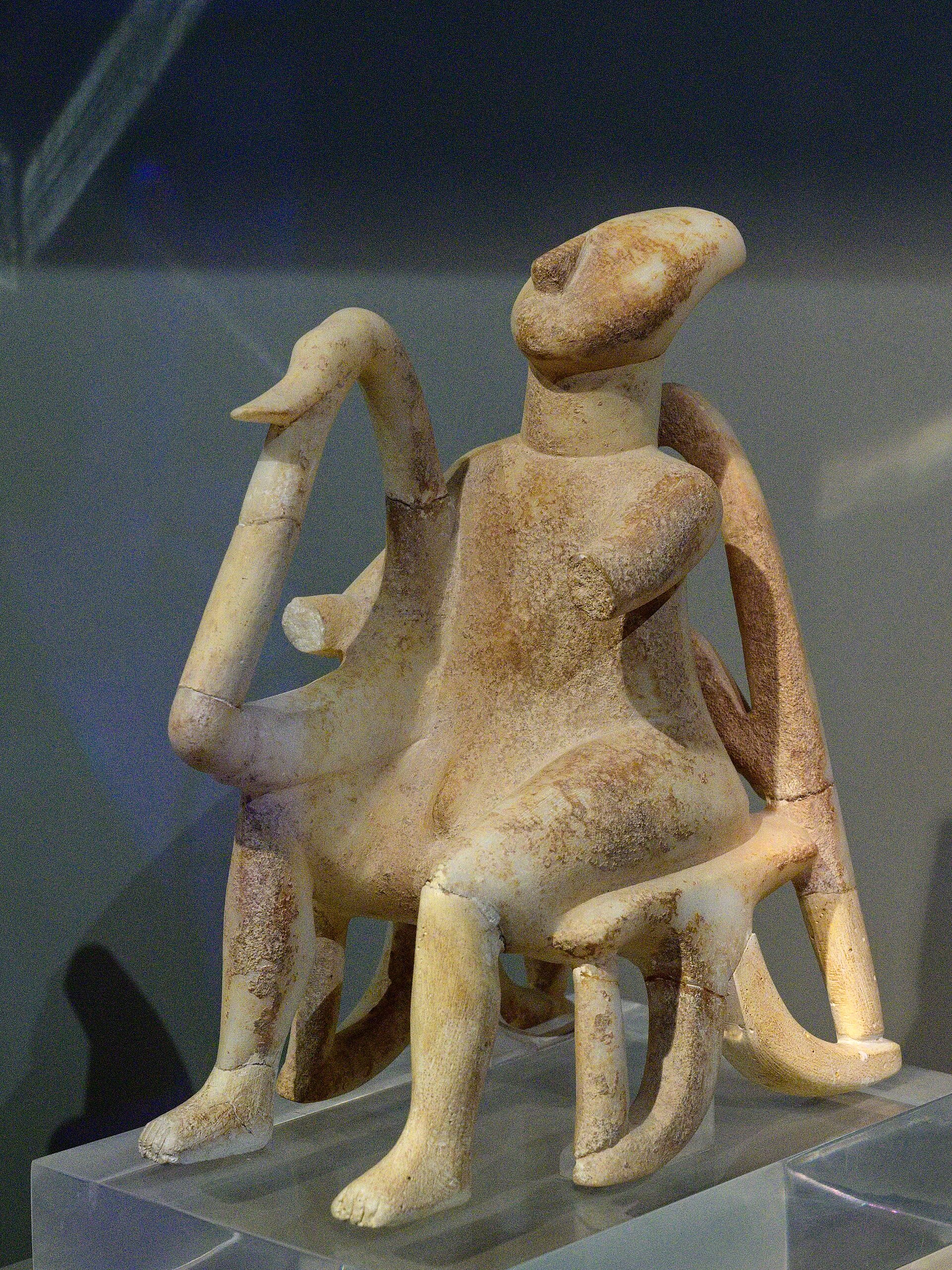
The seated Harpist and standing Aulos Player associated with Keros are among the most celebrated Early Cycladic sculptures. Both depict musicians in three dimensions rather than the more common folded-arm female form. The Harpist, carved from marble and now in the National Archaeological Museum in Athens, is generally dated to Early Cycladic II. These figures testify to a visual culture capable of depicting specialized human activity with remarkable economy. They should, however, be distinguished from the scientifically excavated fragments of the Kavos special deposits; their early discovery histories are less securely contextualized.
Dhaskalio as Monumental Architecture
The architectural transformation of Dhaskalio required planning on a scale previously unexpected for the Cycladic Early Bronze Age. Terraces were laid out before the buildings they supported, pathways channelled movement and imported marble created a conspicuous visual surface. Approaching from the sea, the pale cut stone would have contrasted strongly with the darker local rock. This conspicuous architecture may have communicated the importance of the place to arriving participants. The site is sometimes described as proto-urban, but excavators remain cautious about applying later urban categories directly: Dhaskalio combined dense construction and central organization with unusual specialization and comparatively limited evidence for ordinary domestic life.
The Hall and Organized Space
At the summit of Dhaskalio, excavators identified a long narrow building conventionally called the Hall. Its prominent location, scale and unusual character distinguish it from ordinary domestic architecture, though its exact function remains unknown. Together with monumental entrances, terraces and circulation routes, it suggests that movement and gathering were intentionally structured. Dhaskalio's significance therefore rests less on one 'palace' or temple than on the organization of the entire built landscape.
Water and Drainage
Supplying water to a dense complex on a steep, dry islet presented a major logistical challenge. Excavation revealed channels designed beneath buildings, paths and walls, demonstrating that drainage was incorporated into the site's architectural planning. Not every channel necessarily carried potable water; much of the system probably controlled runoff and wastewater. Even so, its integration into the built environment is evidence for advanced planning. The wider question of how Dhaskalio provisioned water and food remains an active area of research.
Metalworking at the Center of the Aegean
Dhaskalio has produced some of the strongest evidence for specialized metalworking in the Early Cycladic world. Workshops contained hearths, ceramic equipment, crucibles, moulds and metallurgical residues. Copper and lead were worked, small quantities of precious metals were present, and bronze technology can be traced. Since metal ores and much fuel had to be imported, production required sustained maritime logistics. The concentration of metalworking beside a supra-regional ritual center suggests that prestige goods, technical knowledge and ceremonial gathering may have reinforced one another, although the exact institutional relationship between Kavos ritual and Dhaskalio production remains under investigation.
Obsidian, Pottery and Maritime Networks
Melian obsidian, imported pottery and building marble demonstrate that Keros was deeply embedded in inter-island networks. Pottery analysis identifies multiple production origins, while obsidian came largely from Melos and marble construction material principally from Naxos. These flows are too extensive to represent occasional contact. Keros functioned within a maritime system through which boats repeatedly moved people, raw materials and finished goods. The sea was therefore connective infrastructure rather than a barrier.
Keros, Koufonisia and Southeast Naxos
Survey expanded the archaeological picture beyond Kavos and Dhaskalio. Work across Keros in 2012–2013 identified ancient terraces and evidence that the island itself had been used agriculturally and settled before the sanctuary reached its height. Survey on Kato Koufonisi revealed much denser domestic material, suggesting close functional relationships among Keros and the Koufonisia. Southeast Naxos displayed a different settlement pattern but remained an important source region, particularly for marble. Researchers increasingly interpret the complex as a distributed island network rather than a self-contained settlement.
Food, Agriculture and an Unlikely Center
Keros is rocky and poorly suited to intensive agriculture, which makes the scale of Dhaskalio more striking. Survey has nevertheless identified Early Bronze Age terraces showing attempts to increase production. Archaeobotanical research suggests that food had to be drawn from a wider hinterland. The existence of a major gathering and production complex in such a resource-poor setting underscores the importance of maritime cooperation: the site could flourish only because surrounding communities supplied it.
Looting and the Loss of Context
Modern understanding of Keros was permanently shaped by illicit excavation. When Christos Doumas and Colin Renfrew visited in 1963 they found catastrophic disturbance at Kavos. Rescue excavations recovered important material, but countless objects had already entered private and museum collections without secure provenance. This history matters because Keros demonstrates why archaeological context can be more valuable than an individual masterpiece. The discovery of the untouched Special Deposit South in 2006 finally allowed the fragmentation and deposition process to be tested scientifically.
From Mystery to Archaeological Model
For decades Keros was known as an archaeological enigma: an apparently isolated island yielding enormous numbers of broken figurines without clear houses or graves. Successive campaigns changed the question. Excavation of Kavos established structured deposition; Dhaskalio revealed a monumental and productive complex; survey demonstrated a wider landscape of settlements and agriculture. Keros has consequently become a model for studying aggregation, centralization and connectivity before palaces or classical cities existed in the Aegean.
The History of Excavation
Archaeological investigation began with rescue work in 1963, followed by excavation in 1967 and systematic work in 1987–1988. The Cambridge Keros Project excavated Kavos and Dhaskalio in 2006–2008, followed by island survey in 2012–2013 and the Keros–Naxos Seaways Project in 2015–2018. These projects were conducted under the auspices of the British School at Athens in collaboration with the Greek Ministry of Culture, Ephorate of Antiquities of the Cyclades, University of Cambridge and other scientific institutions. A new 2025–2029 programme has returned to Dhaskalio, with fieldwork continuing in 2026. Interpretation should therefore be understood as active research rather than a closed historical narrative.
Keros in the History of Aegean Society
The importance of Keros extends beyond Cycladic art. The combination of ritual aggregation, organized building, specialized production, imported materials and long-distance seafaring suggests social forms more complex than small autonomous farming villages. Researchers use Keros to explore how cooperation, hierarchy, technological specialization and regional identities developed in the centuries before the better-known Minoan palaces. Terms such as 'proto-urban' or 'central place' are useful analytical models but should not imply that Dhaskalio was simply an early version of a later Greek polis.
What a Visitor Can See
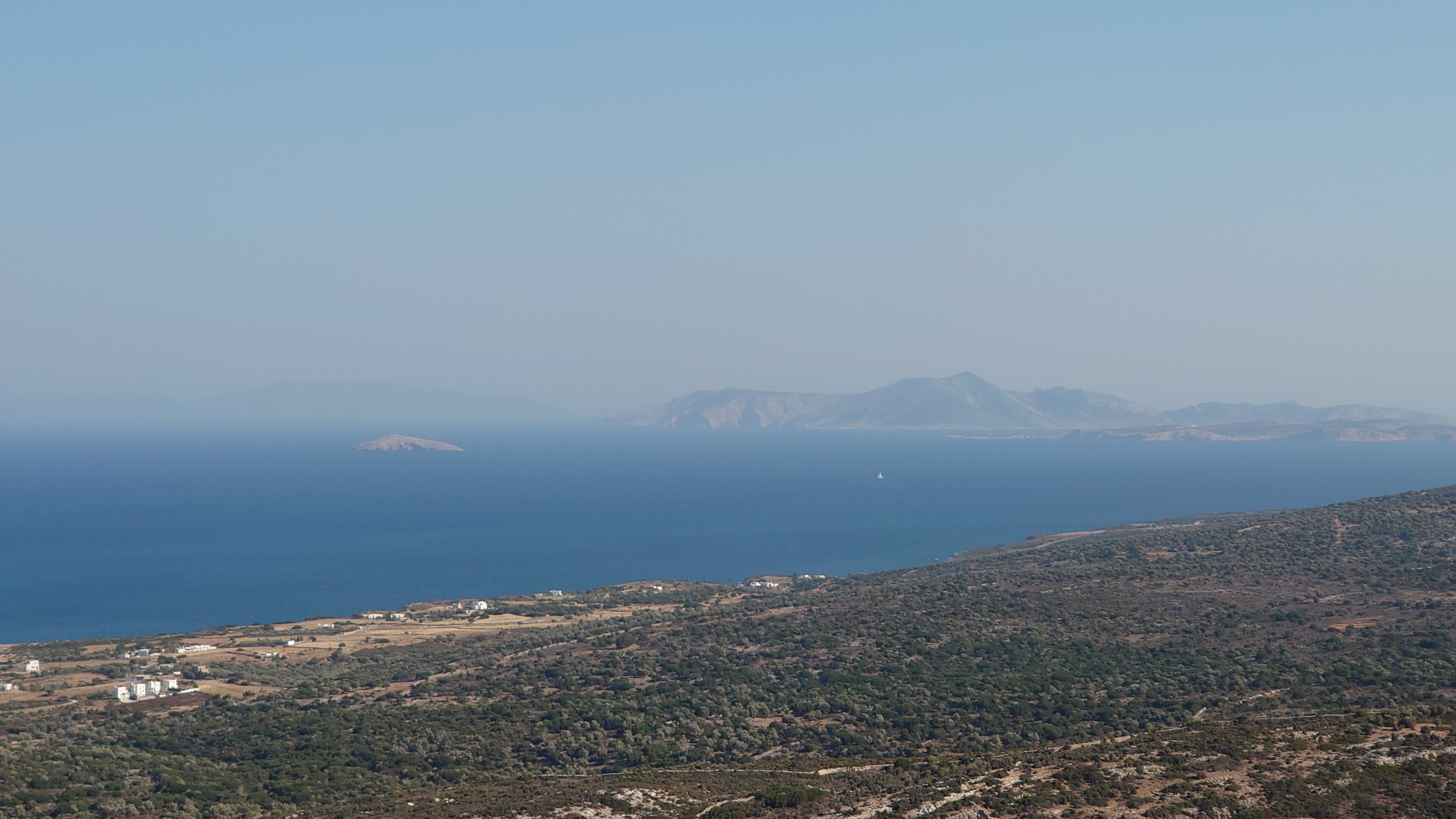
Keros is not a conventional visitor site, and that is part of its significance. The island's archaeological landscape is best understood before attempting any physical approach. From Ano Koufonisi and ferries crossing toward Amorgos, the profile of Keros and Dhaskalio can be appreciated within the same seascape that Early Bronze Age communities navigated. The Archaeological Collection of Koufonisi provides the closest museum context for the Small Cyclades, while major Keros sculptures can be seen in Athens. Published plans, photographs, digital models and the Keros Project's online material make it possible to understand the site without disturbing it.
Why Keros Matters
Keros matters because it forces a reconsideration of what social complexity looked like before cities, palaces and written administration dominated the Aegean. People repeatedly crossed the sea carrying fragmented marble objects to Kavos; nearby they built Dhaskalio with imported stone, engineered terraces and drainage, and practiced specialized metalworking. No single explanation fully captures the complex. It was at once a place of aggregation, ritual deposition, production and exchange. Its archaeology shows that the sea could unite dispersed island communities into durable social institutions more than four thousand years ago.
Architecture
- Massive concentric stone terraces transforming the steep slopes of Dhaskalio into buildable platforms
- Dense Early Cycladic stone-built complexes arranged on successive terraces
- Fine marble building blocks imported principally from Naxos for architectural construction
- Monumental entranceways controlling movement through the Dhaskalio complex
- The long summit building conventionally called the Hall, prominently positioned above the approaches
- Pre-planned pathways, stairways and routes connecting different levels of the settlement
- Integrated drainage channels passing beneath buildings, pathways and terrace walls
- Metalworking workshops with hearths, crucibles and moulds for objects including daggers
- Kavos Special Deposits without normal domestic architecture, emphasizing their distinctive depositional function
- Early Bronze Age agricultural terraces elsewhere on Keros documented by island survey
- Low prehistoric land bridge or causeway that once joined Dhaskalio to the Kavos promontory
Timeline
- before c. 2800 BC Survey indicates occupation and agricultural use of Keros before the Kavos–Dhaskalio complex reached its principal phase.
- c. 2750 BC The main Early Bronze Age sequence at Dhaskalio begins; construction and activity develop through several phases.
- c. 2750–2400 BC Structured deposition of deliberately fragmented marble figurines, vessels, pottery and other selected materials takes place at Kavos over multiple generations.
- Early Cycladic II The artistic tradition conventionally called Keros–Syros includes canonical folded-arm figurines and exceptional musician figures associated with Keros.
- 3rd millennium BC Lower sea level leaves Dhaskalio connected to Keros by a narrow causeway, forming a unified Kavos–Dhaskalio activity zone.
- 3rd millennium BC Dhaskalio is reshaped with massive terraces, dense stone architecture, monumental entrances and planned drainage.
- 3rd millennium BC Large quantities of marble are transported from Naxos for building, while pottery, obsidian, metals and food arrive through wider Aegean networks.
- 3rd millennium BC Specialized metalworking produces copper and bronze objects, including dagger forms, at workshops on Dhaskalio.
- c. 2250 BC The principal Early Bronze Age occupation of Dhaskalio comes to an end; the causes remain an active research question.
- 19th century Keros becomes known to scholars through exceptional Cycladic marble sculptures recovered from the island.
- before 1963 Large-scale illicit digging severely damages the northern Kavos deposit and disperses archaeological objects into the antiquities market.
- 1963 Christos Doumas undertakes rescue excavation after the looting is documented; Colin Renfrew independently inspects the disturbed site.
- 1967 Photeini Zapheiropoulou and Konstantinos Tsakos conduct further rescue excavation at Kavos.
- 1987–1988 Renfrew, Doumas, Marangou and collaborators undertake renewed excavation and survey, developing the concept of a Special Deposit.
- 2006–2008 The Cambridge Keros Project excavates the intact Special Deposit South and begins systematic excavation of Dhaskalio.
- 2012–2013 Survey of the whole island of Keros investigates settlement, agriculture and the wider context of the sanctuary complex.
- 2015–2018 The Keros–Naxos Seaways Project expands work across Dhaskalio, Kato Koufonisi and southeastern Naxos.
- 2016–2018 New excavations reveal extensive Dhaskalio terraces, monumental access routes, drainage and major evidence for specialized metalworking.
- 2025–2029 A new cooperative research programme is launched by the Ephorate of Antiquities of the Cyclades and British School at Athens with scientific partners.
- 2026 Field excavation returns to Dhaskalio as researchers investigate site functions, earliest activity, occupation phases and the reasons for abandonment.
Visiting today
Keros should be approached primarily as a protected archaeological and research landscape, not as a conventional sightseeing island. There is no visitor town, museum, road network or organized archaeological park on Keros itself, and active archaeological work may impose additional restrictions. The most appropriate public interpretation is currently available through the Archaeological Collection of Koufonisi, published Keros Project material, exhibitions and views of the island from Ano and Kato Koufonisi or from ferries passing between the Small Cyclades and Amorgos. Do not enter excavation areas, disturb surface material or treat Dhaskalio and Kavos as recreational landing places. Anyone seeking authorized access should confirm current conditions with the Ephorate of Antiquities of the Cyclades. Several famous objects associated with Keros—including the Harpist—are displayed in museum collections in Athens.
Images
References
- Ephorate of Antiquities of the Cyclades — Keros and Daskalio
- The Keros Project — Keros, Kavos and Dhaskalio
- University of Cambridge Department of Archaeology — Keros Project
- University of Cambridge — 2006–2008 Keros Excavations
- University of Cambridge — Keros–Naxos Seaways Project 2015–2018
- British School at Athens — Advanced Architectural Planning at Dhaskalio
- British School at Athens Digital Collections — Keros–Naxos Seaways Project
- Renfrew, Boyd and Bronk Ramsey — The Oldest Maritime Sanctuary? Dating the Sanctuary at Keros and the Cycladic Early Bronze Age
- Cambridge Repository — The Sanctuary on Keros and the Origins of Aegean Ritual Practice
Related places
Topics
- Cyclades
- Historic Island
- Early Cycladic
- Early Bronze Age
- Keros Syros
- Kavos
- Dhaskalio
- Maritime Sanctuary
- Ritual Deposition
- Cycladic Figurines
- Monumental Architecture
- Metalworking
- Obsidian
- Seafaring
- Exchange Networks
- Archaeological Landscape
- Protected Site
- Small Cyclades