Overview
Milos belongs to the South Aegean volcanic arc and was built through multiple phases of volcanic activity over roughly the last 3.5 million years. Rhyolitic and other volcanic rocks, hydrothermal alteration and geothermal activity produced an exceptional variety of minerals and the sculpted coasts now associated with places such as Sarakiniko and Kleftiko. This geology determined human history from the beginning. Neolithic communities exploited the island's obsidian, especially at Nychia and Demenegaki, and Melian obsidian became a fundamental raw material of prehistoric Aegean exchange. During the Bronze Age, Phylakopi developed through successive settlements into one of the most important centers of the prehistoric Cyclades, eventually displaying strong Minoan and Mycenaean connections. After Phylakopi's abandonment, the historic city of Melos developed above Klima, controlling the entrance to the great gulf. Its resistance to Athens ended catastrophically in 416 BC, but the city recovered and remained inhabited through Hellenistic, Roman and Early Christian times. The Roman theatre and the extensive catacombs belong to this later urban landscape. In the post-medieval period, settlement shifted toward defensible heights such as Kastro and later Plaka, while coastal fishing communities developed the distinctive syrmata used to shelter boats. Modern industrial mining began after the Greek state's 1862 mining legislation and continues today, making Milos unusual among the Cyclades: mineral extraction is not simply archaeological heritage but a living industry.
Highlights
- Ancient Theatre
A Roman-period marble theatre built beside the agora and fortifications of ancient Melos, restored and presented by the Ephorate of Antiquities.
- Catacombs
An approximately 200-metre network of Early Christian burial galleries cut into volcanic tuff and used from the mid-1st to the 7th centuries AD.
- Plaka and Kastro
The historic hill capital combines compact Cycladic architecture with the defensible summit of the older Kastro and sweeping views over the great gulf.
- Klima
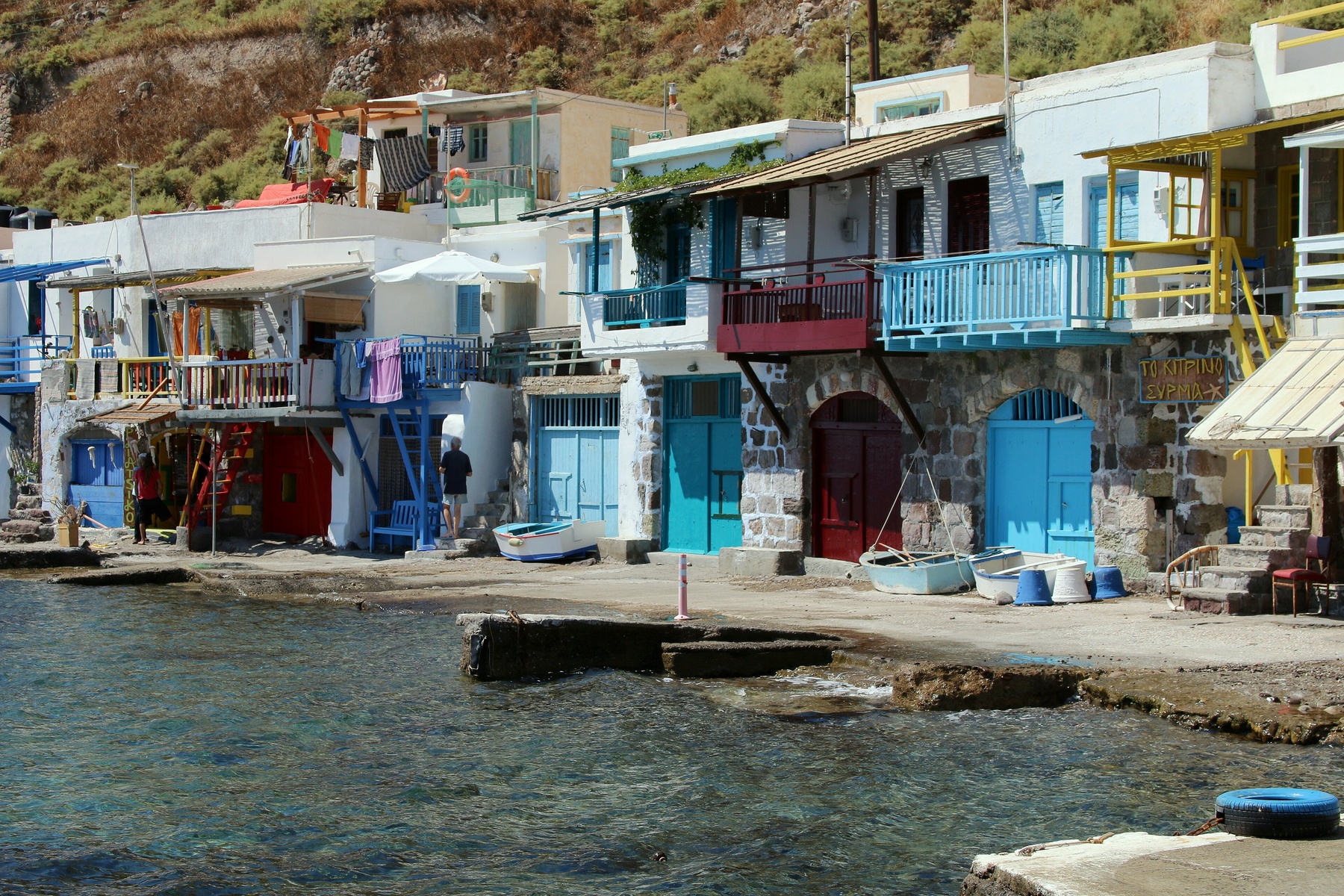
A waterfront settlement famous for syrmata, the brightly painted boat shelters that embody Milos's traditional fishing architecture.
- Obsidian
Melian volcanic glass circulated through the prehistoric Aegean for millennia and made the island a key node of early maritime exchange.
- Mining landscape
Active quarries and abandoned sulfur, manganese and metal-mining sites preserve a rare continuum from prehistoric extraction to modern industry.
- Phylakopi
One of the most important Bronze Age settlements in the Cyclades, with successive fortified towns, a Mycenaean megaron and an important sanctuary.
- Aphrodite of Melos
The island's most internationally famous artifact: a monumental Hellenistic Aphrodite of c. 150–125 BC, carved in Parian marble, discovered near ancient Melos in 1820 and presented to the Louvre in 1821.
- Sarakiniko and Kleftiko
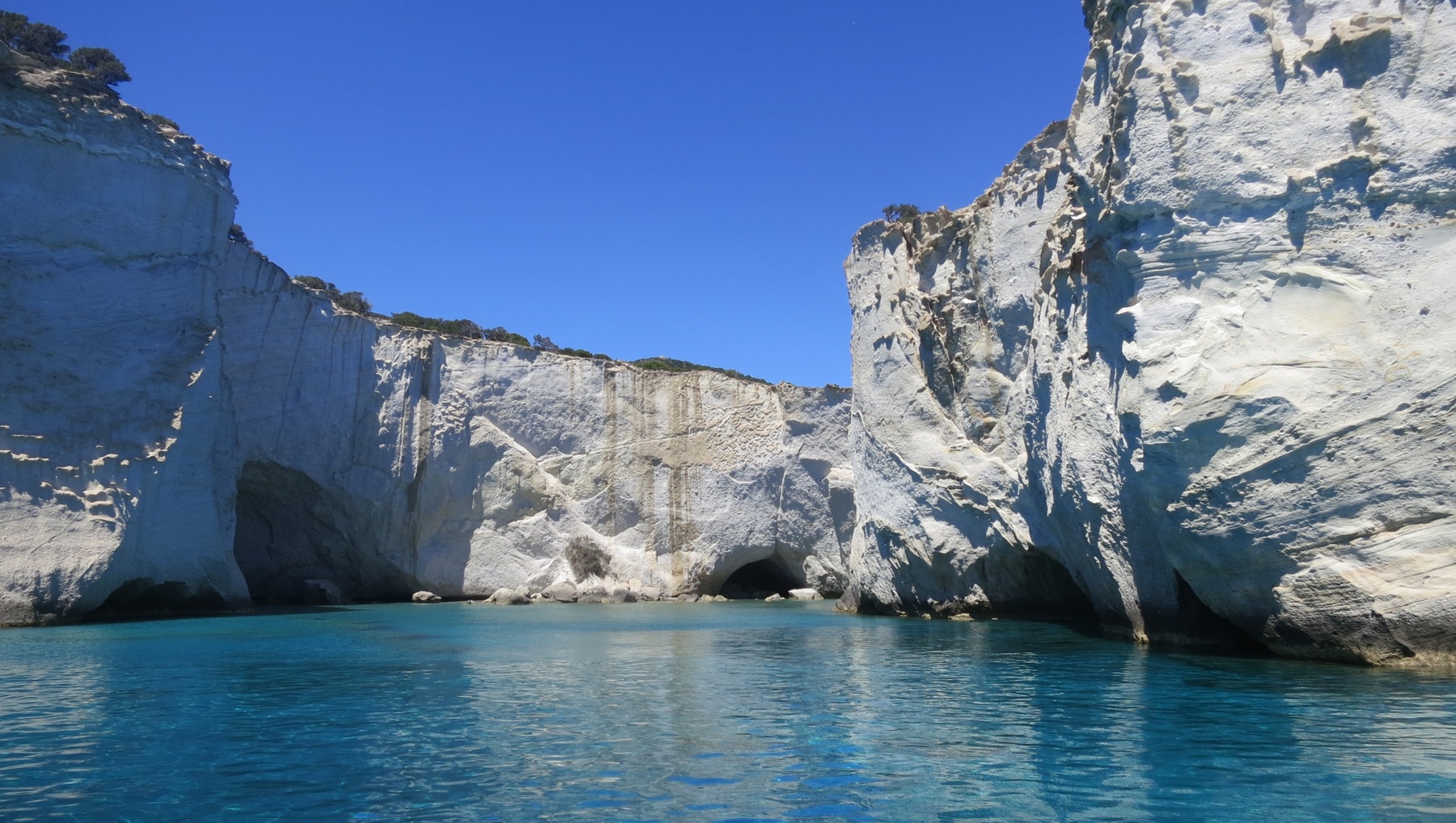
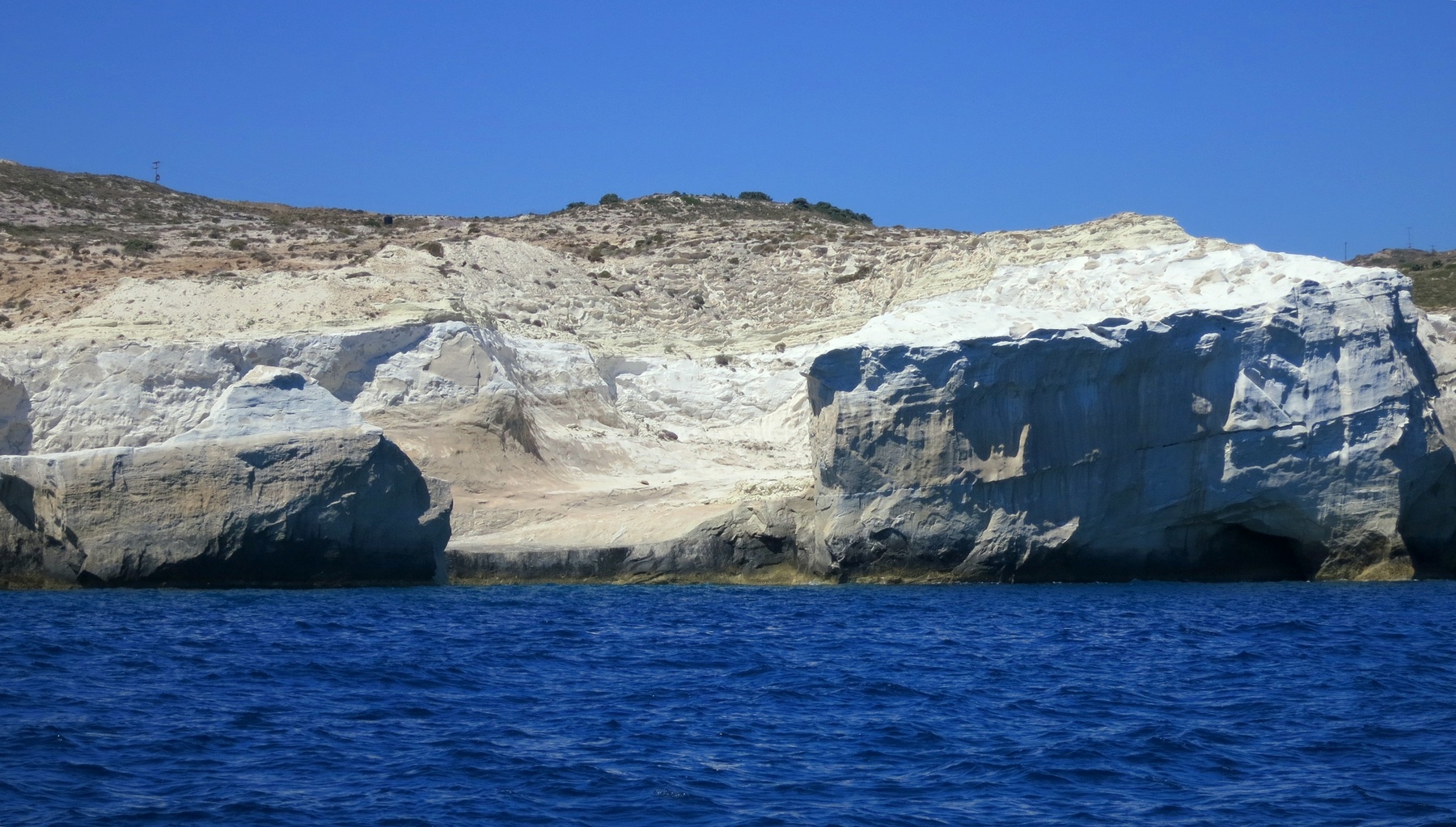
Two contrasting volcanic coastal landscapes—white sculpted deposits at Sarakiniko and sea arches, stacks and caves at Kleftiko.
- Milos Mining Museum
The principal interpretation center for the island's geology, mineral industries, mining communities and prehistoric obsidian.
Strategic role
A volcanic Cycladic island whose mineral wealth, sheltered caldera-like gulf and maritime position shaped prehistoric exchange, Bronze Age urbanism, an independent Dorian polis, Early Christian life, fortified post-medieval settlement and a continuing mining economy.
Obsidian and Prehistoric Exchange
Milos entered Aegean history through geology. Obsidian, a hard volcanic glass capable of producing exceptionally sharp edges, was exploited on the island from the Neolithic period and circulated widely as material for blades, scrapers and projectile points. The principal source areas at Nychia and Demenegaki supplied prehistoric communities across the Aegean for thousands of years. Because obsidian can be characterized geochemically, archaeologists can often distinguish Melian material from other sources and reconstruct early maritime exchange. The significance is profound: long before palaces, written records or formal states, people were crossing open water to obtain and redistribute a resource found in abundance on Milos. The Zafeiris Vaos collection at the Milos Mining Museum preserves tools, cores and production debris that illustrate both quarrying and stone-working traditions.
Phylakopi: A Bronze Age Aegean Center
Phylakopi, on the northeast coast, is one of the defining prehistoric sites of the Cyclades. The Ephorate documents continuous occupation through the third and second millennia BC. An Early Cycladic settlement expanded into a substantial Middle Bronze Age town; after destruction, a strongly fortified Late Bronze Age settlement was created, protected across the neck of the headland by a powerful polygonal wall. Later phases reveal increasing connections first with Minoan Crete and then with the Mycenaean world. Excavation uncovered a Mycenaean megaron and an important sanctuary whose finds include the celebrated 'Lady of Phylakopi' and other figurines. Coastal erosion has removed part of the ancient headland, but the surviving site remains crucial for understanding urbanization, defense, religion and inter-island exchange in the prehistoric Aegean.
Ancient Melos
After a gap following the abandonment of Phylakopi in the 11th century BC, a new settlement developed in the Klima area. The Ephorate identifies the historic city of Melos as a Dorian foundation with continuous occupation from at least the ninth or eighth century BC until the sixth or seventh century AD. It occupied a commanding position on the eastern side of the narrow entrance to the great gulf. The city extended across the hills of Pyrgiantes and Prophet Elias and the valleys of Tramythia and Klima; its agora probably lay on the plateau between the hills, while substantial stretches of fortification remain. Melos produced distinctive pottery and seal stones and maintained a strongly Dorian identity. Its most famous political episode came during the Peloponnesian War. After attempting to remain neutral, the island refused Athenian demands for submission. In 416 BC Athens besieged and captured Melos, killed the adult male citizens and enslaved the women and children, establishing an Athenian cleruchy. Surviving Melians were restored after Sparta's victory at the end of the war.
The Aphrodite of Melos: An Icon of Hellenistic Art
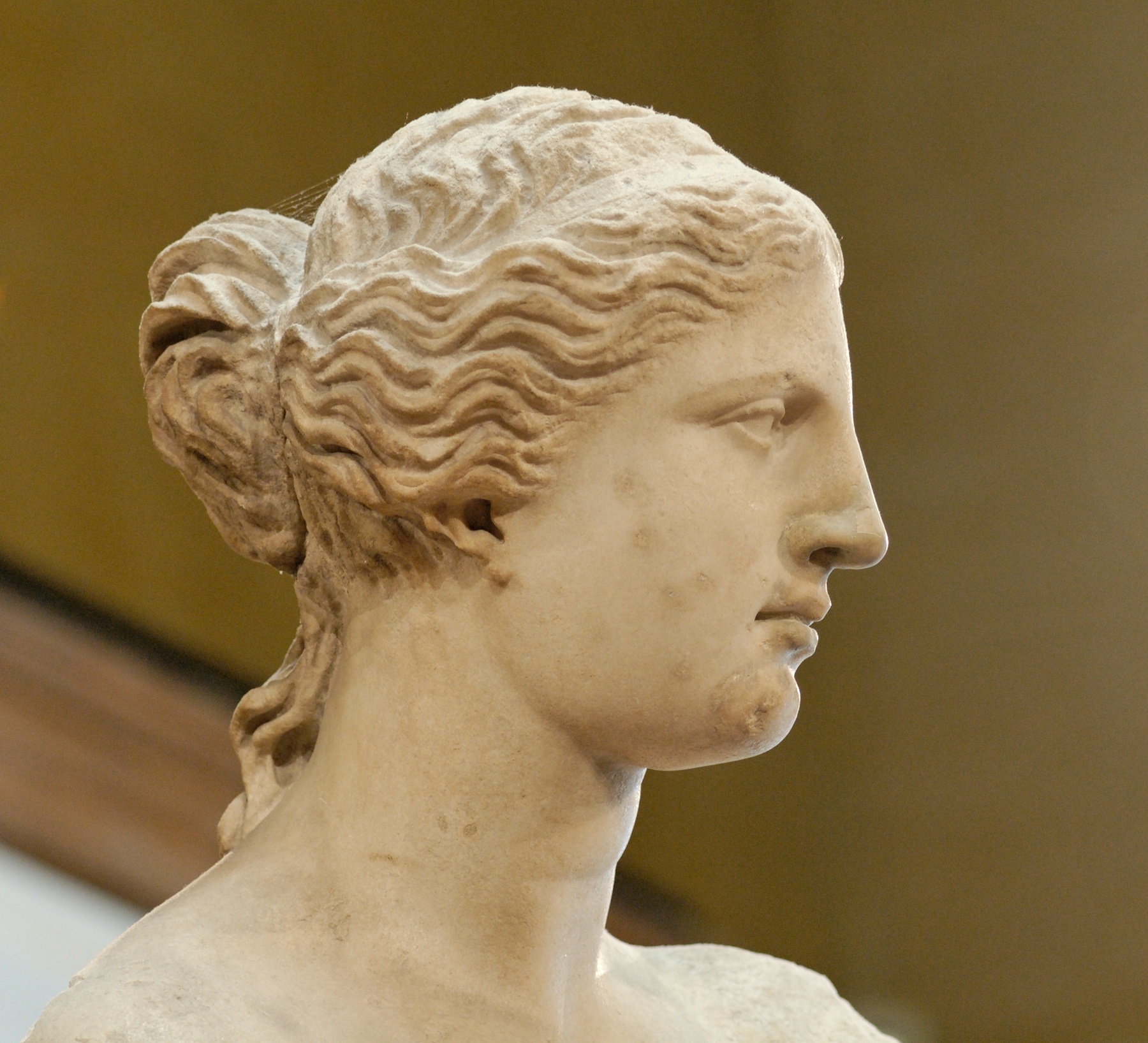
The Aphrodite of Melos, universally known by the Romanizing name Venus de Milo, is the most famous surviving artifact from Milos and one of the canonical works of ancient Greek sculpture. The Louvre dates it to the third quarter of the second century BC, approximately 150–125 BC, and identifies it as a Hellenistic work carved in Parian lychnites marble. Standing just over two metres high, the statue was constructed from separate marble elements joined with remarkable technical skill: the torso and lower body meet at the hips beneath the drapery, while the missing left arm was separately attached. Holes also show that metal ornaments, including a diadem and bracelet, once enriched the figure. Its composition combines an idealized, classically inspired face and torso with the more dynamic spiral, shifting weight and deeply worked drapery associated with Hellenistic sculpture. This mixture of classical retrospection and Hellenistic movement is central to the statue's artistic importance.
The figure is conventionally identified as Aphrodite, although the loss of the arms removed the attributes that would have made identification certain. Amphitrite, a sea goddess worshipped on Melos, was also proposed. Evidence favoring Aphrodite includes the sensuous semi-nudity, traces of jewelry and, especially, a marble hand holding an apple reportedly found with the sculpture. The apple would allude both to Aphrodite's victory in the Judgment of Paris and, suggestively, to the ancient Greek word mēlon, 'apple,' which invited an association with Melos. Other reconstructions have proposed that the goddess held a shield, perhaps contemplating her reflection. The Louvre deliberately left the arms unrestored because no reconstruction could be demonstrated with certainty.
The discovery itself belongs to the modern history of archaeology and collecting. In April 1820 a local farmer uncovered the sculpture accidentally near the ancient city, in the vicinity of its gymnasium and not far from the theatre. The young French naval officer Olivier Voutier saw the newly excavated work and recognized its quality. French consular and naval officials subsequently became involved, and Charles-François de Riffardeau, Marquis de Rivière, the French ambassador at Constantinople, acquired the sculpture. He presented it to King Louis XVIII on 1 March 1821; the king immediately gave it to the Louvre. Fragments found in association included portions of arms, a hand holding a fruit, herms and inscribed stones. The precise relationship of every fragment to the statue and the original pose has remained a subject of scholarly debate.
Its arrival in Paris also shaped its fame. The Louvre had recently returned many antiquities taken during the Napoleonic wars, and the newly acquired Greek masterpiece was rapidly promoted as a centerpiece of the museum. During the nineteenth and twentieth centuries it became an international ideal of ancient beauty, endlessly reproduced, photographed, quoted and transformed by artists and popular culture. That later celebrity should not detach it from Milos. The statue belongs to the flourishing Hellenistic community of ancient Melos and demonstrates the island's participation in the artistic networks of the wider Greek world. Its Parian marble itself embodies inter-island exchange within the Cyclades. For visitors to Milos, the discovery area forms part of the archaeological landscape between Trypiti, the ancient city and the Roman theatre, while the Archaeological Museum of Melos in Plaka displays a full-size cast. The original remains in the Louvre, but its archaeological and cultural context is fundamentally Melian.
The Roman Theatre and Urban Life
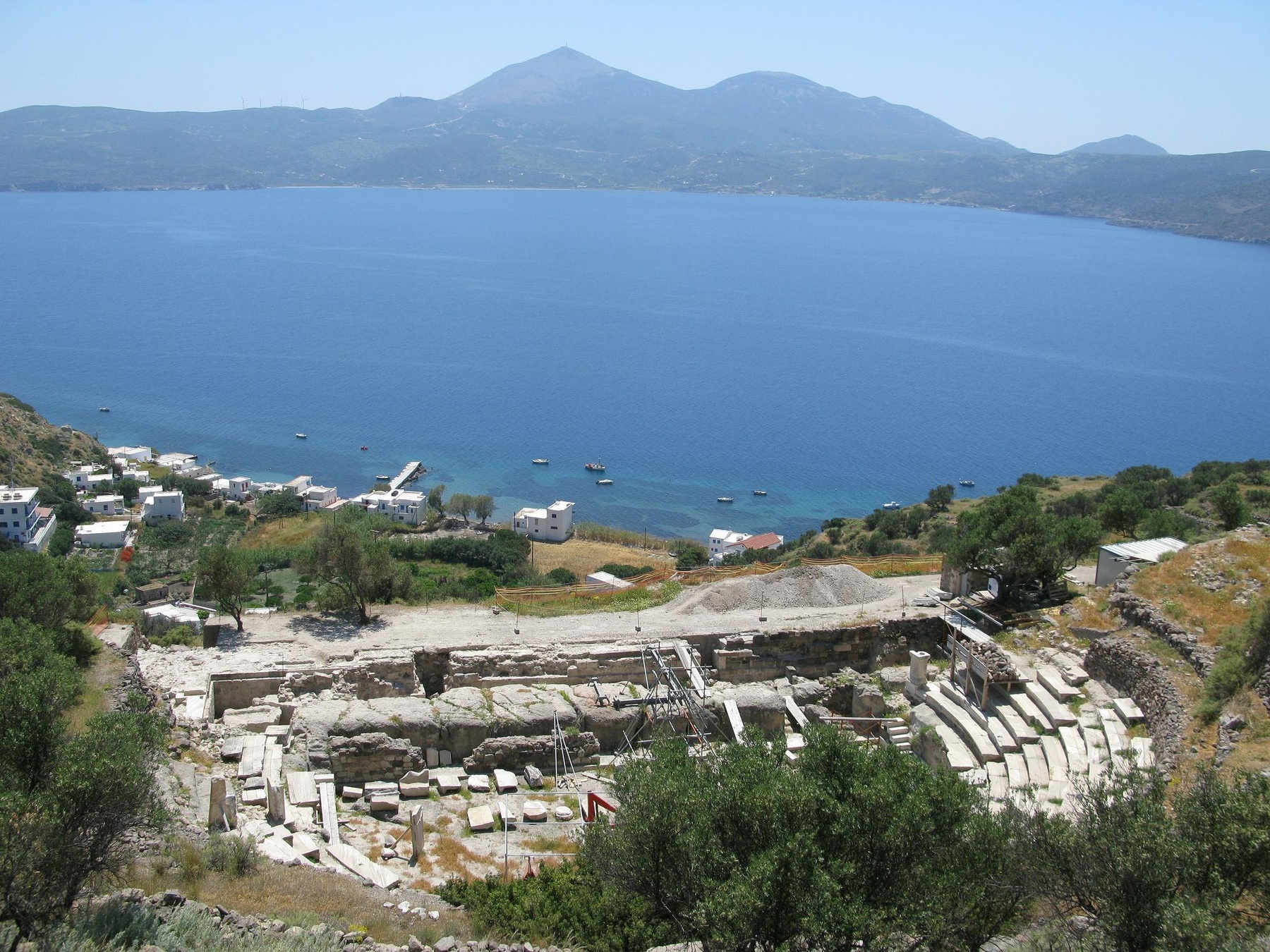
The surviving theatre was constructed in the Roman period south of the area identified as the ancient agora, beside the eastern fortification. Excavations have revealed the cavea, orchestra-arena, western retaining wall and much of the stage building. The site had previously served partly as a Hellenistic cemetery, demonstrating how urban functions changed over time. The theatre's marble seating and position above Klima make it one of the most legible monuments of ancient Melos. Restoration and conservation undertaken by the Ephorate between 2010 and 2015 stabilized the visible remains and returned the monument to active cultural use. Together with the walls, cemeteries and harbor landscape, it demonstrates that Melos remained an important community well after the Classical catastrophe of 416 BC.
Catacombs and Early Christianity
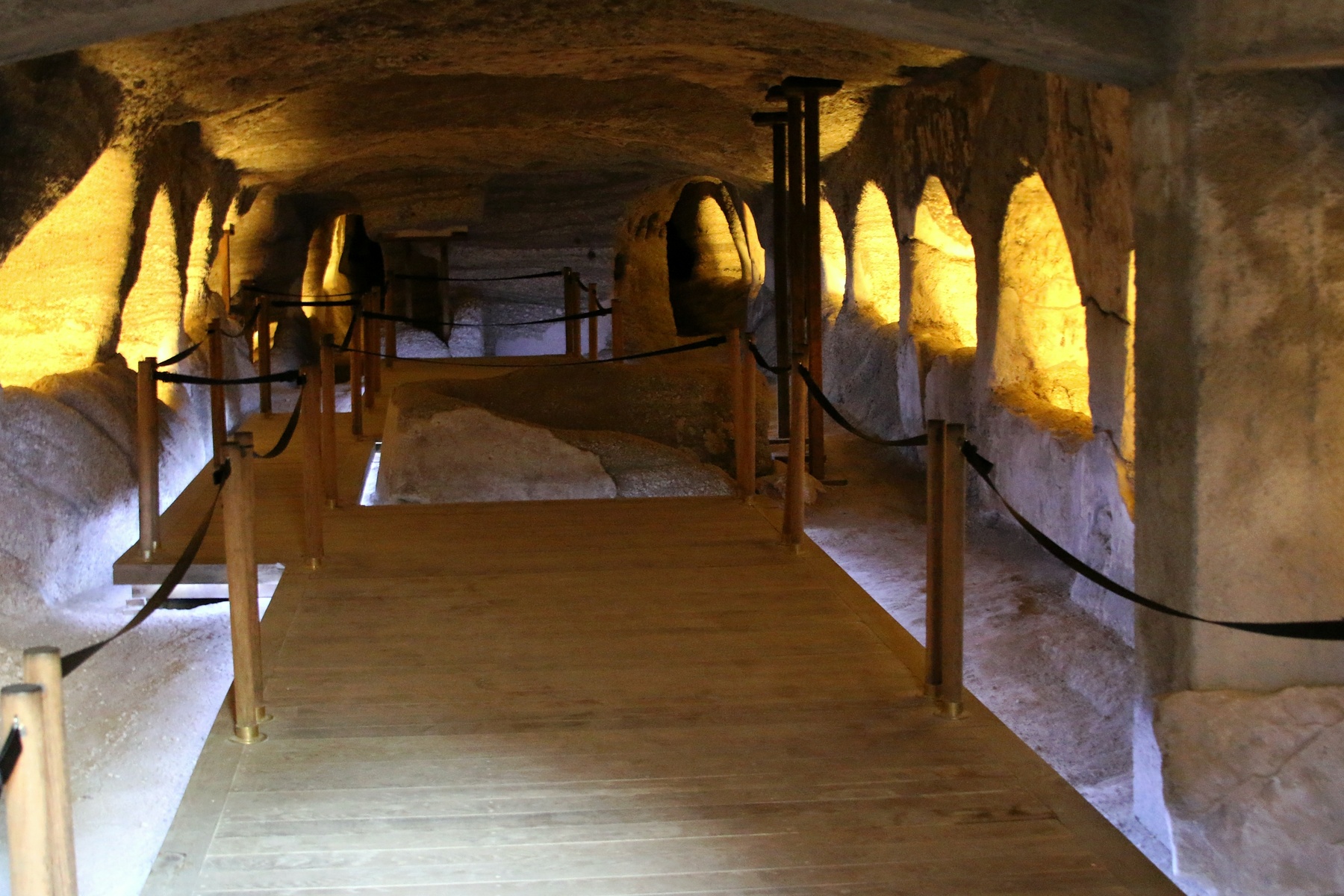
The Catacombs of Melos form the largest underground extra-mural cemetery of the ancient city and were used from approximately the middle of the first century to the seventh century AD. Carved into soft porous volcanic tuff outside the city walls, their galleries extend for roughly 200 m. Burial forms include arched arcosolia, rectangular loculi cut into the walls and graves dug into the floor; family chambers, painted decoration, lamp niches and inscriptions survive. One important inscription names presbyters and other members of the Christian community. The complex demonstrates both the early establishment of Christianity on Milos and the way geology directly enabled a distinctive funerary architecture. Looting occurred before systematic scholarly study, but the surviving catacombs remain among the most important Early Christian monuments of the Cyclades.
From Byzantium to Latin and Ottoman Rule
After Late Antiquity the island followed the wider political history of the Cyclades, passing through Byzantine authority, Latin rule after the Fourth Crusade and eventually Ottoman sovereignty. The documentary and architectural sequence is less complete than for prehistoric and ancient Milos, so simple narratives of uninterrupted castle construction should be avoided. Maritime insecurity and piracy encouraged defensible settlement away from exposed shores. The old Kastro height above present-day Plaka became a principal fortified focus, while churches and small settlements occupied the surrounding volcanic uplands. Under Ottoman rule mineral exports continued on a more limited scale, particularly kaolin and salt, preserving an economic thread that would expand dramatically after Greek independence.
Plaka, Kastro and Coastal Settlements
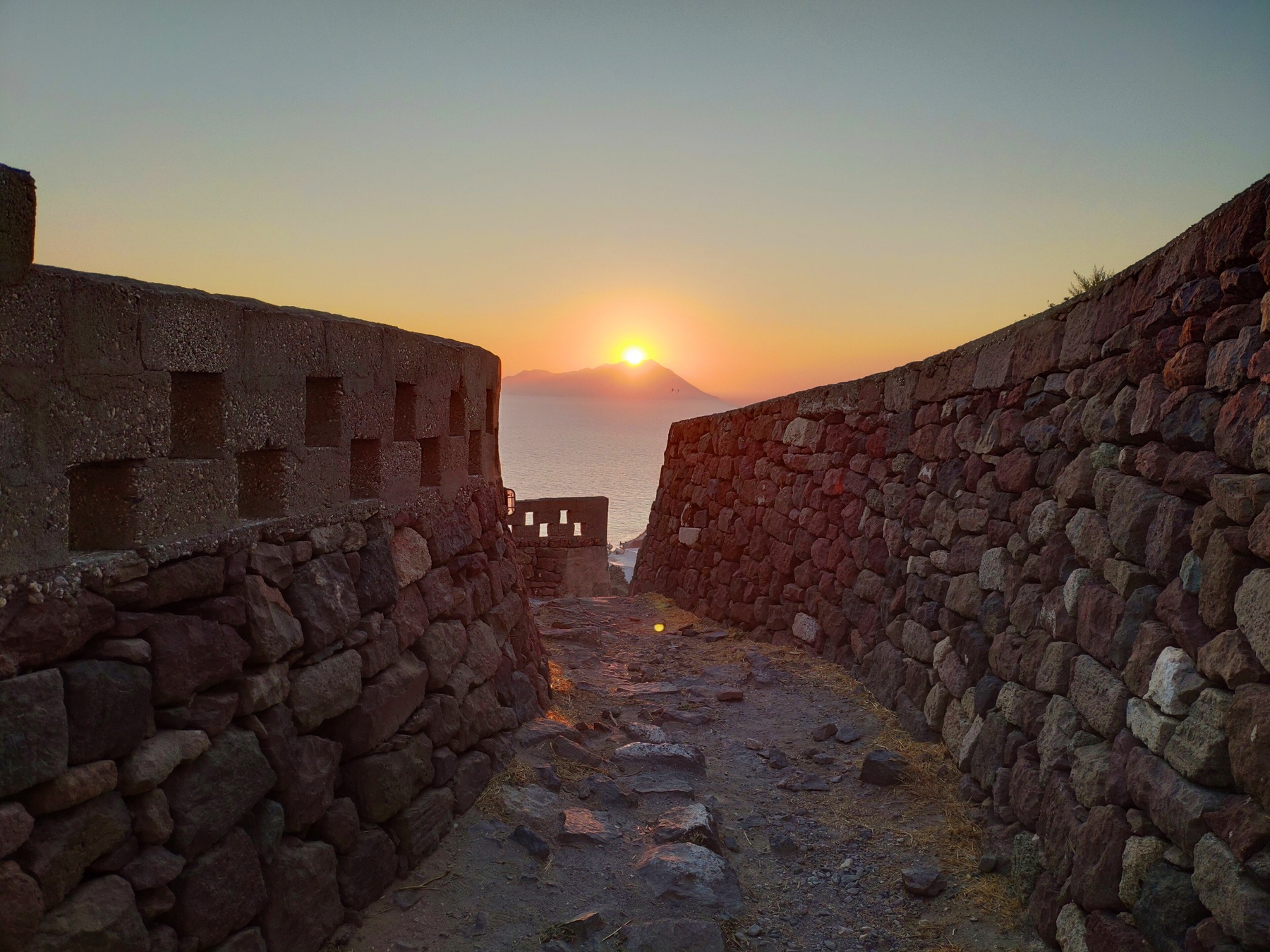
Plaka developed below the old Kastro as the island's principal historic town, its compact whitewashed houses, narrow pedestrian lanes and churches adapted to steep volcanic terrain. The summit Kastro preserves the defensive logic of an earlier settlement phase and commands the entrance and interior of the great gulf. Below, Trypiti occupies the ridge above ancient Melos, while Klima sits directly on the shore. Klima, Mandrakia, Firopotamos and other fishing settlements preserve the characteristic syrmata: narrow ground-level spaces cut or built into the waterfront for hauling boats out of the sea, usually marked by brightly colored doors and often associated with storage or living space. These buildings are functional maritime architecture, not simply decorative cottages, and record the practical relationship between household, fishing boat and shoreline.
Adamas and the Modern Port
Adamas, inside the protected gulf, became the principal modern port and a key interface between mining and maritime transport. Its growth reflects the nineteenth- and twentieth-century reorientation of the island toward commercial shipping, mineral exports and later tourism. Warehouses, loading activity and industrial infrastructure historically connected mines in the interior with external markets. Today the town contains the Milos Mining Museum, which interprets the island's mineral wealth, working communities and changing extraction technologies. Adamas therefore complements Plaka: the latter embodies defensive and civic settlement on the heights, while Adamas represents the modern port economy.
Mining and Volcanic Landscape
Mining on Milos is a ten-thousand-year continuum rather than a single industrial episode. After prehistoric obsidian, ancient and later communities exploited kaolin, alum-related minerals, sulfur, pumice, trachyte for millstones and other volcanic materials. Modern industrial mining accelerated after Greece's 1862 mining law and the first sulfur concession at Paliorema. Sulfur, silver-bearing galena, manganese, kaolin and baryte were exploited in the late nineteenth and early twentieth centuries; bentonite production began in the 1950s, followed by perlite. Today the principal extracted materials include bentonite, perlite, pozzolan, siliceous stone and kaolin. The Milos Mining Museum identifies the island as a major European production and processing center for bentonite and perlite. Abandoned works at Paliorema and Vani preserve an industrial archaeological landscape of galleries, processing buildings, tracks and waste deposits, while active mines demonstrate that mineral extraction remains part of contemporary Milian life.
Geology: An Island Built by Volcanism
Milos forms part of the South Aegean active volcanic arc created above the subduction zone south of the Aegean. Geological research distinguishes several cycles of volcanic activity beginning about 3.5 million years ago and extending into the late Pleistocene. Early phases were substantially submarine and pyroclastic; later activity produced domes, lava flows, tuff rings and explosive deposits dominated increasingly by rhyolitic compositions. The Fyriplaka center belongs to the youngest major eruptive phase, roughly 110,000–60,000 years ago. Volcanism has ceased in the ordinary eruptive sense on historical timescales, but the geothermal system remains evident in hot springs, fumarolic ground and hydrothermal alteration. This alteration is fundamental to the island's extraordinary mineral diversity.
Sarakiniko, Kleftiko and the Sculpted Coast
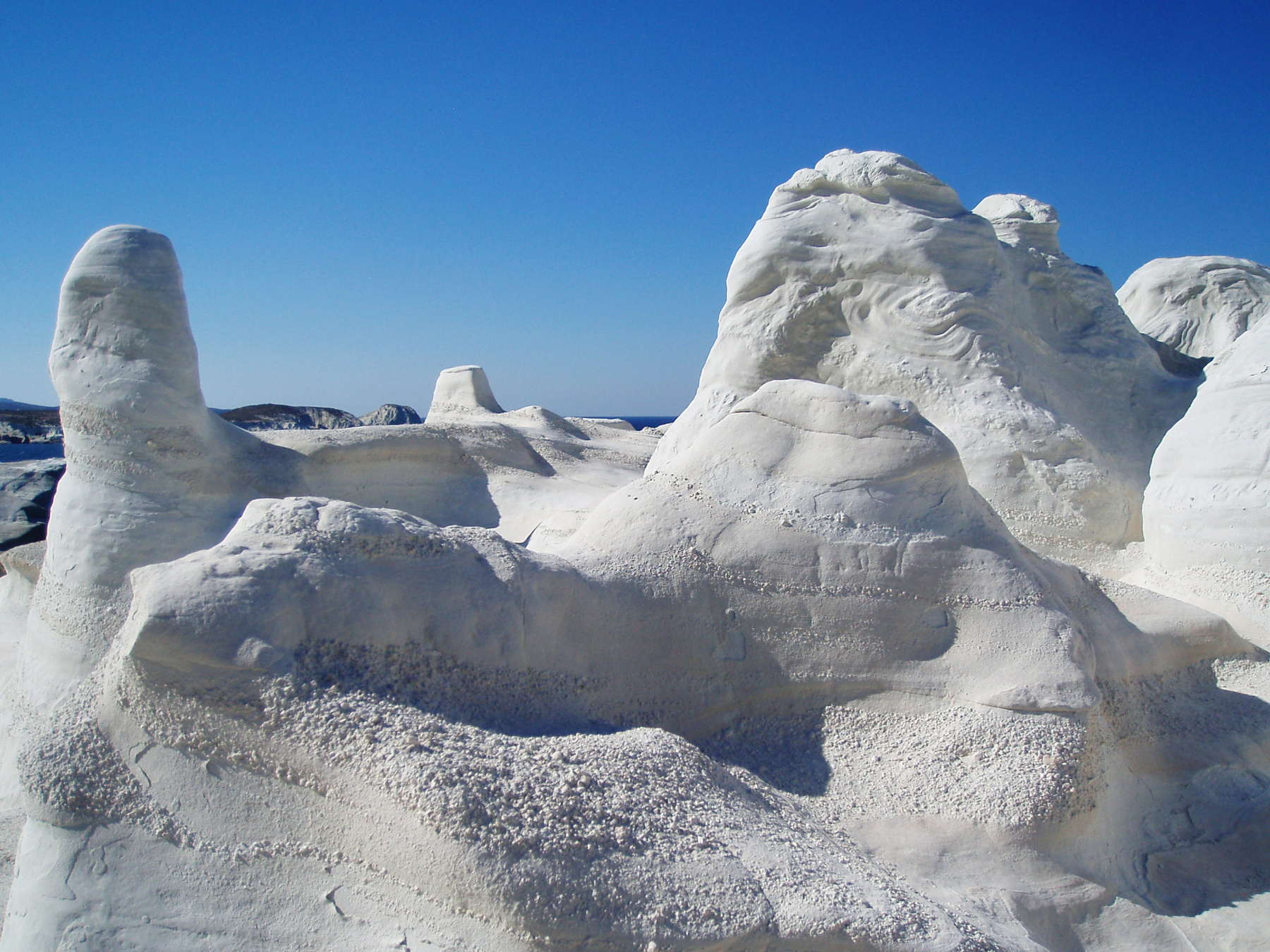
The celebrated coast of Milos is geological evidence made visible. At Sarakiniko, pale volcanic deposits have been carved by wind, salt and waves into smooth gullies, cavities and brilliant white surfaces that contrast sharply with the Aegean. Kleftiko on the southwest coast presents a different erosional landscape of sea stacks, arches, caves and cliffs accessible principally from the sea. Elsewhere, colored volcanic and hydrothermally altered rocks create red, yellow, white and gray cliffs. These sites should not be separated conceptually from the mining story: both spectacular scenery and mineral wealth derive from the same volcanic and hydrothermal processes.
Nature and Protected Western Milos
The western part of Milos retains extensive relatively undeveloped landscapes and important terrestrial and marine habitats. The Central Aegean protected-area system supports Mediterranean scrub, rocky cliffs, marine caves, reefs and Posidonia seagrass meadows, while the wider region is important for seabirds and the Mediterranean monk seal. Milos is especially notable for endemic fauna, including the Milos viper (Macrovipera schweizeri), whose restricted distribution makes habitat protection important. The island's natural history therefore adds another dimension to the tension between mineral extraction, tourism and conservation. Visitors should avoid disturbing wildlife, entering caves used by marine mammals or leaving established routes in sensitive areas.
Museums, Memory and Mining Culture
Two museums are particularly important for interpreting Milos. The Archaeological Museum in Plaka presents finds from Phylakopi and ancient Melos, including prehistoric pottery and figurines, Geometric and Archaic material, inscriptions and sculpture, together with a cast of the Aphrodite of Melos. The Milos Mining Museum in Adamas links geological specimens with tools, photographs, maps, oral history and industrial technology. Its Zafeiris Vaos Obsidian Collection returns prehistoric stone-working evidence to the island and demonstrates continuity between archaeology and mining heritage. Together the museums prevent the island's story from fragmenting into separate narratives of 'ancient ruins,' 'beaches' and 'mines'.
What to Visit Today
For archaeology, the essential circuit is Phylakopi, the Archaeological Museum, Ancient Melos, the Roman theatre and the Catacombs. For settlement and architecture, continue through Trypiti and Plaka to the Kastro, then descend to Klima to see the syrmata in their original maritime setting. The Milos Mining Museum provides the best preparation for understanding active and abandoned mining landscapes; Paliorema is the most evocative surviving sulfur-mining complex, though ruined industrial structures and galleries require caution. Sarakiniko and Kleftiko reveal the volcanic coast at its most dramatic, while western Milos offers a less developed landscape of high conservation value. Current archaeological opening hours, access restrictions and conditions at industrial ruins should always be checked locally.
Why Milos Matters
Few Greek islands demonstrate so clearly how geology can structure an entire cultural history. Volcanism produced obsidian and industrial minerals, shaped natural harbors and spectacular coasts, provided tuff soft enough for catacombs, and created landscapes exploited by miners from prehistory to the present. Human communities repeatedly reorganized themselves around those resources: Neolithic exchange networks, Bronze Age Phylakopi, the Dorian polis of Melos, Early Christian burial communities, fortified post-medieval settlements, fishing villages and modern industrial enterprises. Milos is therefore not merely an archaeological island with unusual beaches; it is a continuous geological-cultural system.
Architecture
- Successive Bronze Age settlement phases at Phylakopi, including a major fortification wall of polygonal masonry, a Mycenaean megaron and sanctuary
- Ancient Melos spread over the hills of Pyrgiantes and Prophet Elias, with agora, fortification walls, harbor zone and extensive cemeteries
- Roman theatre constructed against the ancient fortification near the agora, with marble cavea, orchestra and stage building
- Early Christian catacombs cut into soft volcanic tuff, with approximately 200 m of galleries, arcosolia, loculi and floor graves
- Kastro of Plaka occupying a defensible volcanic height above the gulf, with later churches incorporated into the summit landscape
- Plaka's compact Cycladic urban fabric of narrow lanes, whitewashed houses and churches below the old Kastro
- Syrmata at Klima, Mandrakia, Firopotamos and other coastal settlements: brightly painted boat shelters integrated directly into the shoreline
- Industrial mining architecture at Paliorema, Vani and other sites, including galleries, processing structures, loading systems, workshops and workers' facilities
- Adamas as a nineteenth- and twentieth-century port settlement closely tied to shipping and mineral export
- Vernacular use of volcanic stone, lime, timber and locally adapted building forms throughout rural and coastal settlements
Timeline
- c. 7000 BC onward Neolithic communities exploit Melian obsidian, which becomes a major raw material in prehistoric Aegean exchange.
- 3rd millennium BC Early Cycladic settlement develops at Phylakopi on the northeast coast.
- first half of 2nd millennium BC Phylakopi expands into a major Middle Bronze Age settlement before a major destruction, probably caused by earthquake.
- mid-2nd millennium BC A strongly fortified Late Bronze Age town is built at Phylakopi; later phases show Minoan and Mycenaean connections.
- 11th century BC Phylakopi is finally abandoned.
- 9th–8th centuries BC The historic city of Melos develops above Klima, traditionally associated with Dorian settlers from Laconia.
- 416 BC Athens captures Melos after a siege, kills the adult male citizens, enslaves women and children and installs an Athenian cleruchy.
- early 4th century BC Surviving Melians are restored after the end of the Peloponnesian War.
- Hellenistic period Ancient Melos prospers; sculpture, cemeteries and urban architecture attest continuing civic wealth.
- c. 150–125 BC The monumental marble statue now known as the Aphrodite of Melos (Venus de Milo) is created in the Hellenistic period.
- Roman period The marble theatre is constructed beside the agora and fortification of ancient Melos.
- mid-1st–7th centuries AD The Catacombs serve as the principal underground extra-mural cemetery of the Early Christian community.
- 6th–7th centuries AD Continuous occupation of the ancient city comes to an end.
- 1204 onward Milos enters the Latin political world of the Cyclades after the Fourth Crusade.
- 1566 Ottoman sovereignty replaces Latin rule in the Cyclades, though local patterns of settlement and mineral production continue.
- 1820 The Aphrodite of Melos is discovered near the ancient city. French naval and diplomatic involvement leads to its acquisition; the Marquis de Rivière presents it to Louis XVIII in 1821, and the king gives it to the Louvre.
- 1862 A sulfur concession at Paliorema marks the beginning of the island's modern industrial mining era.
- 1880s–1890s Industrial exploitation expands to silver-bearing galena, manganese and other minerals.
- 1899 Modern kaolin exploitation begins; a processing plant follows in the early twentieth century.
- 1934 Industrial baryte exploitation begins at Voudia.
- 1950s Bentonite and perlite emerge as major modern mining products; sulfur operations at Paliorema cease by the end of the decade.
- 1998 The Milos Mining Museum opens in Adamas to interpret the island's geological and mining heritage.
- 21st century Milos remains a major producer of industrial minerals while archaeology, geotourism and protected natural landscapes become increasingly important to its identity.
Visiting today
For historical depth, combine Phylakopi with the Archaeological Museum in Plaka, then visit Ancient Melos, the Roman theatre and the Catacombs near Trypiti. Walk through Plaka to the Kastro for the post-medieval settlement layer and continue to Klima to understand the syrmata and the relationship between the ancient city and the gulf. The Milos Mining Museum in Adamas is the best introduction to geology, obsidian and the modern extractive economy. Paliorema's abandoned sulfur works and other former mines are important industrial-heritage landscapes but contain unstable structures and mine openings; they should be viewed conservatively and never entered where access is restricted or unsafe. Sarakiniko and Kleftiko demonstrate the volcanic and erosional processes that created the island's celebrated coastline. Western Milos also has significant protected habitats, so marked routes and access restrictions should be respected. Archaeological-site and museum hours are seasonal and should be checked with the Ephorate of Antiquities of the Cyclades.
Expedition guides
Images
References
- Ephorate of Antiquities of the Cyclades — Archaeological Site of Phylakopi in Melos
- Ephorate of Antiquities of the Cyclades — Ancient Melos
- Ephorate of Antiquities of the Cyclades — Ancient Theatre of Melos
- Ephorate of Antiquities of the Cyclades — Catacombs of Melos
- Ephorate of Antiquities of the Cyclades — Archaeological Museum of Melos
- Milos Mining Museum — History of Milos and Mining
- Milos Mining Museum — Mineral Wealth of Milos
- Milos Mining Museum — Museum Collections and Exhibits
- Hellenic Survey of Geology and Mineral Exploration (EAGME) — Milos
- Fytikas et al. — Volcanology and Petrology of Volcanic Products from Milos and Neighbouring Islets
- NECCA — Management Unit of the Central Aegean Protected Areas
- Greek National Tourism Organisation — Milos
- Musée du Louvre Collections — Vénus de Milo (Ma 399)
- Musée du Louvre — Ideal Greek Beauty: Venus de Milo and the Galerie des Antiques
Related places
Related Stops
Topics
- Cyclades
- Historic Island
- Volcanic Island
- Geology
- Obsidian
- Phylakopi
- Bronze Age
- Ancient Greek
- Peloponnesian War
- Roman
- Early Christian
- Catacombs
- Venetian
- Kastro
- Mining History
- Industrial Heritage
- Syrmata
- Vernacular Architecture
- Aphrodite Of Melos
- Nature Conservation
- Maritime History