Attica
Lavrio
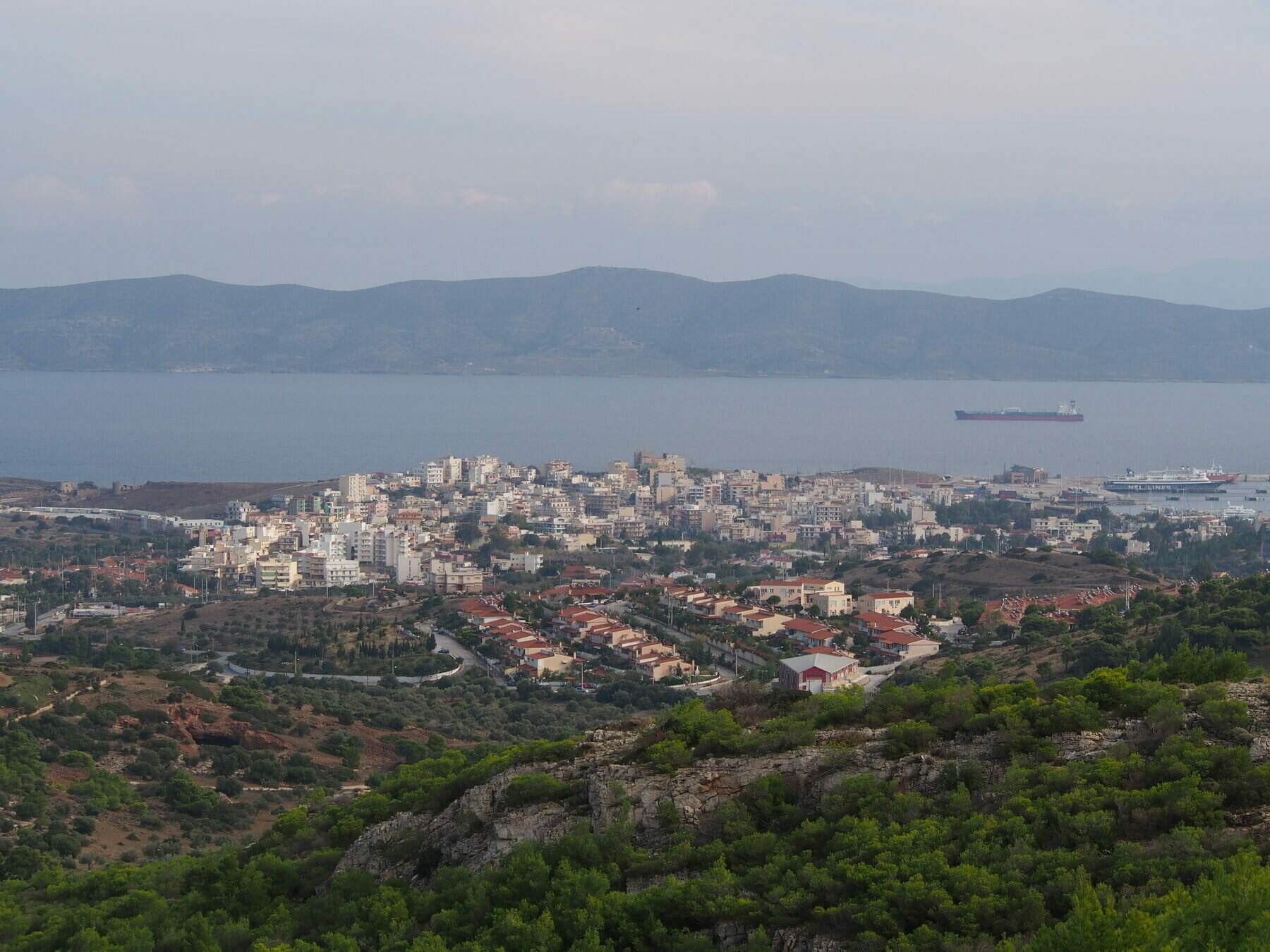
Lavrio is a historic harbor and mining town on southeastern Attica, combining ancient Laurion’s silver-mining landscape with modern marina, ferry, and yachting infrastructure.
sailing expedition · 14 itinerary entries
Lavrio–Kythnos–Milos–Folegandros/Kimolos–Thirasia/Thira–Ios–Syros–Lavrio
An adjustable real-world Cyclades voyage planned for September 2026, using a primary western/southern circuit with weather and timing dependent alternatives.
Approximate voyage framework: 252 NM
Nominal duration: 7 days
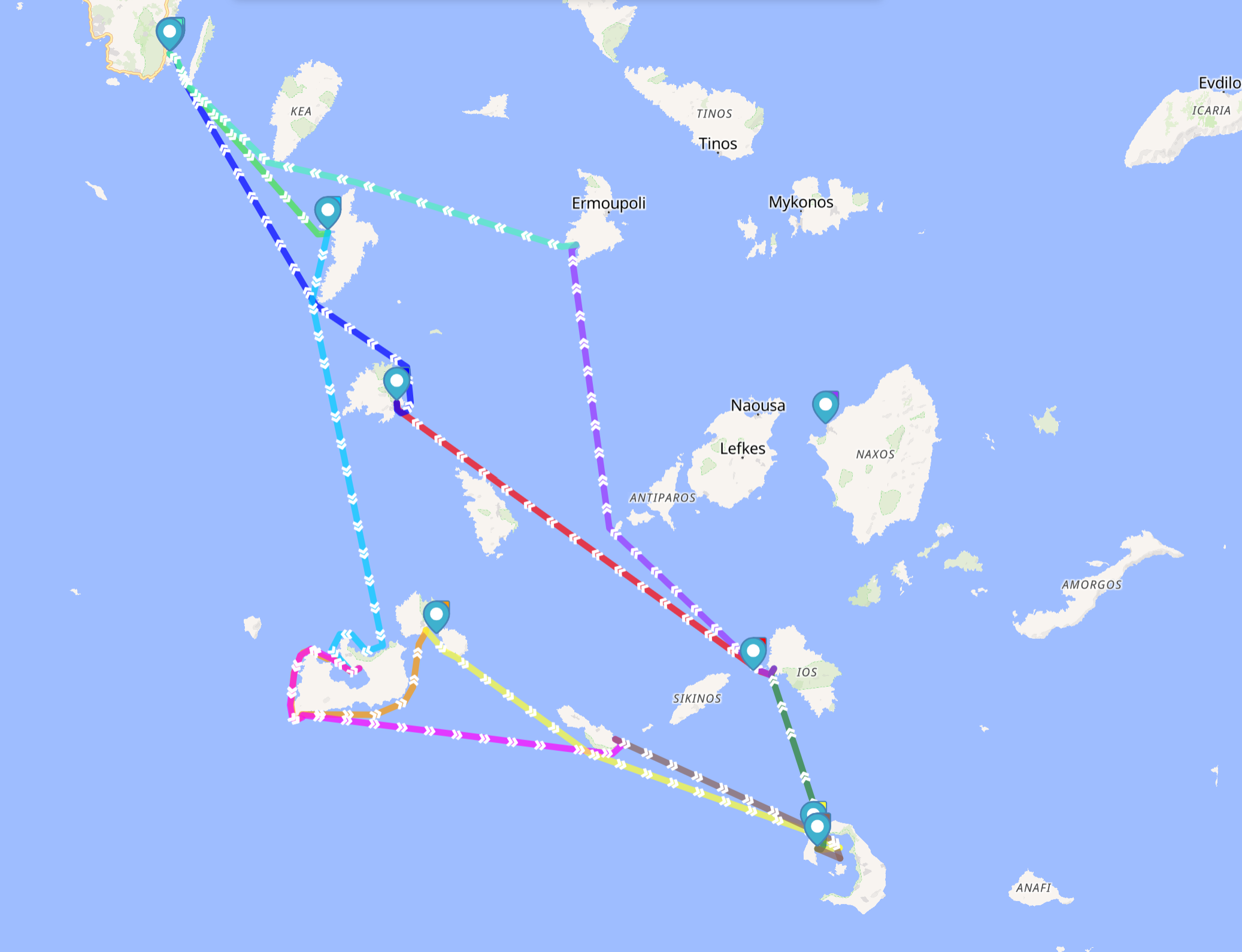
The base is at Lavrio and core overnight stops are at Milos and Santorini. The route shown assumes a late departure from Lavrio, with a stop at Fykiada on Kythnos, to break the long distance to Milos. If a whole day of sailing is possible the first day, consider stopping at Serifos or even Sifnos. The approach to the north coast of Milos is east of Glaronisia, sailing west and into the Milos Bay to Adamantas. This longer route allows for viewing the interesting rock formations at Paralia Papafrafkas, Sarakiniko and the fishing village at Mandrakia. The route from Milos to Santorini, passes by the Kleftiko rock formations and shows two overnight stop alternatives, one at Kimolos with a visit to Polyaigos the next day, or Folegandros which reduces the distance substantially, allowing for a longer visit at Samtorini. The plan shown includes anchoring at Korfos at Thirasia with beautiful views of the village of Fira on top of the volcanic rocks of Thira. The most convenient way is to visit Thira by boat taxi from that location. The return to Lavrio, starts with a short sail to Ios, allowing a later departure from Santorini. From there two alternatives are shown, one via Syros, and the other via Serifos. The Syros overnight stop is at Foinikas, with easy land access to Ermoupolis via Taxi or bus. The Serifos stop is at Livadia, the islands main port. Other alternatives with stops at Paros, Naxos, Sifnos, Kythnos are possible, but not shown as they may require more time and would be appropriate for extended voyages over a week long. The route table below shows the core destinations, Milos and Santorini, with all other stops as optional. By clicking the check buttons to the left the desired route can be selected, and the route table will update to show the total distance and time for the selected route. The route table also shows the recommended anchorage or marina for each stop, with alternatives where appropriate.
This expedition is being prepared for an actual late-August or September 2026 departure. Route distances, weather strategy, berthing decisions and anchorage suitability must be verified against current charts, forecasts, port notices and live local information before use.
The primary line is Lavrio–Fykiada–Milos–Folegandros–Thirasia–Ios–Syros–Lavrio. Kimolos is the principal alternative to Folegandros; Thira is an alternative or companion to Thirasia. Paros, Naxos, Serifos, Sifnos and Polyaigos are retained as conditional islands for weather, timing or crew preference.
This voyage intentionally exercises all three maritime layers: expedition-level route decisions, reusable stop entities, and reusable nautical-site entities. A key model question is how to represent destination-level branches such as Folegandros versus Kimolos without pretending that every conditional stop is part of one linear route.
Adaptable itinerary
The default stop order and optional choices are shown below. When the planner loads, you can adjust optional stops, passage variants, and stays; route distances and time summaries update from the shared route data.
| # | Destination | Role and default choice | Related place | Nautical site options | Authored stay |
|---|---|---|---|---|---|
| 1 | LavrioRoute and destination notesFull stop and shelter details in COG |
Departure BaseRequired | Lavrio | Olympic Marine, Lavrio | 0 nights |
| 2 | Merichas, KythnosRoute and destination notesFull stop and shelter details in COG |
Conditional StopOptional · included by default | Kythnos | Ormos Fikiadha Apokrisi Bay Merichas Marina Merichas Pontoon Ormos Episkopi | 1 night |
| 3 | Livadi, SerifosRoute and destination notesConditional destination; use only if weather, timing and crew priorities favor it. Full stop and shelter details in COG |
Conditional StopOptional · not selected by default | Serifos | Livadi, Serifos | 1 night |
| 4 | Kamares, SifnosRoute and destination notesConditional destination; use only if weather, timing and crew priorities favor it. Full stop and shelter details in COG |
Conditional StopOptional · not selected by default | Sifnos | Kamares, Sifnos | 1 night |
| 5 | Adamas, MilosRoute and destination notesFull stop and shelter details in COG |
Overnight StopRequired | Milos | Adamas Harbor | 1 night |
| 6 | Psathi, KimolosRoute and destination notesConditional destination; use only if weather, timing and crew priorities favor it. Full stop and shelter details in COG |
Conditional StopOptional · included by default | Kimolos | Psathi, Kimolos | 1 night |
| 7 | Karavostasis, FolegandrosRoute and destination notesFull stop and shelter details in COG |
Conditional StopOptional · not selected by default | Folegandros | Karavostasis, Folegandros | 1 night |
| 8 | Korfos, ThirasiaRoute and destination notesFull stop and shelter details in COG |
Overnight StopRequired | Santorini Thirasia | Korfos / Agios Nikolaos Anchorage | 1 night |
| 9 | IosRoute and destination notesFull stop and shelter details in COG |
Conditional StopOptional · included by default | Ios | Ios Marina | 1 night |
| 10 | Parikia, ParosRoute and destination notesConditional destination; use only if weather, timing and crew priorities favor it. Full stop and shelter details in COG |
Conditional StopOptional · not selected by default | Paros | Parikia Harbor | 1 night |
| 11 | NaxosRoute and destination notesConditional destination; use only if weather, timing and crew priorities favor it. Full stop and shelter details in COG |
Conditional StopOptional · not selected by default | Naxos | Naxos Marina | 1 night |
| 12 | AntiparosRoute and destination notesOptional overnight visit to Antiparos before the route continues toward Foinikas. Full stop and shelter details in COG |
Conditional StopOptional · not selected by default | Antiparos | Antiparos Port Psaraliki Anchorage, Antiparos | 1 night |
| 13 | Foinikas, SyrosRoute and destination notesFull stop and shelter details in COG |
Conditional StopOptional · included by default | Syros | Finikas Harbor, Syros | 1 night |
| 14 | LavrioRoute and destination notesFull stop and shelter details in COG |
Return BaseRequired | Lavrio | Olympic Marine, Lavrio | 1 night |
Planning information is not navigational advice. Confirm current charts, weather, Notices to Mariners, local berthing rules, and conditions before sailing.
14 linked places
Attica
Lavrio is a historic harbor and mining town on southeastern Attica, combining ancient Laurion’s silver-mining landscape with modern marina, ferry, and yachting infrastructure.
Cyclades
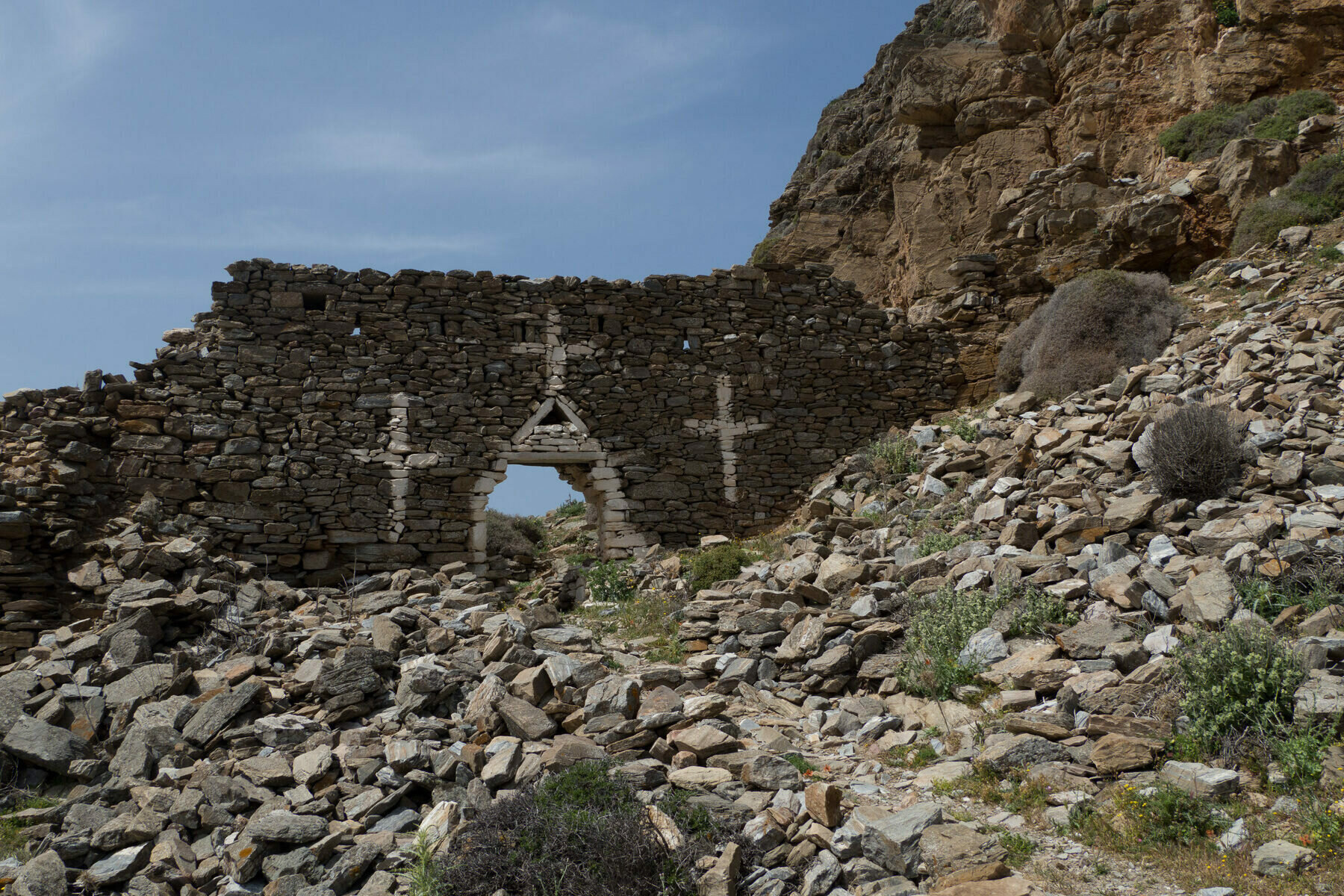
Kythnos adds an optional Cycladic castle stop to the return leg of Expedition I. Its principal monument is Kastro of Oria, a dramatic ruined medieval settlement on the island's northwestern heights, traditionally identified as the island's medieval capital from the early Byzantine period until its destruction and abandonment in the Ottoman era.
Cyclades
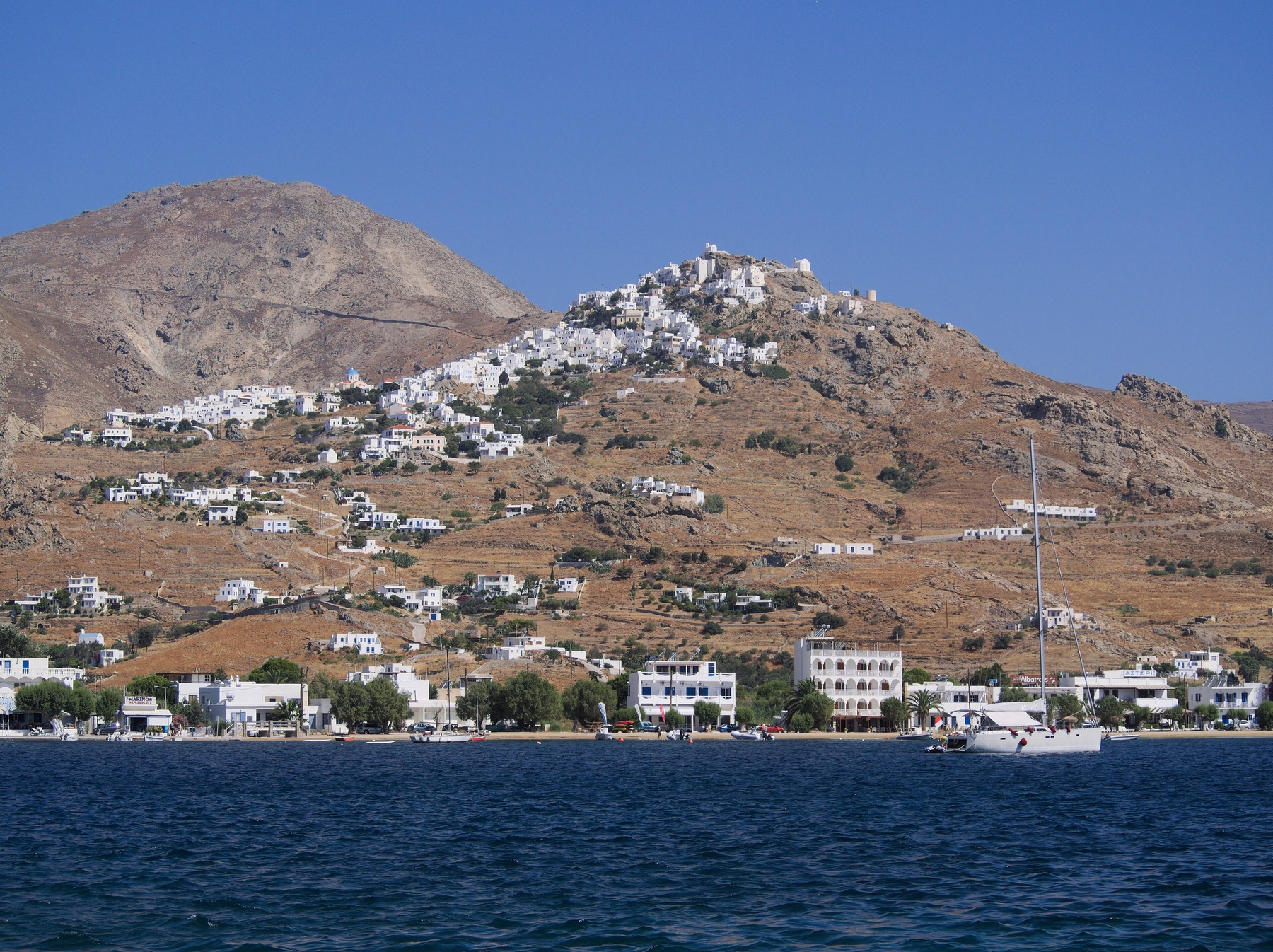
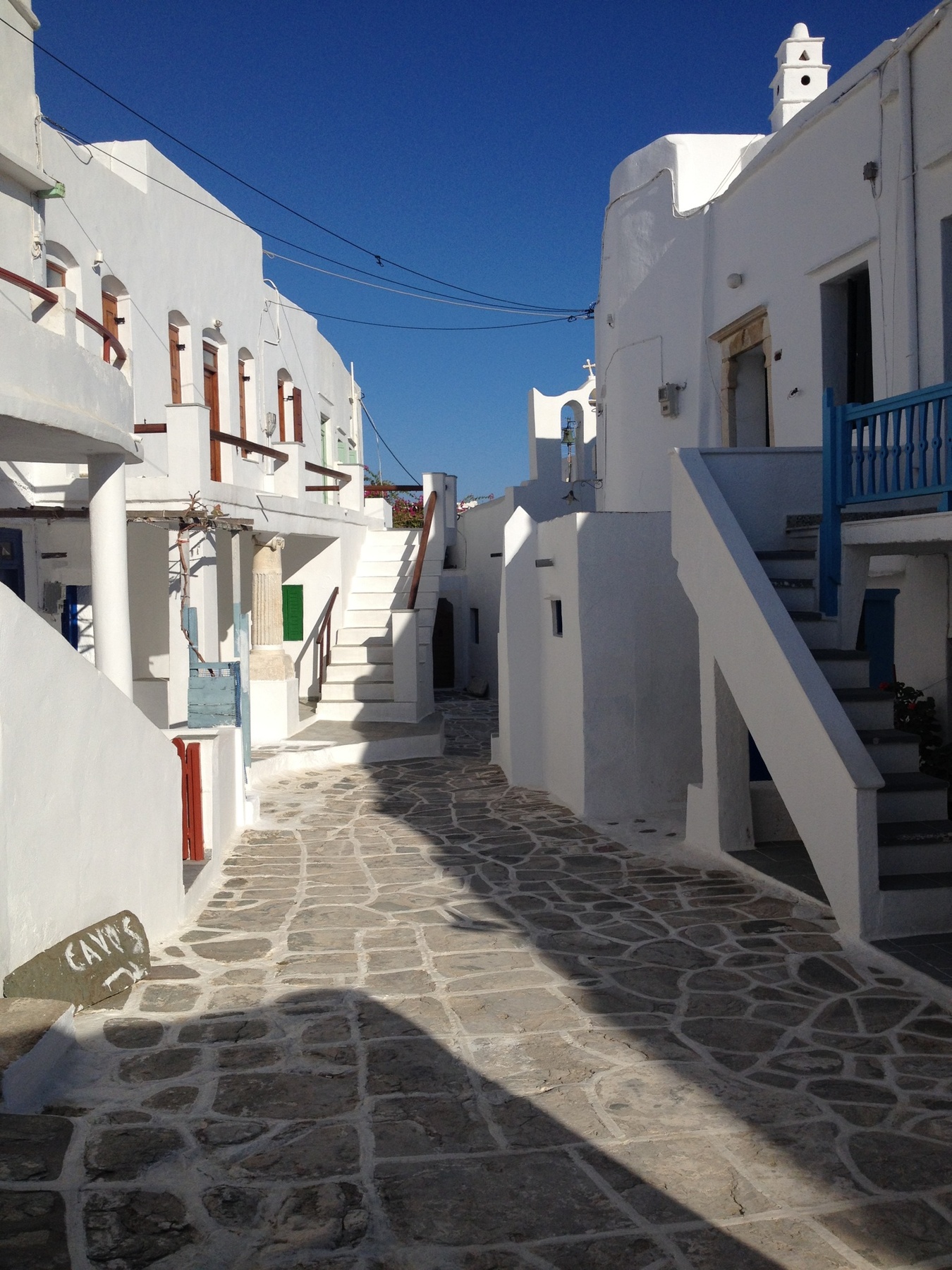
Serifos is a rugged western Cycladic island whose history is inseparable from metal, fortified settlement and maritime life. Ancient communities exploited copper and iron-bearing geology, while Chora developed as a defensible hill town crowned by a Venetian Kastro. Latin and Ottoman rule, the fortified Taxiarches monastery, and a dense landscape of churches and rural towers shaped the premodern island. In the nineteenth and twentieth centuries iron mining transformed the south and west, culminating in the violent miners' strike of 1916 at Megalo Livadi. Today the island's mining ruins, Chora, monasteries, towers, paths and harbors form one of the Cyclades' most distinctive cultural landscapes.
Cyclades
Sifnos is a western Cycladic island whose history combines prehistoric metallurgy, Mycenaean fortification, Archaic prosperity, a dense network of ancient towers, the medieval castle-town of Kastro, post-Byzantine religious culture, and living traditions of pottery and gastronomy. Ancient silver and lead resources helped connect the island to wider Aegean exchange, while later insecurity concentrated power in the fortified capital at Kastro. The island's villages, monasteries, ceramic workshops, terraces, footpaths and communal festivals preserve an unusually coherent cultural landscape extending far beyond its castle.
Cyclades
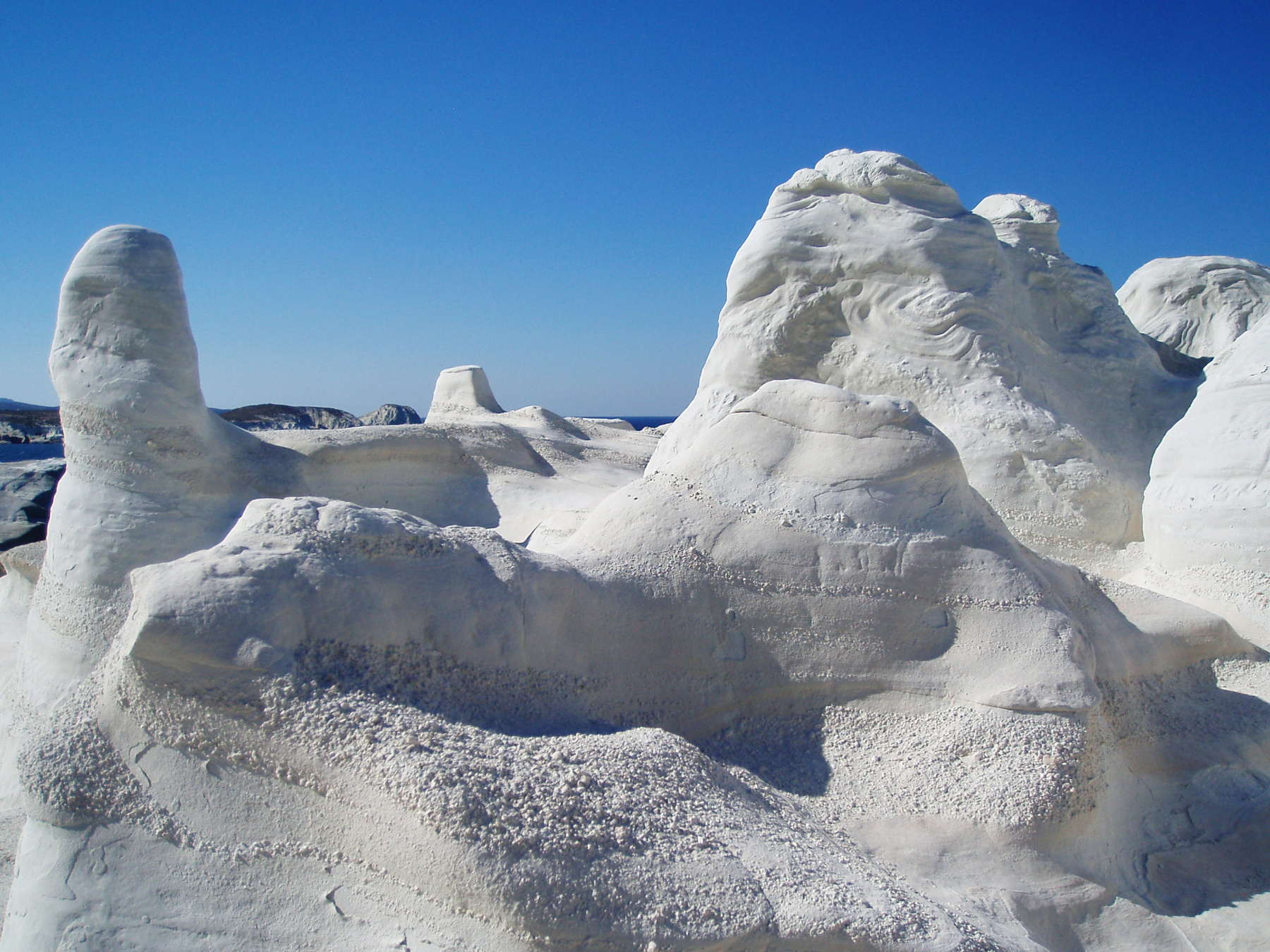
Milos is one of the Cyclades' most distinctive historical landscapes, created by volcanism and repeatedly transformed by human use of its minerals and harbors. Its obsidian circulated through the prehistoric Aegean for millennia; Phylakopi became a major Bronze Age center; ancient Melos is remembered both for its flourishing polis and its destruction by Athens in 416 BC. The Roman theatre, Early Christian catacombs, Aphrodite of Melos, Plaka and Kastro, fishing settlements with syrmata, and an industrial mining tradition extending from sulfur and manganese to modern bentonite and perlite make geology inseparable from the island's culture.
Cyclades
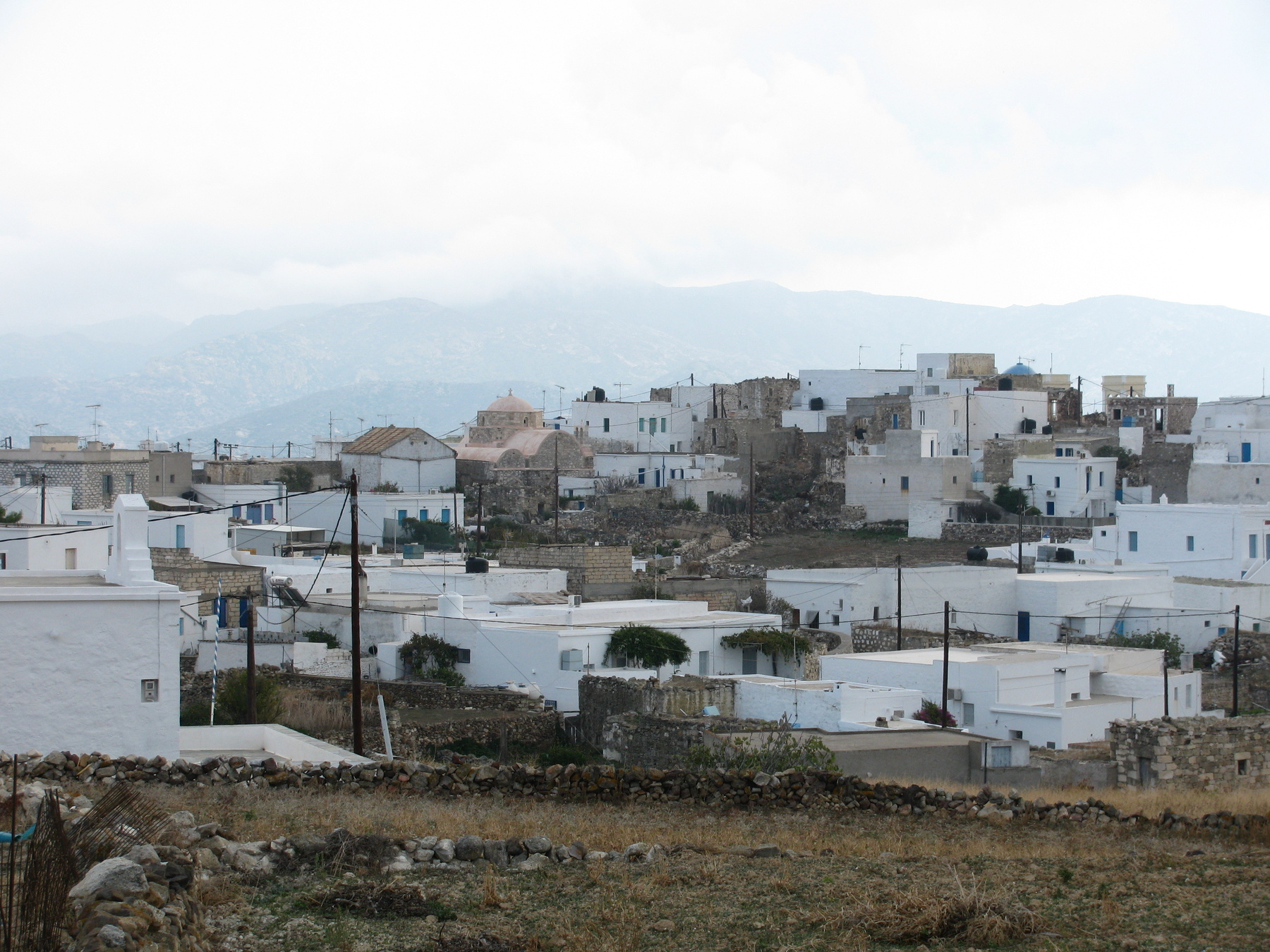
Kimolos is a small volcanic island of the western Cyclades whose history reaches from prehistoric settlement and the ancient city at Ellinika to a remarkable fortified Chorio shaped by piracy, Latin and Ottoman rule. Its cultural landscape combines the late-sixteenth-century Kastro, post-Byzantine churches, the archaeological record of an ancient polis, maritime settlements with rock-cut sirmata, historic mining and mineral extraction, windmills, agricultural terraces and the geological monument of Skiadi. Closely linked to neighboring Milos yet historically distinct, Kimolos also preserves an unusually well-documented ancient territorial relationship with Polyaigos.
Cyclades
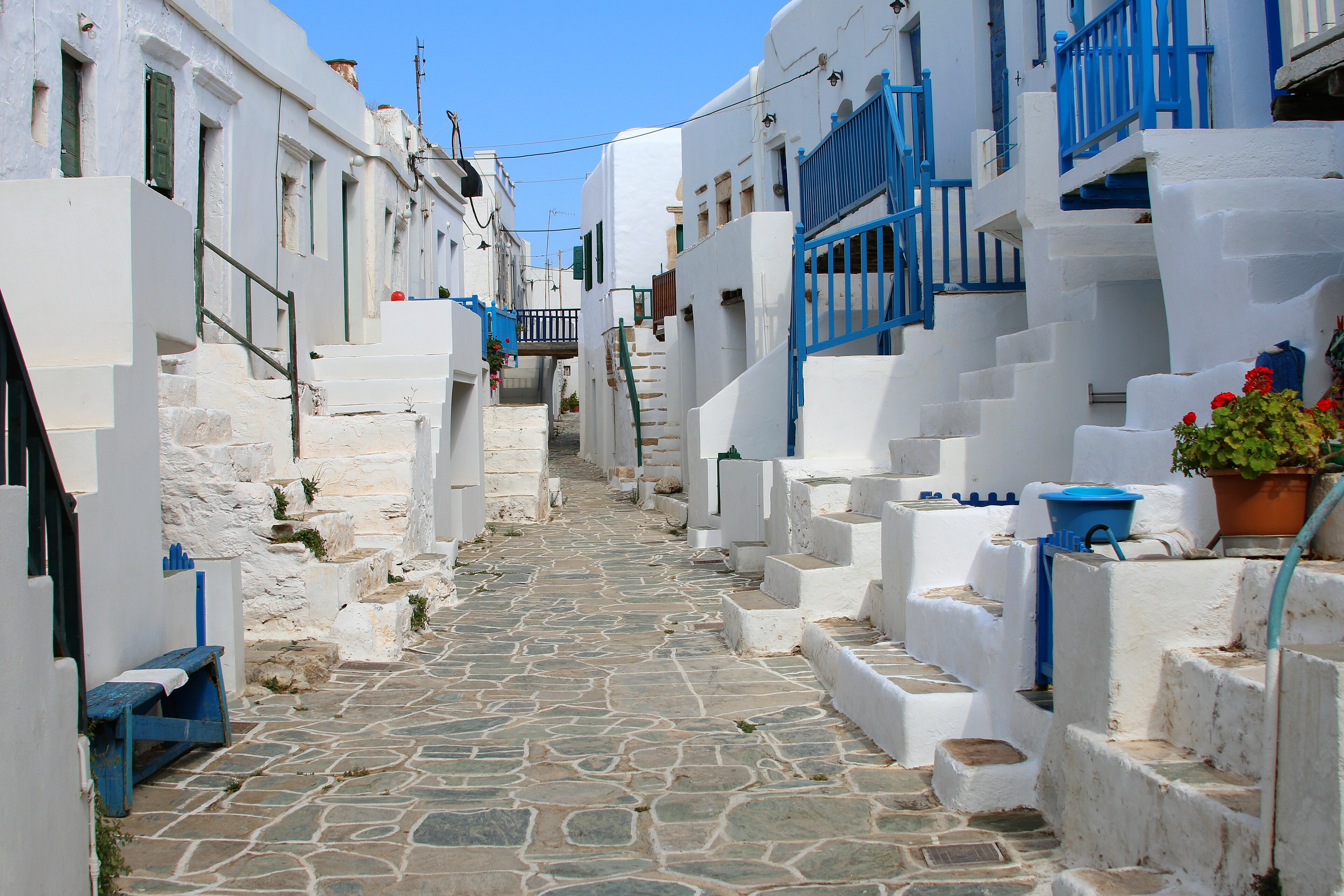
Folegandros is a small but remarkably coherent Cycladic cultural landscape: Early Cycladic Kastelos, the ancient walled city at Palaiokastro, the ritual cave of Chrysospilia, Chora's continuously inhabited medieval Kastro, Panagia above the cliff, the dispersed farmsteads of Ano Meria, and a dense network of terraces and paths link three millennia of island life.
Cyclades
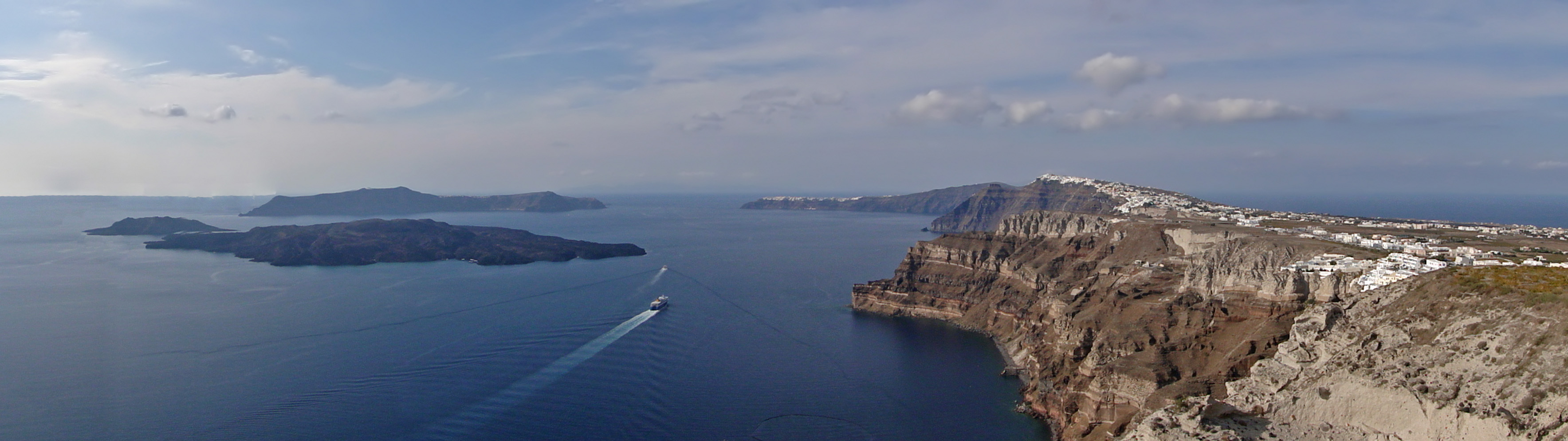
Santorini is a volcanic island group where geology and culture are inseparable: on the main island of Thira, Akrotiri preserves a sophisticated Bronze Age city buried by the great 17th-century BC eruption; Ancient Thera records Dorian, Hellenistic, Roman and Byzantine life; medieval kastelia organized defense; and cave houses, vineyards, wineries and caldera settlements embody centuries of adaptation to ash, wind, water scarcity, earthquakes and the sea.
Cyclades
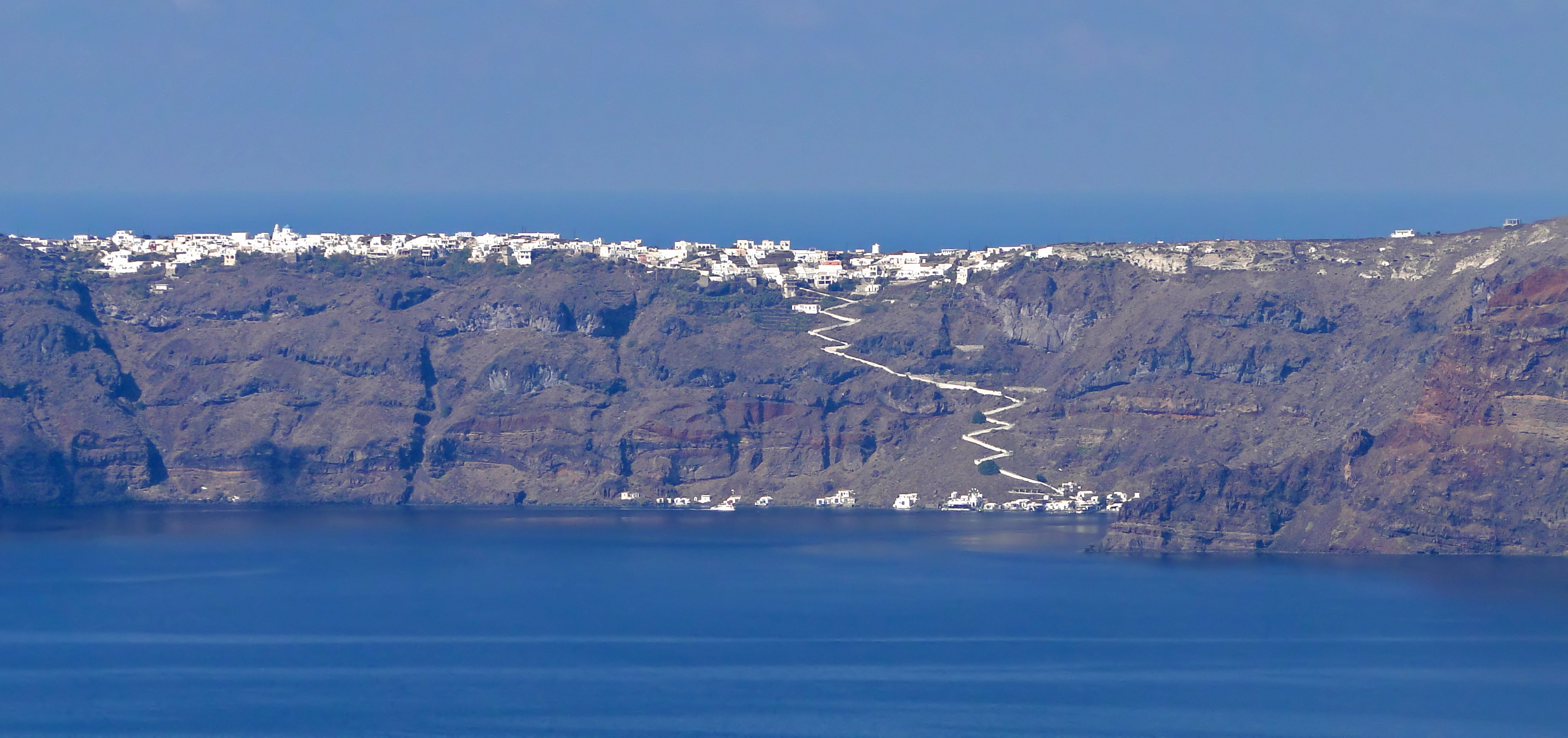
Thirasia is the quieter western counterpart of Thira: part of the same volcanic caldera, but historically distinctive for its Early–Middle Bronze Age settlement at Koimisis, the abandoned cave-village of Agrilia, Manolas and Korfos, dispersed farm architecture, kanaves, churches, terraces and a comparatively intact pre-tourism landscape.
Cyclades
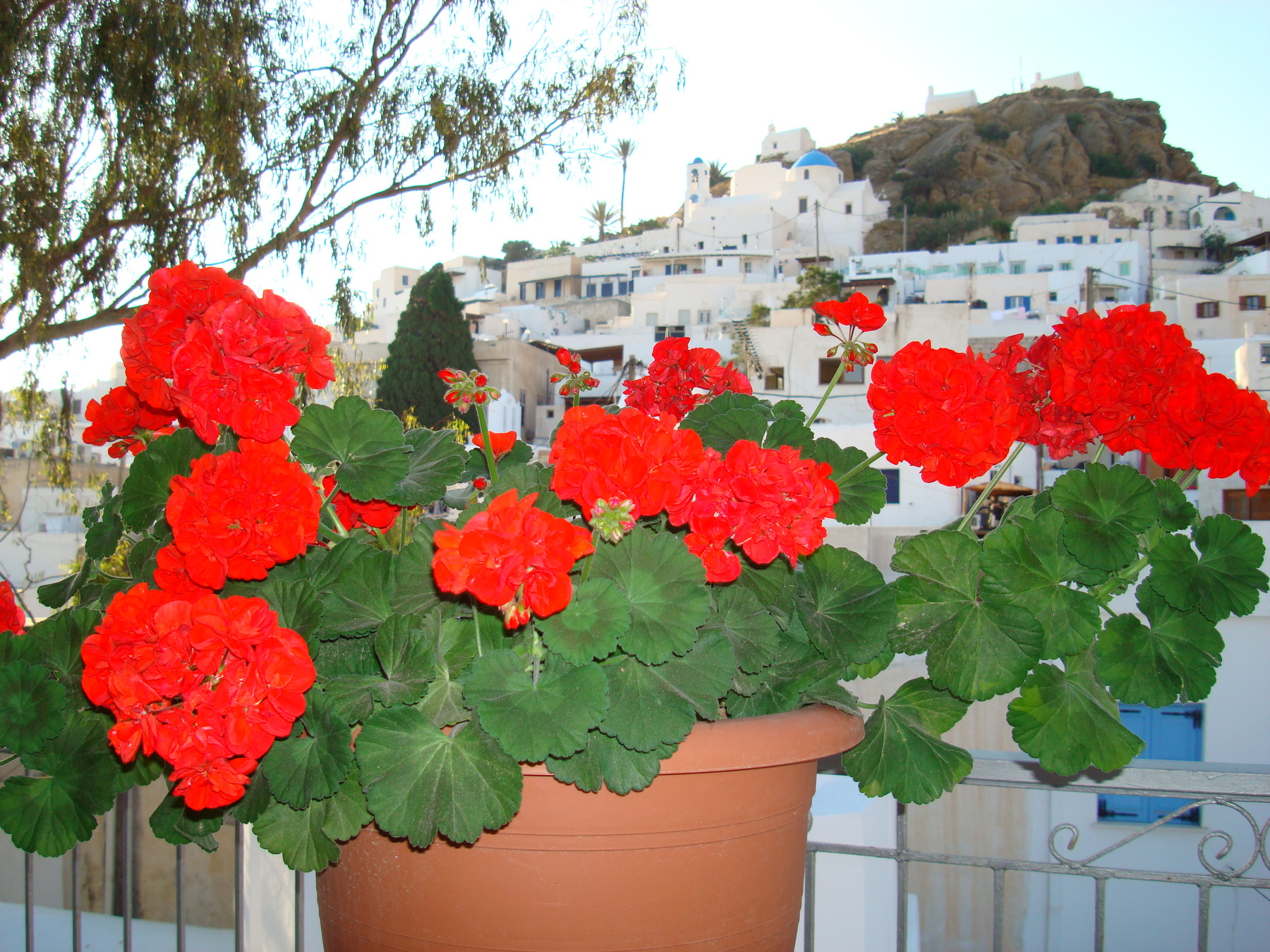
Ios is a historically layered Cycladic island whose significance extends far beyond its modern resort reputation. Skarkos preserves one of the best and most complete Early Cycladic settlements in the Aegean, while modern Chora rises directly over the ancient city, whose Archaic walls, Classical and Hellenistic repairs, public buildings and Roman infrastructure remain visible. Across the island, towers, sanctuaries, terraces and rural sites record an organized agricultural and defensive landscape. Ios also cultivated an unusually strong ancient association with Homer, reflected in literary testimony, local coinage and a month named Homereon, while the traditional tomb at Plakotos remains a place of memory rather than a securely identified burial.
Cyclades
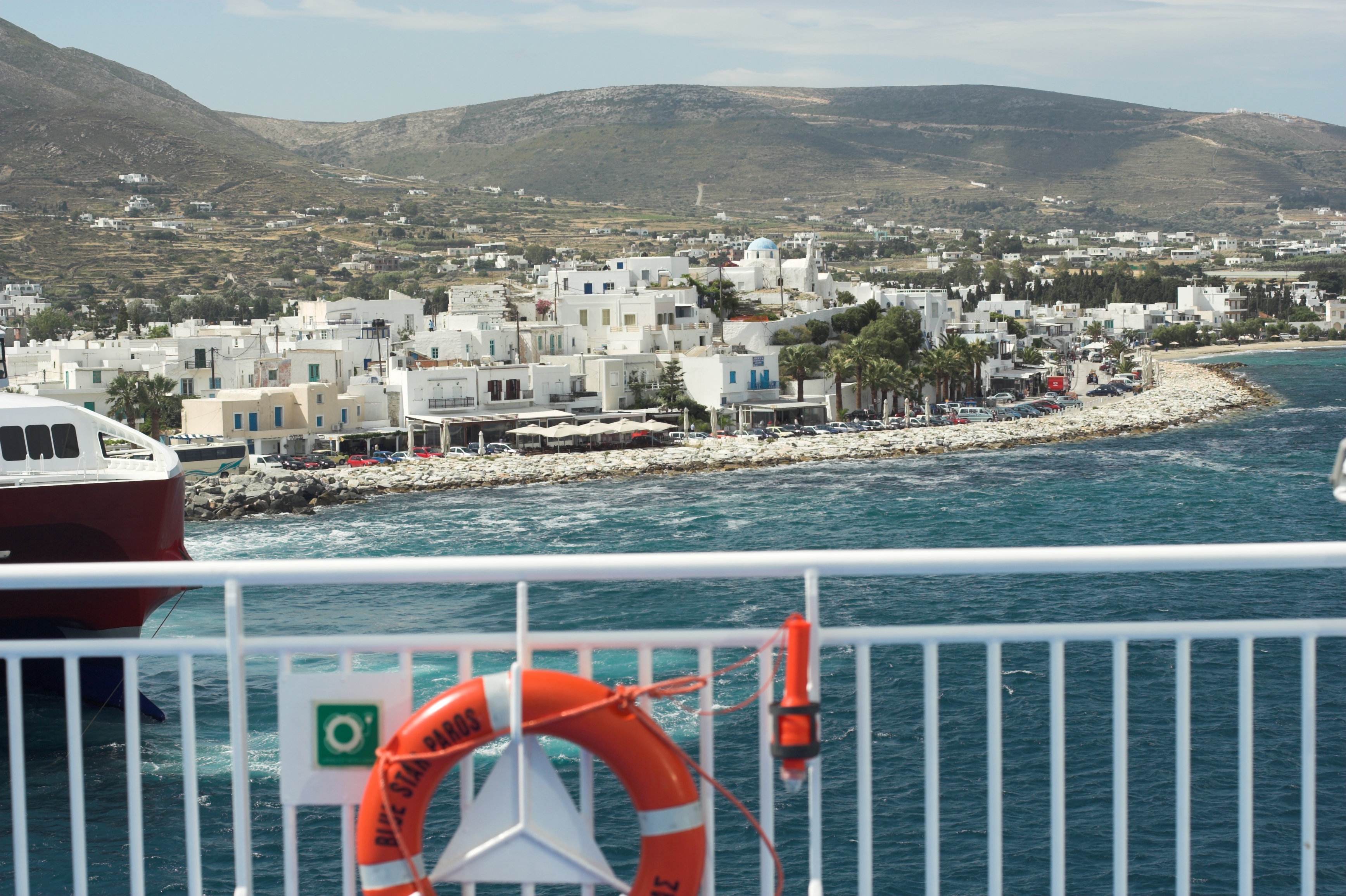
Paros is one of the Cyclades' most historically layered islands: a prehistoric settlement landscape, a wealthy Archaic polis enriched by luminous marble and sculpture, an Early Byzantine episcopal and pilgrimage center, a fortified medieval island with castles at Paroikia, Naoussa and Kefalos, and a maritime-agricultural society whose villages, harbors, churches and quarry landscape remain central to its identity.
Cyclades
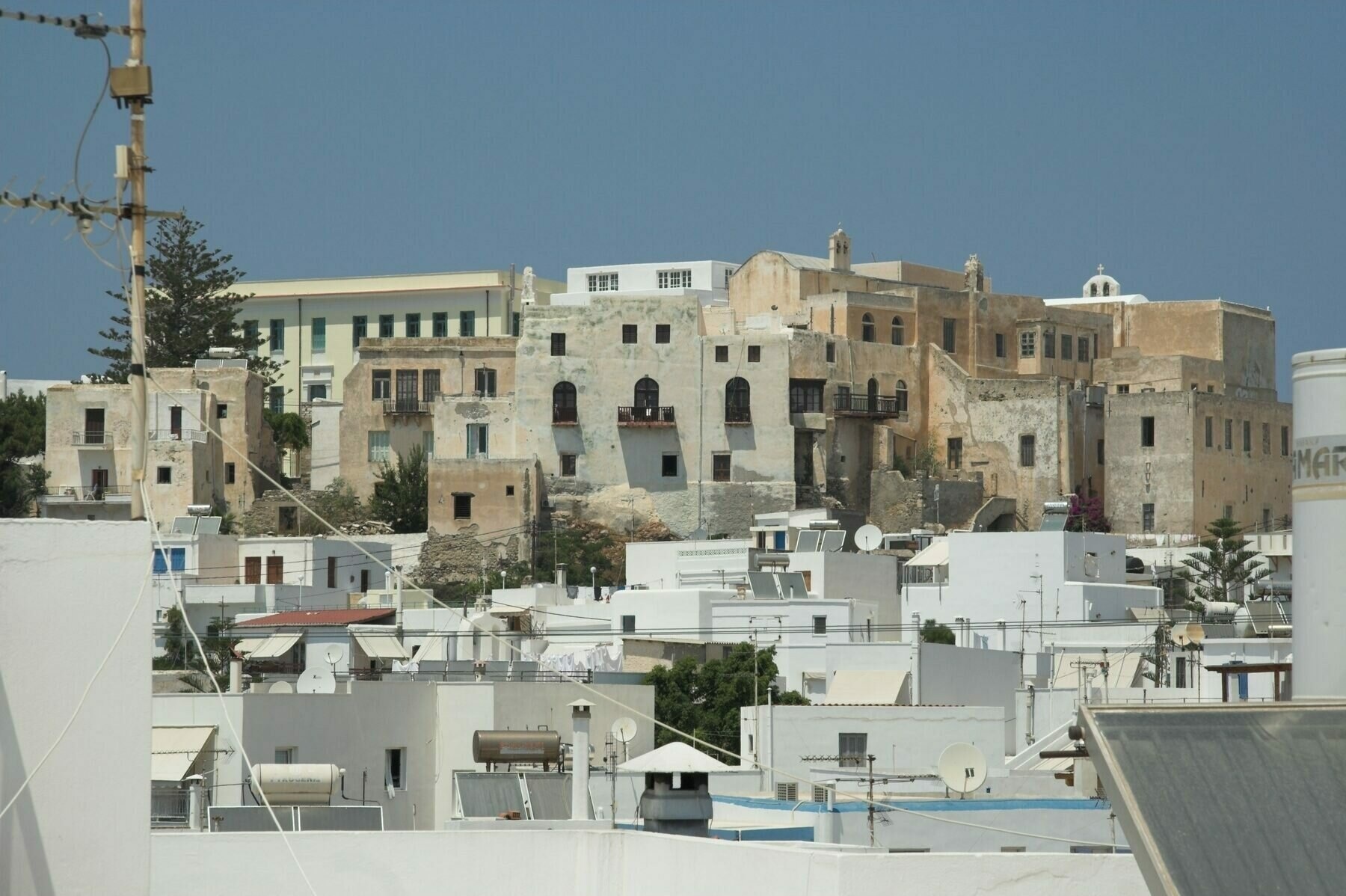
Naxos Chora combines two of the Cyclades' defining monuments: the ancient Portara on Palatia islet and the medieval Venetian Kastro at the heart of the old town. Together they frame the island's transition from ancient sacred landscape to the capital of the Duchy of the Archipelago.
Cyclades
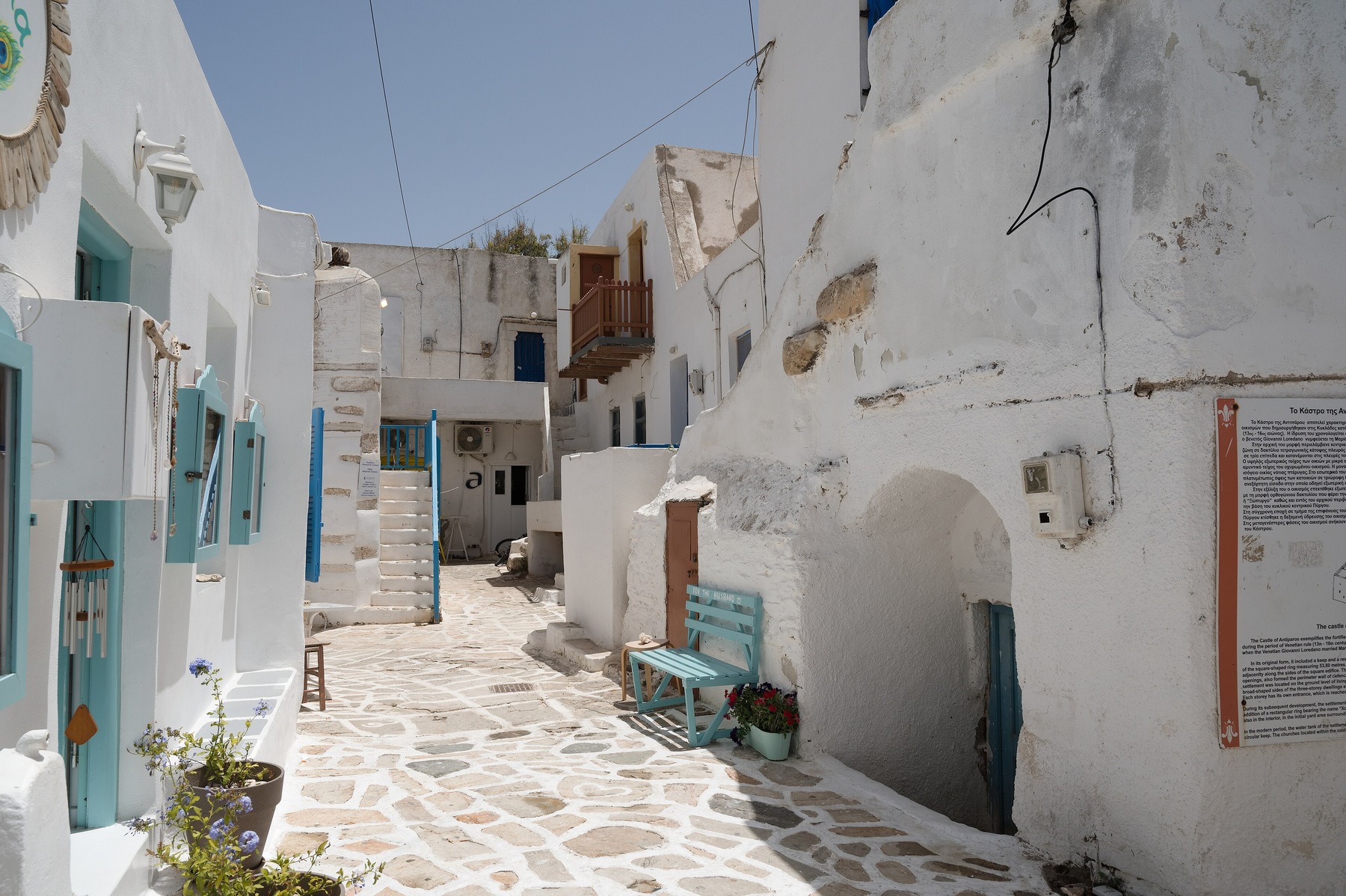
Antiparos brings together an inhabited medieval Kastro, a landscape of small farms and coastal settlements, a celebrated cave, and nearby islands with much older stories. At Saliagos, a Neolithic community worked stone and fished the surrounding waters; on Despotiko, a sanctuary linked the region to the wider Greek world. In Chora, homes formed a defensive perimeter around the Kastro, whose later growth remains visible within the living village.
Cyclades
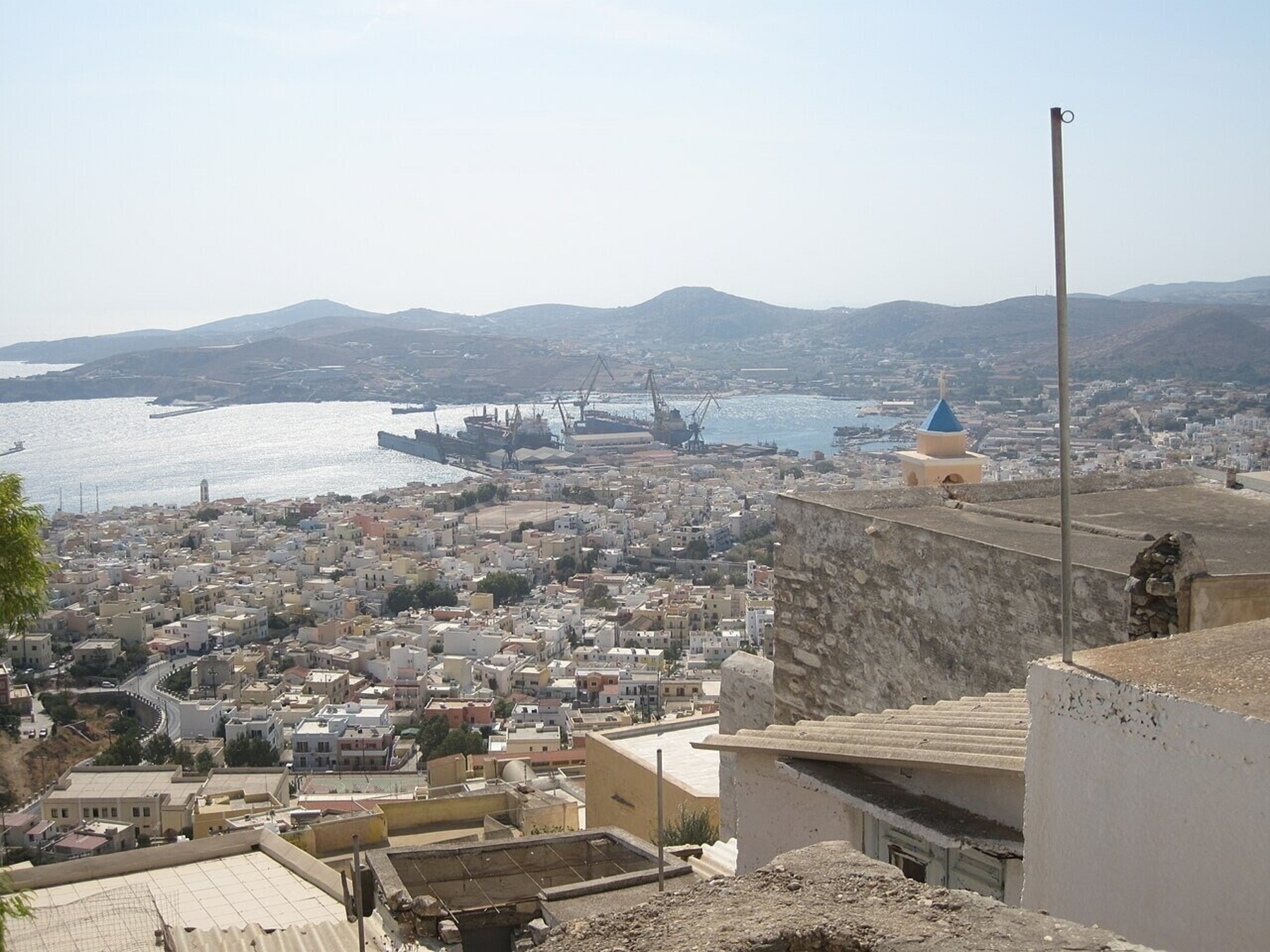
Syros is one of the most historically layered islands of the Cyclades. Early Cycladic Chalandriani and fortified Kastri belong to the defining archaeological cultures of the prehistoric Aegean; ancient Syros occupied the site of modern Ermoupoli, while another fortified city developed at Galissas. Medieval Ano Syros concentrated settlement behind strong walls and preserved a distinctive Catholic identity through Latin and Ottoman rule. After 1821, refugees and merchants created Ermoupoli, which became the leading commercial, shipbuilding, industrial and cultural city of the early Greek state. Neoclassical civic architecture, Orthodox and Catholic monuments, industrial heritage and the rebetiko tradition of Markos Vamvakaris make Syros an island where fortification, migration, commerce and culture remain exceptionally visible.