Overview
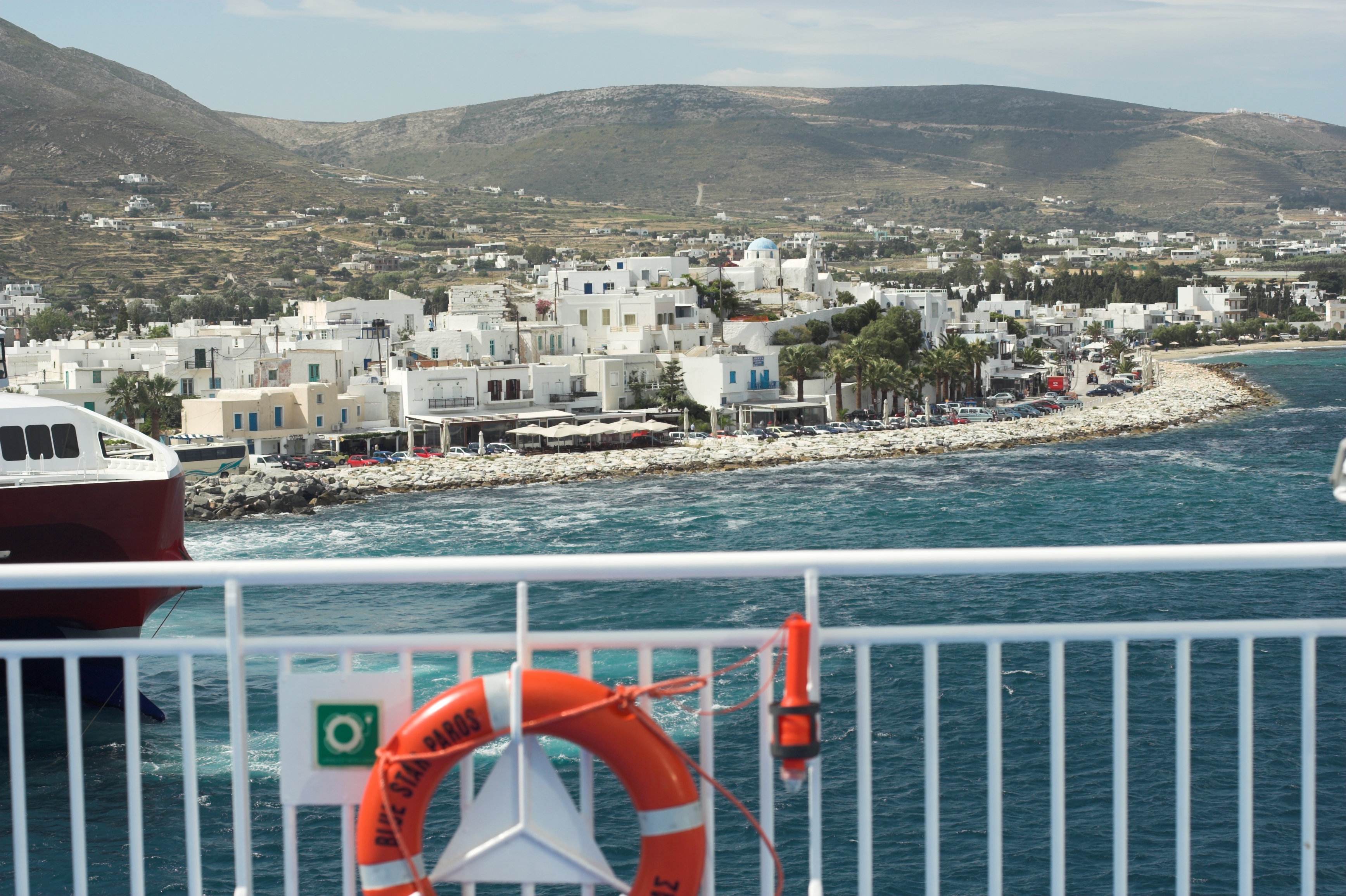
Paros occupies a central position in the Cyclades between Naxos and Antiparos. Its broad cultivable plains, protected bays and metamorphic geology made it unusually favorable for settlement, agriculture and maritime exchange. Human activity reaches back to the Neolithic world represented by nearby Saliagos, while prehistoric settlement developed at the Kastro of Paroikia and the Mycenaean acropolis of Koukounaries. In the Archaic period Paros became one of the richest island poleis in the Aegean. Its wealth rested especially on the celebrated white lychnites marble quarried at Marathi, which supported a major sculptural school and monumental building both on Paros and across the Greek world. The island founded colonies at Parion and Thasos, produced the lyric poet Archilochus, and developed a dense sacred landscape around ancient Paros. Roman and Early Byzantine Paros remained economically connected to the wider Mediterranean. Panagia Katapoliani/Ekatontapiliani became one of the most important Early Christian and Byzantine complexes in Greece, while Parian amphorae and coastal settlements document trade and agricultural production. The medieval island was repeatedly reorganized around defense. The Kastro of Paroikia began as a major Byzantine fortification in the later 7th century and was modified under Venetian rule; Naoussa developed a fortified harbor; and Kefalos became the late Venetian political center until its capture by Hayreddin Barbarossa in 1537. Under Ottoman rule churches, monasteries and villages flourished, and Naoussa briefly served as a Russian naval base in 1770–1774. Modern Paros retains this layered geography: Parikia is the principal port and historic capital; Naoussa combines fishing harbor, fortification and cosmopolitan tourism; Lefkes and Marpissa preserve inland vernacular architecture and historic paths; and the marble quarries, museums, churches and rural landscape connect present-day life to the island's long history.
Highlights
- Parian marble
The translucent lychnites marble of Marathi underpinned the island's ancient wealth and supported one of the most influential sculptural traditions in the Greek world.
- Ekatontapiliani
One of Greece's most important Early Christian and Byzantine church complexes, preserving a monumental basilica, baptistery, marble sculpture and centuries of rebuilding.
- Parikia Kastro
A rare fortified palimpsest where ancient marble architecture was systematically reused in a late-7th-century Byzantine enceinte later modified under Venetian rule.
- Naousa harbor castle
The surviving circular harbor tower and fortified-town remains preserve Naoussa's late medieval role as the island's northern defensive and maritime center.
- Lefkes
A major inland village whose pedestrian lanes, marble details, churches and historic paths preserve the architecture of rural Paros.
Strategic role
A central Cycladic island whose exceptional marble, powerful ancient polis, Byzantine pilgrimage complex, layered fortifications, maritime ports, inland villages and modern cultural economy form one of the Aegean's most continuous historical landscapes.
Parian Marble
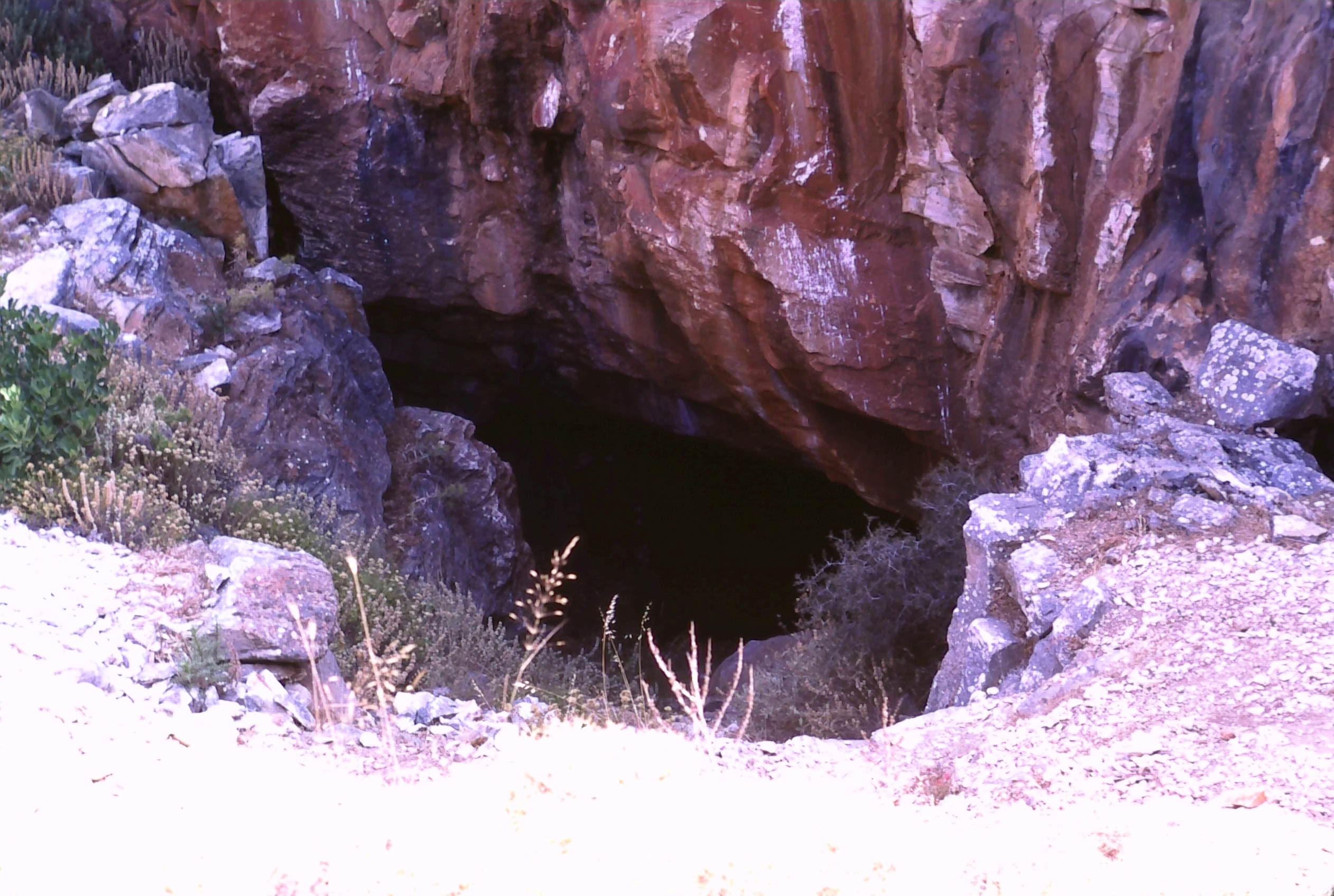
The quarries at Marathi produced the famous Parian lychnites, a fine-grained white marble prized in antiquity for its translucency and ability to take exceptionally delicate carving. Systematic quarrying expanded from the seventh century BC and became one of the principal sources of Parian wealth. The Ephorate emphasizes that this material was sought for sculpture and architecture at Delos, Delphi, Olympia and the Athenian Acropolis, while Parian sculptors developed a school with pan-Hellenic influence. The marble was extracted from underground galleries where the purest deposits could be reached away from weathered surface stone. Parian workshops flourished especially in the sixth and fifth centuries BC; major sculptors connected with the island include Aristion, Agoracritus and, later, Scopas. The quarries therefore represent both industrial archaeology and the material foundation of Paros's artistic prestige.
Ancient Paros
Ancient Paros developed around modern Parikia and became one of the richest island cities of the Archaic and Classical Aegean. Its well-sheltered harbor, productive land and marble resources supported trade, colonization and monumental building. The city possessed an acropolis, defensive walls, temples of Athena and other deities, sanctuaries of Apollo and Demeter and Kore, and a heroon honoring the lyric poet Archilochus. Parian influence extended beyond the island: settlers founded Parion on the Propontis and Thasos in the northern Aegean. Paros participated in the Persian Wars on the Persian side and was later drawn into Athenian power; the failed expedition of Miltiades against Paros in 490/489 BC illustrates both its wealth and strategic importance. Archaeological remains and the museum's rich collections show continued prosperity through Hellenistic and Roman times.
Panagia Ekatontapiliani
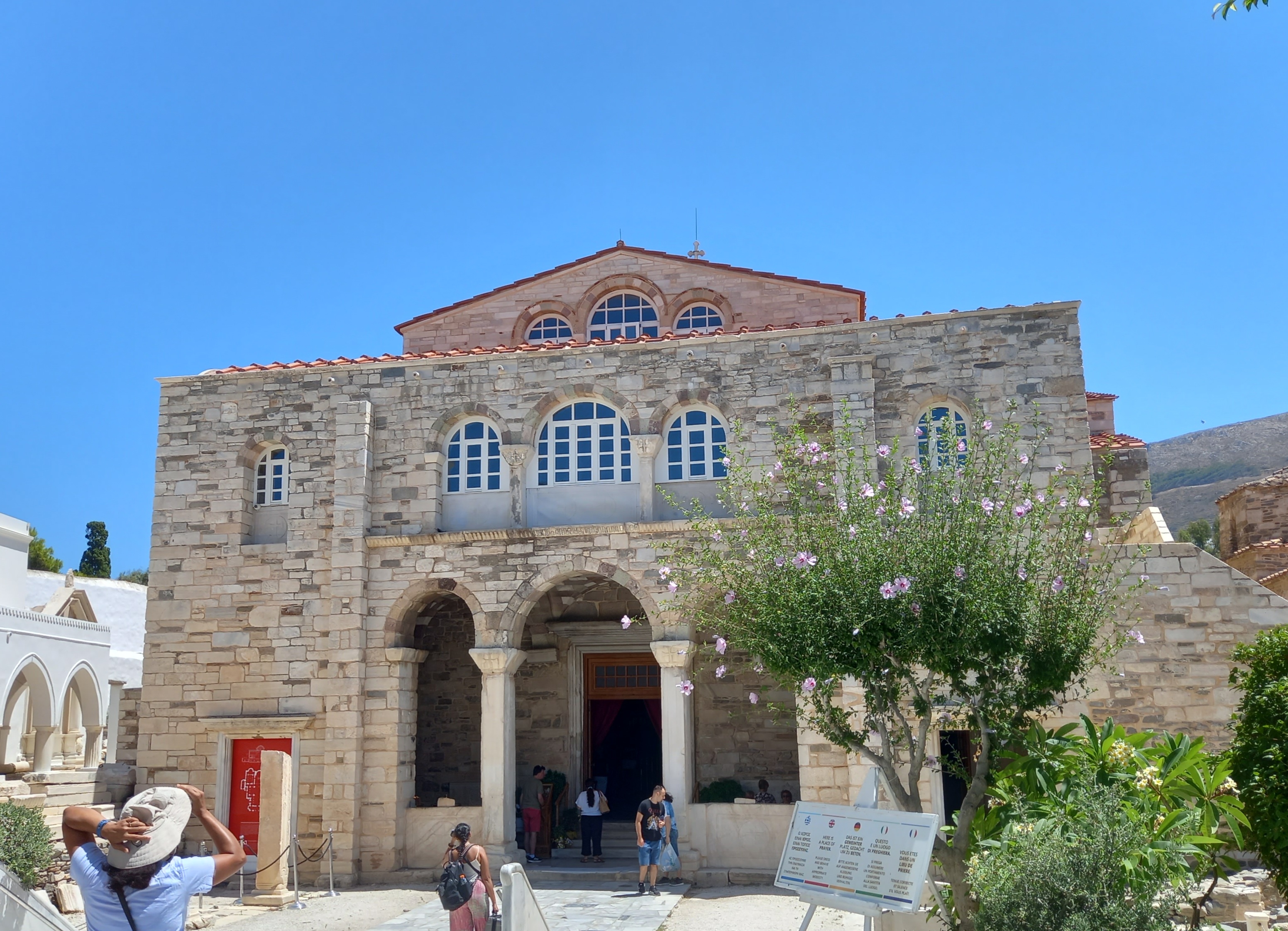
Panagia Katapoliani or Ekatontapiliani is among the most important Early Christian and Byzantine monuments in Greece and one of the great pilgrimage centers of the Cyclades. The complex includes the large cruciform domed basilica of the Virgin, the church of Agios Nikolaos, the baptistery and subsidiary chapels. Marble colonnades, a synthronon, ciborium, remnants of the pulpit, wall revetment, frescoes and abundant sculptural spolia reveal exceptional architectural ambition. Older scholarship associated the principal basilica with Justinian in the sixth century, but recent research by the Ephorate tends to favor a later date in the seventh or even eighth century for the surviving major phase, built over an earlier basilica and a still earlier secular building. The baptistery's cruciform font and the surviving early Christian sculpture are especially important. The complex was repeatedly repaired and expanded, with later monastic cells and chapels added in the seventeenth and eighteenth centuries.
Frankish Kastro
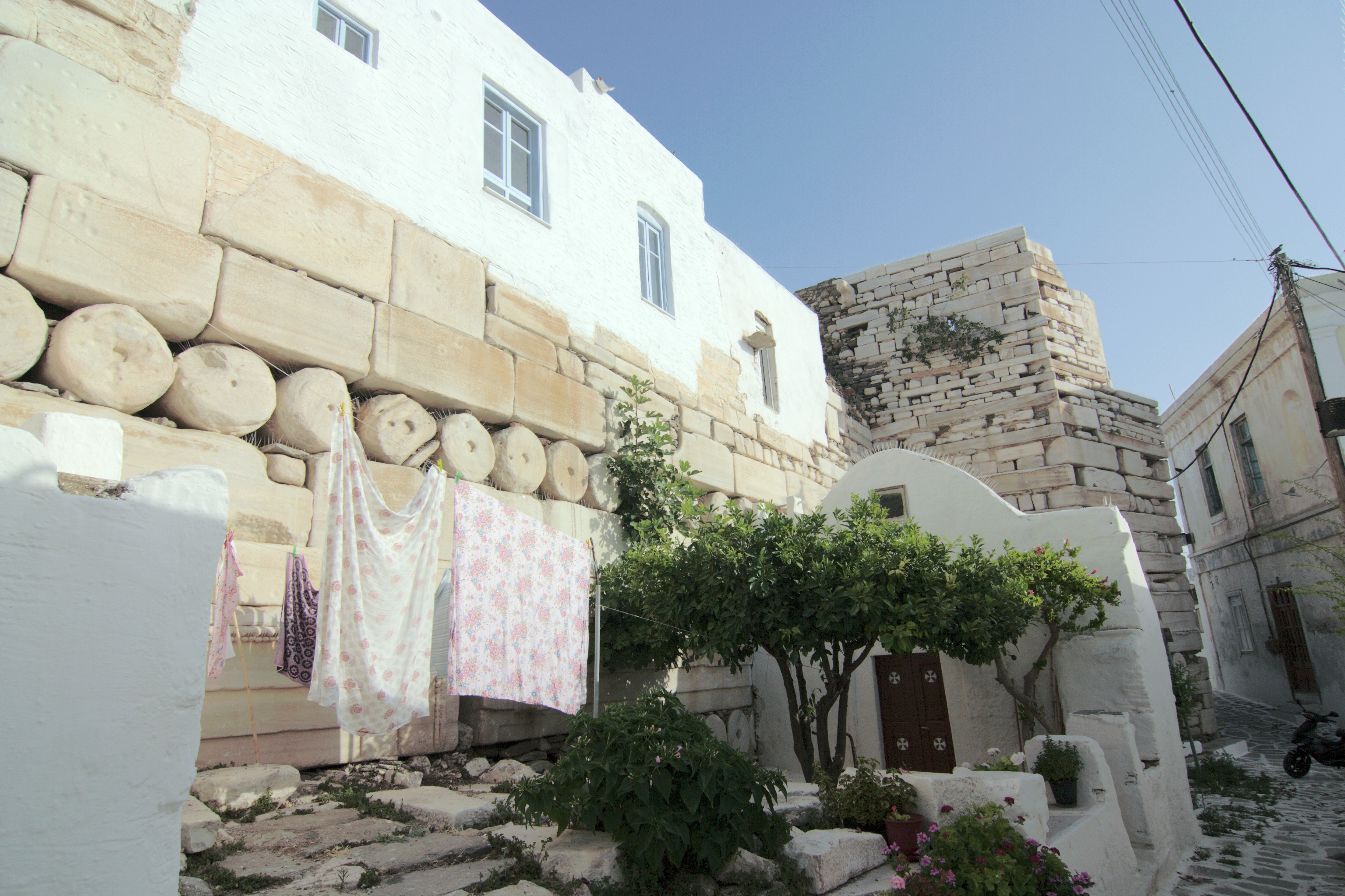
The Kastro of Parikia is more complex than the traditional label 'Frankish Castle' suggests. Current research by the Ephorate places the principal fortification of the ancient acropolis in the second half of the seventh century, when Byzantine authorities strengthened Aegean defenses against Arab maritime attack. The walls were deliberately faced with reused ancient architectural members of brilliant white Parian marble, producing an imposing visual statement above the harbor. A triangular tower and a large five-sided tower reinforced the eastern enclosure and controlled access. Under Latin-Venetian rule the defenses were modified, including the addition of a semicircular bastion, while the urban fabric thickened inside and around the walls. Numerous later churches reused or abutted the fortifications. The Kastro is therefore a striking palimpsest: prehistoric occupation, ancient sanctuary architecture, Byzantine military planning, Venetian adaptation and post-Byzantine sacred building all occupy the same hill.
Naousa and Harbor Defense
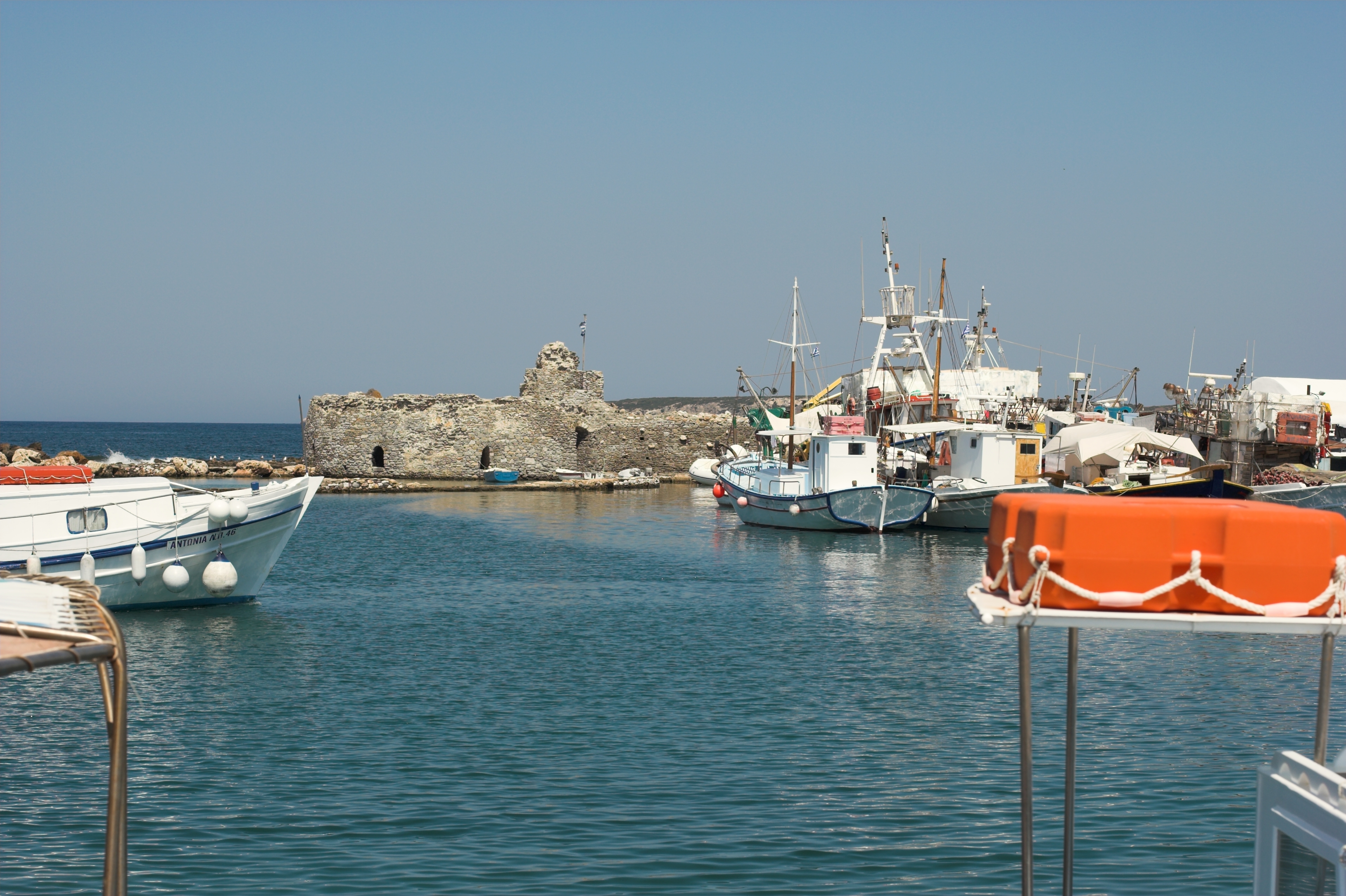
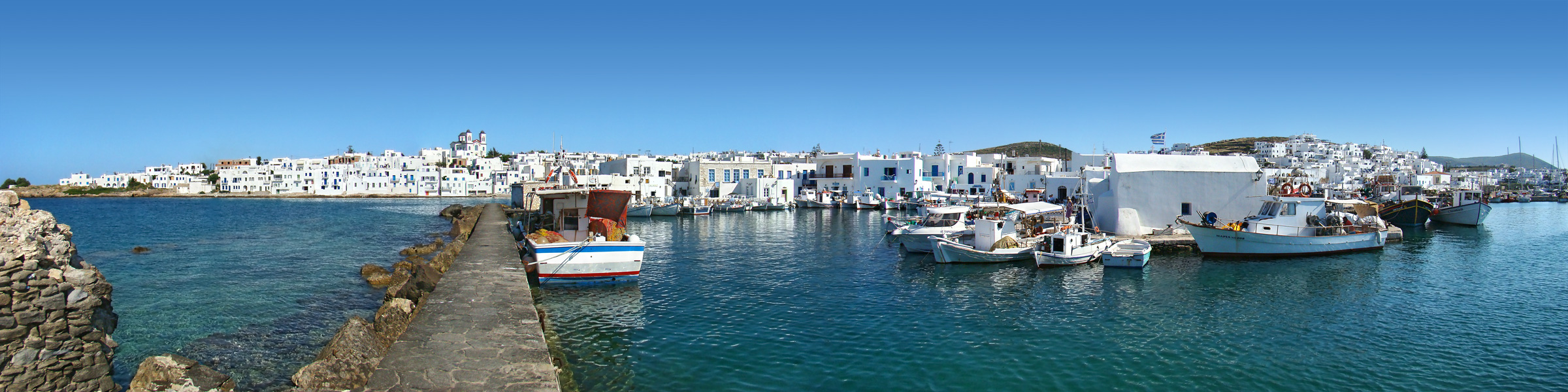
Naoussa's sheltered northern bay created the island's second major maritime center. The fortified settlement developed in the late medieval period, with the Ephorate dating its castle broadly to the fourteenth or fifteenth centuries. Three gates survive from the fortified town. The circular tower at the harbor entrance, built in the early sixteenth century, is the most recognizable defensive element and controlled access to the inner port. Naoussa was not merely a military position: fishing, shipping, ceramic production and regional commerce made it an economically important harbor. In the Early Byzantine period nearby Laggeri contained large pottery kilns producing Parian amphorae; in 1770–1774 Naoussa became a naval base of the Russian fleet during the Russo-Turkish War. Today the harbor still preserves the close relationship between fishing boats, compact urban fabric and fortification.
Prehistoric Paros and Koukounaries
Paros's history begins long before the ancient polis. The wider Paros–Antiparos channel contains the Neolithic settlement of Saliagos, one of the key fifth-millennium BC sites of the Cyclades. On Paros itself, prehistoric occupation developed at the Kastro hill of Parikia from the third into the second millennium BC. Koukounaries, above Naoussa, preserves a major Mycenaean acropolis of the twelfth century BC. These sites show that the island's good harbors, cultivable land and central Aegean position attracted communities for millennia before the rise of Archaic Paros.
Archilochus and Parian Literary Culture
Paros was the homeland of Archilochus, one of the most influential lyric and iambic poets of archaic Greece. His poetry, surviving only in fragments, combined martial experience, personal invective, erotic themes and strikingly individual voice. The Parians commemorated him through the Archilocheion, a hero shrine whose sculptural and epigraphic remains survive in the Archaeological Museum. Inscriptions associated with the monument preserve traditions about his life and works. Archilochus gives Paros an exceptional literary dimension: the island's Archaic cultural prestige rested not only on marble and sculpture but also on poetry that transformed Greek literary expression.
Parian Sculpture and the Archaeological Museum
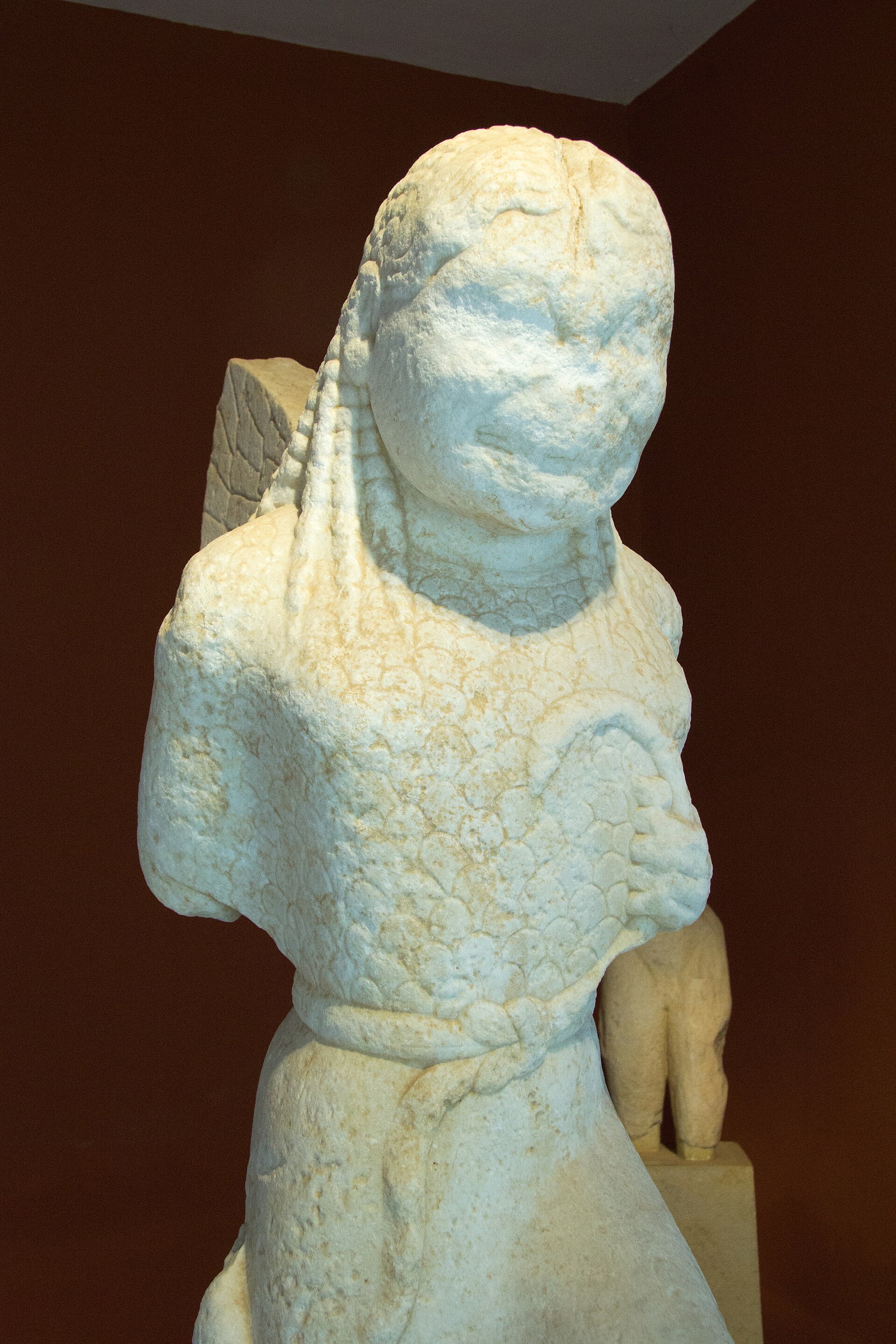
The Archaeological Museum of Paros is indispensable for understanding the island's cultural reach. Its collections include the nearly complete mid-sixth-century BC Gorgo, Archaic kouroi and korai, funerary stelae, architectural sculpture, the Nike monument, material associated with Archilochus, finds from Koukounaries, Delion and Despotiko, and the Parian Chronicle. The Ephorate identifies the island's sculpture as a pioneering school energized by the quality of local marble. Artistic production continued into the Roman period, while works by Parian sculptors and in Parian stone now occupy major museums throughout the world.
The Parian Chronicle
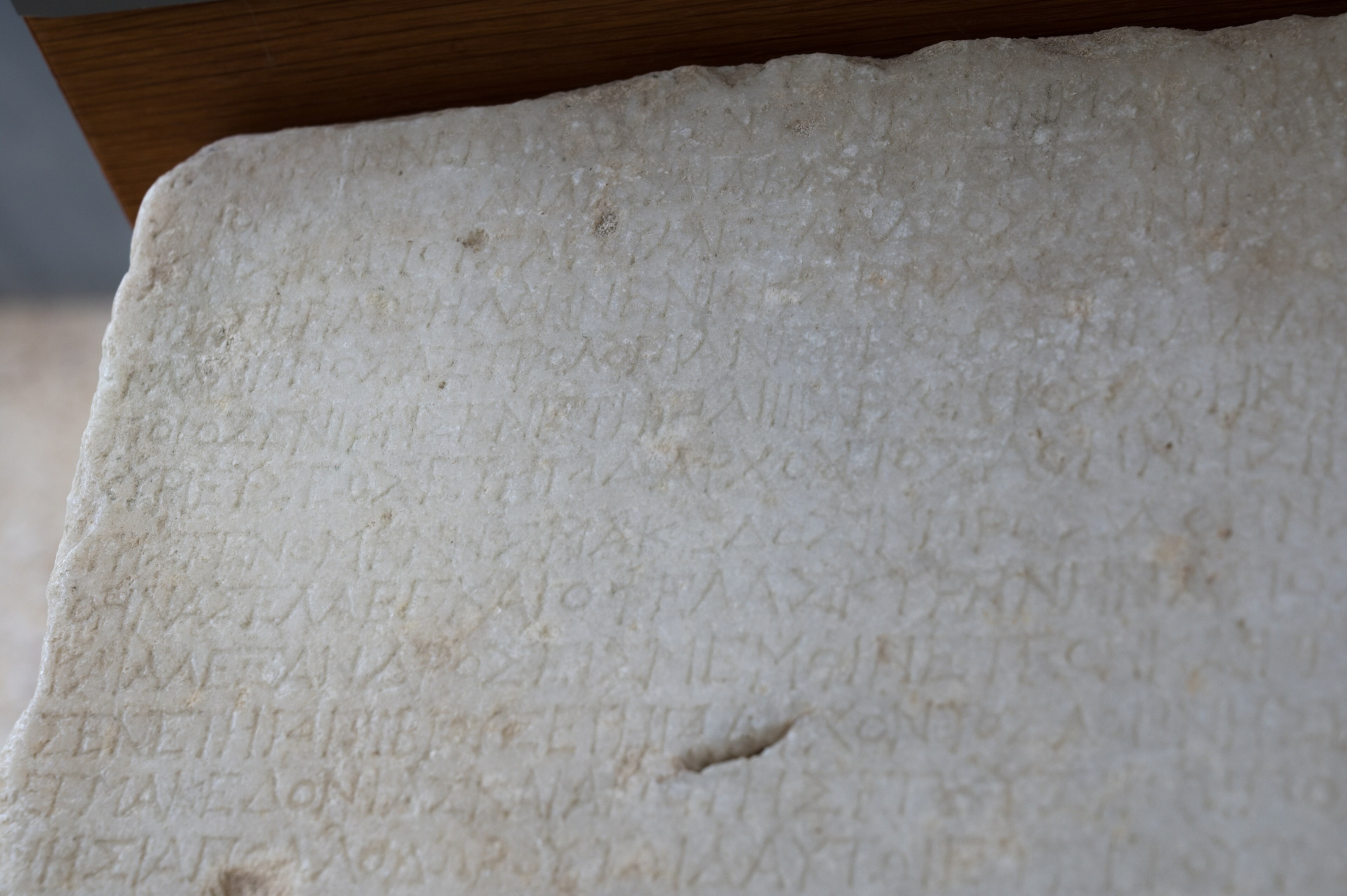
The Parian Chronicle, or Marmor Parium, is one of the most remarkable inscriptions associated with the island. Created in the third century BC, it arranged mythological, literary and historical events in chronological sequence, extending from the legendary age of Cecrops to the third century BC. One surviving original fragment remains in the Archaeological Museum of Paros while another major portion is held by the Ashmolean Museum at Oxford. The chronicle is important not because every date is accepted as historically precise, but because it reveals how an educated Hellenistic community organized Greek collective memory, literature and political history in a single monumental text.
Colonization, Thasos and the Northern Aegean
In the seventh century BC Parian expansion reached the northern Aegean. The Parians founded Parion on the Propontis and established a colony on Thasos, whose rich resources and strategic location opened further opportunities on the Thracian mainland. Archilochus himself was closely associated with the Thasian venture in ancient tradition. This colonial activity demonstrates that Paros was not merely a supplier of marble but an ambitious maritime polis engaged in settlement, trade and political competition far from the Cyclades.
Roman and Early Byzantine Paros
Paros remained connected to the wider Mediterranean under Roman and Early Byzantine rule. The Early Christian period was particularly prosperous. Paros became an episcopal seat by the fourth century, and monumental basilicas arose at Katapoliani, Three Churches and Agios Georgios Voutakos. Imported amphorae and fine wares from Asia Minor, Cyprus, Palestine and North Africa attest long-distance exchange, while locally produced Parian amphorae point to agricultural exports. Large kilns at Laggeri near Naoussa manufactured amphorae on a significant scale; the Ephorate links this production to Paros's role as a supplier within Justinian's quaestura exercitus. Early Byzantine Paros was therefore both a pilgrimage landscape and an active maritime economy.
Mid-Byzantine Insecurity and Sacred Continuity
From roughly the eighth century the island entered a more insecure phase shaped by raids, earthquakes and wider instability in the Aegean. The Life of Saint Theoktiste, written in the tenth century, portrays Paros as nearly deserted when the saint escaped pirates and lived for decades at abandoned Katapoliani. The text is hagiographic and likely exaggerates the desolation, but archaeology supports substantial contraction. Churches such as Agios Ioannis Theologos at Kato Marathi demonstrate that the island was never completely abandoned. This period explains the growing importance of defensible inland and fortified settlement patterns that would shape medieval Paros.
Venetian Paros and the Three Castles
After the Fourth Crusade Paros entered the Duchy of the Aegean and passed through the Sanudo, Crispi and Sommaripa spheres of rule. Three principal castles structured the island's defenses: Paroikia, Naoussa and Kefalos. The earlier Byzantine Kastro at Paroikia was adapted to Latin-period urban life; Naoussa protected the northern port; and by the late fifteenth century Kefalos became the political seat of the Sommaripa rulers. Together they demonstrate a distributed defensive system designed to protect separate harbors and regions rather than a single island capital.
Kefalos and the End of Venetian Rule
Kefalos rises in southeastern Paros beneath the later monastery of Agios Antonios. Nicolo I Sommaripa developed the castle around 1500 as his principal base within an older fortified settlement that may have originated in the late thirteenth century. Two lines of walls, houses and churches survive in ruins. In 1537 the Ottoman admiral Hayreddin Barbarossa captured Kefalos despite resistance led by Cecilia Venieri and Bernardo Sagredo. The fall of the castle marks the effective end of the Venetian political era on Paros and is one of the island's most important siege episodes.
Ottoman Paros, Churches and Russian Naoussa
Ottoman domination followed the conquest of 1537, although the final remnants of Frankish administration ended only later in the sixteenth century. The island's Orthodox institutions benefited from privileges that allowed church construction and repair; from the seventeenth century onward monasteries, chapels and churches multiplied and icons of the Cretan School became prominent. In the eighteenth century the Mavrogenis family played an influential role in local society. During the Russo-Turkish War of 1768–1774, Naoussa served from 1770 to 1774 as a base for the Russian fleet, briefly placing the island at the center of imperial naval competition in the Aegean.
Parikia: Harbor, Castle and Urban Palimpsest
Modern Parikia is the principal port and administrative center, but its urban form overlays nearly every major period of Parian history. The ancient city, Kastro, Ekatontapiliani, archaeological museum and later waterfront stand within walking distance. Narrow lanes, limewashed houses, marble fragments, small churches and commercial streets developed around an ancient and Byzantine core rather than replacing it. The town's significance lies in this compression: prehistoric occupation, Archaic civic architecture, Early Christian monumental religion, Byzantine fortification, Venetian adaptation and modern port life remain physically intertwined.
Lefkes, Marpissa and Inland Village Architecture
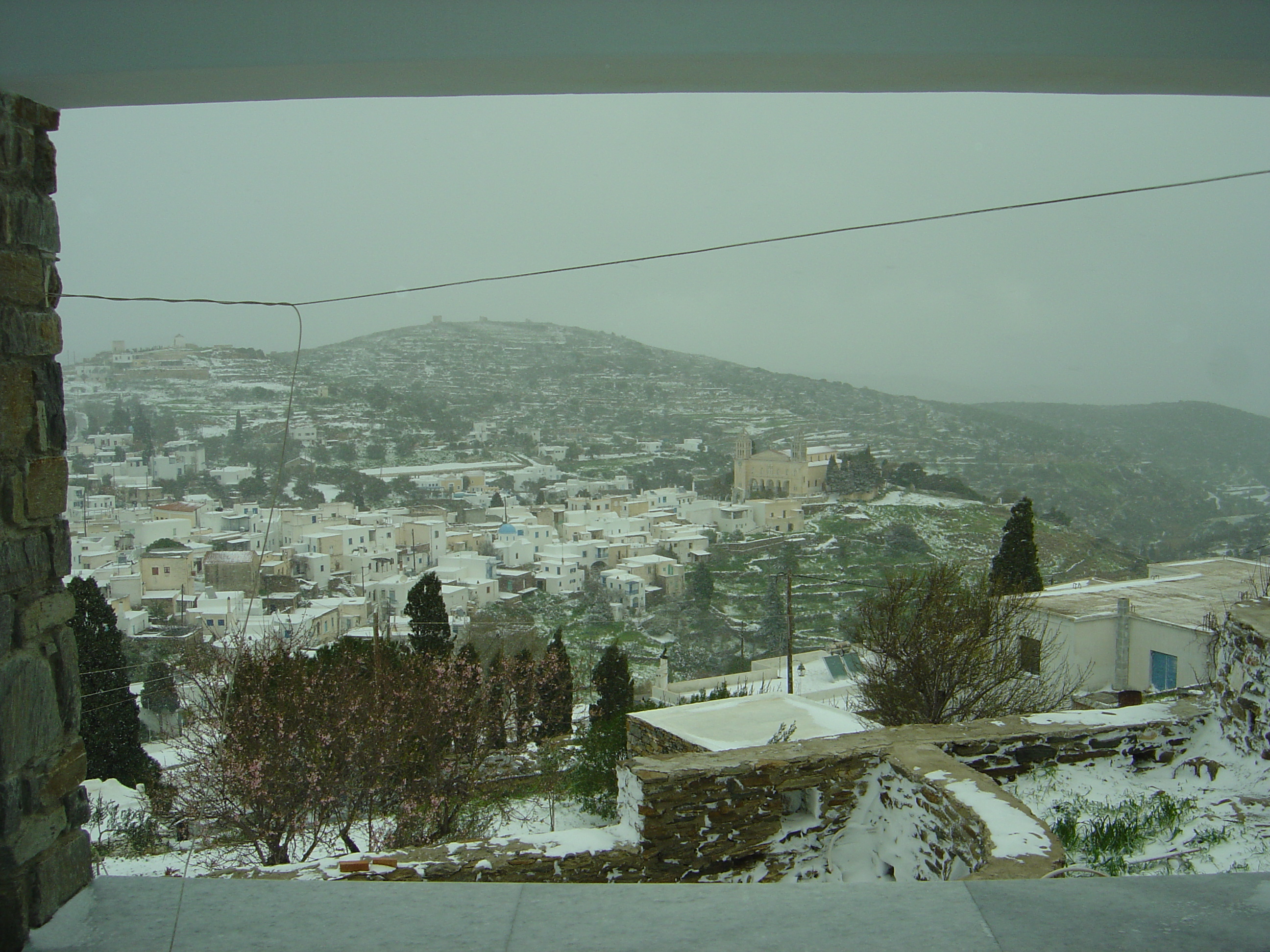
The interior villages preserve another side of Parian history. Lefkes, set on the slopes beneath the central highlands, became an important inland settlement and preserves a dense network of pedestrian lanes, whitewashed houses, marble architectural details and the large church of Agia Triada. Marpissa and neighboring villages likewise retain compact Cycladic morphology, churches, courtyards and agricultural connections. Their location away from exposed coasts reflects both access to farmland and the historic advantages of inland security.
Paths, Agriculture, Wine and the Working Landscape
Paros's historic economy depended on more than marble and shipping. Fertile plains supported cereals, vines, olives, livestock and later a wide range of crops. Dry-stone terraces, field walls, threshing floors, wells, chapels and paved routes linked villages to farmland and ports. The traditional path between Lefkes and Prodromos, often called the Byzantine Road, preserves part of this old movement network. Wine has a long presence on the island, already reflected in ancient economic life. These landscapes are essential for understanding why Paros could sustain large settlements and remain economically important across so many periods.
Naoussa, Fishing Culture and Modern Transformation
Naoussa retains a working-harbor identity even as tourism has transformed the town. Fishing boats, the circular harbor tower, narrow streets and former storage or work buildings coexist with restaurants, shops and accommodation. Its evolution illustrates a broader modern Parian pattern: historic settlements remain visually intact in important ways while their economic functions change rapidly. The challenge is to preserve the relationship among harbor, fortifications, traditional urban scale and everyday island life as tourism intensifies.
Nature, Wind and the Island Landscape
Paros combines cultivated plains with hills, wetlands, rocky coasts and sandy bays. The Ephorate notes more than three hundred recorded bird species and identifies wetlands as important habitats for migratory and endemic fauna; marine habitats around the island also support the Mediterranean monk seal. The island's strong seasonal winds historically shaped sailing, settlement and agriculture and today support major wind- and kitesurfing activity. At Kolymbithres, weathered granite formations create one of the island's most distinctive natural landscapes. These environmental features belong to the same history as the built landscape: harbors, agriculture and settlement all developed in response to topography, wind and water.
Museums and Cultural Memory
The Archaeological Museum is the principal institution for ancient Paros, but the island's cultural memory is distributed more widely among churches, village museums, local collections and living religious traditions. Ekatontapiliani preserves Early Christian sculpture and inscriptions; historic churches retain later icons and frescoes; quarry galleries preserve the working environment of ancient stone extraction. Paros is therefore unusually strong as an island where museums and monuments can be read together rather than as separate cultural experiences.
What to Visit Today
The essential historical circuit starts in Parikia with Ekatontapiliani, the Archaeological Museum, Kastro and ancient cemetery. The Marathi quarries should follow because they explain the material basis of ancient Paros's wealth and sculpture. Naoussa combines fortified harbor and living fishing town. Lefkes and the historic path toward Prodromos reveal inland architecture and agricultural movement. For a deeper visit, add Koukounaries, Kefalos/Agios Antonios, Marpissa, Agios Georgios Thalassitis and selected Early Byzantine sites. Access to archaeological areas and quarry galleries can change; current conditions should be checked locally.
Why Paros Matters
Paros matters because a single island preserves an unusually complete sequence of Aegean social forms: prehistoric settlement, a wealthy Archaic polis, colonial expansion, world-class marble quarrying and sculpture, Early Christian pilgrimage, Byzantine fortification, Venetian castles, Ottoman religious life, fishing and agricultural villages, and a modern tourism economy. Marble gives these histories unusual physical continuity. Ancient temples were dismantled into Byzantine walls; marble sculpture traveled across the Mediterranean; later churches and houses continued to use the same material. Paros is therefore not simply a picturesque Cycladic destination but a long-lived cultural landscape in which geology, architecture, defense, religion and maritime exchange repeatedly reshaped one another.
Architecture
- Prehistoric and Mycenaean remains at Kastro-Paroikia and Koukounaries
- Ancient urban and sacred architecture of the Parian polis around modern Parikia
- Underground marble quarries at Marathi, source of the prized Parian lychnites
- Panagia Ekatontapiliani/Katapoliani complex with cruciform domed basilica, Agios Nikolaos, baptistery, synthronon, ciborium and extensive marble sculpture
- Early Byzantine basilicas at Three Churches and Agios Georgios Voutakos
- Kastro of Paroikia: late-7th-century Byzantine acropolis fortification built extensively with reused ancient Parian marble
- Venetian-period bastions and later churches incorporated into the Paroikia Kastro
- Naoussa fortified settlement with surviving gates and early-16th-century circular harbor tower
- Kefalos castle and fortified settlement on the hill of Agios Antonios
- Post-Byzantine churches and monasteries distributed across the island
- Lefkes, Marpissa and other inland settlements with narrow lanes, limewashed houses, marble details and compact village morphology
- Historic paved paths, dry-stone terraces, threshing floors and agricultural structures
- Fishing and merchant architecture around Naoussa, Parikia and Piso Livadi
Timeline
- late 5th millennium BC Neolithic communities flourish in the Paros–Antiparos channel, notably at Saliagos.
- 3rd–2nd millennia BC Prehistoric settlement develops at the Kastro of Parikia and elsewhere on Paros.
- 12th century BC The Mycenaean acropolis at Koukounaries is occupied.
- 7th century BC Systematic exploitation of Parian marble expands; Parian sculpture and overseas colonization enter a major period of growth.
- c. 710/705 BC Parians establish the colony of Parion on the Propontis.
- c. 680/670 BC Parian colonists establish Thasos in the northern Aegean.
- 7th century BC The poet Archilochus becomes the island's most important literary figure.
- 6th century BC Ancient Paros reaches a major peak of wealth, monumental construction and sculptural production.
- 490/489 BC Miltiades leads an unsuccessful Athenian expedition against Paros after the Persian Wars.
- 5th–4th centuries BC Paros remains an important Cycladic polis; sculptural workshops continue and Scopas becomes internationally famous in the 4th century.
- mid-3rd century BC The Parian Chronicle is inscribed, organizing Greek mythical, literary and historical chronology.
- Roman period Paros continues as a productive maritime and artistic center under Roman rule.
- 4th century AD Paros is established as an episcopal seat.
- 4th–7th centuries AD Early Byzantine settlements, basilicas, amphora production and maritime trade flourish around Parikia, Naoussa and other coastal centers.
- second half of 7th century The Byzantine fortification of the Paroikia acropolis is constructed using extensive ancient marble spolia.
- 7th–8th centuries The principal surviving phase of Ekatontapiliani is now often dated by recent research to this period rather than strictly to Justinian's reign.
- 8th–10th centuries Raid insecurity and economic contraction affect Paros; the Life of Saint Theoktiste preserves a literary image of severe depopulation.
- 11th–13th centuries Middle Byzantine churches such as Agios Ioannis Theologos at Kato Marathi attest continuing island life.
- after 1207 Paros enters the Latin Duchy of the Aegean and its fortifications are adapted under successive Venetian families.
- 14th–15th centuries The fortified settlement of Naoussa develops.
- c. 1500 Nicolo I Sommaripa develops Kefalos as the principal fortified political center.
- early 16th century The circular harbor tower of Naoussa is constructed.
- 1537 Hayreddin Barbarossa captures Kefalos, ending the effective Venetian political era on Paros.
- 1580 onward Ottoman privileges support renewed construction and repair of Orthodox churches and monasteries.
- 1770–1774 Naoussa serves as a Russian naval base during the Russo-Turkish War.
- 1821 Paros joins the Greek War of Independence and subsequently becomes part of the modern Greek state.
- 1950s The Archaeological Museum of Paros is constructed to house the island's rapidly expanding archaeological collections.
- 1959–1964 Anastasios Orlandos conducts major restoration and excavation at Ekatontapiliani.
- late 20th–21st centuries Tourism becomes a dominant economic force while archaeological research, restoration and heritage management continue across the island.
Visiting today
A historically focused visit should begin in Parikia with Panagia Ekatontapiliani, the Archaeological Museum, the Kastro and the ancient cemetery, then continue to the Marathi marble quarries. Naoussa is essential for understanding the island's northern harbor economy and medieval defense; the surviving circular harbor tower and old fishing quarter should be read together. Lefkes, Marpissa and the Byzantine Path reveal inland architecture and the agricultural landscape. Koukounaries and other archaeological sites require more planning and current access should be checked with the Ephorate of Antiquities. Kefalos and the monastery of Agios Antonios provide the strongest surviving landscape of the late Venetian political center. Museum and site hours change seasonally; confirm current conditions with the Ephorate before visiting.
Expedition guides
Images
References
- Ephorate of Antiquities of the Cyclades — Paros
- Ephorate of Antiquities of the Cyclades — Archaeological Museum of Paros
- Ephorate of Antiquities of the Cyclades — Byzantine Paros
- Ephorate of Antiquities of the Cyclades — Despotiko and the Archaic Parian Sphere
- Greek National Tourism Organisation — Paros
Related places
Related Stops
Topics
- Cyclades
- Historic Island
- Parian Marble
- Ancient Greek
- Archilochus
- Sculpture
- Early Christian
- Byzantine
- Venetian
- Fortified Island
- Parikia Kastro
- Naoussa
- Kefalos
- Ekatontapiliani
- Marble Quarries
- Maritime History
- Vernacular Architecture
- Rural Landscape
- Tourism History