Overview
Thasos has been shaped for more than two millennia by the interaction of mineral wealth, maritime access and defensive geography. Parian settlers established a major Greek polis on the north coast in the Archaic period, and the city developed monumental walls, decorated gates, an agora, sanctuaries and a theatre. The island’s resources—gold, silver-bearing ores, timber, wine and especially marble—linked it to wider markets across the Aegean and Mediterranean. Archaeology at Aliki demonstrates the scale of marble extraction from the Archaic through the Early Christian period, while the Archaeological Museum and a century of French and Greek excavations make ancient Thasos one of the best-documented island poleis in Greece. Later, Byzantine and Genoese fortifications responded to insecurity and piracy, and upland settlements became centers of refuge and administration. In the modern era, Limenaria’s mines and metallurgical installations created one of the island’s most important industrial landscapes. Thasos today combines ancient urbanism, medieval fortification, industrial archaeology, Orthodox religious traditions, mountain villages, forests, olive groves and an exceptionally varied coastline.
Highlights
- Ancient City Walls
A monumental defensive circuit and decorated gates still define the extent and ambition of ancient Thasos.
- Ancient Agora
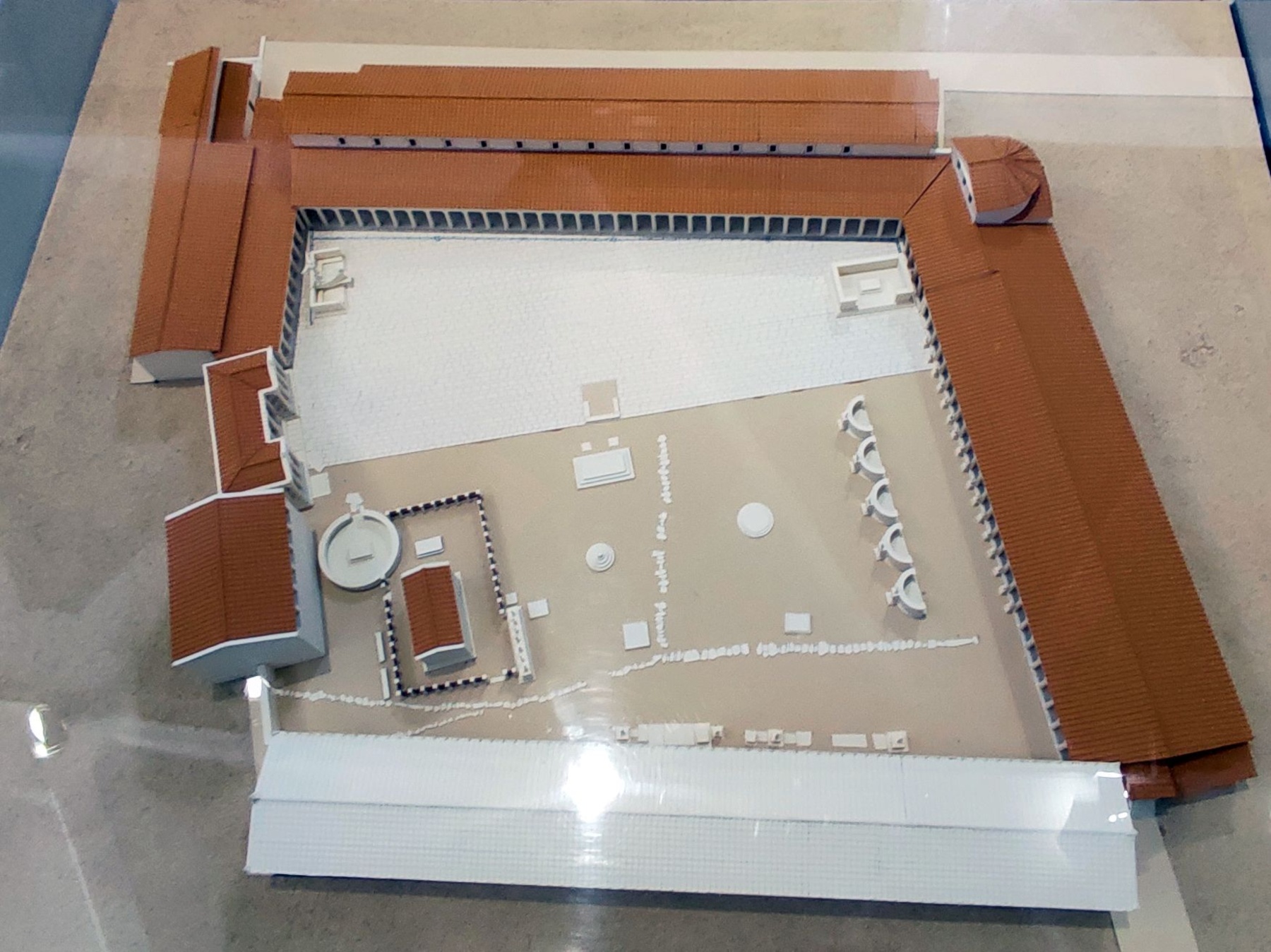
The civic center reveals public, commercial and religious life across Classical, Hellenistic and Roman phases.
- Ancient Theatre
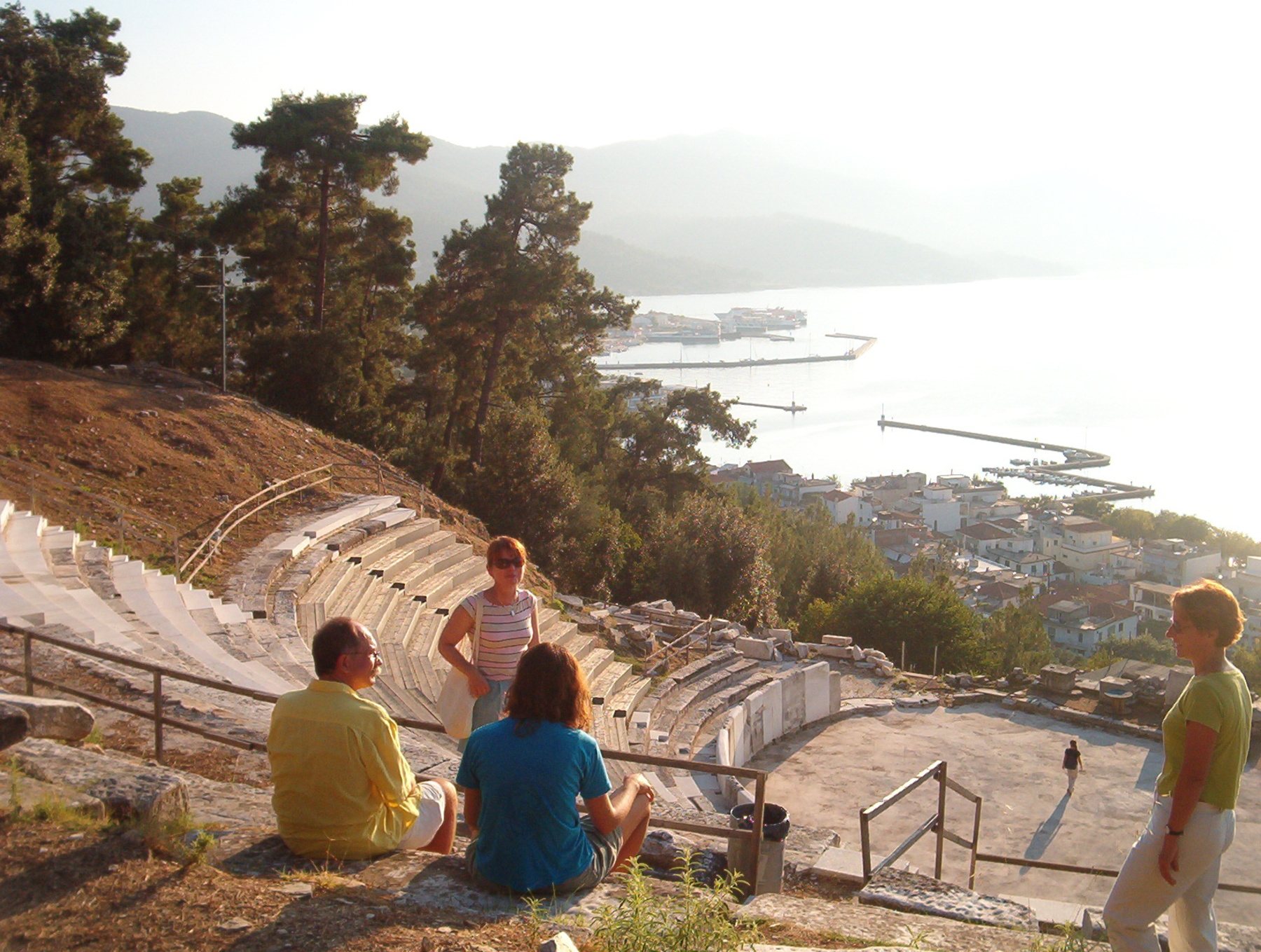
The theatre combines architecture, acropolis and harbor views in one of the island's most evocative ancient settings.
- Aliki Marble Quarries
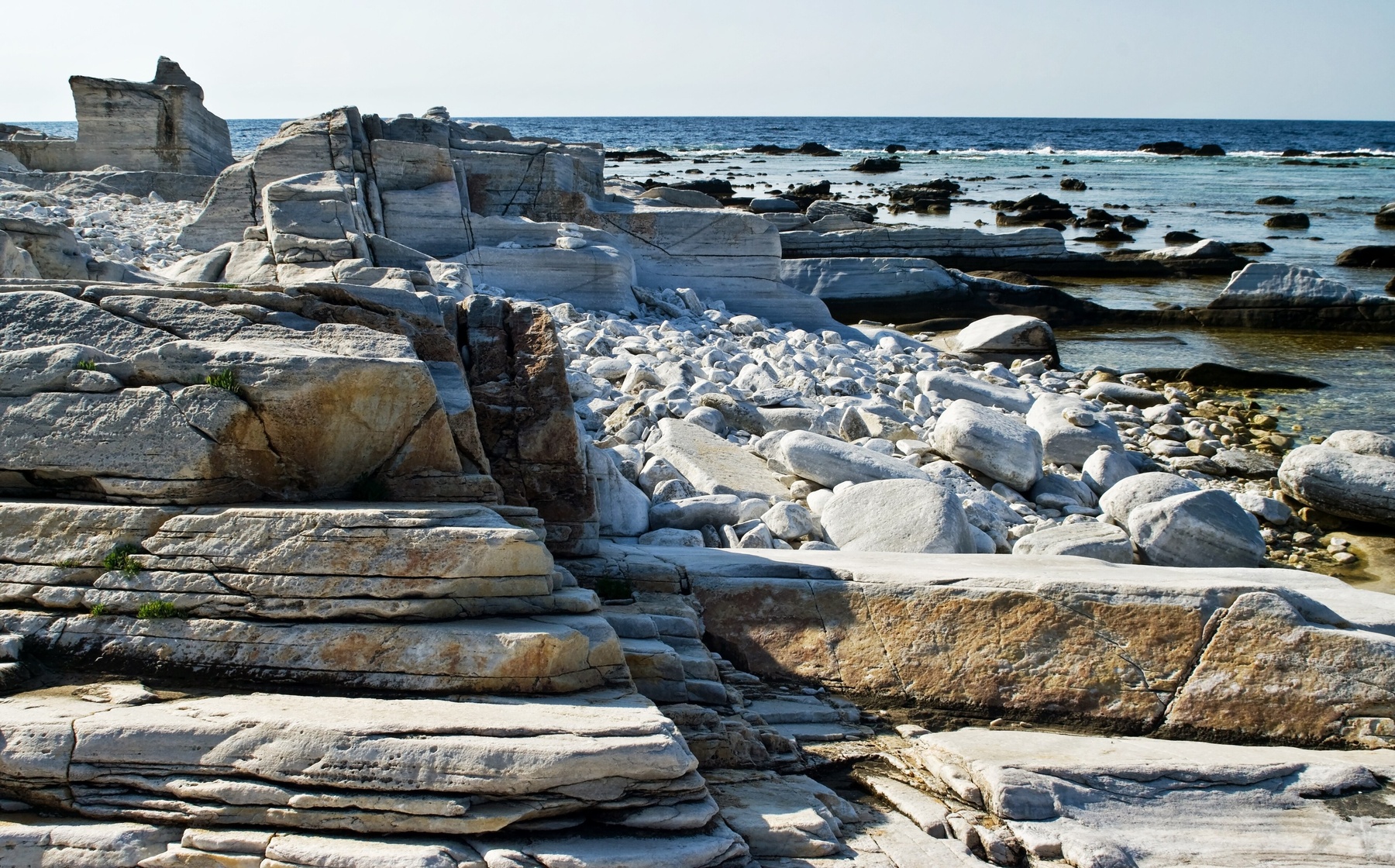
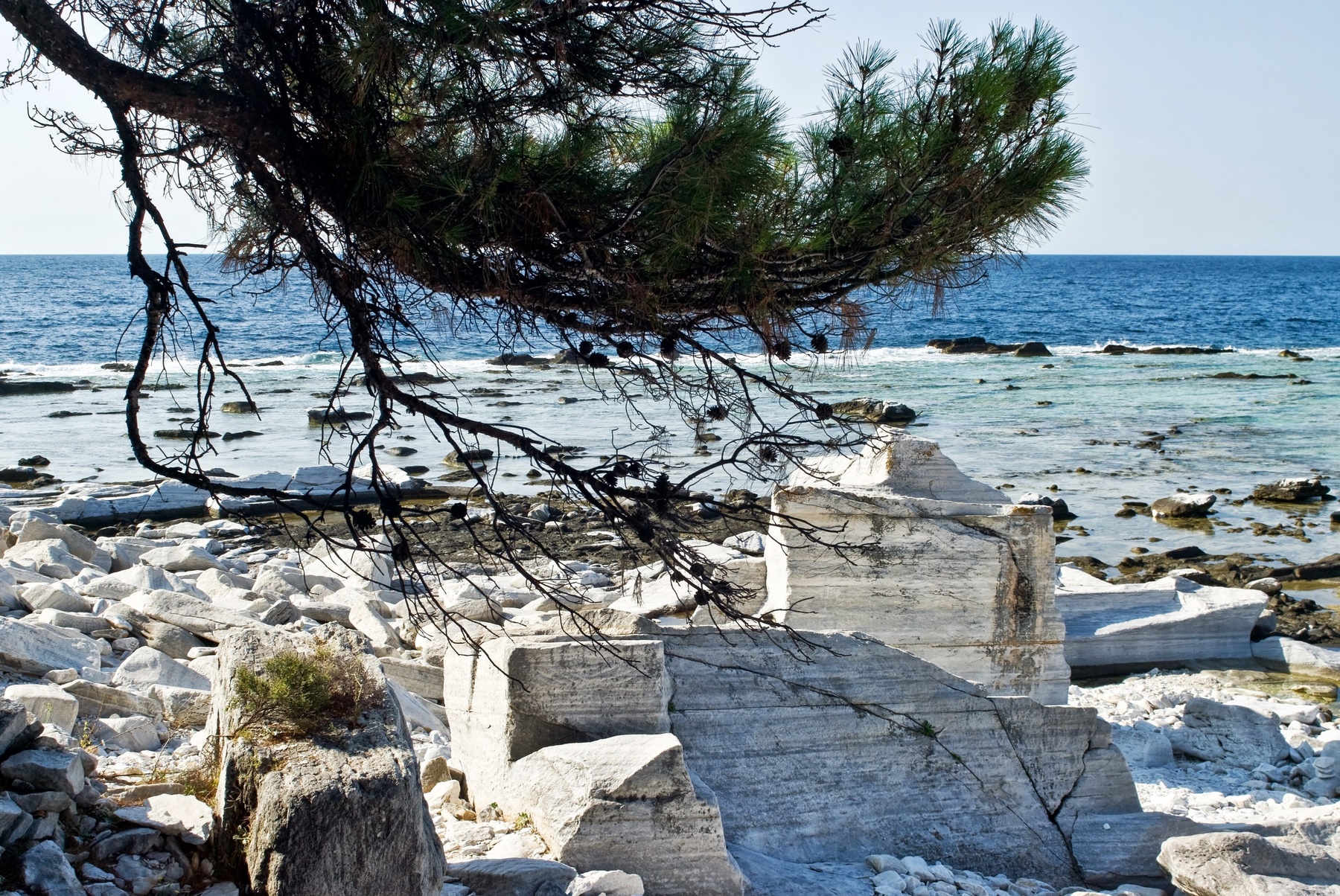
Ancient extraction faces and loading areas show how Thasian marble entered Mediterranean trade directly from the coast.
- Archaeological Museum
The museum presents the island from prehistory through the Early Christian period and anchors interpretation of the ancient city.
- Kastro
The upland refuge settlement preserves the memory of Genoese fortification and centuries of protection from maritime raids.
- Theologos
Traditional stone houses, churches, paved lanes and water-powered installations preserve the culture of the island's mountain communities.
- Archangel Michael Monastery
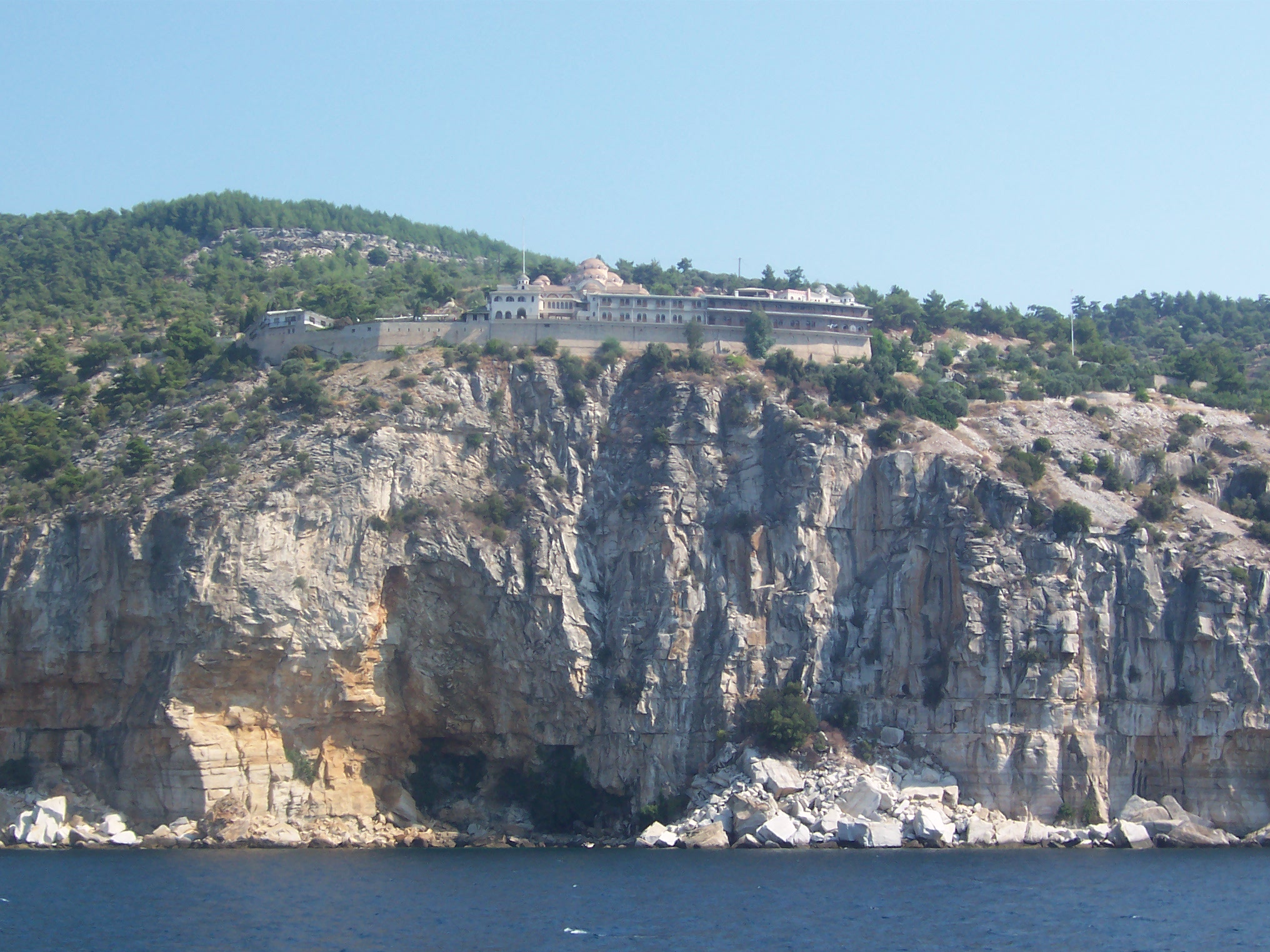
The cliff-top monastery links Orthodox pilgrimage with one of Thasos's most dramatic coastal landscapes.
- Ancient Mining
Gold and other ores helped make Thasos one of the wealthier city-states of the northern Aegean.
- Limenaria Industrial Heritage
Metallurgical works and mining infrastructure preserve a rare modern industrial landscape on a Greek island.
- Palataki
The landmark administration building above Limenaria symbolizes the modern mining era.
- Emerald Mountain Landscape
Forests, olive groves, springs and traditional villages give Thasos a greener and more continental character than many Aegean islands.
Strategic role
A resource-rich island controlling maritime approaches to the northern Aegean and Thracian coast, successively functioning as a Greek polis, fortified medieval island, mining center and cultural crossroads.
Overview: An Island Shaped by Stone, Sea and Defense
Thasos occupies a strategic position just off the Macedonian and Thracian coast, close enough to the mainland to participate intensively in its trade and politics yet sufficiently distinct to develop a powerful island identity. Its forests, mineral deposits, fertile slopes and marble made it unusually wealthy. Those resources attracted settlers, merchants and conquerors, but they also financed an impressive defensive and civic landscape. Ancient Thasos developed as a fortified city-state with monumental gates, sanctuaries, an agora and theatre; later inhabitants reused the same terrain and building material in Byzantine, Genoese and Ottoman settings. The island's cultural history is therefore best understood as a sequence of adaptations to wealth, vulnerability and geography.
Parian Settlement and the Rise of Ancient Thasos
Greek settlers from Paros established themselves on Thasos in the early Archaic period, traditionally in the seventh century BCE. The island already had indigenous Thracian populations and a complex cultural environment, so the development of the polis was a process of interaction rather than settlement onto an empty landscape. Thasos quickly became prosperous through access to timber, agricultural products and mineral resources on both the island and the neighboring mainland. The poet Archilochus, himself associated with the Parian colonization, preserves a literary voice from this formative period. By the Classical era Thasos was an important northern Aegean city-state with overseas interests and a strong maritime economy.
Walls, Gates and the Fortified City of Limenas
The ancient capital occupied the site of modern Limenas and was enclosed by an extensive defensive wall that climbed from the coast toward the acropolis and returned to the sea. Excavations by the French School at Athens and the Greek Archaeological Service have revealed long stretches of this circuit together with monumental gateways. The walls were not purely military works: gates were articulated with relief sculpture and religious symbolism, turning entry into the city into a statement of civic identity. Their scale reflects both the wealth of ancient Thasos and the importance attached to protecting the harbor, urban population and sanctuaries.
Agora, Theatre and the Civic Landscape
The agora formed the political, commercial and ceremonial heart of ancient Thasos. Excavations between 1948 and 1955 exposed the full complex and its associated structures. Later work has shown that commercial activity extended beyond the square into adjacent courtyards, workshops and shops. Above the lower city, the theatre occupies a natural slope with commanding views toward the harbor and the sea. The combined sequence of harbor, agora, theatre and acropolis gives Thasos one of the clearest surviving ancient urban landscapes in the northern Aegean.
Sanctuaries and Religious Life
Ancient Thasos supported a dense religious landscape. The French School's excavations have identified major sanctuaries of Athena, Apollo, Heracles, Artemis and Dionysus, among others. These cult places were distributed between the lower city and acropolis and linked civic identity with maritime, agricultural and military concerns. The prominence of Dionysus is particularly appropriate for an island famous in antiquity for wine, while the sanctuary of Heracles reflects both Greek and older eastern Mediterranean traditions. In Late Antiquity the sacred landscape changed again as basilicas and Christian buildings appeared within and around the ancient city.
Gold, Metals and the Wealth of the Island
Thasos's reputation for mineral wealth was already famous in antiquity. Herodotus described gold mines on the island, and modern archaeological and geological research has relocated ancient workings in the eastern mountains. Mining extended beyond gold to other metallic ores and helped sustain the prosperity of the polis. The island's relationship with the mineral-rich mainland opposite Thasos was equally important, and disputes over mining and trading rights played a role in political conflicts with Athens. The mining story did not end in antiquity: industrial extraction returned on a major scale in the nineteenth and twentieth centuries, creating a second mining landscape around Limenaria.
Thasian Marble and the Quarries of Aliki
Marble is one of the most enduring threads in Thasian history. The brilliant white stone was quarried extensively and exported throughout the Mediterranean. At Aliki, on a peninsula of the southeast coast, quarrying continued from the Archaic period into the Early Christian era. The ancient working faces reach the sea, where blocks could be loaded directly onto ships. The site also preserves sanctuaries and later Christian basilicas, revealing that Aliki was not merely an extraction zone but a coastal community and sacred landscape tied to long-distance trade. The French School at Athens identifies Aliki as one of the major extra-urban sites through which the economic organization of ancient Thasos can be reconstructed.
Roman and Early Christian Thasos
Under Roman rule Thasos remained integrated into eastern Mediterranean trade and urban life. The ancient city received new monumental buildings, while existing civic spaces continued in use and were adapted. Archaeological exploration has uncovered imperial-period architecture, residential quarters, several Early Christian basilicas and villas. These remains demonstrate continuity rather than sudden collapse: the classical city evolved gradually into a Christian center before the disruptions of the early medieval period transformed settlement and economic patterns.
Byzantine Thasos and the Turn Inland
Thasos remained part of the Byzantine world for most of the Middle Ages, but increasing insecurity changed the distribution of settlement. Coastal areas exposed to raids became less attractive, and communities relied increasingly on inland or elevated positions. Byzantine occupation is visible in churches, reused ancient material and fortified sites. The island's proximity to Constantinople, Mount Athos and the Thracian coast kept it connected to major ecclesiastical and maritime networks even as population shifted away from exposed ancient centers.
Genoese Rule and Kastro
In the later Middle Ages Thasos became part of the contested northern Aegean frontier, passing through Byzantine and Genoese hands. The Gattilusi family, whose power was centered on Lesvos, controlled Thasos during the fifteenth century. The upland settlement known simply as Kastro preserves the memory of this period. Surviving evidence associates the site with a fortified enclosure established and strengthened in the early fifteenth century. Its position deep in the island's mountainous interior made it a refuge from maritime attack and piracy. The later Church of Agios Athanasios incorporates material and heraldic traces from the ruined fortification, preserving the memory of Genoese rule inside a post-Byzantine village.
Theologos and the Culture of the Mountain Villages
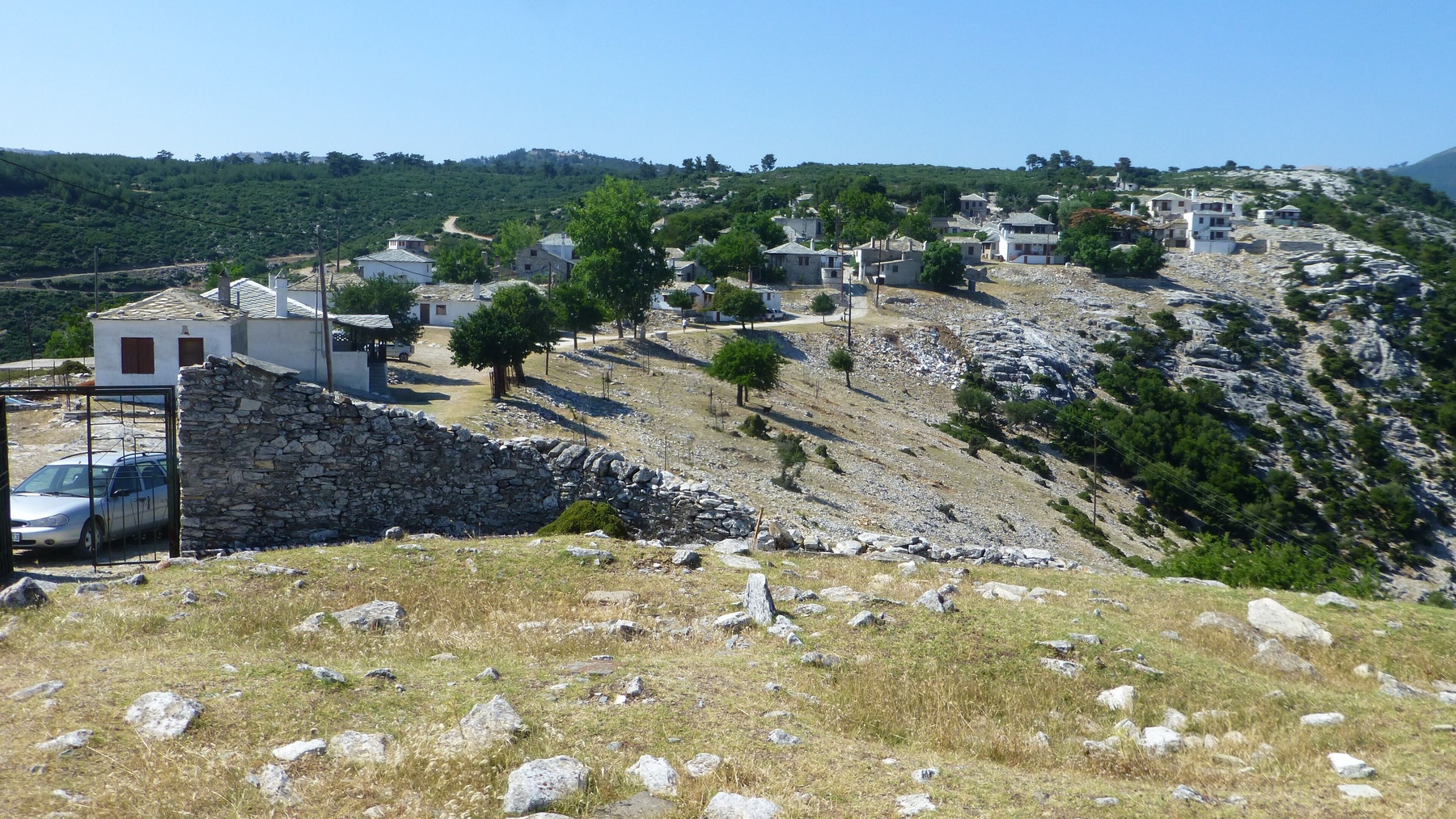
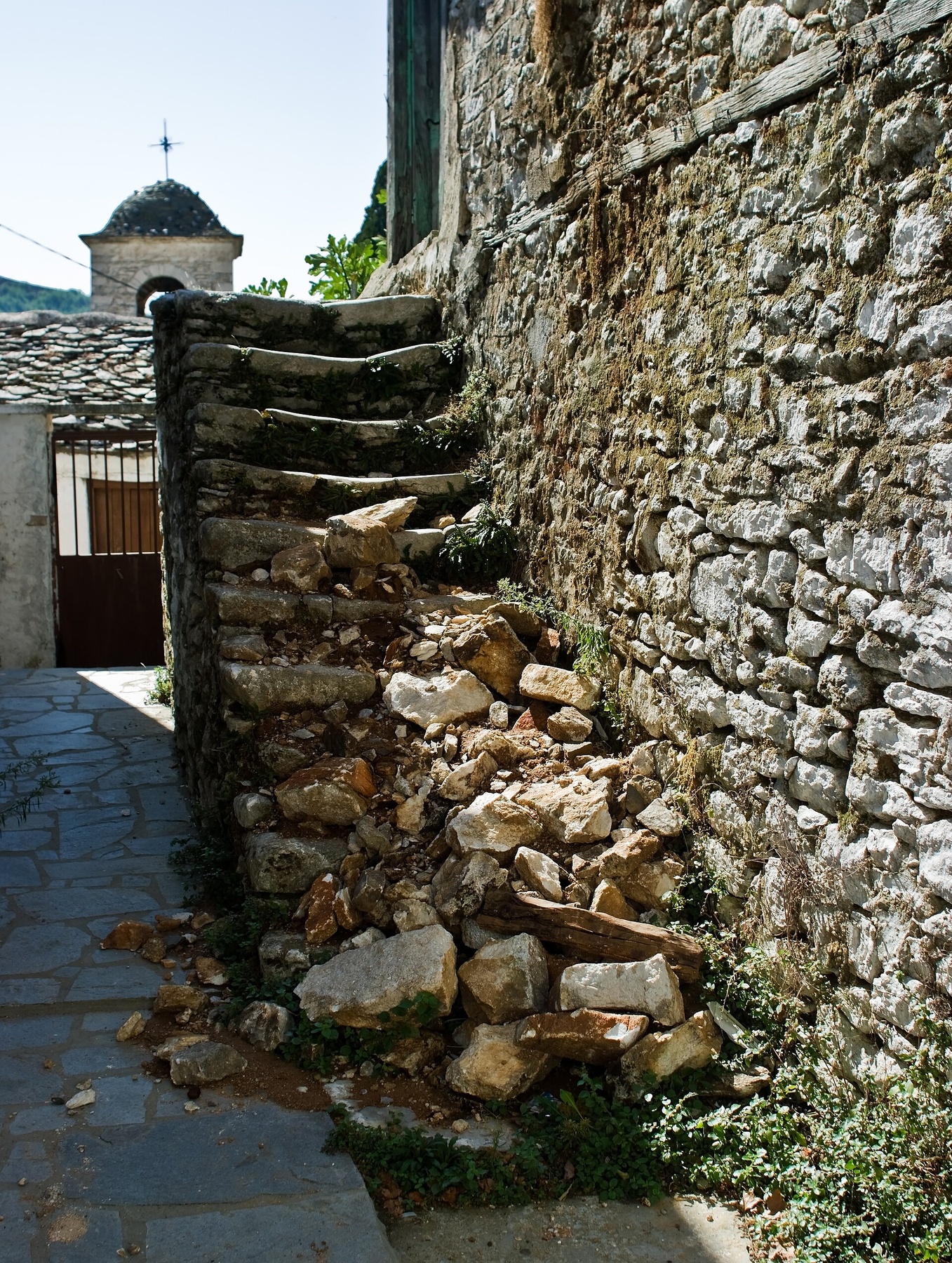
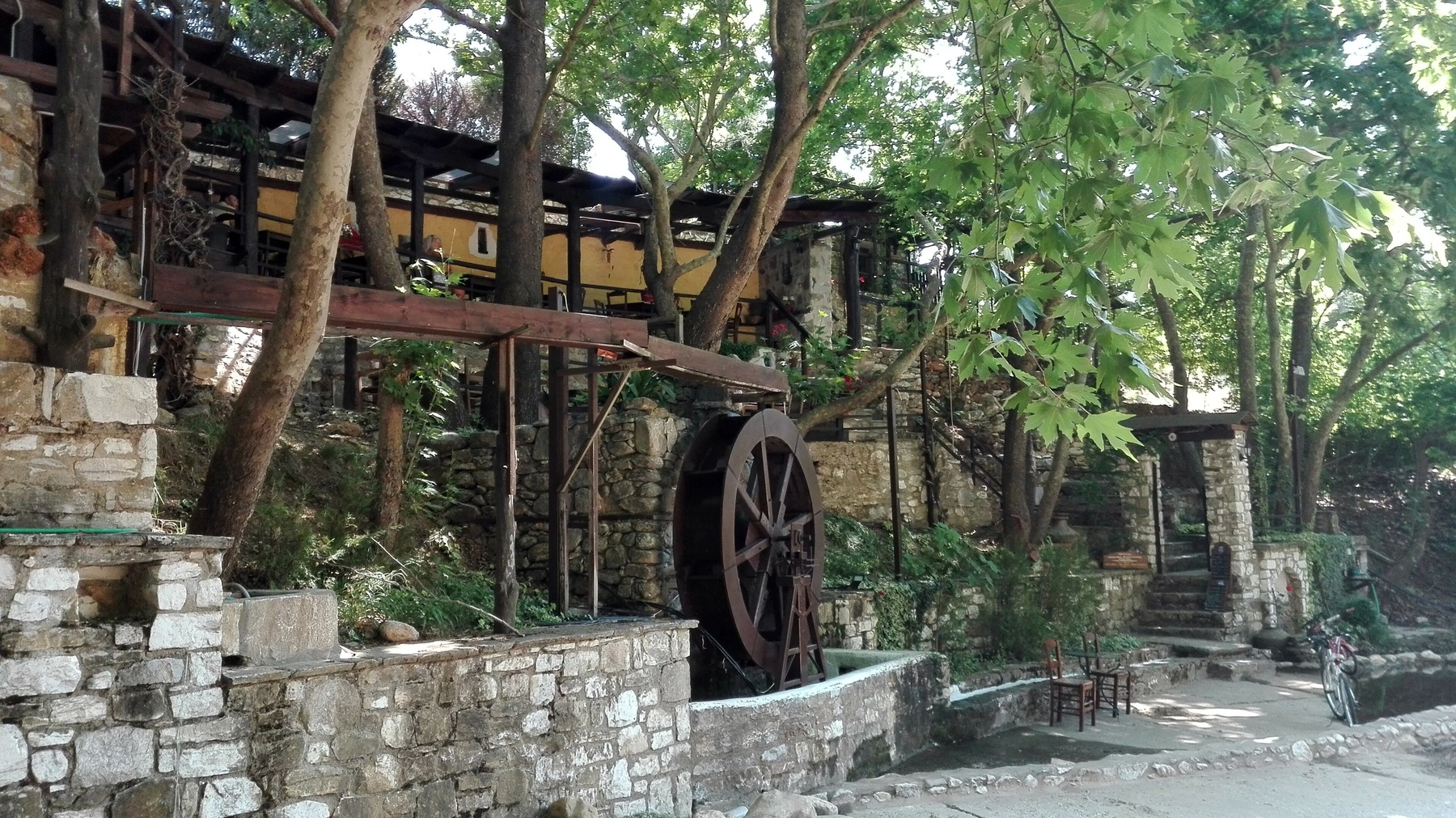
Theologos became one of the island's most important inland settlements and later served as an administrative center. Written evidence for the village reaches the late Byzantine period. Under Ottoman and Egyptian administration it developed into a substantial community with churches, schools and distinguished houses. Today its paved streets, projecting upper floors, stone houses, churches and water-powered installations preserve the traditional Thraco-Macedonian architecture highlighted by the Greek National Tourism Organisation. Theologos demonstrates how the island's defensive turn inland eventually produced a distinctive village culture whose built form survived after the immediate threat of raids diminished.
Ottoman Rule and the Egyptian Interlude
Thasos passed under Ottoman sovereignty in the fifteenth century and retained a degree of local organization shaped by its island geography and maritime economy. In 1813 the island was granted to Mehmet Ali of Egypt, who had personal ties to the region around Kavala and Thasos. Local tradition and later histories associate this period with fiscal privileges and a measure of autonomy. Theologos played a prominent administrative role, and unrest during the Greek revolutionary era reflected the islanders' continuing desire for self-government. Egyptian administration ended in the early twentieth century, shortly before Thasos returned to direct Ottoman control and was subsequently liberated by Greek naval forces in 1912.
Limenaria: Industrial Archaeology and Palataki
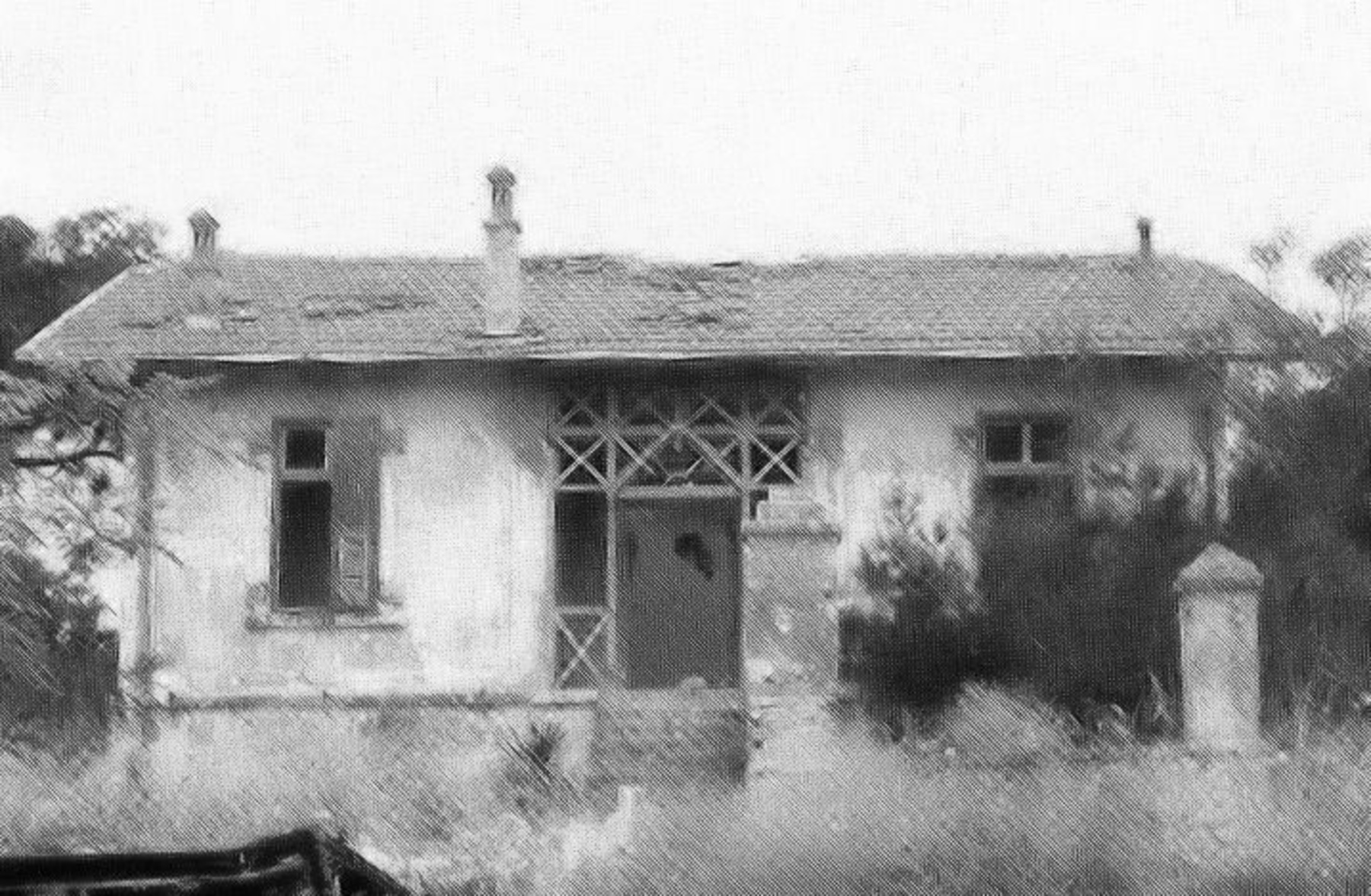
The modern mining history of Thasos is concentrated around Limenaria. In the early twentieth century the German company Speidel developed extensive metallurgical installations for processing island ores. The surviving industrial complex, conveyors, furnaces and related buildings form an important industrial-archaeological landscape. Above the works stands Palataki, the prominent administration residence whose architecture became a landmark of Limenaria. The industrial site was damaged during the First World War, restored and reused in later decades, and finally ceased operation in the twentieth century. This landscape provides a striking modern parallel to ancient Thasian mining: extraction once again reorganized settlement, labor, transport and architecture.
Orthodox Monasteries, Churches and Living Religious Culture
Religious life remains a visible part of Thasian identity. The island has numerous churches and several monasteries, with the Monastery of Archangel Michael occupying one of the most dramatic sites on a cliff above the southeastern coast. Villages maintain strong feast-day traditions, and Theologos preserves a particularly important relationship with the Archangel through annual processions. These practices are not merely visitor attractions: they connect villages, monasteries and family histories and preserve paths and ritual movements through the landscape.
The Archaeological Museum and a Century of Research
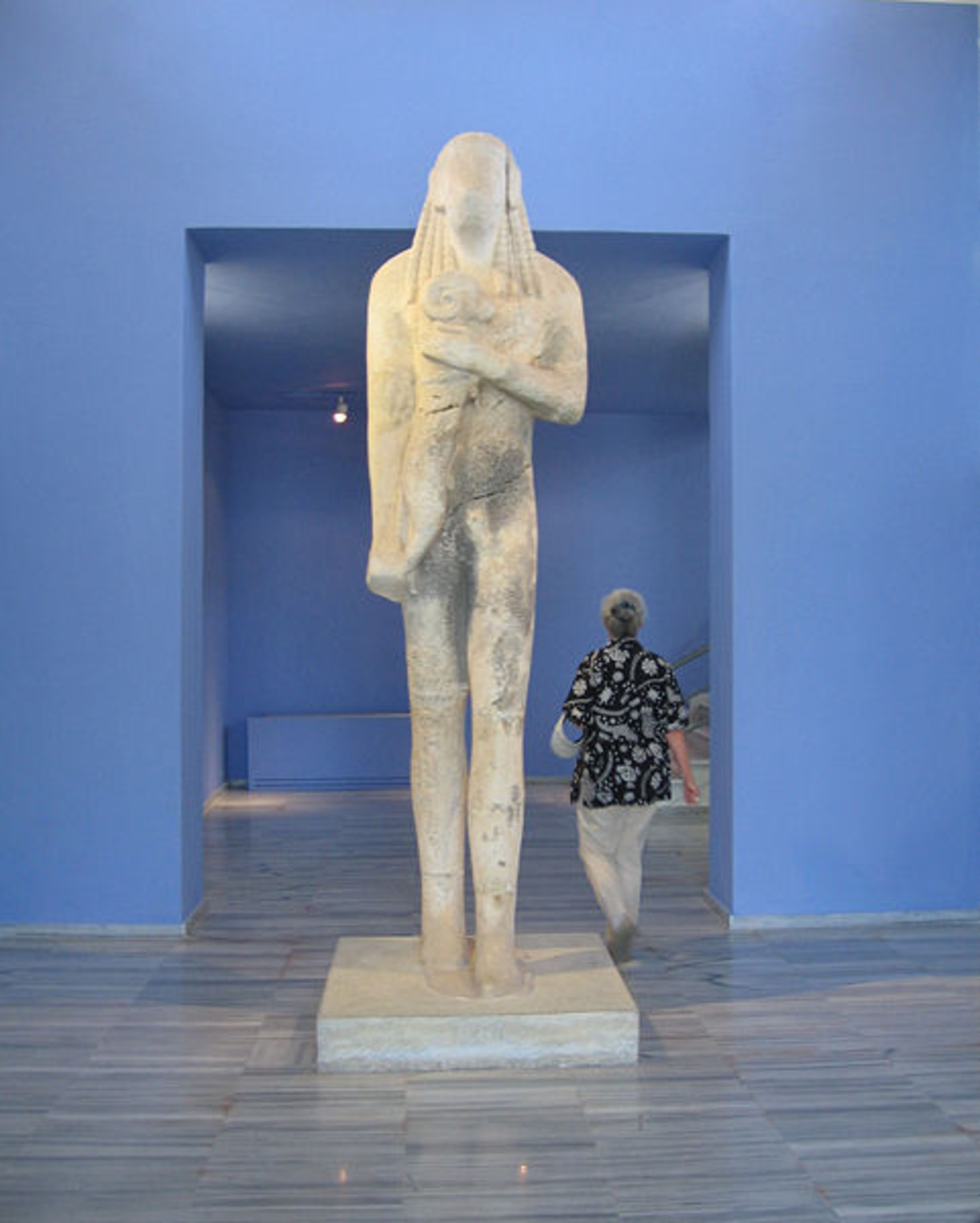
The Archaeological Museum of Thasos in Limenas is essential to understanding the island. The Ministry of Culture states that the museum presents Thasian history from prehistory to Early Christian times. Its collections include major sculpture, inscriptions, architectural pieces and finds from the ancient city and wider island. The French School at Athens began systematic excavation in 1911, and continuing collaboration with Greek archaeologists has made Thasos one of the best-documented Greek city-states across a remarkably long chronological span. The museum and archaeological landscape should therefore be experienced together.
Landscape, Villages and Cultural Identity
Modern Thasos is often described as the 'Emerald of the Aegean' because forests cover much of the mountainous interior. The Greek National Tourism Organisation emphasizes the combination of pines, oaks, firs, plane trees, olive groves and traditional villages around Mount Ypsario. This natural setting is not separate from history: timber was an ancient resource, upland forests sheltered medieval settlements, and water supported village mills and agriculture. Panagia, Theologos, Kastro and other villages preserve houses with wooden balconies, projecting upper storeys, stone paving and fountains that distinguish the island from the whitewashed architectural stereotype of the southern Aegean.
Why Visit
Thasos offers an unusually complete historical sequence within a compact island. In Limenas, visitors can walk from an ancient harbor and agora to a theatre, acropolis and city gates; at Aliki they can see how marble was cut directly from a peninsula and shipped across the Mediterranean; at Kastro and Theologos they encounter the inland refuge settlements created by medieval insecurity; and at Limenaria they can read a modern industrial landscape built around mining. Museums, monasteries, forests and beaches connect these episodes rather than distracting from them. Thasos is compelling because stone, wealth, defense and settlement can be followed continuously from antiquity to the modern era.
Architecture
- Ancient city wall circuit with monumental and decorated gates around Limenas
- Agora complex with stoas, civic and commercial buildings
- Ancient theatre set against the acropolis hillside above the harbor
- Acropolis sanctuaries including Athena and other major cult sites
- Archaic, Classical and Hellenistic temples and sacred precincts
- Early Christian basilicas and villas integrated into the ancient city
- Aliki marble-quarry landscape with extraction faces, loading areas, sanctuaries and basilicas
- Late Byzantine and Genoese fortification remains at Kastro
- Traditional Thraco-Macedonian village architecture in Theologos, Panagia and other mountain settlements
- Archangel Michael Monastery set dramatically above the southeastern coast
- Industrial complex and metallurgy installations at Limenaria
- Palataki, the landmark administration building associated with modern mining
Timeline
- Prehistoric period Archaeological discoveries at sites including Kastri and elsewhere on Thasos document occupation before the establishment of the Greek polis.
- Early 7th century BCE Parian settlers established the Greek city of Thasos on the north coast, beginning the development of the island polis.
- Archaic period Thasos expanded its defenses, sanctuaries, mining activities and mainland interests while marble quarrying developed at sites including Aliki.
- 491 BCE Persian authorities compelled Thasos to dismantle its walls and surrender its naval strength after its fortification program aroused suspicion.
- 5th century BCE Thasos joined the Athenian alliance but later clashed with Athens over mining and commercial interests.
- 465–463 BCE Thasos revolted from Athenian control and was besieged before being forced to submit.
- Classical–Hellenistic periods The city developed its agora, sanctuaries, monumental gates, residential quarters and theatre while marble, wine and minerals supported prosperity.
- Roman period Thasos continued as an important urban and commercial center, adding imperial monuments and adapting earlier civic spaces.
- 4th–6th centuries CE Early Christian basilicas, villas and churches transformed the ancient urban and rural landscape.
- 7th century CE Disruption in the northern Aegean contributed to the decline of some coastal and quarry settlements, including Aliki.
- Byzantine period Thasos remained within the Byzantine sphere for most of the Middle Ages; settlement increasingly favored defensible inland positions.
- 13th–14th centuries Control of Thasos shifted at times among Byzantine and Latin/Genoese powers in the contested northern Aegean.
- Early 15th century Fortifications were established or strengthened at Kastro during the period of Genoese influence.
- 1414–1450s The Gattilusi family controlled Thasos and reinforced strategic positions on the island.
- 15th century Thasos passed under Ottoman sovereignty.
- 1813 The Ottoman Sultan granted Thasos to Mehmet Ali of Egypt, beginning a period of Egyptian administration with local privileges.
- 1821 Islanders participated in revolutionary unrest during the Greek War of Independence, though Thasos did not join the new Greek state at that time.
- 1903 Modern metallurgical installations were developed at Limenaria as industrial mining expanded.
- 1911 Systematic excavations of ancient Thasos by the French School at Athens began while the island was still under Ottoman rule.
- 1912 Greek naval forces liberated Thasos during the Balkan Wars.
- 1913 International settlement confirmed Thasos as part of the Greek state.
- 1916 During the First World War, Entente forces used Thasos in support of operations in the northern Aegean and Macedonia; industrial facilities at Limenaria suffered damage.
- 1935 The first building of the Archaeological Museum of Thasos was completed beside the Ancient Agora.
- 1941–1944 Thasos experienced Axis-era occupation as part of the wartime upheaval affecting eastern Macedonia and Thrace.
- 1948–1955 Excavation exposed the full extent of the Ancient Agora and its associated buildings.
- 1950s–1960s Industrial activity at Limenaria resumed for a final period before permanent closure.
- Late 20th–21st centuries Archaeological conservation, village restoration, industrial-heritage awareness and tourism increasingly shaped preservation of the island's cultural landscape.
Visiting today
Thasos is best explored as an island-wide cultural landscape. Limenas offers the Archaeological Museum, ancient agora, theatre, walls and acropolis in close proximity. Aliki combines archaeology, marble quarries and coastal scenery. Kastro and Theologos reveal the defensive and traditional mountain settlement pattern, while Limenaria preserves industrial archaeology and Palataki. The Archangel Michael Monastery is an active religious site and visitors should observe dress and access rules. Archaeological opening times and restoration work can change, so current Ministry of Culture information should be checked before visiting.
Expedition guides
Images
References
- École française d’Athènes — Thasos: History of the Excavations
- École française d’Athènes — Thasos: Work in Progress
- Hellenic Ministry of Culture — Archaeological Museum of Thasos
- Hellenic Ministry of Culture — Ephorate of Antiquities of Kavala-Thasos
- Visit Greece — Thasos
- Municipality of Thassos — Official municipal portal
- Go Thassos — History and Myth
- Go Thassos — Alyki
- Go Thassos — Theologos
- Go Thassos — Religion and Faith
- G. A. Wagner et al. — Discovery of ancient gold mining on Thasos
Related places
Related Stops
Topics
- Fortified Island
- Ancient City
- North Aegean
- Parian Colony
- Ancient Walls
- Ancient Agora
- Ancient Theatre
- Marble Quarries
- Mining Heritage
- Byzantine
- Gattilusi
- Genoese Aegean
- Ottoman
- Industrial Archaeology
- Traditional Villages
- Orthodox Monasticism
- Archaeological Museum
- Living Heritage