Overview
Serifos lies in the western Cyclades between Kythnos and Sifnos. Its bare ridges, iron-rich geology, sheltered bays and steep valleys created a landscape in which mining, agriculture, seafaring and defensive settlement repeatedly overlapped. Ancient tradition connected the island with Perseus and Danae, but archaeology and metallurgy provide a firmer historical framework: copper working is documented in the Early Bronze Age, while later antiquity saw fortified rural towers and an urban center in the area of present-day Chora. In the medieval period Chora's precipitous hill became the principal fortified settlement. The Municipality associates the surviving Venetian Kastro with a rebuilding around 1434 under the Michiel family, using dense houses as part of the defensive perimeter. Ottoman sovereignty followed the collapse of Latin rule, while the fortress-monastery of Taxiarches, founded in the sixteenth century, preserved the logic of fortified communal life in the countryside. The most transformative modern chapter began with systematic iron-ore exploitation in the nineteenth century. Mining installations, rail tracks, loading bridges, workers' settlements and managerial buildings reshaped Megalo Livadi, Koutalas and the southwestern coast. In 1916 a strike led by Konstantinos Speras for an eight-hour day, higher wages and safer conditions ended in lethal violence, making Serifos a landmark in Greek labor history. Chora, the ancient White Tower, Taxiarches, Livadi and the mining landscape together show why Serifos should be read as an island-wide historical entity rather than simply as 'Serifos Castle'.
Highlights
- Chora and Kastro
A dramatic fortified hill settlement where dense houses, narrow lanes and summit churches preserve the island's medieval defensive logic.
- White Tower
The island's most conspicuous ancient tower, a major surviving element of the premedieval defensive landscape.
- Taxiarches Monastery
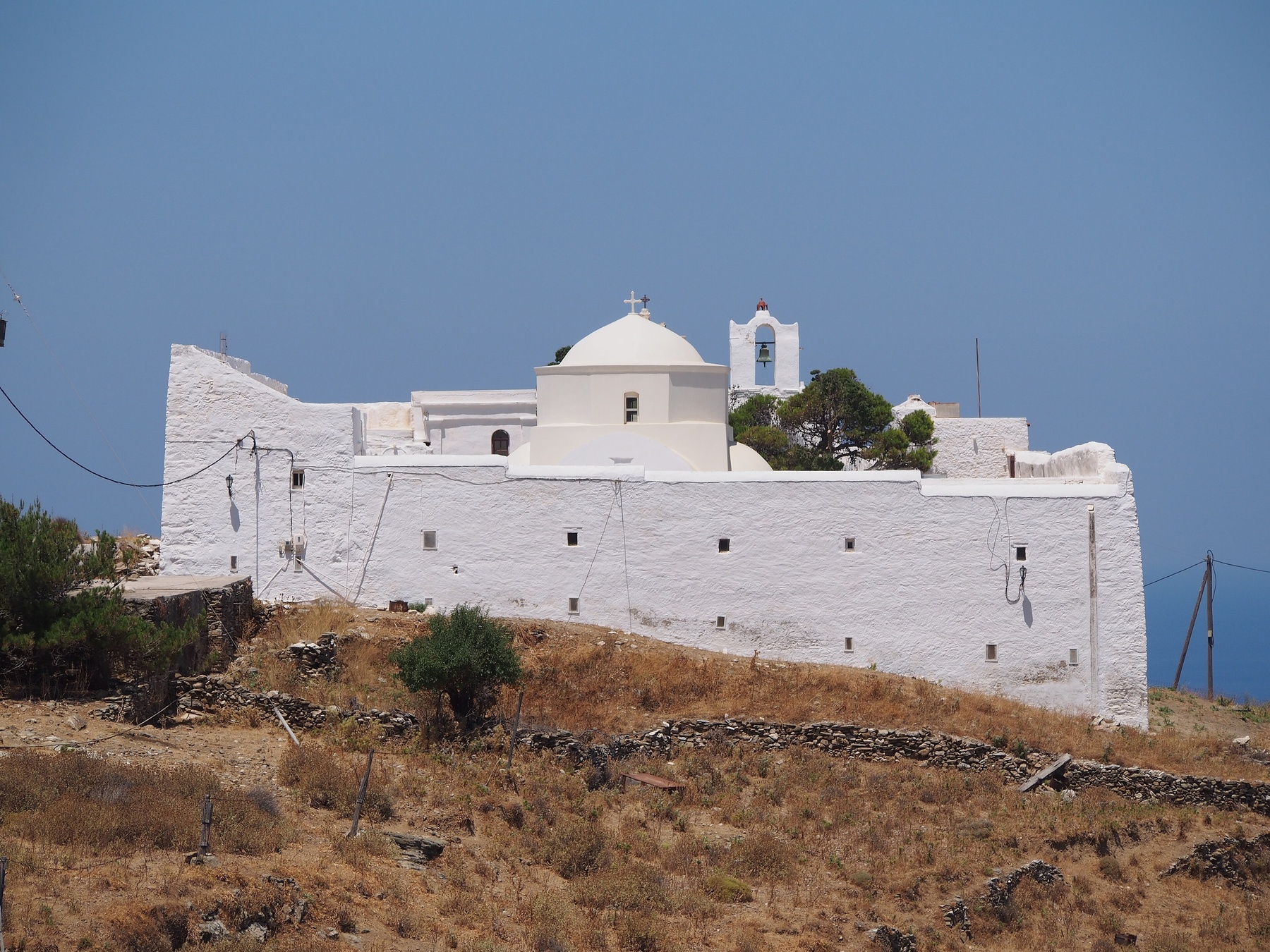
A sixteenth-century castle-monastery whose high walls and elevated entrance were designed for protection against raids.
- Megalo Livadi Mines
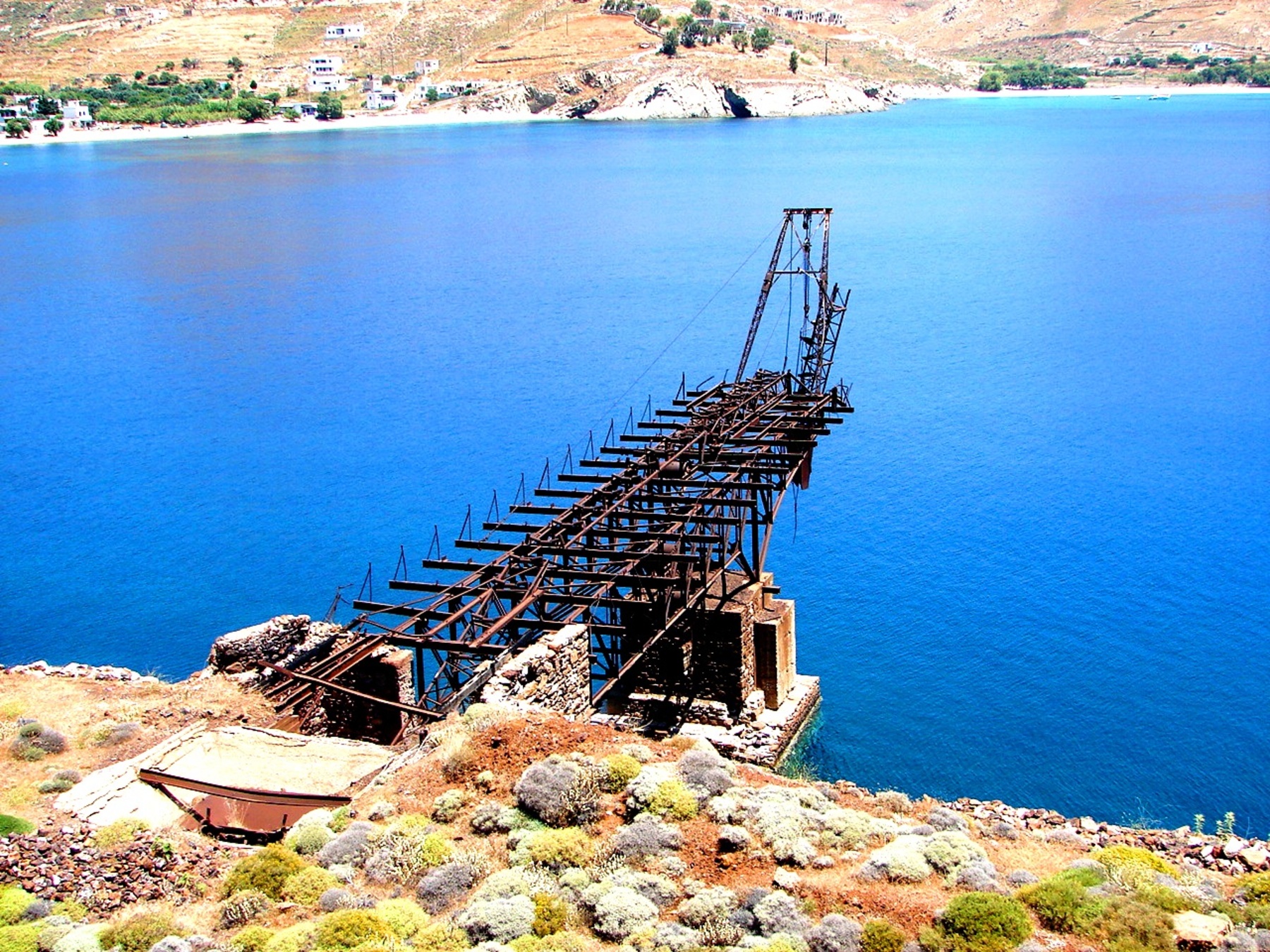
One of the most evocative industrial landscapes in the Cyclades, preserving company ruins, rails, galleries and ore-loading structures.
- 1916 Miners' Strike
A landmark confrontation in Greek labor history centered on demands for the eight-hour day, better wages and safer conditions.
- Ano Piatsa
The civic heart of upper Chora, combining Agios Athanasios with the neoclassical Town Hall.
- Livadi
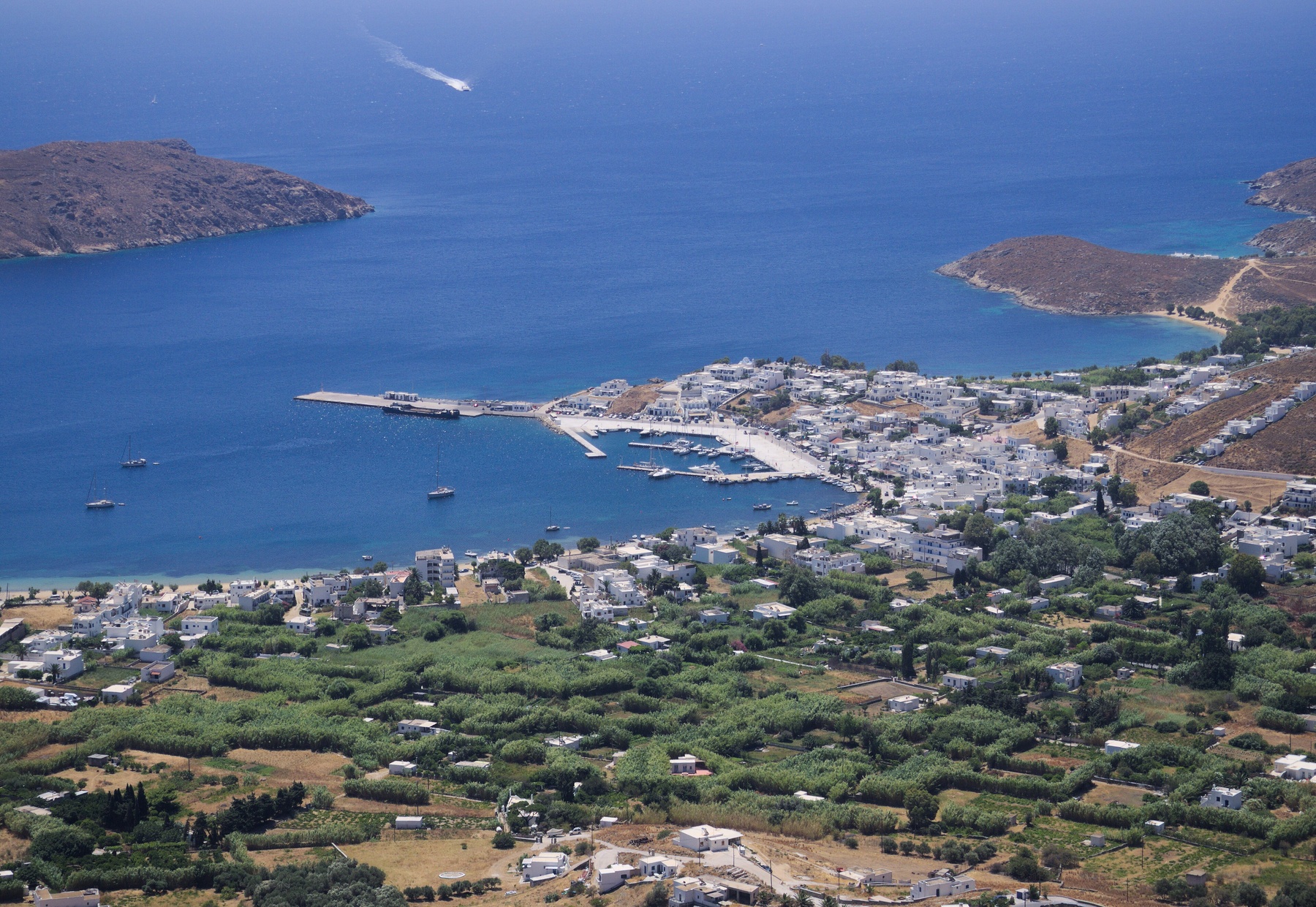
The island's main harbor and the maritime counterpart to fortified Chora high above.
- Mining and Geology
Iron-rich terrain shaped the island's economy, settlements and identity from ancient metallurgy to modern industrial extraction.
Strategic role
A mineral-rich Cycladic island whose defensible hill capital, rural fortifications, monastic strongholds and industrial mining landscape reveal repeated adaptation to piracy, maritime exchange, extractive industry and labor conflict.
A Rugged Mineral Island in the Western Cyclades
Serifos is visually and historically unlike the polished stereotype of the Cyclades. Its interior is dominated by bare granite and iron-bearing ridges cut by ravines, while settlements cling to steep slopes or shelter in bays. The Greek National Tourism Organisation explicitly links the island's geology with its mining history, noting ancient copper exploitation and the later importance of iron and other minerals. This geological structure shaped more than industry: difficult terrain favored dispersed agriculture, fortified observation points and a capital set high above the sea. The island's cultural landscape is therefore best read through the interaction of mineral resources, defensive geography and maritime access.
Myth, Perseus and the Cultural Memory of Serifos
In Greek myth Serifos is inseparable from Danae and Perseus. According to the familiar tradition, Danae and her infant son were set adrift in a chest and washed ashore on Serifos, where they were received by Dictys. King Polydectes later attempted to remove Perseus by sending him to obtain the head of Medusa; on his return Perseus used the Gorgon's head against Polydectes and his followers. The story belongs to mythology rather than island archaeology, but it became one of Serifos's enduring identities in ancient and modern culture. It also helps explain why the island appears frequently in ancient literary geography despite its modest political scale.
Early Metallurgy and Ancient Serifos
Serifos participated in Aegean metallurgy from the Early Bronze Age. Archaeometallurgical research has identified copper-smelting slag heaps and local copper mineralizations, demonstrating that metal production was part of the island economy long before the modern iron mines. The exact relationship between local ore sources and all recovered slag remains an active research question, so claims of continuous exploitation of specific mines from prehistory to modern times should be avoided. In historical antiquity Serifos developed as an independent polis and later participated in the Athenian alliance. The ancient town occupied the general area of modern Chora, whose commanding position over the eastern harbor continued to shape settlement through later periods.
The White Tower and the Ancient Defensive Landscape
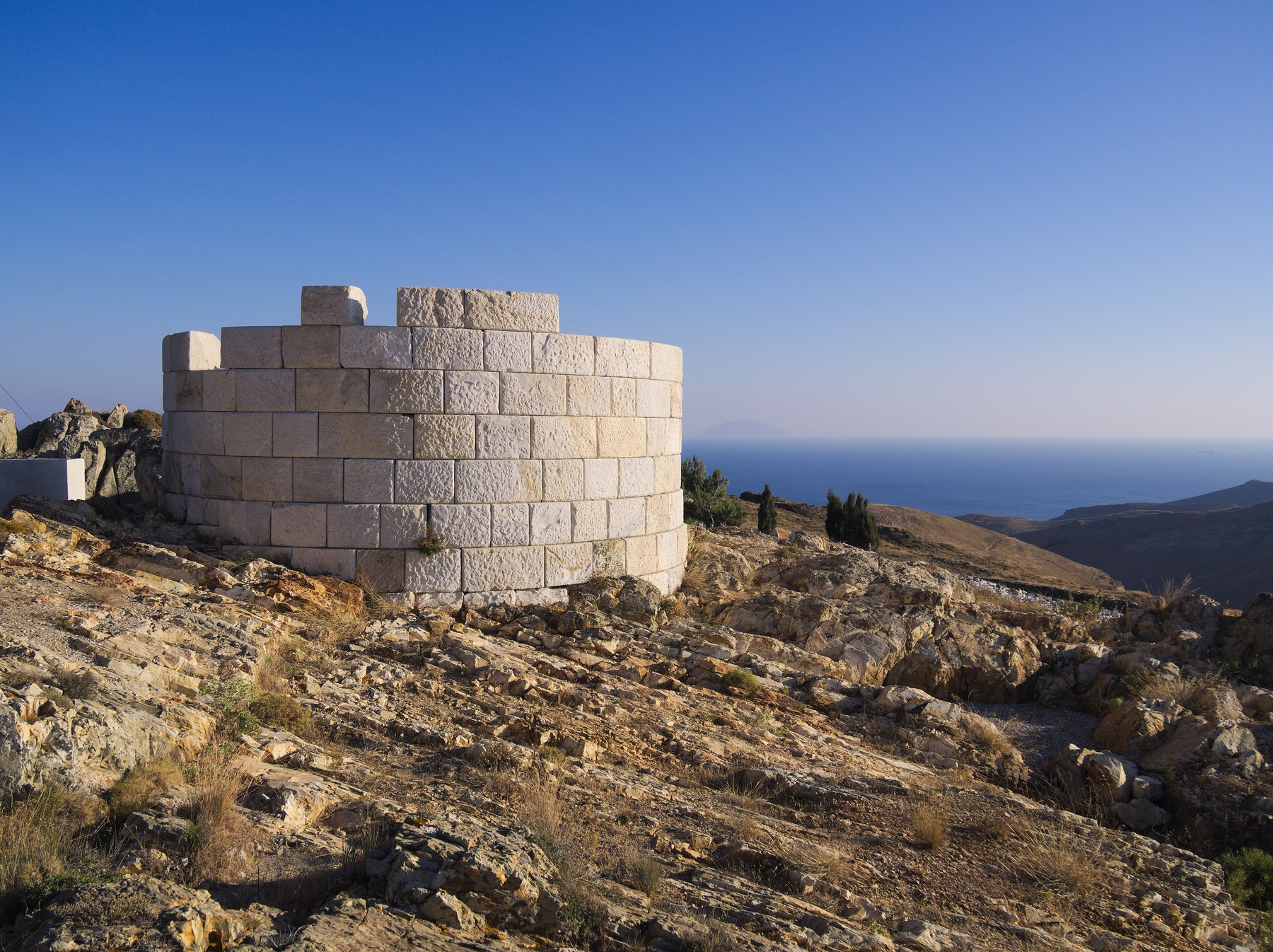
The White Tower, or Aspros Pyrgos, is the most conspicuous surviving ancient fortification on Serifos. Built of large pale marble blocks on the southwestern side of the island, the circular tower commanded routes linking the interior with mining and coastal zones. Its exact date and function are debated in popular accounts, but it belongs to the Classical-Hellenistic tradition of Cycladic rural towers used for surveillance, refuge and control of land or resources. A nearby ancient water cistern reinforces the impression of a deliberately organized defensive and productive landscape. The monument is especially important because it shows that Serifos's concern with observation and protected movement long predates the Venetian Kastro.
From Late Antiquity to the Medieval Hill Capital
The centuries between Roman Serifos and the medieval Kastro are poorly documented. As elsewhere in the Cyclades, coastal vulnerability and piracy gradually encouraged more defensible settlement patterns. Chora's steep hill, with broad visibility over Livadi and the eastern approaches, offered obvious advantages. Rather than inventing a precise Byzantine foundation date, it is more accurate to see the medieval capital as the result of gradual concentration around an already strategic and historically occupied height.
Latin Rule and the Venetian Kastro
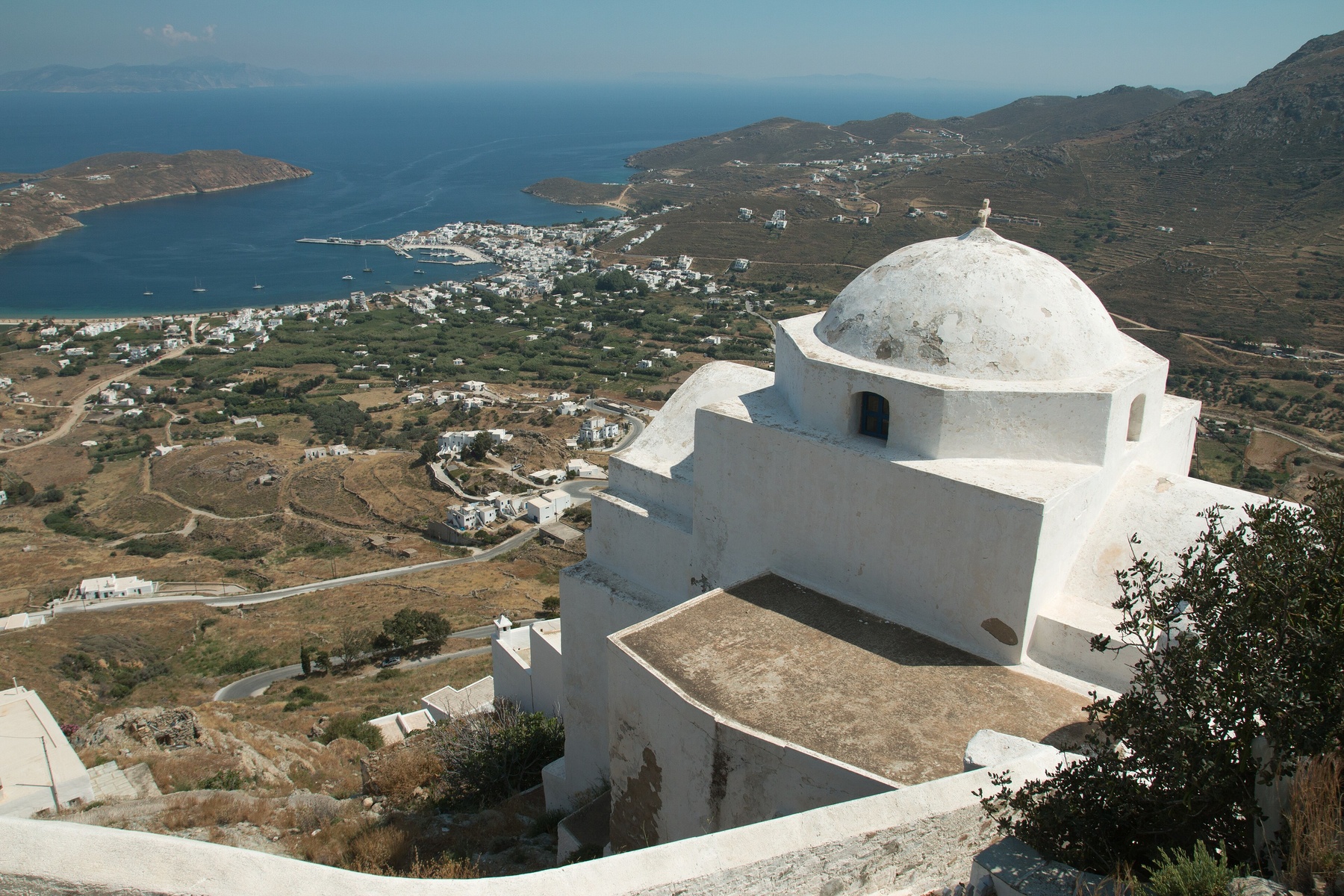
After the Fourth Crusade, Serifos entered the fragmented Latin political world of the Cyclades. The Municipality dates a major phase of the castle to about 1434 and associates it with the Venetian Michiel family. The Kastro crowned the highest point of Chora and was designed to protect the community from raids. Its defensive system depended heavily on the compact construction of houses around the summit: densely built domestic walls helped create the fortified edge. This form of collective defense is characteristic of many island settlements where military architecture and housing cannot be separated cleanly. Surviving churches on and around the summit preserve the sacred dimension of the old fortified core.
Chora: Fortified Urbanism and Cycladic Architecture
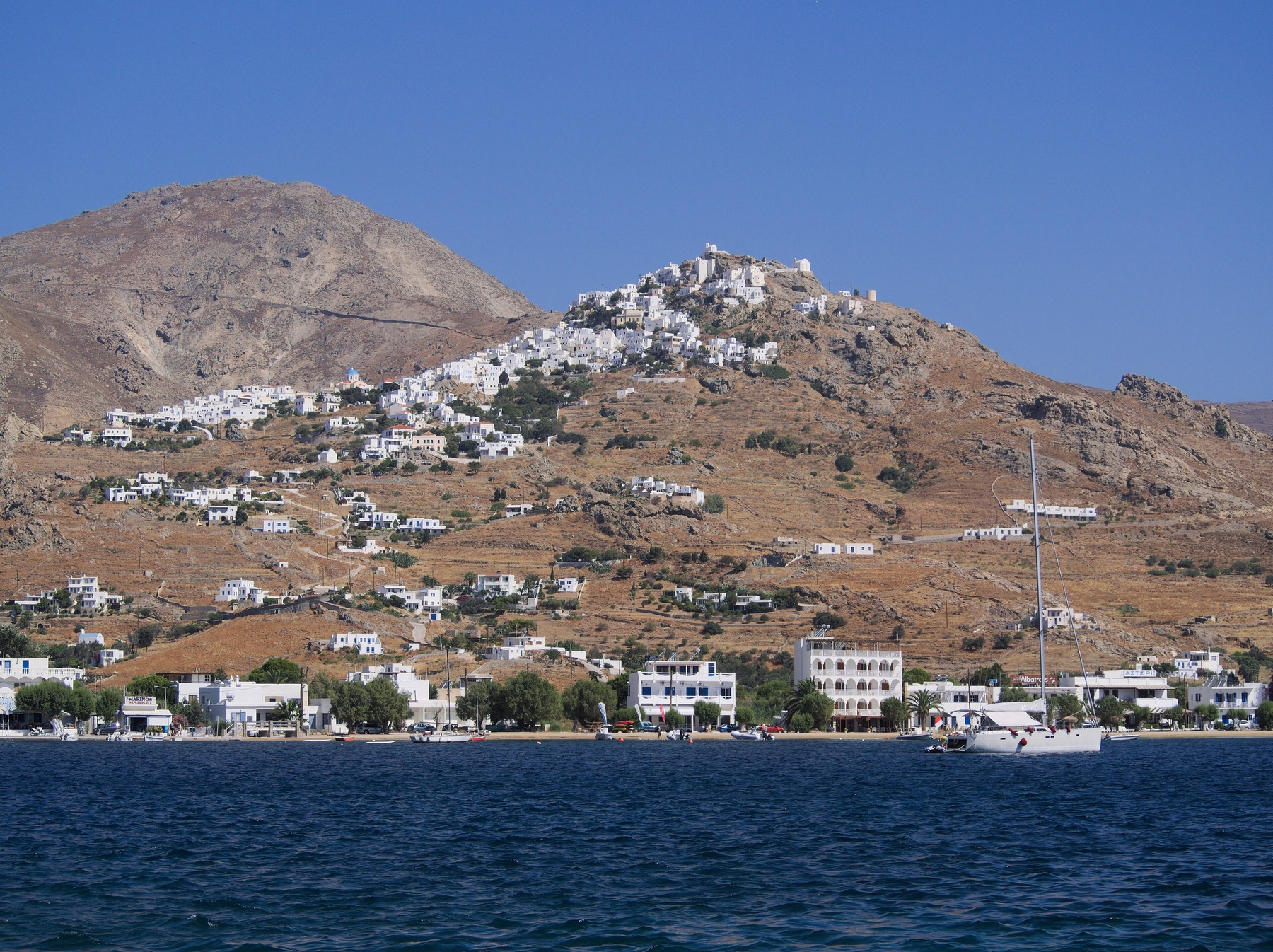
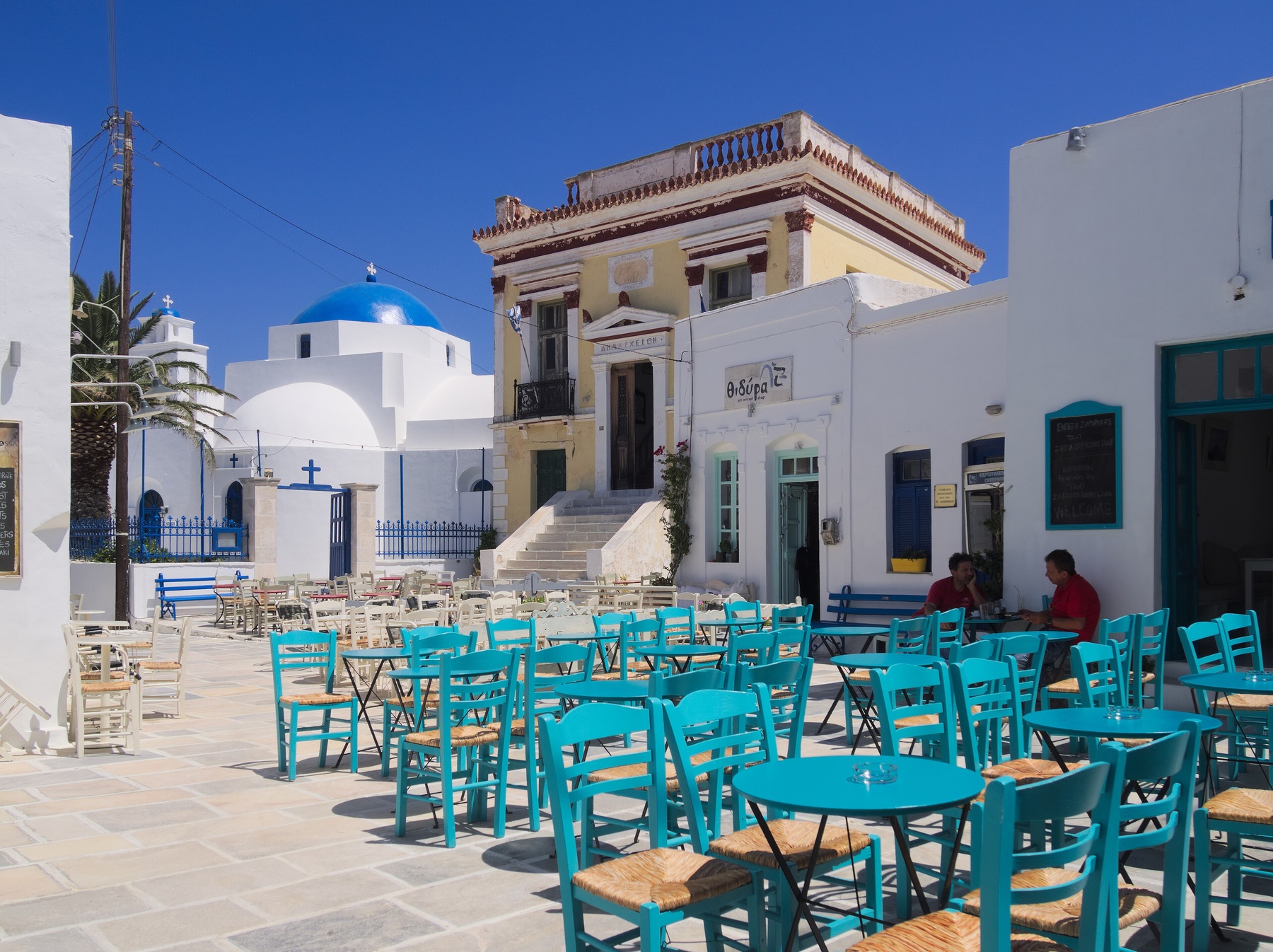
Chora is the architectural heart of the island. It rises dramatically above Livadi in two main zones, Kato Chora and Ano Chora, culminating in the Kastro. Stepped alleys, tiny passages, irregular whitewashed houses and small churches follow the steep terrain rather than a formal plan. The compact upper settlement reflects older defensive constraints, while lower quarters expanded as security improved. Ano Piatsa, the upper civic square, brings together the church of Agios Athanasios and the neoclassical Town Hall, showing the transition from fortified medieval community to modern municipal center. The visual power of Chora lies precisely in this superimposition: ruined castle, ecclesiastical landmarks, vernacular houses and nineteenth-century civic architecture occupy the same hill.
Ottoman Serifos and the Persistence of Local Institutions
Serifos passed into the Ottoman sphere after the decline of Latin lordship, but local Orthodox institutions remained central to island life. Communities continued to rely on agriculture, shipping and small-scale resource exploitation while maintaining churches, chapels and monasteries. Piracy remained a serious concern well into the early modern era, which helps explain why fortified forms survived in both secular and religious architecture. The island eventually joined the Greek state after the War of Independence, but many older settlement patterns remained legible.
Taxiarches: A Fortress-Monastery
The Monastery of Taxiarches is one of Serifos's most important post-Byzantine monuments and a direct continuation of the island's defensive culture. According to the monastery code cited by the Municipality, it was founded in 1570–1572, although a small church may have existed on the site from the mid-fifteenth century. The complex was designed as a true castle-monastery. High enclosure walls with battlements protected the katholikon and monks' cells, while the original entrance stood almost four meters above ground and was reached by a removable ladder. This architecture translated the threat of piracy into monastic form. Taxiarches is therefore not merely a religious monument but one of the clearest surviving examples on Serifos of communal life organized around defense.
The Nineteenth-Century Mining Transformation
Industrial-scale mining altered Serifos more profoundly than any development since the medieval concentration at Chora. During the nineteenth century the island's iron deposits attracted organized exploitation, and mining activity increasingly concentrated on the southwestern coast around Megalo Livadi and Koutalas. Galleries penetrated the hills; narrow-gauge rails moved ore downslope; loading bridges projected into sheltered bays; workshops, warehouses and workers' housing appeared near the mines. Mining tied Serifos directly to European industrial demand and created communities whose daily rhythms were set by extraction rather than traditional agriculture alone.
Megalo Livadi: Industrial Capital of the Mines
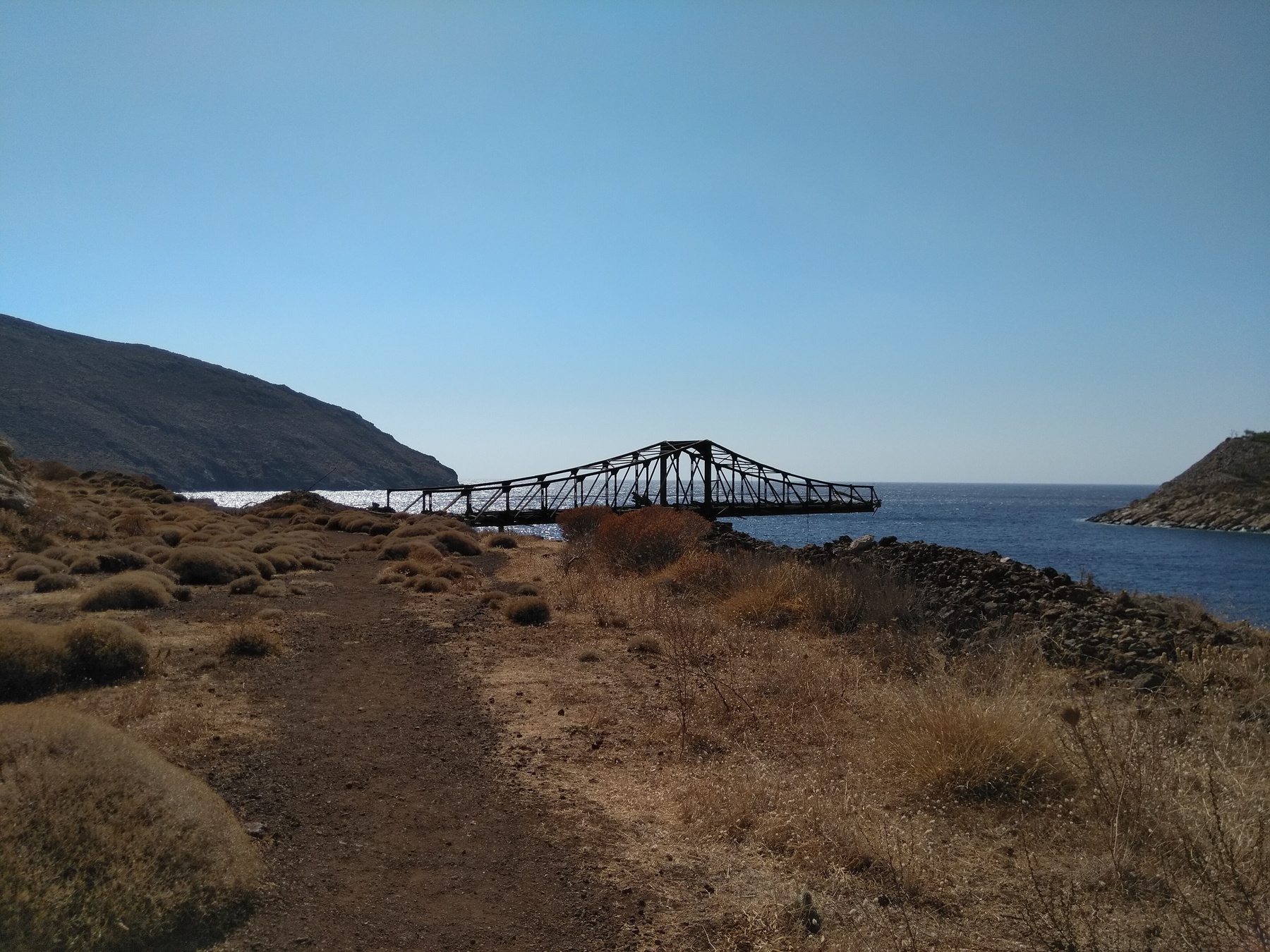
Megalo Livadi became the administrative and logistical center of the mining district. The Municipality identifies the ruined mining administration building at the edge of the bay as a neoclassical structure in the architectural manner associated with Ernst Ziller. Nearby survive ore-loading installations, rail tracks, wagons, industrial ruins and mine openings. The picturesque bay therefore contains one of the most historically charged industrial landscapes in the Cyclades. It should be read not as abandoned machinery scattered around a beach but as a planned company settlement where extraction, management, transport and labor were physically concentrated.
The 1916 Miners' Strike
Serifos occupies an important place in Greek labor history because of the miners' strike of August 1916. Municipal historical material describes harsh work from sunrise to sunset, unsafe conditions and the employment of very young workers. Under the leadership of the anarcho-syndicalist Konstantinos Speras, miners occupied the port of Megalo Livadi and blocked ore loading while demanding an eight-hour day, higher wages and improved safety. On 21 August the gendarmerie intervened and opened fire after an ultimatum. Four workers were killed; in the ensuing clash several gendarmes, including their commander, also died. The strike ended with at least partial gains and became one of the landmark struggles for the eight-hour working day in Greece. The miners' memorial at Megalo Livadi anchors this history in the surviving landscape.
Mining Decline and Industrial Ruins
Mining continued after 1916 but eventually lost economic viability as markets, ore quality and industrial organization changed. Operations contracted and the island's mines ultimately closed in the twentieth century. What remains is an unusually extensive industrial archaeological landscape: galleries, loading piers, rails, collapsed buildings, machinery foundations, waste heaps and settlements. These remains are culturally valuable but can be physically dangerous. Unstable mine workings and decaying structures should be observed from safe, authorized areas rather than entered casually.
Livadi: Harbor and the Opening of the Island
Livadi occupies the broad southeastern bay directly below Chora and became increasingly important as the island's maritime gateway. Its sheltered anchorage connected the defensive hill settlement with inter-island trade and later ferry traffic. The visual relationship between Livadi and Chora is fundamental to understanding Serifos: one settlement sits at sea level, oriented toward movement and exchange, while the other rises hundreds of meters above it in a form shaped by insecurity. Their paired development records the island's gradual shift from fortified withdrawal toward a more open maritime economy.
Churches, Chapels and Religious Landscape
Serifos possesses a dense religious landscape extending far beyond Taxiarches. Churches and chapels occupy hilltops, villages, bays and routes, often functioning as landmarks in otherwise sparse terrain. The summit of Chora includes several small churches closely associated with the Kastro, while Agios Athanasios presides over Ano Piatsa as part of the civic center. Rural foundations preserve family and communal traditions and historically helped articulate movement between settlements and cultivated areas. The religious landscape is therefore integral to the island's architecture, not an ornamental addition to it.
Architecture of Scarcity and Exposure
Serifian vernacular architecture responds directly to steep ground, wind, limited water and the need to reuse local material. Whitewashed cubic houses, narrow paths, retaining walls and terraces follow contours rather than imposing a rigid geometry. Chora compresses these forms into dense urban fabric; rural settlements loosen them into scattered clusters surrounded by fields, dry-stone walls and chapels. Mining introduced a contrasting architecture of rails, piers, workshops and company buildings. The island's built heritage is consequently notable for the coexistence of defensive, agricultural and industrial forms within a small territory.
What to Visit Today
The essential historical circuit begins in Chora: explore Kato Chora, Ano Piatsa, Agios Athanasios and the Town Hall, then climb to the Kastro and summit churches for the relationship between fortified town and harbor. At Megalo Livadi, see the miners' memorial, administration-building ruins, rail and loading remains and the wider mining landscape. The White Tower adds the ancient defensive dimension, while Taxiarches is the island's major fortified monastic monument. Livadi provides the maritime counterpoint to Chora. Additional interest comes from the Folklore Museum in Kato Chora, rural paths, mining settlements around Koutalas and the dispersed church landscape.
Why Serifos Matters
Serifos is unusually coherent as a historical landscape because its strongest themes reinforce one another. Mineral wealth encouraged both prehistoric metallurgy and modern industry; rugged topography fostered ancient towers, a fortified hill capital and a castle-monastery; maritime access created opportunities for trade while exposing the island to piracy; and industrial mining produced one of the most important labor conflicts in modern Greek history. Chora remains the architectural climax, but Serifos as a whole is the historical subject.
Architecture
- Chora built amphitheatrically on a steep rock above Livadi, separating Ano Chora from Kato Chora
- Venetian Kastro at the summit, traditionally associated by the Municipality with a rebuilding around 1434
- Dense perimeter houses used collectively as defensive fabric rather than relying only on a freestanding curtain wall
- Narrow stepped lanes, passages and compact plots reflecting the defensive morphology of the hill settlement
- Churches within and immediately below the Kastro, including Christos, Agios Ioannis and Agios Konstantinos
- Ano Piatsa civic ensemble with the neoclassical Town Hall and church of Agios Athanasios
- Ancient circular White Tower built of large marble blocks, one of the island's most important premedieval defensive monuments
- Fortified Taxiarches monastery with high enclosure wall, battlements and originally a single elevated entrance reached by ladder
- Mining galleries, rail alignments, ore-loading bridges and industrial ruins at Megalo Livadi and Koutalas
- Neoclassical-style mining administration building at Megalo Livadi
- Workers' settlements and utilitarian industrial structures integrated into the mining landscape
- Dry-stone terraces, rural paths, threshing floors and chapels forming the vernacular agricultural landscape
- Livadi's harbor settlement representing the island's shift from defensive hill settlement toward maritime commerce
Timeline
- Early Bronze Age Copper smelting and metallurgical activity are archaeologically documented on Serifos.
- Archaic–Classical periods Serifos developed as a Greek polis and participated in the political and maritime networks of the Cyclades.
- Classical–Hellenistic periods Rural stone towers, including the White Tower, formed part of the island's defensive and productive landscape.
- Roman period Serifos continued as a small island community and appears in literary tradition as a place of exile.
- 13th century onward After the Fourth Crusade, Serifos entered the Latin political world of the Cyclades.
- c. 1434 The Municipality associates a major rebuilding of the Kastro of Chora with the Venetian Michiel family.
- 16th century The island passed progressively into the Ottoman sphere as Latin power declined.
- 1570–1572 The fortified Monastery of Taxiarches was founded, according to its monastic code; an earlier chapel may have existed on the site.
- Greek War of Independence Serifos joined the emerging Greek state with the other Cycladic islands.
- 19th century Industrial iron-ore exploitation expanded, especially in the southwestern mining district around Megalo Livadi and Koutalas.
- late 19th–early 20th century Mining infrastructure, company buildings, rail systems and ore-loading installations reshaped the southern and western coast.
- August 1916 Miners led by Konstantinos Speras launched a strike demanding the eight-hour day, higher wages and safer working conditions.
- 21 August 1916 Gendarmes opened fire on striking miners at Megalo Livadi; four workers were killed and several gendarmes died in the ensuing clash.
- 20th century Mining continued for decades after the strike but eventually declined and ceased, leaving an extensive industrial archaeological landscape.
- Modern period Chora, the mining sites, Taxiarches and the island's rural monuments form the core of Serifos's preserved cultural identity.
Visiting today
The most rewarding visit combines Chora with the island's mining and rural monuments. In Chora, climb from Kato Chora through Ano Piatsa to the Kastro and summit churches, then descend through the compact lanes and civic center. Livadi provides the harbor context and the classic view of Chora above. Megalo Livadi is essential for the mining story: the ruined administration building, miners' memorial, loading structures, rails and galleries survive around the bay. The White Tower and the fortified Taxiarches monastery add ancient and post-Byzantine defensive layers. Old mining galleries and unstable industrial ruins should not be entered without authorized access and local safety guidance. Current monastery hours, museum access and any archaeological restrictions should be confirmed locally before visiting.
Historical contexts
- Late Byzantium
- Venetian Maritime Empire
- Ottoman Period
- Rise of Modern Greece
- Harbor Defense and Sea-Lane Control
Expedition guides
Images
References
- Municipality of Serifos — History
- Municipality of Serifos — Chora
- Municipality of Serifos — Megalo Livadi and Mines
- Municipality of Serifos — Monastery of Taxiarches
- Hellenic Ministry of Culture — Ephorate of Antiquities of Cyclades / Traditional Settlement of Serifos
- Greek National Tourism Organisation — Serifos
- Georgakopoulou et al. — Seriphos Surfaces: Copper Slag Heaps and Early Bronze Age Metallurgy
Related places
Related Stops
Topics
- Cyclades
- Historic Island
- Fortified Settlement
- Kastro
- Venetian
- Ottoman
- Ancient Greek
- Ancient Tower
- Mining History
- Industrial Heritage
- Labor History
- Taxiarches
- Fortified Monastery
- Maritime History
- Vernacular Architecture
- Geology