Highlights
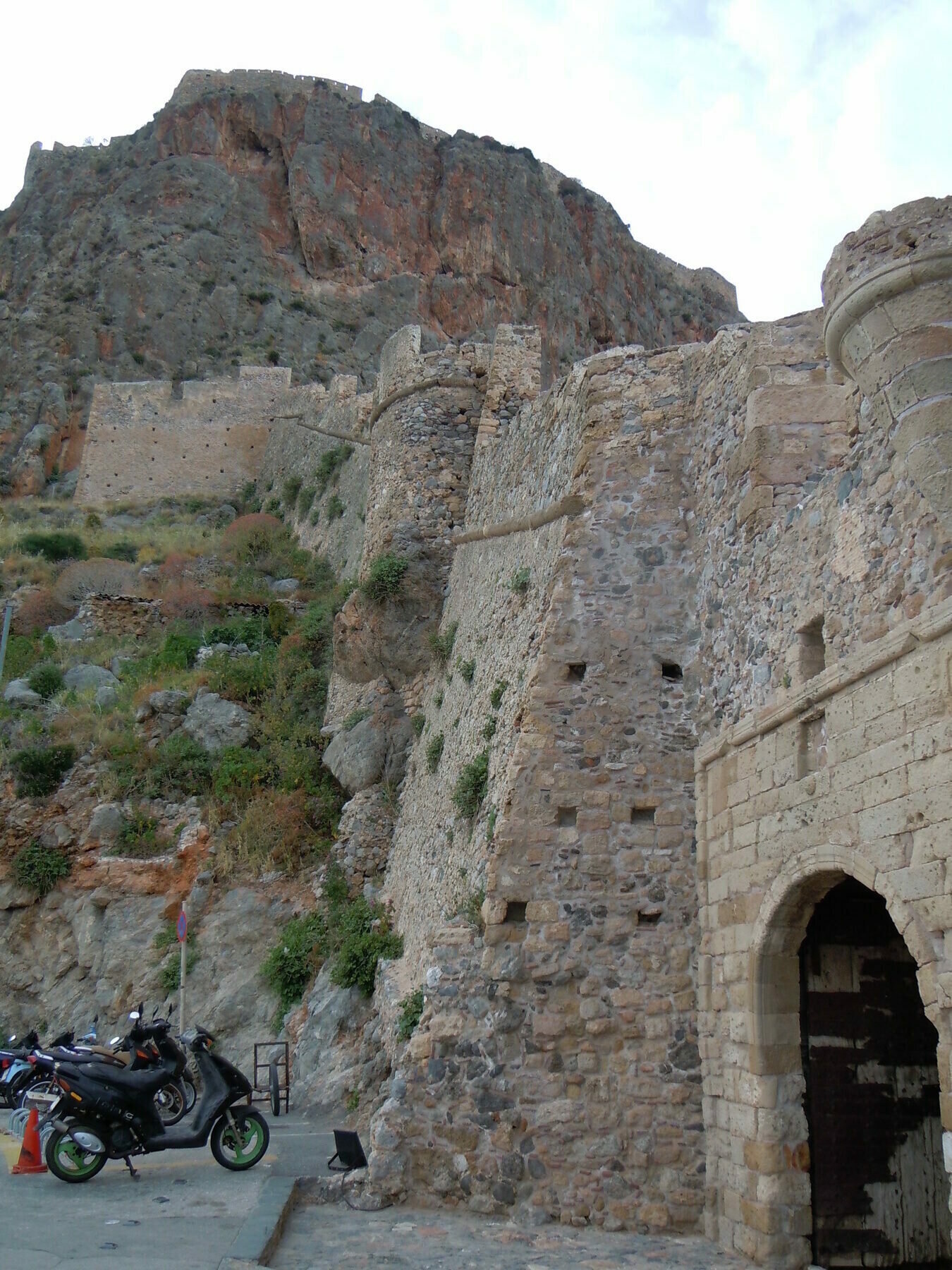
- Main Gate
- Lower Town Streets
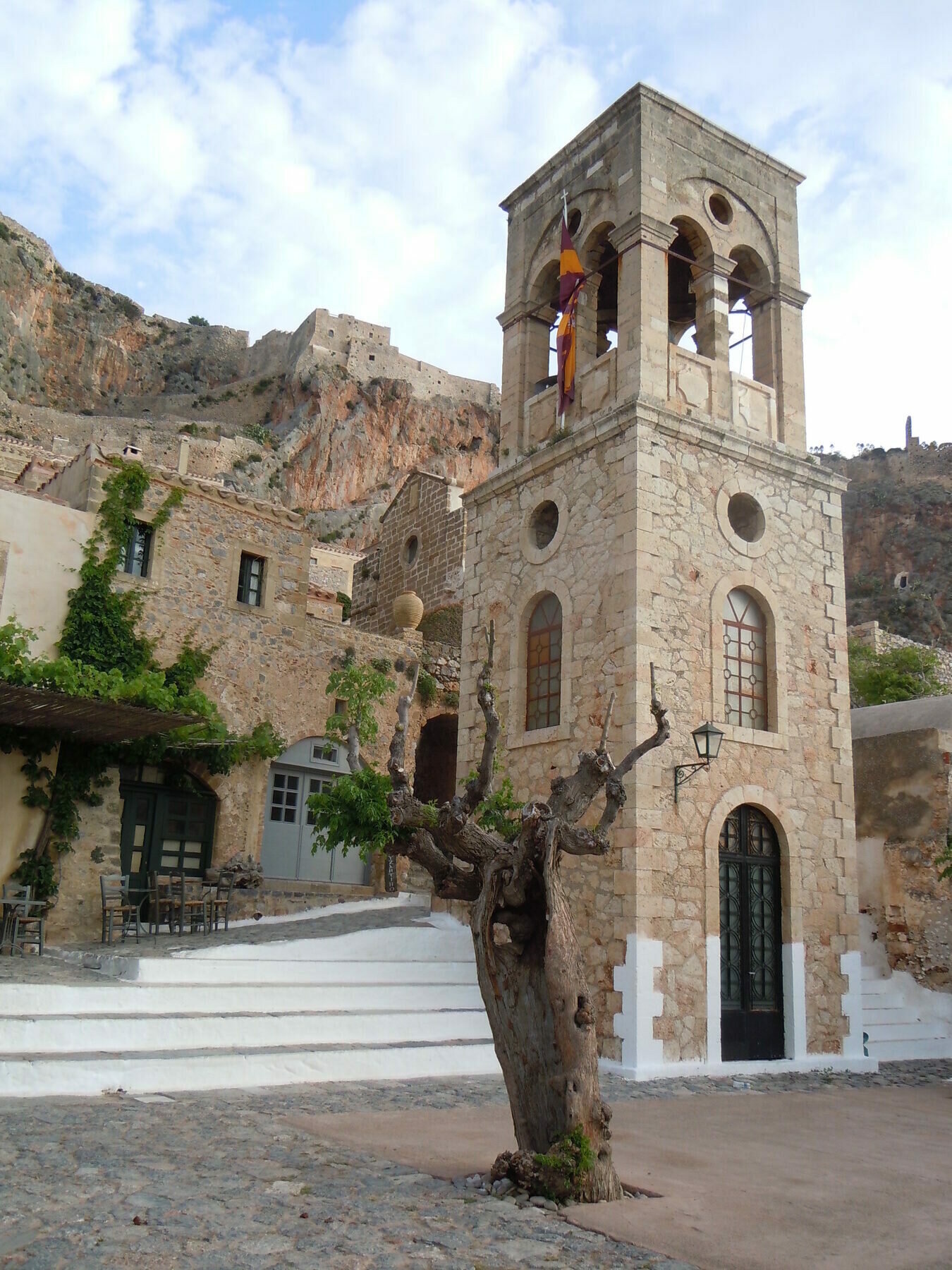
- Church of Elkomenos Christos
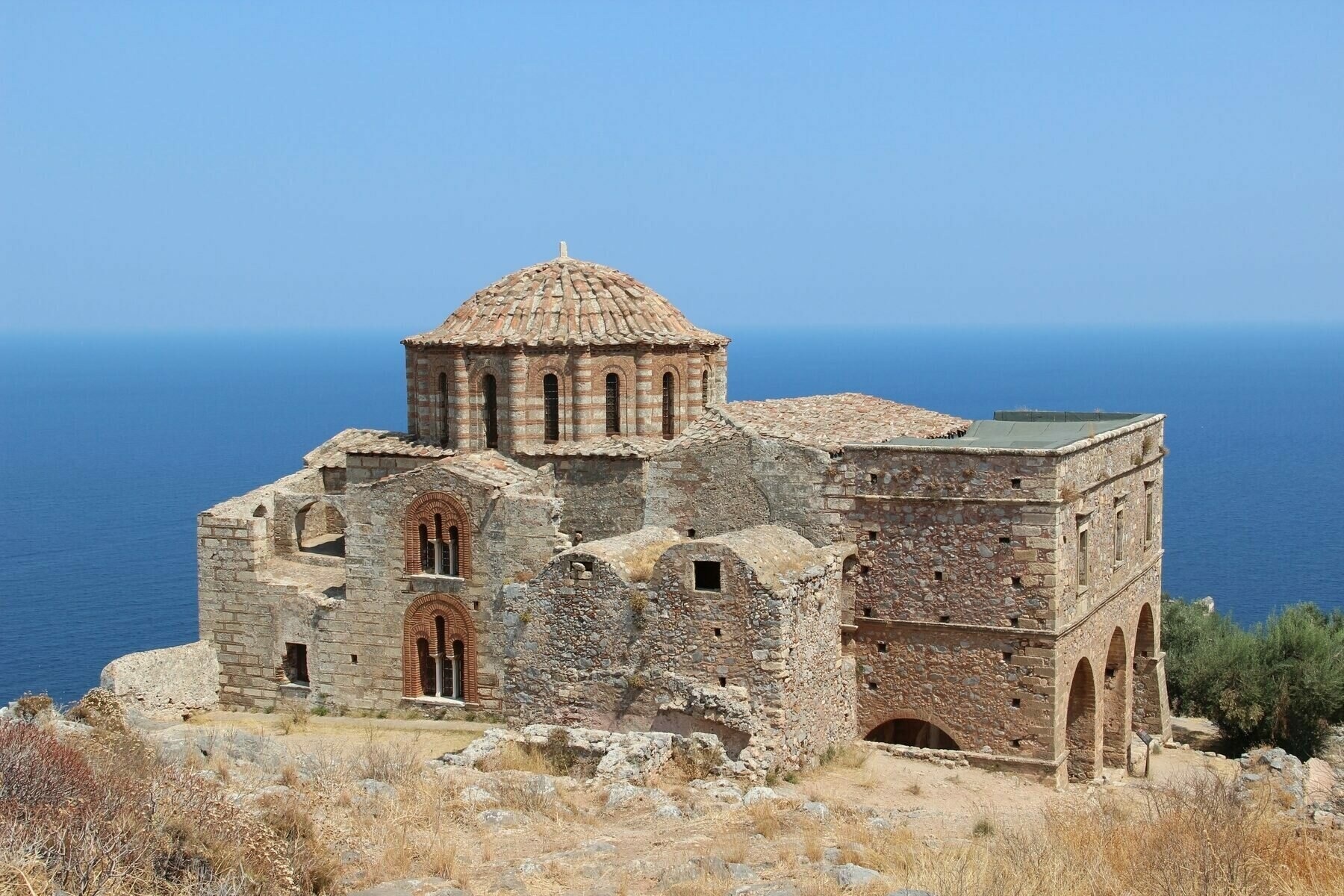
- Hagia Sophia
- Upper Citadel
- Sea Walls
Overview
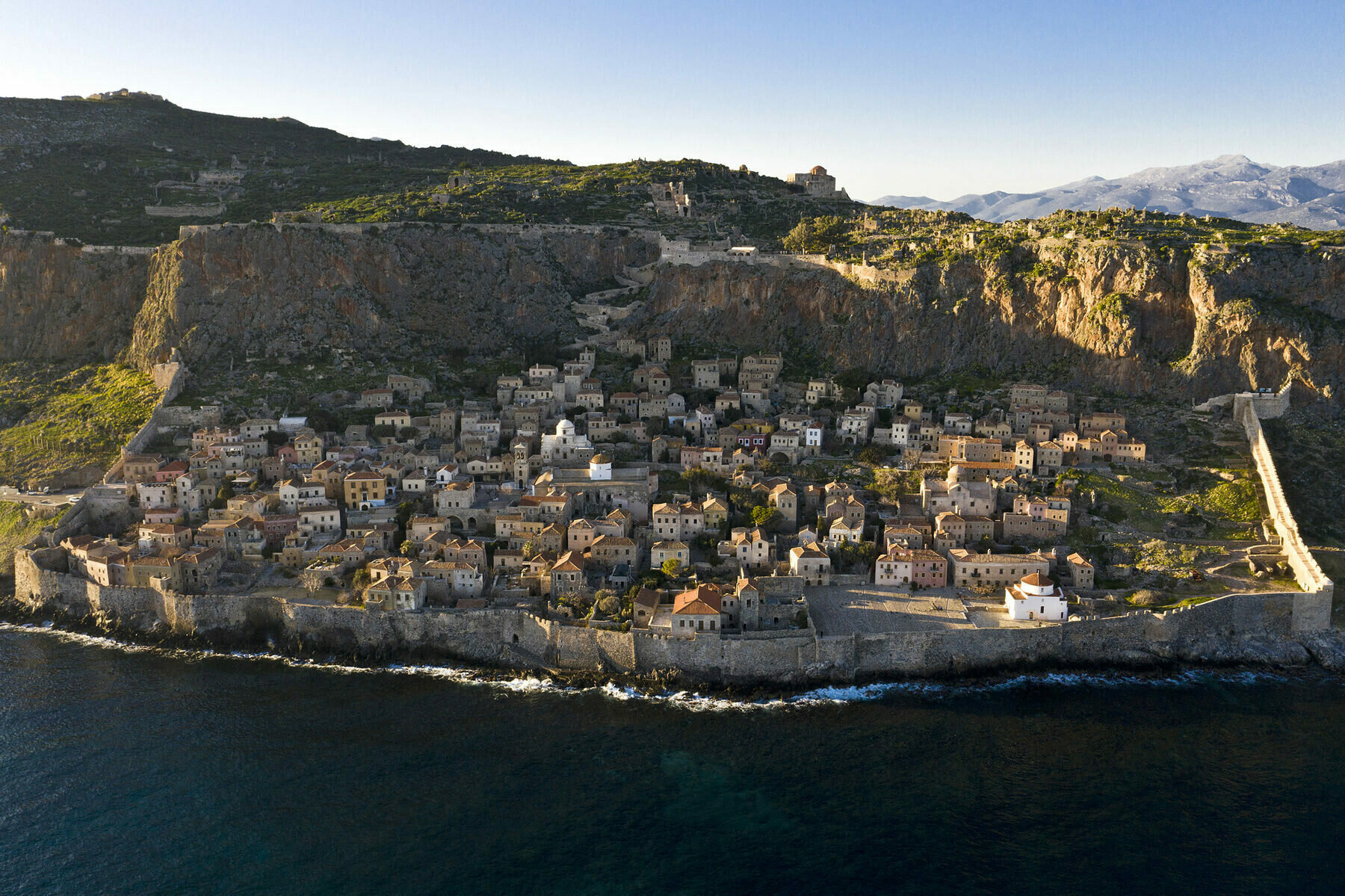
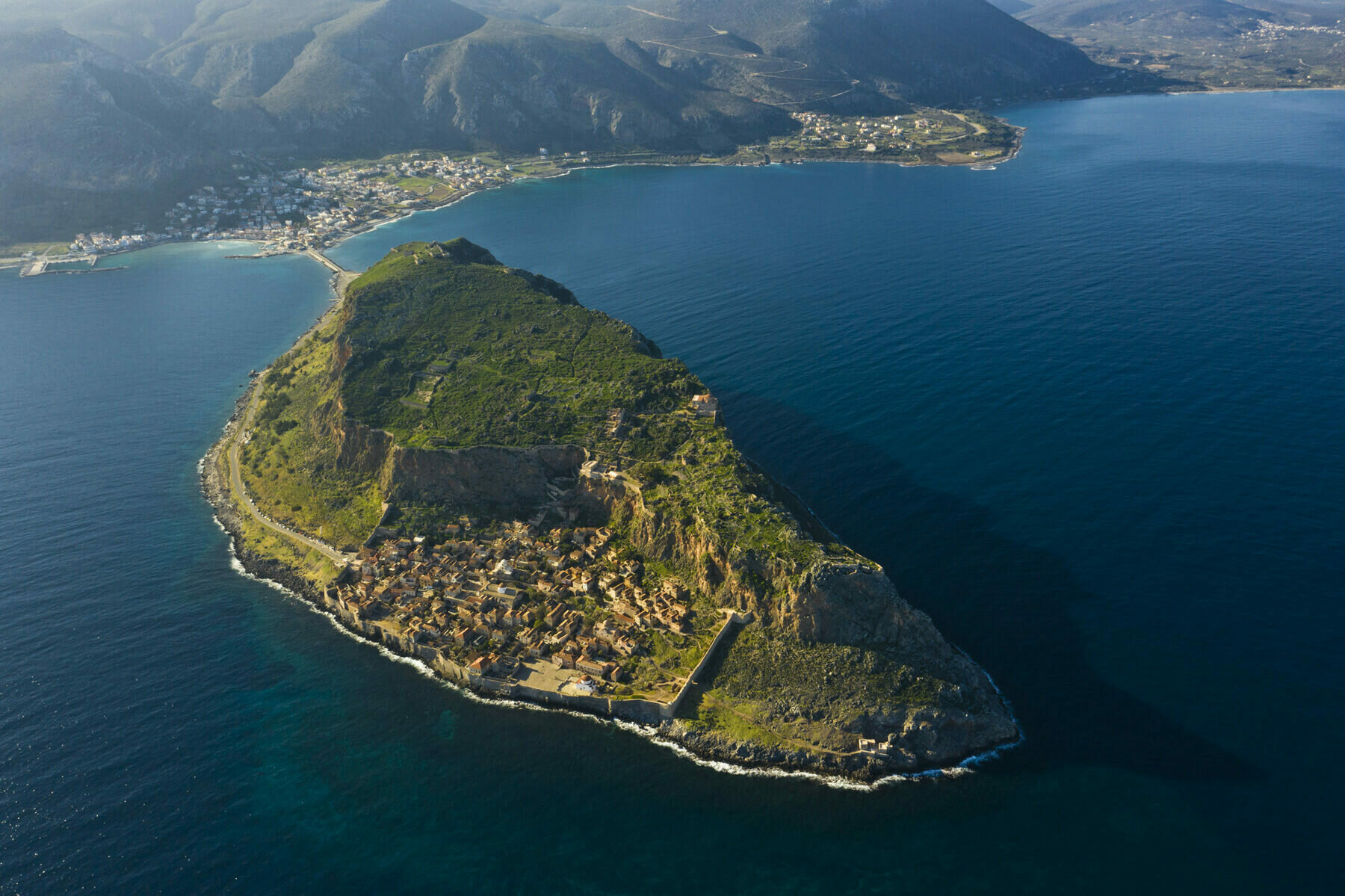
Monemvasia is one of the most remarkable fortified settlements in the Mediterranean. Built against the seaward face of a massive limestone rock connected to the mainland by a narrow causeway, it combines the functions of fortress, naval base, commercial port, and living town. For nearly fourteen centuries it served as a refuge, trading center, and military stronghold. Unlike many castles that survive only as ruins, Monemvasia preserves an entire medieval urban landscape enclosed within its walls. Its nickname, 'The Gibraltar of the East,' reflects both its natural defenses and its strategic control of maritime routes between the Aegean and western Mediterranean.
Historical Significance
The city emerged during the turbulent decades of the late sixth century when Slavic and Avar incursions destabilized the Peloponnese. Refugees from nearby settlements sought protection on the offshore rock, whose steep cliffs rendered it almost impregnable. Over the following centuries Monemvasia became a key Byzantine naval station, a commercial port linking Constantinople and Venice, an ecclesiastical center, and a refuge during periods of invasion. Following the Fourth Crusade it remained one of the last major Byzantine strongholds in southern Greece. After temporary Frankish occupation it returned to Byzantine control and became one of the wealthiest cities of the Despotate of the Morea. The fortress later passed between Venice and the Ottoman Empire before joining the modern Greek state during the War of Independence.
Strategic Importance
Monemvasia occupies a unique position. The offshore rock rises abruptly from the sea and presents sheer cliffs on most sides. Access is possible only through a narrow entrance on the western side, from which the settlement derives its name: Monemvasia ('single entrance'). From this location the fortress controlled routes around Cape Malea, traffic between the Aegean and Ionian Seas, approaches to the southeastern Peloponnese, and commercial shipping moving toward Constantinople. Its sheltered harbor made it particularly valuable as a naval station.
The Lower Town
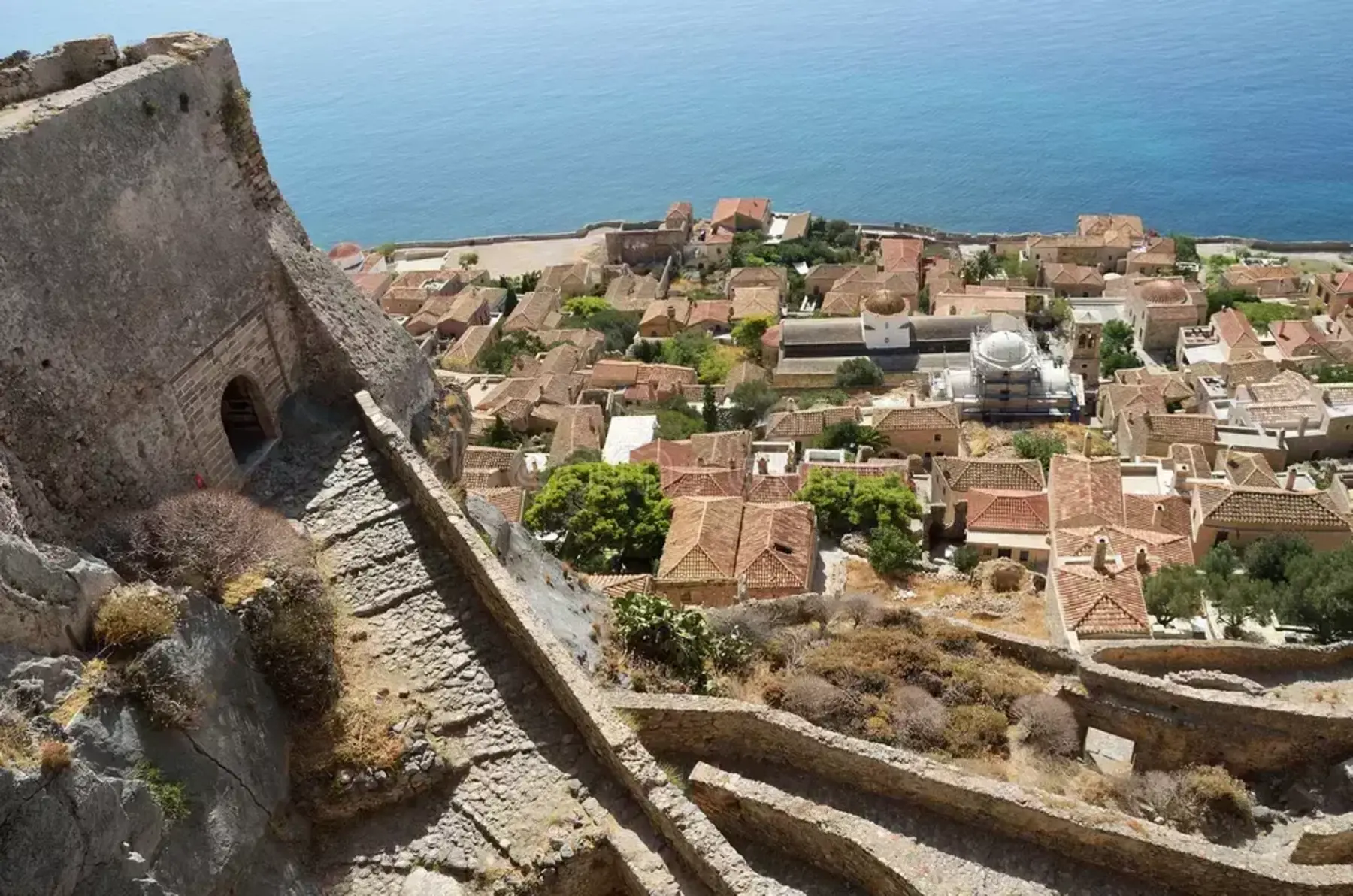
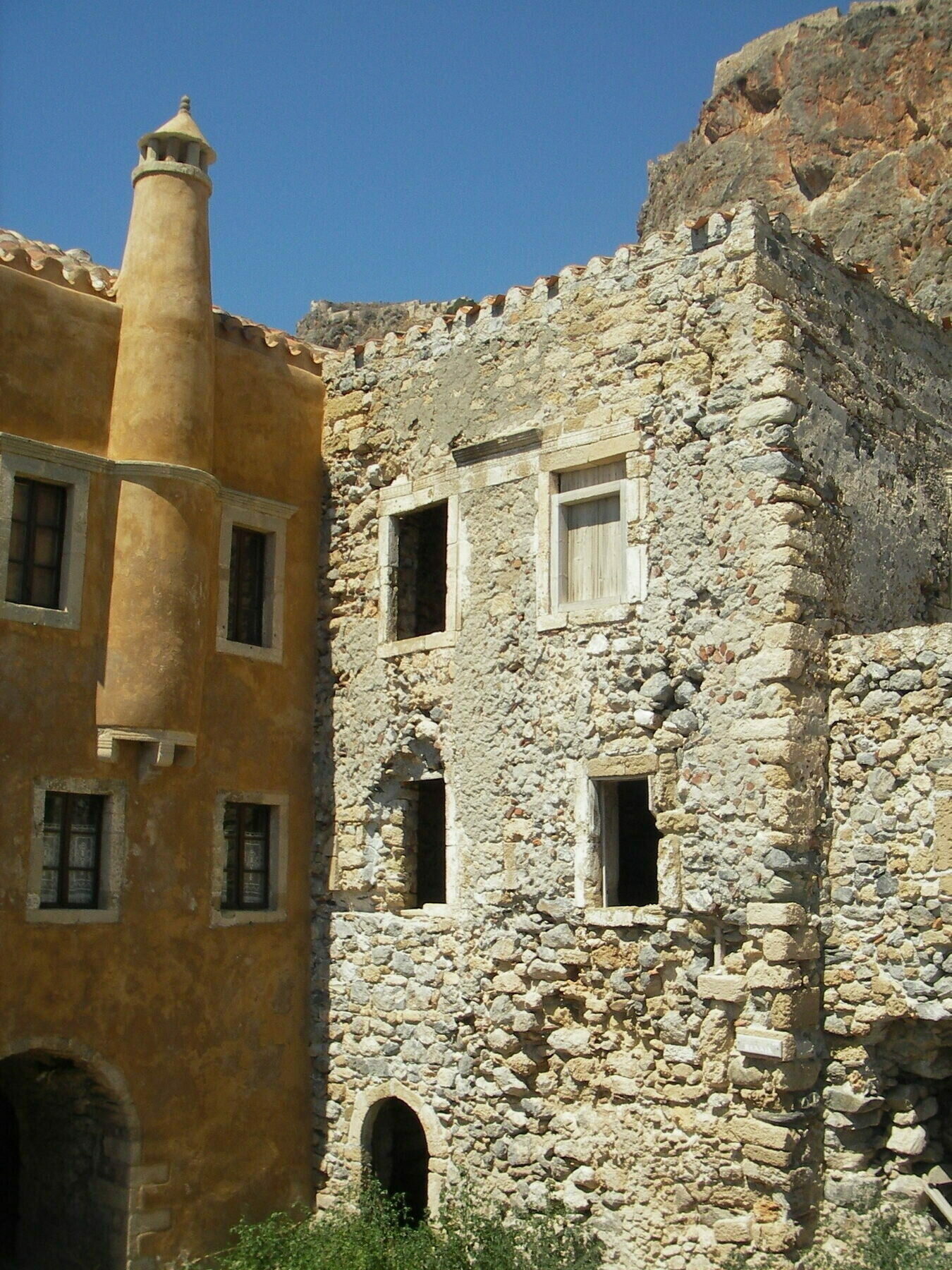
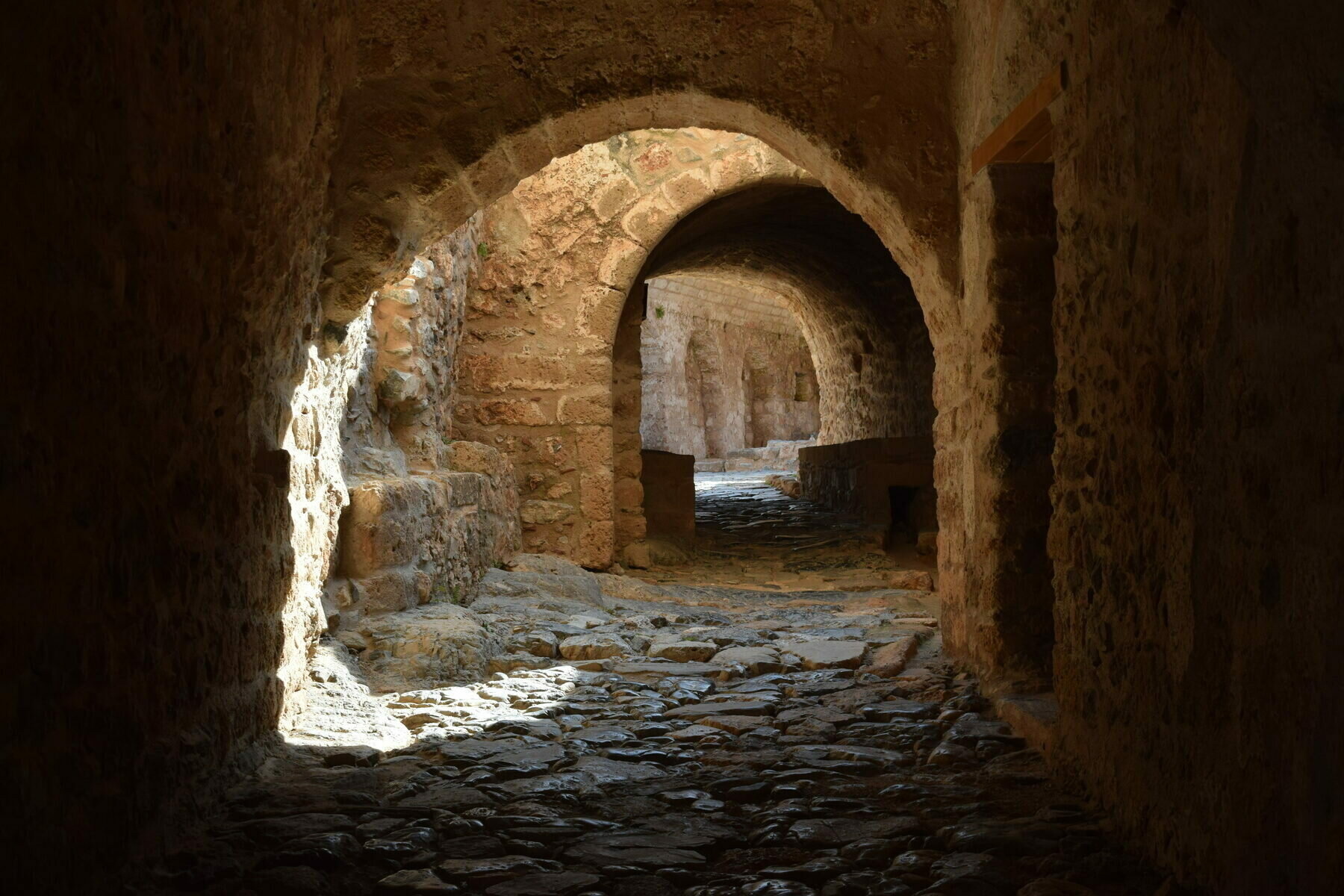
The lower town remains inhabited and preserves much of its medieval street plan. Highlights include defensive walls and gates, narrow stone-paved streets, Byzantine churches, Venetian houses, and Ottoman-period structures. Unlike many restored historic towns, Monemvasia retains an authentic layered appearance reflecting centuries of occupation.
The Upper Town
The upper town occupies the summit plateau. Today visitors encounter ruins of houses and public buildings, defensive structures, and extensive views across the Myrtoan Sea. The climb reveals how the settlement exploited every natural defensive advantage of the rock.
Hagia Sophia
The Church of Hagia Sophia is among the finest surviving Byzantine monuments in Greece. Built during the twelfth century on a dramatic cliff-edge position, it combines octagonal Byzantine planning, elegant masonry, and exceptional views. It is frequently compared with major churches in Constantinople and Mystras.
What to See Today
Key sites include the Main Gate, the Lower Town streets, the Church of Elkomenos Christos, the Church of Hagia Sophia, the Upper Citadel, and the sea walls that demonstrate successive Byzantine, Venetian, and Ottoman phases of fortification.
Why Monemvasia Matters
Many castles preserve walls. A few preserve towers. Monemvasia preserves an entire fortified world. It illustrates the transition from Late Byzantium through Venetian and Ottoman rule better than almost any other site in Greece. For the Castles of Greece project, it serves as one of the clearest examples of a living fortified settlement and a benchmark against which other castle towns can be compared.
Timeline
- 582 Traditional foundation during Slavic and Avar incursions.
- 10th–12th centuries Develops into a major Byzantine naval and commercial center.
- 1204 The Fourth Crusade fragments Byzantine authority in Greece.
- 1248 Captured by the Principality of Achaea.
- 1262 Returned to Byzantine control.
- 14th–15th centuries Experiences a golden age under the Despotate of the Morea.
- 1460 Remains among the last Byzantine possessions in Greece.
- 1463–1540 First Venetian period.
- 1540–1690 Ottoman rule.
- 1690–1715 Second Venetian period.
- 1715–1821 Ottoman rule restored.
- 1821 Joins the Greek War of Independence.
Expedition guides
Images