Highlights
- Two enclosures, many building phases
A smaller western high enclosure and a larger eastern enclosure show the castle’s growth, while repeated repairs make some phases difficult to separate.
- A bastion shaped by successive work
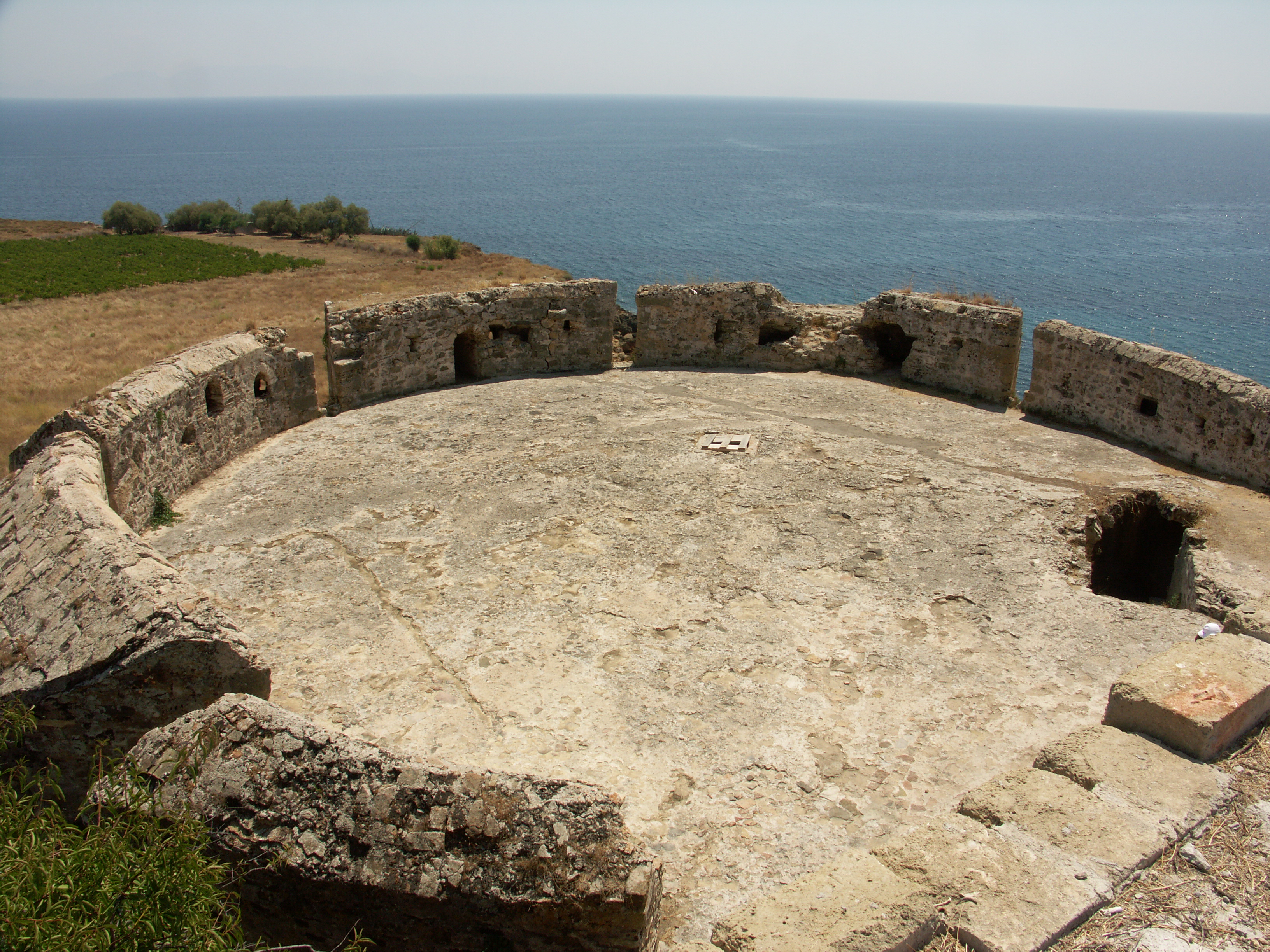
The circular southeastern bastion belongs to the Ottoman strengthening of the eastern defenses, within a system later altered under Venetian rule.
- A town with changing sacred spaces
Churches reused as cathedral, mosque and Orthodox church show how buildings acquired new roles as authority changed.
- A fortress still inhabited
Homes, a monastery and cultivated land remain part of the castle landscape, alongside its monumental defenses.
Strategic role
An inhabited fortress-town whose peninsula, harbor, cultivated ground, water supply and layered defenses reveal how a strategic port functioned under changing rule.
A fortress above the Messenian Gulf
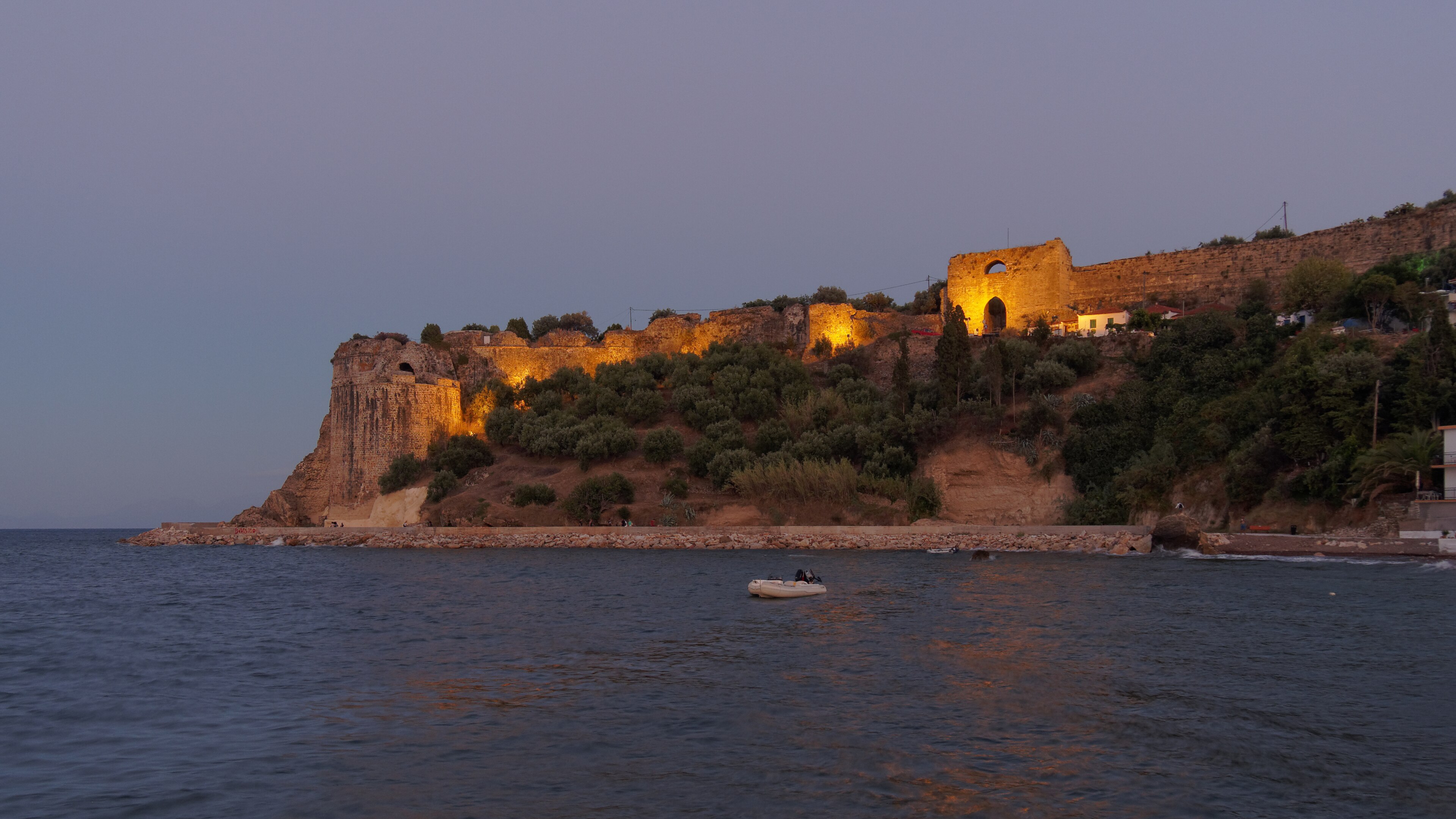
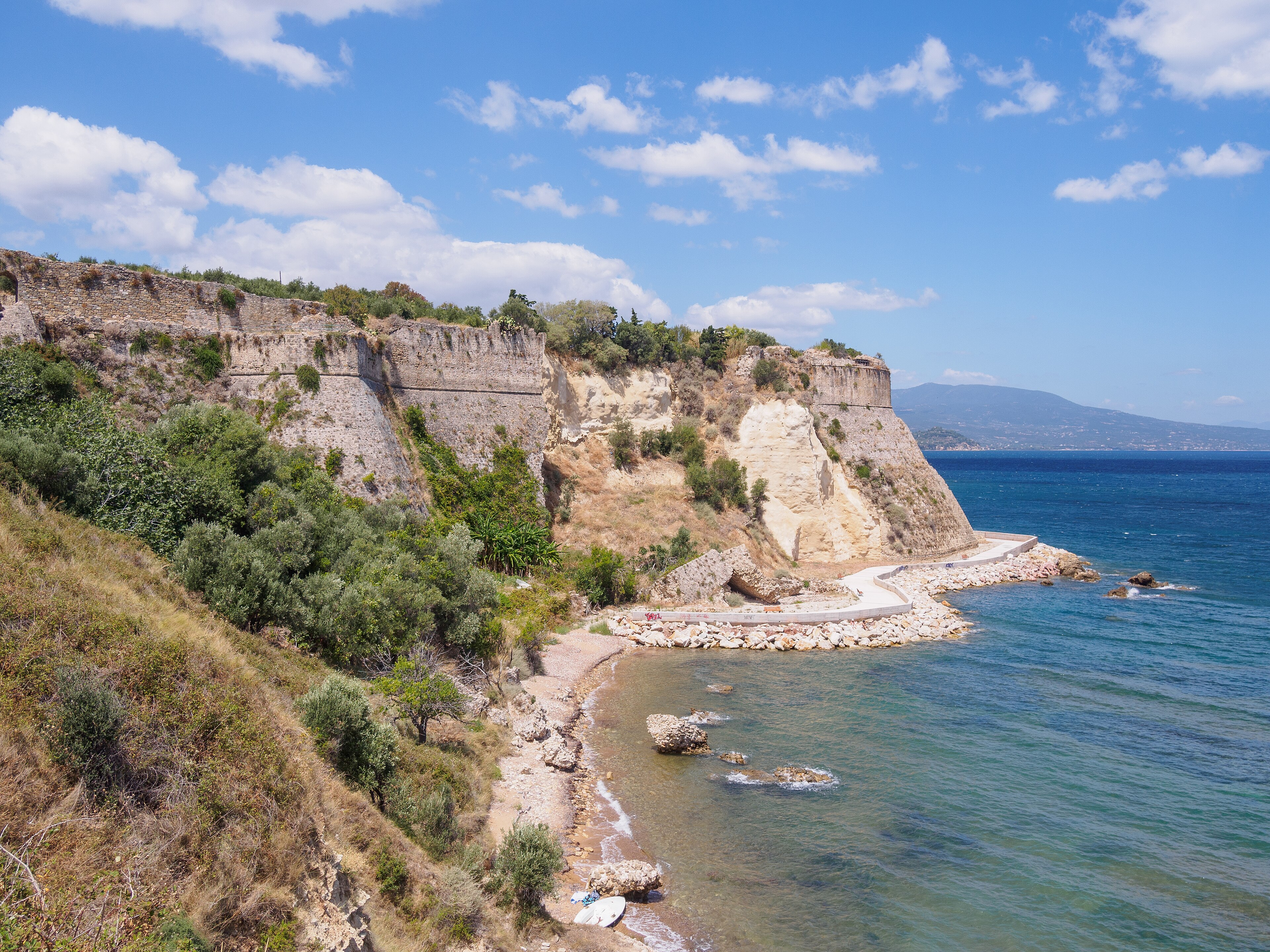
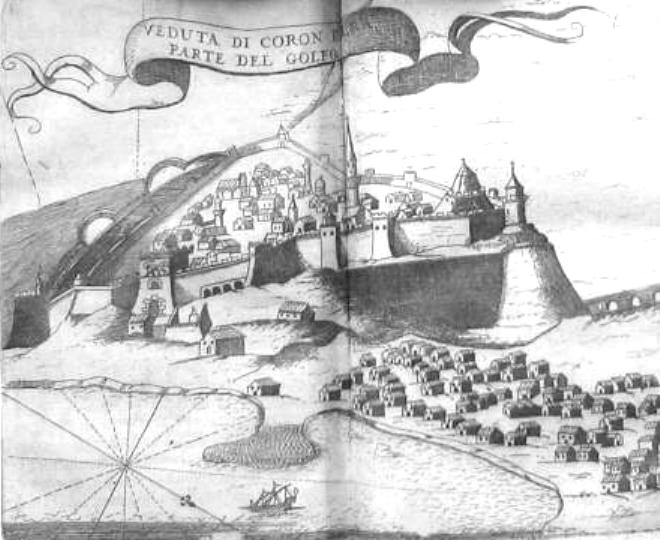
Koroni’s castle occupies the high ground of a peninsula at the western edge of the Gulf of Messenia. The sea borders it to the north and south; the landward approach lies to the west. This setting made the harbor and the fortress parts of one place. To the southeast, the area known as Livadia remained outside the walls and supplied cultivated ground. The castle therefore depended on more than its ramparts: its position linked ships and shore, while fields and water sources supported the people living inside.
During Venetian rule Koroni became an important port alongside Methoni. Their paired role is often summarized as Venice’s “eyes” in the East, but the phrase can obscure the fact that these were distinct towns. Koroni’s enclosure, harbor and relationship to its hinterland shaped its own history. The physical remains help explain the strategic setting; claims about the volume or control of trade require documentary evidence and should not be inferred from location alone.
Enclosures and changing defenses
The fortification has two main enclosures. A smaller western enclosure occupies the highest ground and is thought to include the earliest core. A larger eastern enclosure extends the defended settlement. An intermediate wall separates them. The Ministry attributes the eastern expansion broadly to Venetian rule, while describing parts of the earlier wall as probably Byzantine. These are informed attributions, not a complete map of securely dated masonry. Rebuilding and repair under different rulers have left phases that can be hard to distinguish.
The defenses changed as artillery made older walls more vulnerable. The eastern front was strengthened with bastions and a moat. The surviving circular southeastern bastion is associated with Ottoman strengthening during 1500–1685, but the eastern defenses as a whole were modified in later periods and its present fabric should not be treated as the work of a single regime. Its central octagonal support carries the ground-floor dome, and openings in the structure helped light and ventilate the interior; gun openings in the walls faced outward. This is a reminder that Ottoman rule involved active adaptation of the fortress. A northeastern bastion was damaged in the 1685 siege and later rebuilt by the Venetians; it was destroyed during World War II. Koroni’s defenses are thus an accumulated structure, not a single Venetian design.
Life, water and worship inside the walls
The enclosures held a settlement as well as military works. Today, homes and the Timios Prodromos monastery occupy parts of the castle, and the open ground of Livadia remains cultivated. These uses help make the site legible as a lived landscape, while later buildings and alterations mean the interior is not a frozen medieval town. Respect for residents and religious spaces is part of visiting the monument.
The surviving religious buildings record changing authority and worship. Agios Charalambos began in 1689 as a Latin church dedicated to Saint Roch; after Ottoman conquest it became a mosque, and after 1828 it became an Orthodox church. The remains of a much larger three-aisled basilica lie near the small church of Agia Sophia. Its date is debated, with official accounts placing it broadly between the late sixth and ninth centuries. It served as a Latin cathedral during the first Venetian period and was later converted to a mosque. These changes document reuse of important buildings, but they do not by themselves describe the beliefs or experience of every resident.
Cisterns supported the population within the walls. An aqueduct built under Ottoman rule supplied the castle and the settlement outside it after the sixteenth century, and parts remained in use into the twentieth century. Near the Livadia gate are the remains of an Ottoman bath. Together these traces show how water infrastructure and public buildings helped sustain life inside a defended town.
From Venetian port to living town
After its capture in 1500, Koroni remained under Ottoman rule apart from a brief occupation by Andrea Doria’s forces in 1532–34 and a Venetian return from 1685 to 1715. The fortress continued to be adapted, and its buildings took on new uses. In 1828 Ottoman forces surrendered it to the French expeditionary corps; it then passed to the newly established Greek state.
The castle has continued to change through residence, religious use, damage and conservation. During World War II, German forces used the fortress; an ammunition explosion destroyed the northeastern bastion as they withdrew. The remaining walls, homes, monastery, churches and open ground should be read together. Koroni’s significance lies not only in the powers that held it, but in how a fortified town continued to function and be reshaped after its role as a Venetian port had passed.
Architecture
- Irregular peninsula enclosure with sea on two sides and a landward approach to the west
- Smaller western high enclosure and larger eastern enclosure divided by an intermediate wall
- Rectangular towers, gates, moat, bulwark and artillery-era bastions from successive phases
- Southeastern circular bastion associated with Ottoman strengthening and later repair across successive phases; central octagonal support and gun openings
- Agia Sophia basilica remains, Agios Charalambos church, Ottoman bath, cisterns and aqueduct traces
- Timios Prodromos monastery within the western enclosure; inhabited homes and cultivated Livadia
Timeline
- Antiquity Material remains indicate ancient occupation in the area. The Ministry considers the castle site a probable continuation of ancient Asine; the Ephorate identifies ancient Koroni with present-day Petalidi.
- Early Byzantine period The fortress is thought to have an early Byzantine origin, though the precise date and extent of its earliest defenses remain uncertain.
- 1205–1209 After a Frankish capture, Koroni passed to Venice; the Treaty of Sapienza recognized Venetian rights in the region in 1209.
- 13th–15th centuries Koroni developed as an important Venetian port beside Methoni, with a fortified settlement and a harbor-oriented economy.
- 1500 Ottoman forces took Koroni after the fall of Methoni. The eastern defenses were strengthened and adapted during Ottoman rule.
- 1532–1534 Andrea Doria briefly captured Koroni; some residents left with his forces. The scale and details of population movement require careful sourcing.
- 1685–1715 Venice briefly regained Koroni. Repairs altered defenses, including the northeastern bastion after the 1685 siege.
- 1715 onward Ottoman rule returned. In 1828 the castle was surrendered to French forces and passed soon after to the new Greek state.
- 20th century The northeastern bastion was destroyed by an ammunition explosion during the German withdrawal in World War II; the castle remains inhabited.
Visiting today
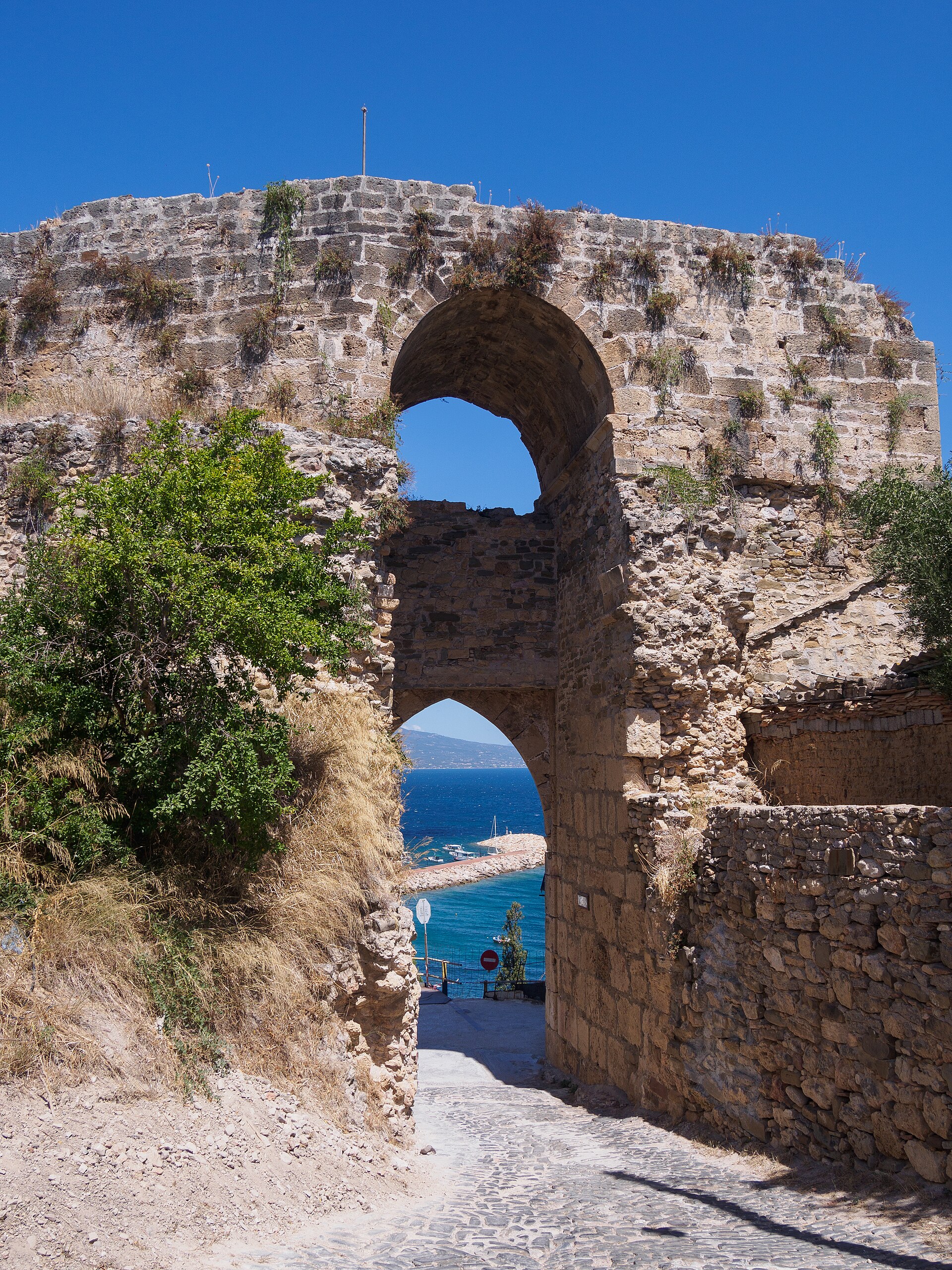
Koroni Castle is an inhabited place as well as a monument. Respect residents, religious spaces, monastery boundaries and any signed closures; footing can be uneven and exposed areas may lack barriers. The principal northern entrance and a southern entrance are described by the Ministry of Culture, but opening hours, access to individual structures and accessibility can change; check current local or official guidance before visiting. Allow time to understand the relationship between the walls, town, harbor and open cultivated ground rather than treating the site as a single viewpoint.
Historical contexts
- Venetian Maritime Empire
- Ottoman Period
- Rise of Modern Greece
- Harbor Defense and Sea-Lane Control
Expeditions
- Expedition I
- Expedition IV
Images
References
- Hellenic Ministry of Culture — Castle Routes: Koroni
- Ephorate of Antiquities of Messenia — Koroni Castle
- Ephorate of Antiquities of Messenia — Petalidi, Koroni, Methoni
- UNESCO World Heritage Centre — Late Medieval Bastioned Fortifications in Greece (Tentative List)
- Xeni Simou — Ottoman fortification works at Koroni castle, Messenia, Greece (1500–1685), Defensive Architecture of the Mediterranean XIV (2023)
Related places
Topics
- Venetian
- Ottoman
- Fortified Port
- Harbor Defense
- Coastal Fortification