Overview
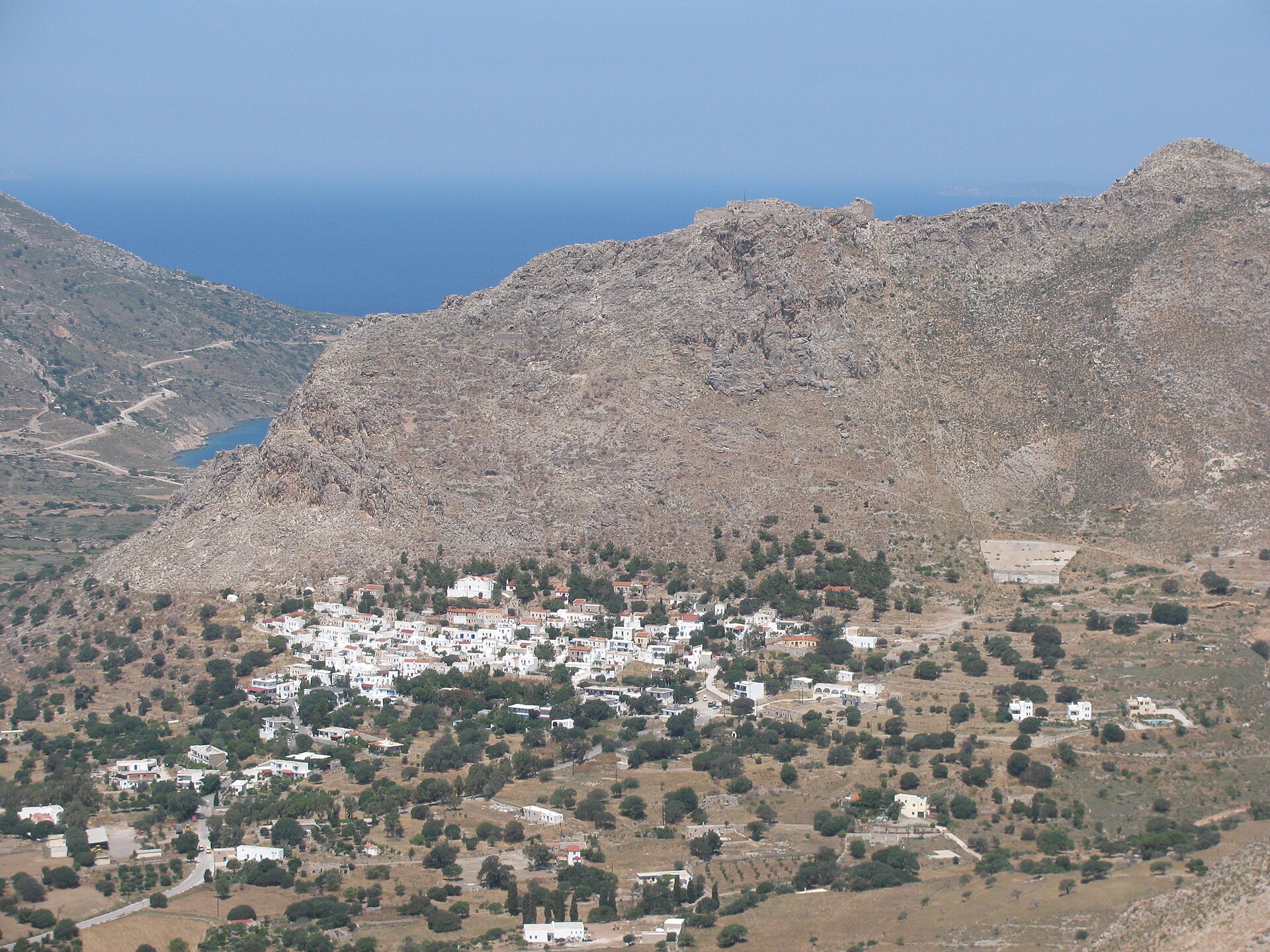
Tilos lies between Nisyros and Chalki in the southeastern Aegean. Its scale belies the diversity of its historical and natural record. Charkadio Cave has yielded remains of dwarf elephants and evidence of prehistoric human presence, making the island important to Mediterranean paleontology as well as archaeology. Ancient settlement concentrated around the acropolis above present-day Megalo Chorio, with harbors at Erystos and Agios Antonios. Medieval insecurity produced several fortified sites across the island. The castle above Megalo Chorio reused the ancient acropolis and was developed during Byzantine and Hospitaller rule, while smaller castles and watch positions protected settlements and agricultural territory. The Knights of Saint John controlled Tilos for roughly two centuries before Ottoman rule. Livadia later developed as the principal port and modern settlement. Today the island is also distinguished by its protected natural environment, abandoned Mikro Chorio, monastic landscape and the close relationship between villages, paths and the surrounding countryside.
Highlights
- Castle of Megalo Chorio
The principal fortified hill combines an ancient acropolis with later Byzantine and Hospitaller defenses above the historic capital.
- Charkadio Cave
The cave and museum collections preserve the island's exceptional dwarf-elephant and prehistoric record.
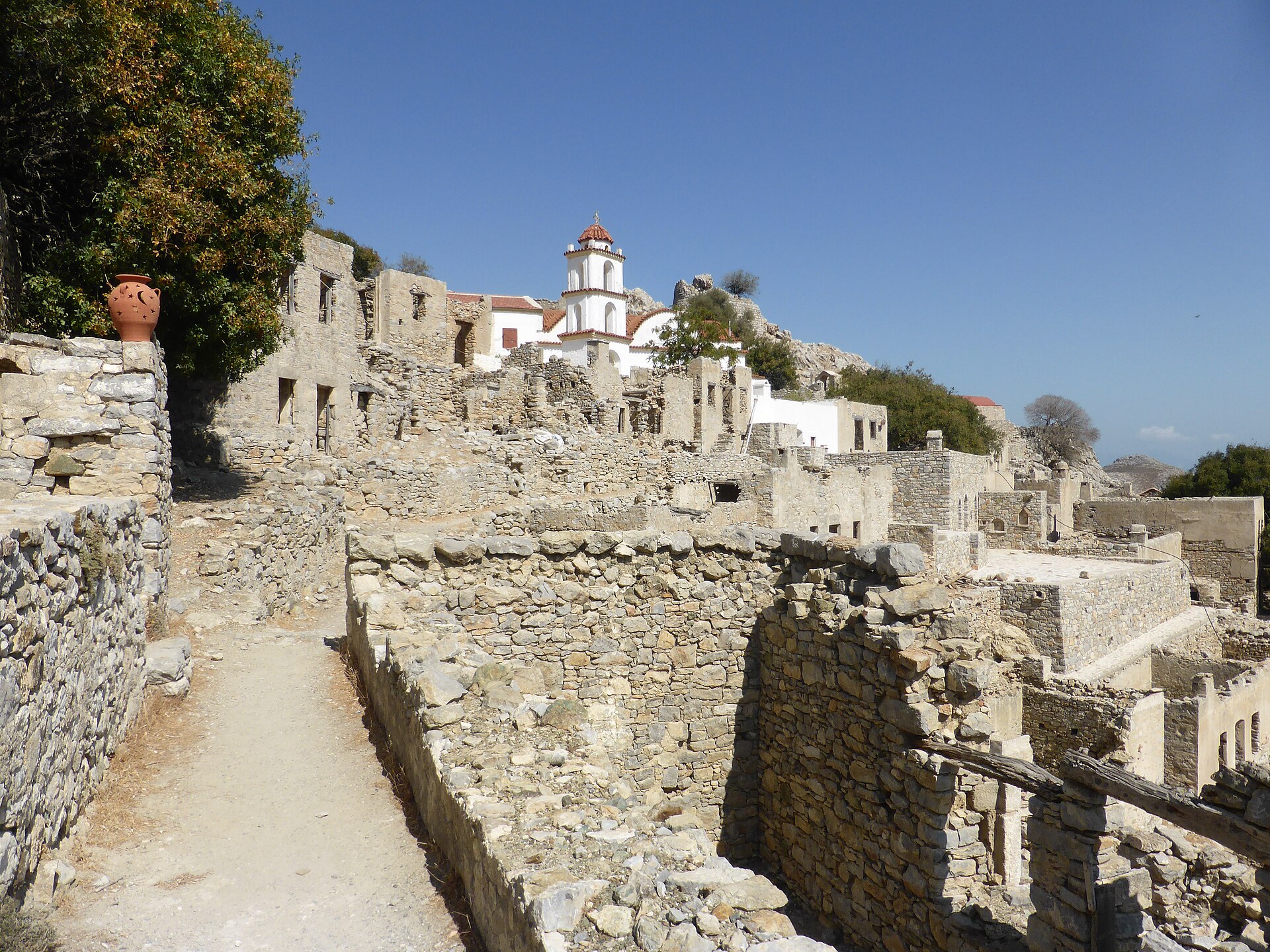
- Mikro Chorio
The abandoned settlement preserves houses, churches and a fortified landscape that remained inhabited into the twentieth century.
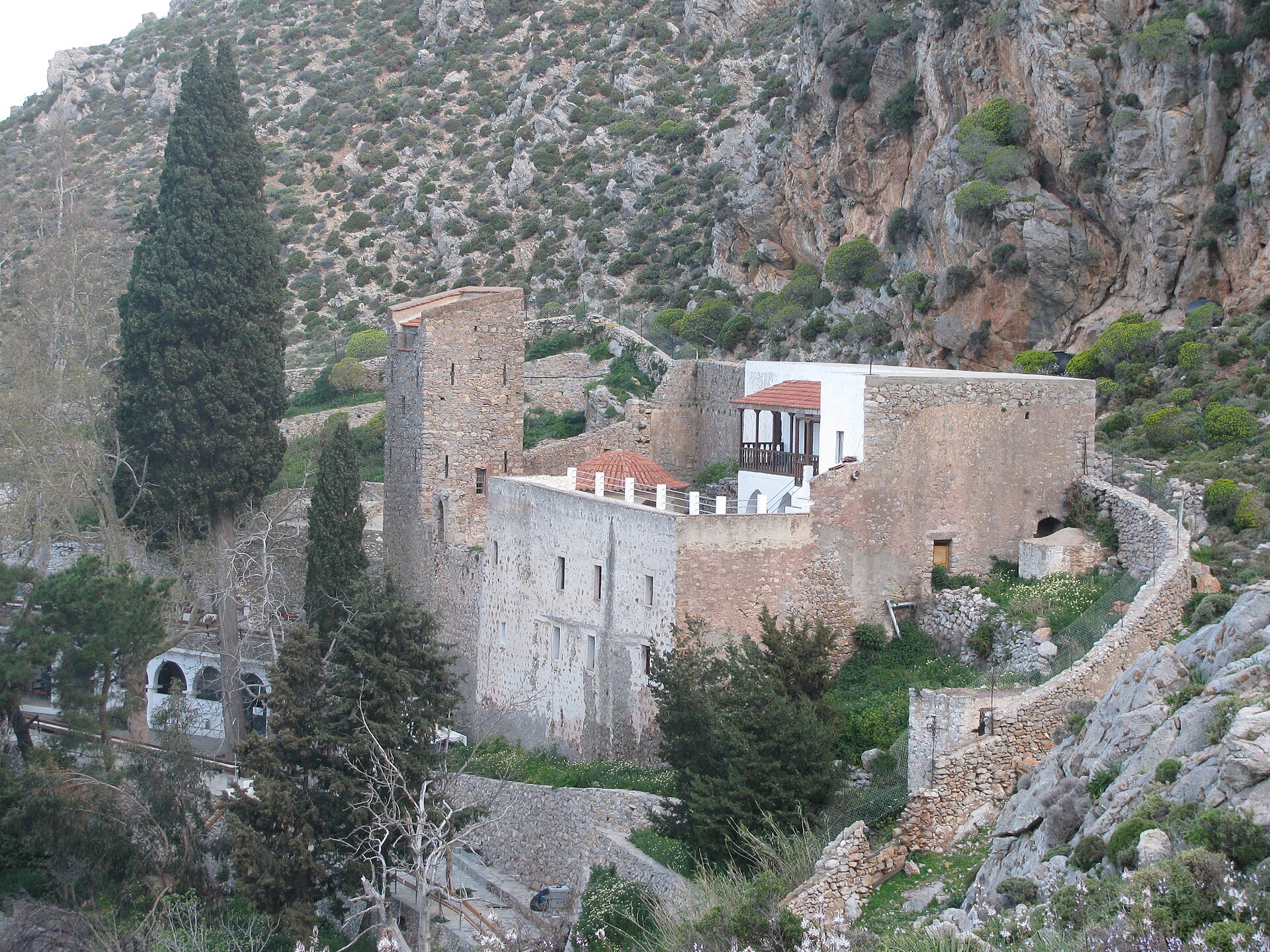
- Agios Panteleimon
The western monastery connects religious history with one of the island's most dramatic landscapes.
- Livadia
The modern port links the island's maritime operations with inland historical and natural destinations.
Strategic role
A small strategic island whose ports, acropolis, castle network and religious landscape record adaptation to maritime movement, piracy and successive regional powers.
A Small Island with a Deep Record
Tilos occupies a maritime position between Nisyros, Chalki and Rodos. Springs, cultivable valleys and several landing places supported communities despite the island's limited size. Archaeological evidence ranges from prehistoric occupation to ancient urban settlement, while castles and churches reveal the pressures of medieval insecurity. The modern division between Livadia as port and Megalo Chorio as historic capital reflects a long dialogue between coastal access and defensible inland settlement.
Charkadio Cave and the Dwarf Elephants
Charkadio Cave preserves a rich fossil record of dwarf elephants adapted to island conditions. Excavations begun in 1971 revealed remains that make Tilos important to the study of island wildlife and changing environments. The fossil record and evidence of prehistoric human activity give the island a history far deeper than its standing monuments.
See the exhibition of dwarf-elephant finds to understand the scale of these animals and the work of recovering their remains. Confirm the exhibition’s current location and opening arrangements locally; access to a display does not mean that the cave itself is open for ordinary visits.
Ancient Tilos and Its Acropolis
The ancient settlement occupied the slopes and summit above present-day Megalo Chorio. The castle hill held an ancient acropolis, with high retaining terraces and cisterns serving the community and maritime access through Erystos and Agios Antonios. Later builders reused the defensible summit. This continuity makes the castle hill more than a medieval monument: it is a long-lived center where ancient civic, defensive and sacred landscapes overlap.
Byzantine and Hospitaller Fortifications
Tilos preserves several medieval fortified positions rather than one isolated castle. The main castle above Megalo Chorio occupies an earlier acropolis site; its surviving enclosure reflects a history of rebuilding during Byzantine and Hospitaller times. The Knights of Saint John held Tilos from the early fourteenth century into the early sixteenth century as part of their island domain centered on Rhodes.
These strongholds helped shelter communities and watch the sea approaches between Rhodes and Kos. Look at their settings and the ground they command, while remembering that repeated repairs make individual walls difficult to assign to a single period. Smaller sites require care on rough paths; the presence of ruins does not establish a maintained visitor route.
Churches, Monastery and Island Community
The island's many churches and chapels preserve another map of settlement and memory. The Monastery of Agios Panteleimon stands in a dramatic western setting and remains one of Tilos's principal religious monuments. At Megalo Chorio, churches are integrated with the historic settlement and castle landscape; Mikro Chorio retains ruined houses and ecclesiastical buildings after its twentieth-century abandonment. Together these places show how religious foundations, defensible villages and agricultural routes sustained community life beyond the ports.
Livadia and the Modern Maritime Gateway
Livadia is the island’s principal maritime gateway and a useful starting point for exploring inland. From the harbor settlement, the island’s story leads towards Megalo Chorio and its castle hill, the Charkadio fossil finds, Mikro Chorio and the monastery of Agios Panteleimon.
Allow time for these places separately. Tilos is best understood through the contrast between coastal access, defensible settlements and the paths connecting villages and religious foundations, with its natural landscape present throughout.
Architecture
- Fortified acropolis and medieval castle above Megalo Chorio
- Ancient retaining walls, terraces and cistern systems around the historic settlement
- Multiple smaller medieval castles and fortified positions across the island
- Byzantine and post-Byzantine churches with surviving wall paintings
- Monastery of Agios Panteleimon in the island's western landscape
- Stone houses and church ruins of abandoned Mikro Chorio
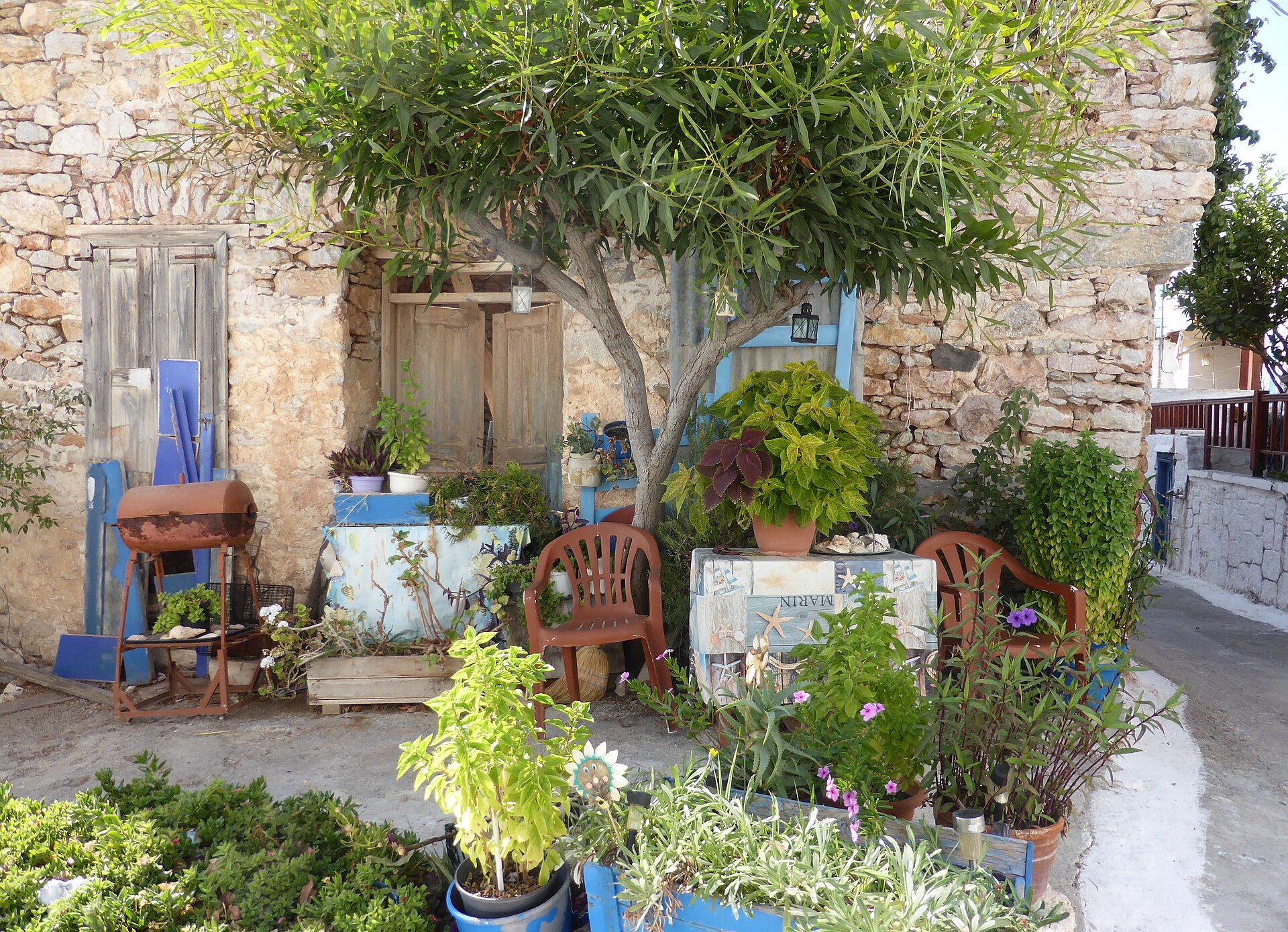
- Traditional settlement fabric at Megalo Chorio and Livadia
Timeline
- Late Pleistocene Dwarf elephants inhabited Tilos; their remains were preserved at Charkadio Cave.
- Final Neolithic–Bronze Age Archaeological evidence indicates human activity and wider Aegean connections.
- Classical period An organized settlement occupied the acropolis and slopes above present-day Megalo Chorio.
- Roman–Early Christian periods Island settlement and religious life continued within the southeastern Aegean world.
- Byzantine period Defensible settlements, castles and churches developed across the island.
- Early 14th–early 16th centuries The Knights of Saint John hold Tilos within their Dodecanese island domain and adapt its defenses.
- 16th century Ottoman sovereignty replaced Hospitaller rule in the Dodecanese.
- 1912 Tilos passed under Italian rule with the other Dodecanese islands.
- 1948 Tilos was incorporated into Greece.
- 1971 onward Excavation and study at Charkadio Cave brought the island's dwarf-elephant record to international attention.
Visiting today
Begin at Livadia, then make time for Megalo Chorio and the castle hill, Mikro Chorio and the Monastery of Agios Panteleimon. Ask the municipality about the dwarf-elephant exhibition’s current location and opening arrangements before planning a visit around it. Do not assume Charkadio Cave is open. Smaller castles and chapels may require rough uphill paths; check local access advice and protected-area rules.
Expedition guides
Images
References
- Municipality of Tilos — Sights
- Municipality of Tilos
- Aegean Islands — History of Tilos
- Municipal Port Fund of South Dodecanese — Tilos
- Municipality of Tilos — History
- Municipality of Tilos — Museums (historical location information)
- Theodorou and Symeonides — Charkadio excavations, The World of Elephants, 2001, pp. 514–518
- Michael Heslop — Medieval Greece, 2021, chapter 2 preview
Related places
Related Stops
Topics
- Fortified Settlement
- Byzantine
- Hospitaller
- Natural History
- Traditional Settlements
- Monasteries