Highlights
- Ancient walls in dark stone
See how local volcanic material forms the towers and gateway.
- Panagia Spiliani
An active sanctuary crowns the medieval castle rock.
- Nikia and the caldera
Village architecture and volcanic interpretation broaden an island visit.
Strategic role
Defenses above Mandraki protected settlement and overlooked the coast; the castle rock also became a focus of religious life.
Mandraki between the shore and the heights
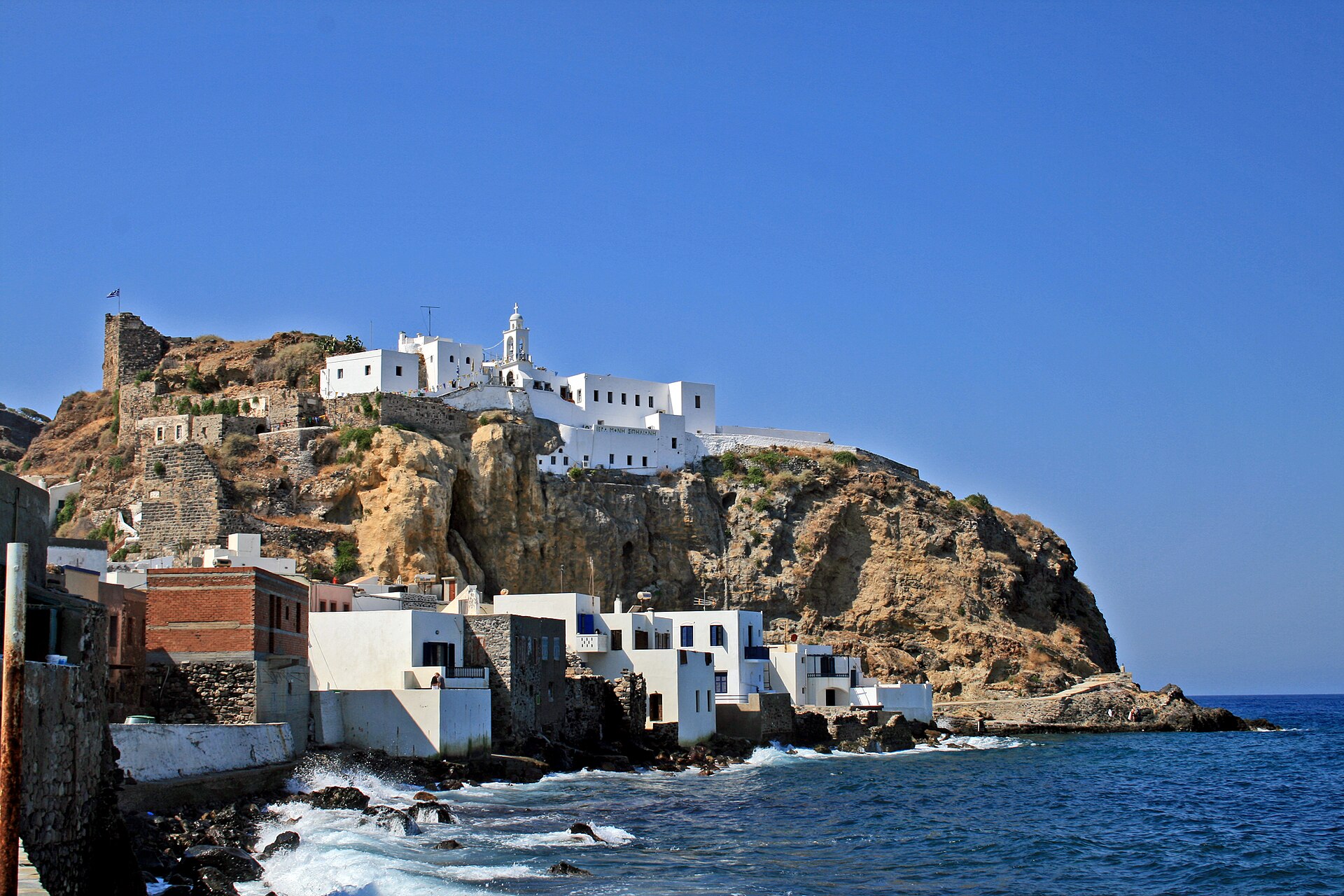
Mandraki brings the island’s history into a compact landscape. White houses and narrow lanes gather beside the sea; a rock carrying the medieval castle and Panagia Spiliani rises above them. Higher inland, Palaiokastro preserves the defenses of the ancient city. Their positions make sense together, but their masonry belongs to different historical worlds. Start by noticing how the shore, settlement and high ground frame one another rather than treating every old wall as part of a single castle.
Palaiokastro: a city defended in volcanic stone
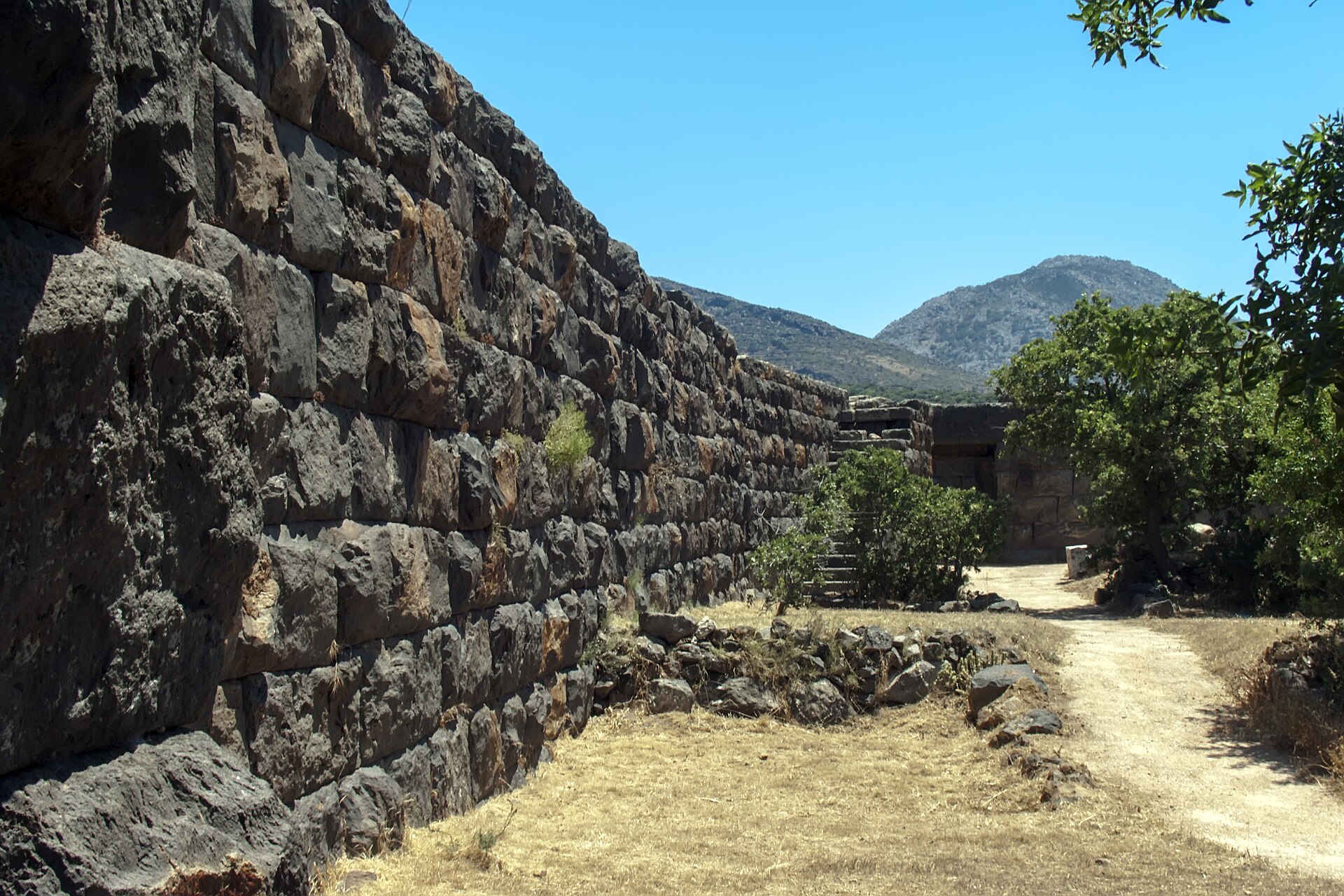
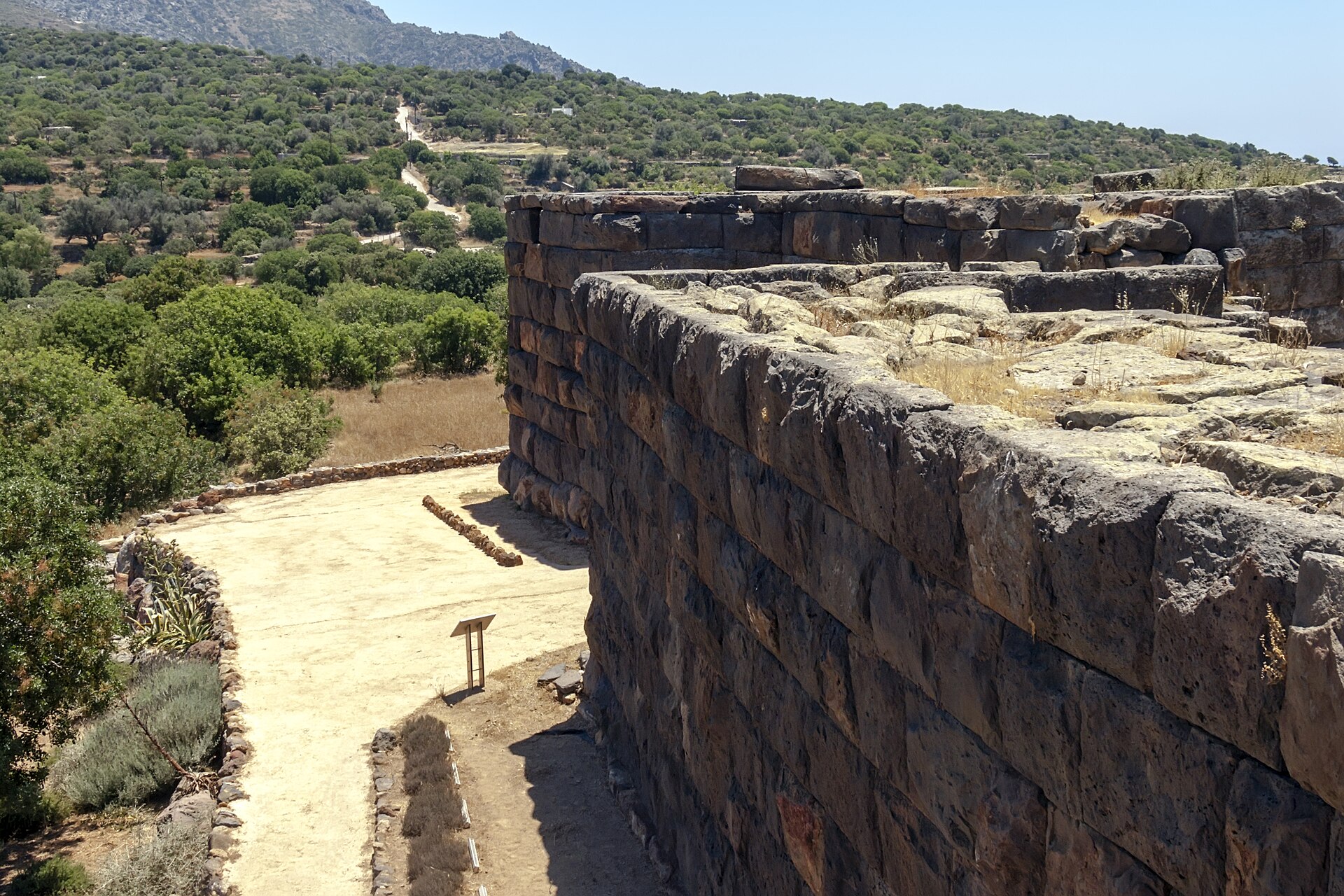
The ancient enclosure is the island’s most substantial surviving defensive monument. Large blocks of dark volcanic stone form walls strengthened by rectangular towers. A sheltered gateway and internal stairs show how movement through and onto the defenses was controlled. The surviving circuit is associated chiefly with the fourth century BCE, with later alterations. An inscription outside the gate regulated the clear strip beside the wall, a reminder that defense depended on managing surrounding space as well as building strong masonry.
Look for changes in block size and arrangement, the relationship between towers and gate, and the wall’s use of the hill’s edge. Early Christian remains inside the enclosure show that this ground had a history after its original defensive purpose.
The castle rock and Panagia Spiliani
The medieval castle above the waterfront belongs to the island’s later fortified history, associated with the Knights Hospitaller. Panagia Spiliani gives this rock a continuing importance beyond warfare. The monastery’s church and its enclosed, elevated setting combine sanctuary, landscape and the memory of protection. Its medieval origins should not be confused with the much older walls of Palaiokastro.
The ascent offers a changing view of Mandraki and the sea. Treat the monastery as an active place of worship: observe dress guidance, avoid disturbing services and respect areas reserved for the community.
A town with more than fortifications
Mandraki’s archaeological and folklore museums offer different ways into island life: ancient objects on one hand, household and community memory on the other. Pebbled public spaces, churches and the waterfront make the town worth exploring at walking pace. The fortifications are important landmarks within this inhabited setting, rather than isolated ruins detached from the island’s culture.
Villages around a volcanic interior
Beyond Mandraki, Nisyros opens into a landscape shaped by volcanic activity. Emporios sits on the caldera rim, while Nikia combines views towards the craters with a distinctive pebble-paved square and a volcanological museum. These villages give the fortified coast a wider setting of farming, building stone and adaptation to difficult terrain. The volcanic interior is a separate excursion, not an extension of the castle visit.
Exploring Nisyros today
Allow time for both the ancient fortification and the castle rock if you want to understand the contrast between them. The climbs involve exposed ground and uneven surfaces; wear secure shoes and carry water. Confirm current museum and monastery access locally. Ask about conditions before entering volcanic visitor areas, follow marked routes and heed closures. As checked in November 2026, this page does not guarantee step-free access or a particular opening timetable.
Architecture
- Large volcanic-stone blocks and rectangular towers at Palaiokastro
- Sheltered ancient gateway and stairs associated with the defenses
- Medieval castle rock overlooking Mandraki
- Panagia Spiliani within the elevated religious and fortified setting
Timeline
- Fourth century BCE Principal surviving defenses of ancient Palaiokastro take shape.
- Early Christian period Christian buildings occupy ground within the ancient enclosure.
- Medieval period The castle rock above Mandraki develops within the island’s fortified and religious landscape.
- Today Mandraki, the monastery and the archaeological remains coexist within a living volcanic island.
Visiting today
Begin in Mandraki and distinguish the ascent to Palaiokastro from the approach to Panagia Spiliani. Both involve changes in level and uneven ground. Check current access with local operators, respect worship and private homes, and obtain separate guidance for the volcanic interior.
Historical contexts
- Knights Hospitaller
- Ottoman Period
- Rise of Modern Greece
- Harbor Defense and Sea-Lane Control
Expedition guides
Images
References
Related places
Related Stops
Topics
- Ancient Fortifications
- Hospitaller
- Religious Heritage
- Volcanic Landscape
- Island Settlement