Highlights
- A fortress on the Sfakian plain
Frangokastello occupies a coastal plain where the mountains of Sfakia approach the Libyan Sea.
- The Venetian enclosure
The Region of Crete dates construction to 1371–1374.
- A surviving outline, a rebuilt fabric
Inside the walls, low rooms and foundations recall the accommodation and supplies needed by a garrison.
- The battle and the Drosoulites
In 1828 an insurgent force under Hatzimichalis Dalianis confronted Ottoman-led troops on the plain.
Strategic role
A coastal stronghold intended to secure Venetian authority in Sfakia, later reinterpreted through resistance and historical memory.
A fortress on the Sfakian plain
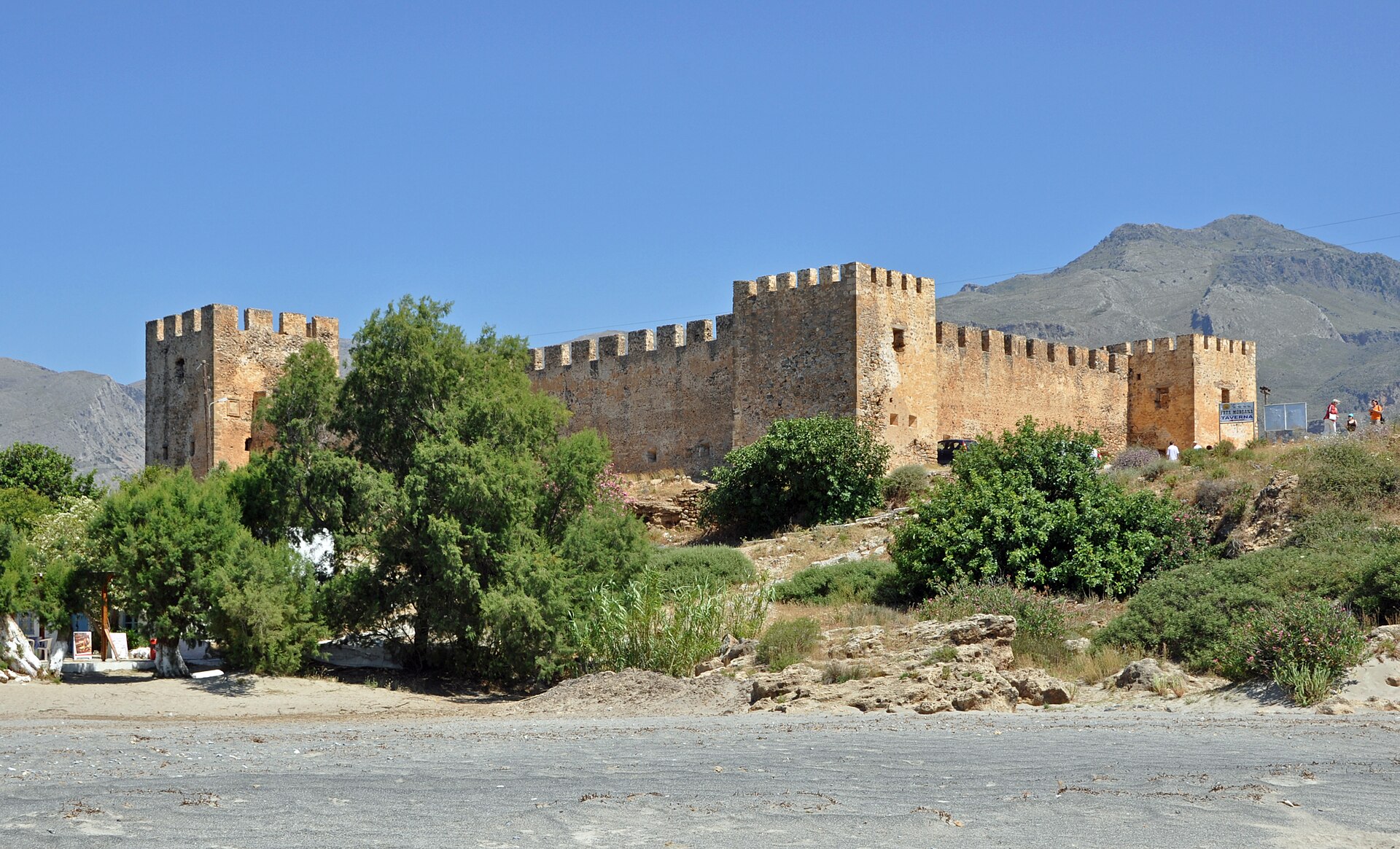
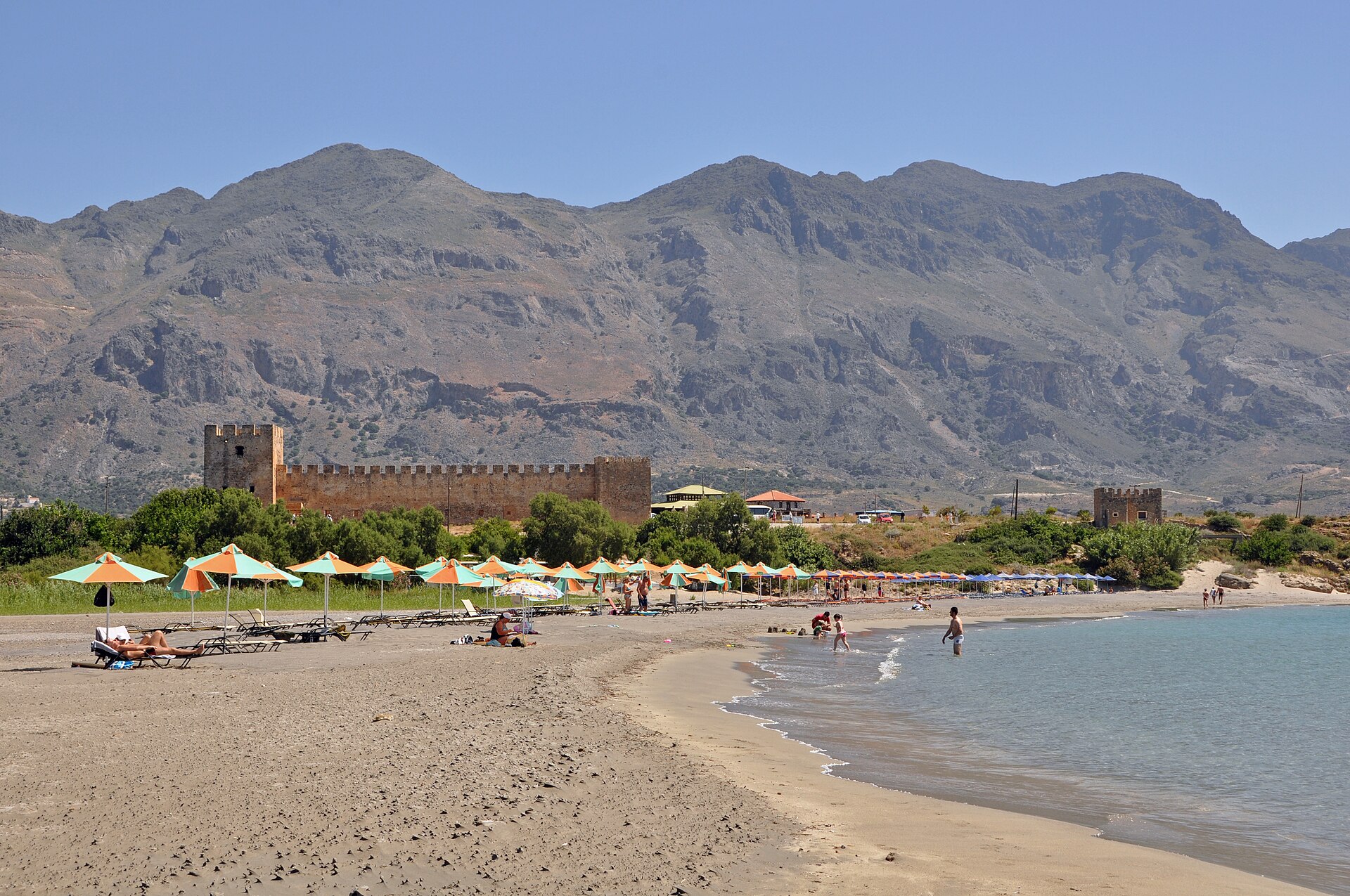
Frangokastello occupies a coastal plain where the mountains of Sfakia approach the Libyan Sea. Its low rectangular outline differs from the elevated island forts of western Crete. The position joined access from the sea to the difficult inland district, making defense and the imposition of authority closely connected. The regional account explains Venetian concern with both maritime raiding and local resistance. Seen from the surrounding ground, the enclosure is therefore a statement about governing the district as well as protecting a beach.
The Venetian enclosure
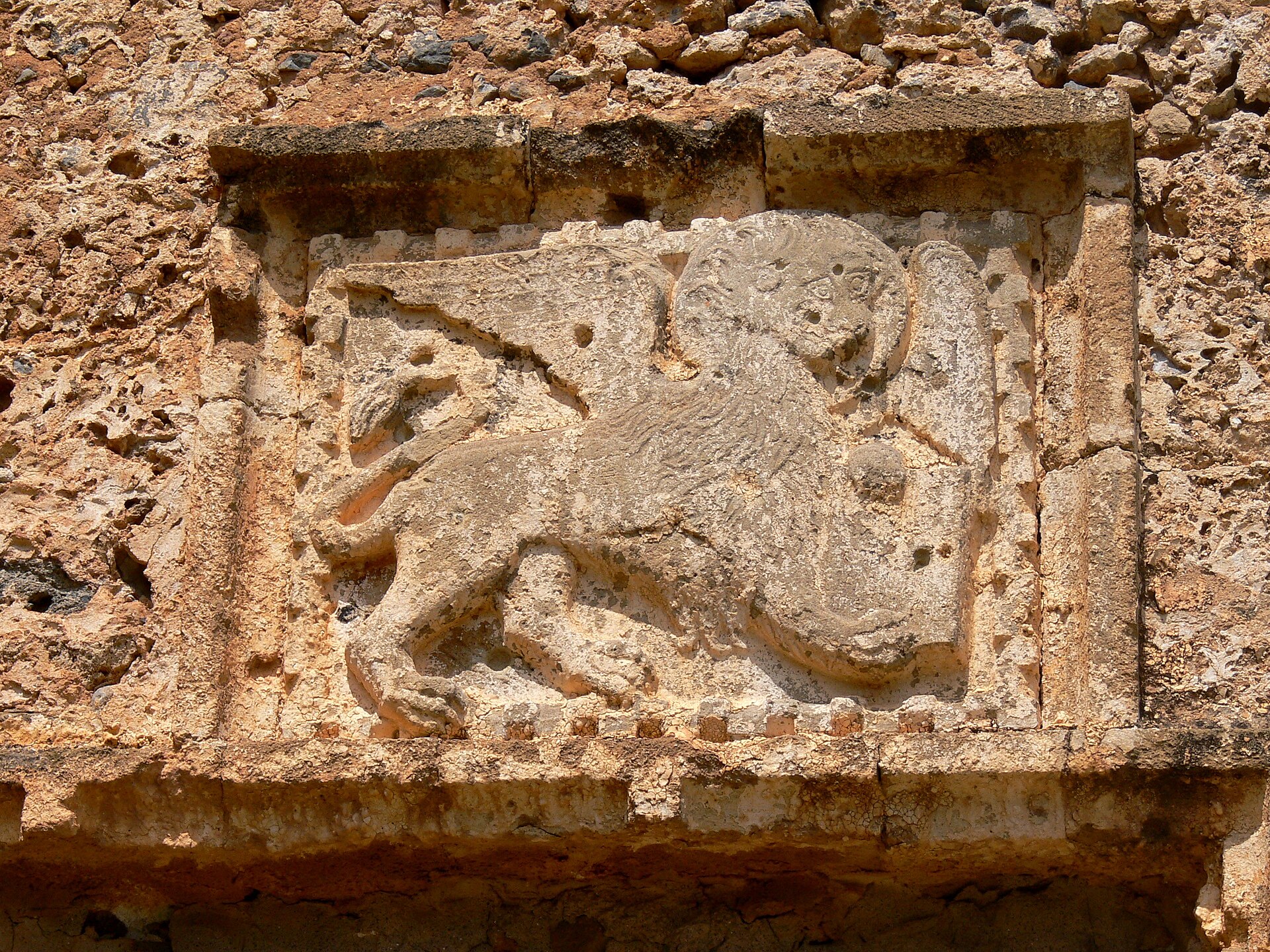
The Region of Crete dates construction to 1371–1374. Four corner towers and high straight curtains belong to an older defensive arrangement than the large angular bastions developed later for artillery. The surviving entrance displays Venetian heraldic elements, including the lion of Saint Mark. These features establish the fortress’s association with Venice, but they do not make every visible surface medieval. Repairs, replacement of upper parts and changes around the entrances have repeatedly altered the building while maintaining its recognizable plan.
A surviving outline, a rebuilt fabric
Inside the walls, low rooms and foundations recall the accommodation and supplies needed by a garrison. Their present appearance includes reconstruction over earlier remains. The regional archaeological description identifies particularly substantial nineteenth-century intervention under Mustafa Pasha and earlier Venetian repairs. Frangokastello is consequently better read as an inherited military shell repeatedly made usable than as an intact fourteenth-century castle. Compare the robust towers with the lesser internal buildings: the different survival of perimeter and service spaces shapes the visit.
The battle and the Drosoulites
In 1828 an insurgent force under Hatzimichalis Dalianis confronted Ottoman-led troops on the plain. Dalianis was killed, and surviving revolutionaries withdrew into the fortress before negotiating their departure. The episode transformed the castle into a landmark of resistance in Cretan memory. The later Drosoulites story describes shadowy figures near dawn around the battle’s anniversary. This is a tradition associated with the fallen, not archaeological evidence for the fighting or proof of a supernatural event. It shows how a military building became a remembered landscape.
Looking beyond the silhouette
The clearest visit compares the enclosure from outside with the internal yard, the corner towers and the heraldic entrance, where access is permitted. The nearby shore makes the relationship between fortress and coast immediately apparent. Recent tourism information reports restoration and public access, but opening arrangements and individual spaces can change; check the archaeological service before travel. The surrounding plain and settlement remain living places. Beaches and cultural events have their own conditions and should not be treated as evidence that every part of the fortress is accessible.
Architecture
- Rectangular enclosure with high straight curtains
- Four corner towers of unequal scale
- Entrance with surviving Venetian heraldic elements
- Internal garrison rooms incorporating reconstructed fabric
Timeline
- 1371–1374 Regional archaeological information dates construction of the Venetian fortress to these years.
- Late 16th–17th centuries Venetian authorities carried out repairs as the defensive needs of Crete changed.
- 1828 Fighting at the castle established its lasting association with resistance and later remembrance.
- 19th century Ottoman rebuilding substantially changed elements of the surviving fortress.
- Modern period Conservation and cultural use added another phase to the military enclosure.
Visiting today
The clearest visit compares the enclosure from outside with the internal yard, the corner towers and the heraldic entrance, where access is permitted. The nearby shore makes the relationship between fortress and coast immediately apparent. Recent tourism information reports restoration and public access, but opening arrangements and individual spaces can change; check the archaeological service before travel. The surrounding plain and settlement remain living places. Beaches and cultural events have their own conditions and should not be treated as evidence that every part of the fortress is accessible.
Historical contexts
- Venetian Maritime Empire
- Ottoman Period
- Rise of Modern Greece
- Harbor Defense and Sea-Lane Control
Expeditions
- Expedition I
Images
References
Related places
Topics
- Frangokastello
- Historical Landscape
- Material Culture
- Visitor Context