Highlights
- A height above the western approaches
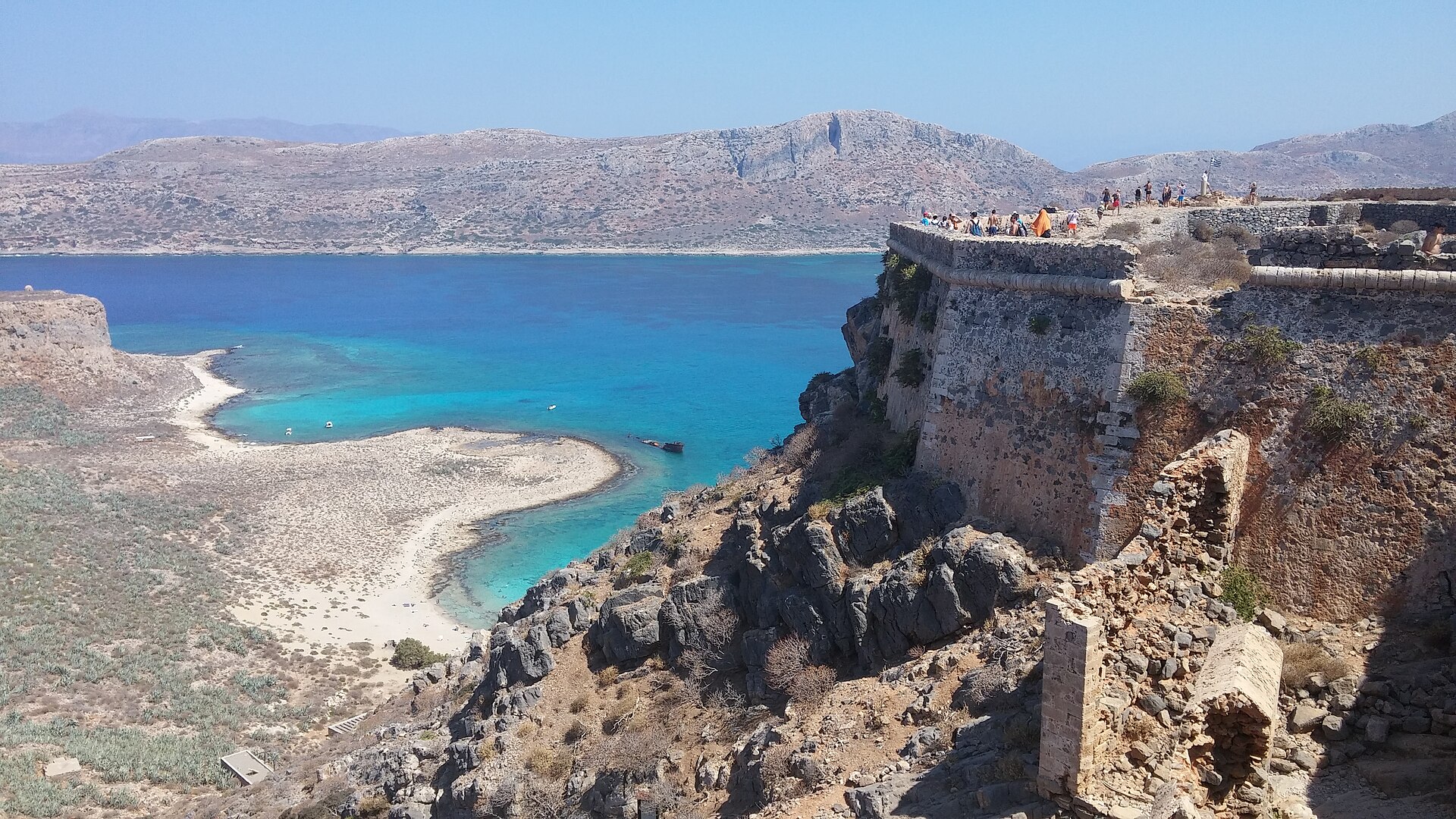
The fortress occupies the steep upper ground of Imeri Gramvousa, an island close to Crete’s northwestern peninsula.
- Walls fitted to the rock
Regional archaeological information connects the late-sixteenth-century fortress with designs supervised by Latino Orsini.
- Rainwater and the isolated garrison
Large vaulted reservoirs collected rainwater from paved surfaces.
- From Venetian stronghold to revolutionary base
The fortress remained part of the contested maritime landscape after the Ottoman conquest of most of Crete and passed into Ottoman hands at the end of the seventeenth century.
Strategic role
An island fort controlling a small harbor and observing the western sea approaches to Crete.
A height above the western approaches
The fortress occupies the steep upper ground of Imeri Gramvousa, an island close to Crete’s northwestern peninsula. The small landing and the climb above it explain both the position’s attraction and its limitations. Sea approaches could be observed from above, while cliffs reduced the length of defensible ground. This did not make the island self-sufficient. The imposing prospect should be read alongside the practical work of bringing people, provisions and building material up from the water.
Walls fitted to the rock
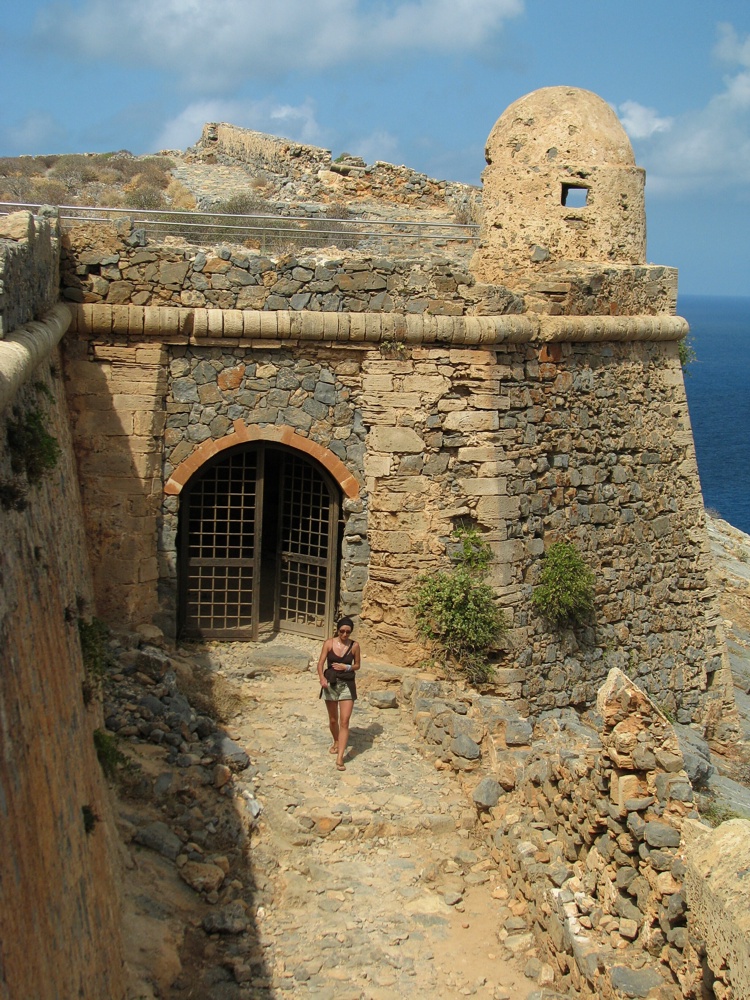
Regional archaeological information connects the late-sixteenth-century fortress with designs supervised by Latino Orsini. Walls and small bastions follow the uneven ground rather than a regular square plan; steep rock supplies part of the perimeter. The eastern entrance leads through a vaulted passage. Inside, surviving foundations and the remaining church and powder-store building establish the scale of an organized military establishment. They are remnants of a working complex, not simply a wall built to provide a viewpoint.
Rainwater and the isolated garrison
Large vaulted reservoirs collected rainwater from paved surfaces. Their prominence offers a particularly clear way to understand life in an island fort: protection depended on stores and water as much as on guns and walls. The landscape should not be mistaken for a permanently well-supplied refuge merely because its height made attack difficult. Compare the reservoirs, service-building foundations and controlled entrance to reconstruct the tasks required to sustain the enclosure.
From Venetian stronghold to revolutionary base
The fortress remained part of the contested maritime landscape after the Ottoman conquest of most of Crete and passed into Ottoman hands at the end of the seventeenth century. During the Greek revolutionary period it became a base for rebels and sea raiding. Its pirate reputation adds an uncomfortable dimension to the history of revolutionary occupation. Those later uses explain why the same defensive position can be remembered as both a stronghold of resistance and a center of predation, without making either label a complete history.
Distinguishing island, fortress and lagoon
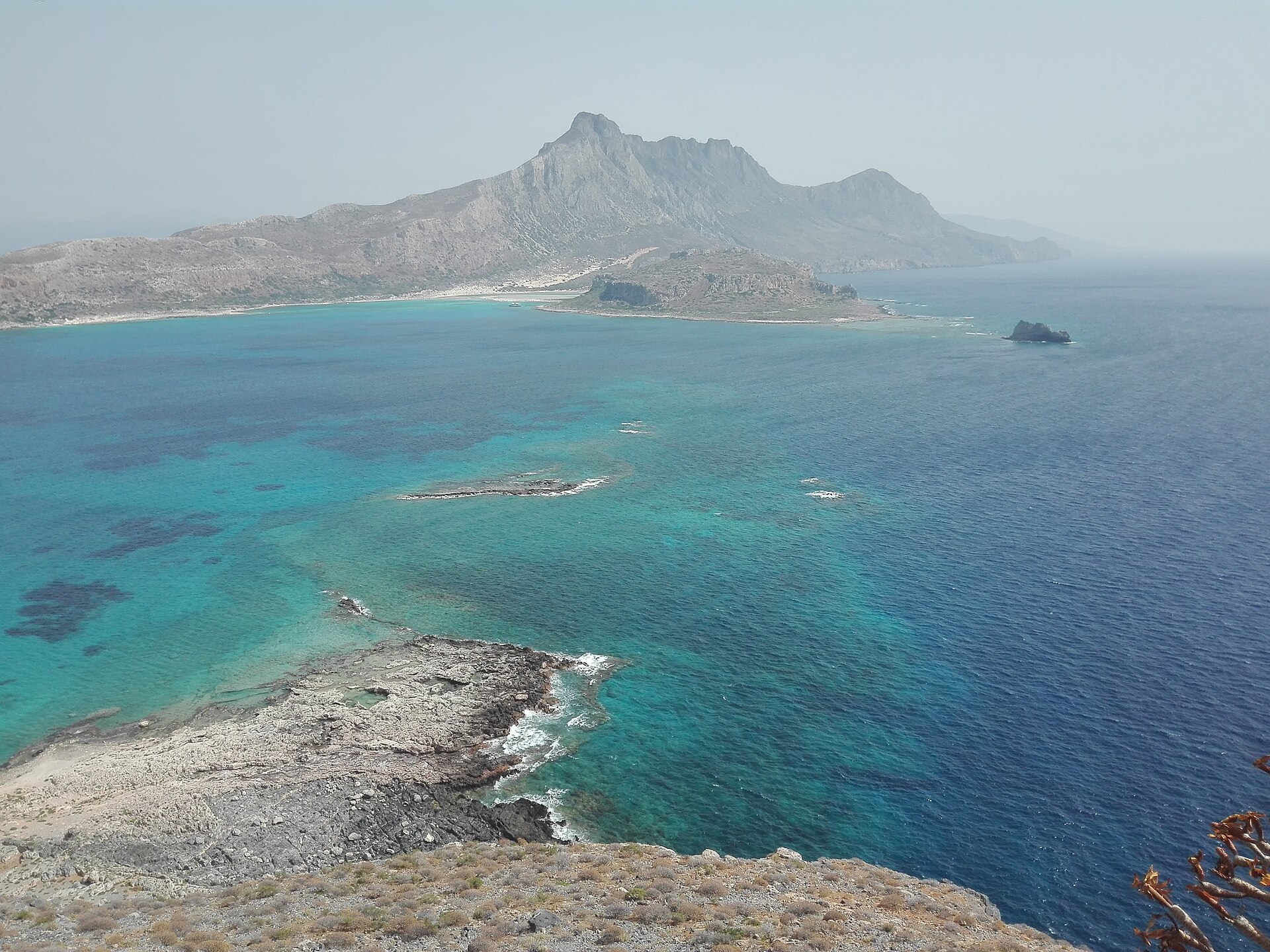
Imeri Gramvousa, the neighboring Agria Gramvousa and Balos lagoon are distinct parts of the landscape. A visit to one does not establish access to the others. On Imeri Gramvousa the fortress requires a steep exposed climb beyond the landing, with uneven stone surfaces and limited shade. Boat operations, weather and archaeological-service restrictions can all affect the visit. Confirm current permitted access and follow marked routes; keep away from damaged walls and exposed edges.
Architecture
- Irregular wall circuit adapted to cliffs
- Small bastions and protected eastern entrance
- Vaulted passage into the enclosure
- Rainwater reservoirs, church and military-building remains
Timeline
- Late 16th century Venetian authorities constructed the fortress as part of the wider defense of Crete.
- Late 17th century The fortress passed into Ottoman possession after an extended Venetian maritime presence.
- Greek revolutionary period Rebel occupation and maritime raiding changed the island’s role and reputation.
- Modern period Conservation and organized visits brought new uses to the surviving enclosure.
Visiting today
Imeri Gramvousa, the neighboring Agria Gramvousa and Balos lagoon are distinct parts of the landscape. A visit to one does not establish access to the others. On Imeri Gramvousa the fortress requires a steep exposed climb beyond the landing, with uneven stone surfaces and limited shade. Boat operations, weather and archaeological-service restrictions can all affect the visit. Confirm current permitted access and follow marked routes; keep away from damaged walls and exposed edges.
Historical contexts
- Venetian Maritime Empire
- Ottoman Period
- Rise of Modern Greece
- Harbor Defense and Sea-Lane Control
Expeditions
- Expedition I
Images
References
Related places
Topics
- Gramvousa
- Historical Landscape
- Material Culture
- Visitor Context