Highlights
- The monastic coastline
The monastery links island landscape with the Great Lavra of Mount Athos.
- Early islanders
Neolithic Agios Petros reveals craft and Aegean connections.
- A protected maritime landscape
Bays, archaeology and wildlife require a careful, permitted approach.
Strategic role
A monastic island and maritime crossroads within the Northern Sporades protected landscape.
An island within the marine park
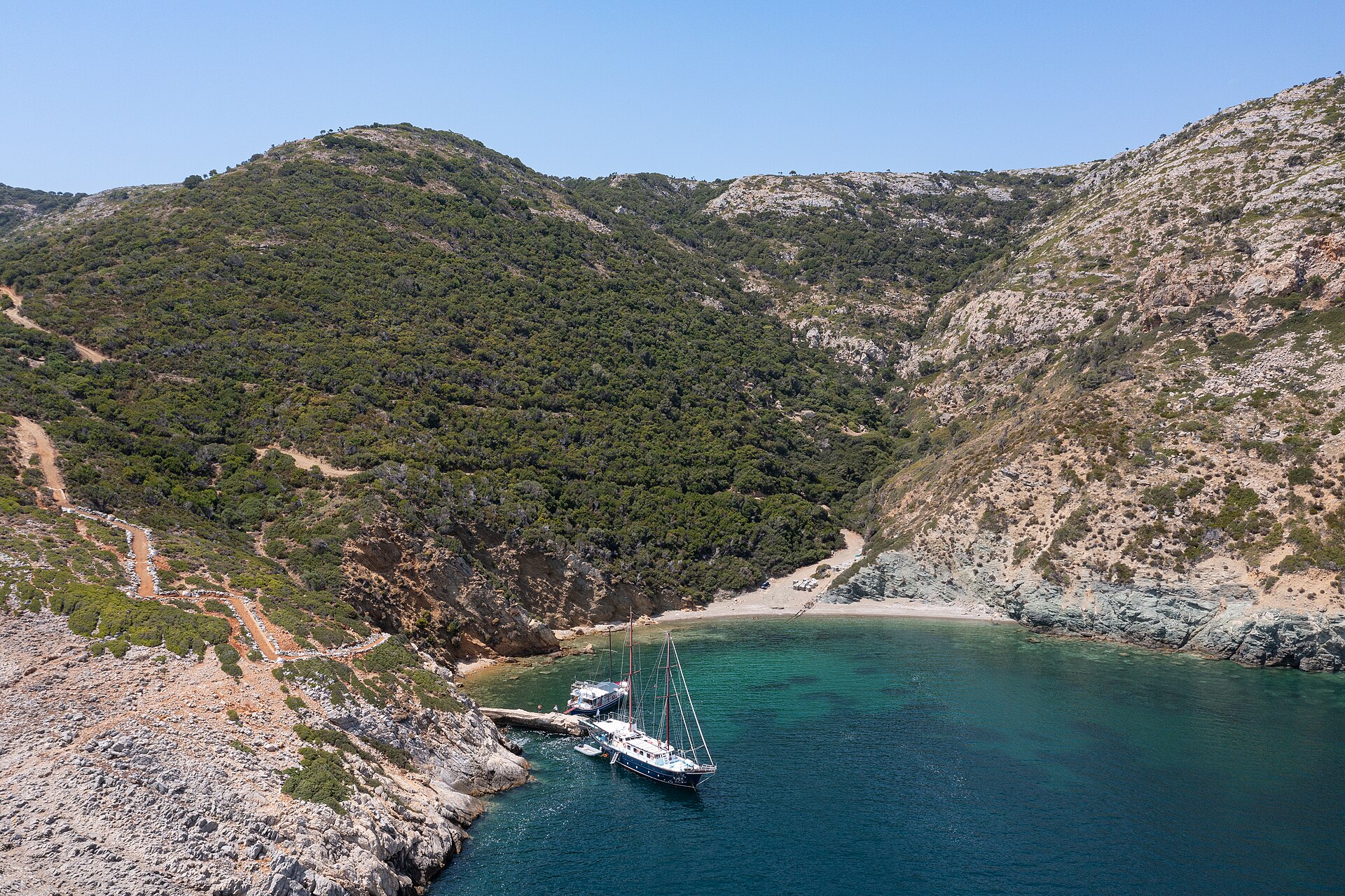
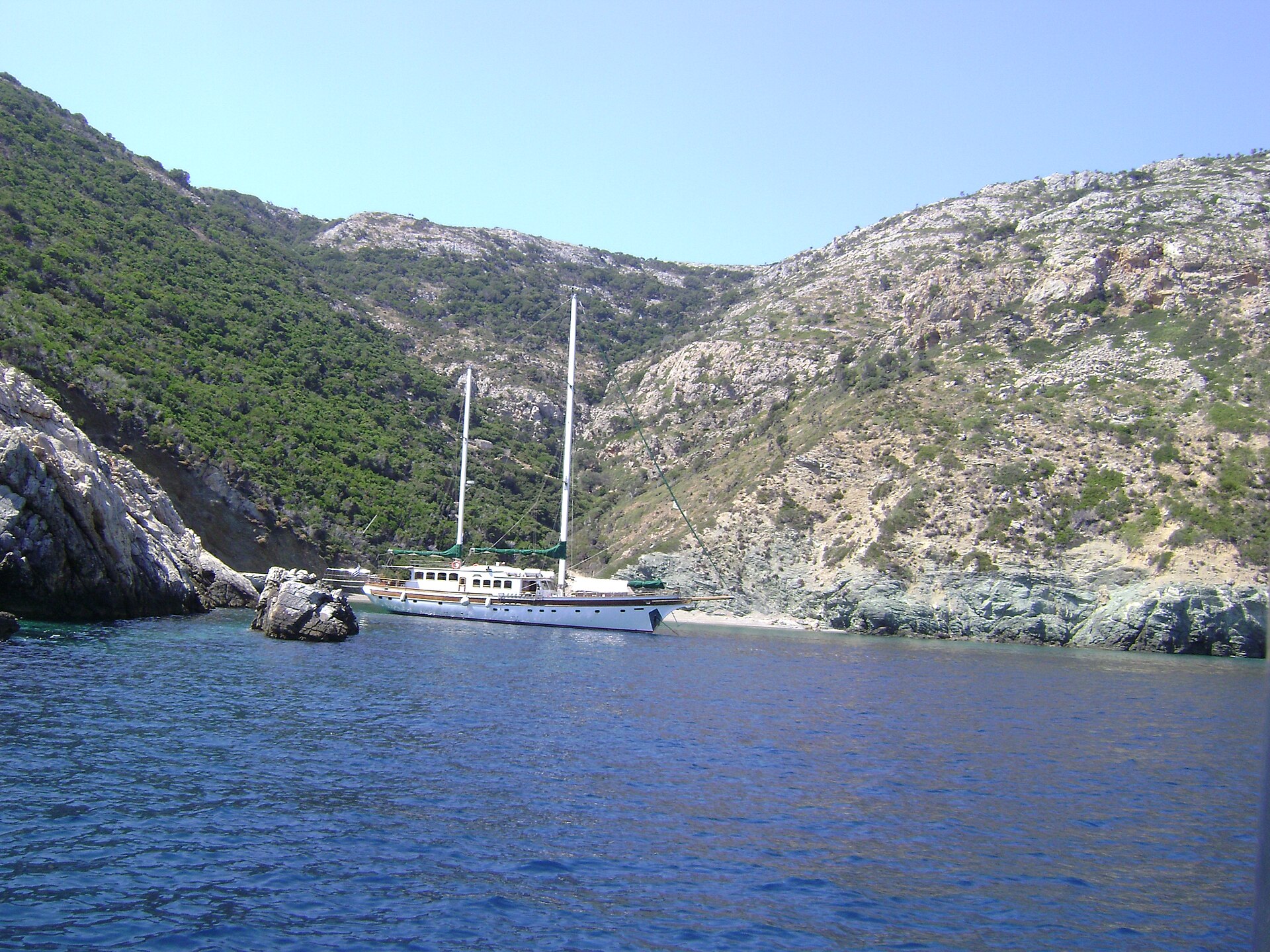
Kyra Panagia offers a different kind of historic place from an inhabited castle town. Low scrub, rocky slopes and bays dominate the view, and the monastery is a rare concentration of buildings. Agios Petros lies on the southern side and Planitis to the north. Their shapes explain the island’s long attraction to people moving by sea, but an inviting coastline does not imply unrestricted landing.
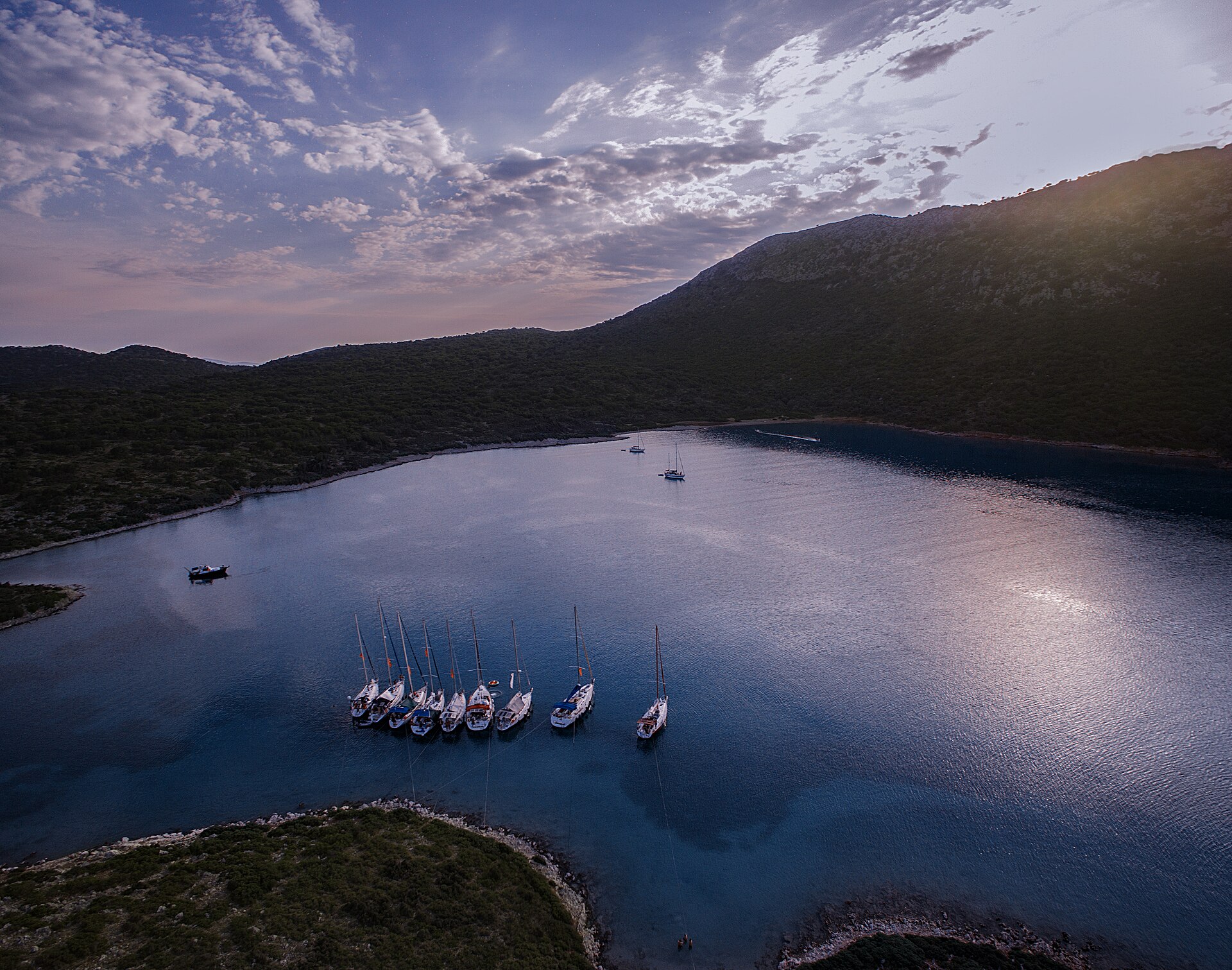
The island belongs to a protected archipelago whose value includes marine life, birds and coastal habitats. Its cultural history is part of that environment rather than an alternative to it.
Agios Petros and early island life
The Neolithic settlement associated with the small islet of Agios Petros shows that these apparently remote islands were part of a connected prehistoric world. Studies of pottery investigate local production and relationships with neighboring Yioura. Finds also place the community within wider Aegean exchanges.
Changing shorelines matter to the interpretation: some archaeological remains are now submerged. This is a research landscape, not a marked open-air village that visitors can assume they may enter. Its importance lies in what it reveals about early settlement, craft and movement between islands.
A separate Byzantine shipwreck
Agios Petros bay also contains a twelfth-century commercial shipwreck, distinct from the prehistoric settlement. Archaeological investigation in 1970 recovered evidence of a substantial cargo, including amphorae, decorated glazed pottery and millstones. These objects connect a quiet bay with the movement of goods through the medieval Aegean.
The wreck is not a casual snorkeling attraction. In the November 2026 check, the Ephorate of Underwater Antiquities explicitly states that it is not yet open to the public. Its historical importance should not be confused with permission to dive on the site.
The monastery above the eastern shore
The monastery of the Nativity of the Virgin Mary is associated with the Great Lavra on Mount Athos. The standing complex belongs to the island’s post-Byzantine religious landscape. Its position near the eastern coast makes the connection between sea access and monastic life especially clear.
A visit, when permitted and agreed, should respect the community’s privacy and worship. The approach from the shore is part of the experience, but access to the monastery does not mean permission to roam throughout the island.
Visiting with care
Plan a visit through current park guidance and an operator familiar with local restrictions. The park’s published rules distinguish the monastery approach from the bays of Agios Petros and Planitis, and restrict movement ashore. Confirm entry requirements, landing permissions and any seasonal changes with the management unit before travel.
As checked in November 2026, the published monastery route is limited to the designated path from Monastiri beach. Do not disturb wildlife, collect objects or enter archaeological remains. The bays’ historical role as stopping places is not a guarantee of shelter or safe anchoring in particular conditions.
Architecture
- A post-Byzantine monastery set above the eastern shore
- A limited built footprint within scrub-covered island terrain
- Prehistoric settlement evidence at Agios Petros, partly submerged
- A distinct medieval wreck site preserving evidence of cargo and navigation
Timeline
- Neolithic period A settled community at Agios Petros participates in Northern Sporades networks.
- Twelfth century CE A commercial vessel carrying pottery and other cargo is lost in Agios Petros bay.
- Post-Byzantine period The standing monastery develops within the island’s religious landscape.
- 1970 Archaeologists investigate the Byzantine shipwreck.
- 1992 The Alonissos–Northern Sporades area is designated a marine park.
Visiting today
Check current requirements with the marine park management unit and arrange permitted visits in advance. Follow the designated monastery approach, respect restrictions on landing and movement ashore, and do not assume access to underwater archaeological sites.
Expedition guides
Images
References
Related places
Related Stops
Topics
- Monastic Heritage
- Maritime Archaeology
- Prehistoric Settlement
- Protected Landscape
- Northern Sporades