Overview
The historical center of Alonissos is the Old Village, or Chora, set high above the southern coast on the site associated with one of the two principal settlements of ancient Ikos. The island's position on routes through the Northern Sporades encouraged settlement and maritime trade from antiquity, but in later centuries exposure to piracy favored a compact inland refuge rather than an open coastal capital. Medieval and early modern sources are less detailed than for major fortress cities, and the surviving castle remains are modest; the significance of Chora lies as much in its defensible position and settlement form as in monumental fortification. The 1965 earthquakes accelerated the transfer of population and administration to the harbor of Patitiri, creating the modern contrast between the restored hilltop village and the coastal port below.
Highlights
- Old Alonissos (Chora)
The restored hilltop village preserves the setting and compact form of the island's historic capital, developed away from the coast in response to centuries of maritime insecurity.
- Medieval Castle Remains
The Municipality of Alonissos identifies a medieval castle in the Old Village. Its surviving remains are modest, making the defensive landscape and settlement pattern more important than monumental walls.
- Ancient Ikos
Alonissos was known in antiquity as Ikos, with two principal settlements and a strong maritime economy based in part on wine production and export.
- National Marine Park
Established in 1992, the National Marine Park of Alonissos Northern Sporades protects an extensive island and marine ecosystem and is especially associated with conservation of the Mediterranean monk seal.
- Mediterranean Monk Seal
The surrounding marine park contains important habitat for Monachus monachus, making conservation one of the defining elements of Alonissos's modern identity.
- Peristera Underwater Museum
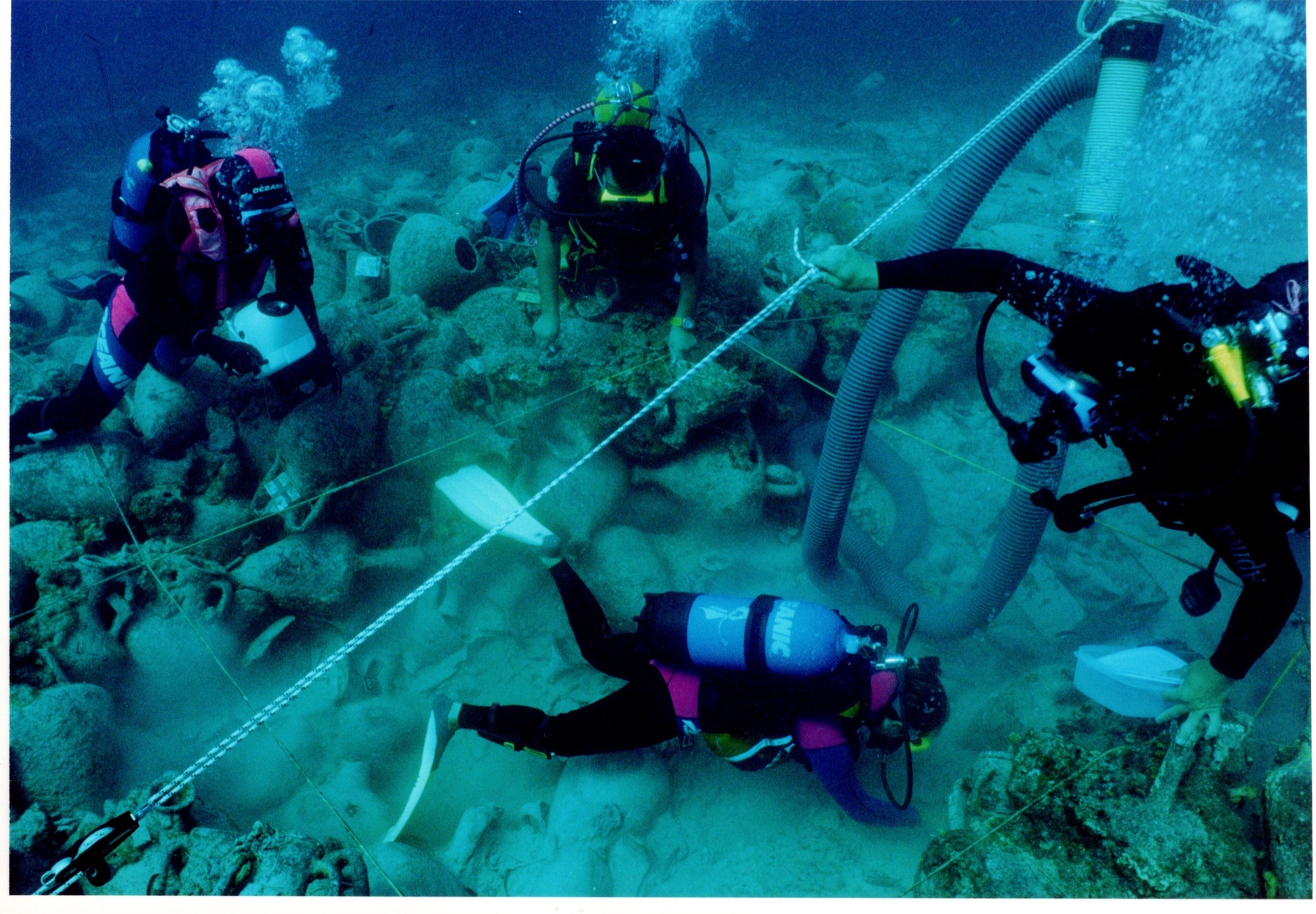
The Classical-period wreck off Peristera, carrying thousands of wine amphorae, became Greece's first underwater archaeological museum open to the diving public in 2020.
- Traditional Architecture
Stone houses, tiled roofs, narrow lanes and small churches preserve the scale of the historic Chora despite the destruction and abandonment that followed the 1965 earthquakes.
- Panoramic Sporades Setting
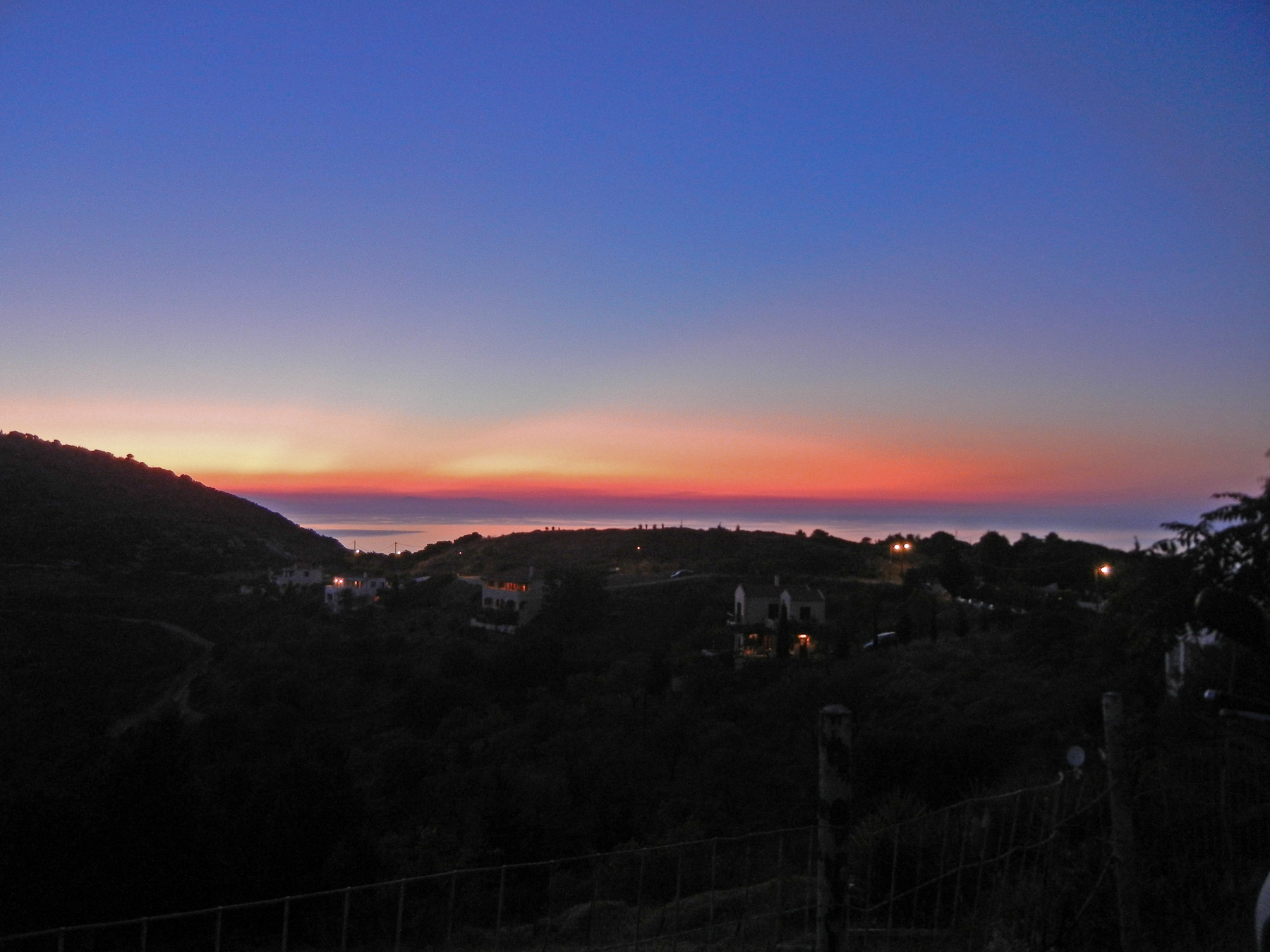
From the elevated Chora, broad views across the Aegean reveal why the settlement could observe maritime approaches while remaining removed from the vulnerable shoreline.
- International Academy of Classical Homeopathy
George Vithoulkas established the International Academy of Classical Homeopathy on Alonissos in 1995, creating an unusual modern international association for the island.
Strategic role
A compact hilltop refuge settlement whose position and modest fortifications protected an island community exposed to maritime raiding, later complemented by Patitiri as the modern coastal capital.
Overview
Alonissos, known in antiquity as Ikos, occupied an important position on the maritime routes of the Northern Sporades. Classical sources and archaeological evidence indicate two principal ancient settlements, probably around modern Kokkinokastro and the area of today's Old Village. In later centuries the island's exposure to piracy and raiding favored settlement on defensible high ground. The Chora that survives today occupies this commanding inland position above the southern coast. Its medieval castle was never comparable in scale with the great Venetian fortresses of the Aegean, and much of its fabric has disappeared, but the fortified setting remains essential to understanding why the community developed away from the shoreline. The result is a historic landscape in which ancient settlement, medieval refuge, traditional architecture and modern island life remain closely connected.
From Ikos to the Medieval Chora
Ancient Ikos prospered through agriculture and maritime exchange and was known for wine exported in amphorae marked with the island's name. In 476 BCE it entered the Athenian alliance, while later Roman control placed the island within a wider imperial maritime system. Written evidence becomes much thinner after antiquity. The National Marine Park's historical account records Venetian rule from 1207 to 1276, followed by renewed Byzantine control, and a second Venetian phase after 1453. Ottoman forces took the island in 1538. Across these centuries the fortified hilltop settlement provided a defensible focus for the island population. The surviving remains are limited, so Alonissos is best interpreted not as a monumental castle ruin but as a medieval refuge settlement whose topography, compact form and small castle responded to the insecurity of island life.
Earthquake, Abandonment and Patitiri
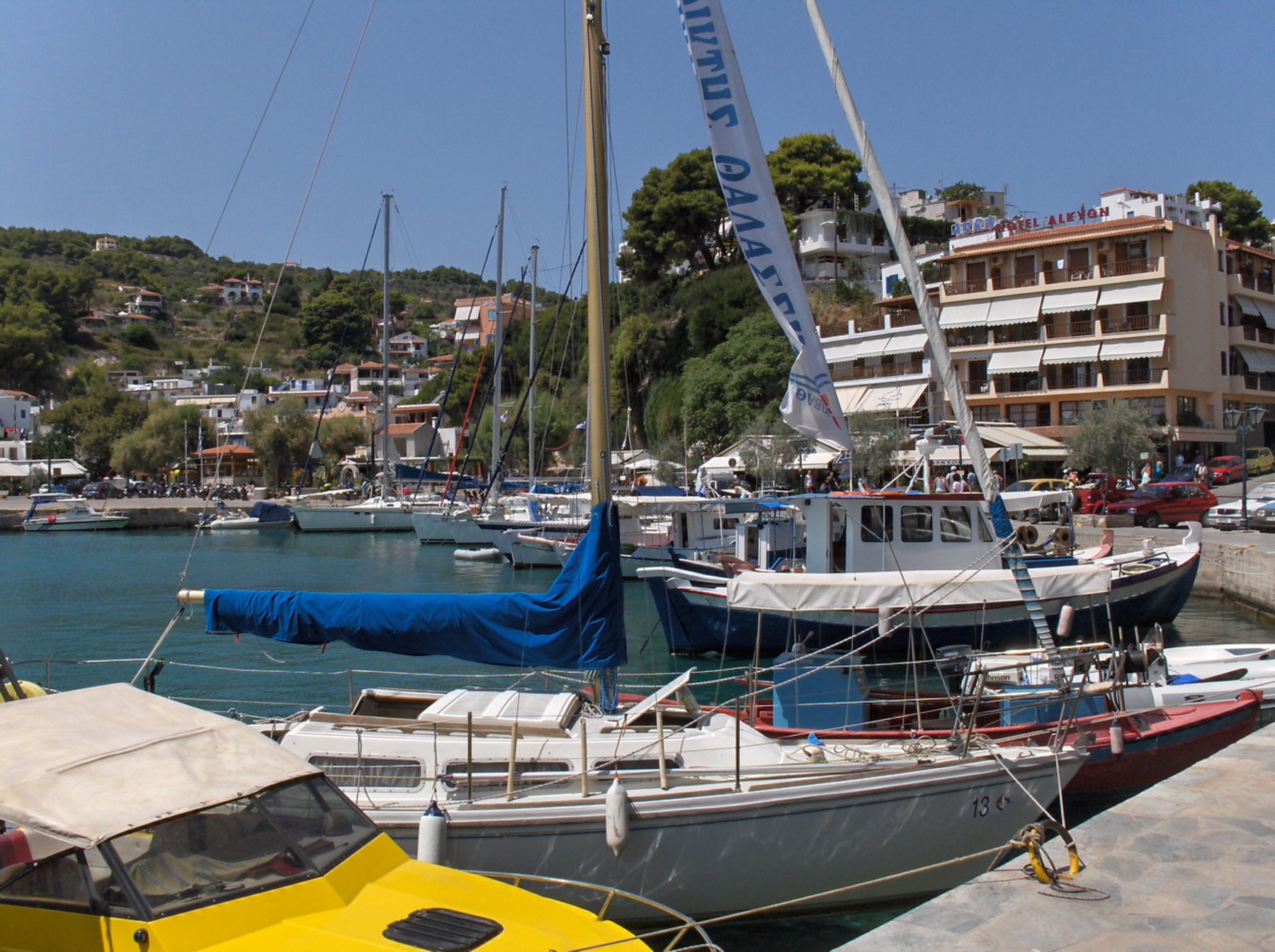
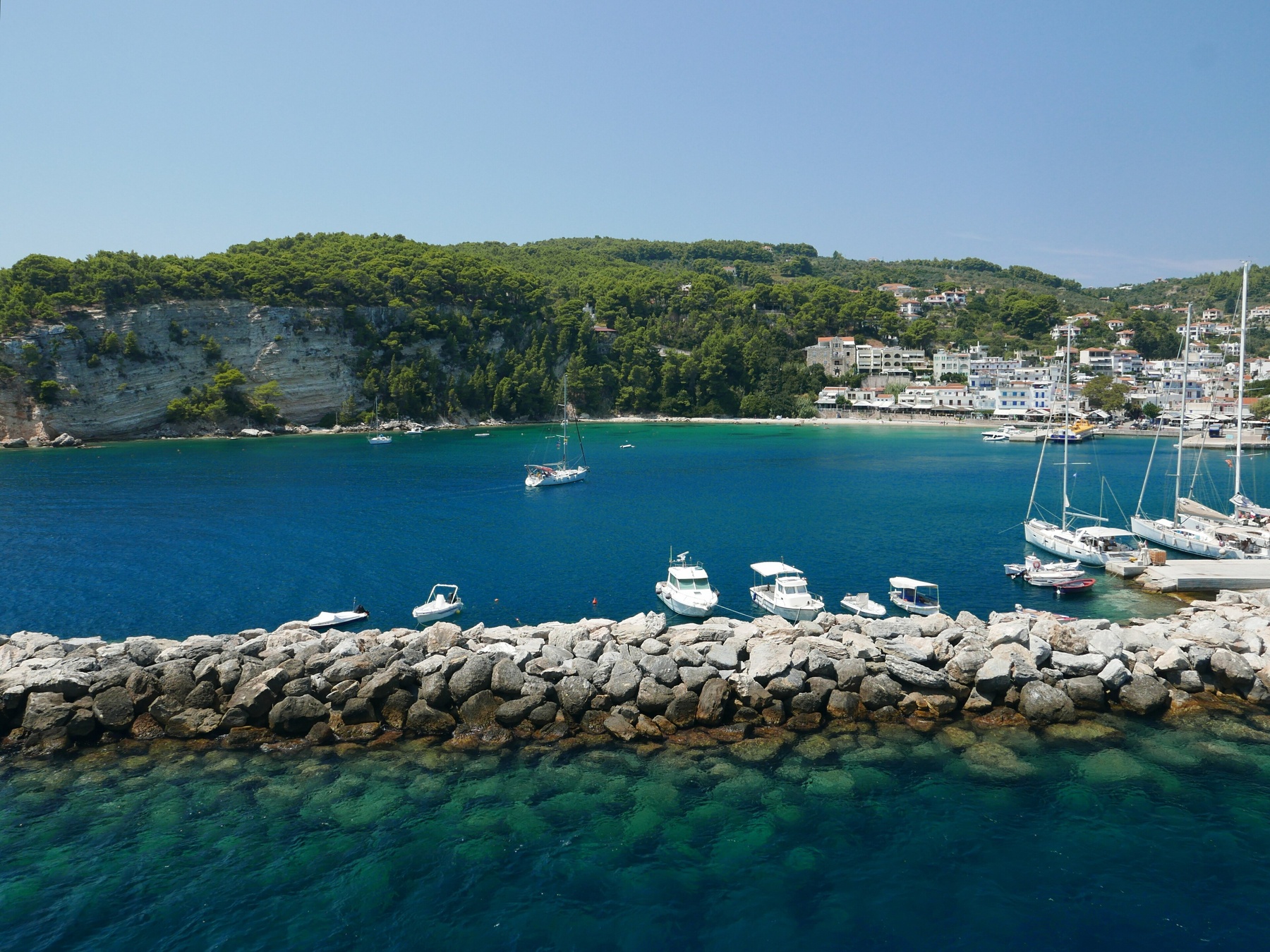
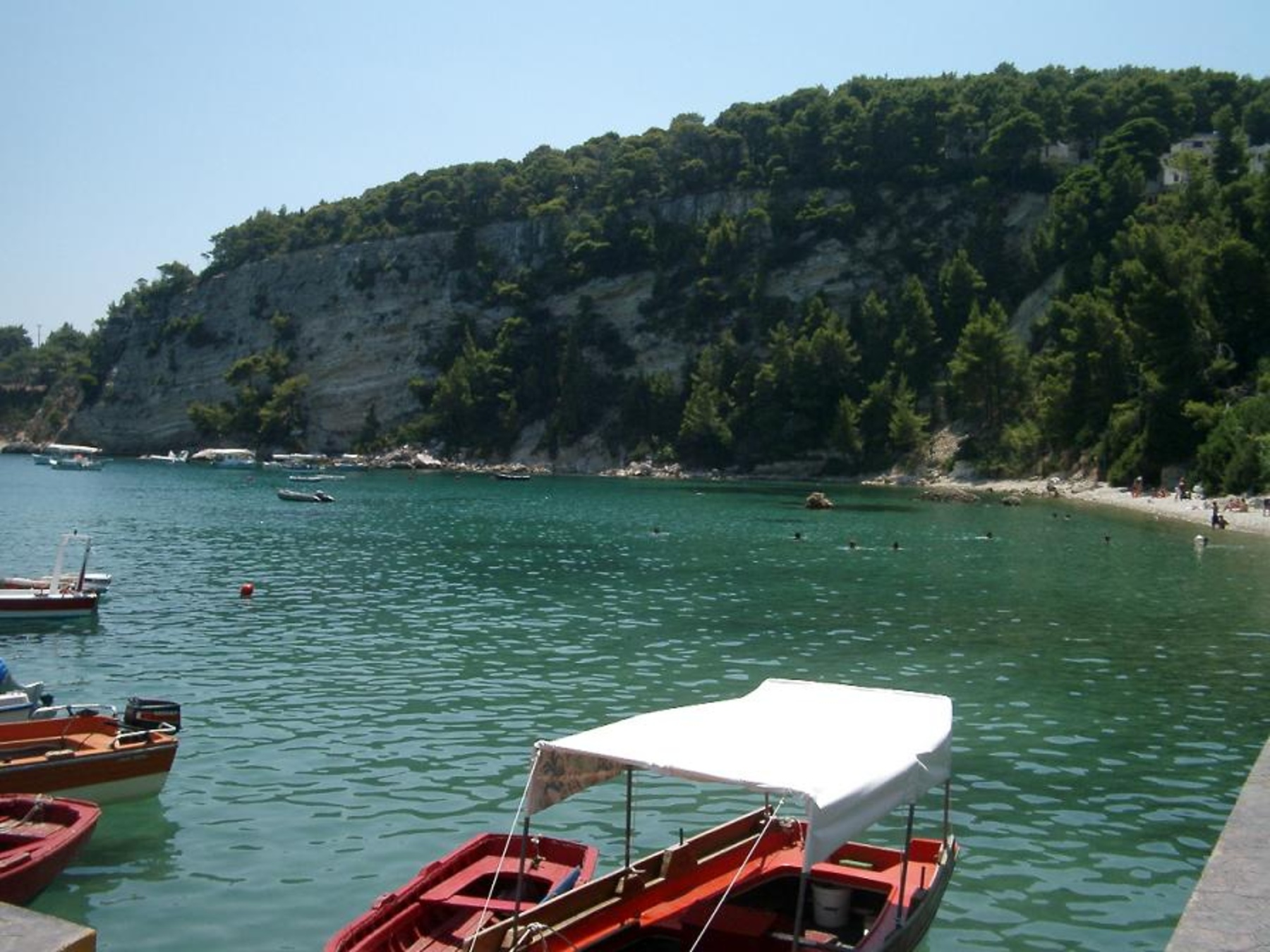
The strongest break in the continuity of the old settlement came with the earthquakes of 1965. Damage to Chora led many residents to relocate permanently to Patitiri, the sheltered harbor that became the island's modern administrative and commercial center. For a period the Old Village was largely deserted, but houses were gradually restored by islanders and new residents, preserving much of its traditional scale and street pattern. The two settlements now tell complementary stories: Chora preserves the memory of a community shaped by defensible inland living, while Patitiri reflects the island's modern turn toward transport, fishing, tourism and direct engagement with the sea.
National Marine Park and the Monk Seal
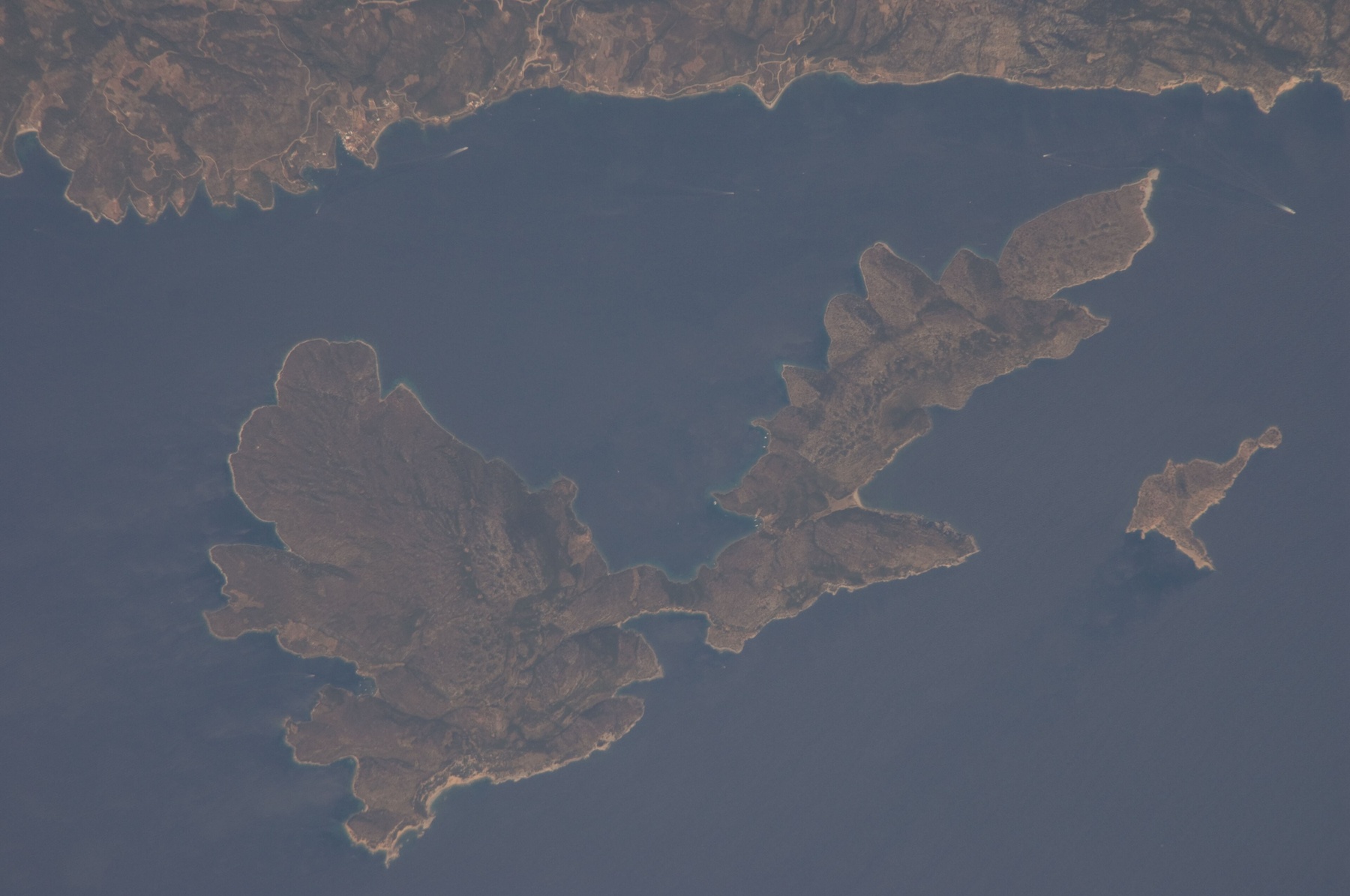
Established in 1992, the National Marine Park of Alonissos Northern Sporades protects the waters around Alonissos together with a wider complex of islands, islets and marine habitats. Its best-known conservation focus is the endangered Mediterranean monk seal (Monachus monachus), for which the remote shores and sea caves of the Northern Sporades provide important habitat. The park also protects seabirds, fish populations and relatively undisturbed coastal ecosystems. Regulations on access, fishing and navigation in sensitive zones reflect the effort to balance human use with conservation. For Alonissos, the park is more than a nearby natural attraction: it has become central to the island's modern identity and links the historic maritime landscape of the Sporades with contemporary environmental stewardship.
Peristera and Underwater Archaeology
Just east of Alonissos lies Peristera, where archaeologists investigated a late fifth-century BCE shipwreck carrying a remarkably large cargo of wine amphorae. The wreck provides unusually vivid evidence for the scale and organization of maritime commerce in the Classical Aegean and complements the archaeological record of ancient Ikos, whose economy was closely connected with seaborne trade. In 2020 the Peristera site opened to controlled recreational diving as Greece's first underwater archaeological museum, allowing certified divers to experience the wreck in situ while interpretation for non-divers makes the discoveries accessible on land. The site gives Alonissos a distinctive role in Greek maritime archaeology and extends the island's story from fortified settlement on land to the ancient sea routes surrounding it.
Why Visit
Alonissos completes the principal Northern Sporades sequence alongside Skiathos and Skopelos, but its appeal is distinct from both. The Old Village preserves the atmosphere of a compact hilltop refuge whose origins reach back to ancient Ikos and whose medieval form reflects centuries of insecurity in the Aegean. The National Marine Park and its Mediterranean monk seals add an internationally important conservation dimension, while the Peristera wreck reveals the depth of the region's ancient maritime history. Alonissos is also home to the International Academy of Classical Homeopathy, founded by George Vithoulkas in 1995, giving the island an unusual additional modern international association. Together these layers make Alonissos valuable not for a single monumental castle, but for the way archaeology, defensive settlement, traditional architecture, maritime history and natural conservation converge in one island landscape.
Architecture
- Compact hilltop settlement overlooking the southern approaches to the island
- Remains associated with a small medieval castle or fortified enclosure
- Narrow lanes and tightly grouped houses within the historic village
- Traditional stone-built and whitewashed houses with tiled roofs
- Churches embedded in the historic settlement fabric
- Restored houses reflecting both local rebuilding and post-1965 revival
- Strong visual relationship between the old hilltop settlement and the modern port of Patitiri
Timeline
- Prehistoric period Archaeological evidence in the Alonissos area points to very early human activity, while later prehistoric settlement developed across the Northern Sporades.
- Classical period The island was known as Ikos and appears to have had two principal settlements, probably near modern Kokkinokastro and the area of today's Old Village.
- 476 BCE Ikos joined the Athenian alliance. The island became known for wine production and maritime trade.
- 190 BCE A Roman fleet took control of the island, after which the written historical record becomes comparatively sparse.
- 1207–1276 The island came under Venetian rule during the fragmentation of Byzantine authority after the Fourth Crusade.
- 1276–1453 Alonissos returned to Byzantine control. The hilltop settlement remained the island's principal defensible center.
- 1453–1538 The island again came under Venetian authority as inhabitants sought protection from expanding Ottoman power.
- 1538 Ottoman forces took the island, which then remained under Ottoman rule until the Greek revolutionary era.
- 1821 During the Greek War of Independence, islanders contributed ships and sailors to the struggle.
- 19th century The hilltop Chora remained the island's principal settlement, while the small castle and older defenses gradually lost their military function.
- 9 March 1965 Strong earthquakes severely damaged the Old Village and accelerated the transfer of population to Patitiri.
- Late 20th century The Old Village was progressively restored by local residents and newcomers, preserving it as a traditional hilltop settlement.
- May 1992 The National Marine Park of Alonissos Northern Sporades was formally established by presidential decree, becoming Greece's first national marine park.
- 1995 George Vithoulkas established the International Academy of Classical Homeopathy on Alonissos.
- 1 August 2020 The Peristera shipwreck opened as Greece's first underwater archaeological museum accessible to recreational divers under controlled conditions.
Visiting today
Old Alonissos is an inhabited and restored traditional village rather than a large organized castle site. The historic lanes, churches, viewpoints and surviving traces of the medieval enclosure are best explored on foot. The National Marine Park and the Peristera underwater archaeological site have separate conservation and access rules; visitors should consult current official guidance before planning boat trips or dives.
Images
References
- https://alonissos.gr/en/alonissos/history-alonissos.html
- https://alonissos.gr/en/places-to-go/sightseeing-in-alonissos/old-village.html
- https://alonissos-park.gr/?lang=en_US&page_id=71
- https://alonissos-park.gr/?lang=en_US&page_id=101
- https://alonissos.gr/en/marine-park/marine-park-history.html
- https://www.culture.gov.gr/el/Information/SitePages/view.aspx?nID=3396
- https://www.vithoulkas.com/academy/who-we-are/
Related places
Topics
- Castle Town And Island
- Northern Sporades
- Ancient Ikos
- Medieval Settlement
- Venetian
- Ottoman
- Piracy
- Traditional Settlement
- Marine Park
- Monk Seal
- Maritime Archaeology
- Peristera Wreck