Highlights
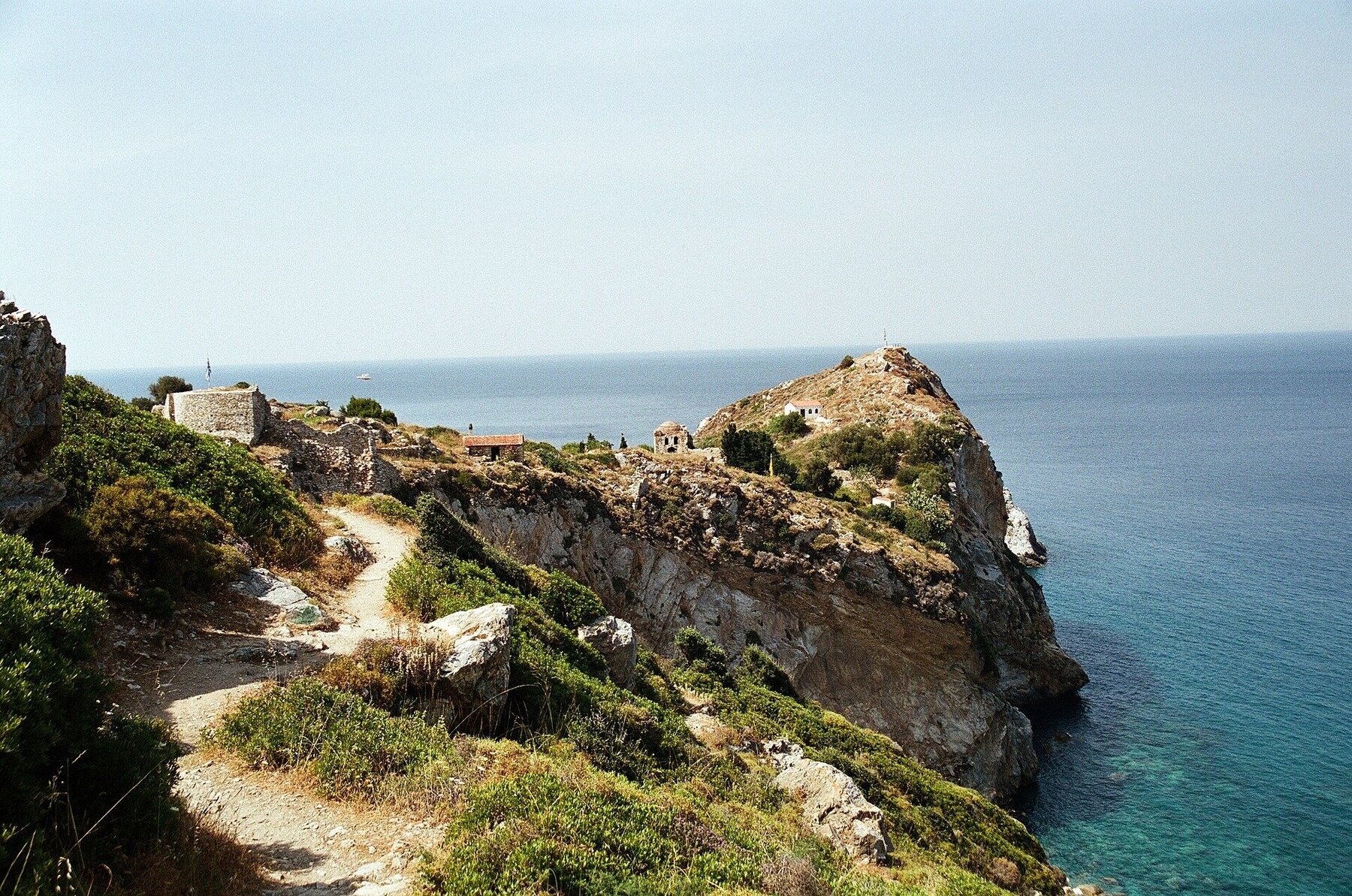
- Kastro’s cliff-top fortified settlement and surviving landward defenses
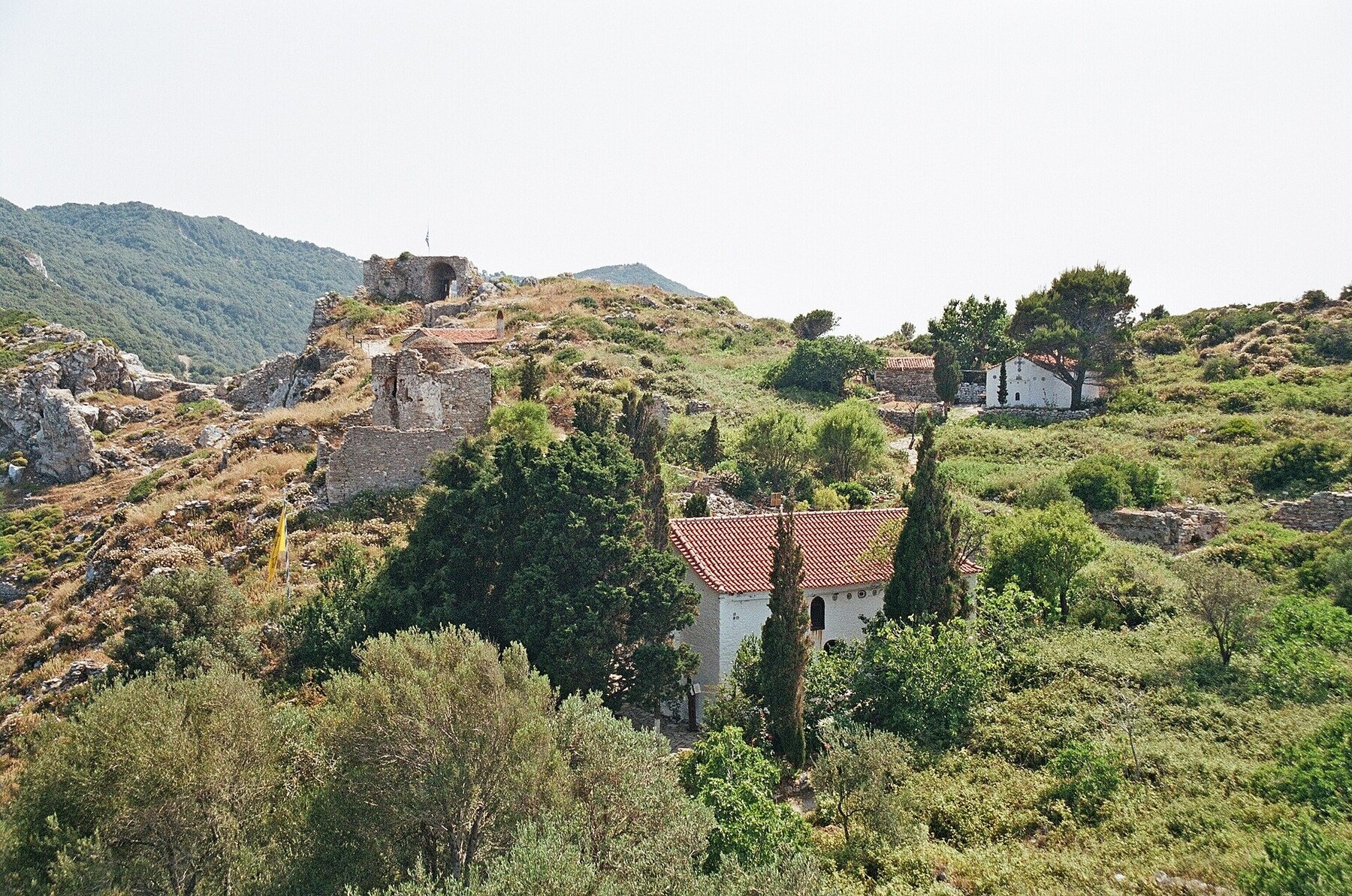
- The churches of Kastro and the sacred landscape evoked by Papadiamantis
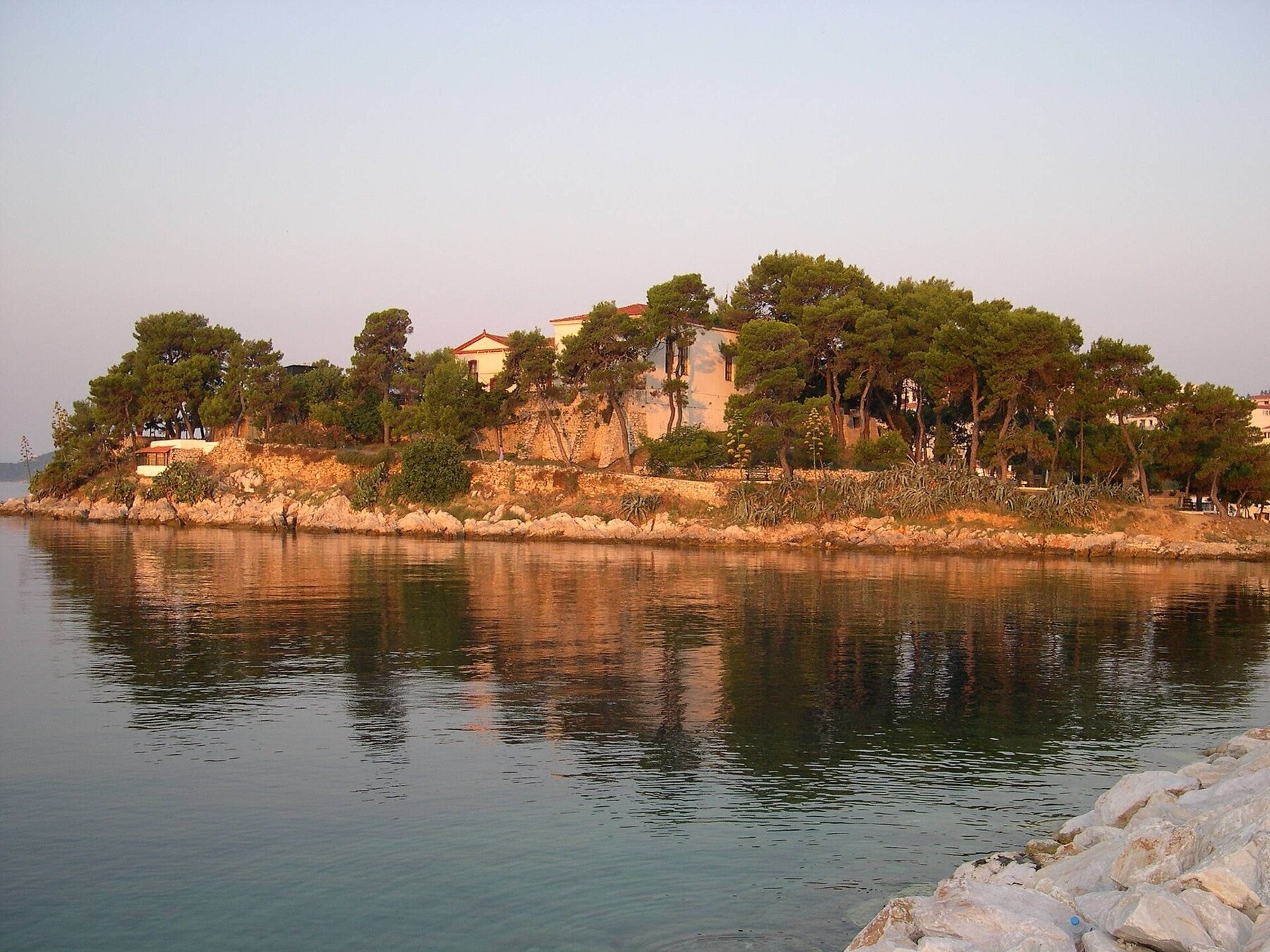
- Bourtzi peninsula between the old and new harbors
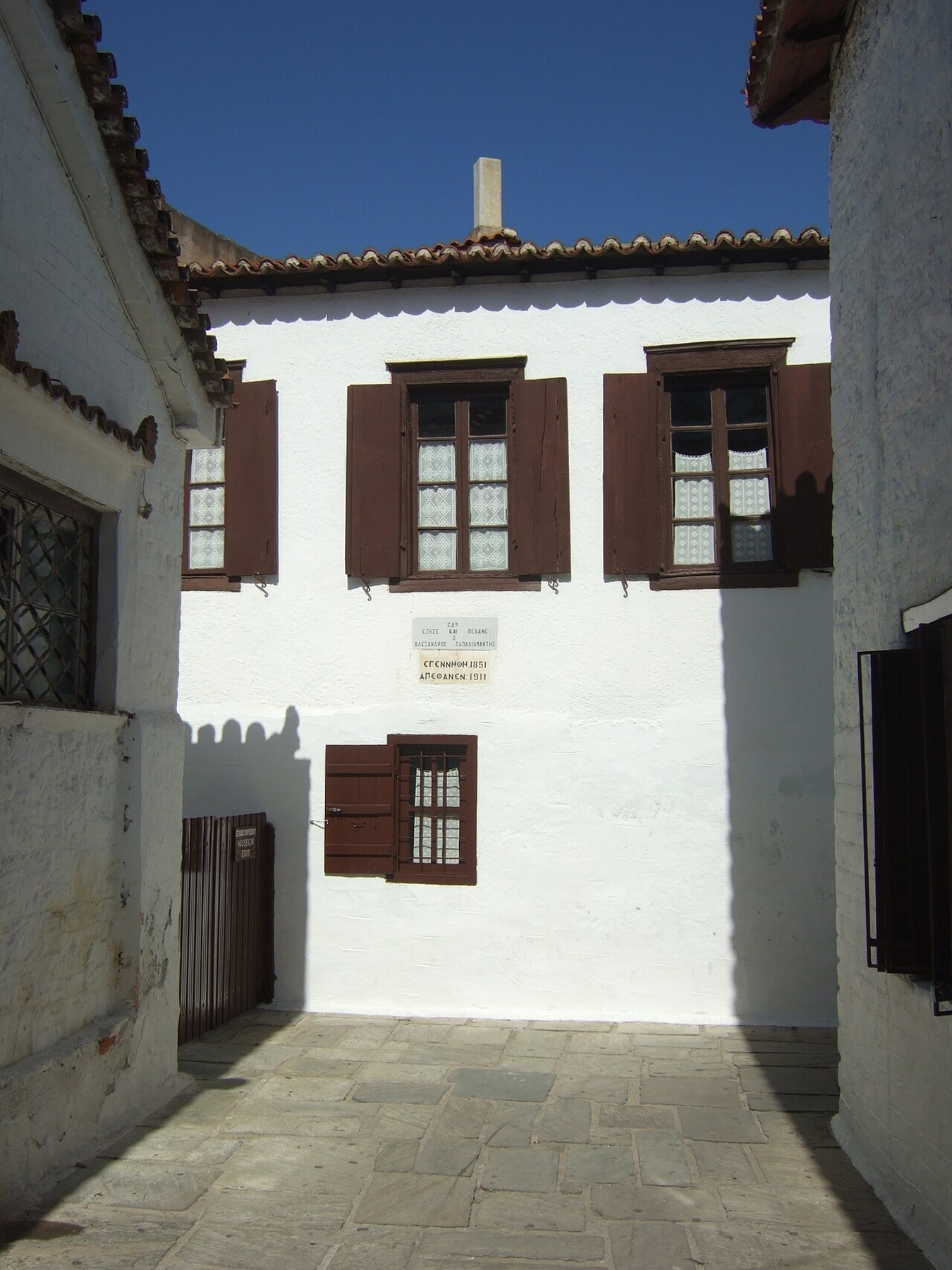
- Papadiamantis House Museum in Skiathos Town
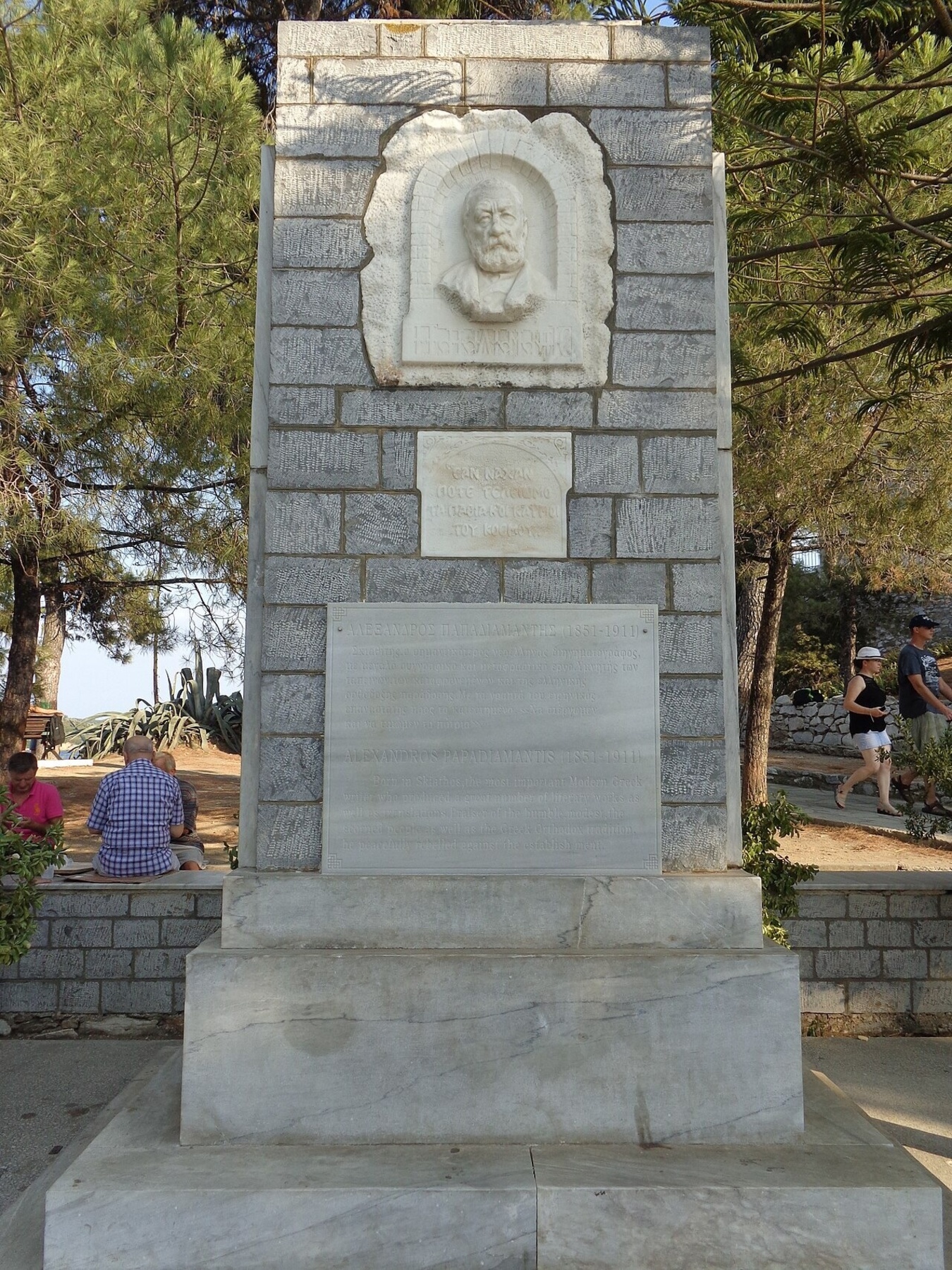
- The monument to Alexandros Papadiamantis at Bourtzi
- Evangelistria Monastery and its revolutionary associations
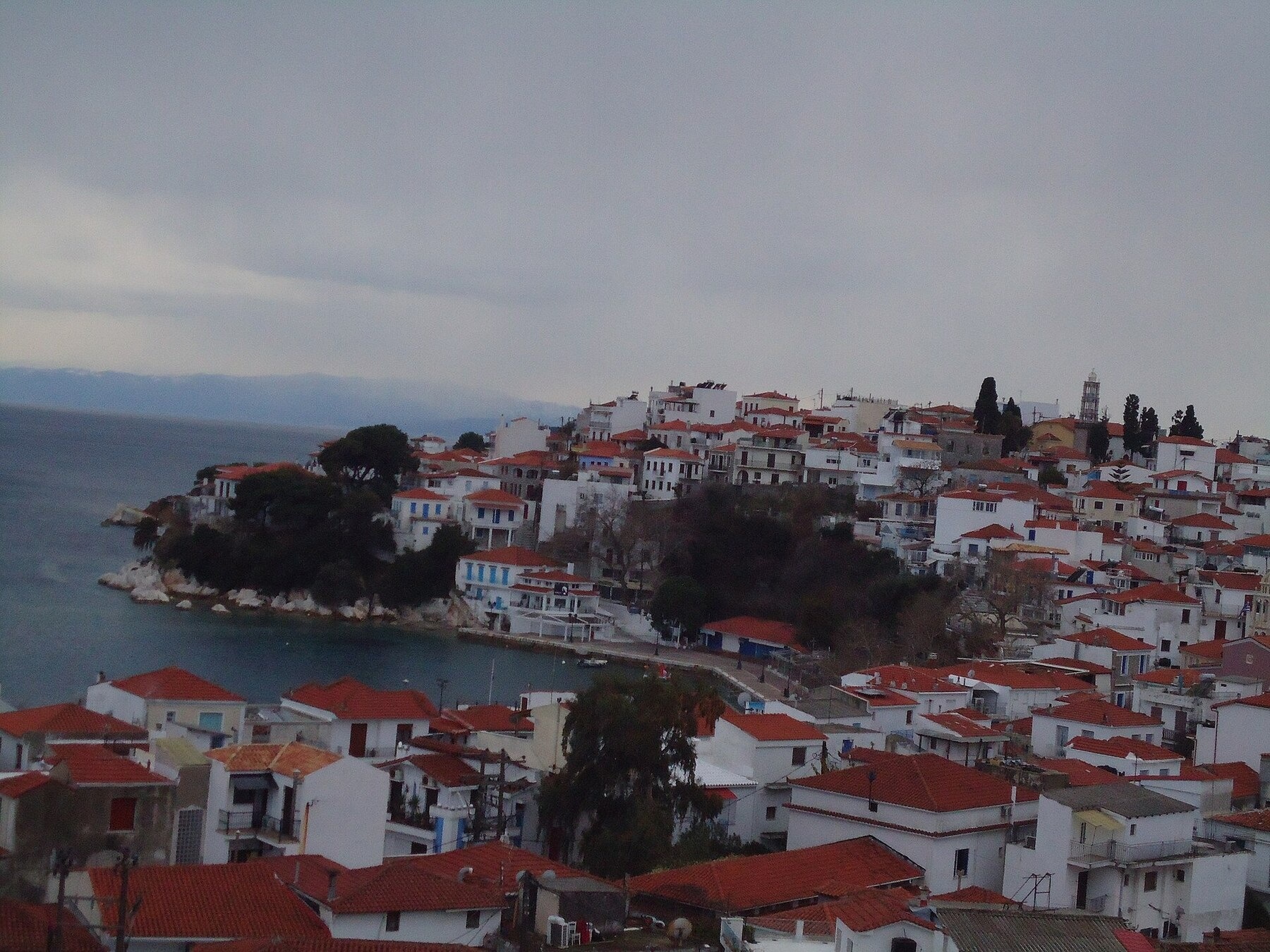
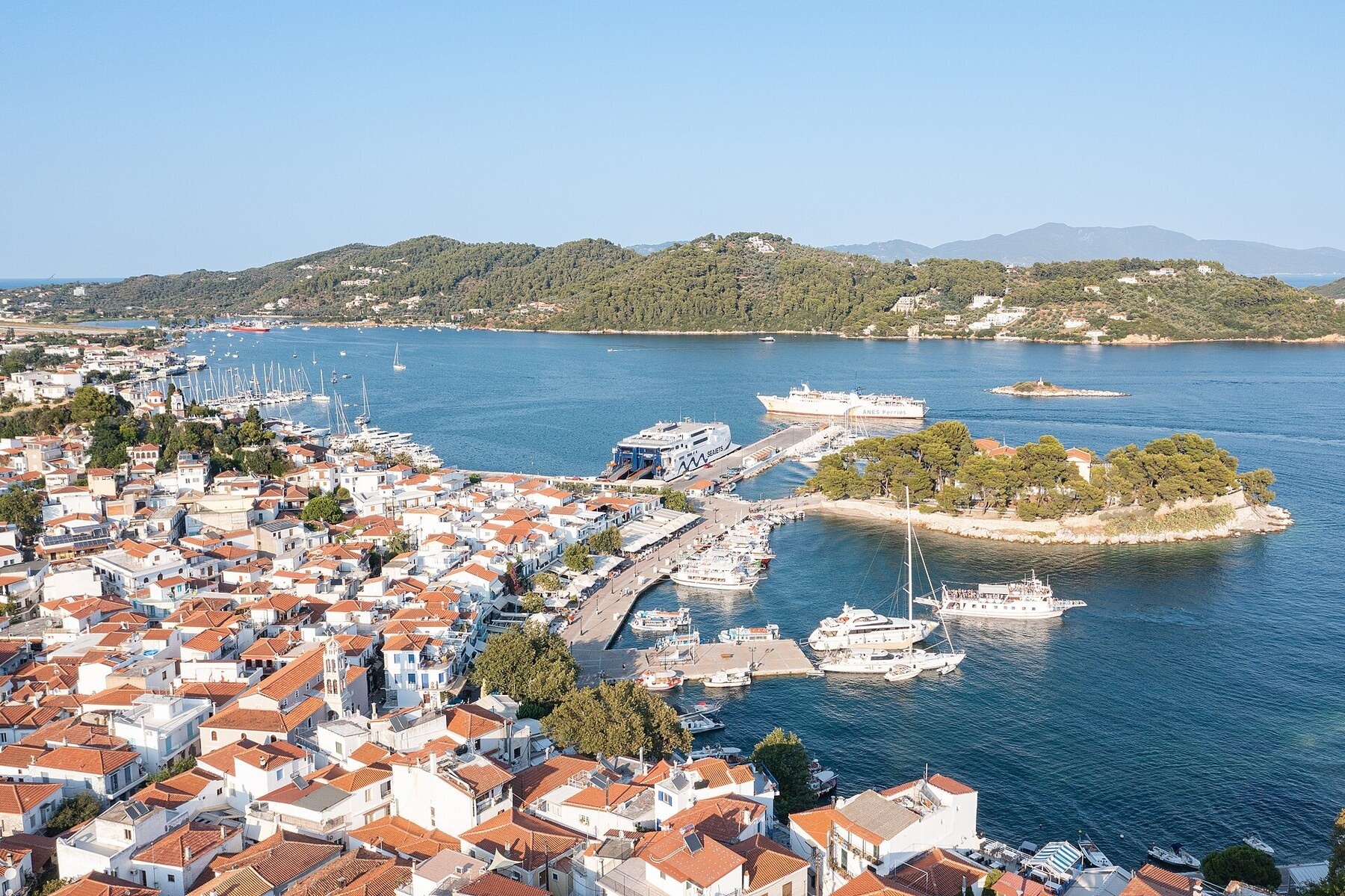
- The old harbor and traditional waterfront of Skiathos Town
- Historic churches and narrow streets of the modern town
- Surviving wooden-boat building and maritime craftsmanship
- Views from Kastro across the northern cliffs and Kastronisia
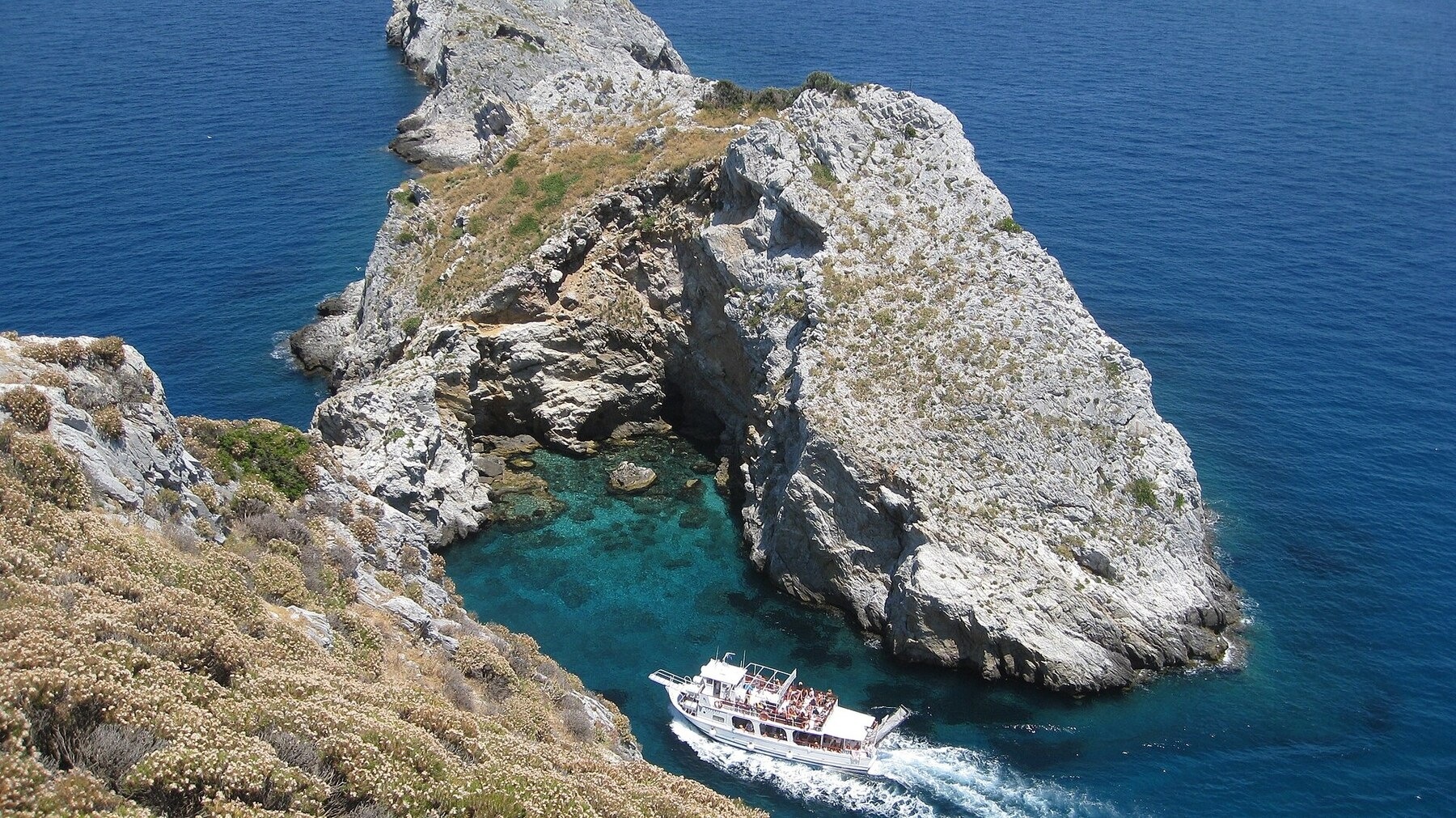
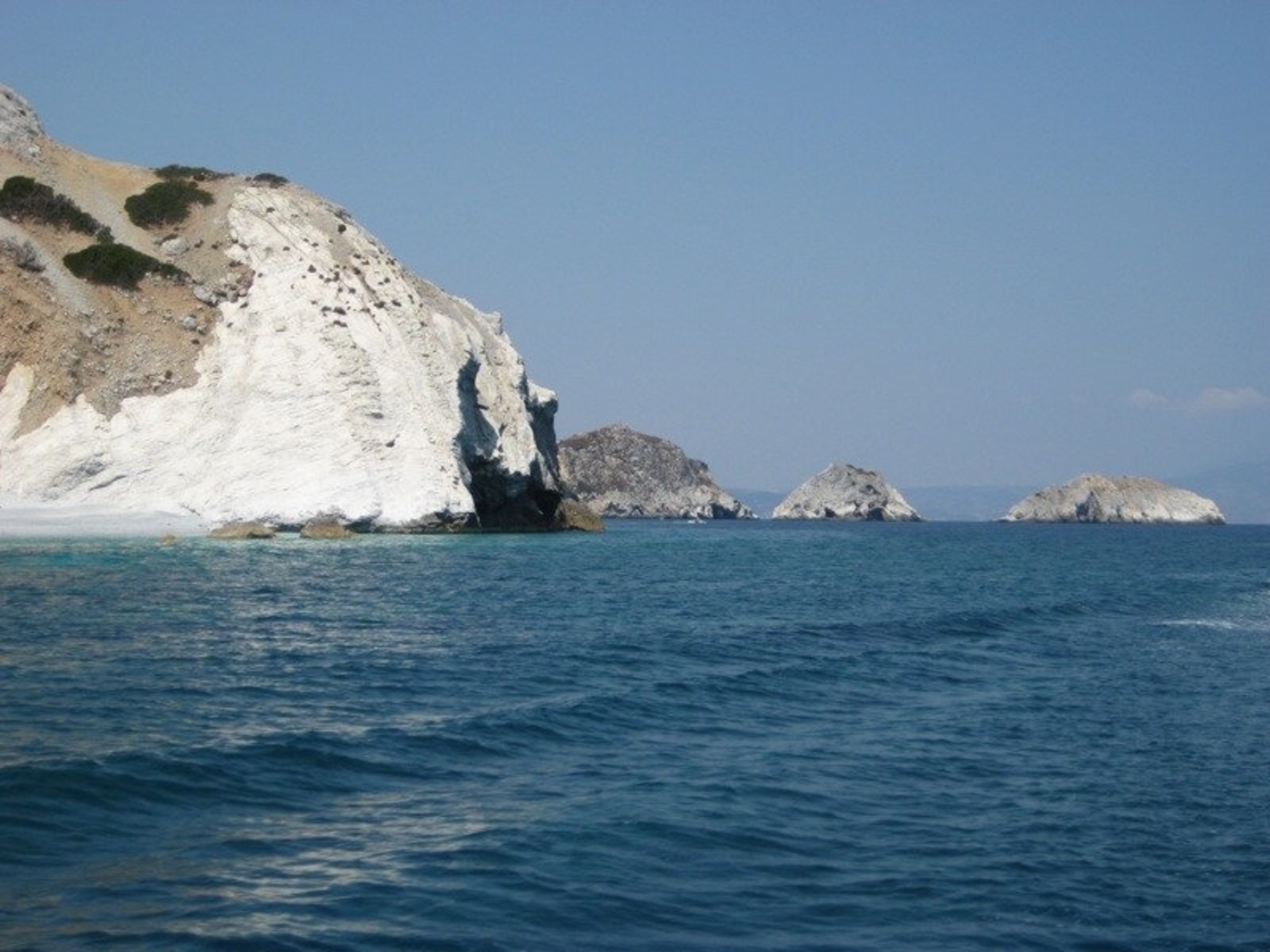
- Lalaria’s pale stones, sea arch, and exposed northern coast
- The contrast between the sheltered southern harbor and rugged northern shoreline
Monuments and sites
An island between mainland passages and the open Aegean
Skiathos occupies a strategic position at the western entrance to the Northern Sporades. The island faces the mainland of Magnesia and lies close to the sea routes connecting the Pagasetic Gulf, Euboea, Macedonia, and the central Aegean. Its deeply indented southern shore offers protected anchorages, while the northern coast presents cliffs, reefs, and exposure to strong weather. The same geography that made Skiathos useful to sailors also left its settlements vulnerable to raiding fleets and piracy. Its history repeatedly alternated between openness to maritime exchange and withdrawal into defensible terrain.
Ancient Skiathos and the Persian Wars
Ancient settlement was concentrated around the present harbor town. Skiathos appears in accounts of the Persian Wars, when islanders used signals to warn the Greek fleet of Persian naval movements in 480 BC. The island later belonged to the Delian League and participated in the political and economic networks of the classical Aegean. During the Second Macedonian War, Philip V ordered destruction on Skiathos and nearby Skopelos to deny their use to Roman and allied forces. Although ancient remains are less monumental than the island’s medieval sites, the harbor’s continuity as a settlement center is historically important.
Xerxes, the Aleurion, and the World's Earliest Navigational Marker
The waters between Skiathos and the Pelion peninsula have challenged mariners since antiquity. During the Persian invasion of Greece in 480 BC, King Xerxes assembled one of the largest fleets ever seen in the Aegean. According to Herodotus, numerous Persian vessels were wrecked on the submerged reefs around the ancient Myrmix—today's Lefteris Reef—while advancing toward Artemisium. The disaster demonstrated the exceptional hazards of the narrow passage separating Skiathos from the Pelion peninsula. Ancient tradition holds that, following these losses, Xerxes ordered the construction of the Aleurion, a tall stone navigational marker erected directly on the Lefteris Reef. Built from large white dolomite blocks quarried on southern Pelion, the structure was designed to be highly visible during daylight, warning ships away from the submerged rocks. Unlike the later Lighthouse of Alexandria, the Aleurion was not a lighted beacon but a permanent stone daymark. Many historians therefore regard it as the earliest known purpose-built navigational safety structure in the world and an important predecessor of later lighthouse construction. Local tradition also associates the Persian campaign with Skiathos itself. Damaged ships are said to have been hauled ashore on the island and repaired using timber from its extensive pine forests, giving rise to the name Xerxes Beach, which preserves the memory of these events. Interest in the Aleurion continues today. In 1928, the pioneering Greek naval diver Stylianos Lykoudis recovered several large worked dolomite blocks from the seabed near the Lefteris Reef. These blocks are widely believed to be remains of the ancient structure, and several are now preserved in the courtyard of the Piraeus Naval Command, where they provide tangible evidence of one of the earliest known attempts to improve maritime safety in the Aegean. For sailors approaching the Northern Sporades today, the passage between Pelion and Skiathos remains one of the principal gateways to the archipelago, making the Aleurion a remarkable reminder that the challenges of navigating these waters have changed far less than the ships themselves.
Bourtzi: a fortified threshold between two harbors
Bourtzi forms the wooded threshold between the old and new harbors. Its medieval defensive history and later school and cultural uses connect the peninsula with the everyday life of the modern town. The separate component account introduces its surviving setting and maritime museum, a different visit from Kastro on the remote northern coast.
Flight to Kastro
In the fourteenth century, insecurity drew the population away from the exposed southern harbor to Kastro on a naturally defended northern headland. That relocation changed the center of island life. The remains deserve a separate excursion, with time to understand the settlement rather than simply reaching a viewpoint.
Life inside the medieval capital
Kastro sheltered an inhabited community with houses, churches and the ordinary needs of daily life. Its defenses protected a town, not an empty military enclosure. The detailed component account follows the entrance, internal routes and religious buildings, while this island guide keeps the connection with land, sea and later settlement change.
Byzantine, Venetian, and Ottoman rule
Kastro remained under Byzantine authority until the mid-fifteenth century and then passed to Venice. Venetian government did not end piracy or political tension, and local resistance culminated in violence against a governor in the early sixteenth century. In 1538, Hayreddin Barbarossa captured the fortress for the Ottoman Empire after a siege and internal revolt. The site briefly returned to Venetian control during the seventeenth century before Ottoman authority was restored. Successive rulers repaired walls, reused churches, and adapted administrative spaces, but the settlement’s basic defensive logic remained unchanged.
Churches and sacred memory at Kastro
The churches of Kastro preserved a sacred landscape after the community returned to the harbor. Their memory also survives in Papadiamantis’s writing. These religious and literary connections give the abandoned town a continuing place in Skiathos’s identity.
Evangelistria Monastery and the age of revolution
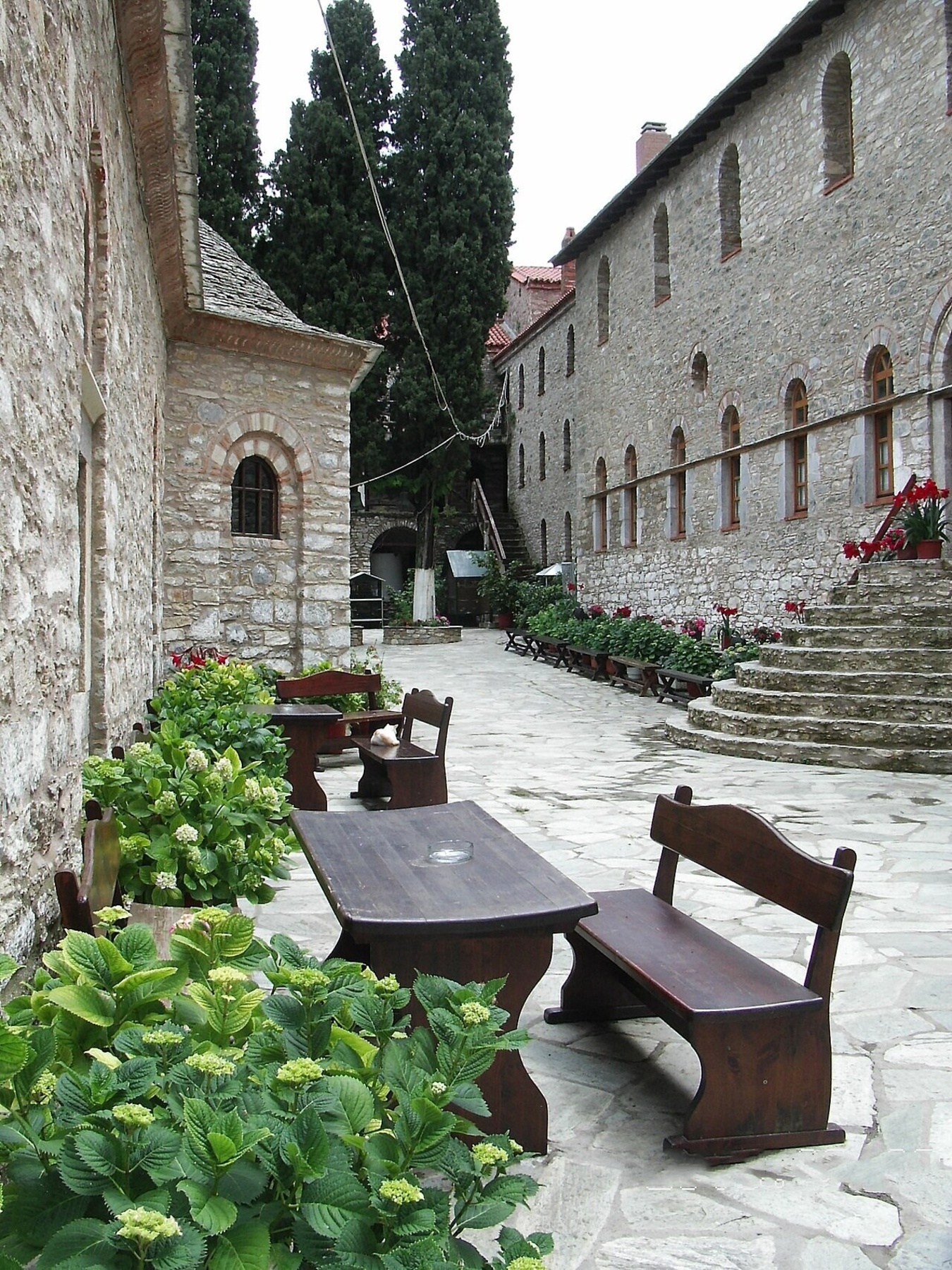
The Monastery of the Annunciation, or Evangelistria, was founded in the late eighteenth century in the wooded interior north of Skiathos Town. It became a spiritual, economic, and political center during the years preceding the Greek War of Independence. Tradition connects the monastery with revolutionary leaders, oaths, and an early Greek flag bearing the white cross on blue. Even where details have accumulated commemorative meaning, the monastery’s role as refuge, meeting place, and supporter of the struggle is well established. Its church, courtyards, monastic buildings, library, and collections preserve an important chapter of island and national history.
Return to the harbor and creation of the modern town
With the establishment of the Greek state and the decline of piracy, Kastro’s isolation ceased to be an advantage. Around 1829–1830, the inhabitants returned to the old harbor area and rebuilt Skiathos Town. The new settlement expanded along the waterfront and over low hills, using lanes, small squares, churches, houses with tiled roofs, and commercial buildings adapted to island life. Bourtzi again became part of the town’s daily landscape. The shift from cliff fortress to open port marks one of the clearest transitions in Skiathos history: security was now sought through statehood and maritime commerce rather than physical withdrawal.
Shipbuilding, forests, and maritime labor
During the nineteenth century, Skiathos developed a significant tradition of wooden shipbuilding. The island’s pine forests supplied timber, while experienced craftsmen built caiques and larger sailing vessels for fishing, transport, and trade. Shipowners and seamen linked Skiathos to ports throughout the Aegean and Black Sea. The transition to steamships reduced the industry, and heavy timber demand affected the forests, but small-scale boatbuilding survived. The remaining boatyards near the town are important evidence of practical knowledge transmitted through measurement, memory, and apprenticeship rather than formal plans.
Alexandros Papadiamantis and the literary island
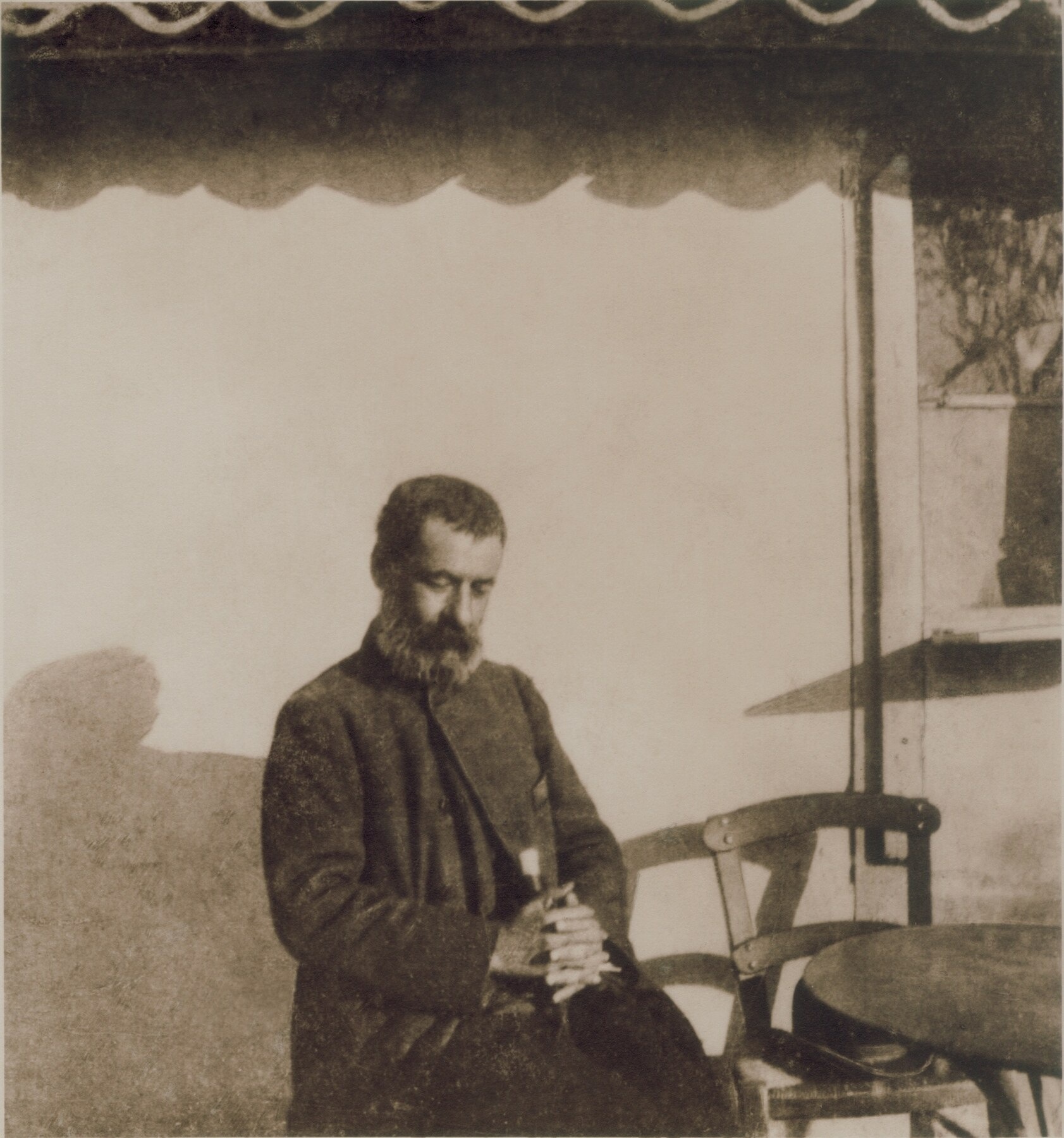
Alexandros Papadiamantis was born on Skiathos in 1851 and made the island one of the most distinctive literary landscapes in modern Greek writing. His stories portray sailors, widows, priests, laborers, migrants, children, and impoverished families living within a world of Orthodox observance, social constraint, natural beauty, and economic hardship. Skiathos is not decorative scenery in his work; its coves, chapels, footpaths, storms, houses, and oral traditions shape character and fate. The modest family house in Skiathos Town, now a museum, preserves furniture, manuscripts, personal objects, and the domestic scale from which his imaginative world emerged.
Papadiamantis, Kastro, and “Christmas at the Castle”
Papadiamantis repeatedly returned to Kastro as a place of memory, hardship, faith, and communal endurance. In the story commonly translated as “Christmas at the Castle” or “At Christ’s in the Castle,” a priest and islanders struggle through severe winter conditions to celebrate the Christmas liturgy at the remote church and assist men stranded by the storm. The narrative transforms the abandoned fortress into a sacred and human landscape rather than a picturesque ruin. An English translation is available through the Cappella Romana production booklet linked in the references, allowing the historical place page to connect directly with Papadiamantis’s literary representation of Kastro.
Reading Skiathos as a connected cultural landscape
Skiathos is best understood through the relationship among its sites. The harbor explains ancient and modern settlement; Bourtzi represents the first medieval attempt to defend that harbor; Kastro records the population’s retreat from maritime danger; Evangelistria embodies religious and revolutionary networks; the shipyards preserve maritime labor; and Papadiamantis gives voice to the islanders who inhabited these places. Beaches and pine forests remain central to Skiathos’s visual identity, but the island’s deeper significance lies in the continuity between landscape, memory, work, worship, and literature.
Kastro access and conservation — November 2026
The Ministry recorded completion of bridge, gate, approach and southern-wall work at Kastro in May 2025. The restored entrance improves the visitor encounter but does not remove the site’s exposed terrain or the need to confirm current approaches. Plan it separately from the museums and waterfront monuments of Skiathos Town.
Architecture
- Natural cliff defenses and narrow landward entrance at Kastro
- Fragmentary curtain walls, towers, gate works, and bridge approach at Kastro
- Compact churches with post-Byzantine masonry, wall paintings, and carved icon screens
- Cisterns and settlement remains adapted to the constrained Kastro summit
- Medieval fortification remains on the Bourtzi peninsula
- Early twentieth-century school building on Bourtzi, now used for cultural purposes
- Evangelistria Monastery church, courtyards, cells, service buildings, and collections
- Traditional Skiathos houses with tiled roofs, modest courtyards, and narrow street fronts
- Papadiamantis House as a restrained example of nineteenth-century island domestic architecture
- Harbor warehouses, workshops, waterfront buildings, and surviving boatyards
- Churches and bell towers integrated into the urban fabric of Skiathos Town
Timeline
- Prehistoric and early historic periods Settlement develops around Skiathos’s protected southern harbor and maritime routes.
- 480 BC Skiathos participates in warning and reconnaissance activity during the Persian naval advance.
- 478 BC The island joins the Delian League.
- 200 BC Philip V orders destruction on Skiathos and Skopelos during the Second Macedonian War.
- Early 13th century The Ghisi family controls Skiathos and establishes a fortified residence at Bourtzi.
- c. 1350–1360 The population relocates from the harbor settlement to the naturally defended site of Kastro.
- 1453 Following the fall of Constantinople, Skiathos passes from Byzantine to Venetian rule.
- 1518 Resistance to Venetian authority culminates in rebellion against the local governor.
- 1538 Hayreddin Barbarossa captures Kastro and Skiathos enters the Ottoman Empire.
- c. 1660 Venetian forces briefly regain Kastro before Ottoman control is restored.
- 1794 Evangelistria Monastery is founded in the wooded interior of Skiathos.
- 1807 Local tradition associates Evangelistria with revolutionary leaders and an early Greek flag.
- 1821–1829 Skiathos supports the Greek struggle while refugees and fighters move through the Northern Sporades.
- c. 1829–1830 Residents abandon Kastro and rebuild the capital at the old southern harbor.
- 19th century Skiathos becomes an important center of wooden shipbuilding, seafaring, and coastal commerce.
- 1851 Alexandros Papadiamantis is born in Skiathos.
- 1860 Papadiamantis’s father builds the family house that later becomes the author’s museum.
- 1911 Papadiamantis dies in Skiathos, leaving an extensive body of island-centered fiction.
- 20th century Tourism, air transport, and new construction transform the island while historic sites and maritime traditions remain visible.
- 21st century Conservation and cultural programming renew attention to Kastro, Bourtzi, Evangelistria, Papadiamantis, and traditional boatbuilding.
Expedition guides
Images
References
- Municipality of Skiathos — History and Traditions
- Municipality of Skiathos — Kastro
- Municipality of Skiathos — Museums
- Municipality of Skiathos — Holy Sites
- Wikipedia — Skiathos
- Wikipedia — Skiathos Castle
- Wikipedia — Papadiamantis House Museum
- Travel.gr — Alexandros Papadiamantis’s Skiathos: Inside the Great Writer’s House
- Cappella Romana — Christmas at the Castle: English Translation and Production Booklet
- Greek News Agenda — Christmas Short Stories by Alexandros Papadiamantis
- Kastra.eu — Castle of Skiathos
Related places
Related Stops
Topics
- Historic Island And Port
- Expedition Vii
- Skiathos
- Northern Sporades
- Kastro
- Bourtzi
- Papadiamantis
- Evangelistria
- Shipbuilding
- Venetian
- Ottoman
- Maritime History