Overview
Set only a short sea passage from the coast of Asia Minor, Kos has repeatedly functioned as both bridge and frontier. Fertile plains supported dense settlement and agriculture, while its harbors tied the island to Rhodes, Knidos, Halicarnassus and wider eastern Mediterranean routes. Ancient Kos acquired exceptional prestige through Hippocrates, its physicians and the Asklepieion; the Hellenistic and Roman city developed a monumental harbor, agora, houses, baths and entertainment buildings; Christianity left major basilicas; Byzantine insecurity favored fortified inland settlements; and the Knights of St John organized the island as a network of coastal and inland strongholds. Ottoman Kos added mosques, baths and fountains, while Italian rule after 1912—especially reconstruction after the earthquake of 1933—created the distinctive modern townscape in which excavated antiquities and new civic architecture were deliberately placed side by side. The result is one of the Dodecanese's richest cultural landscapes, best understood through the relationships among Kos Town, the Asklepieion, the rural interior and the castles that controlled different parts of the island.
Highlights
- Hippocrates, medicine and the Asklepieion
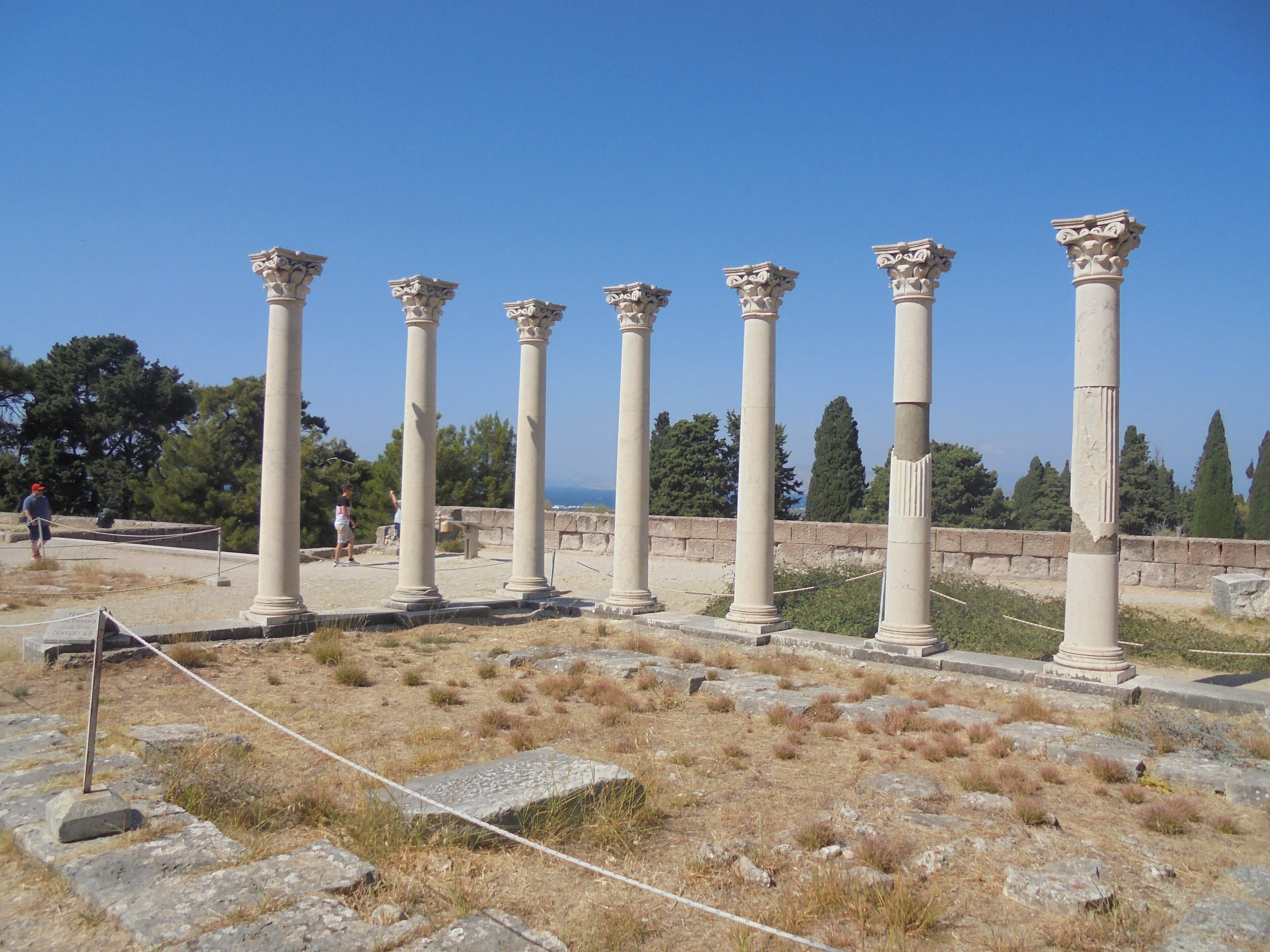
The terraced sanctuary explains why medicine, religion and civic identity became inseparable in the historical reputation of Kos.
- Roman city and Early Christian Kos
The Odeon, Casa Romana, mosaics and basilicas reveal the island's continued prosperity and changing religious life under Rome and Late Antiquity.
- Fortifications and strategic geography
Neratzhia, Antimachia, Palio Pyli and Kefalos form an island-wide defensive system linking harbor control, roads and inland refuge.
- Archaeological sites and museums
Kos Town's Agora, Western Archaeological Zone, Odeon, Casa Romana and museum make successive phases of the ancient city unusually easy to read.
- Ottoman Kos: mosques, baths and continuity
Surviving mosques, the hammam and fountains preserve an important urban layer later reduced and reframed by earthquakes and Italian planning.
- Italian rule and the remaking of Kos Town
The post-1933 city deliberately places archaeological zones beside modern civic architecture, creating one of the Dodecanese's most distinctive planned townscapes.
- Villages, agriculture and cultural life
Traditional houses, windmills, farming, wine and village landscapes show the productive society that sustained Kos beyond its monumental centers.
- Reading Kos as a cultural landscape
The island becomes most coherent when harbor, sanctuary, city, villages and castles are understood as parts of one historical geography.
Strategic role
Historically productive island and maritime crossroads facing Asia Minor; a major ancient medical and religious center and, under the Hospitallers, a defended island system combining the harbor fortress of Neratzhia with inland refuges including Antimachia, Palio Pyli and Kefalos.
Overview
Set only a short sea passage from the coast of Asia Minor, Kos has repeatedly functioned as both bridge and frontier. Fertile plains supported dense settlement and agriculture, while its harbors tied the island to Rhodes, Knidos, Halicarnassus and wider eastern Mediterranean routes. Ancient Kos acquired exceptional prestige through Hippocrates, its physicians and the Asklepieion; the Hellenistic and Roman city developed a monumental harbor, agora, houses, baths and entertainment buildings; Christianity left major basilicas; Byzantine insecurity favored fortified inland settlements; and the Knights of St John organized the island as a network of coastal and inland strongholds. Ottoman Kos added mosques, baths and fountains, while Italian rule after 1912—especially reconstruction after the earthquake of 1933—created the distinctive modern townscape in which excavated antiquities and new civic architecture were deliberately placed side by side. The result is one of the Dodecanese's richest cultural landscapes, best understood through the relationships among Kos Town, the Asklepieion, the rural interior and the castles that controlled different parts of the island.
Island between the Aegean and Asia Minor
Kos lies close to the Carian coast, and that geography has shaped nearly every period of its history. The island combines relatively broad fertile plains with mountain refuges and usable harbors, allowing agriculture and maritime exchange to reinforce one another. In antiquity it belonged to the cultural world linking Rhodes, Knidos and Halicarnassus; later it sat on the front line between Byzantine, Latin, Hospitaller and Ottoman spheres. This combination of productive land and strategic sea position explains why settlement repeatedly recovered after earthquakes, invasions and political change.
From Bronze Age settlement to the Hellenistic city
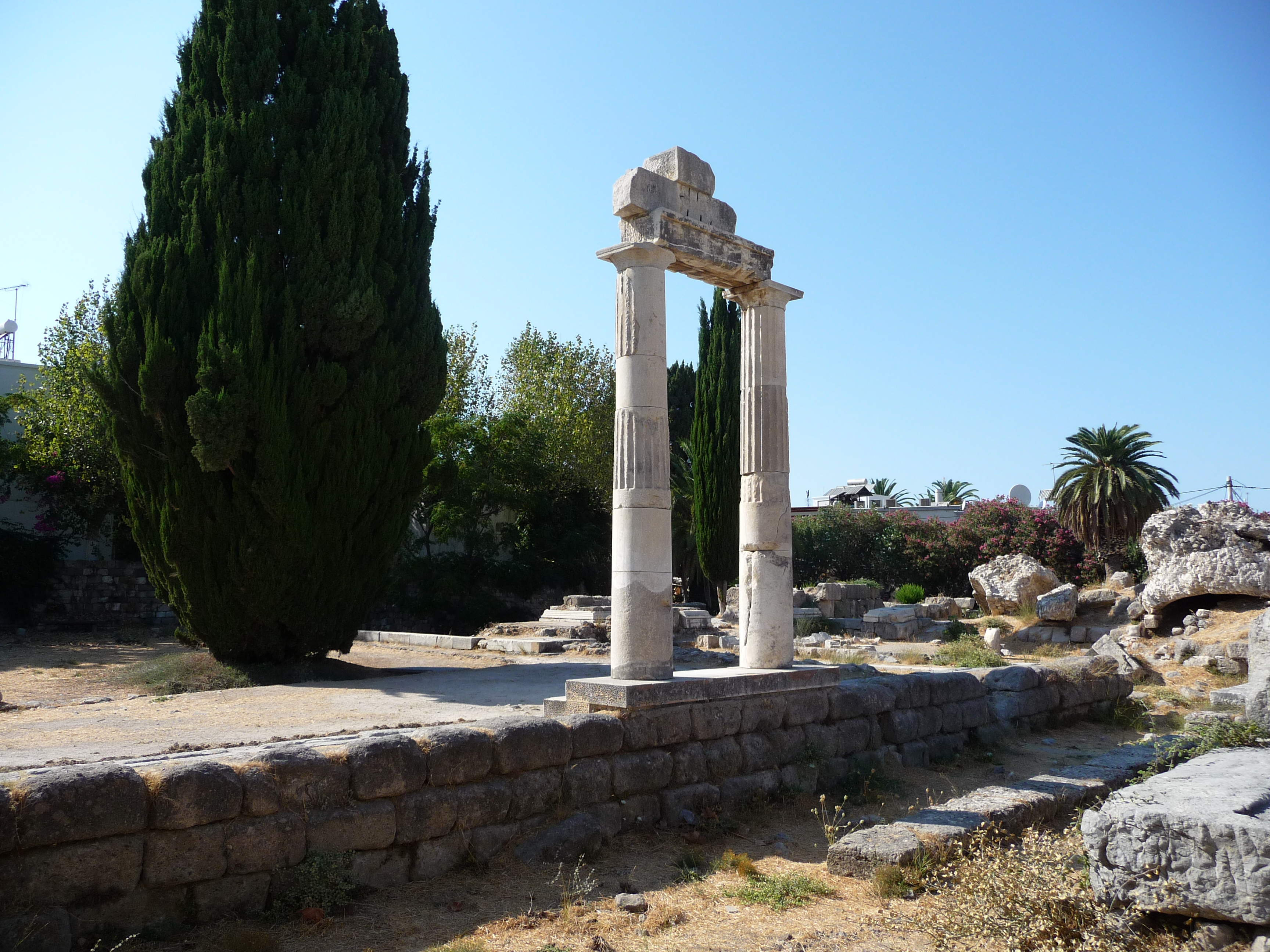
Archaeology documents occupation from the Early Bronze Age, including substantial settlement in the area of later Kos Town. Minoan and Mycenaean material demonstrates the island's integration into wider Aegean networks. In the Archaic and Classical periods Kos participated in the Dorian and eastern Greek worlds before the synoecism of 366 BC established the new city of Kos on the northeastern coast. The Hellenistic city developed around its harbor, fortifications, sanctuaries and an exceptionally large Agora, which served as commercial and social center and remained a defining element of the urban plan.
Hippocrates, medicine and the Asklepieion
The island's most enduring intellectual association is with Hippocrates, born on Kos in the fifth century BC, and with the medical tradition that later flourished around the cult of Asklepios. The Asklepieion developed after the fourth century BC on three monumental terraces outside the city. It was simultaneously sanctuary, healing center and civic institution. Its architecture—stairs, stoas, temples, altar and commanding views—gave ritual movement a spatial form, while inscriptions preserve sacred regulations, dedications and evidence for the prestige of Koan medicine. The site should be understood as part of the island's civic and religious identity, not merely as a hospital in the modern sense.
Roman city and Early Christian Kos
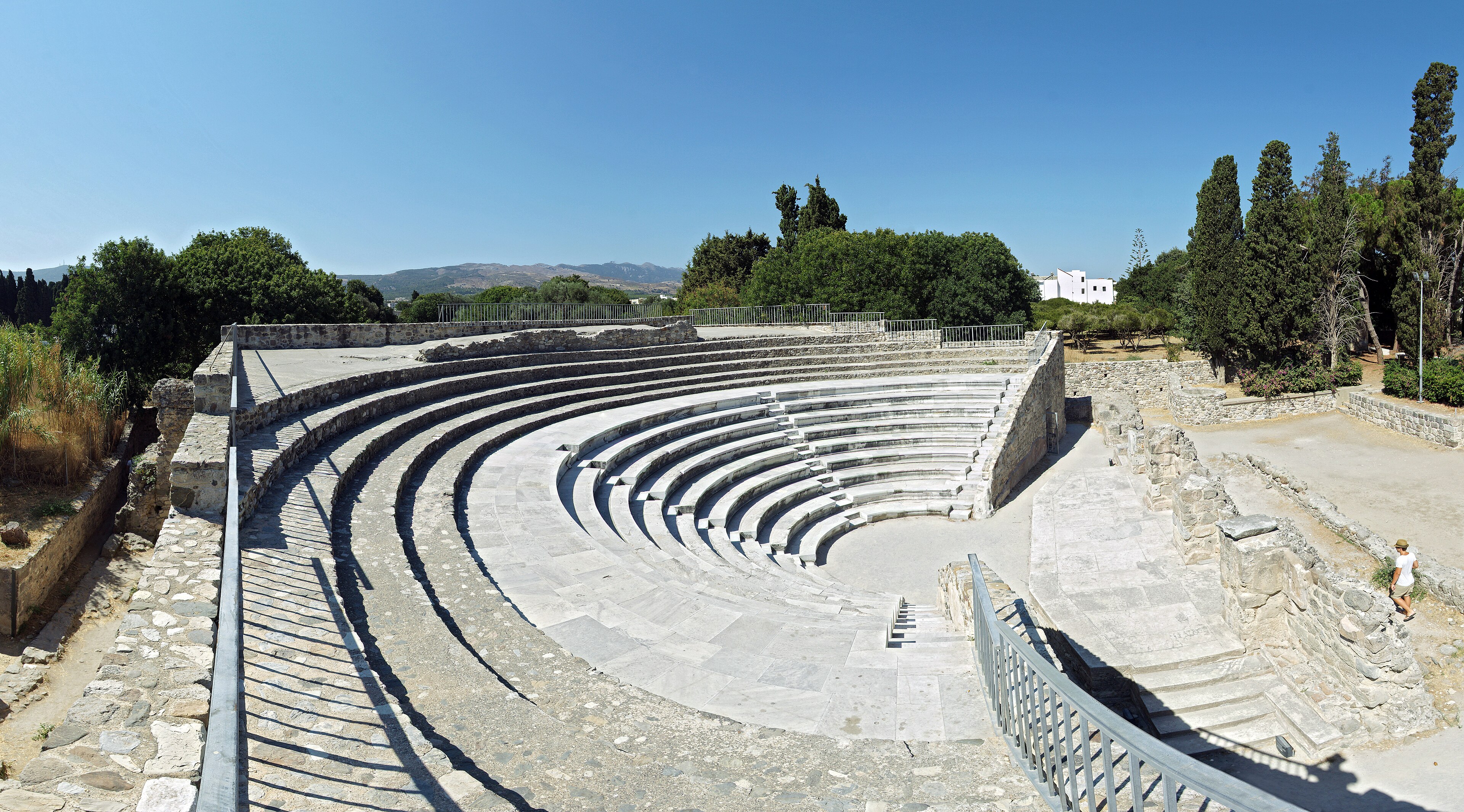
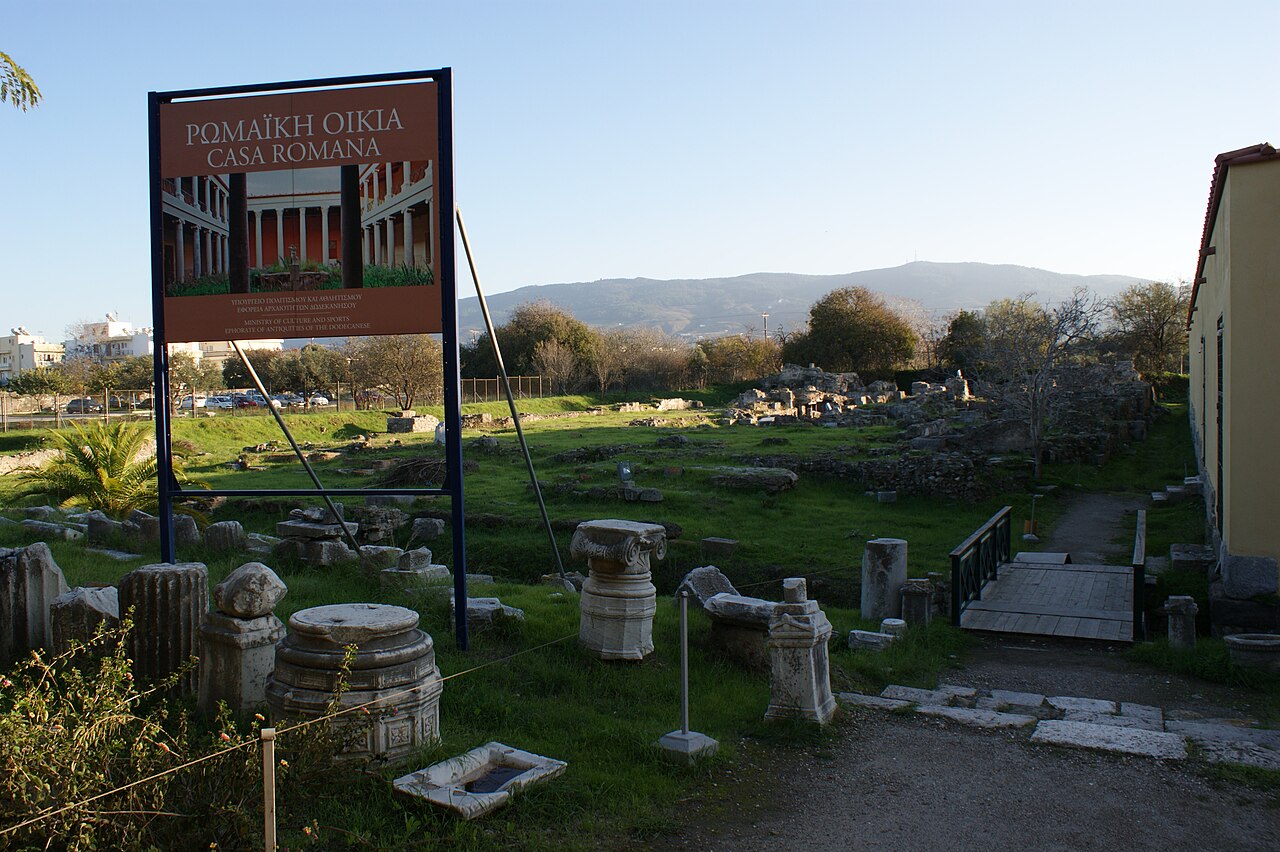
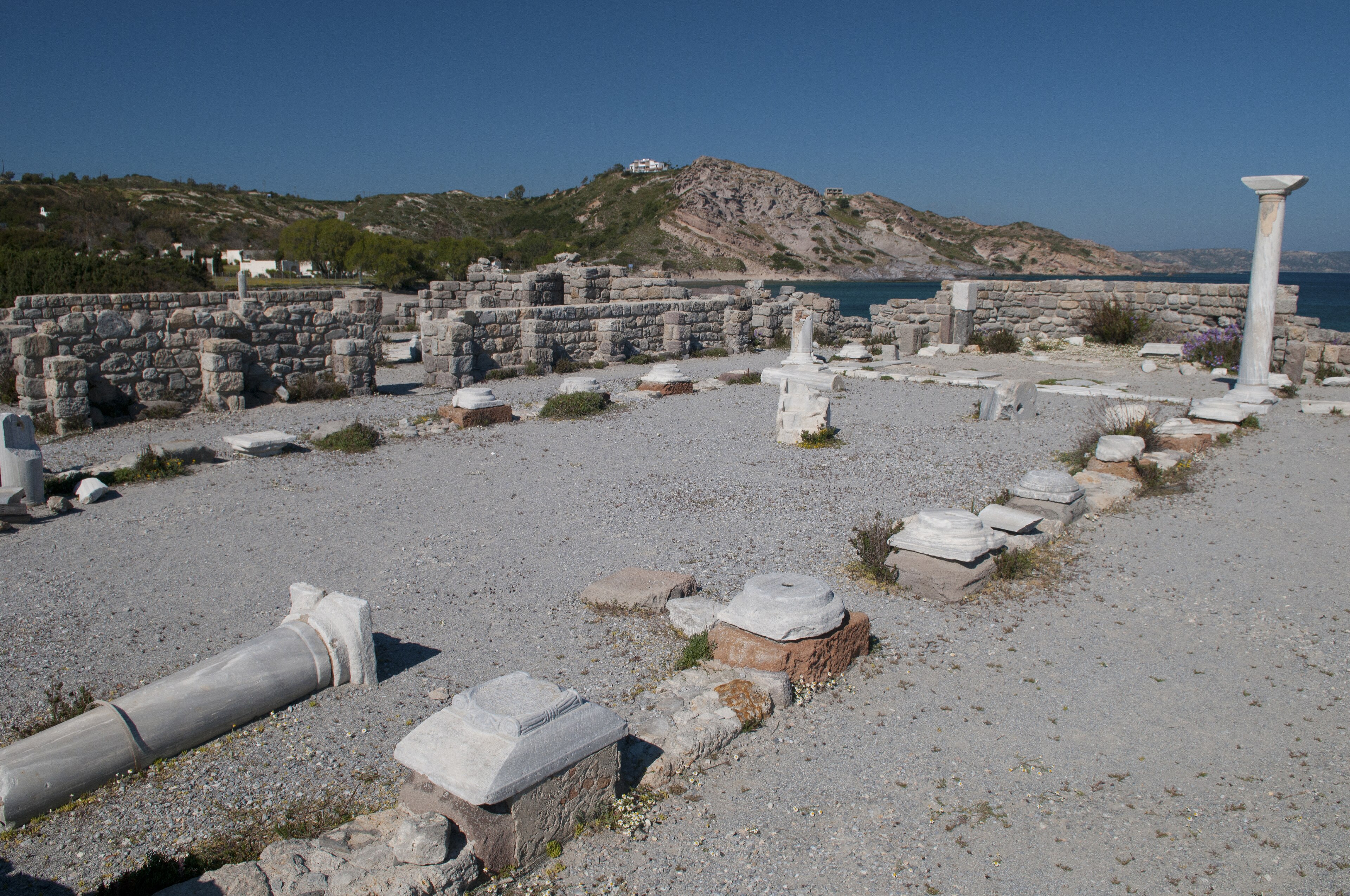
Roman rule preserved and extended the island's urban prosperity. The Roman Odeon, baths, mosaics and Casa Romana reveal a city of public entertainment, sophisticated infrastructure and elite domestic display. Casa Romana, rebuilt over Hellenistic foundations, is organized around three atria and preserves rich mosaics and architectural reconstruction that make Roman domestic life unusually legible. Christianity spread early, and Late Antique Kos developed numerous basilicas and baptisteries. The paired basilicas of Agios Stefanos near Kefalos, with mosaics and a baptistery overlooking Kamari Bay, show that Christian monumental architecture was not confined to the capital.
Byzantine settlement and the fortified interior
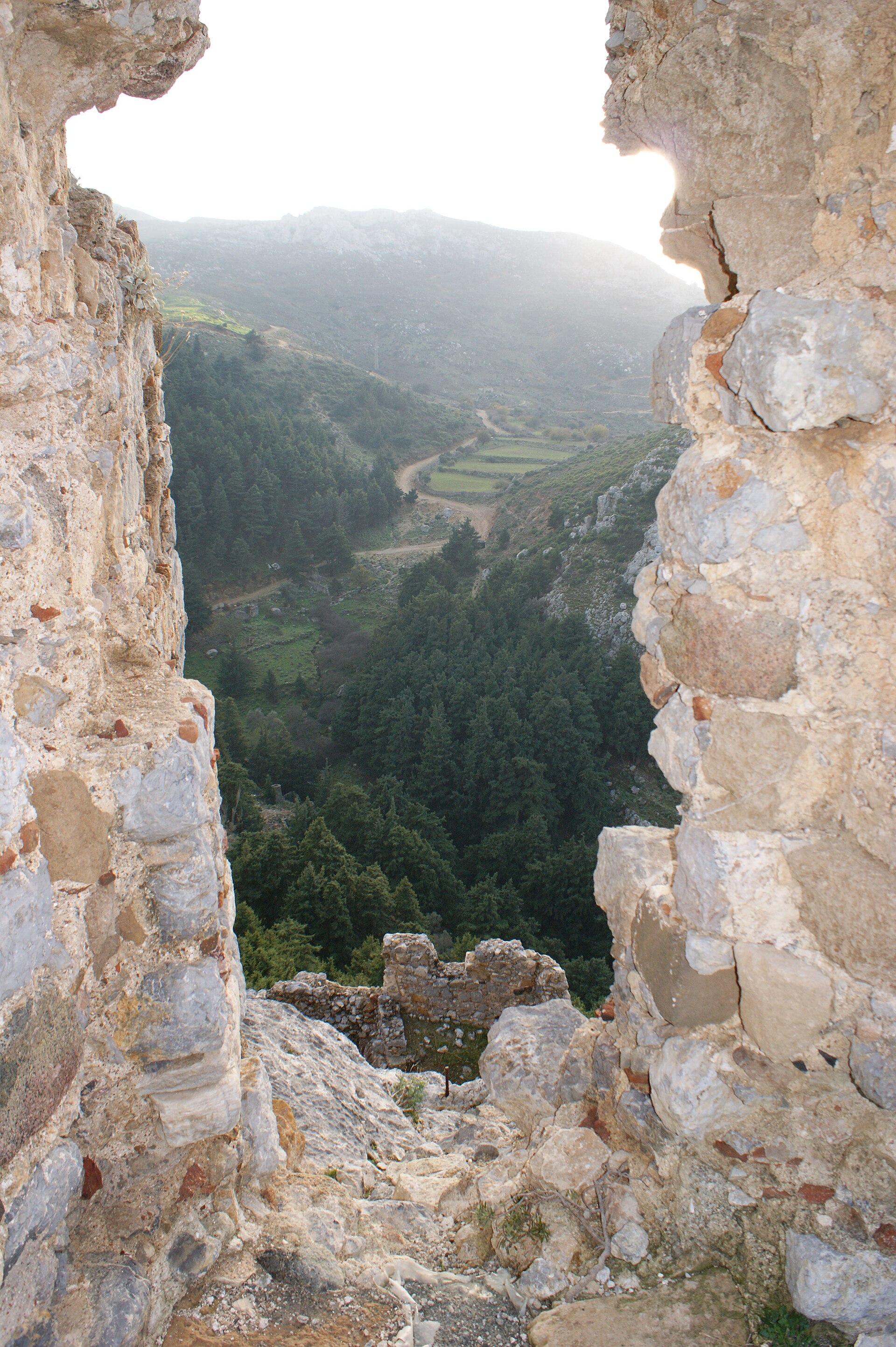
Earthquakes, changing imperial frontiers and maritime raiding altered settlement during the Byzantine centuries. Defensible inland locations became increasingly important. Palio Pyli is the clearest surviving example: an eleventh-century castle-town in a naturally fortified position, associated with Saint Christodoulos before his move to Patmos. Its castle, churches, ruined houses and old routes preserve the shift toward protected settlement that later Hospitaller defense would reinforce.
Fortifications and strategic geography
Medieval Kos was defended as a system rather than by a single castle. Neratzhia guarded the harbor, knightly administration and the sea corridor toward Asia Minor. Antimachia occupied the central plateau and could shelter population withdrawn from exposed districts. Palio Pyli combined a naturally strong acropolis with an inhabited castle-town, while Kefalos controlled the western peninsula and southern approaches. The Ottoman assault of 1457 demonstrated the value of these inland refuges. After the earthquake of 1493, Hospitaller repairs and new artillery-conscious works strengthened major positions. Reading these sites together reveals an island-wide defensive geography linking coast, roads, settlements and refuge.
Archaeological sites and museums
Kos Town is remarkable for the density of excavated remains within the modern street plan. The Ancient Agora includes the commercial center, sanctuaries, fortification remains and part of the ancient port; the Western Archaeological Zone preserves streets, baths and mosaics; the Odeon provides the civic performance setting; and Casa Romana presents the elite domestic world. The Archaeological Museum brings together sculpture and finds from these sites and from the wider island. Outside the capital, the Asklepieion, Agios Stefanos, Palio Pyli and numerous smaller monuments turn Kos into an archaeological landscape rather than a city with a few isolated ruins.
Ottoman Kos: mosques, baths and continuity
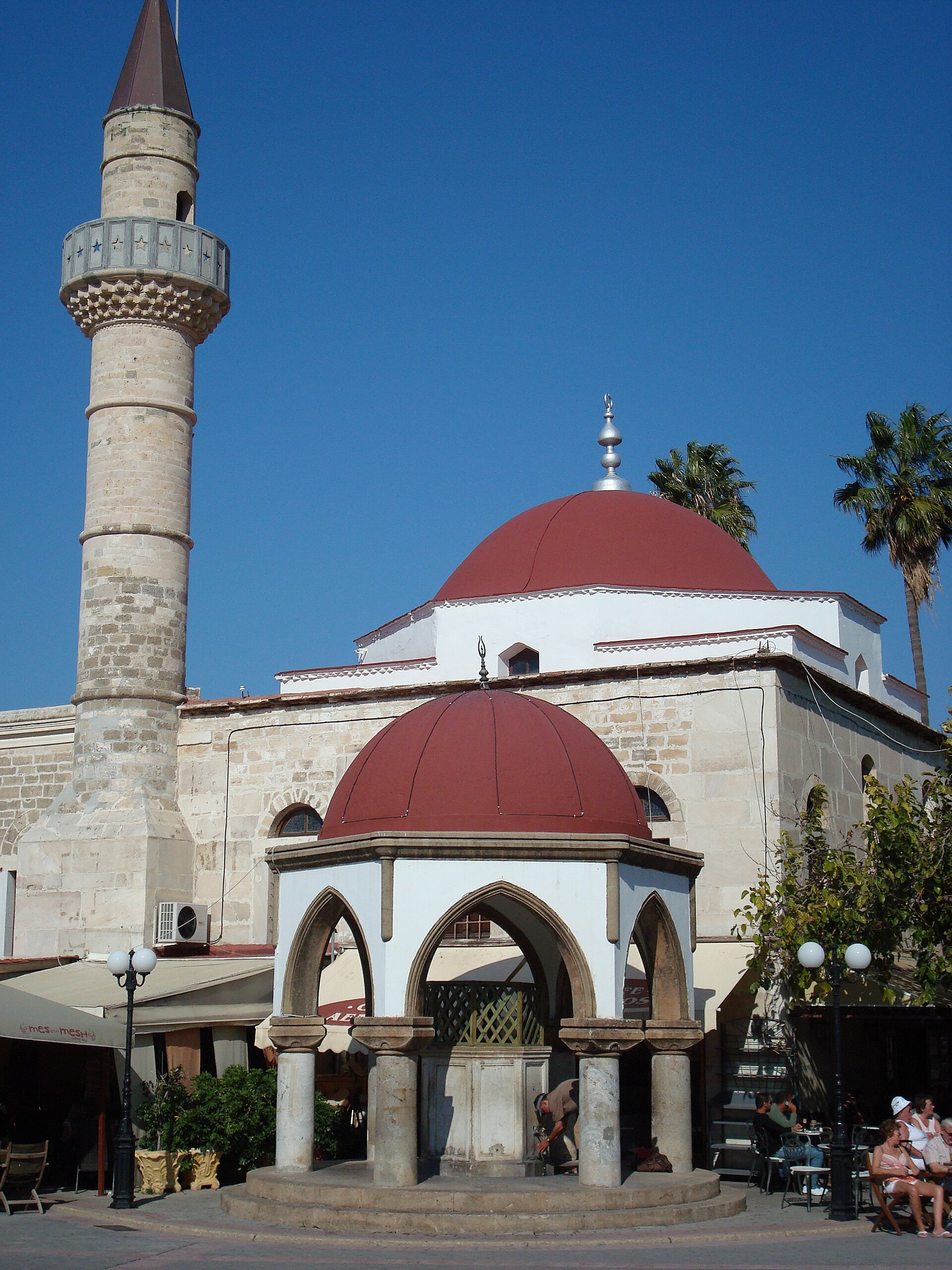
Ottoman rule began after the Hospitaller Dodecanese passed to the empire in the early sixteenth century and lasted until 1912. Greek Orthodox communities continued alongside Muslim institutions, and Kos Town acquired mosques, baths, fountains and cemeteries. The Defterdar and Loggia mosques remain prominent urban landmarks, while the surviving Ottoman hammam near the Plane Tree of Hippocrates illustrates social as well as architectural life. Later earthquakes and Italian interventions removed or reframed much Ottoman fabric, making the surviving monuments especially important evidence for the early modern town.
Italian rule and the remaking of Kos Town
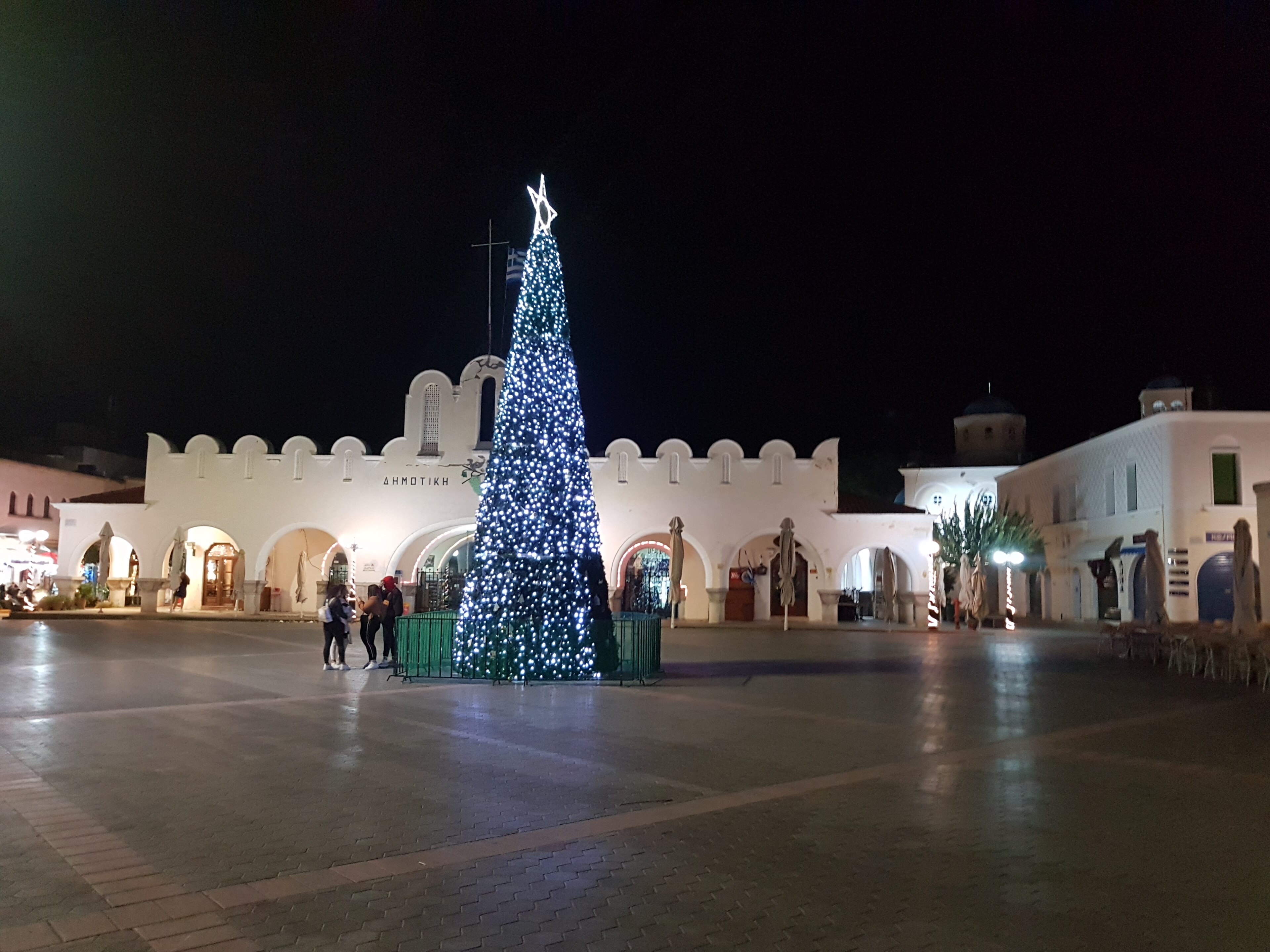
Italy occupied Kos in 1912 and treated the island as both an archaeological showcase and a modern colonial center. The earthquake of 1933 devastated much of Kos Town and opened the way for extensive excavation and reconstruction. Ancient remains were exposed and incorporated into a new urban composition of broad streets, planted squares and public buildings. The Archaeological Museum, municipal market, Town Hall and other civic structures employed a mixture of rationalist, Mediterranean and historicizing forms. Modern Kos Town is therefore not simply an old city with Italian buildings; it is a consciously designed encounter between excavated antiquity and twentieth-century planning.
War, occupation and incorporation into Greece
After the Italian armistice in September 1943, Kos became a battlefield in the Dodecanese campaign. German forces captured the island after fighting against Italian and British defenders, and occupation lasted until 1945. British administration followed until the postwar transfer of the Dodecanese. Kos was formally incorporated into Greece with the rest of the islands in 1948, ending a long sequence of Ottoman, Italian, German and British rule.
Villages, agriculture and cultural life
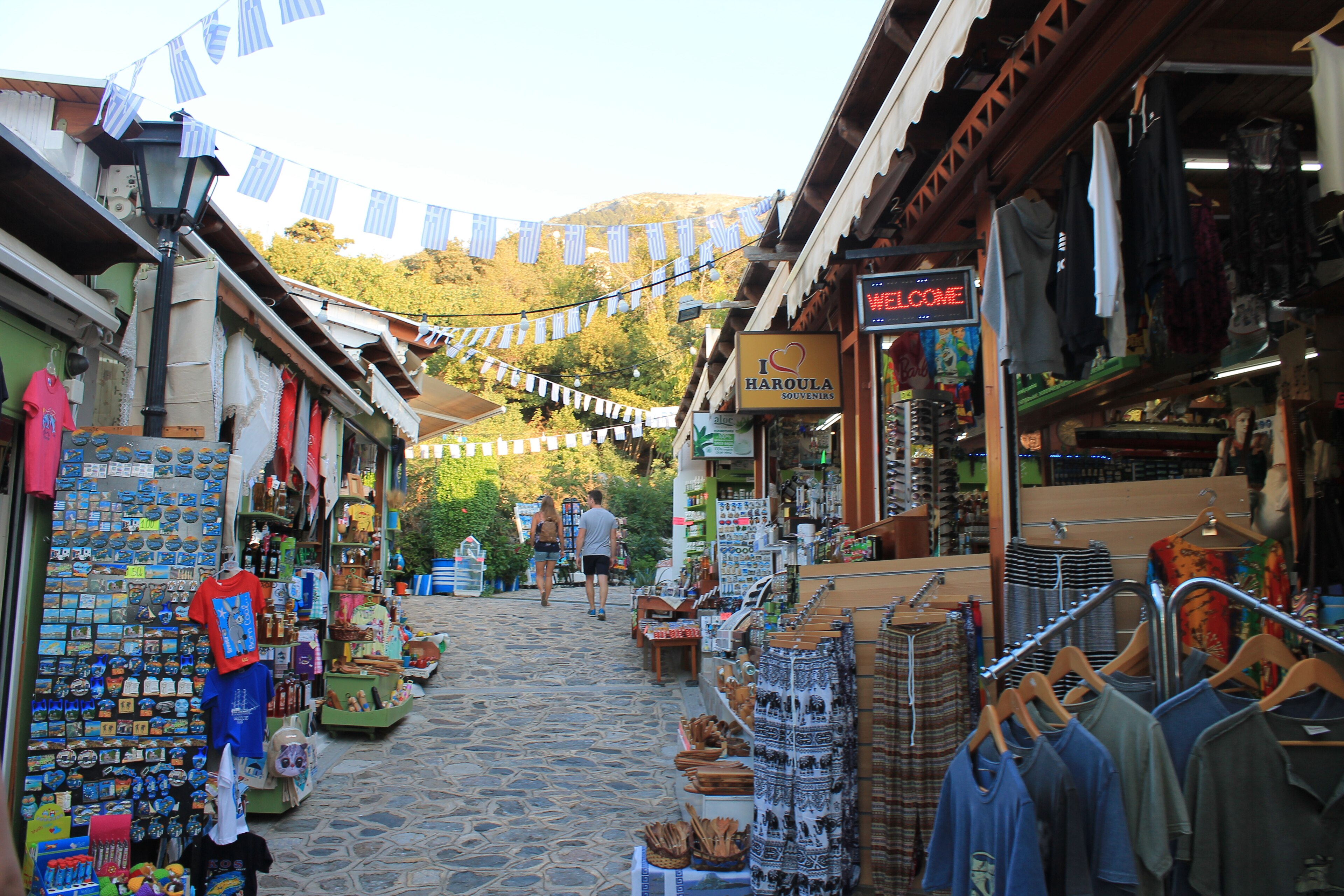
The island's historical character extends beyond monuments. Before mass tourism, agriculture, livestock raising and fishing formed the basis of much Koan life, and the primary sector still contributes to local cuisine and identity. Villages such as Antimachia, Pyli, Zia and Kefalos preserve different relationships between cultivated plains, mountain routes and coast. Windmills, traditional houses, churches, foodways and wine culture provide the domestic counterpart to the island's monumental archaeology. This living landscape helps explain why Kos could sustain dense settlement and recover repeatedly from political and seismic disruption.
Reading Kos as a cultural landscape
The most rewarding way to understand Kos is comparatively. In the capital, ancient streets, Roman monuments, Ottoman buildings and Italian public architecture sit within walking distance of one another, with Neratzhia anchoring the harbor edge. The Asklepieion reveals the sacred and medical landscape outside the city; Antimachia and Palio Pyli explain inland defense and settlement; and western Kos adds Early Christian and medieval sites to the sequence. Together these places show why the island's strategic role, architecture and cultural history are inseparable from its geography.
Architecture
- Hellenistic sanctuary architecture on the three terraces of the Asklepieion
- Ancient city walls, harbor installations and the monumental Agora of Kos Town
- Roman civic and domestic architecture including the Odeon, baths, mosaics and Casa Romana
- Early Christian basilicas and baptisteries, including the basilicas of Agios Stefanos near Kefalos
- Byzantine fortified settlement and churches at Palio Pyli
- Hospitaller fortification system linking Neratzhia, Antimachia, Palio Pyli and Kefalos
- Ottoman mosques, bath architecture, fountains and cemetery remains in Kos Town
- Italian-period civic architecture and urban planning after the 1933 earthquake
- Traditional rural houses, windmills and village architecture in the island interior
Timeline
- 3rd–2nd millennium BC Bronze Age settlements develop on Kos, including in the area of later Kos Town.
- 5th century BC Hippocrates is born on Kos and becomes the enduring symbol of the island's medical tradition.
- 366 BC Synoecism establishes the new city of Kos on the northeastern coast.
- 4th–3rd century BC The Asklepieion develops into a major sanctuary, healing center and civic institution.
- Hellenistic period Kos Town flourishes with major fortifications, sanctuaries and one of the largest agoras of the ancient Greek world.
- Roman period The city expands with baths, the Odeon, mosaics and elite domestic architecture such as Casa Romana.
- 5th–6th centuries AD Early Christian basilicas and baptisteries reshape the island's religious landscape.
- 11th century The fortified settlement of Palio Pyli develops in the island interior.
- 1314 The Knights of St John take control of Kos and integrate it into the defensive system centered on Rhodes.
- 1457 A major Ottoman attack demonstrates the value of the island's inland refuge castles.
- 1493–1514 Earthquake damage is followed by major Hospitaller repairs and modernization of key fortifications.
- 1523 Ottoman rule begins on Kos.
- 1912 Italy occupies Kos and the Dodecanese.
- 1933 A destructive earthquake leads to extensive excavation and replanning of Kos Town under Italian rule.
- 1943 German forces capture Kos during the Dodecanese campaign after the Italian armistice.
- 1948 Kos and the Dodecanese are incorporated into Greece.
Visiting today
Kos is most rewarding when its sites are read as connected historical landscapes. In Kos Town, the Ancient Agora, Roman Odeon, Casa Romana, Archaeological Museum, Ottoman monuments and Italian civic buildings can be explored on foot. The Asklepieion is a separate major excursion. For the island's defensive history, compare Neratzhia at the harbor with Antimachia inland and, where time permits, Palio Pyli and Kefalos. Current opening and conservation conditions should be checked locally.
Expedition guides
Images
References
- Municipality of Kos — History
- Kos Island — History throughout the ages
- Epigraphical Collection of Asklepieion, Kos — Hellenic Ministry of Culture
- Ancient Agora — Kos Island
- Casa Romana (Roman Villa), Kos — Hellenic Ministry of Culture
- Kos Island — Historical monuments & museums
- Kos Island — Asclepieion
- Kos Island — Castle and settlement of Palio Pyli
- Kos Island — Castle of Kefalos
- Kos Island — Basilicas of Agios Stefanos
- Kos Island — Kos Town
- Kos Island — Local cuisine
Related places
Related Stops
Topics
- Dodecanese
- Island History
- Ancient Greece
- Asklepieion
- Hippocrates
- Knights Hospitaller
- Ottoman Period
- Italian Dodecanese