Highlights
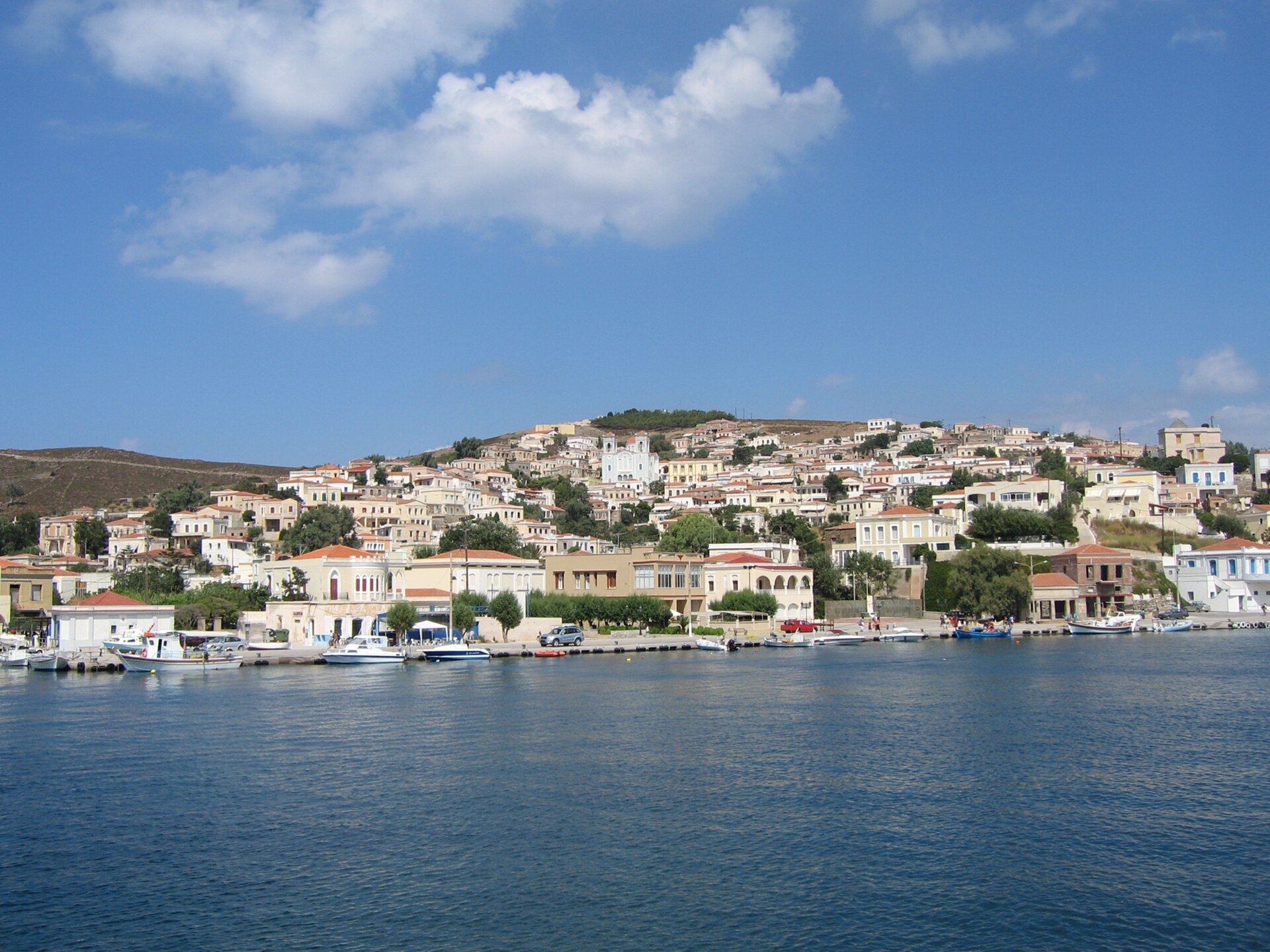
- The harbor and its houses
Follow the town uphill to understand how maritime life shaped its built setting.
- Maritime Museum
Ships and family memories explain the island’s international connections.
- Living seafaring traditions
Education and institutions continue a heritage of work at sea.
Strategic role
An island community connected to regional and international shipping through seafarers, families and maritime education.
A settlement facing the sea
The harbor is the natural starting point for Oinousses. Houses rise behind the waterfront, with larger captains’ residences among more modest homes. Moving into the narrow paved lanes reveals a settlement built across a slope rather than along a single seafront road. Views back towards the water keep the town’s relationship with shipping close at hand.
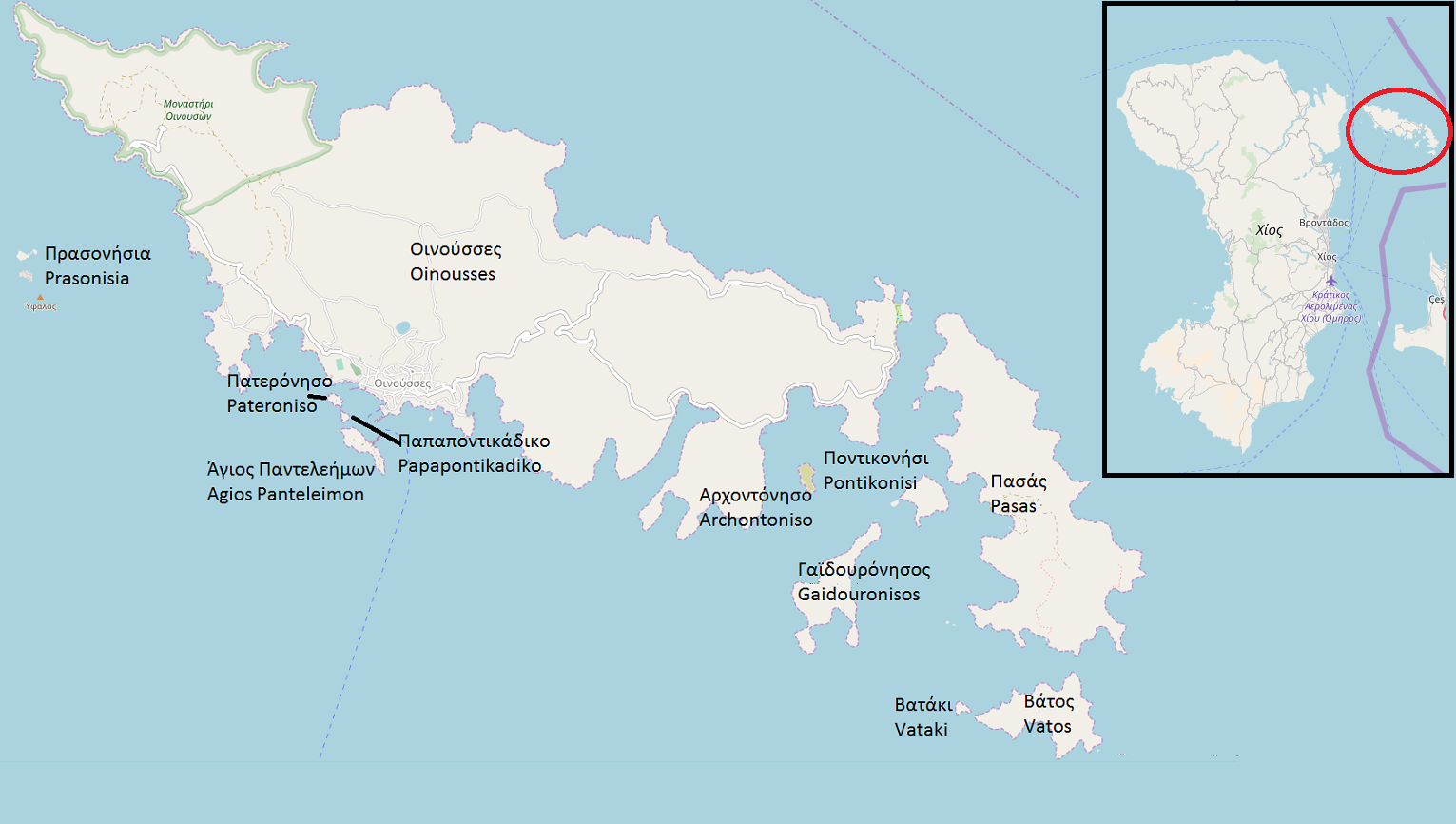
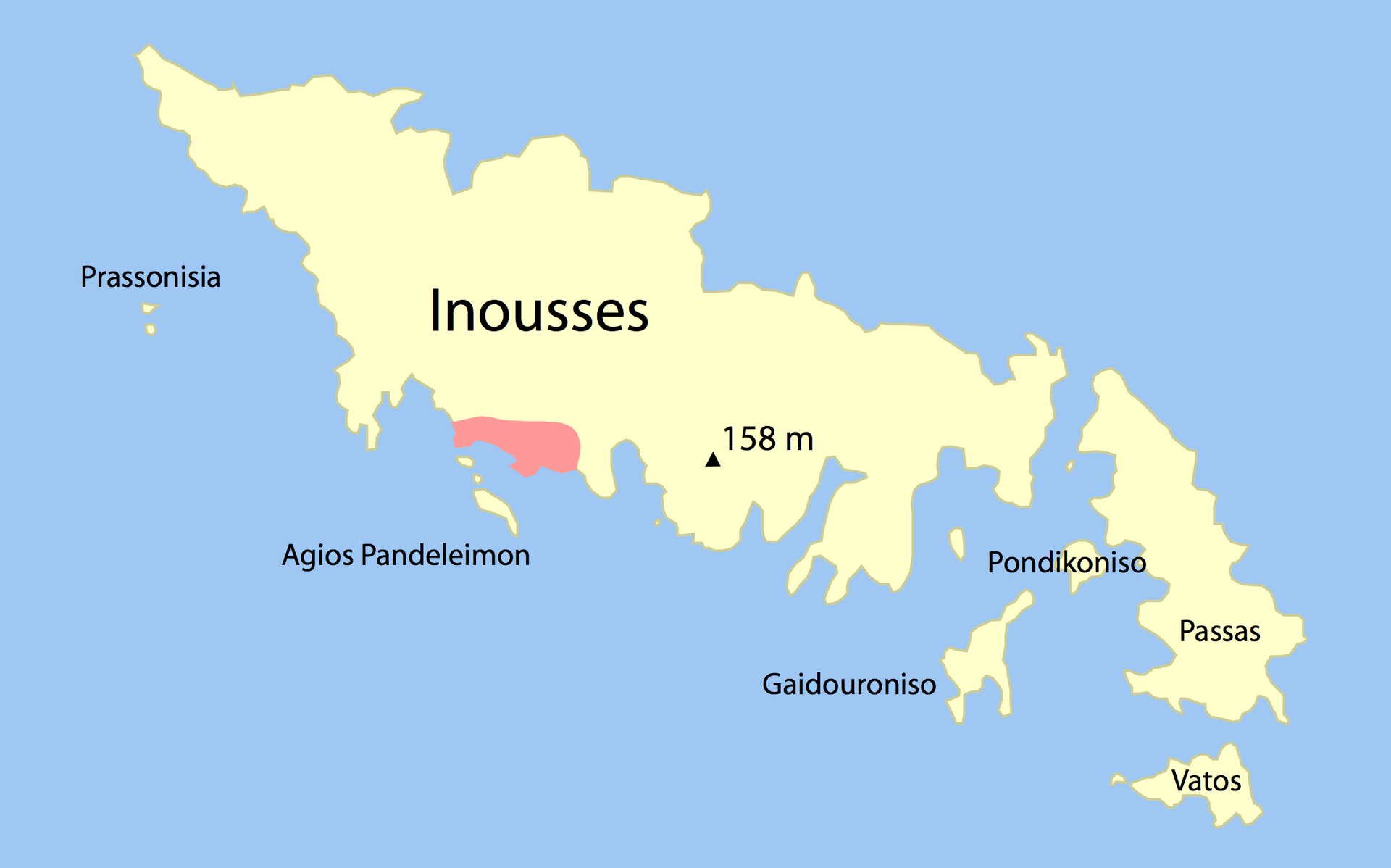
The name refers both to the island group and to its principal settlement. Nearby islets form part of its setting, but a visit to the town offers a much more personal introduction than a distant view of the archipelago.
Seafaring as work and family history
Oinousses is associated with prominent shipping families, but its heritage also belongs to crews, households and those who waited ashore. Successive generations worked through the transition from sailing ships to steamers and modern cargo vessels. Travel linked a small community with much larger commercial worlds.
Maritime education remains part of that identity. The island’s maritime school and merchant marine academy connect inherited experience with training for a profession. The town’s houses, institutions and memorials make the consequences of seafaring visible on land.
The Maritime Museum
The museum grew from a postwar gallery established to preserve paintings of local sailing ships by Aristides Glykas. Its collections subsequently expanded; the refurbished museum opened in 1991. Ship models, paintings, navigational instruments and personal material make it possible to follow changes in vessels alongside the lives connected with them.
Look beyond the models’ fine workmanship to the differences in hull, rig and propulsion. These are clues to changing routes, work and commercial possibilities. The collection turns the harbor outside into part of a wider historical story, rather than presenting maritime objects without their community.
Churches, a monastery and the island landscape
Religious life is another part of the island’s maritime culture. The Annunciation monastery, founded in the twentieth century through shipping-family patronage, provides a quieter destination beyond the town; its decoration is associated with Fotis Kontoglou. It remains an active religious community.
The surrounding coastline and small islands broaden the setting for a visit, but they should not be treated as an unrestricted playground. Respect local guidance, occupied property and protected coastal places. A shore walk and time in the town can be as revealing as travelling farther afield.
Exploring Oinousses today
Combine a walk along the waterfront with the museum and a gradual ascent through the settlement. Steps, slopes and narrow lanes may limit some routes. Museum and monastery visits need separate checks: the museum publishes seasonal arrangements, while religious access depends on the community.
As checked in November 2026, published museum timetables differ between the operator and tourism pages, so confirm directly before setting out. Arrange transport and any visit beyond the town locally; the historical page does not establish berthing availability, shelter or a guaranteed onward sailing.
Architecture
- Tiled-roof houses and captains’ residences arranged on the hillside
- Narrow paved lanes linking the harbor with the upper settlement
- A waterfront museum rooted in local maritime collecting
- Twentieth-century monastic architecture beyond the town
Timeline
- Nineteenth–twentieth centuries Seafaring families participate in the transition from sail to steam and modern shipping.
- After the Second World War A gallery is established to preserve Glykas’s paintings of local sailing ships.
- 1960s The gallery moves into the building that houses the museum.
- 1991 The expanded and refurbished Maritime Museum opens.
Visiting today
Start at the waterfront, visit the Maritime Museum when open and explore the hillside lanes at walking pace. Confirm museum and monastery access directly, expect changes of level, and keep practical passage and berthing decisions separate from sightseeing.
Expedition guides
Images
References
Related places
Related Stops
Topics
- Maritime Heritage
- Island Settlement
- Museum
- Religious Heritage
- Shipping