Highlights
- A peninsula and the settlement below
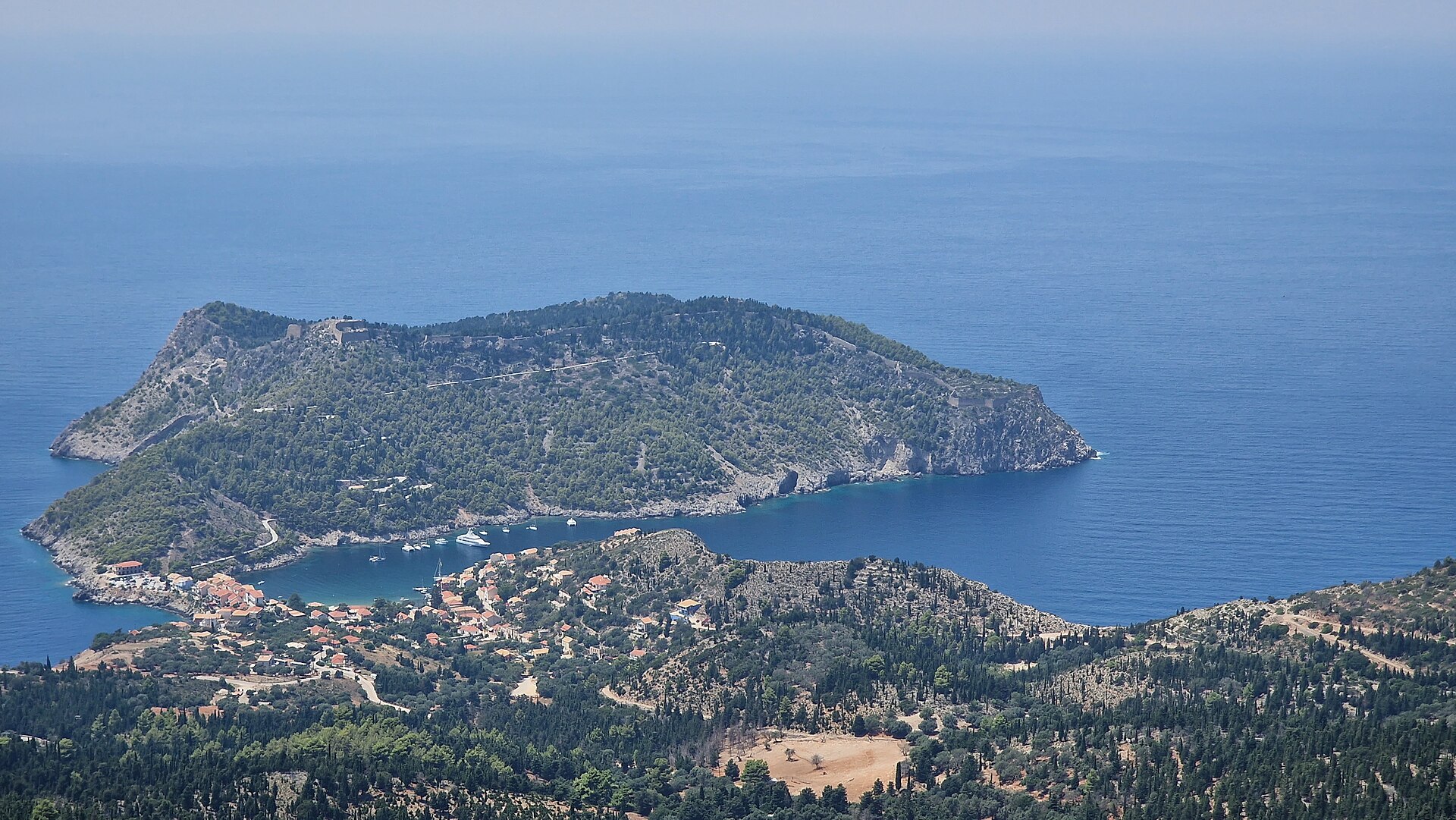
The narrow connection between the village and the castle peninsula is fundamental to Assos.
- A new fortress for northern Kefalonia
Venetian construction began in 1593 after local appeals for additional protection.
- The city that did not fully develop
The plan included streets and plots intended to encourage inhabitants to settle within the walls.
- Fortification adjusted to difficult ground
The perimeter follows the peninsula rather than a regular geometric plan.
Strategic role
A coastal village beside an ambitious Venetian fortress whose intended city did not fully develop.
A peninsula and the settlement below
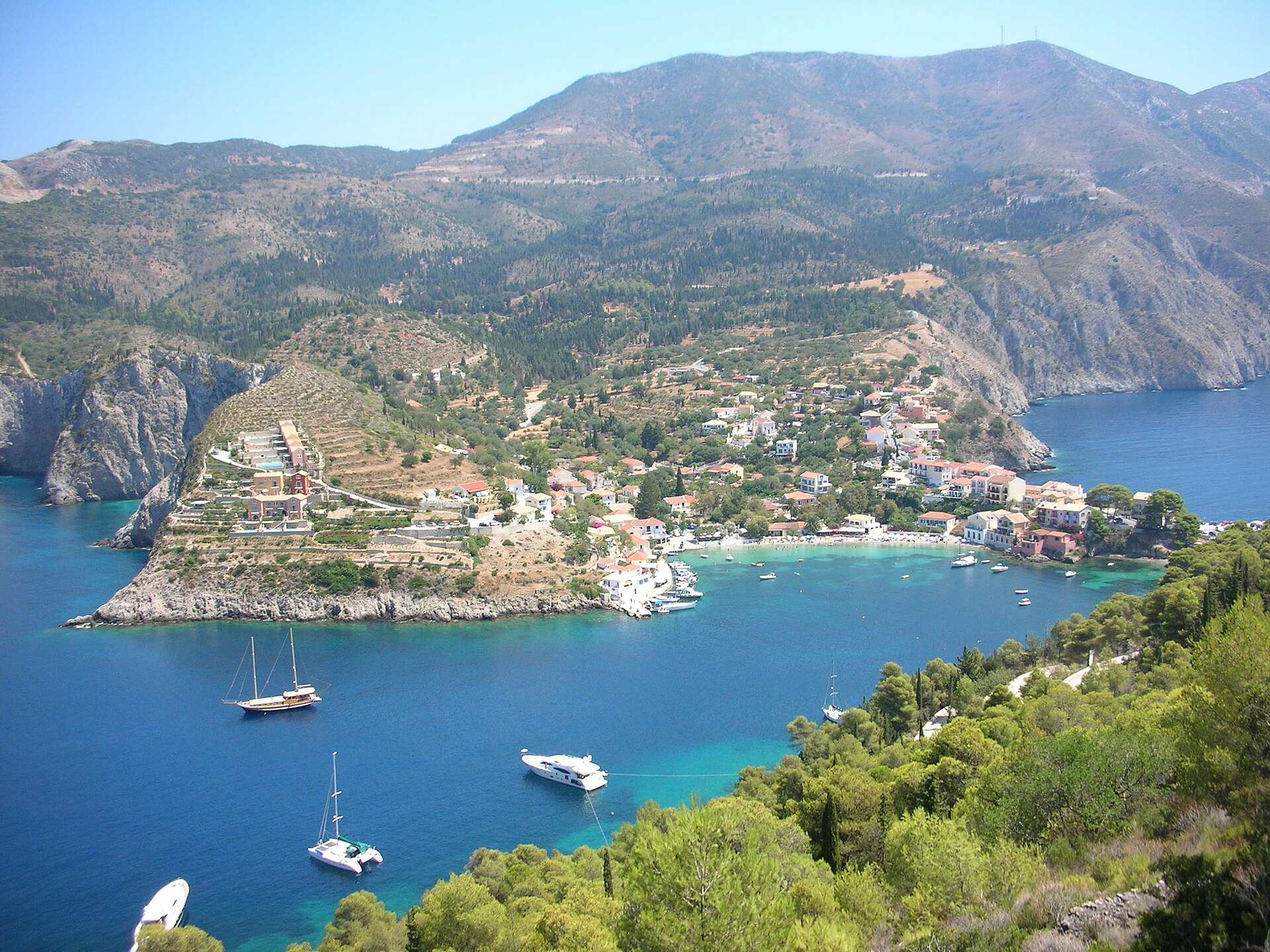
The narrow connection between the village and the castle peninsula is fundamental to Assos. Steep coastal slopes gave the intended fortress natural protection, while the isthmus concentrated access. The village occupies a more intimate waterfront setting below. Seen together, the two landscapes distinguish the space an authority wanted to fortify from the places where everyday settlement proved more sustainable.
A new fortress for northern Kefalonia
Venetian construction began in 1593 after local appeals for additional protection. The project belonged to a period of increased concern for the eastern Mediterranean possessions after the loss of Cyprus. It was not simply an ornamental castle overlooking an existing resort. It represented a substantial commitment to northern Kefalonia and an attempt to give surrounding communities a place of refuge.
The city that did not fully develop
The plan included streets and plots intended to encourage inhabitants to settle within the walls. Limited water and a difficult, remote position worked against those ambitions. Modern Assos grew from the settlement outside the enclosure rather than from a fully realized new capital inside it. This distinction explains the open, thinly built character of much of the fortified ground and the different density of the village.
Fortification adjusted to difficult ground
The perimeter follows the peninsula rather than a regular geometric plan. Bastions protect vulnerable points, but steep rock constrained the ideal artillery layout. The main entrance passes through a vaulted approach, and its inner inscription records 1611. Compare this focused point of entry with the broad area beyond: the project had to combine military enclosure with the circulation and services expected of an inhabited place.
Decline and later reuse
Changes in the wider Ionian strategic situation reduced the castle’s role. Later administrations reused buildings, and a prison complex occupied part of the interior in the twentieth century until the 1953 earthquake. Ruins near the gate and elsewhere are therefore not all evidence of the original construction campaign. The fortress’s later life matters alongside the failure of its urban ambitions.
Village, ascent and ruined interior
Begin with the village and waterfront to appreciate the contrast with the intended fortified city. The climb to the gate and the larger enclosure require time, water and attention to exposed uneven ground. Stay on permitted routes and avoid entering unstable buildings. The view explains the peninsula’s appeal as a defensive position, while the scattered structures prompt a different question: how successfully could a community live there? Check current access before setting out.
Architecture
- Peninsula enclosure adapted to steep ground
- Bastions concentrated at vulnerable points
- Main gate with vaulted approach and 1611 inscription
- Ruins of administrative and religious buildings
- Twentieth-century prison complex
- Village and waterfront outside the intended fortified city
Timeline
- 1593 Work began on the Venetian fortress.
- Early 17th century Construction and urban planning continued within the enclosure; the settlement outside it developed.
- 1611 An inscription dates the surviving main gate’s inner arch.
- 1684 Venetian capture of Lefkada reduced Assos’s strategic importance.
- 1797 The end of Venetian rule brought changes of administration and reuse.
- 1927–1953 The fortress housed a prison before the destructive 1953 earthquake.
Visiting today
The village and castle peninsula are distinct walking environments. The ascent and interior are exposed and uneven; take water, stay on permitted routes and verify current access. No claim is made that every ruin or prison building is safe to enter.
Historical contexts
- Venetian Maritime Empire
- Ottoman Period
- Rise of Modern Greece
- Harbor Defense and Sea-Lane Control
Expeditions
- Expedition IV
Images
References
Related places
Topics
- Kefalonia
- Venetian
- Planned Settlement
- Coastal Fortress
- Water Supply
- Military Reuse