Highlights
- A fortress at a water crossing
The castle stands beside the mainland approach to Lefkada, where land connection and coastal movement met.
- From lordly strongpoint to fortified town
John Orsini established a small fortress around 1300.
- Ottoman shape and Venetian remaking
The basic irregular seven-sided outline emerged under Ottoman rule by the end of the 16th century.
- Water and the people inside
The former aqueduct across the lagoon expresses the scale of supplying an occupied fortress.
Strategic role
A lagoon-side fortified settlement transformed into a military complex at Lefkada’s land entrance.
A fortress at a water crossing
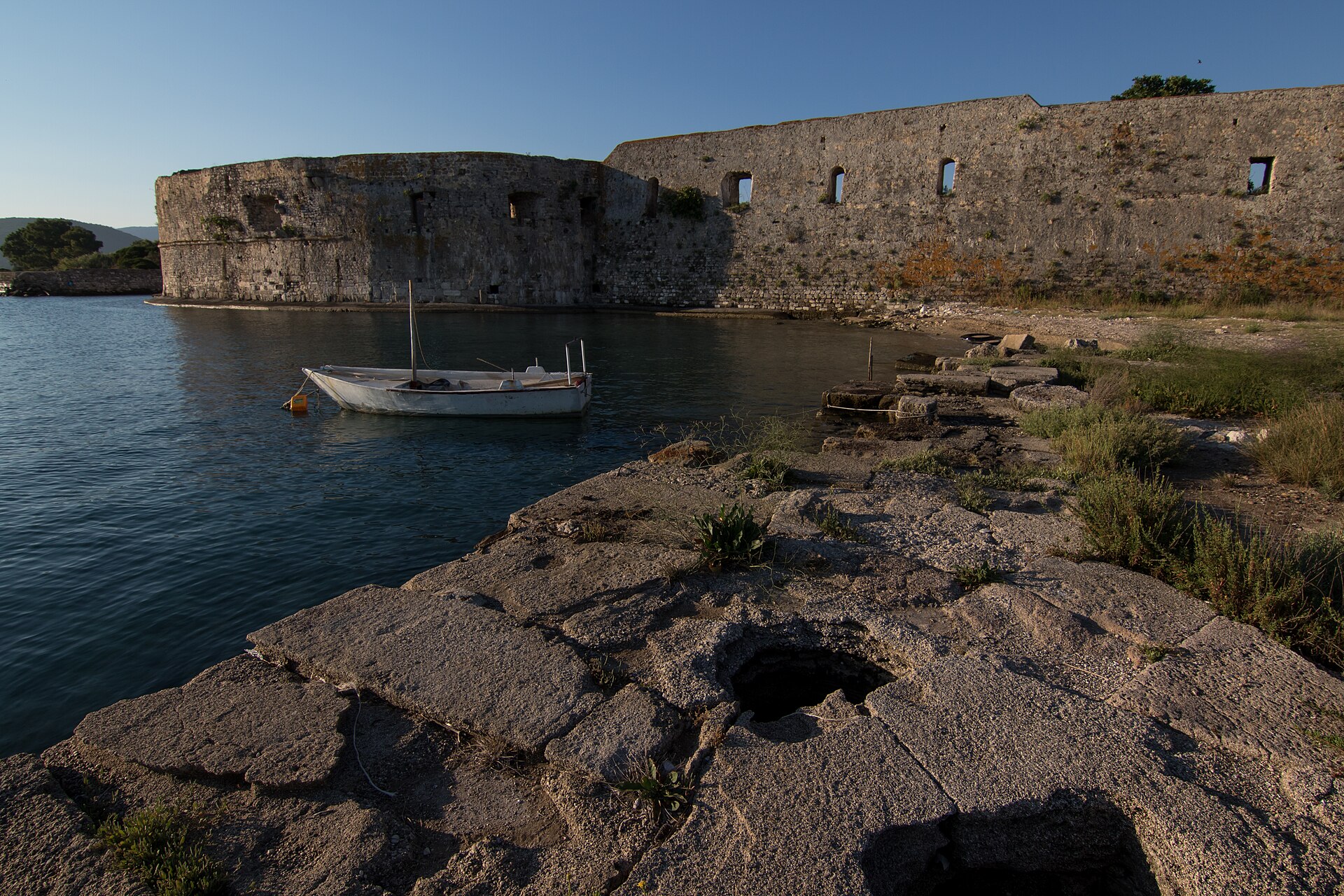
The castle stands beside the mainland approach to Lefkada, where land connection and coastal movement met. Its position is low and waterside, not a summit fortress. The surrounding lagoon and approaches shaped both protection and supply. From the enclosure, the contrast between open water, causeway and modern town makes the changing connection between fortress and settlement easier to understand.
From lordly strongpoint to fortified town
John Orsini established a small fortress around 1300. The original inner strongpoint was later dismantled and should not be equated with the whole surviving enclosure. As population and activity expanded, a fortified settlement developed around it. This transformation gave Agia Mavra an administrative and urban role: defenses enclosed officials, households, religious buildings and services, not merely a garrison.
Ottoman shape and Venetian remaking
The basic irregular seven-sided outline emerged under Ottoman rule by the end of the 16th century. Its bastions and sloping defenses responded to firearms and repeated attacks. After the Venetian conquest in 1684, further works strengthened vulnerable approaches and changed internal uses. Read the walls as an inherited system repeatedly enlarged and adjusted, rather than treating every bastion as an independent Venetian invention.
Water and the people inside
The former aqueduct across the lagoon expresses the scale of supplying an occupied fortress. Within the enclosure, cisterns, service structures and traces of accommodation belong to the practical infrastructure of daily life. Churches and earlier places of worship also register changes of authority and community. The present small church of Agia Mavra belongs to later rebuilding; the dedication’s long history does not mean all its standing fabric is medieval.
When the town moved outside
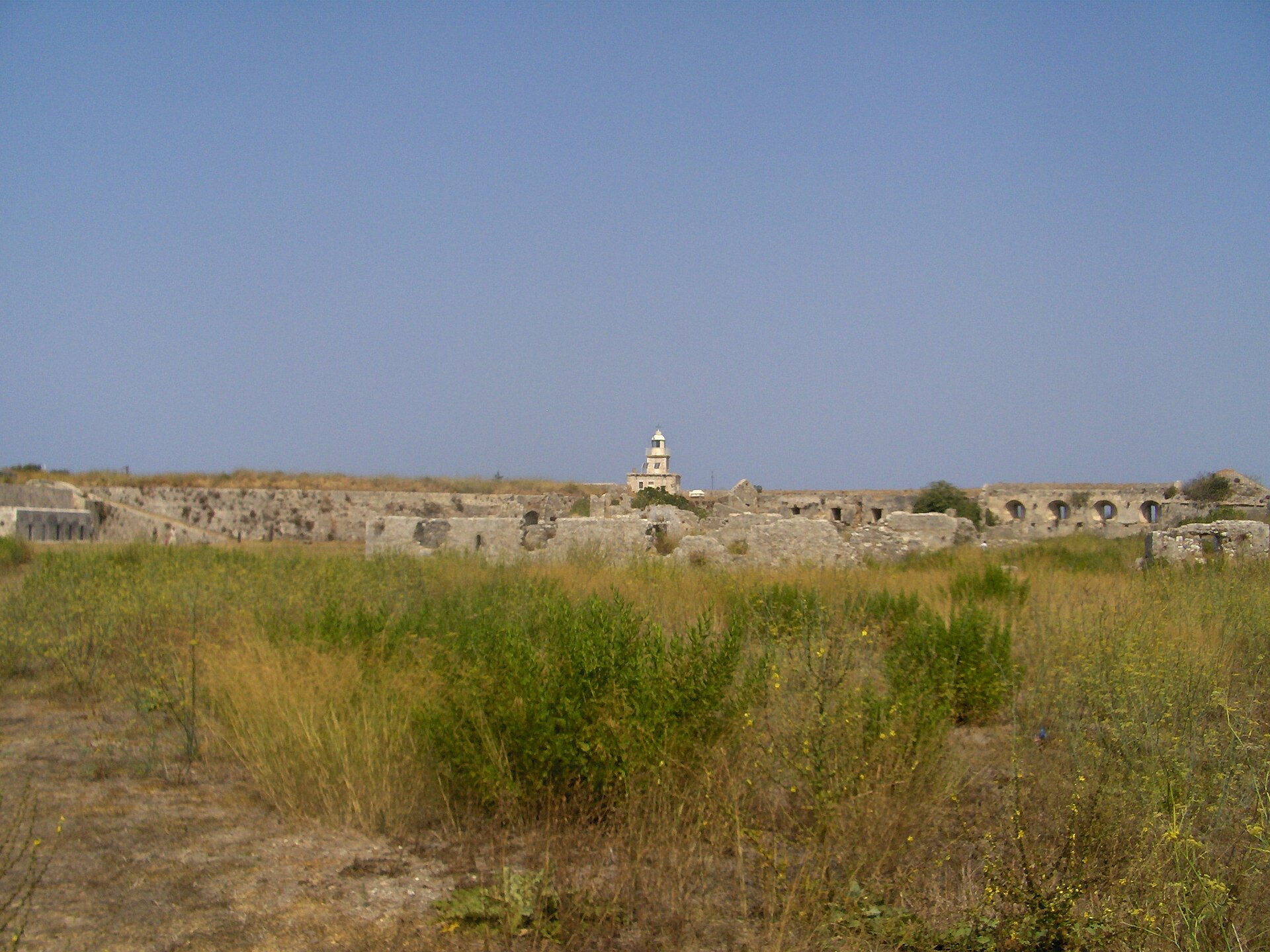
Under Venetian administration the settlement shifted toward Amaxiki, the location of modern Lefkada town. The fortress consequently became more clearly a military precinct. Later British rule brought barracks, medical and penal facilities, a lighthouse and changes to connections across the water. These uses help explain why seemingly utilitarian ruins deserve attention alongside the more monumental perimeter.
Reading the enclosure today
A walk through Agia Mavra is most rewarding when the walls are connected to the vanished urban life they protected. Look from the enclosure toward the modern town and crossing, then compare the bastions with water and service installations inside. The official visitor material also identifies interpretation in a vaulted casemate. Check current museum and fortress arrangements separately before relying on interior access; restoration and events can change available areas.
Architecture
- Irregular seven-sided coastal enclosure
- Bastions and sloping artillery defenses
- Vaulted gun positions and service structures
- Cisterns and traces of water-supply systems
- Later church, lighthouse and military remains
Timeline
- Around 1300 John Orsini founded the original small fortress.
- Late 16th century Ottoman enlargement established the basic irregular heptagonal outline.
- 1684 Venetian forces captured the fortress and began further changes.
- 18th century Military remaking continued while the capital developed outside the enclosure.
- 1810–1864 British rule added military and service infrastructure.
- 1883 The present church of Agia Mavra was rebuilt, according to official visitor interpretation.
Visiting today
The fortress lies beside the road crossing into Lefkada. Confirm current opening, museum operation and permitted routes with its operator; access to the enclosure does not guarantee every casemate or building is open.
Historical contexts
- Venetian Maritime Empire
- Ottoman Period
- Rise of Modern Greece
- Harbor Defense and Sea-Lane Control
Expeditions
- Expedition IV
Images
References
Related places
Topics
- Coastal Fortress
- Lefkada
- Ottoman
- Venetian
- Lagoon
- Water Supply
- Military Reuse