Highlights
- A town between gulf and hinterland
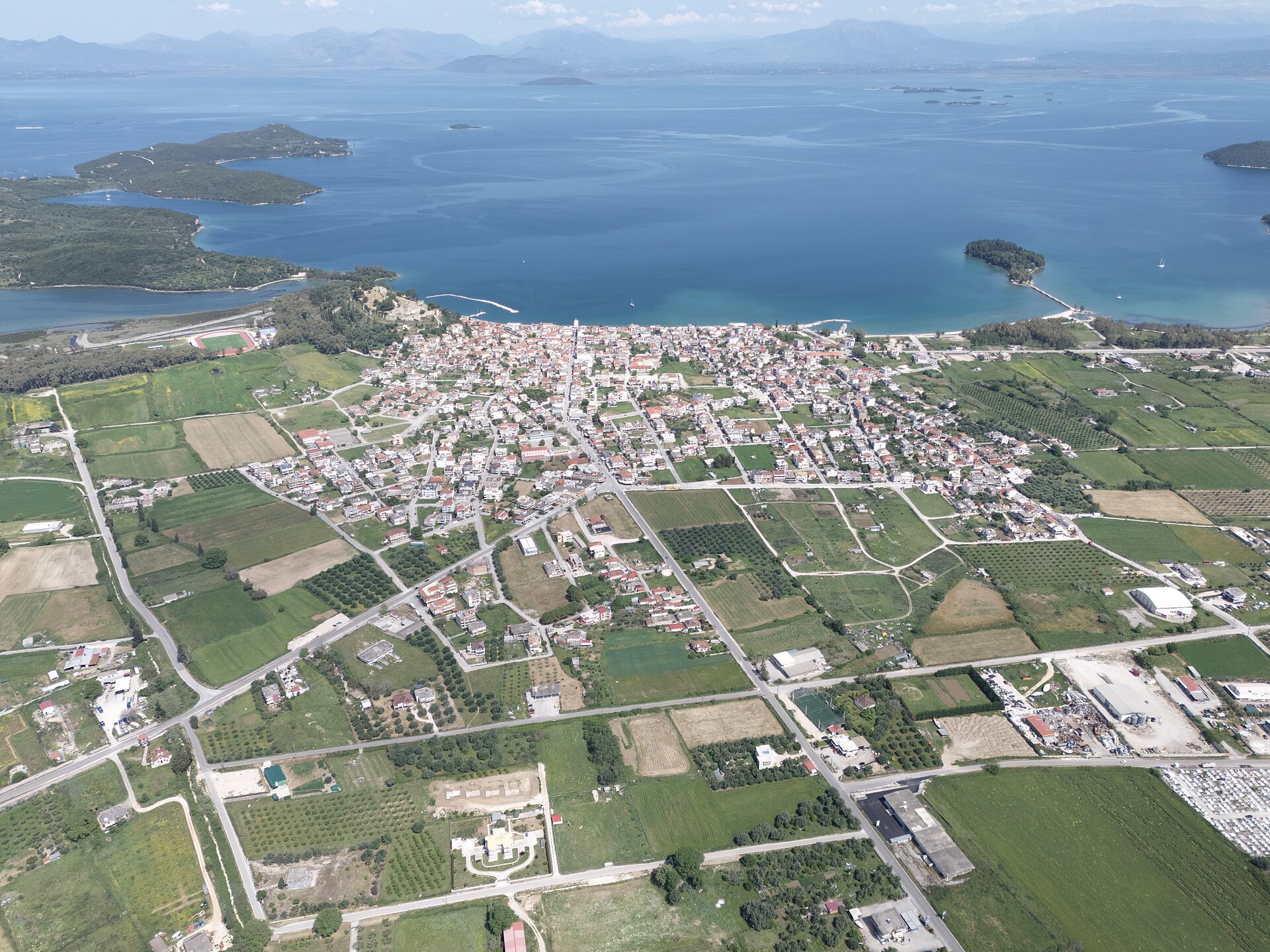
The castle overlooks the southern shore of the Ambracian Gulf and the town’s waterfront.
- A medieval center with changing connections
Medieval written references describe an episcopal and commercial center.
- Four zones and successive lines of protection
The castle is arranged in successive enclosures rising toward the top.
- Religious fabric, garrison and interpretation
Agia Sophia preserves a Byzantine religious element within the later military landscape.
Strategic role
A gulf-side center whose fortified hill connected a productive hinterland with Ionian exchange and contested authority.
A town between gulf and hinterland
The castle overlooks the southern shore of the Ambracian Gulf and the town’s waterfront. Agricultural hinterland and coastal exchange helped sustain settlement here. Vonitsa’s historical importance therefore lies in the connection between land and water, not merely in the view from a hill. The present promenade and built shore offer a different scale of encounter from the defensive precinct above.
A medieval center with changing connections
Medieval written references describe an episcopal and commercial center. The castle’s Byzantine inheritance survives within later work, but the town’s role also depended on connections with Epirus and the Ionian islands. Relations with the Epirote state and western dynasties changed the framework of power without creating the settlement anew at every transfer. Its story is one of an enduring regional center repeatedly drawn into wider competition.
Four zones and successive lines of protection
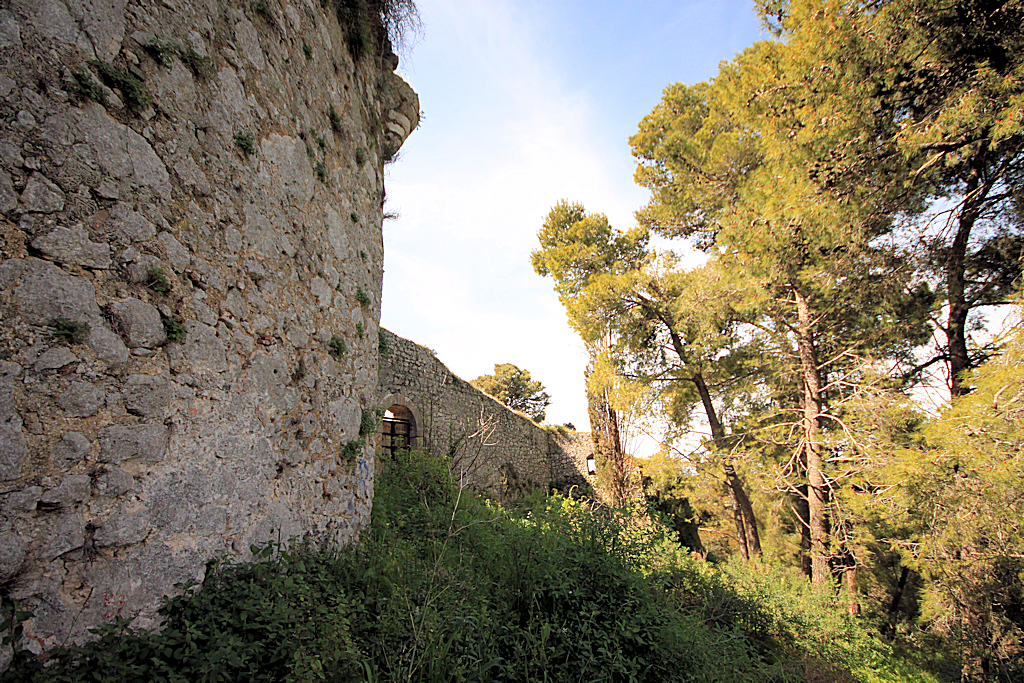
The castle is arranged in successive enclosures rising toward the top. Lower defenses face the more accessible townward slope, while the main precinct contains much of the surviving building fabric. Venetian rebuilding strengthened artillery defenses and reused earlier elements. At the highest point, a small later enclosure belongs to a different military phase, probably associated with Ali Pasha. The ascent makes this hierarchy easier to understand than a single distant panorama.
Religious fabric, garrison and interpretation
Agia Sophia preserves a Byzantine religious element within the later military landscape. Other buildings served changing needs of command and accommodation. The structure known as the Ali Pasha Residence has been restored for digital interpretation of the castle and regional fortifications. Its name and present exhibition use should be distinguished from the evidence for how successive garrisons actually occupied the site.
The difficult transition to the Greek state
Venetian and Ottoman rivalry repeatedly affected Vonitsa, followed by French and Ali Pasha interventions after the end of the Venetian Republic. During the Greek struggle, capture of the town in 1828 did not immediately mean possession of the castle: the garrison surrendered in March 1829. Keeping these events separate shows how a fortified height could prolong control even after the settlement below changed hands.
Town, castle and wetland landscape
Walk the waterfront and town before climbing, then look back to reconnect the defensive zones with the shore. Beyond the built edge, the gulf forms a distinctive ecological landscape, so historic and natural settings can be read together without treating the entire wetland as part of the castle. Check current monument and exhibition access, use permitted paths and respect sensitive shore habitats. No present navigational or harbor-service claims follow from the town’s historical maritime role.
Architecture
- Successive fortified zones up the hill
- Townward gates and lower protective enclosures
- Venetian artillery bastions and battered walls
- Earlier square-tower fabric within later defenses
- Agia Sophia and reused garrison structures
- Restored building housing digital interpretation
Timeline
- Early 10th century Written references identify Vonitsa as an episcopal center.
- Middle Byzantine period The castle’s earliest surviving defensive phase developed.
- 1479 Ottoman forces took Vonitsa.
- 1684 Venetian forces captured the castle and later strengthened it.
- Early 19th century A final upper enclosure was probably added under Ali Pasha’s influence.
- 1828 Greek forces captured the town.
- March 1829 The castle garrison surrendered.
- 1832 Vonitsa became part of the recognized Greek state.
Visiting today
Combine the town and waterfront with the castle ascent. Confirm current monument and digital-exhibition access; public access to one part does not guarantee every building is open. Respect shore habitats and do not infer berthing or navigational conditions from historical harbor descriptions.
Historical contexts
- Late Byzantium
- Venetian Maritime Empire
- Ottoman Period
- Rise of Modern Greece
- Harbor Defense and Sea-Lane Control
Expeditions
- Expedition IV
Images
References
Related places
Topics
- Ambracian Gulf
- Byzantine
- Venetian
- Ottoman
- Coastal Town
- Artillery Fortification
- Military Reuse