Overview
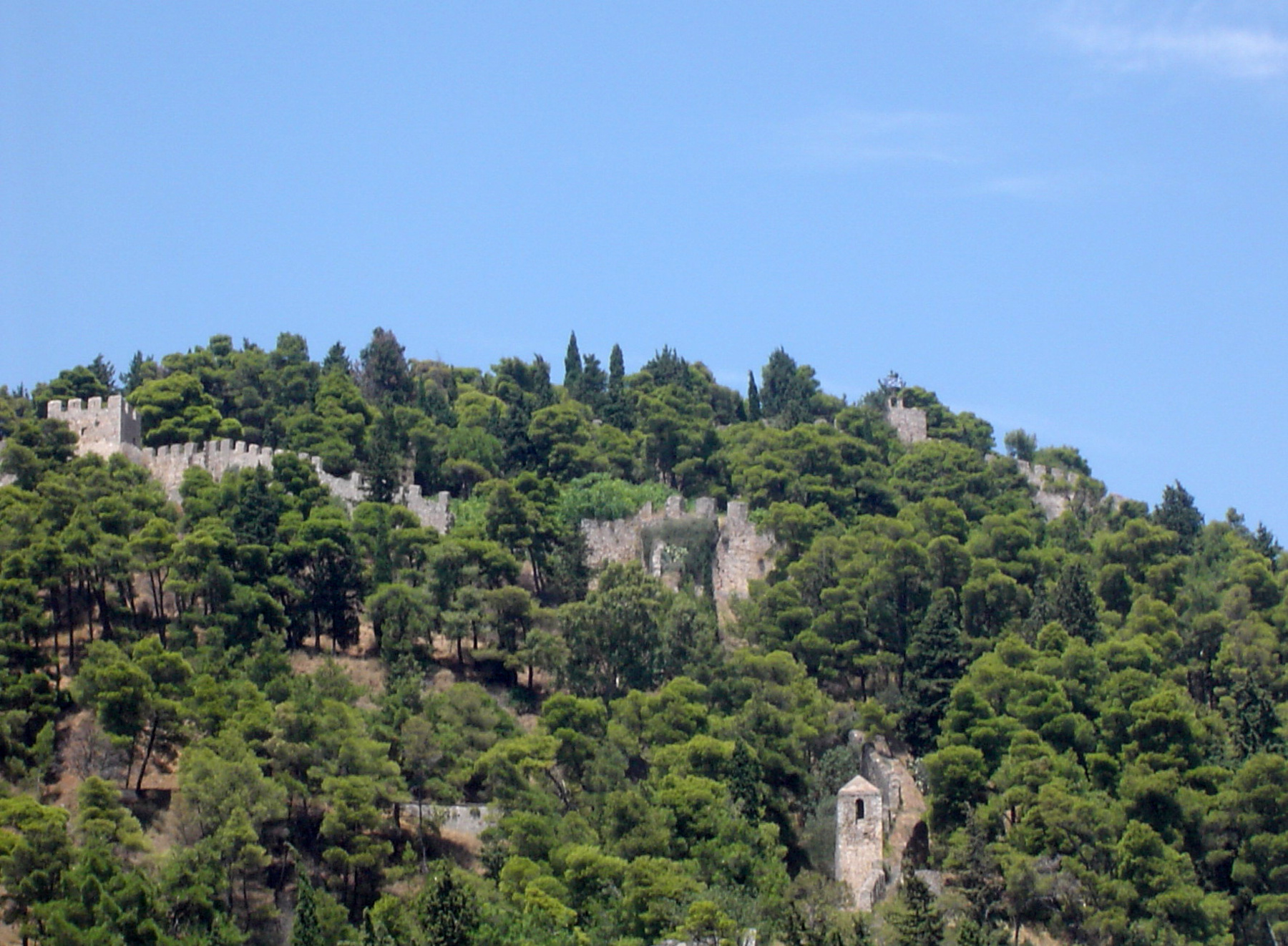
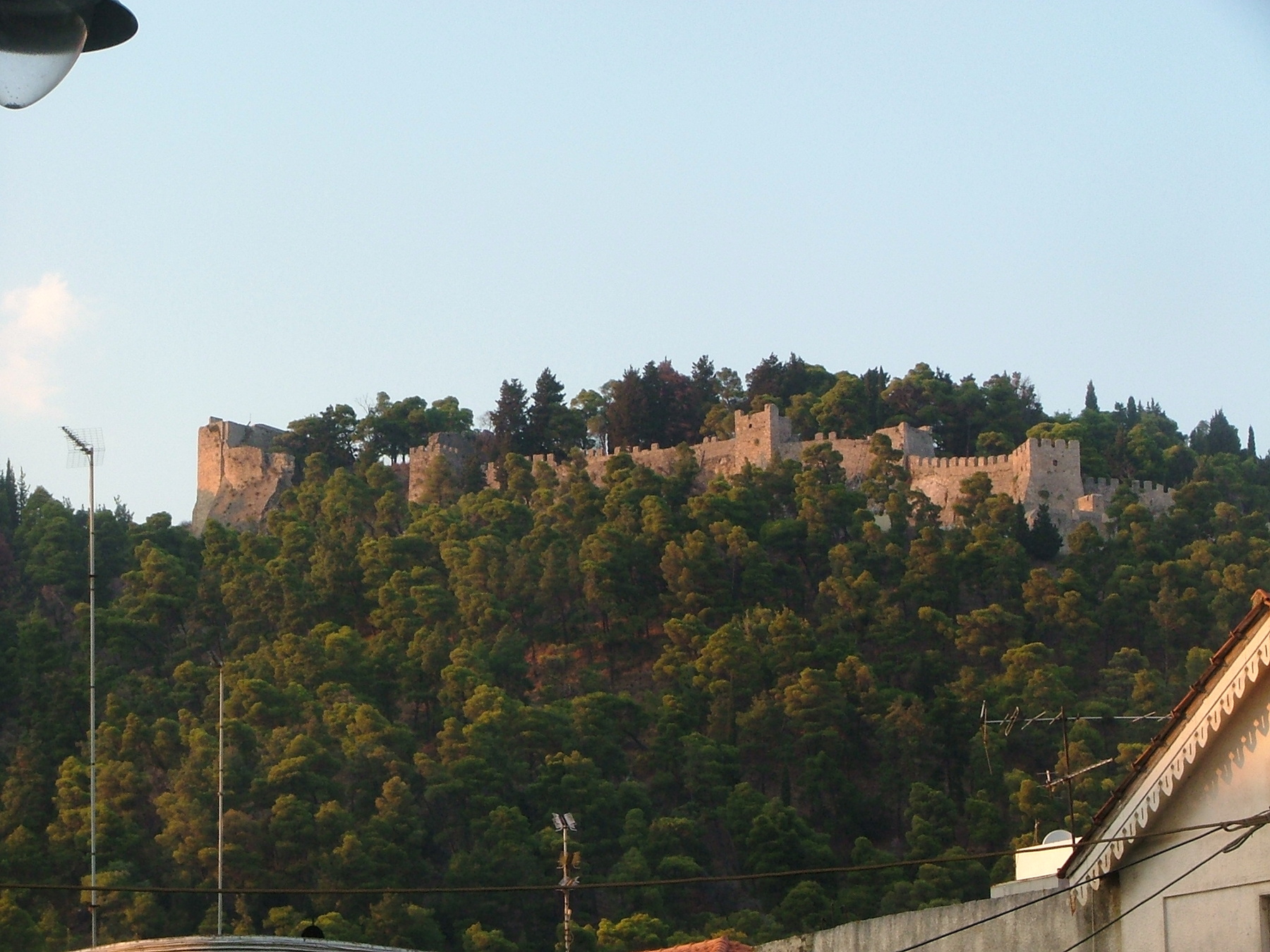
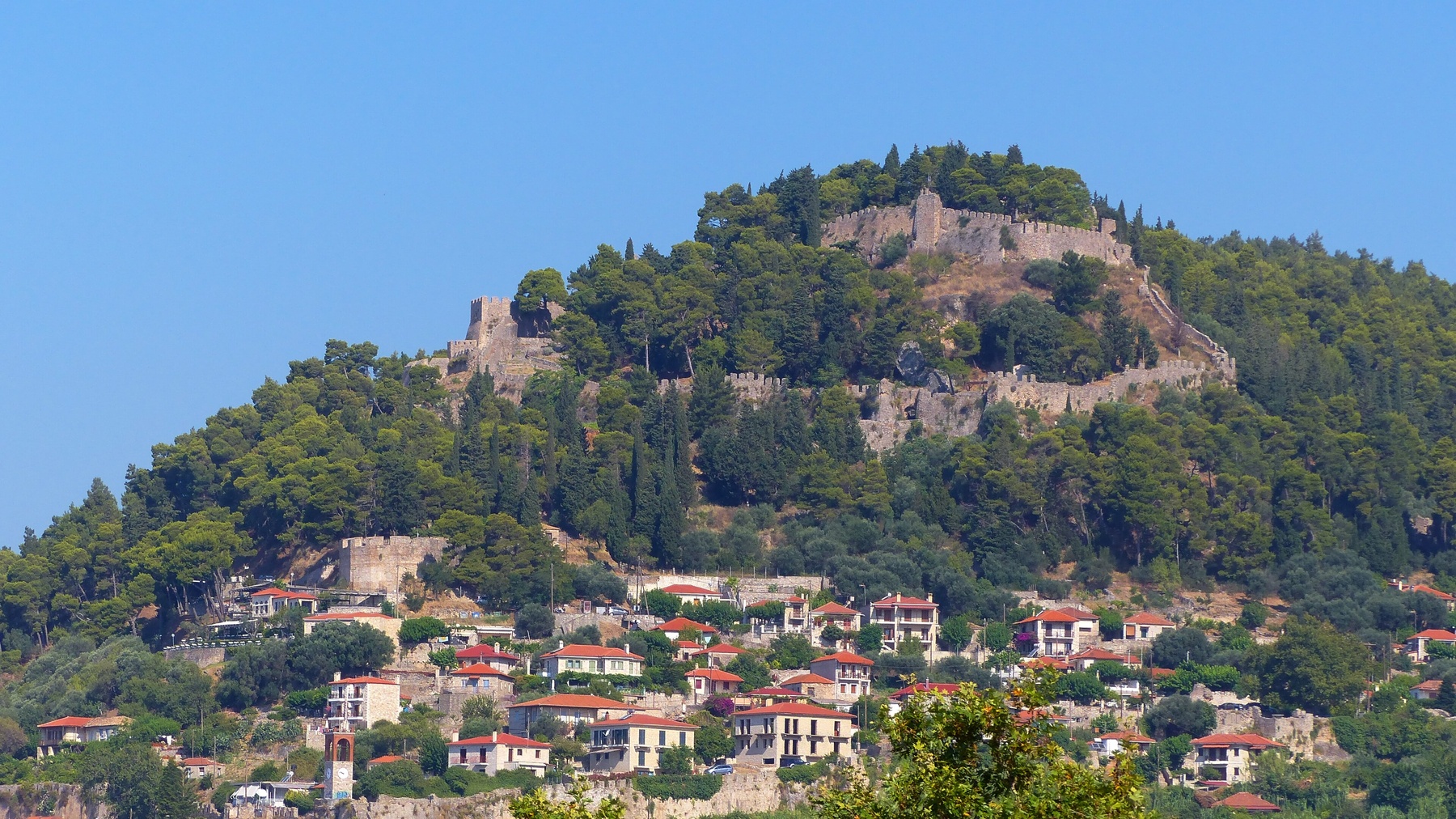
Nafpaktos is one of Greece's most complete surviving fortified urban landscapes. From the citadel on the hill above the town, two great wall lines descend to the sea and embrace the historic settlement and its U-shaped harbor. Four transverse walls divide the enclosure into five successive defensive tiers, creating a layered system that preserves ancient masonry, Byzantine fortifications, major Venetian rebuilding and later Ottoman adaptations. Known in western sources as Lepanto, Nafpaktos guarded the maritime entrance to the Gulf of Corinth and became one of the most contested strongholds of western Greece.
Highlights
- Five Defensive Tiers
Four transverse walls divide the fortress into five successive enclosures, each capable of functioning as a separate defensive zone from the harbor to the citadel.
- Fortified Venetian Harbor
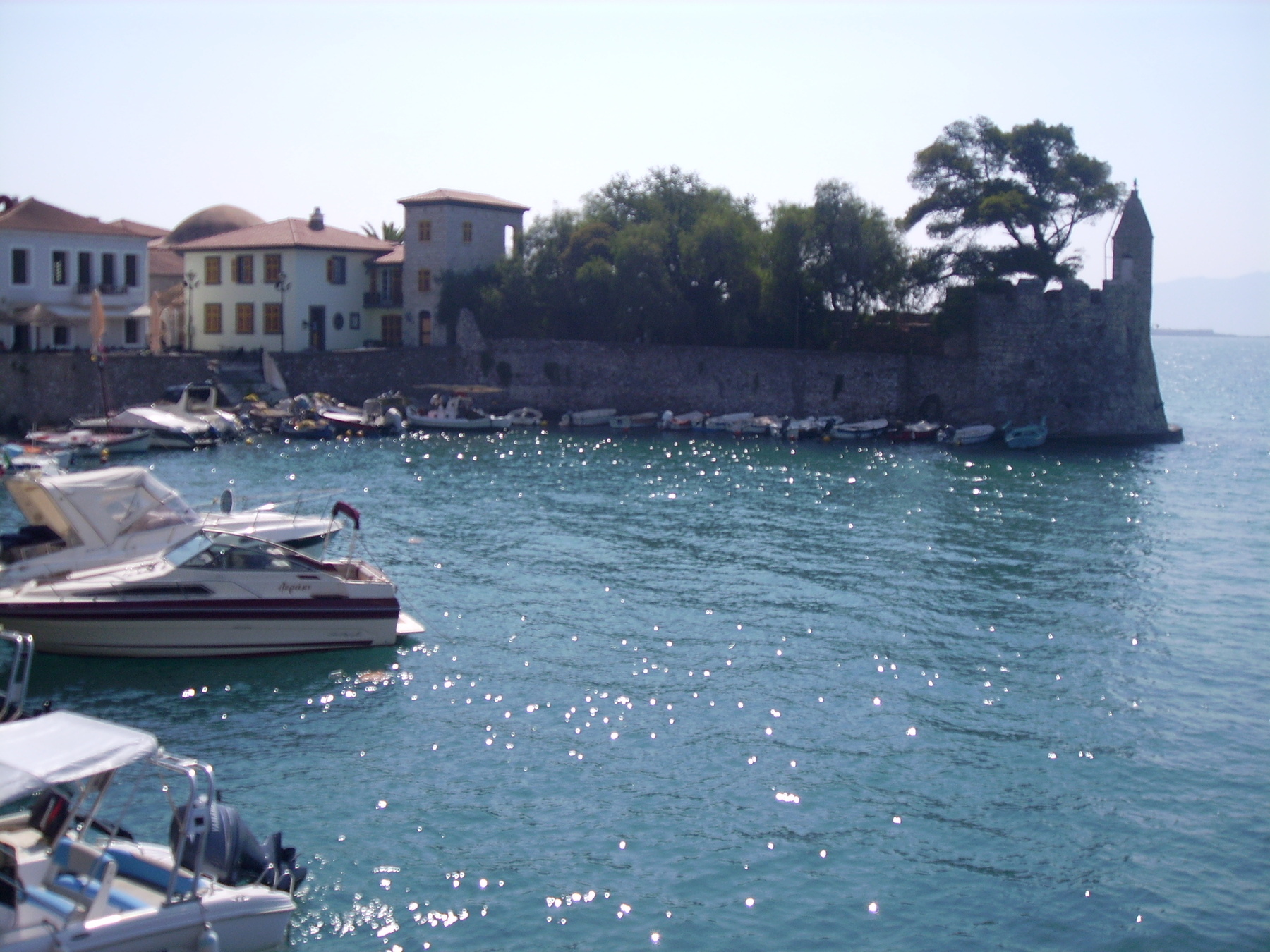
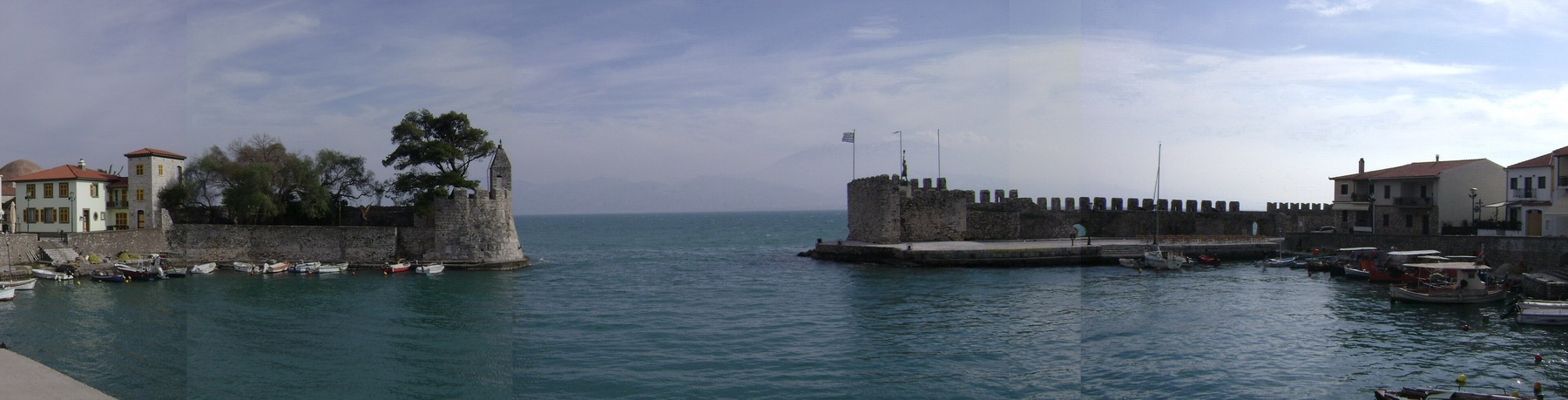
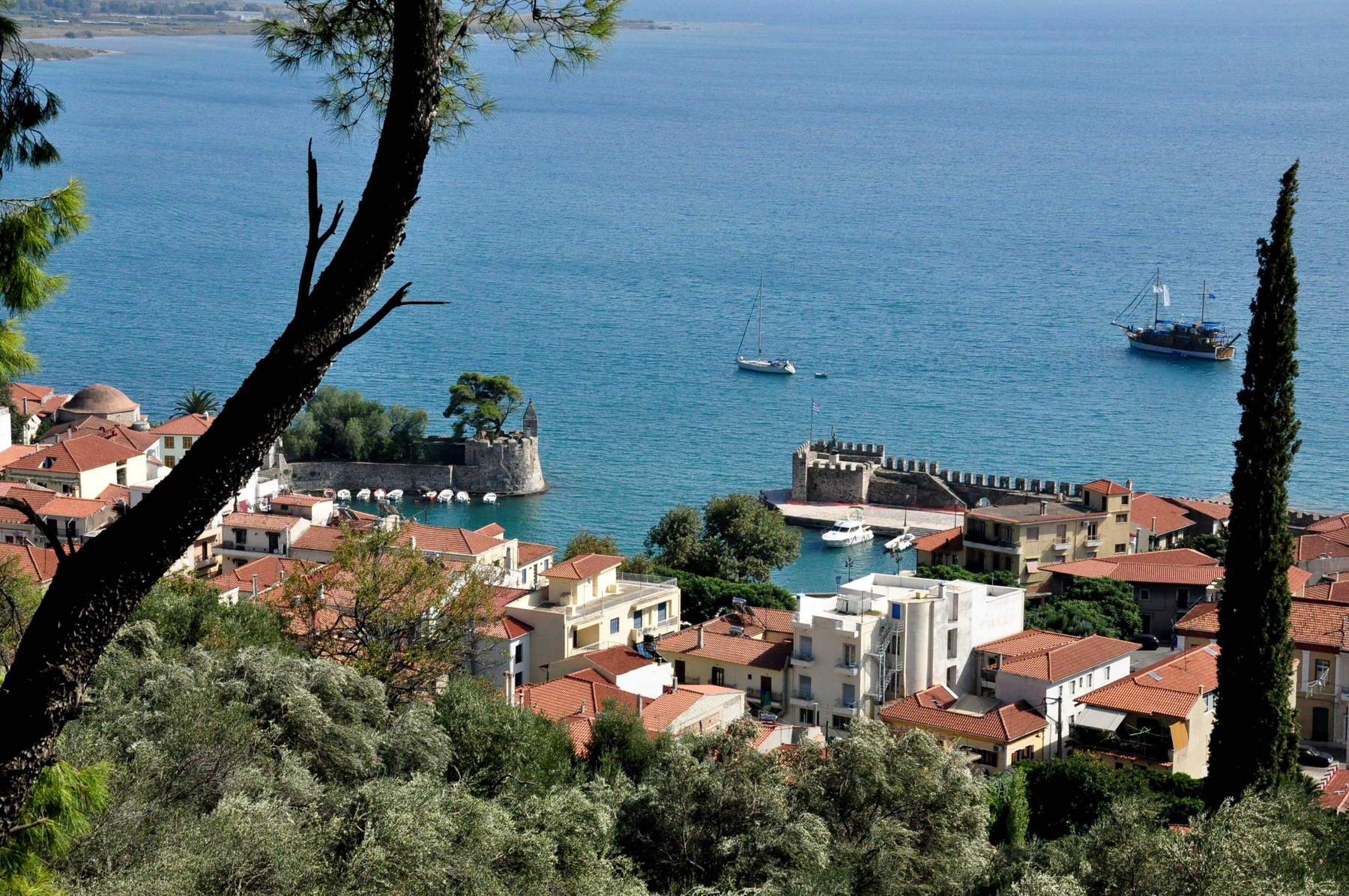
Two semicircular bastions protect the narrow harbor entrance, historically closable by a chain, while the main walls rise directly from the waterfront toward the castle.
- The 1491 Faltsoporti Bastion
A late Venetian artillery bastion preserves the Lion of Saint Mark and the date 1491, providing a rare visible marker of the fortress's final pre-Ottoman modernization.
- Ancient Walls Inside a Medieval Fortress
Fragments of the classical and Hellenistic defenses survive embedded in later masonry, making Nafpaktos a physical record of more than two millennia of fortification.
- Lepanto and the 1571 Naval Battle
The western name of Nafpaktos became internationally famous through the Battle of Lepanto, fought near the entrance to the Gulf of Patras on 7 October 1571.
- Fethiye Mosque
Built by Sultan Bayezid II after the Ottoman conquest of 1499, the restored mosque beside the harbor is one of the most important surviving monuments of Ottoman Nafpaktos.
- Living Fortified Town
Unlike an isolated ruin, Nafpaktos still contains inhabited historic quarters within its lower defensive enclosures, preserving the relationship between fortress and city.
- Castle Museum and Byzantine Core
The upper archaeological site preserves Byzantine administrative and ecclesiastical remains, while the Castle Museum in the citadel presents the city's history through the 19th century.
Strategic role
A fortified harbor city controlling the western approach to the Gulf of Corinth, combining a hilltop citadel, successive urban defensive zones and a protected naval harbor.
A Fortress City at the Gate of the Corinthian Gulf
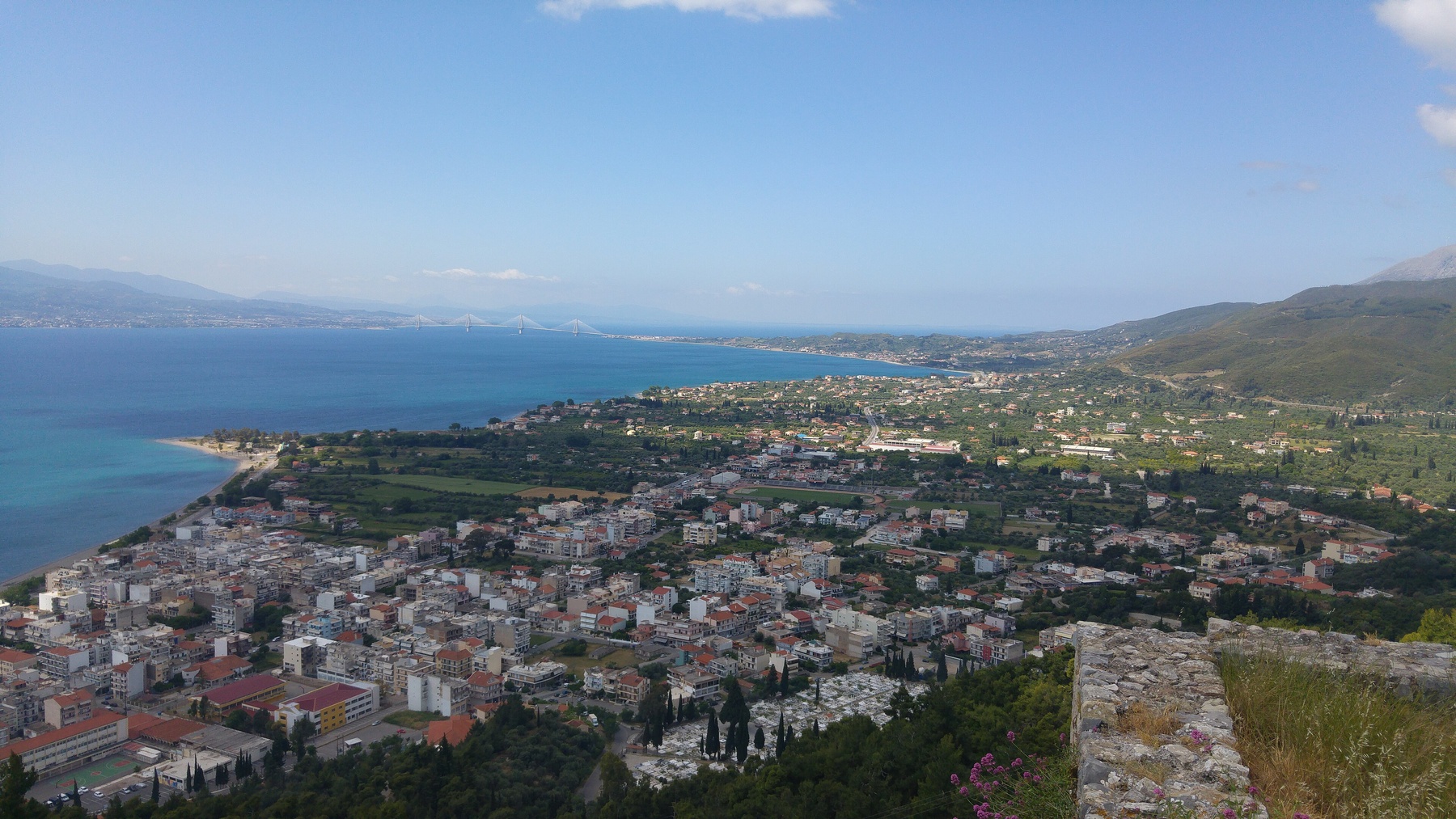
Nafpaktos occupies a steep hill and narrow coastal plain at the western approach to the Gulf of Corinth. Before the opening of the Corinth Canal, this maritime corridor was the only sea entrance into the gulf, giving the town exceptional strategic value. The defenses exploit the terrain with unusual completeness: a citadel crowns the hill, two fortified arms descend toward the coast, and the walls close around a compact U-shaped harbor. The result is not simply a castle above a town but a fortified urban system in which military, administrative, commercial and residential spaces were organized within successive defensive zones.
Ancient Naupactus and the First Fortifications
The site was inhabited from prehistoric times and was fortified by at least the middle of the 5th century BCE. Ancient wall fragments survive in the lower portions of the later circuit, including masonry built in polygonal technique. Thucydides describes Naupactus as a strong place whose walls extended toward the harbor, and the Athenians used it as a base for operations during the Peloponnesian War. In the Hellenistic period, when the city came under Aetolian influence, the defensive perimeter expanded eastward. The medieval fortress therefore did not replace an empty hill: it grew directly over and through a much older fortified city.
Byzantine Recovery and the Hilltop Castle
After disruption in late antiquity and the early medieval centuries, Nafpaktos recovered strongly after the 10th century. It became the capital of the Byzantine Theme of Nicopolis and an important metropolitan see. The principal Byzantine fortress was concentrated on the upper hill, occupying the ancient acropolis, while the lower town initially remained outside the main fortified core. Surviving masonry in the upper tiers preserves this Byzantine phase. Religious and administrative buildings stood inside the defensible center, including the metropolitan church and the episcopal complex. By the 12th century Nafpaktos was again a commercially active city whose defenses were being reinforced.
Venetian Lepanto, 1407–1499
The transformation most responsible for the appearance of today's fortress came after Nafpaktos passed to Venice in 1407. The Republic valued Lepanto as a trading center and as a strongpoint protecting navigation through the Gulf of Corinth. Venetian engineers extended the fortifications down the hillside to enclose the previously unwalled urban areas and the harbor, while older walls were raised, thickened and repeatedly reinforced. The lower defensive zones took shape during the 15th century as artillery became increasingly important. Robust bastions and low, thick parapets provided firing positions for cannon. At Faltsoporti, a surviving Lion of Saint Mark and the date 1491 record one of the final major Venetian building phases before the Ottoman conquest.
Five Defensive Tiers and the Gates
Four transverse walls divide Nafpaktos into five successive defensive tiers. Each zone could function as an independent defensive enclosure, allowing defenders to fall back uphill if a lower line was breached. The upper three zones formed the military and administrative core and now constitute the organized archaeological site; the two lower zones, traditionally called the Upper and Lower or Inner Town, remain inhabited. The system included five principal gates—four landward and one seaward—plus internal gates between the tiers. Sidiroporta, the 'Iron Gate,' linked the lower zones, while Faltsoporti controlled access to the Upper Town. Entry to the upper castle was protected by three successive gates and strong defensive works.
The Fortified Harbor
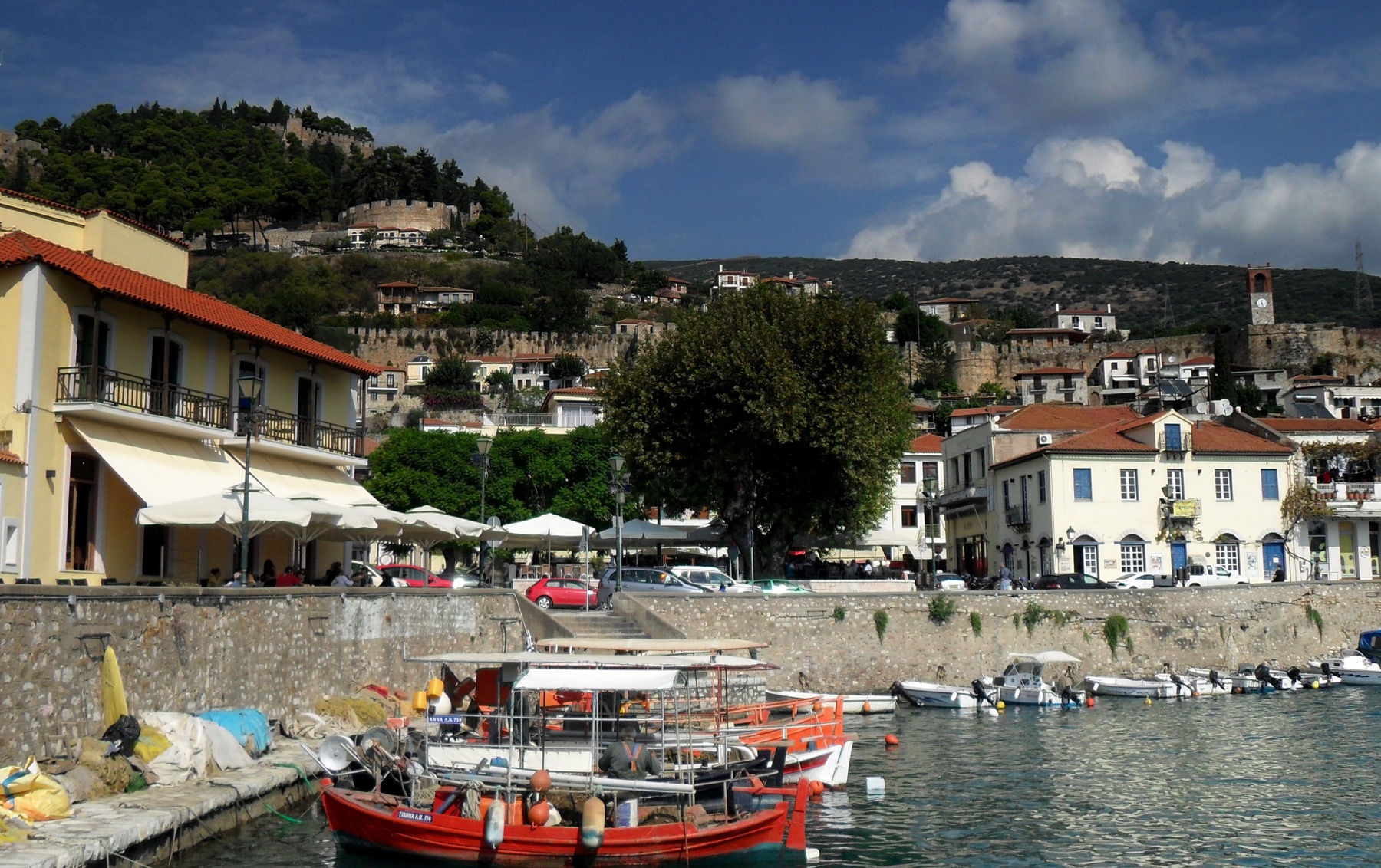
The harbor is the seaward termination of the entire defensive system and one of Nafpaktos's defining features. Two semicircular bastions guard the narrow mouth of the U-shaped basin. Historical testimony indicates that a chain could be stretched between them to close the entrance, a familiar defensive technique in major fortified ports. The walls climbing behind the harbor visually connect the waterfront to the citadel above, making the strategic logic of the fortress unusually easy to read. The eastern bastion later carried a guardhouse with a pyramidal roof that served as a lighthouse, while Ottoman and 19th-century alterations continued to adapt the waterfront to changing military and commercial needs.
Ottoman Nafpaktos and the Battle of Lepanto
After resisting Ottoman attacks in 1462, 1477 and 1485, Nafpaktos fell on 26 August 1499. Under Ottoman rule, known as İnebahtı, it became the seat of a sanjak and remained a prosperous regional center. The Ottomans modified the fortifications for firearms, opening gun embrasures in the sea walls, strengthening existing bastions and constructing new defensive works. They also reshaped the urban landscape with mosques, baths, fountains and residences. The Fethiye Mosque, erected by Sultan Bayezid II after the conquest, survives beside the harbor. In 1571 the Ottoman fleet sailed from this strategic region before meeting the Holy League near the entrance to the Gulf of Patras. The resulting Battle of Lepanto made the western name of Nafpaktos famous throughout Europe, although the battle itself was fought at sea some distance from the town.
From the Second Venetian Occupation to Greek Independence
Venice recaptured Nafpaktos in 1687 during the Morean War, but its return was brief. The Treaty of Karlowitz restored the fortress to Ottoman rule in 1699. During the 18th century the city lost some of its former commercial importance as Patras grew, but the fortified settlement continued to function as an administrative and military center. In the spring of 1829, near the end of the Greek War of Independence, the Ottoman garrison surrendered the castle after a siege. Fighters from Souli and other Greek communities subsequently settled in houses vacated by the Muslim population, marking the transition of the old Ottoman fortress town into the modern Greek city.
The Castle Today
Nafpaktos remains remarkable because the fortifications are still integrated with a living town. The upper three enclosures preserve the archaeological core, including cisterns, storage structures, the church of Prophitis Ilias, remains associated with the Byzantine metropolitan complex and restored buildings used for interpretation. The Nafpaktos Castle Museum, opened in August 2024 within restored vaulted spaces of the citadel, presents the city's Byzantine and post-Byzantine history. The lower defensive zones contain streets, houses, Ottoman fountains, the Botsaris mansion-tower and the surviving Fethiye Mosque. Recent conservation campaigns have stabilized and presented large portions of the walls, allowing the visitor to understand Nafpaktos as a continuous fortified landscape rather than as an isolated monument.
Architecture
- Five successive defensive tiers divided by four transverse walls
- Hilltop citadel occupying the ancient acropolis
- Two long wall arms descending from the citadel to the sea
- Fortified U-shaped harbor with semicircular bastions
- Venetian artillery bastions and reinforced gates
- Ancient and Byzantine masonry incorporated into later walls
- Ottoman gun embrasures, bastion repairs and urban monuments
Timeline
- 2nd millennium BCE The earliest traces of habitation in the area of Nafpaktos date to the Bronze Age.
- Mid-5th century BCE Naupactus was already strongly fortified; surviving polygonal masonry and Thucydides' account attest to the ancient defensive circuit.
- 5th century BCE The Athenians used Naupactus as an important naval and military base during the Peloponnesian War.
- 3rd–2nd centuries BCE Under Aetolian control, the city's fortifications were expanded eastward to protect a larger urban area.
- 10th–12th centuries Nafpaktos revived as the capital of the Byzantine Theme of Nicopolis and as a metropolitan see; the hilltop castle was rebuilt and reinforced.
- 1204 After the Fourth Crusade, Nafpaktos became part of the Epirote state and remained an important regional administrative and ecclesiastical center.
- 1294 Nafpaktos passed to Philip of Taranto through the dowry of Tamar of Epirus; fortification works and a mint are associated with this period.
- 1407 Nafpaktos passed to Venetian rule. Venice expanded the defenses to enclose the previously unwalled lower city and harbor and reinforced the walls for artillery warfare.
- 1462, 1477 and 1485 The Venetian fortress successfully resisted repeated Ottoman attacks.
- 1491 A major Venetian bastion protecting the Faltsoporti Gate bears the Lion of Saint Mark and the date 1491, evidence of the late-15th-century artillery modernization.
- 26 August 1499 Nafpaktos fell to the Ottomans and became the seat of a sanjak. The Fethiye Mosque was erected soon after the conquest.
- 7 October 1571 The Holy League defeated the Ottoman fleet near the entrance to the Gulf of Patras in the naval battle remembered internationally as the Battle of Lepanto.
- 1687–1699 Venice temporarily recovered Nafpaktos before returning it to Ottoman rule under the Treaty of Karlowitz.
- Spring 1829 The Ottoman garrison surrendered the castle during the Greek War of Independence, bringing Nafpaktos into the emerging Greek state.
- 2006–2024 Successive conservation and presentation projects restored major sections of the fortifications; the Nafpaktos Castle Museum opened in the citadel in August 2024.
Visiting today
The upper three defensive zones form the organized archaeological site, while the lower two zones remain part of the inhabited historic town. The castle museum and interpretation spaces are within the upper enceinte. Opening hours and access conditions can change seasonally, so consult the Ephorate of Antiquities of Aetolia-Acarnania and Lefkada before visiting.
Historical contexts
- Late Byzantium
- Venetian Maritime Empire
- Ottoman Period
- Rise of Modern Greece
- Harbor Defense and Sea-Lane Control
Expeditions
- Expedition IV
Images
References
- Hellenic Ministry of Culture — Castle Route: Nafpaktos
- Ephorate of Antiquities of Aetolia-Acarnania and Lefkada — Castle of Nafpaktos
- Hellenic Ministry of Culture — Odysseus: Castle of Nafpaktos
- Municipality of Nafpaktia — Castle of Nafpaktos
- Municipality of Nafpaktia — History of Nafpaktos
- Eleni Katsouli et al. — The Castle of Naupaktos: Partial Reconstruction and Structural Reinforcement
- Allan Brooks — Castles of Northwest Greece: From the Early Byzantine Period to the Eve of the First World War
- Myrto Veikou — Byzantine Epirus: A Topography of Transformation
Related places
Topics
- Fortress Capital
- Fortified City
- Harbor Fortress
- Byzantine
- Venetian
- Ottoman
- Artillery Fortification
- Lepanto
- Gulf Of Corinth
- Living Fortification