Highlights
- A castle that became a palace
Chlemoutsi’s inner stronghold developed into a princely residence, bringing defense, daily life, and formal reception together around one courtyard.
- Power in a changing landscape
The hilltop castle stood near Andravida and the later port of Glarentza, two centers that helped shape the western Morea over time.
- Life depended on stored rainwater
Cisterns collected roof water on a hill with no natural springs, linking the castle’s impressive rooms to the practical needs of its inhabitants.
- A monument shaped by later lives
Ottoman and Venetian changes, 19th-century damage, and modern conservation all contribute to the layered castle visitors encounter today.
Strategic role
An early-13th-century Frankish castle that developed into a princely residence and reception complex, then changed under Byzantine, Ottoman, and Venetian rule.
A new Frankish foundation
Chlemoutsi was built anew by the Frankish rulers of Achaea in the early 13th century, rather than by taking over a known Byzantine fort. Its exact date and patron remain disputed: Antoine Bon proposed 1220–23 under Geoffrey II, while a later reading of papal letters and the building phases favors c.1210–13 under his father, Geoffrey I. Versions of the Chronicle of the Morea tell that the prince used church revenues to finance the castle, but this is a medieval account whose details differ between versions. What is clear is that Chlemoutsi was an ambitious new stronghold for the principality.
From stronghold to princely residence
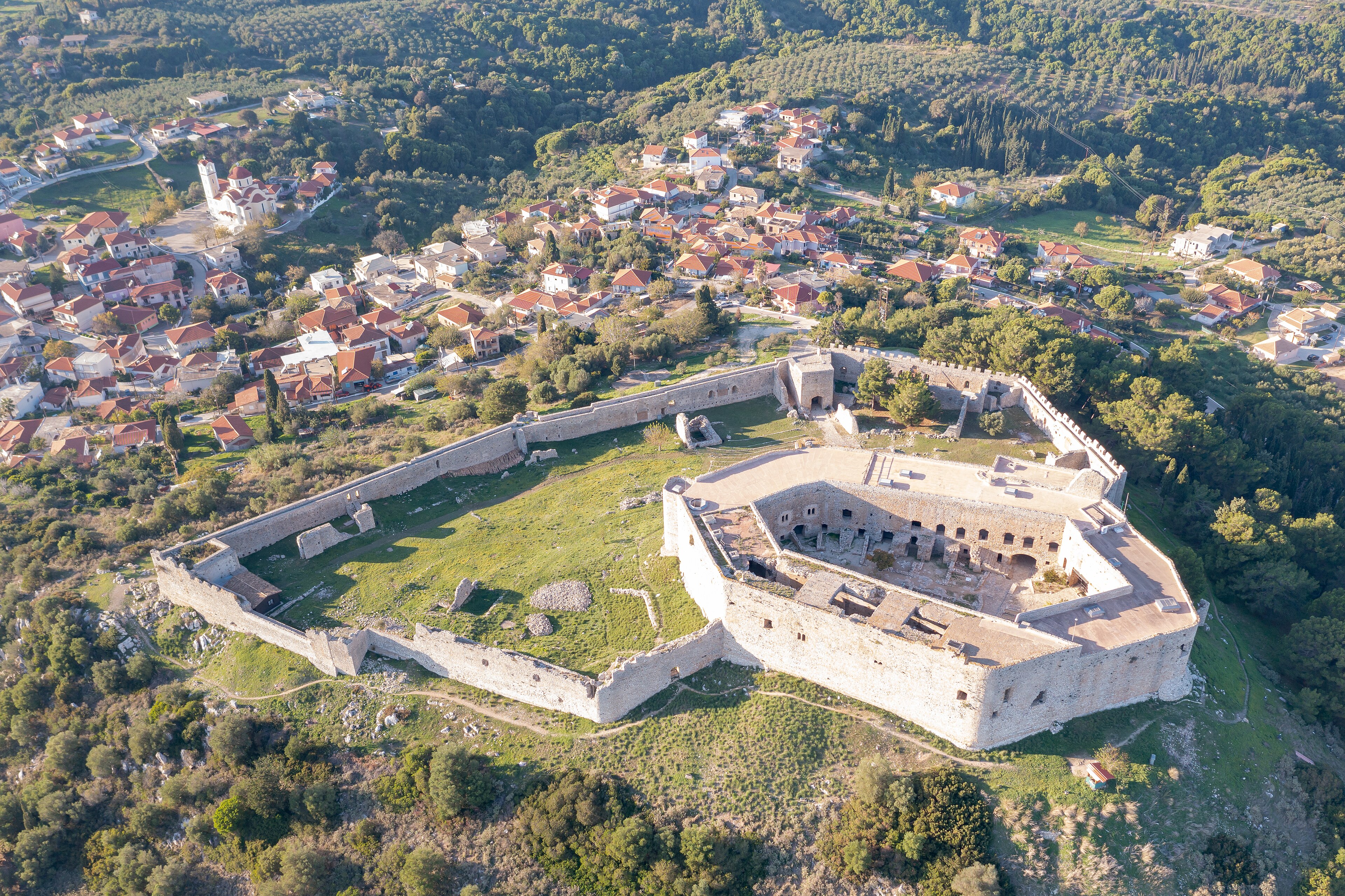
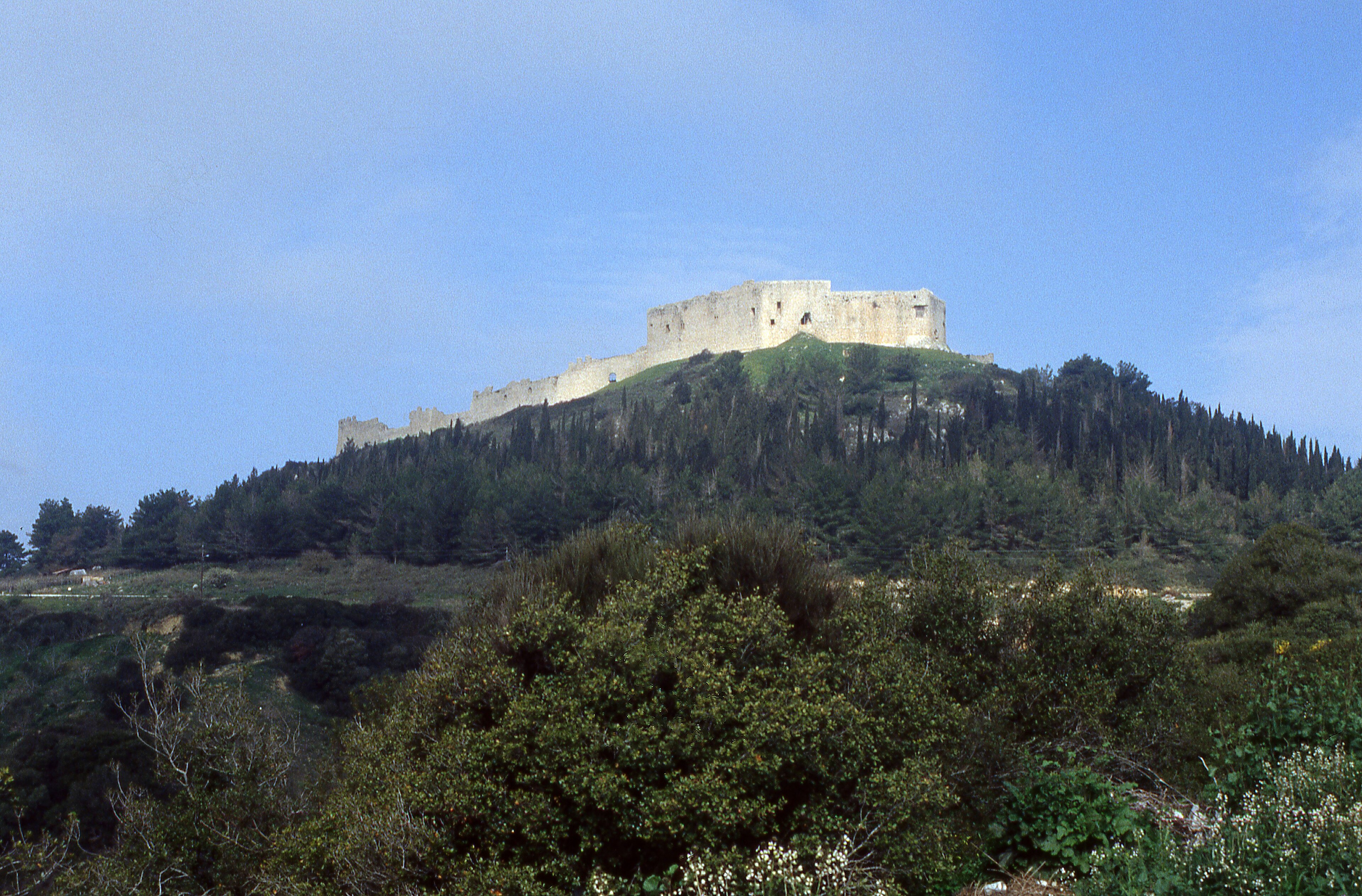
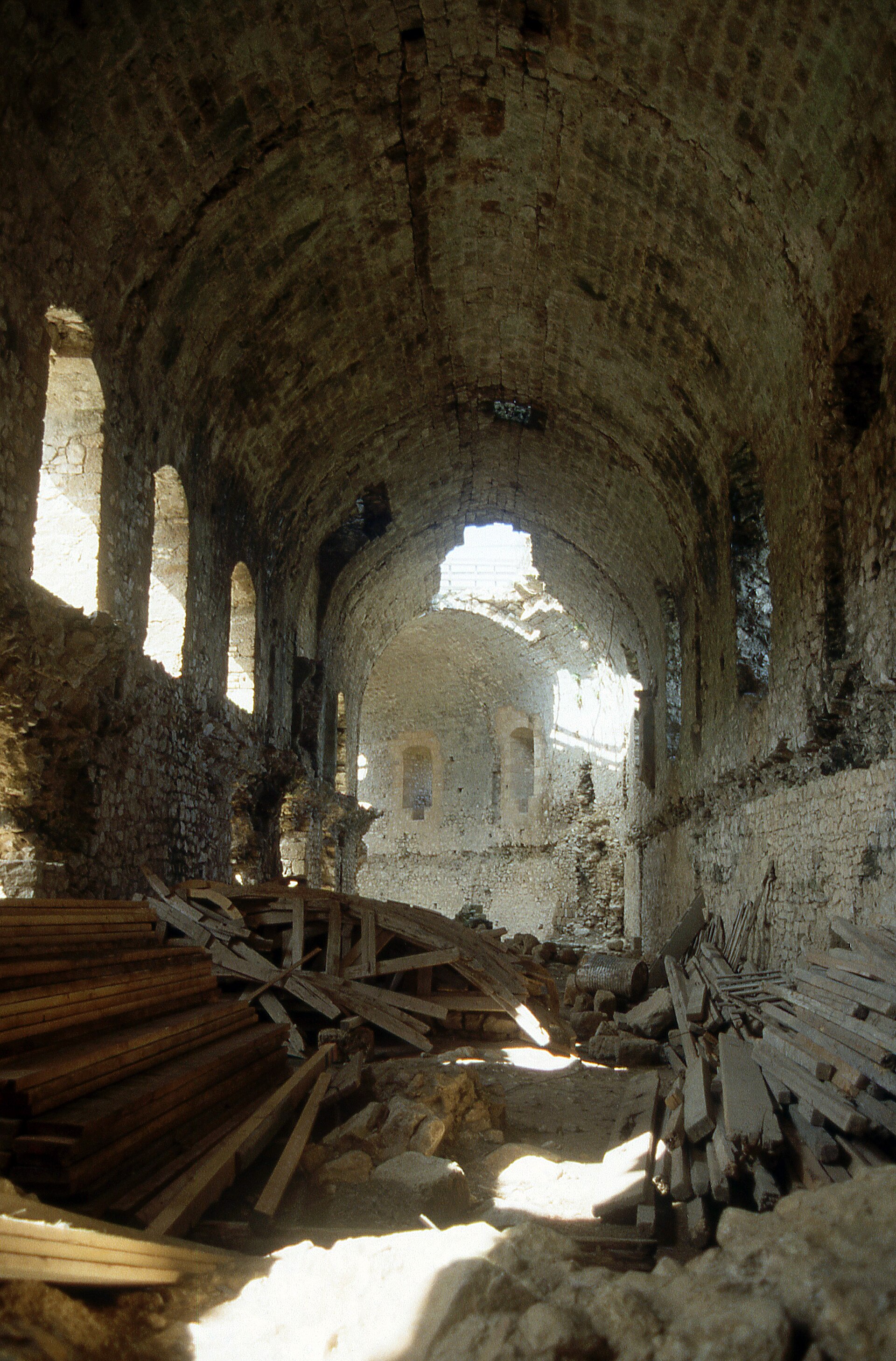
The inner castle forms an uneven six-sided enclosure around a central courtyard. It appears to have begun as the whole fortified site. During the 13th century it was altered and furnished with connected halls and upper rooms, while a larger outer enclosure extended the complex down the gentler slopes. These changes show the castle serving more than one purpose: defense remained important as the inner ranges took on the character of a residence and a setting for receiving visitors. The great hall, chapel, fireplaces, windows, and vaulted rooms make the ruler’s household visible in the plan. The exact use of some rooms remains uncertain. The chapel is traditionally dedicated to Saint Sophia; fragments of wall painting survive.
Andravida, Glarentza, and a changing region
Chlemoutsi stood near Andravida, the political center of the principality, and Glarentza, its port. These places became part of a connected regional landscape, but they did not all begin at the same time: Glarentza was established shortly after the middle of the 13th century, later than the earliest proposed date for Chlemoutsi. The castle’s relationship with the capital and port therefore developed over time.
Water and life on the hill
The hill has no natural springs, so cisterns were essential. Roofs collected rainwater and fed underground tanks, including a large vaulted cistern beneath the inner residence. This practical system connects the impressive halls and courtyards with the everyday work needed to keep people supplied. Kitchens, fireplaces, and supporting rooms also show how the residence functioned, though the purpose of some spaces in the outer enclosure remains uncertain. Visitors can still see how the castle’s layout gathered buildings around its courtyard and fitted water storage into the complex.
Later rulers and a layered monument
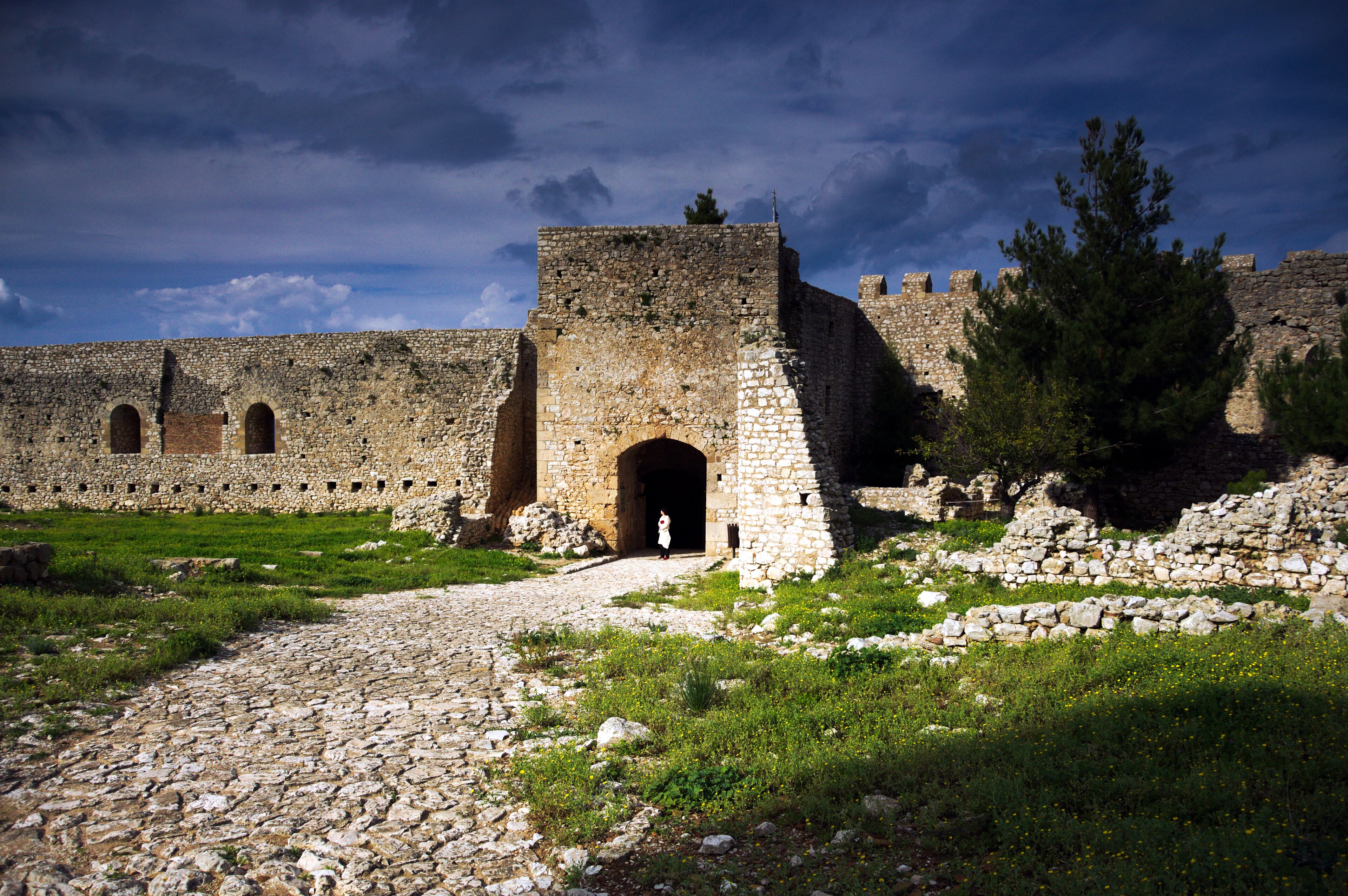
After the Frankish period, Chlemoutsi passed through Byzantine, Ottoman, and Venetian rule. Accounts place its transfer to Constantine Palaiologos in either 1427 or 1428; another describes a Byzantine conquest in 1430, but the exact sequence remains uncertain. The Ottomans altered parts of the defenses, including the main gate and outer works. The castle was used again during the Greek War of Independence and suffered damage during Ibrahim Pasha’s 1825 campaign, though the precise sequence is unclear. Modern conservation has also shaped the visitor’s experience. From 1994 to 2000, a hall in the inner enclosure was restored, another was adapted for storage and conservation work, and paths were created. Those interventions do not mean the whole castle was reconstructed; they are part of the site’s continuing history.
Architecture
- Uneven hexagonal inner enclosure arranged around a central courtyard
- Connected vaulted halls and upper rooms adapted for residence and reception
- Great hall and chapel near the entrance to the inner enclosure
- Larger outer enclosure added after the inner castle began to take shape
- Rainwater cisterns, including a large vaulted tank beneath the inner residence
- Ottoman-period changes to the main gate and outer defenses
- Historic fabric alongside documented repairs and adaptations from modern conservation
Timeline
- Early 13th century The Franks establish Chlemoutsi as a new castle in the Principality of Achaea. The exact date and whether Geoffrey I or Geoffrey II was responsible remain disputed.
- 13th century The inner enclosure gains rooms for princely residence and reception, and a larger outer enclosure expands the castle.
- After the mid-13th century Glarentza is established as the port of Andravida, adding a new center to the regional landscape around Chlemoutsi.
- 1315–1316 Chlemoutsi is captured during a succession conflict and returns to Frankish control the following year.
- 1427 or 1428 Chlemoutsi passed from the Toccos to Constantine Palaiologos; accounts differ on whether the transfer occurred in 1427 or 1428.
- 1430 (reported conquest) A specialist account describes a Byzantine conquest of Chlemoutsi in 1430. Whether this marks a separate stage or reflects a different chronology remains uncertain.
- 1460 onward The Ottomans take Chlemoutsi and alter parts of its defenses, including the main entrance and outer works.
- 1687–1715 Venice controls the Morea; later accounts describe Chlemoutsi as dilapidated and report a proposal to replace it with a new fort at Glarentza.
- 1825 During Ibrahim Pasha’s campaign the castle is used again and damaged; the exact sequence and scale of events remain uncertain.
- 1994–2000 A conservation and enhancement project restores a hall in the inner enclosure, adapts another for storage and conservation work, and creates paths through the castle.
Visiting today
The Castle Museum is in the inner courtyard. The official visitor page checked on 3 November 2026 lists winter hours of 08:30–15:30, Wednesday through Monday, with Tuesdays closed; last admission is 20 minutes before closing. The castle is about a 15-minute walk from the center of Kastro, or about 10–15 minutes by car from Kyllini port. Road access and parking are available. Check current official visitor information before travelling, as hours and access arrangements can change. The castle is on a hilltop, so visitors should be prepared for some uphill walking and uneven surfaces. Comfortable shoes and water are recommended, especially in warm weather.
Historical contexts
- Frankish Greece
- Venetian Maritime Empire
- Ottoman Period
- Rise of Modern Greece
Expeditions
- Expedition I
Images
References
- Hellenic Ministry of Culture, Castle Network — Chlemoutsi
- Simon Hasdenteufel, Château, Chlemoutsi, ‘Clermont’ — Frankika, École française d’Athènes
- Demetrios Athanasoulis, ‘The Triangle of Power,’ in Viewing the Morea (2013), pp. 111–151
- Stephania Skartsis, Chlemoutsi Castle: Its Pottery and Its Relations with the West, PhD thesis, University of Birmingham (2009/2010)
- Hellenic Ministry of Culture, Castle Network — Glarentza
- Hellenic Heritage / Ministry of Culture — Chlemoutsi Castle visitor information (checked 3 November 2026)
- Hellenic Ministry of Culture — Museum of Chlemoutsi Castle
- Municipal Port Fund of Kyllini — Fishing Shelter (checked 3 November 2026)
- ADAC Skipper — Kyllini listing (checked 3 November 2026)
- Hellenic Ministry of Maritime Affairs and Insular Policy — Kyllini port and possible recreational-vessel marina (27 July 2026)
- TravelDojo — Chlemoutsi Castle access information (checked 3 November 2026)
Related places
Topics
- Chlemoutsi
- Frankish Greece
- Principality Of Achaia
- Peloponnese
- Castle
- Ottoman Period
- Venetian Period
- Court Architecture
- Water Management