Highlights
- A village on the ridge
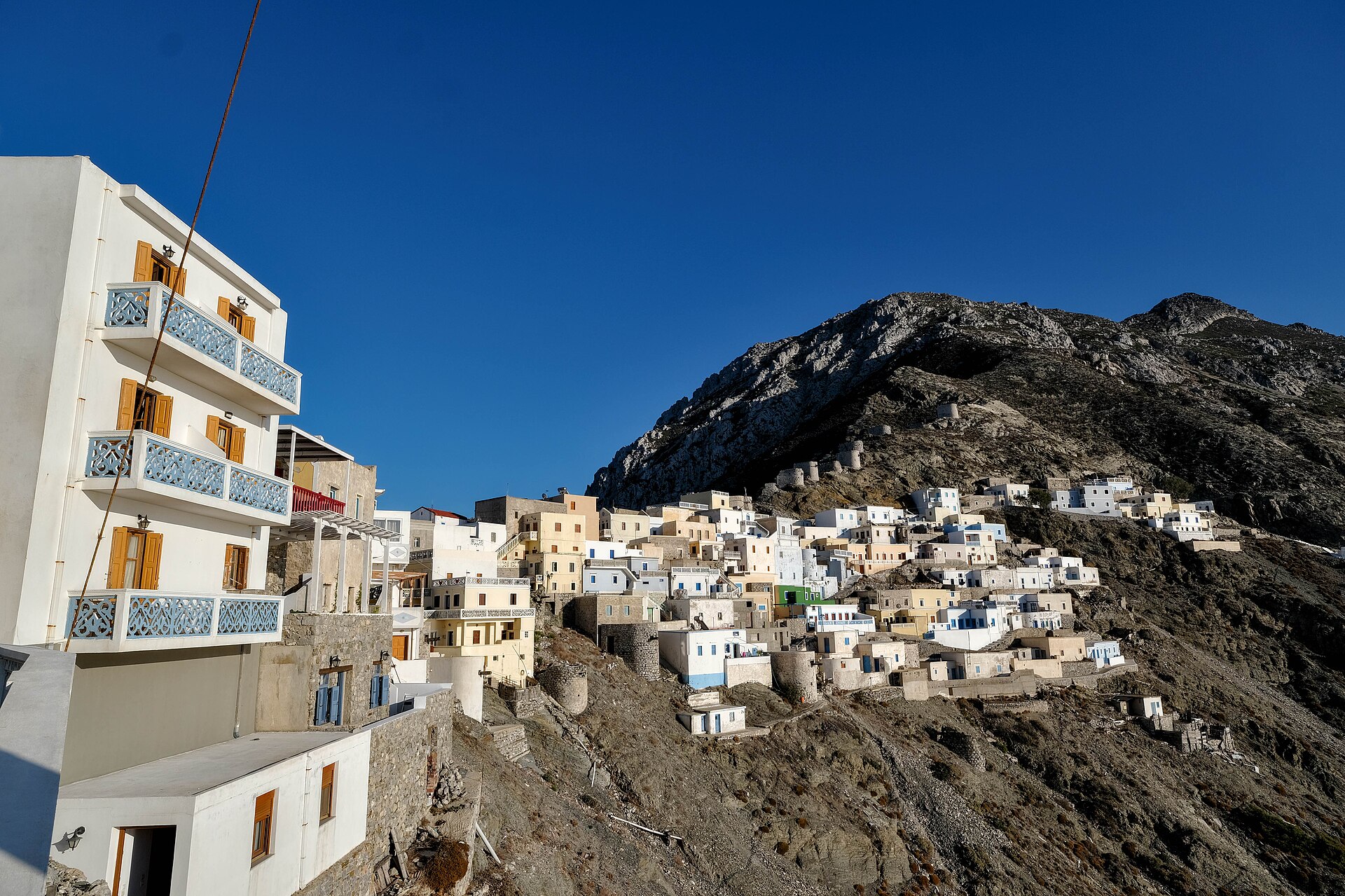
Olympos is a village, not a name for all Karpathos.
- Houses, mills and the work of subsistence
The traditional houses and windmills are linked to the practical work of maintaining households and processing food.
- Food knowledge and the cultivated landscape
The agricultural setting is not simply a backdrop.
- Music and worship as collective practice
The Olympitiko glenti is recognized in Greece’s National Inventory of Intangible Cultural Heritage.
Strategic role
An upland village whose built form and living practices connect community, farming, worship and migration.
A village on the ridge
Olympos is a village, not a name for all Karpathos. Its compact houses and winding routes occupy a northern mountain setting apart from the southern settlements. The elevated position and long difficult communications helped shape local life, but they do not mean the village was completely cut off from exchange. Neighboring Diafani is a separate coastal settlement, while Avlona belongs to a cultivated inland landscape. Keeping these places distinct explains the relationships that supported Olympos more clearly than calling the entire north one isolated village.
Houses, mills and the work of subsistence
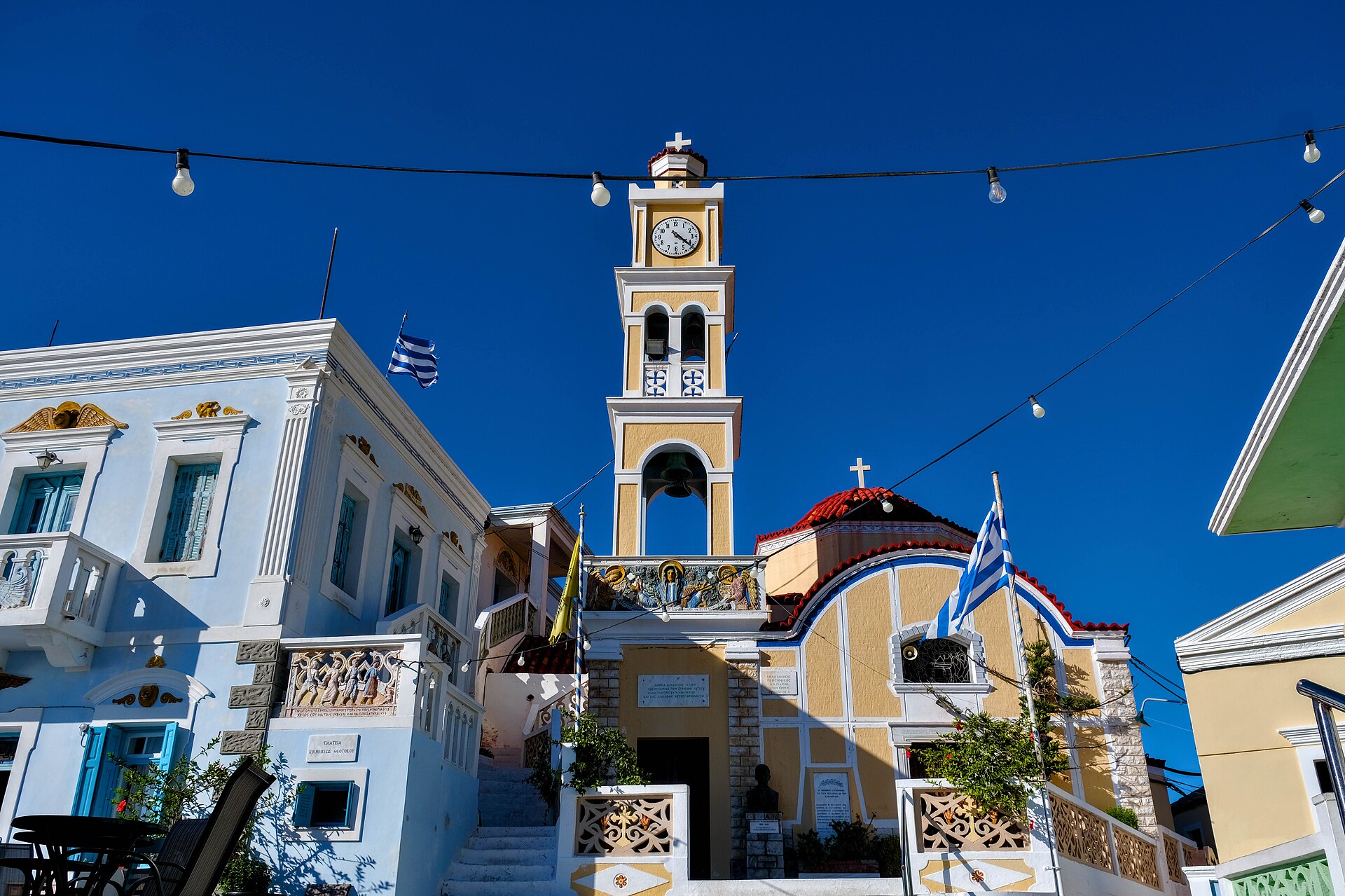
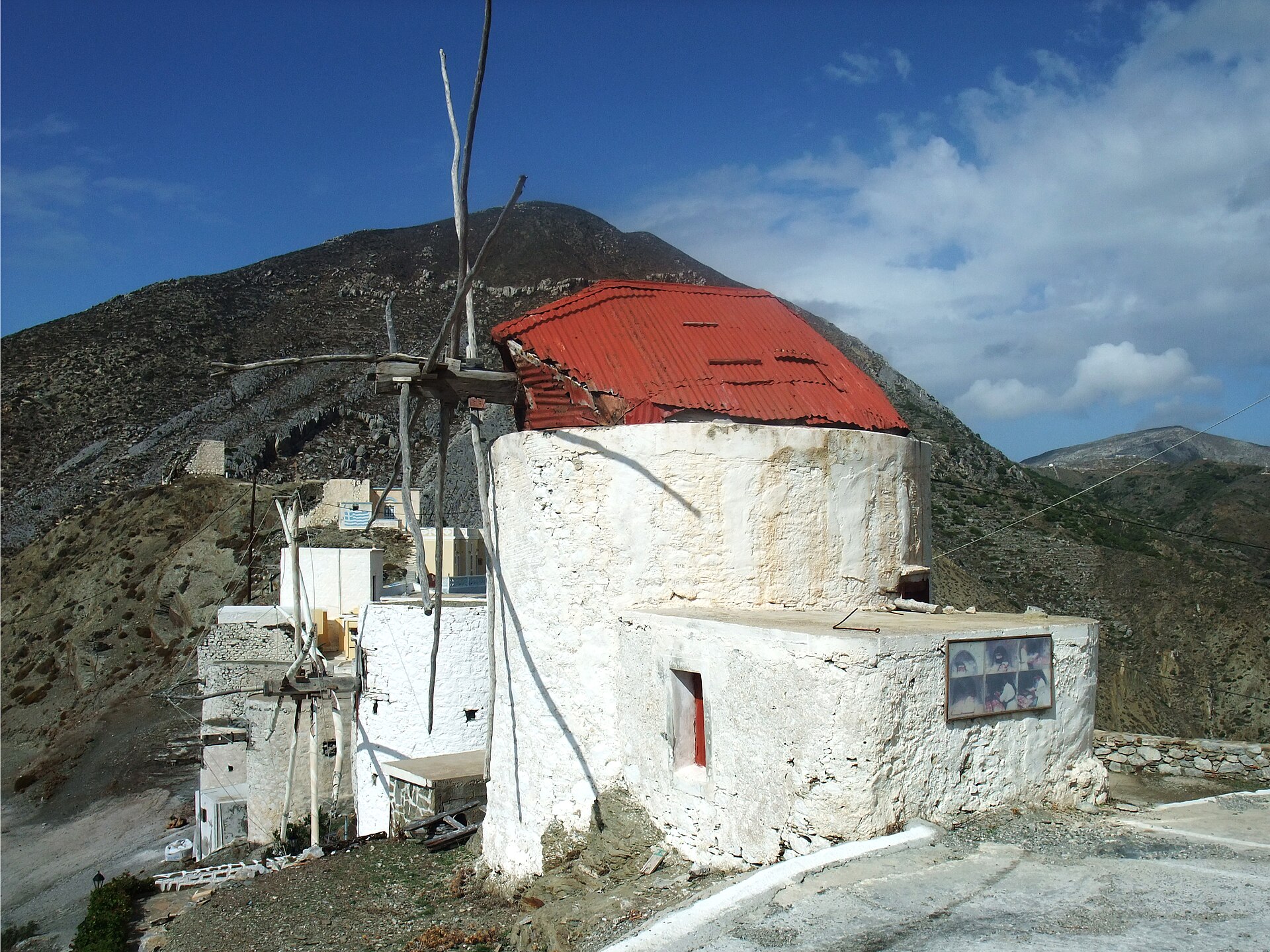
The traditional houses and windmills are linked to the practical work of maintaining households and processing food. They should be read as useful structures before being admired as picturesque scenery. Local visitor information identifies churches and the folk-artist museum of Vassilis Hadjivassilis among the village’s cultural places. The contrast between private houses, communal religious buildings and working installations offers a way to understand different forms of investment and care. Surviving fabric has been repaired and adapted; traditional appearance does not establish a single age for every building.
Food knowledge and the cultivated landscape
The agricultural setting is not simply a backdrop. Avlona’s fields and settlement provide a nearby context for the work that sustained the community, while household knowledge also included gathering and preparing wild greens. A 2023 field study documented local plant names, culinary practice and the role of experienced residents in passing on that knowledge. Its findings show adaptation and shared Mediterranean practices as well as local distinctions. They do not justify claims that contemporary food or language has survived unchanged from antiquity.
Music and worship as collective practice
The Olympitiko glenti is recognized in Greece’s National Inventory of Intangible Cultural Heritage. Music, song and improvised verse develop through participation, following conventions understood within the community. Religious feasts connect worship with shared food and performance, but they are not simply shows scheduled for visitors. The significance lies in relationships among participants and in the renewal of local knowledge. Respect the occasion’s purpose, and ask before photographing people or entering spaces reserved for a ceremony rather than treating dress and music as exhibits.
Continuity through change
Olympos’s cultural distinctiveness coexists with migration, tourism and easier modern communication. Research describes migrants and descendants returning, caring for homes and helping transmit practices across generations. Women’s prominent roles in household and cultural life are important, but the label matriarchy would compress more complicated social arrangements into a slogan. Nor should costume or dialect be used to portray inhabitants as people outside modern history. The village is better understood through decisions about what to maintain, adapt and share within a changing community.
Encountering a living settlement
Walk the public lanes slowly, leaving room for residents, deliveries and religious activity. The ridge setting brings steps, uneven paving and exposure to wind. Churches and the Hadjivassilis museum have individual arrangements, so confirm access locally rather than assuming that an open village means open interiors. Excursions toward Avlona, Vroukounda or Diafani involve different distances and conditions and should be planned separately. Agricultural plots and working mills are not automatically visitor spaces; seek permission before entering them.
Architecture
- Closely grouped houses on a mountain ridge
- Stepped lanes and small public spaces
- Traditional windmills associated with food processing
- Churches and village cultural institutions
Timeline
- Historic settlement period Olympos developed as a northern Karpathian community; precise foundation narratives vary and are not securely resolved here.
- Ottoman and later periods Local households and communal institutions maintained distinctive cultural and agricultural practices.
- 20th century Migration and changing transport connected the village with wider networks while reshaping local continuity.
- 2023 Ethnobotanical fieldwork documented contemporary wild-green knowledge and its transmission.
- Present day Village practices continue through resident participation, returning families and cultural institutions.
Visiting today
Walk the public lanes slowly, leaving room for residents, deliveries and religious activity. The ridge setting brings steps, uneven paving and exposure to wind. Churches and the Hadjivassilis museum have individual arrangements, so confirm access locally rather than assuming that an open village means open interiors. Excursions toward Avlona, Vroukounda or Diafani involve different distances and conditions and should be planned separately. Agricultural plots and working mills are not automatically visitor spaces; seek permission before entering them.
Historical contexts
- Late Byzantium
- Ottoman Period
- Rise of Modern Greece
Expeditions
- Expedition II
Images
References
Related places
Related Stops
Topics
- Olympos Karpathos
- Historical Landscape
- Material Culture
- Visitor Context