Highlights
- Rock and fortification
See how natural cliffs and built defenses work together.
- The defended entrance
Successive gates turn the ascent into a controlled approach.
- Life inside the walls
Water storage, houses and military buildings reveal an inhabited fortress.
- The museum below
A renewed exhibition places the headland in the wider history of Lemnos.
Strategic role
A stronghold controlling the coastal approach and overlooking Myrina’s two bays.
Monuments and sites
The castle between two shores
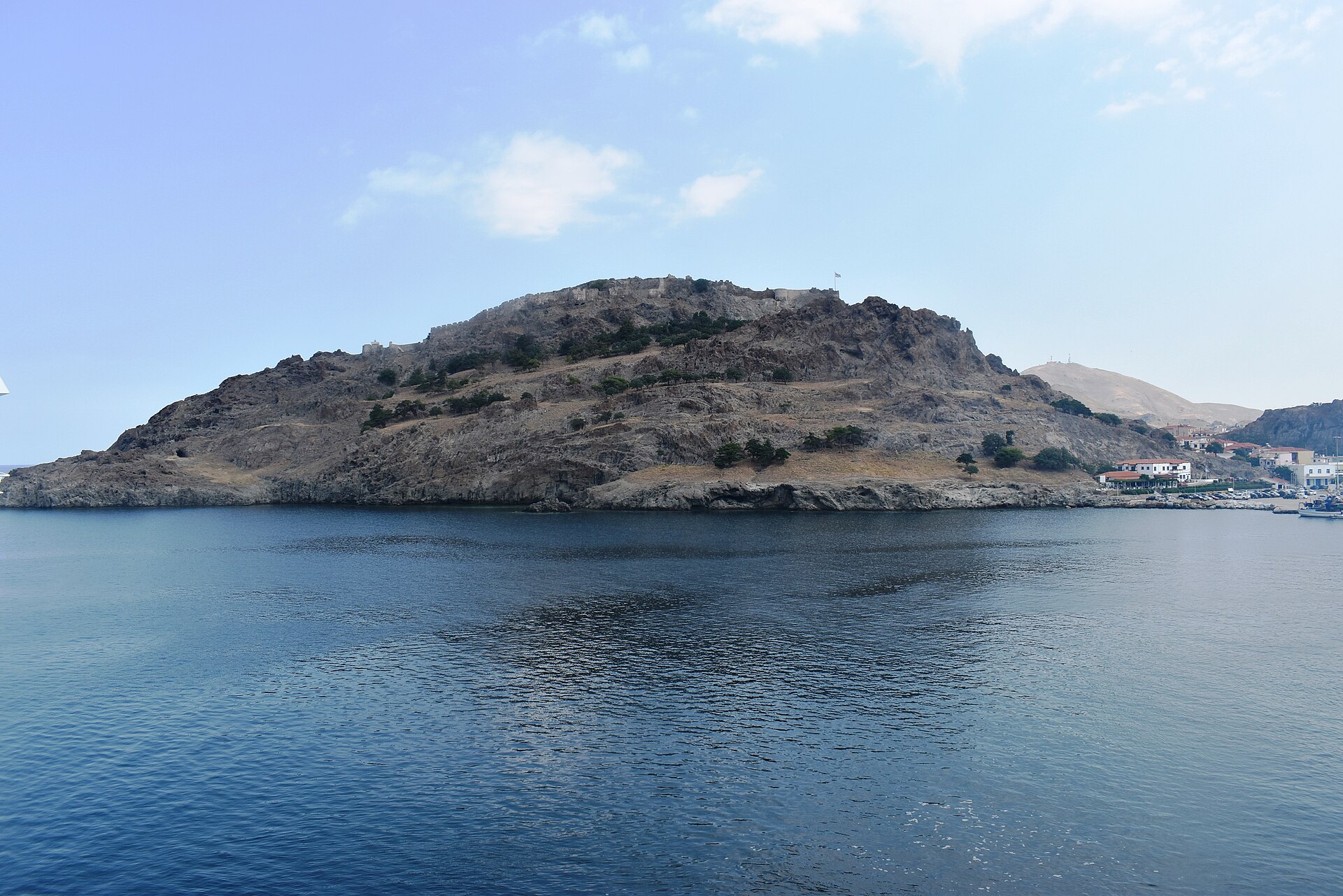
The peninsula gives Myrina its defining shape. On either side lie the town’s waterfronts; above them the castle occupies broken volcanic terrain rather than a level platform. From below, walls and natural cliffs can seem continuous. During the ascent, look for where masonry supplements an already formidable rock face and where a more approachable slope required stronger protection.
This is the setting that made the site useful over many periods. The view is not merely an attraction added to the monument: it explains the fortress’s relationship with the town and the sea.
A fortress made through repeated rebuilding
The headland was occupied long before the surviving medieval fortress. Ancient material was reused in later works, and the Byzantine stronghold was rebuilt and enlarged under subsequent rulers. Venetian and Ottoman interventions contributed to the present enclosure. Calling the whole site simply a Venetian castle hides that long process.
Political changes do not provide a precise date for every visible wall. Read the irregular circuit, altered openings and reused stone as evidence of adaptation. The castle’s survival owes as much to repair and reuse as to its original defensive strength.
Gateways, towers and the defended approach
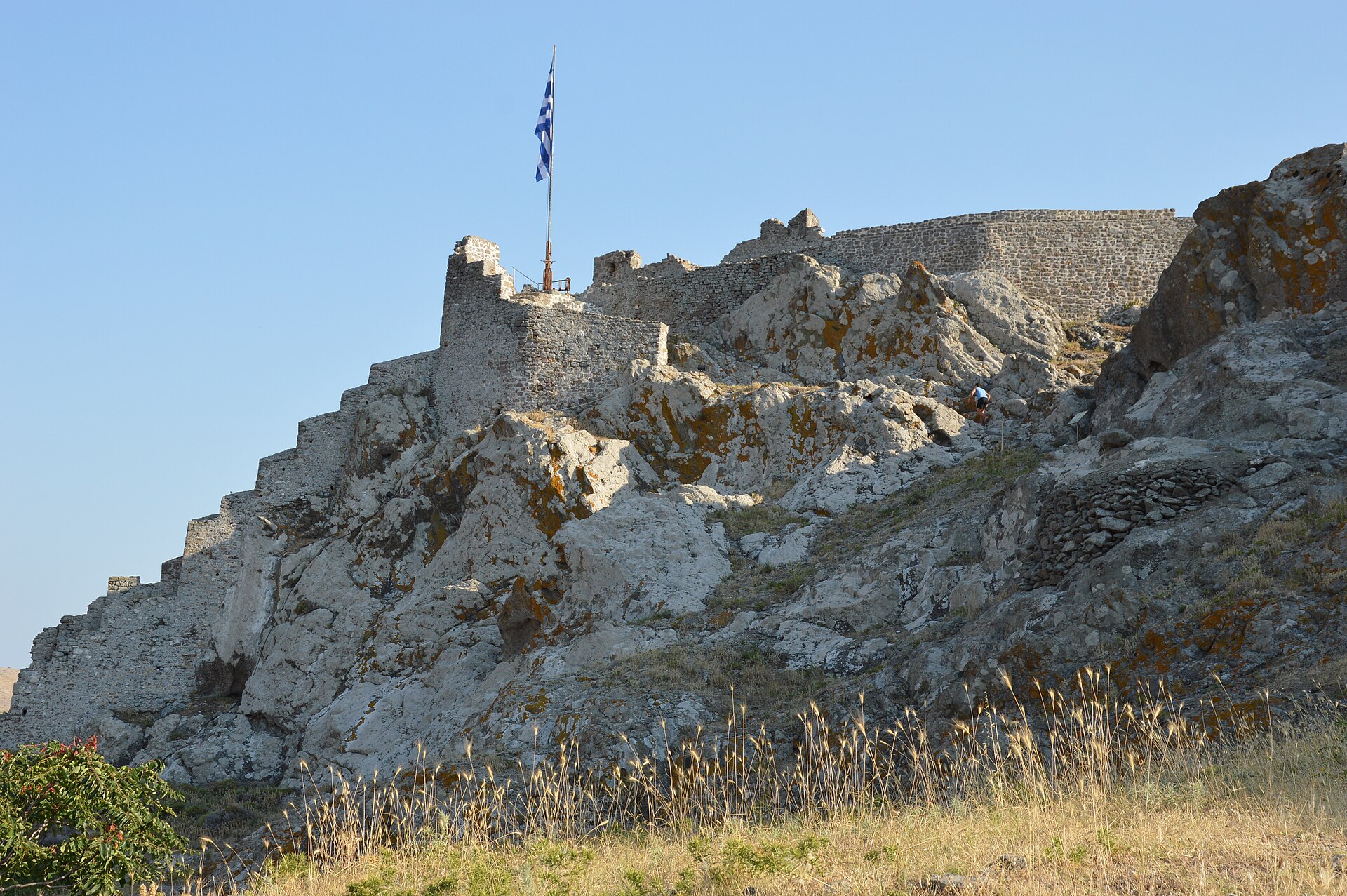
The main approach enters from the town side through a sequence of gates and a turning uphill passage. Towers reinforce the entrance, while the route prevents a direct rush into the interior. Elsewhere, the circuit responds to the changing terrain. The contrast between the more accessible landward side and the abrupt seaward cliffs helps explain why defenses differ around the enclosure.
Once inside, follow permitted paths to see the towers in relation to one another and to the town below. Avoid treating broken wall tops as walkways.
Life within the walls
The open interior once supported a community and garrison. Remains include houses, a mosque, barracks and a robust powder-storage building associated with Ottoman use. Wells and cisterns remind visitors that surviving a siege depended on supplies as well as weapons. Some underground spaces have been interpreted as storage or shelter, but their original uses are not all certain.
Twentieth-century military activity added another layer. The result is a landscape of buildings and voids whose purposes changed over time. The ruins are best understood as parts of an occupied stronghold, rather than decorative objects within an empty park.
The town and its archaeological museum
Return to the waterfront to place the castle within the life of Myrina. Streets, shorefront houses and the harbor offer a less elevated view of the same maritime setting. The Archaeological Museum of Limnos, on Romeikos Gialos, broadens the story from the castle to settlements and sanctuaries across the island.
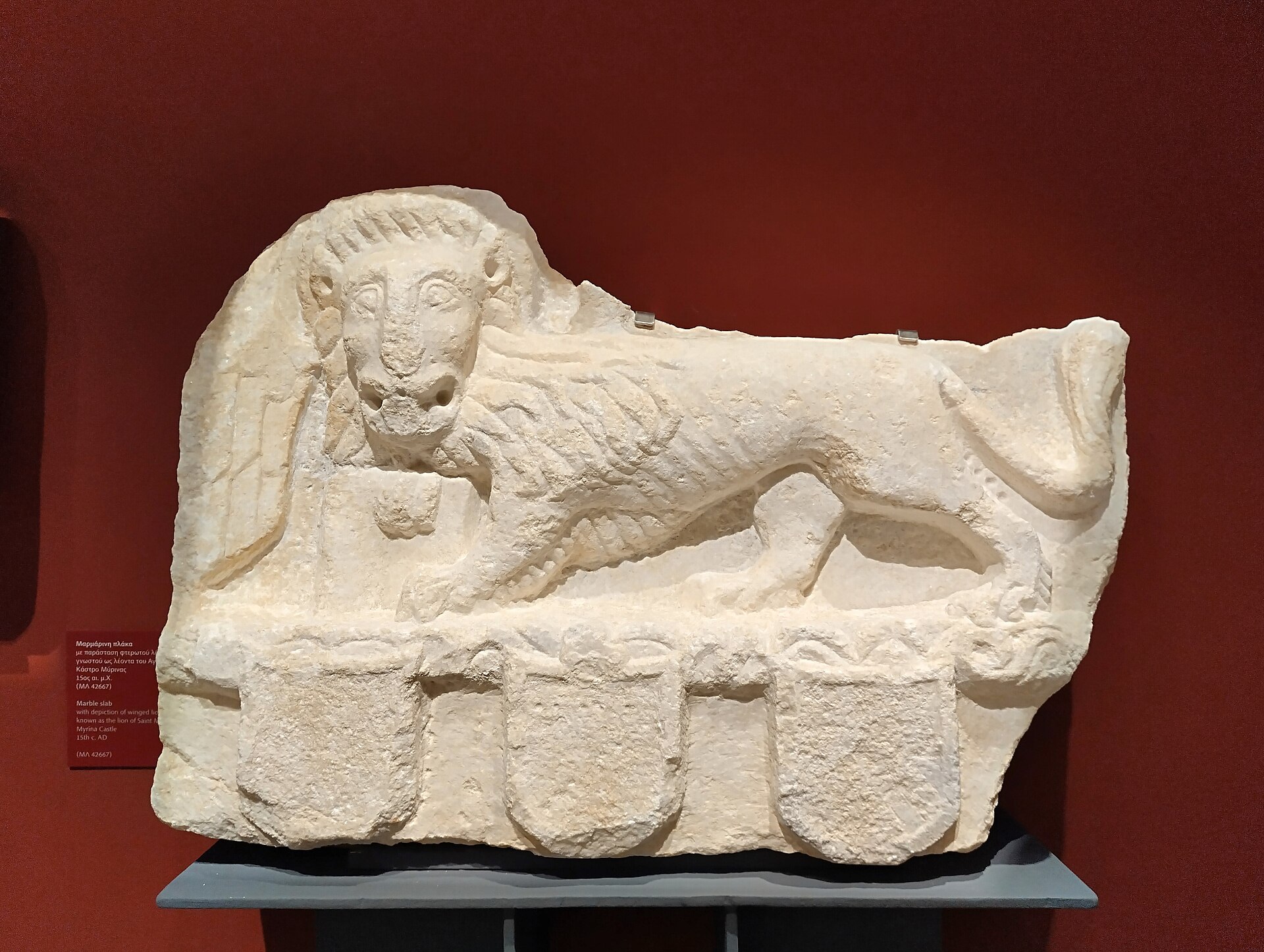
Its new permanent exhibition opened in August 2025. Finds from Poliochni, Myrina, Koukonisi, Kavirio and Ouriakos, together with sculpture and other objects, introduce prehistoric and historical Lemnos. The museum is a useful companion to a castle visit, not simply a collection of material from the fortress.
Visiting the rocky enclosure
The castle involves exposed uphill walking and irregular ground. Wear shoes with grip, carry water and follow current signs and barriers. Allow time to pause on the ascent and to explore the waterfront afterwards. As checked in November 2026, museum access is published separately by the Ministry; confirm its current hours and ask the local archaeological service about any castle restrictions. Do not enter underground spaces or approach cliff edges merely because a path appears to continue.
Architecture
- Walls adapted to steep volcanic rock
- Successive gateways and a turning entrance passage
- Towers protecting vulnerable approaches
- Ruined settlement and garrison buildings
- Wells, cisterns and an Ottoman-period powder store
Timeline
- Antiquity The headland is occupied and fortified before the medieval castle.
- Byzantine period A stronghold develops on the earlier acropolis.
- Thirteenth century onward Venetian and later authorities repeatedly rebuild the enclosure.
- Ottoman period Settlement and garrison facilities occupy the fortress.
- 1941–1944 German occupation forces add military structures.
- August 2025 The Archaeological Museum of Limnos opens its new permanent exhibition.
Visiting today
Approach from Myrina on foot, expecting an exposed climb and uneven surfaces. Stay on permitted routes, keep clear of ruin edges and closed structures, and combine the visit with the archaeological museum when its hours permit.
Historical contexts
- Late Byzantium
- Venetian Maritime Empire
- Ottoman Period
- Rise of Modern Greece
- Harbor Defense and Sea-Lane Control
Expedition guides
Images
References
Related places
Related Stops
Topics
- Byzantine
- Venetian
- Ottoman
- Coastal Fortress
- Archaeological Museum