Highlights
- Inside the fortified monastery
A strong outer enclosure protects an enduring center of worship and learning.
- The sacred cave
A place of pilgrimage associated with Revelation in Christian tradition.
- Chora’s domestic heritage
Merchant houses and Nikolaidis Mansion broaden the island’s story.
Strategic role
A fortified center of Orthodox worship and learning with an associated settlement and maritime connections.
An island organized around a monastery
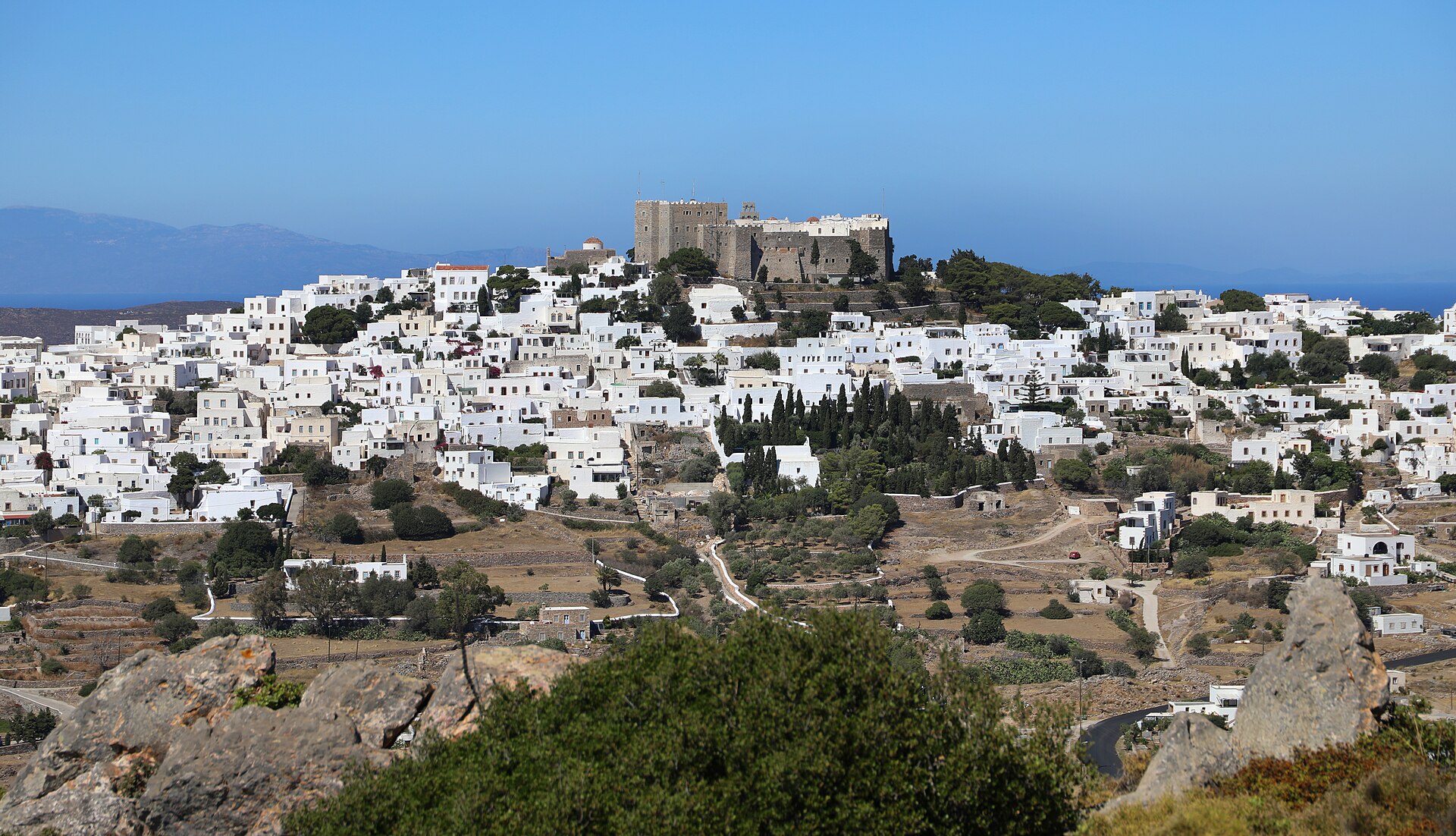
Arriving at Skala, the monastery above Chora gives Patmos a striking point of orientation. Its walls enclose a religious community rather than a secular castle. The old settlement spreads around the height, and the Cave of the Apocalypse lies between the harbor and the upper town. These relationships explain why the protected heritage is an ensemble: sanctuary, settlement and approaches belong together.
Patmos is also an inhabited island with coastal villages and a working harbor. Leave time to understand the spaces between its celebrated monuments rather than visiting them as unrelated stops.
Saint John’s monastery: protection and devotion
Christodoulos founded the monastery in 1088 with imperial support. The complex developed over succeeding centuries within a strong enclosure, combining defensive appearance with churches, communal spaces and monastic cells. Towers and crenellations present a guarded face to the outside; inside, courtyards and arcades reveal a more intimate world.
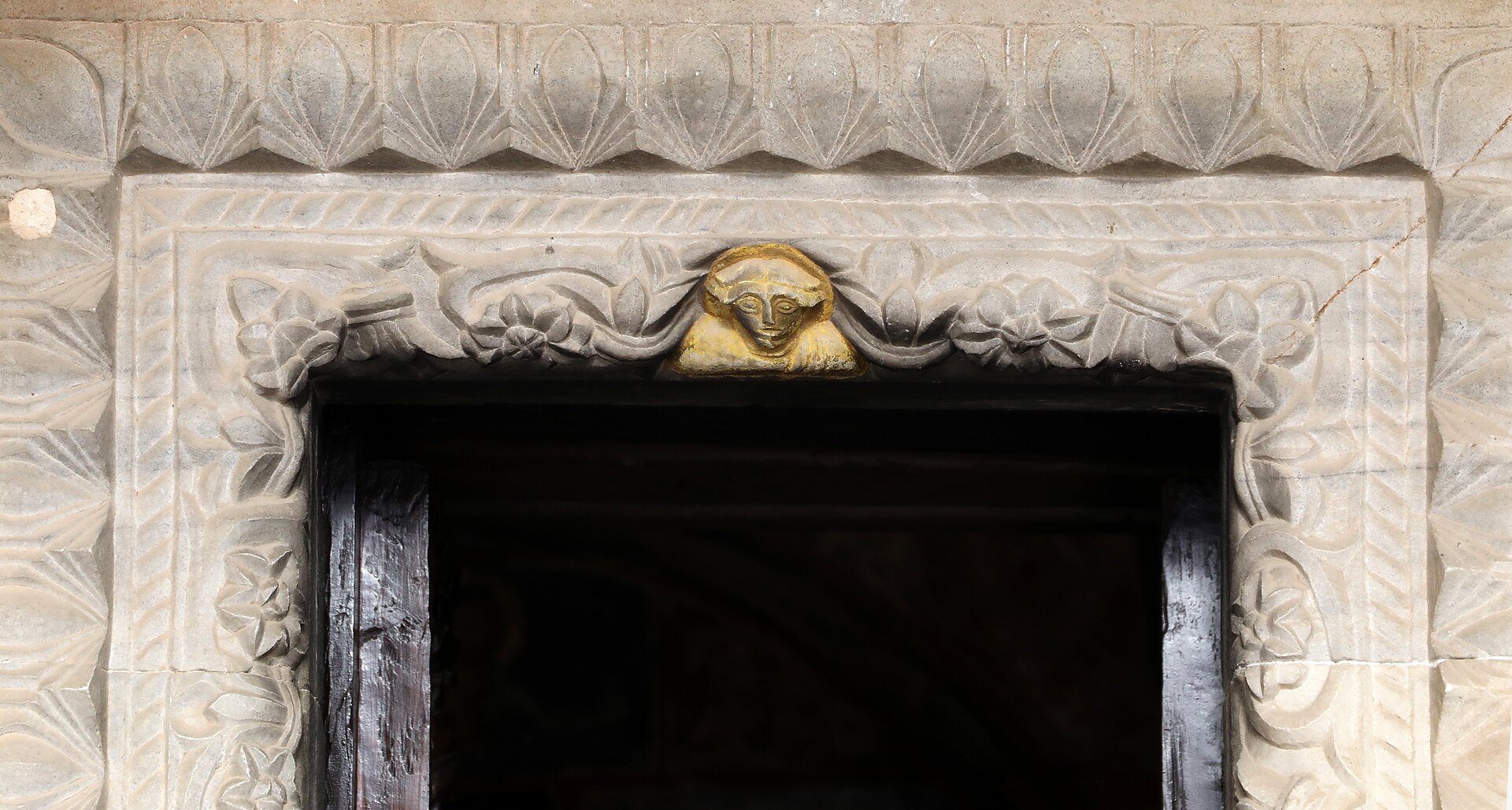
Notice the contrast between the outer walls and the church precinct. The monastery’s significance is also intellectual: manuscripts, books, icons and liturgical objects connect the buildings with centuries of learning and worship. Public exhibition areas offer access to parts of that heritage, while other spaces remain the home and workplace of the community.
The Cave of the Apocalypse
Christian tradition associates the cave with Saint John’s reception of the Revelation. The identification gives the site its profound importance for pilgrims; it should be understood as a sacred tradition rather than an archaeologically proven account of an individual event. Chapels and monastic buildings have grown around the cave, making it part of a long-lived devotional landscape.
The enclosed interior is a different experience from the expansive views at Chora. Allow others space to worship and follow local instructions on quiet, dress and photography.
Chora: houses, churches and maritime households
Chora grew in close relationship with the monastery but has a rich secular history of its own. Narrow streets connect modest houses, churches and more substantial merchant residences. Trading prosperity during Ottoman rule helped shape the houses that survive today. The settlement’s human scale makes details worth noticing: thresholds, enclosed courtyards and changes in the width of lanes.
Nikolaidis Mansion, built in the seventeenth and eighteenth centuries, offers a focused introduction to domestic architecture. Its exhibition combines archaeological material with photographs tracing the island from prehistory to modern life. It complements the monastery by showing a different household and cultural setting.
Skala and the paths across the island
Skala connects the upper town with the Aegean. Its waterfront gives a broader sense of the movement of people and goods that sustained the island. Traditional paths also connect settlements, fields and chapels. Walking an appropriate section can help make sense of the changing levels between coast, cave and monastery; it does not require attempting the whole island on foot. Ask locally which paths are maintained and suitable for the conditions.
Visiting a living pilgrimage landscape
Plan for uphill walking, steps and uneven surfaces. The monastery, cave and museums have separate visiting arrangements, and worship may affect access. As checked in November 2026, the Ministry lists Nikolaidis Mansion with seasonal opening information and advises confirmation before a visit. Verify each venue’s current arrangements rather than assuming a single ticket or timetable covers them all. Respect occupied homes and private monastic areas.
Architecture
- Fortified monastic enclosure with towers and crenellations
- Courtyards, arcades, churches and monastic cells
- Chapels and associated buildings around the Cave of the Apocalypse
- Dense Chora lanes, merchant houses and small churches
- Nikolaidis Mansion as an example of domestic architecture
Timeline
- First century CE, according to Christian tradition Patmos is associated with Saint John and the Revelation.
- 1088 Christodoulos founds the Monastery of Saint John the Theologian.
- Medieval and early modern periods Chora develops around the monastery and expands through changing island circumstances.
- Seventeenth–eighteenth centuries Domestic buildings including Nikolaidis Mansion reflect the island’s prosperity.
- 1999 Chora, the monastery and the cave enter the UNESCO World Heritage List.
Visiting today
Combine the monastery and Chora with the cave on the slope towards Skala. Confirm separate venue hours and worship arrangements, allow for steep walking and steps, and respect private homes and monastic areas.
Expedition guides
Images

References
Related Stops
Topics
- Fortified Monastery
- Religious Heritage
- Manuscripts
- Traditional Settlement
- Maritime Heritage