Highlights
- Rock as part of the defenses
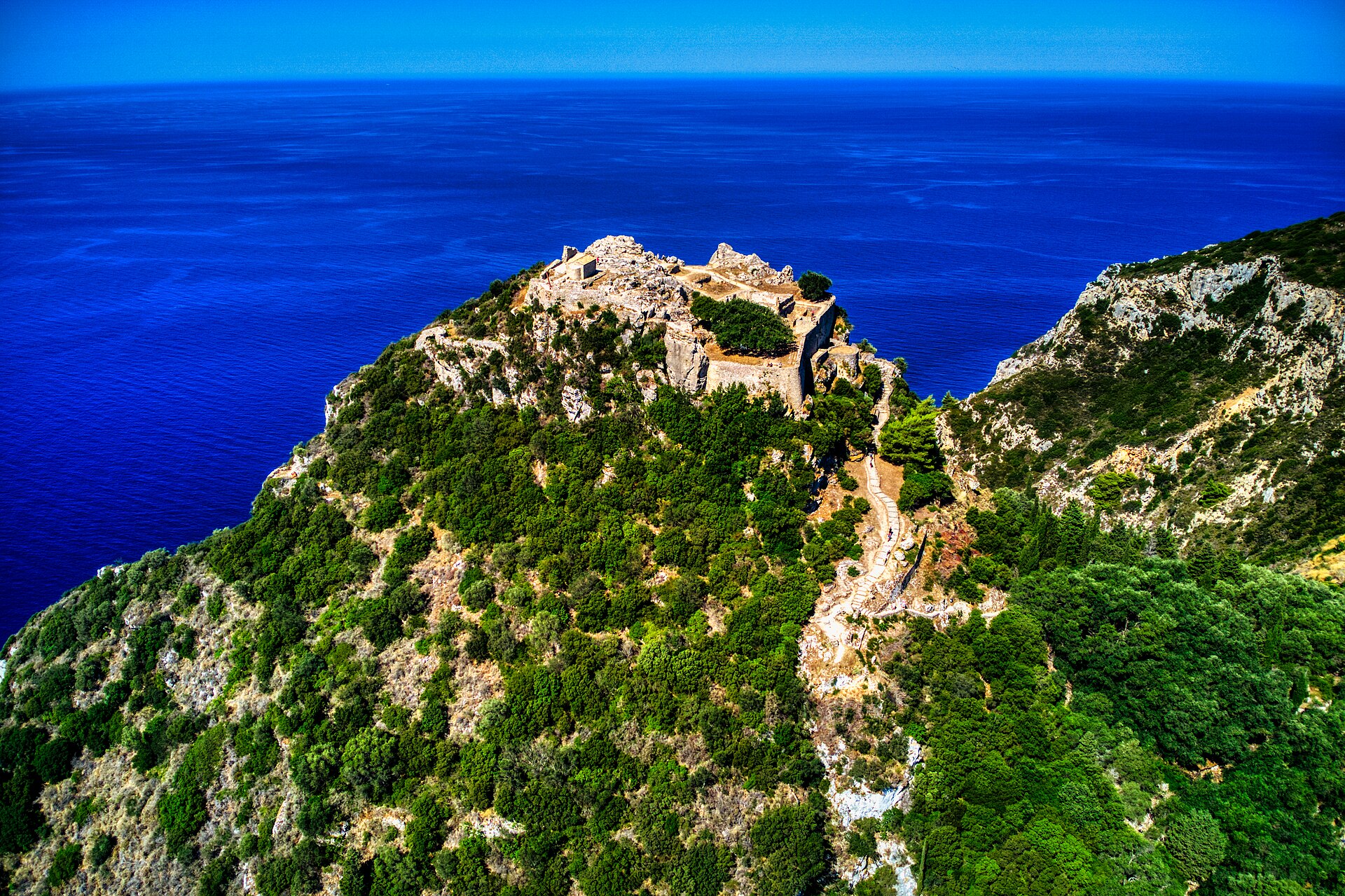
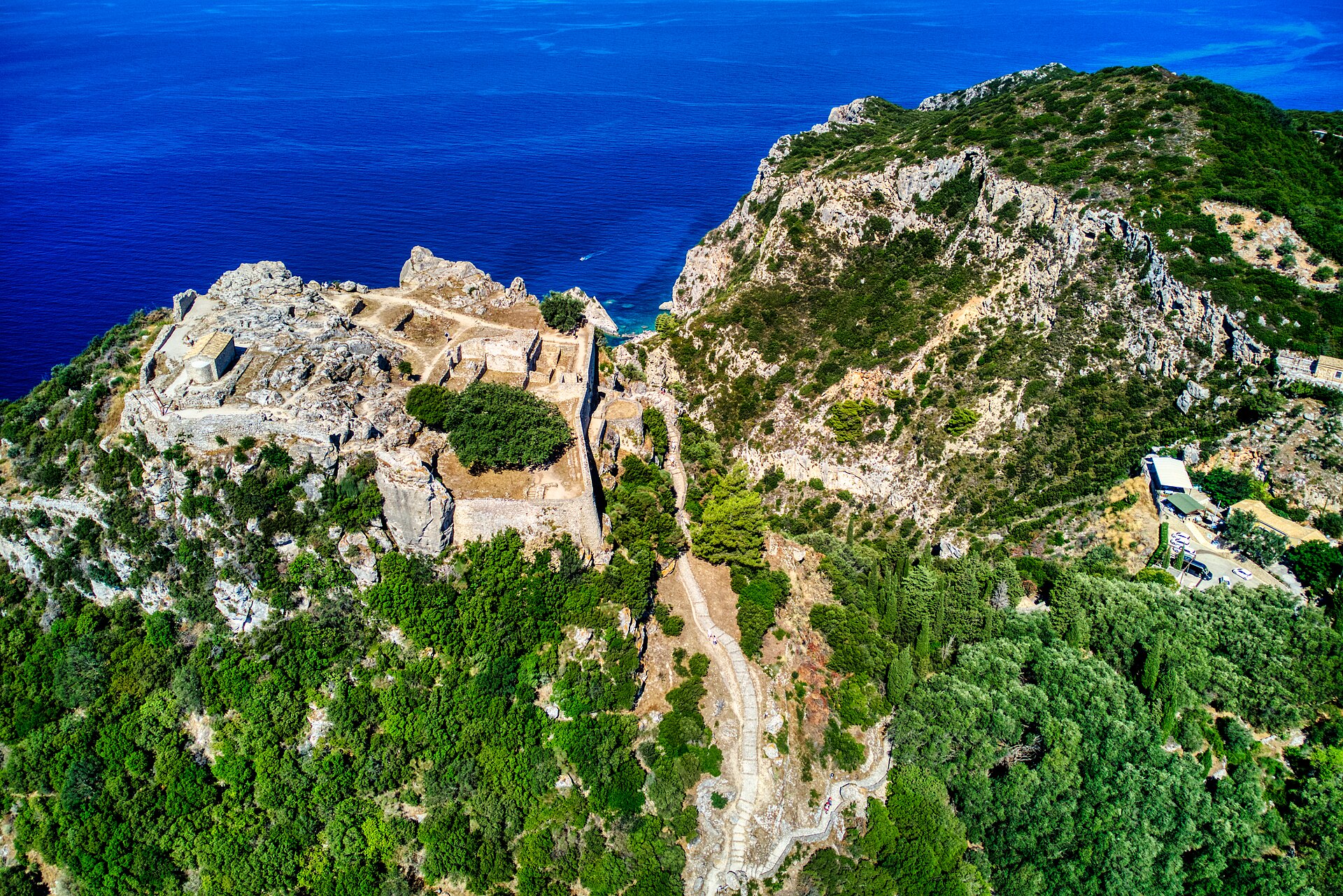
The ascent toward the castle makes its central defensive advantage plain: much of the approach is constrained by steep terrain.
- Origins that remain uncertain
Archaeological traces indicate earlier use of the height, but the medieval castle’s foundation is generally placed in the 12th or 13th century.
- Gate, accommodation and cisterns
A stepped approach reaches the main northern entrance, reinforced by a curved tower and a covered passage.
- Two religious spaces
The church of the Archangel Michael occupies the high citadel, while Agia Kyriaki is set partly into rock farther below.
Strategic role
A compact cliff-top refuge within Corfu’s wider defensive landscape.
Rock as part of the defenses
The ascent toward the castle makes its central defensive advantage plain: much of the approach is constrained by steep terrain. The western cliff required no continuous wall, while accessible sides needed built protection. This was a selective use of masonry around a naturally difficult position. A long coastal view explains the importance of observation, but a refuge also required a defensible entry and support for the people inside.
Origins that remain uncertain
Archaeological traces indicate earlier use of the height, but the medieval castle’s foundation is generally placed in the 12th or 13th century. Associations with Manuel I Komnenos and with the rulers of Epirus are interpretations rather than a settled building inscription. Its first secure written appearance belongs to the 1272 handover under Angevin authority. The uncertainty is useful: it separates occupation of the rock, creation of the castle and the date at which documents name it.
Gate, accommodation and cisterns
A stepped approach reaches the main northern entrance, reinforced by a curved tower and a covered passage. Inside, ruins of accommodation and underground cisterns show the practical counterpart to the dramatic setting. Water storage helped occupants remain on the height when access below was threatened. The enclosure is therefore best read as a refuge with a small working interior, rather than a scenic wall around an empty summit.
Two religious spaces
The church of the Archangel Michael occupies the high citadel, while Agia Kyriaki is set partly into rock farther below. The official visitor account records an 18th-century rebuilding of the summit church and wall paintings in Agia Kyriaki. These later interventions matter: religious use continued to reshape a medieval defensive site. The standing churches should not be assigned automatically to the castle’s uncertain foundation period.
A countryside castle in an island system
Under Venetian rule Angelokastro remained part of Corfu’s defenses and provided refuge during Ottoman attacks. Its role differed from the evolving Old and New Fortresses at the capital, where artillery and urban protection required much larger works. As military priorities changed, the rural stronghold lost importance. The contrast helps explain the site without turning it into a miniature version of Corfu’s city fortifications.
The ascent and present access
The visit is an uphill walk over steps and uneven ground, with exposed parts at the summit. Look back from the gate to understand how the approach is controlled, then relate the cisterns and churches to occupation inside. Hellenic Heritage’s visitor page checked on 22 November 2026 lists winter closure from November through March. Confirm current arrangements with the operator before travel.
Architecture
- Walls selectively reinforcing accessible parts of the rock
- Northern gate and covered entrance passage
- Cisterns and ruined accommodation
- Summit church of Archangel Michael
- Rock-cut setting of Agia Kyriaki
Timeline
- 5th–6th centuries Archaeological evidence indicates earlier activity on the height.
- 12th–13th centuries The medieval foundation is attributed to this broad period, but remains uncertain.
- 1272 A handover report provides the first secure written mention of the castle.
- 1386 Corfu and Angelokastro came under Venetian rule.
- 18th century Religious rebuilding and decoration continued at the site.
- Early 19th century The castle fell out of military use during the changing Ionian administrations.
Visiting today
The approach climbs steps and uneven ground. The Hellenic Heritage page checked 22 November 2026 lists November–March closure; confirm current arrangements before travel. Do not assume access to steep edges or every interior feature.
Historical contexts
- Late Byzantium
- Venetian Maritime Empire
- Ottoman Period
- Rise of Modern Greece
- Harbor Defense and Sea-Lane Control
Expeditions
- Expedition IV
Images
References
Related places
Topics
- Byzantine Castle
- Corfu
- Refuge
- Defensive Geography
- Cisterns
- Religious Reuse
- Venetian