Highlights
- Athena’s sanctuary
Read the terraces and stairs as an approach to a celebrated sacred place.
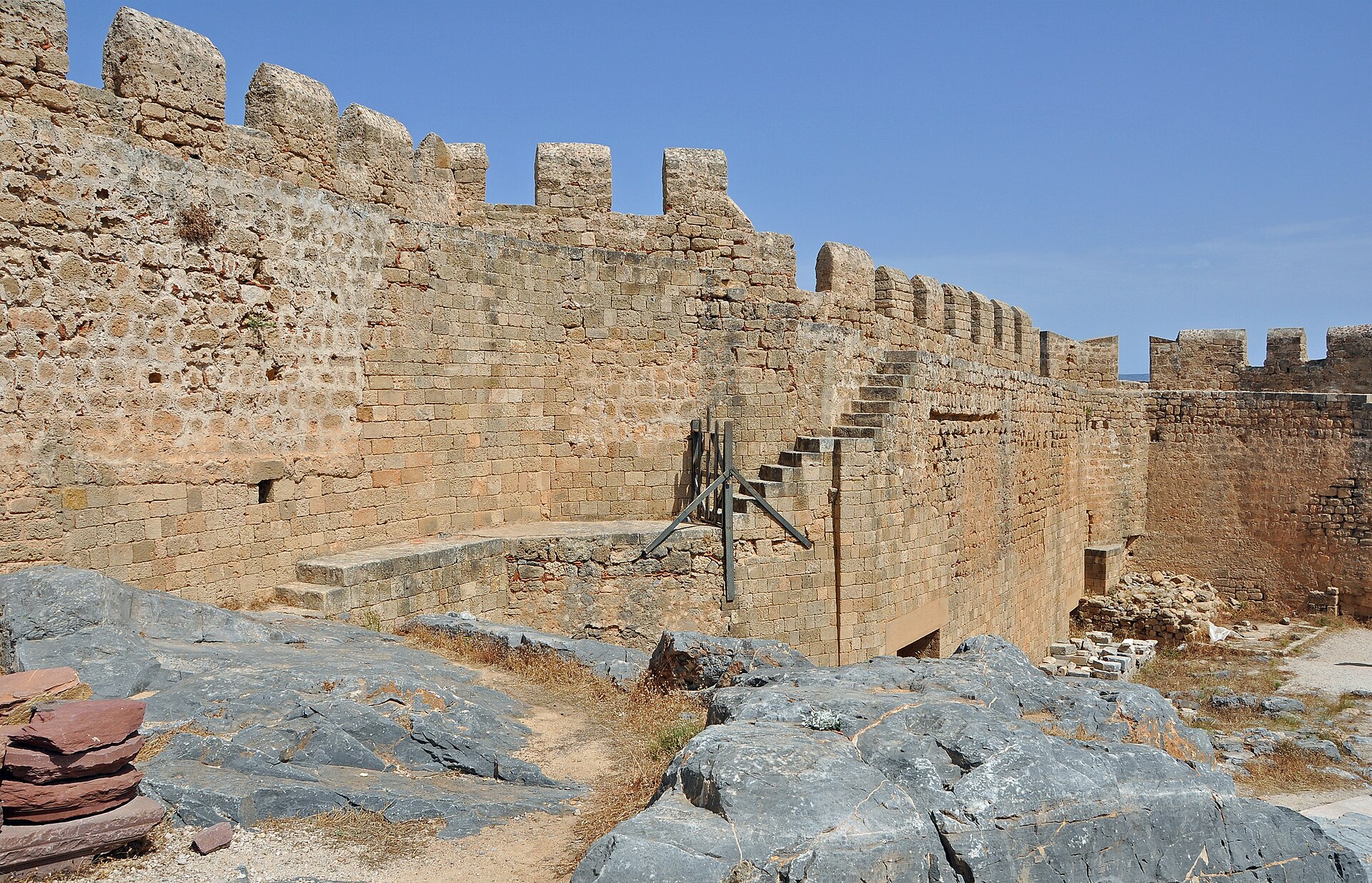
- Medieval entrance
Walls and the commandery enclose the ancient summit.
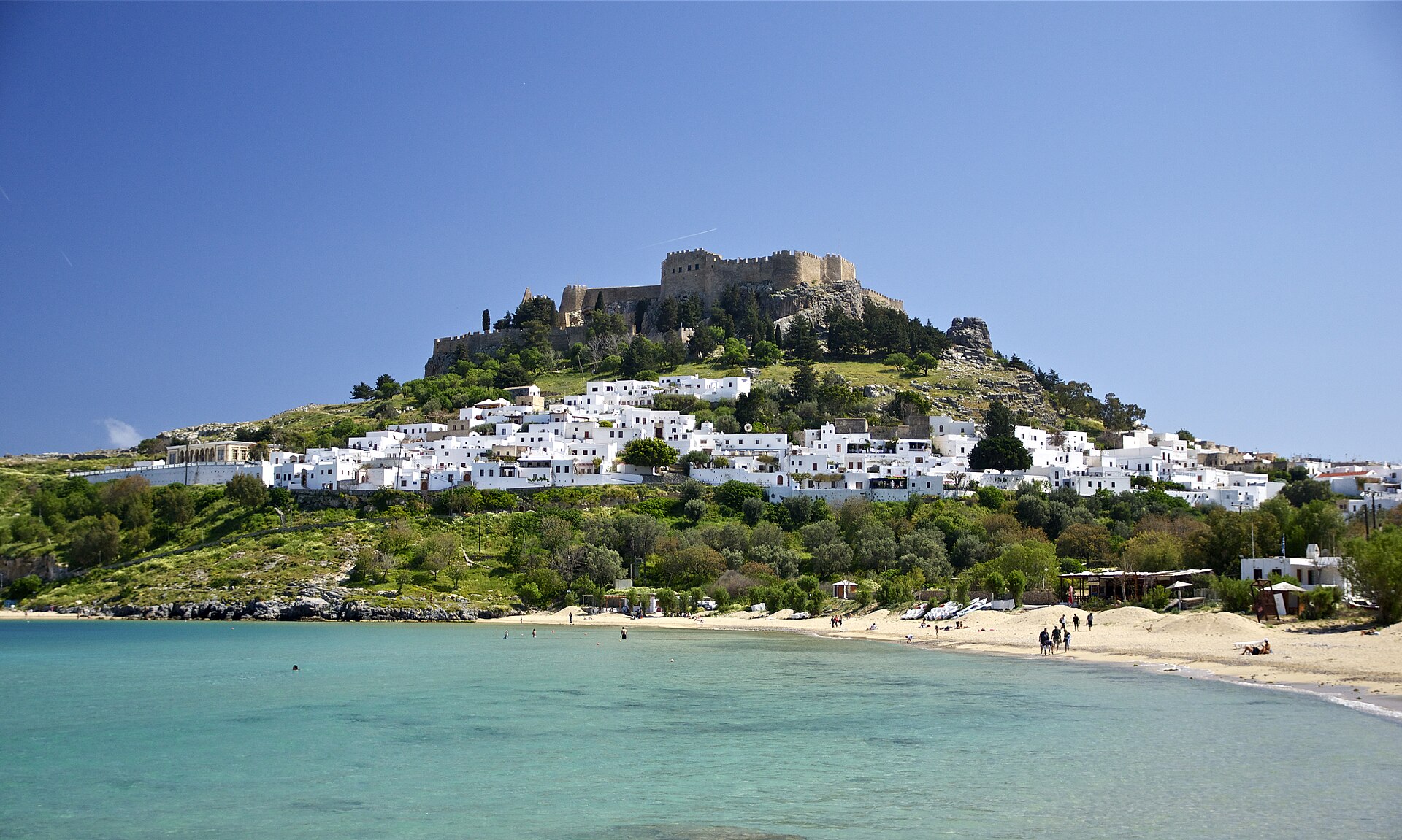
- A maritime village
Captains’ houses connect the monument with later island life.
Strategic role
A renowned sanctuary and defensible coastal height overlooking the harbors of southeastern Rhodes.
The acropolis above Lindos
The rock makes Lindos immediately recognizable. From the village, the ascent passes through narrow streets before climbing towards the fortified summit. Sea and bays open out below, explaining both the visual power of Athena’s sanctuary and the defensive attraction of the height. The village and the acropolis belong to the same historical landscape, though their surviving buildings represent many different periods.
A sanctuary known across the sea
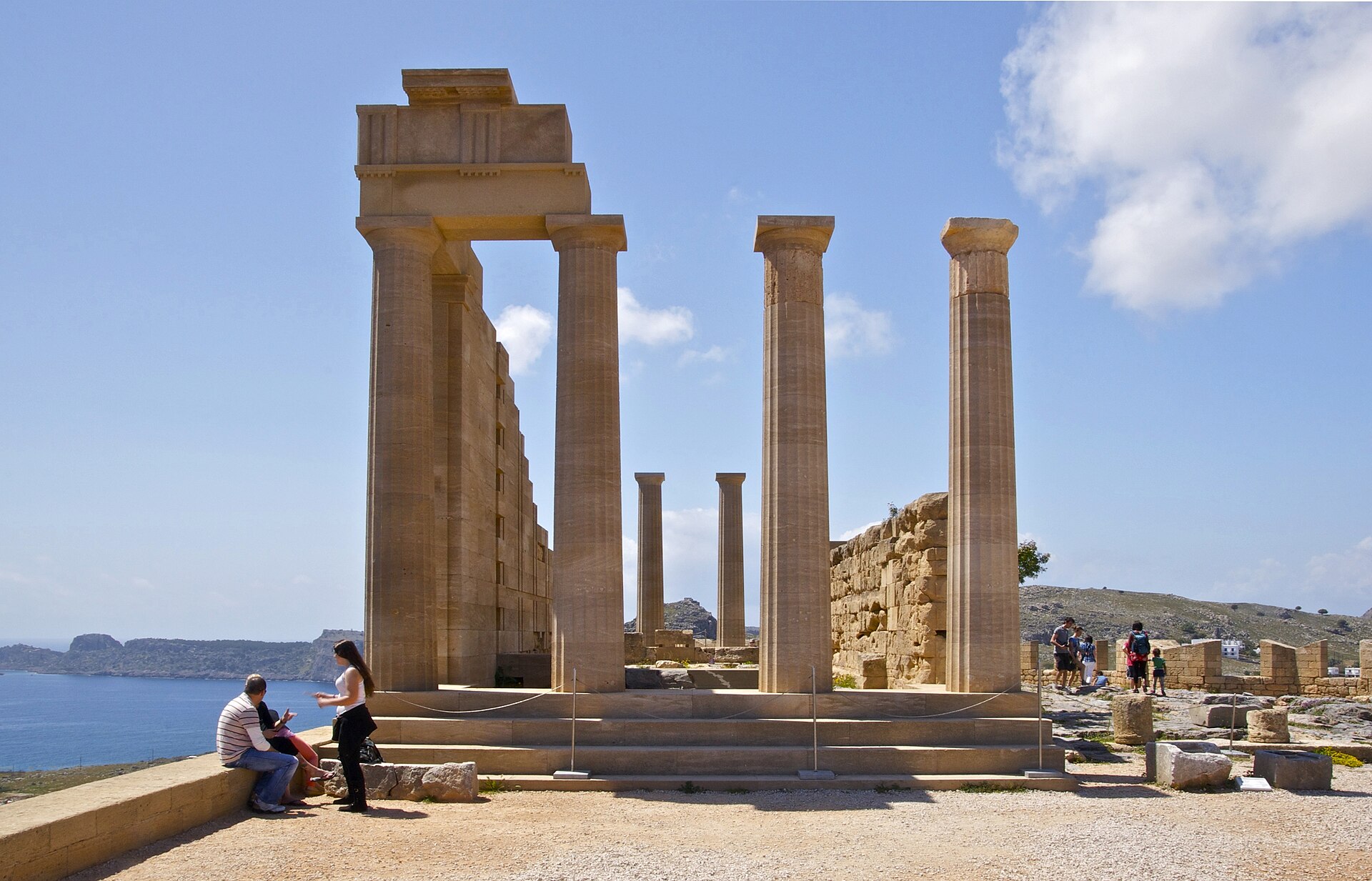
Athena Lindia drew offerings from worshippers near and far over many centuries. Small objects, inscriptions and statue bases reveal a religious community with connections extending well beyond Rhodes. The sanctuary’s monumental terraces made the ascent itself part of the experience: stairways, colonnades and gateways led towards the temple at the top.
The standing Doric temple belongs to the fourth century BCE or early Hellenistic period; it succeeded an older sanctuary. The broad Hellenistic stoa and the approach to the sacred enclosure help visitors understand how architecture gave shape to religious ceremony. Lindos retained its importance as a sanctuary even after the establishment of the city of Rhodes shifted the island’s political center.
A sacred height becomes a medieval stronghold
The acropolis also served as a fortress in Byzantine, Hospitaller and Ottoman times. The Knights’ work in the fourteenth and fifteenth centuries strengthened earlier defenses and added an administrative building, or commandery. The entrance and enclosed passages make a striking transition from the village to the exposed summit. The church of Agios Ioannis is another reminder that the medieval acropolis was a place of worship as well as authority.
Look at the relationship between gateway, stairs and defensive walls. Repeated occupation and rebuilding make the whole complex more informative than any attempt to give every stretch of masonry one date.
What to notice on the ascent
Near the approach stairway, a ship carved into the rock and a semicircular seat preserve the ancient habit of honoring people through monuments in public space. Above them, the medieval entrance gives way to the sanctuary’s successive levels. Take time to look back: views over the settlement explain the difference between the tightly packed town below and the carefully arranged terraces above.
The visible sanctuary includes substantial modern restoration. Re-erected architectural elements make the ancient arrangement easier to read, but the monument is not an untouched survival from antiquity. Follow site signs when distinguishing ancient fabric from restored presentation.
Captains’ houses and the village below
Lindos continued to prosper through seafaring after the medieval period. Its captains’ mansions, especially those associated with the seventeenth century, preserve the memory of maritime households. The church of Panagia adds an important religious interior to the village’s lanes and courtyards. Explore these places as part of the visit rather than treating the settlement simply as a passage to the acropolis.
Visiting the layered site
The climb is steep, with steps, uneven paving and exposed areas. Secure shoes, water and protection from the sun make a difference. Allow time for the village as well as the summit, and respect occupied homes and church services. In the November 2026 access check, the official heritage operator lists seasonal hours and winter closing days; consult its current notice before travelling. Do not assume that the route is step-free.
Architecture
- Fortified gateway and Hospitaller commandery
- Rock-cut ship relief and ancient seating monument
- Terraces, monumental stairs and Hellenistic colonnade
- Doric Temple of Athena Lindia
- Village mansions and religious buildings below the acropolis
Timeline
- Archaic period Lindos flourishes as a maritime community and the sanctuary of Athena gains renown.
- Fourth century BCE–Hellenistic period The sanctuary acquires its principal monumental terraces and buildings.
- Byzantine period The acropolis continues in use as a fortified height.
- Fourteenth–fifteenth centuries The Knights strengthen the defenses and establish their commandery.
- Early twentieth century onward Excavation and restoration shape the archaeological presentation.
Visiting today
Approach through Lindos village on foot and plan for a sustained ascent with steps. Check current opening arrangements with Hellenic Heritage, carry water, and leave time to explore the village’s churches and maritime houses.
Historical contexts
- Knights Hospitaller
- Ottoman Period
- Rise of Modern Greece
- Harbor Defense and Sea-Lane Control
Expedition guides
Images
References
Related places
Related Stops
Topics
- Ancient Sanctuary
- Hospitaller
- Maritime Heritage
- Fortifications
- Traditional Settlement