Highlights
- The rock explains the position
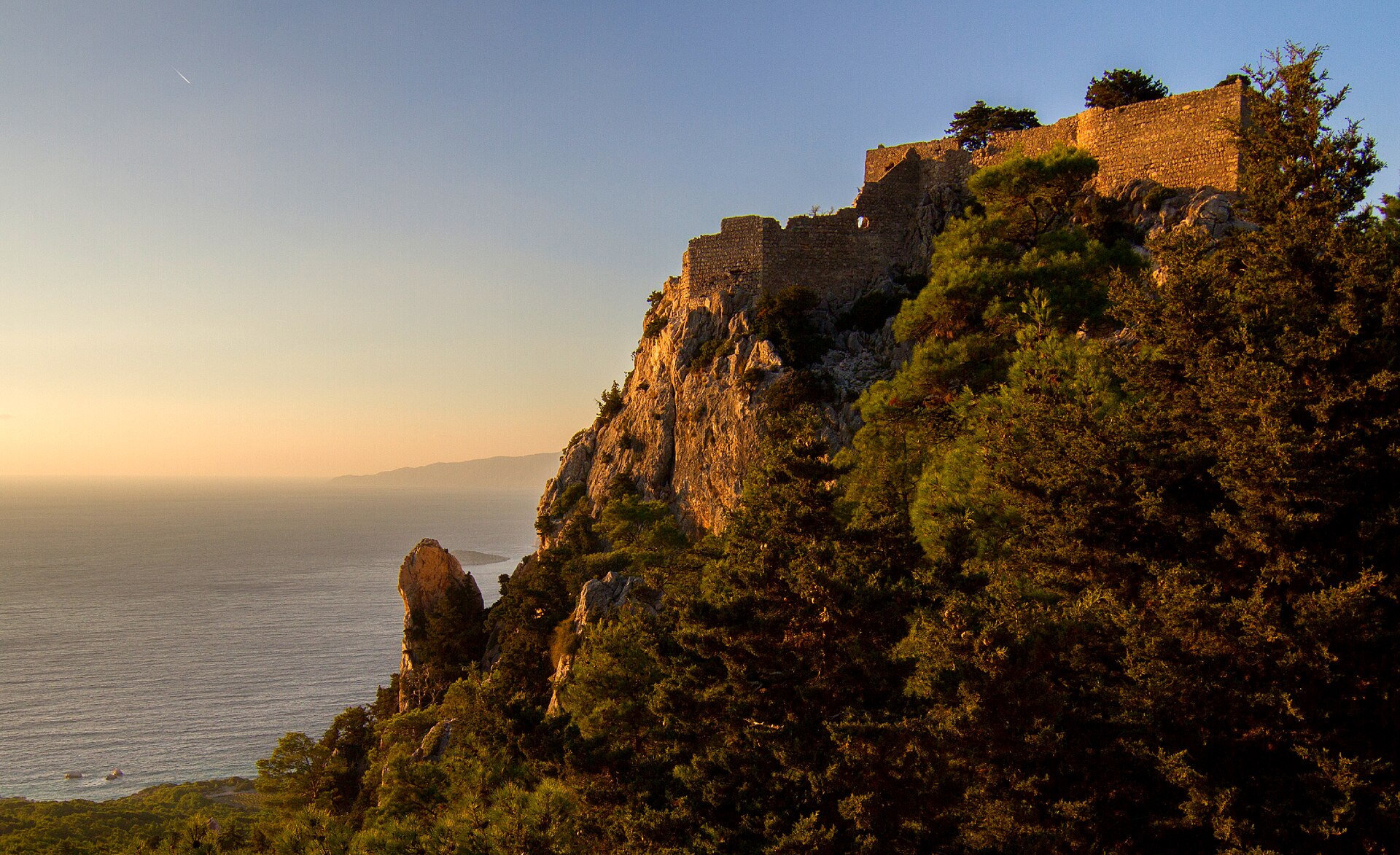
The castle occupies a steep outcrop apart from Monolithos village.
- An inherited medieval stronghold
Accounts place the surviving fortress within the Hospitaller defensive landscape and associate important late-fifteenth-century work with Grand Master d’Aubusson.
- What survives on the summit
Fragments of the enclosure frame the summit and its long outlook over coast and sea.
- A western coastal landscape
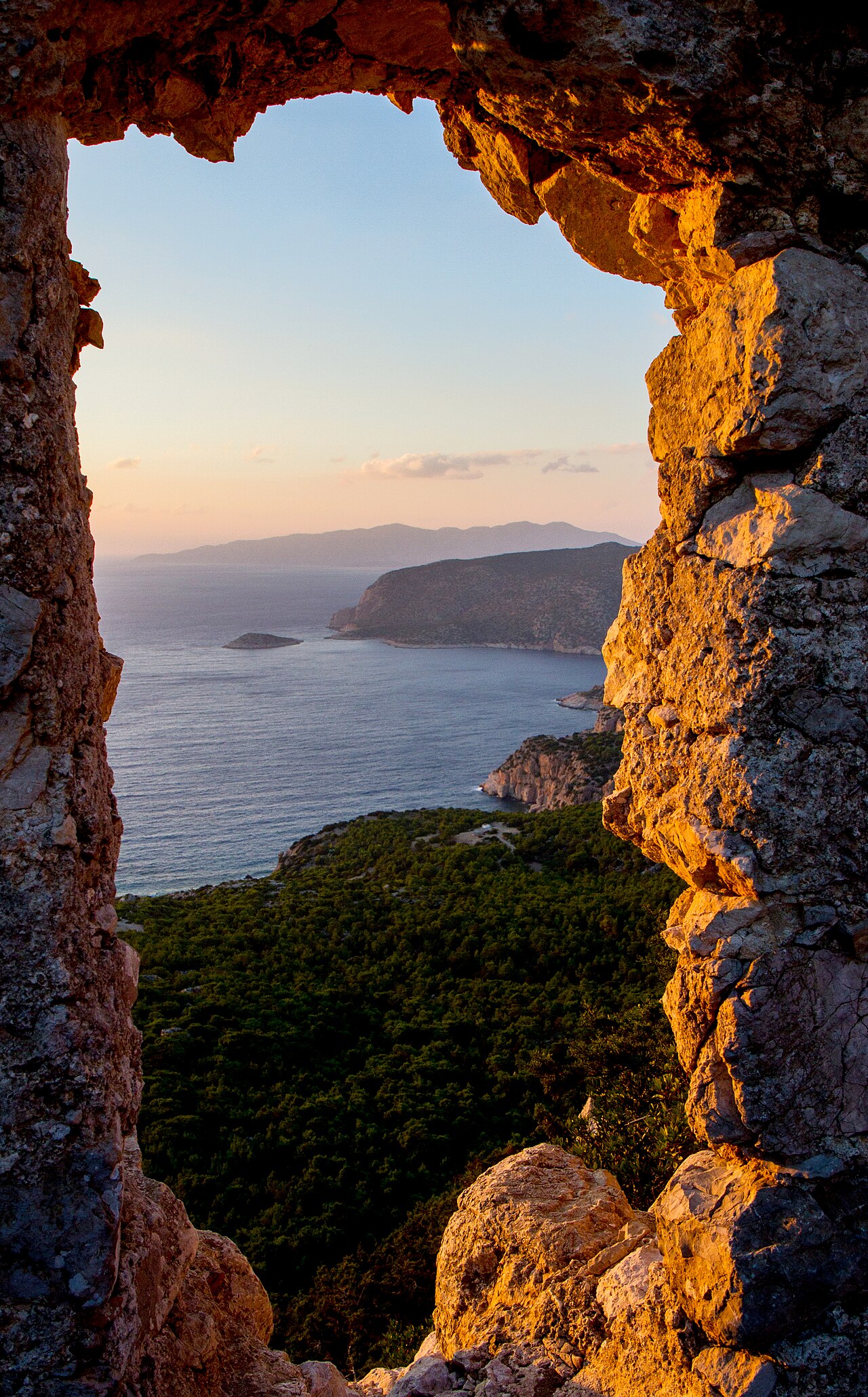
Views extend toward the surrounding slopes, shoreline and offshore islands.
Strategic role
A village and fortified rock where difficult access and maritime outlook gave a small enclosure strategic value.
The rock explains the position
Monolithos Castle stands on a steep rock apart from the village that shares its name. The first sight from below explains the choice: cliffs protect much of the approach, leaving a narrow ascent to the small enclosure. The castle’s commanding place above the western coast mattered, but it never replaced the village below. Together, the rock and settlement show two kinds of habitation: a defended height and the rural community that endured around it.
An inherited medieval stronghold
The fortress belongs to the Hospitaller defense of Rhodes, and important work is associated with Grand Master d’Aubusson in the late fifteenth century. Accounts differ over the precise dates and any earlier foundation, so the surviving walls should not be presented as a single, securely dated construction. They are the remains of an inherited stronghold altered over time. Compared with Rhodes’s larger walled towns, Monolithos was small; its steep rock supplied much of the defense that masonry alone could not.
What survives on the summit
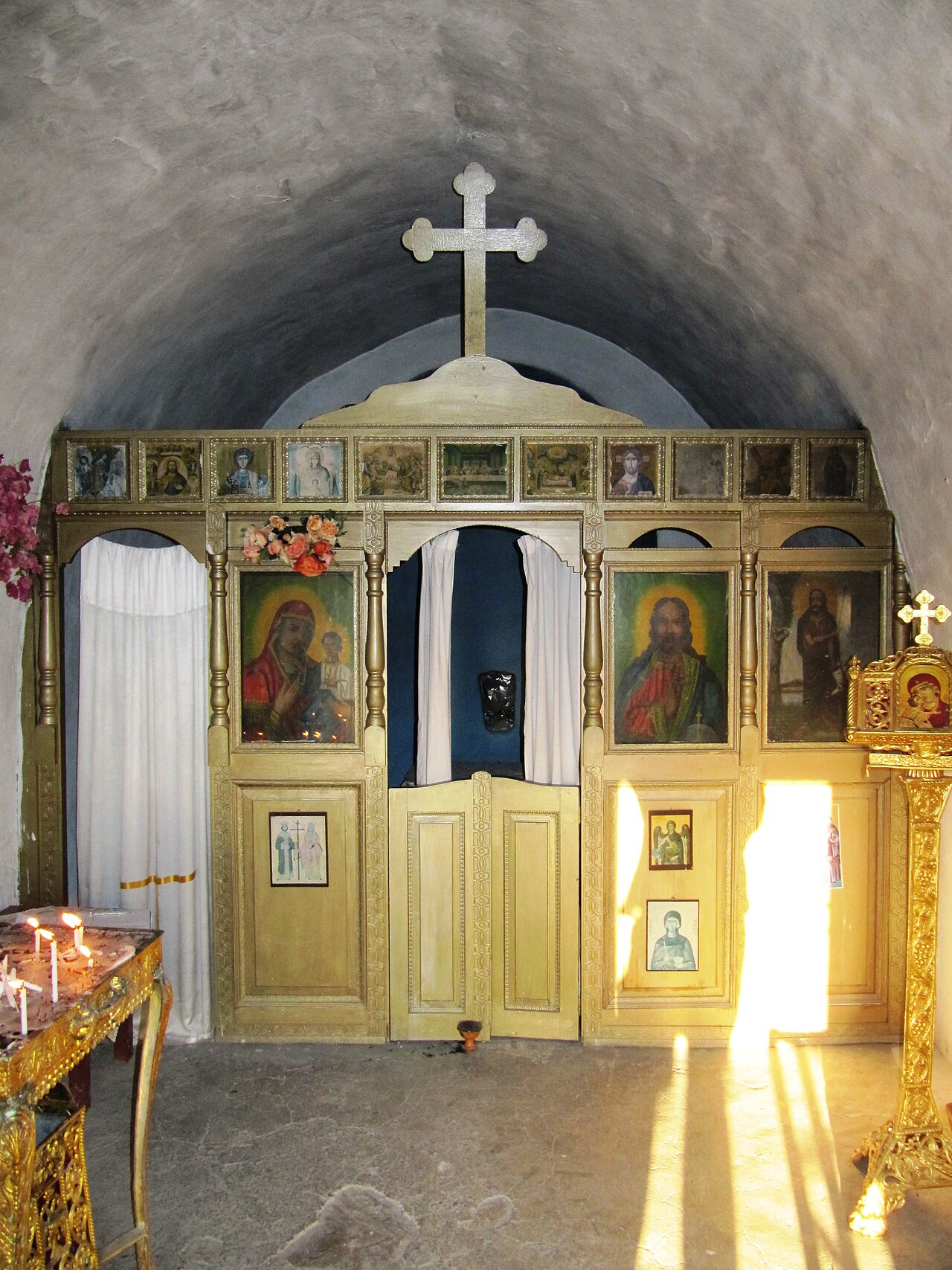
Within the enclosure, fragments of wall surround two chapels: Saint Panteleimon, which still draws the eye, and the ruined chapel of Saint George noted in the local visitor guide. Their presence gives the summit a life beyond its military purpose. After the fortress lost its strategic role, worship and religious memory remained attached to the height. The small interior is best understood through these surviving traces and the paths between them, rather than imagined as a complete barracks or lordly residence.
A western coastal landscape
From the summit, the view opens over the western slopes, shoreline and offshore islands. Below, Monolithos village offers lanes and buildings on a more human scale. The contrast makes clear that the fortress watched a landscape that included farms, paths and a living community, not an empty coast. Take in the rock from the village as well as from its summit: seen from below, the difficulty of reaching the enclosure becomes part of its history.
The ascent is part of the visit
The final ascent follows narrow steps over exposed, uneven ground. Allow time, wear secure footwear and keep away from wall edges, especially in heat or wind. The chapels may have separate access arrangements, so check local conditions before setting out. A full visit connects three views: the rock from below, the small enclosure above and the village around it. The surviving masonry is limited, but the relationship among those places remains legible.
Architecture
- Cliff-top enclosure on a separate rock
- Narrow stepped final approach
- Fragmentary defensive walls
- Small summit chapels, including Saint Panteleimon
Timeline
- Medieval period A fortified height became part of the defensive landscape of western Rhodes.
- Late 15th century Sources associate major Hospitaller works with Grand Master d’Aubusson, while giving different exact dates.
- Later periods Religious use of summit chapels continued beyond the castle’s military role.
- Present day A steep ascent leads to fragmentary walls and chapels overlooking the coast.
Visiting today
The final approach uses narrow steps and uneven exposed ground. Allow time for the ascent, wear secure footwear and avoid wall edges; the summit should not be treated as a protected viewing platform. Verify current local conditions before attempting the climb, particularly in heat or wind. The chapels may have separate access arrangements. A rewarding visit combines the outline of the rock from below, the limited enclosure above and the village setting, rather than measuring the experience by how much masonry remains.
Historical contexts
- Knights Hospitaller
- Ottoman Period
- Rise of Modern Greece
- Harbor Defense and Sea-Lane Control
Expeditions
- Expedition II
Images
References
Related places
Topics
- Monolithos
- Historical Landscape
- Material Culture
- Visitor Context