Overview
Mesta is among the clearest surviving examples of the fortified mastic villages of southern Chios. Official regional sources describe it as a medieval settlement whose architectural form has roots in the Byzantine period and whose defenses were strengthened under Genoese rule. The houses of the outer perimeter were built directly against one another to form a continuous defensive wall, while the village plan narrowed movement into labyrinthine, often vaulted lanes leading toward the center. Small corner towers strengthened the perimeter, and a central defensive tower once dominated the settlement. That tower was demolished in the nineteenth century and the Great Taxiarchis church was built on its site. Mesta's importance lies not in a separate citadel but in the way the entire inhabited village functioned as a fortified system.
Highlights
- The Village as a Castle
Adjoining perimeter houses form a continuous defensive wall, making the settlement itself the fortification.
- Labyrinthine Vaulted Streets
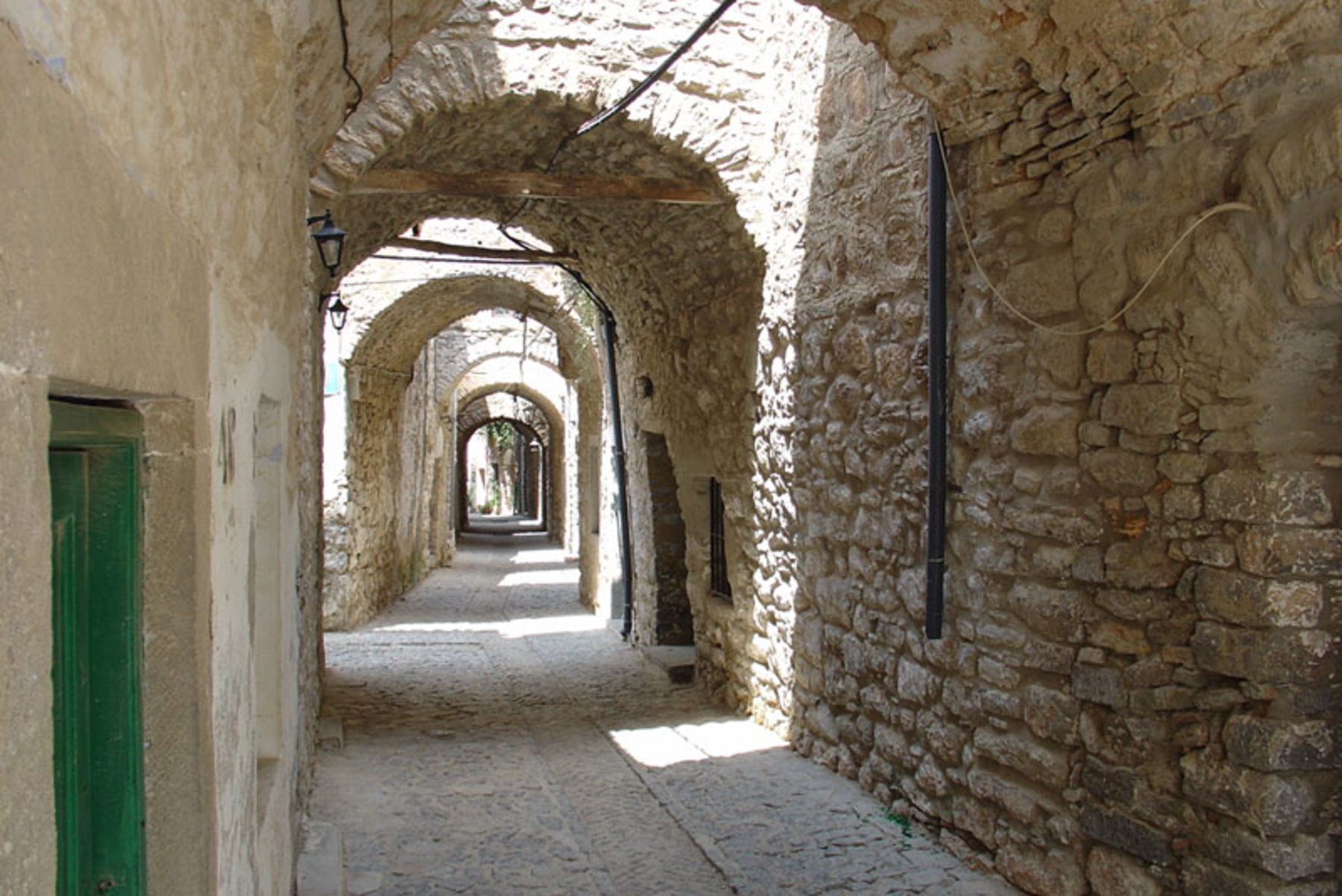
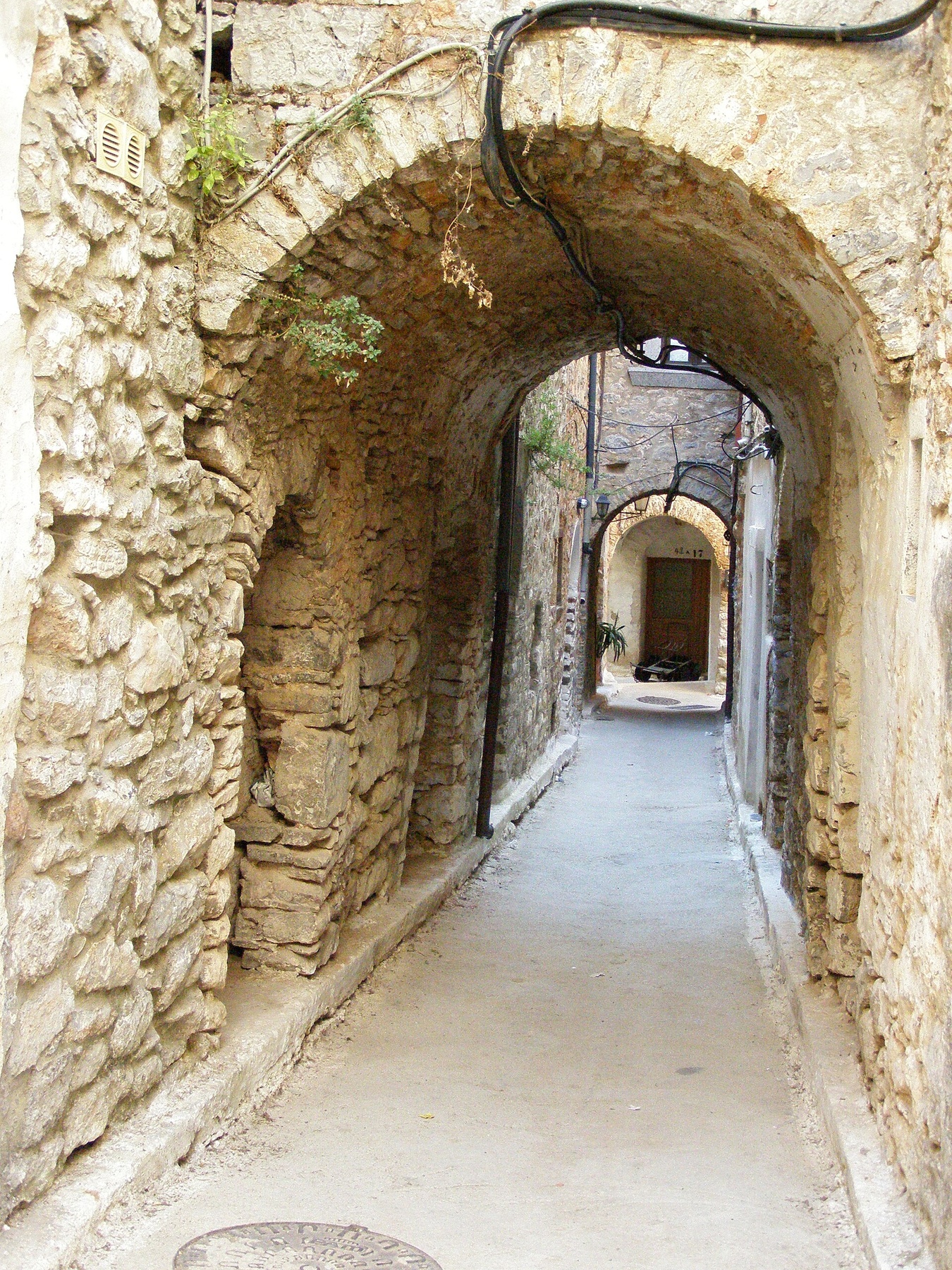
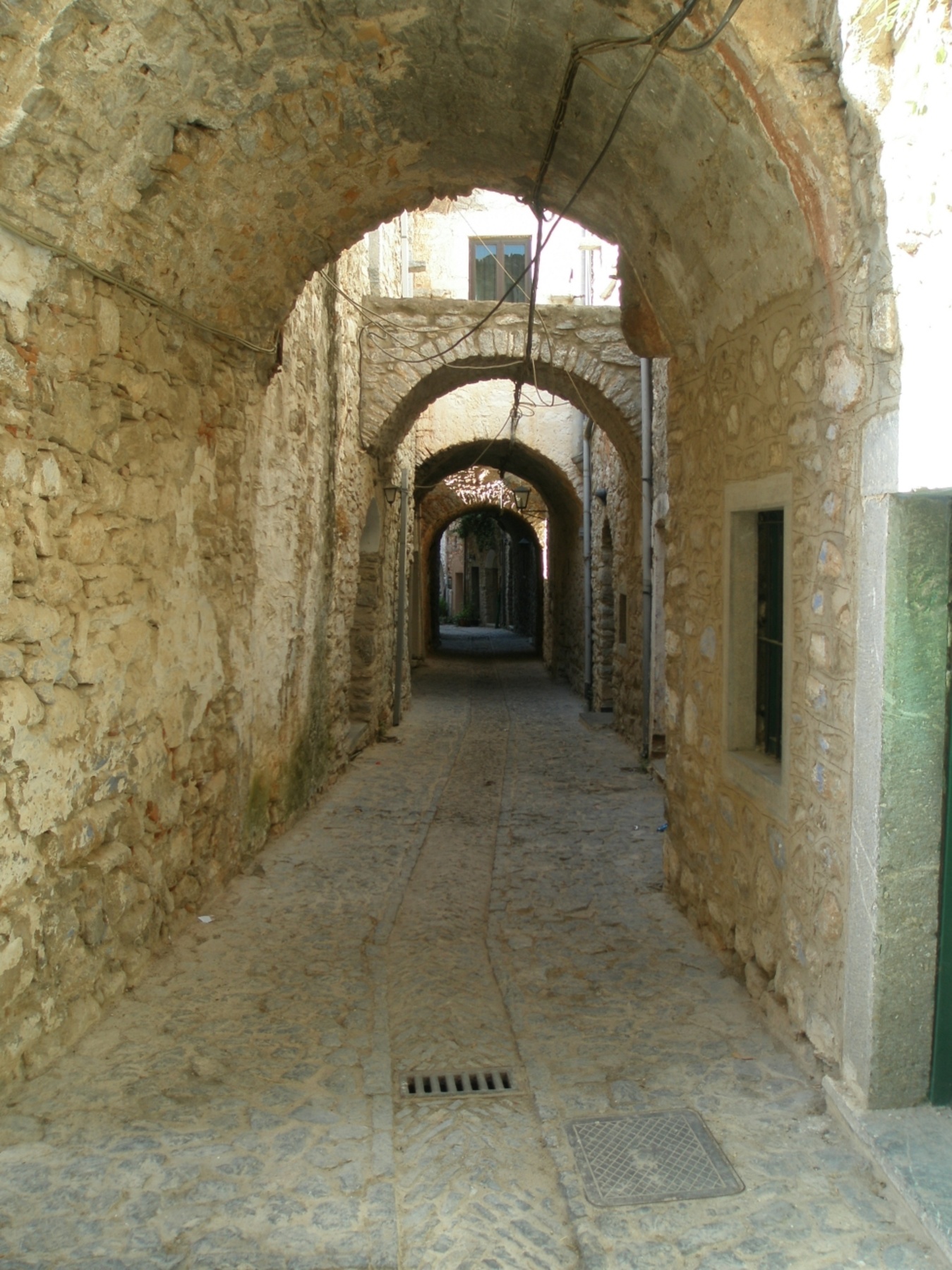
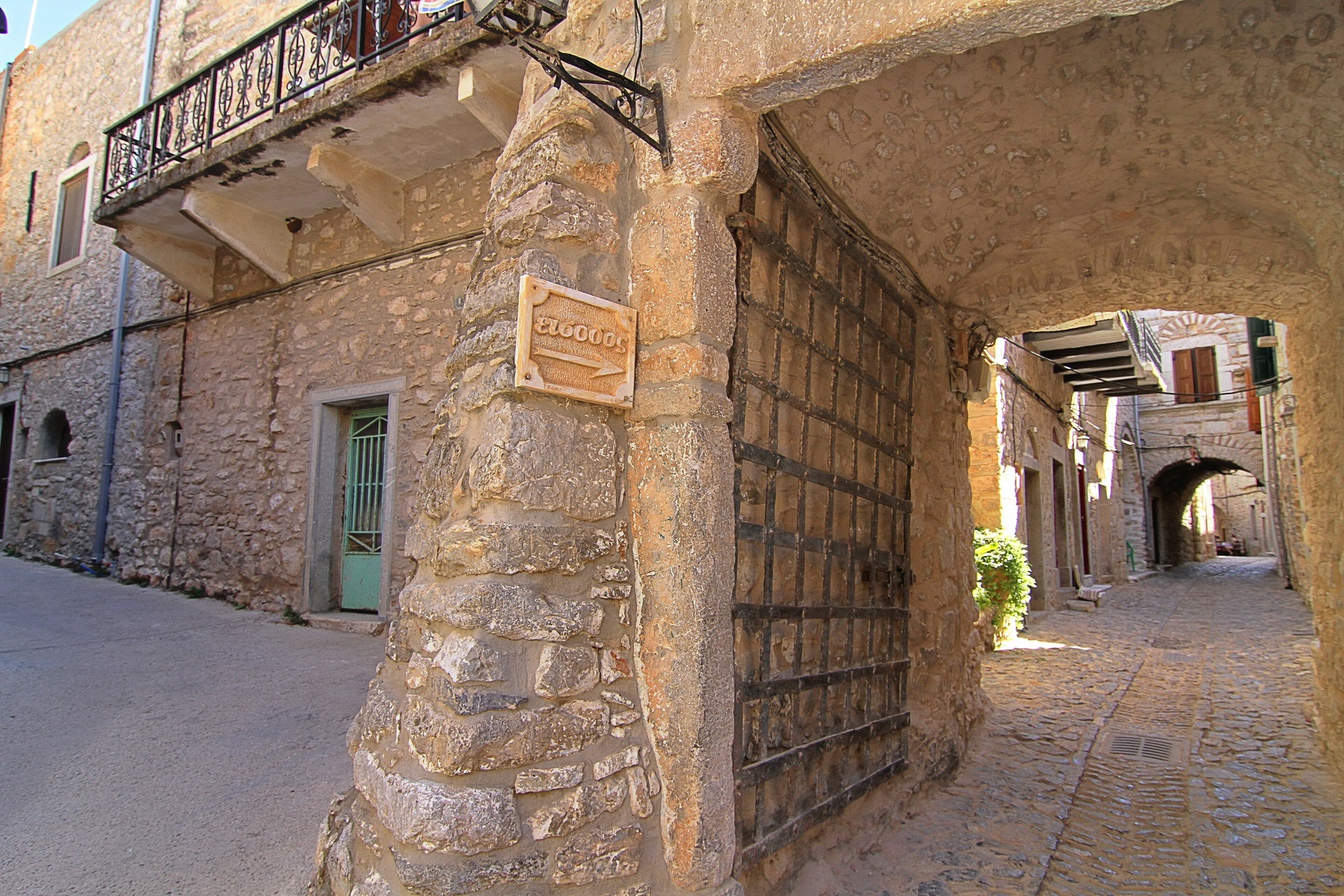
Narrow irregular lanes and stone-covered passages were integral to Mesta's defensive organization.
- Captain's Gate
The principal northern gateway controlled access to the medieval settlement.
- Lost Central Tower
The village's principal refuge tower stood at the center until its demolition in 1860.
- Great Taxiarchis
The monumental church completed in 1868 occupies the site of the former central defensive tower.
- Old Taxiarchis
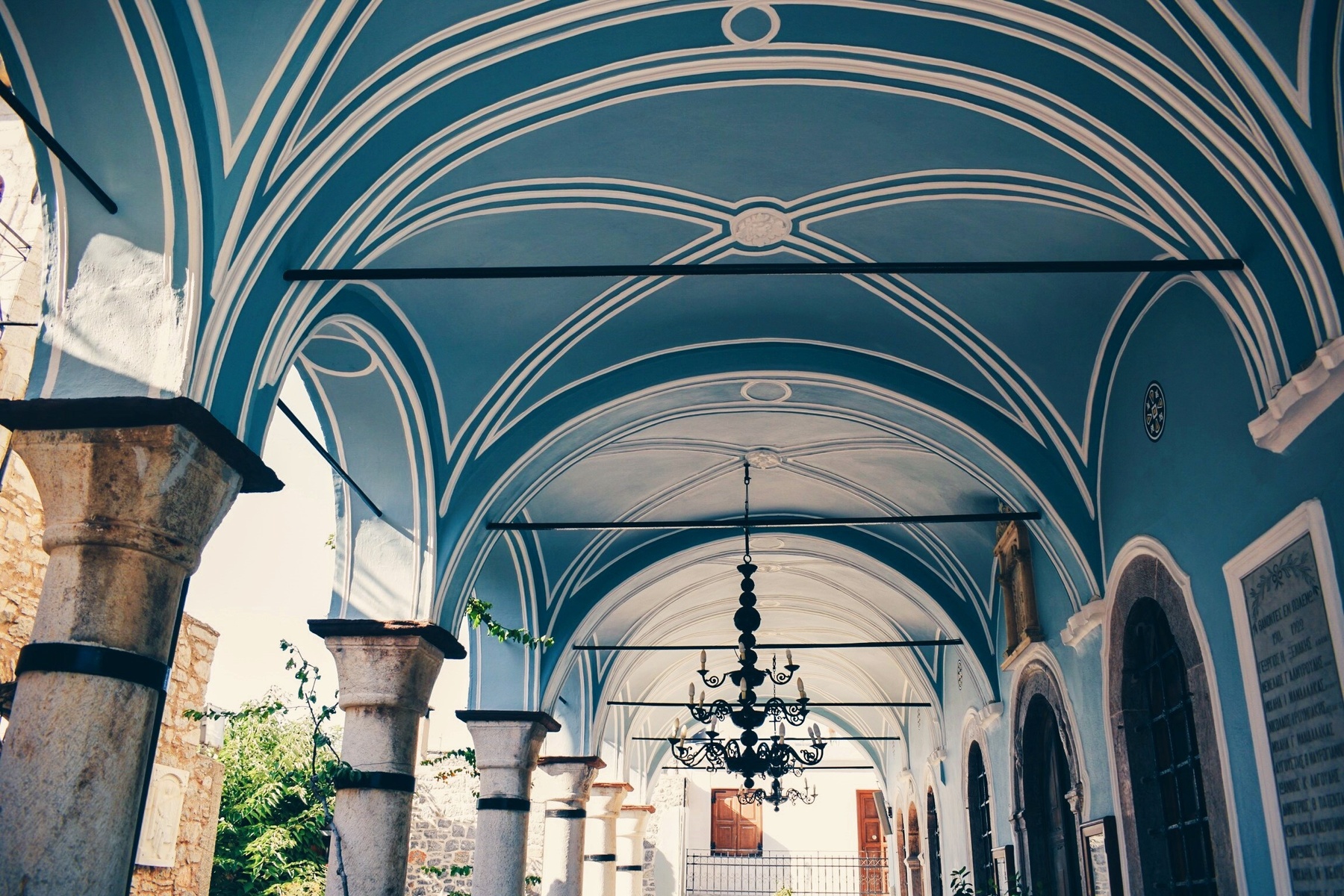
The older church preserves an important carved wooden iconostasis and belongs to the historic medieval fabric.
- Mastic Heritage
Mesta's history and fortified form are inseparable from the protection and organization of Chios's unique mastic economy.
- Living Medieval Settlement
Continuous occupation has preserved Mesta as a functioning village rather than an archaeological ruin.
Strategic role
A fortified mastic-producing community whose urban form protected population, stores and a high-value agricultural economy from piracy and attack.
Overview
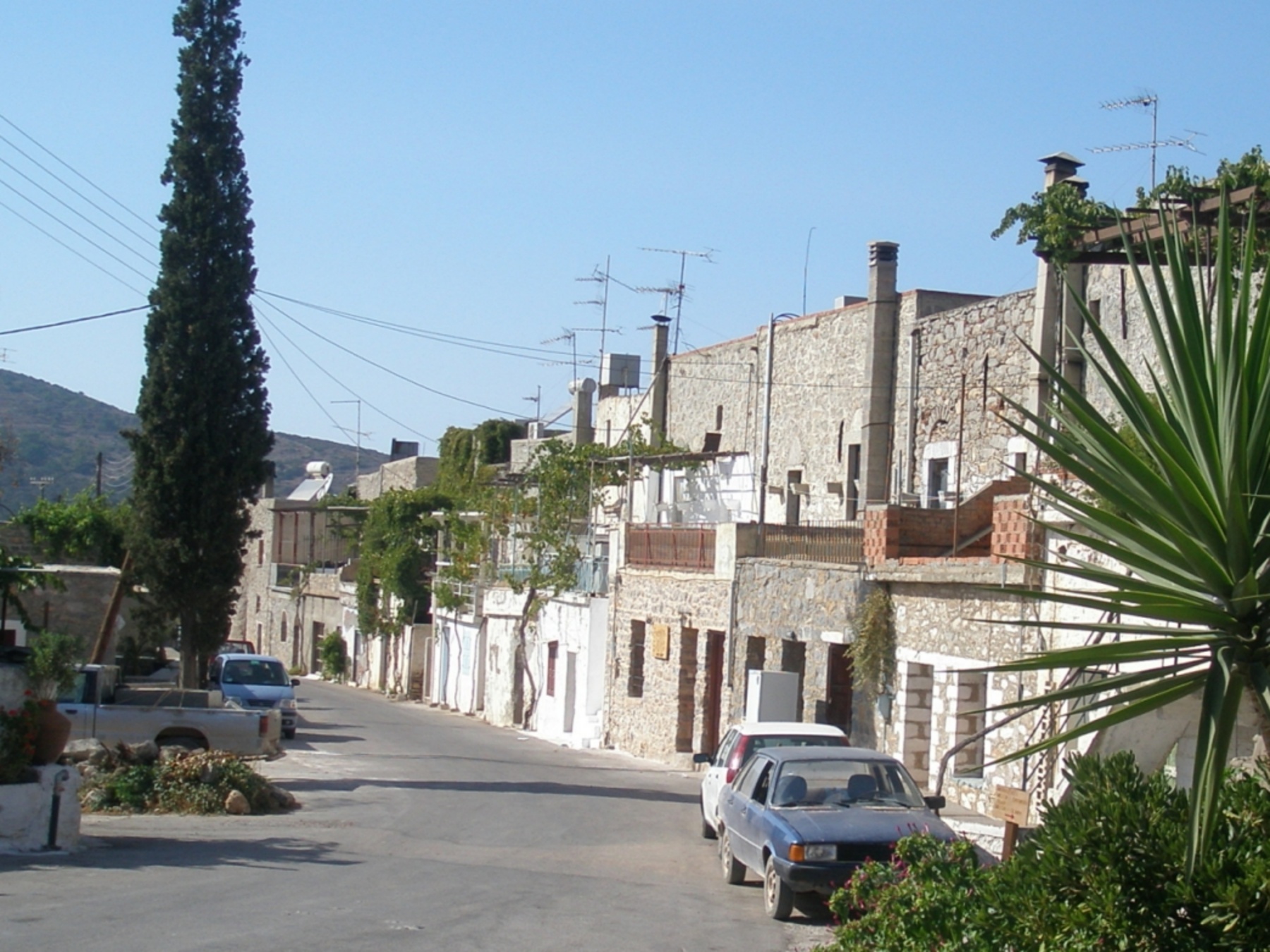
Mesta is one of the best-preserved medieval villages of Chios and one of the most complete surviving examples of the island's Mastichochoria. Unlike a conventional castle standing apart from a settlement, Mesta was designed so that the village itself became the fortification. Houses were built tightly against one another around the perimeter, creating a continuous high wall with very few openings. Within that shell, narrow winding streets, vaulted passages and controlled approaches made rapid penetration difficult. The result is a remarkably legible example of collective defense in which homes, churches, storage spaces and streets formed a single fortified organism.
The Mastic Villages and the Genoese Economy
The distinctive form of Mesta cannot be separated from the history of Chios mastic. Southern Chios is the only place where the cultivated mastic tree produces the famous aromatic resin on a commercial scale, and the crop became one of the island's most valuable commodities. Official Chios sources emphasize that systematic cultivation and organization of the mastic economy intensified during Genoese rule from 1346 to 1566. The Genoese monopoly encouraged the concentration of growers in fortified inland settlements hidden from direct view of the sea. Mesta therefore protected not only its inhabitants but also the agricultural labor, storage and commercial system on which a valuable export economy depended.
Architecture of Collective Defense
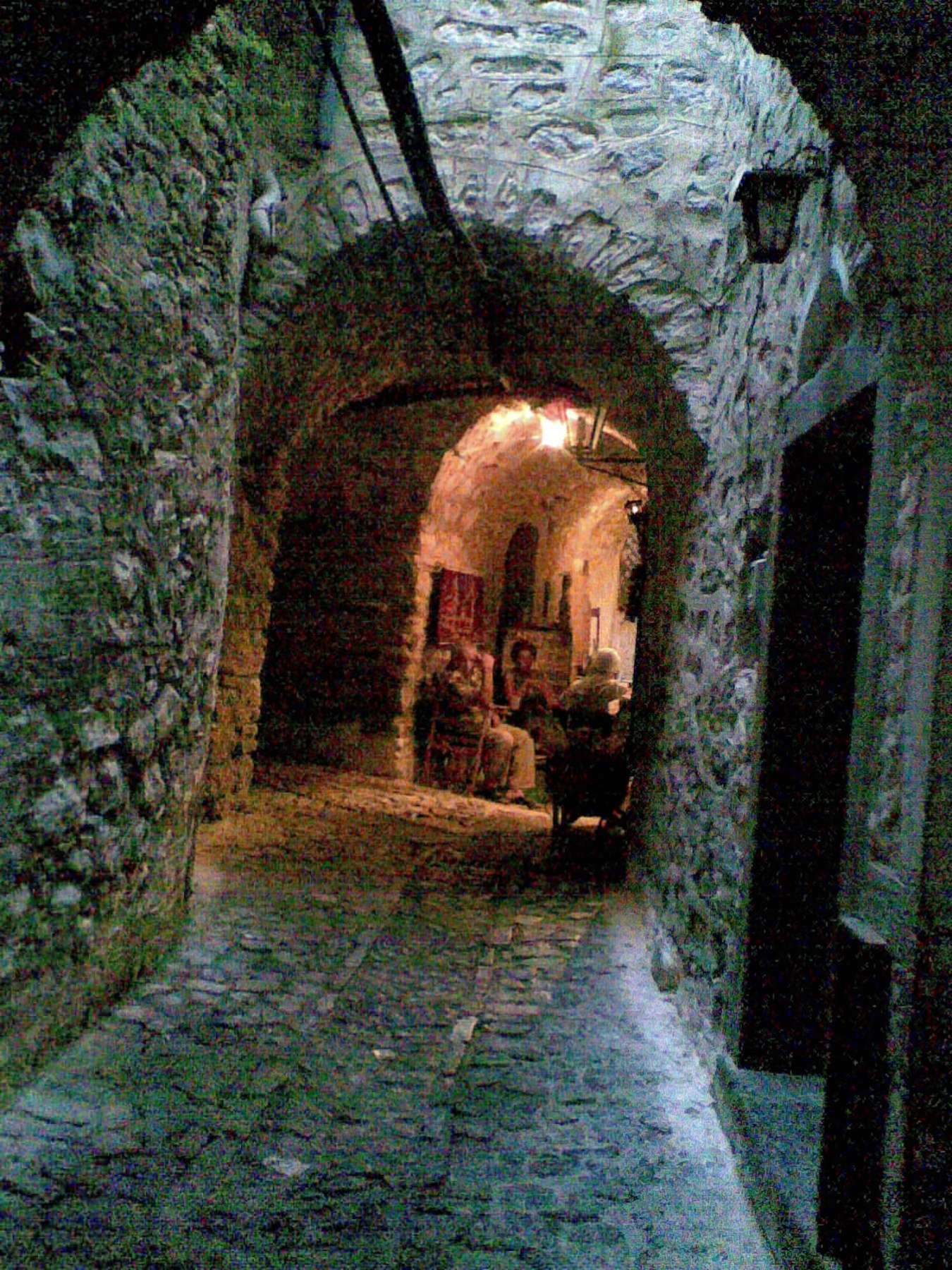
Mesta's defensive power came from urban planning as much as from military construction. The village has a polygonal form, with the blank outer walls of adjoining houses creating a defensive perimeter. Small round towers strengthened the corners, while access was restricted through a limited number of gates. Inside, streets branch irregularly and often pass beneath stone vaults formed by buildings crossing above the lanes. This labyrinthine arrangement hindered strangers and attackers while allowing inhabitants familiar with the village to move efficiently. Official descriptions also note that movement over connected rooftops could provide alternative routes in times of danger. The village thus functioned as a layered defensive environment rather than simply a ring of walls.
The Central Tower, Gates and Taxiarchis Churches
At the center of the medieval settlement once stood a major defensive tower that served as the ultimate refuge if the outer village defenses were breached. The principal northern entrance, known as the Captain's Gate, controlled access to the settlement. The central tower was demolished in 1860, and the Great Taxiarchis church was subsequently erected on its site, completed in 1868. The older and smaller Taxiarchis church preserves a more direct connection with the medieval settlement and is especially valued for its carved wooden iconostasis. Together the gates, vanished tower and two Taxiarchis churches reveal how the symbolic and functional center of Mesta evolved from military refuge toward religious and civic focus.
Daily Life Inside a Castle-Village
The defensive plan was inseparable from ordinary life. Typical houses were arranged on two levels: storage spaces, stables and work areas occupied the ground floor, while family living spaces were above. Balconies and upper passages provided light and ventilation within the dense fabric. The central square developed as the communal heart of the village, while churches and small open spaces punctuated the tight network of lanes. This combination of density and adaptability explains why Mesta feels very different from an abandoned fortress. Its defensive architecture survives because it remained part of an inhabited community.
Ottoman Rule, Mastic and Continuity
When the Ottomans took Chios in 1566, the island's mastic economy remained too valuable to disrupt. The crop continued to shape taxation, administration and village life, and the Mastichochoria preserved a distinctive relationship with central authority because of their economic importance. Mesta therefore did not lose its function when Genoese rule ended. Its defenses gradually became less militarily essential, but its settlement pattern, houses and communal institutions continued in use. This continuity is one of the principal reasons the village survives so completely today.
Mastic as Living Heritage
Mesta is not only a medieval monument; it remains part of a living cultural landscape. In 2014 UNESCO inscribed the know-how of cultivating mastic on Chios on the Representative List of the Intangible Cultural Heritage of Humanity. UNESCO emphasizes that cultivation is transmitted between generations and is embedded in social cooperation and collective memory. The Chios Mastic Museum likewise interprets the way mastic production shaped both the agricultural landscape and the settlements of southern Chios. Seen in this context, Mesta's fortifications are not merely remnants of warfare: they are the architectural expression of a community organized around safeguarding a unique crop and the social world that grew around it.
Why Visit
Mesta offers perhaps the most immediate experience on Chios of walking through a living medieval defensive system. The attraction is not a single monumental tower or wall but the cumulative effect of gates, blank perimeter houses, shadowed vaults, twisting alleys, churches and the central square. Compared with abandoned Anavatos, Mesta shows the opposite fate of a fortified village: continuous occupation preserved its architecture by adapting it to everyday life. Together with nearby Pyrgi, it also demonstrates how the mastic economy produced a distinctive fortified landscape found nowhere else in Greece.
Architecture
- Polygonal fortified village plan
- Continuous outer defensive wall formed by adjoining houses
- Few controlled entrances, including the principal Captain's Gate on the north side
- Small round towers strengthening the outer corners
- Labyrinthine narrow lanes designed to restrict movement
- Vaulted passages linking buildings and supporting movement above street level
- Former central defensive tower at the heart of the settlement
- Great Taxiarchis church built in 1868 on the site of the former central tower
- Old Taxiarchis church with an important carved wooden iconostasis
- Two-storey stone houses with storage and work spaces below and living quarters above
Timeline
- Medieval period Mesta developed as one of the fortified Mastichochoria of southern Chios. Official Chios sources describe its architectural origins as Byzantine.
- 1346–1566 During Genoese rule of Chios, systematic organization of the mastic economy strongly shaped the southern villages. Mesta's fortifications were improved and its castle-like urban form consolidated.
- 15th century The Old Taxiarchis church belongs to the medieval fabric of the settlement and survives as one of Mesta's principal historic monuments.
- 1566 Ottoman rule replaced Genoese administration. Mastic retained exceptional economic importance and helped preserve the special status and prosperity of the southern mastic villages.
- Ottoman period Mesta remained a living agricultural community closely tied to mastic cultivation while preserving its fortified medieval street plan.
- 1860 The former central defensive tower was demolished.
- 1868 The Great Taxiarchis church was completed on the site formerly occupied by the central tower.
- 20th century Mesta was recognized and protected as a historic traditional settlement, preserving the defensive morphology of the medieval village.
- 2014 UNESCO inscribed the know-how of cultivating mastic on Chios on the Representative List of the Intangible Cultural Heritage of Humanity.
- 21st century Conservation continues within the living settlement, including restoration work at the Old Taxiarchis church.
Visiting today
Mesta remains a living settlement rather than an archaeological ruin. Its defensive structure is best understood on foot by entering through the historic gateways and following the vaulted lanes toward the central square and the Taxiarchis churches. The Old Taxiarchis has recently been subject to conservation work, so current access conditions should be checked locally.
Historical contexts
- Genoese Aegean
- Ottoman Period
- Rise of Modern Greece
Expedition guides
Images

References
- North Aegean Region — Mesta
- North Aegean Region — Olympoi–Mesta: Fortified Medieval Settlements
- North Aegean Region — Mastiha Villages
- North Aegean Region — Natural and Human Environment of Mastiha
- UNESCO Intangible Cultural Heritage — Know-how of cultivating mastic on the island of Chios
- Piraeus Bank Group Cultural Foundation — Chios Mastic Museum
- Hellenic Ministry of Culture — Conservation projects on Chios including Taxiarchis at Mesta
Related places
Related Stops
Topics
- Fortified Village
- Mastichochoria
- Mastic
- Genoese Aegean
- Byzantine
- Ottoman
- Collective Defense
- Castle Village
- Living Heritage
- Traditional Architecture
- Medieval Chios
- Intangible Cultural Heritage