Highlights
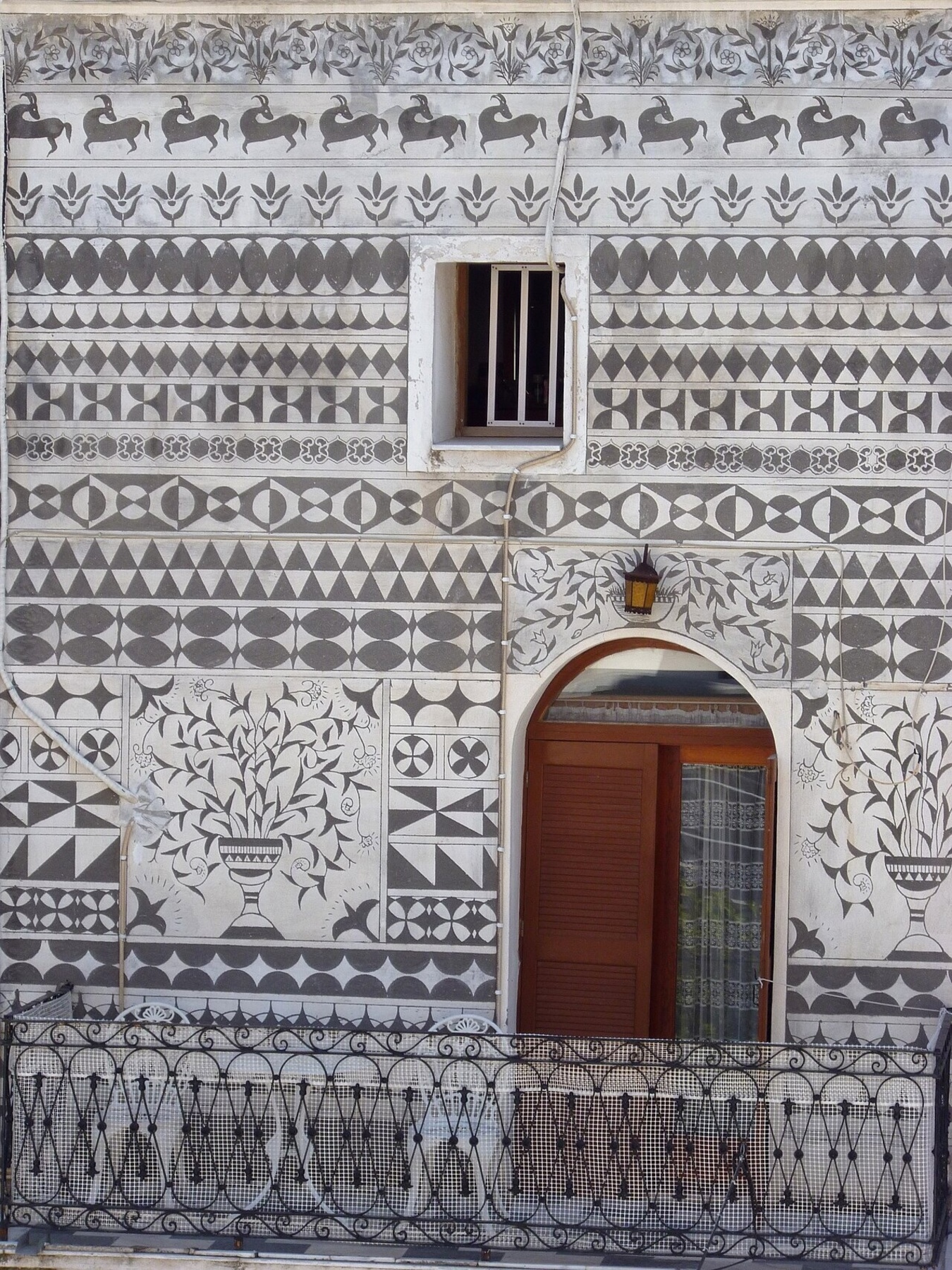
- Decorated house fronts
Look for the rhythms and individual details of xysta.
- A fortified village plan
Read the close relationship between homes, lanes and protection.
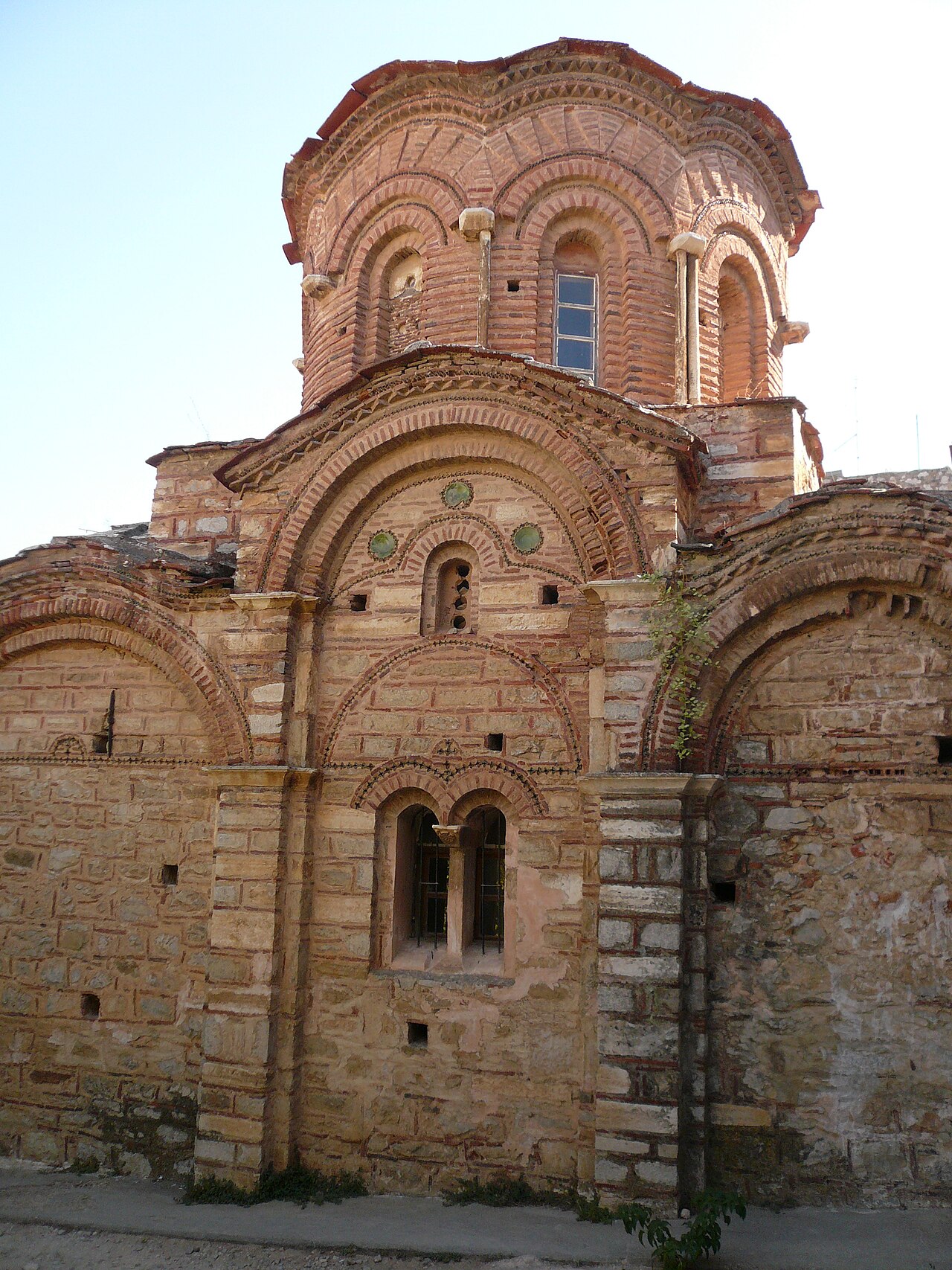
- The Holy Apostles
A domed church reveals another strand of Chian architecture and painting.
- Mastic and its museum
Understand the knowledge and labor linking settlement with countryside.
Strategic role
A compact southern Chios community whose defensive form developed within a valuable mastic-producing landscape.
Pyrgi in the mastic landscape
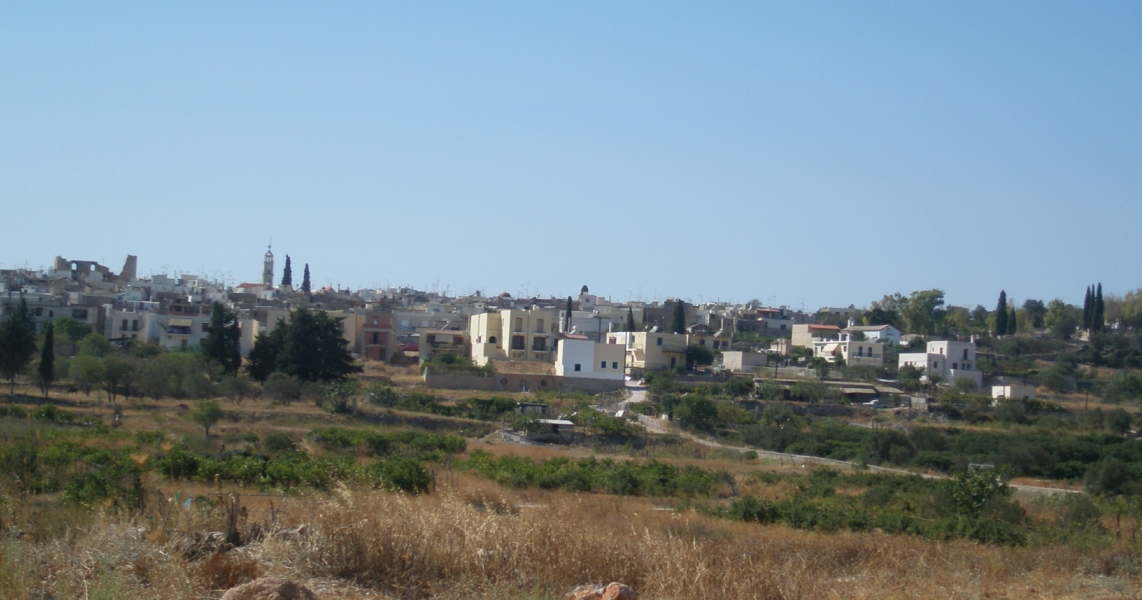
The approach to Pyrgi places a dense settlement within a cultivated countryside. It belongs to the southern Chios villages associated with mastic, the aromatic resin collected from a locally cultivated shrub. Houses, lanes and fields formed part of the same working landscape: village history is inseparable from the people who cultivated and processed the crop.
The importance of mastic gave this region a distinctive economic history. Its cultural value also lies in knowledge shared and renewed by successive generations, not simply in a product sold to visitors.
A village planned for protection
Pyrgi retains a compact medieval form despite later alterations. Closely grouped buildings, narrow routes and the relationship between houses and shared spaces invite visitors to think about collective protection. This is a fortified settlement rather than a detached castle standing beside an otherwise unrelated village.
Read the street pattern as well as individual buildings. The fabric changed under Genoese and Ottoman rule and continued to change as houses were repaired and adapted. The medieval character of the plan does not mean that every façade, roof or passage survives unchanged from one founding period.
Xysta: the village’s decorated surfaces
Black-and-white patterns cover many house fronts, turning walls into compositions of bands, repeated shapes, plants and figures. Known as xysta, the decoration is worked into plaster rather than applied as a collection of separate tiles. Look closely at the way patterns frame doors and windows or change between neighboring houses.
These surfaces express a living decorative practice. Their visual richness should not be used to date the buildings beneath them: a house, its repairs and its latest decoration may belong to different moments. Enjoy the façades from public lanes while remembering that the doors open into occupied homes.
The Church of the Holy Apostles
Near the village center, the Holy Apostles offers a different architectural experience from the decorated houses. Its domed design belongs to the island tradition associated with Nea Moni, and its exterior uses stone and brick ornament rather than xysta. The church has a history of renewal and later decoration, so its architectural ancestry and the dates of its surviving paintings should be considered separately.
The wall paintings date to 1665 and are associated with the Cretan painter Antonios Domestichos. If the church is open, pause to see how the interior’s painted space contrasts with the busy village outside. Confirm access with the archaeological service and respect instructions on photography and worship.
The Chios Mastic Museum
The museum near Pyrgi, opened in 2016, explains the cultivation, processing and cultural significance of mastic. Exhibits connect agricultural tools and practical skills with the organization of the villages, cooperative production and modern uses. Its outdoor area introduces the plants themselves.
This visit helps connect the village’s buildings with work in the surrounding fields. In 2014, UNESCO inscribed the know-how of cultivating mastic on Chios as intangible cultural heritage. That recognition concerns the practiced knowledge of communities, something the museum helps make understandable alongside the visible settlement.
Exploring a living village
Walk through the center at a pace that allows time for details, church approaches and ordinary activity in the lanes. Leave cars in permitted areas outside the most constrained streets. Uneven paving, steps and narrow passages can make access difficult, and residents need clear routes to their homes.
The village, church and museum have different visiting conditions. As checked in November 2026, confirm the church’s access with the Ephorate and the museum’s current arrangements with its operator. Check the operator’s notices for changes during maintenance and seasonal closures. Respect cultivation and do not cut mastic branches or enter working plots without permission.
Architecture
- Compact medieval settlement pattern and closely grouped houses
- Narrow lanes and shared village spaces
- Xysta geometric and figurative decoration worked in plaster
- Domed Holy Apostles church with stone-and-brick ornament
- Later repairs and domestic adaptation within the older plan
Timeline
- Medieval period Pyrgi develops within the fortified settlement network of southern Chios.
- Genoese and Ottoman periods The mastic-producing region continues under successive systems of rule.
- 1665 The Holy Apostles receives the wall paintings associated with Antonios Domestichos.
- 2014 Chios mastic-cultivation know-how enters UNESCO’s intangible heritage list.
- 2016 The Chios Mastic Museum opens near Pyrgi.
Visiting today
Explore the village on foot from permitted parking, keeping lanes clear for residents. Check separate access arrangements for the Holy Apostles and the Chios Mastic Museum, and respect working fields, private homes and uneven surfaces.
Historical contexts
- Genoese Aegean
- Ottoman Period
- Rise of Modern Greece
Expedition guides
Images
References
Related places
Related Stops
Topics
- Fortified Village
- Mastic Culture
- Traditional Crafts
- Religious Heritage
- Genoese
- Museum