Highlights
- Amani’s inhabited center
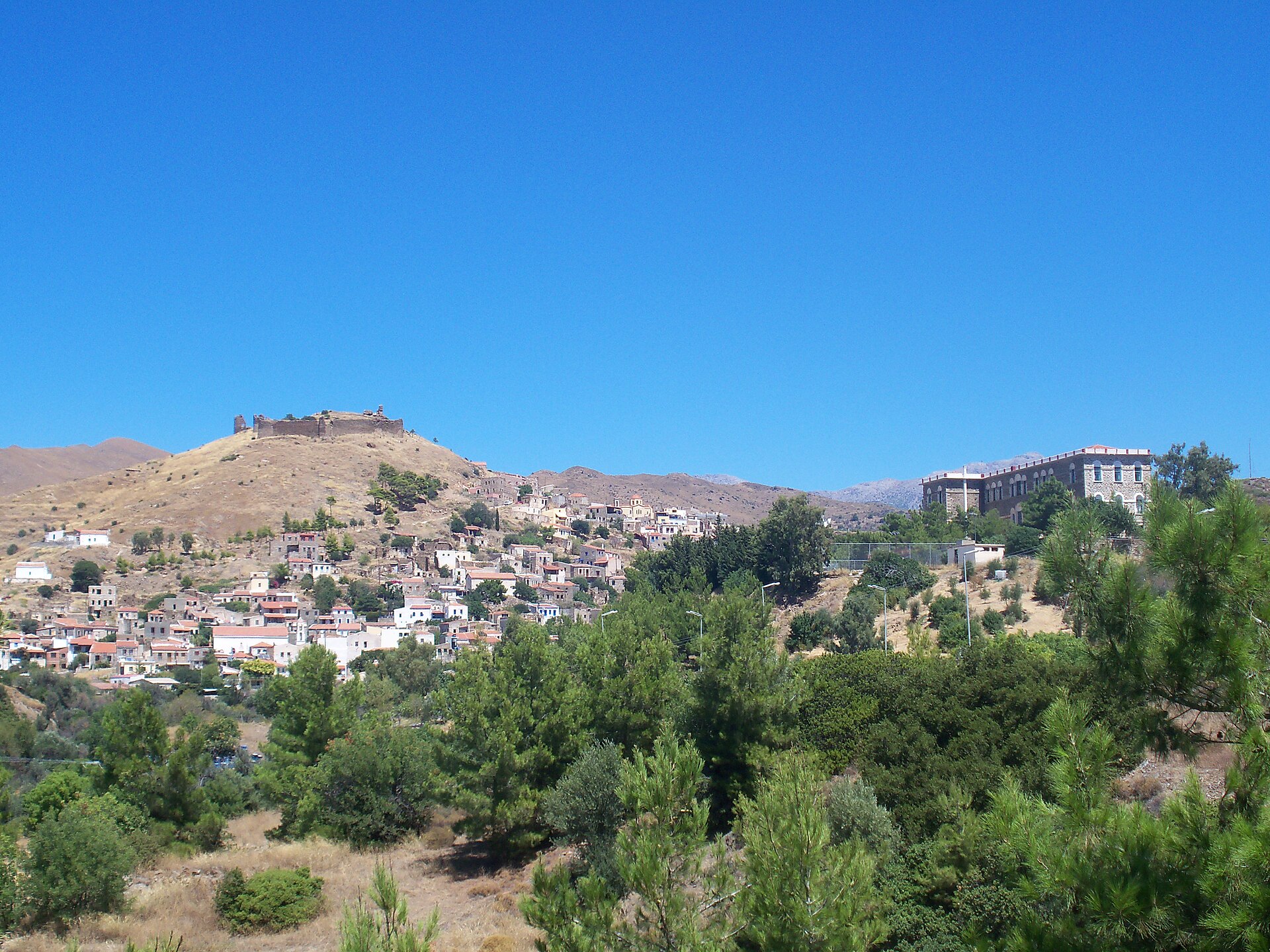
Volissos occupies a hillside in northwestern Chios, with the castle above and routes toward the valley and coast below.
- A castle with uncertain beginnings
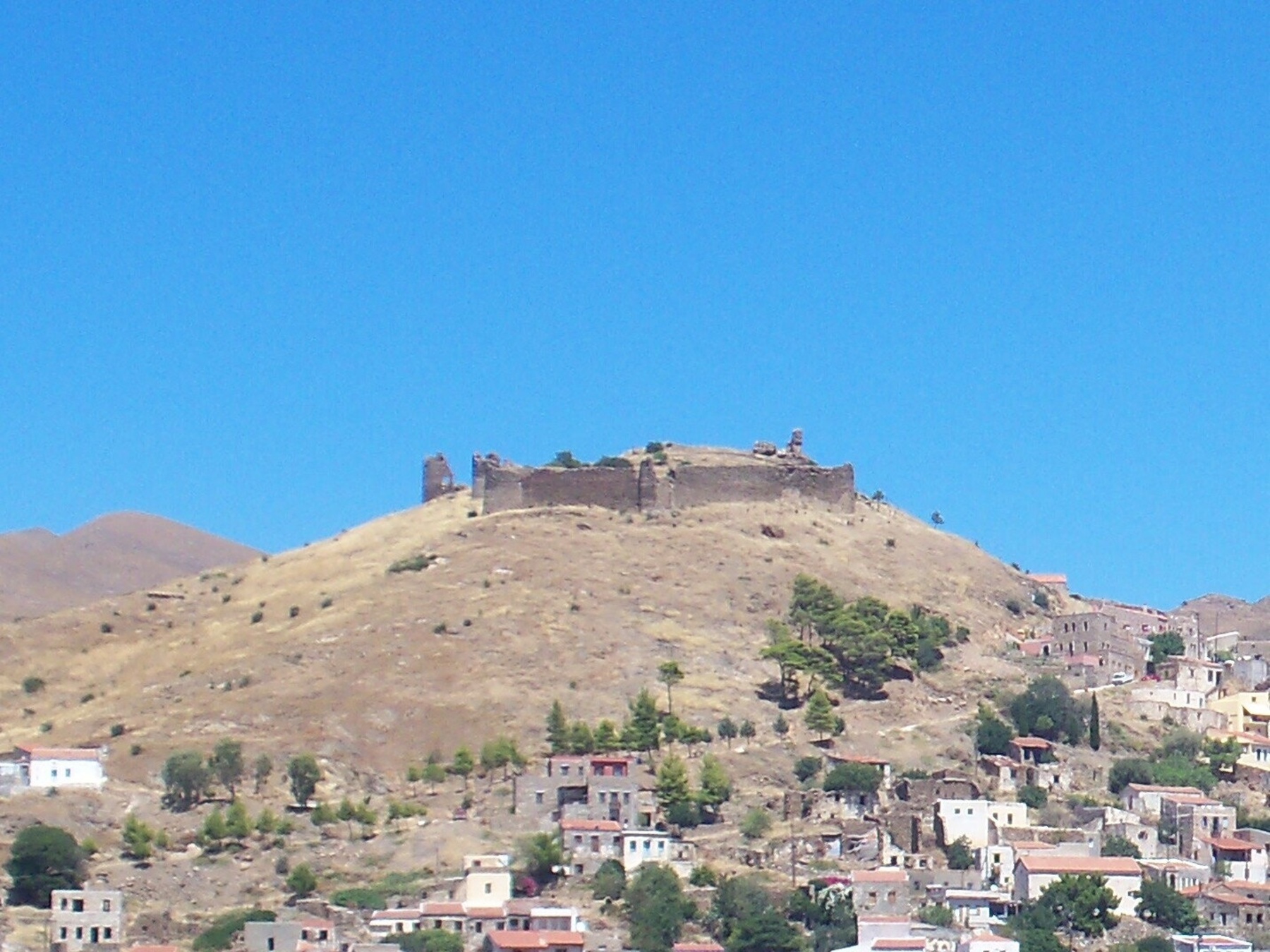
The castle’s six circular towers and enclosing walls formed a major defensive landmark in this part of Chios.
- Wine, vessels and an Ottoman konaki
The Archaeological Collection occupies a nineteenth-century mansion formerly used as the konaki of a local Ottoman judge.
- The valley and its watermills
The regional trail through the Malagkiotis valley connects Volissos with olive-growing ground, riparian vegetation and the surviving landscape of watermills.
Strategic role
A northwestern Chian village connecting a defensive height with rural production, local administration and nearby maritime access.
Amani’s inhabited center
Volissos occupies a hillside in northwestern Chios, with the castle above and routes toward the valley and coast below. This arrangement gives the place more than one scale. The military enclosure dominates the skyline, but the houses, churches and square belong to an inhabited community. The coastal settlement of Limnia is related to the village without being the same place. Reading these differences helps connect defense to ordinary movement and production rather than imagining an isolated fortress with an empty countryside around it.
A castle with uncertain beginnings
The castle’s six circular towers and enclosing walls formed a major defensive landmark in this part of Chios. Hellenic Heritage places construction in the eleventh century and the final form in the Genoese fifteenth century. Regional information treats the early date more cautiously and distinguishes it from a tradition crediting the sixth-century general Belisarius. The traditional attribution is not a secure foundation history. The surviving plan and reused or repaired fabric should be studied without assuming that broad political dates identify the age of every tower.
Wine, vessels and an Ottoman konaki
The Archaeological Collection occupies a nineteenth-century mansion formerly used as the konaki of a local Ottoman judge. Its exhibition focuses on Ariousios wine: transport and trade, the cult of Dionysus, and vessels used at drinking gatherings and other occasions. The building and exhibition therefore link two different histories. An administrative residence became a place for interpreting ancient production and exchange, while amphorae and drinking vessels bring the rural region into wider Mediterranean networks. The exhibition is distinct from the castle and has its own access arrangements.
The valley and its watermills
The regional trail through the Malagkiotis valley connects Volissos with olive-growing ground, riparian vegetation and the surviving landscape of watermills. These features help explain how work and resources sustained the village below its defended height. The route is not merely an extension of a castle walk: its length, surfaces and current condition need separate consideration. Following public paths also preserves the distinction between an interpreted rural landscape and fields or buildings still belonging to local owners.
Homeric tradition and the pilgrimage coast
Stories connecting Homer with Volissos form part of the village’s historical memory, but they do not establish that the poet lived in the medieval castle. The nearby shrine of Agia Markella supplies another, distinct sacred geography and remains an important pilgrimage destination for Chios. These associations should be presented as different kinds of connection: literary tradition, religious devotion and surviving architecture do not support identical historical conclusions. Together they explain why the locality matters beyond the age and form of the walls.
Seeing village, castle and collection separately
Allow time to walk the village as well as viewing the castle and, when available, the collection. The ascent involves uneven ground and exposed areas. As checked on 22 November 2026, Hellenic Heritage lists castle visits by appointment; the collection’s official directory also specifies winter visits by arrangement with the Ephorate. Confirm both individually before travel. Valley paths and the pilgrimage coast have their own conditions, and private buildings should be respected even when they contribute to the historic character of the setting.
Architecture
- Castle circuit with six circular towers
- Hillside village below the fortified height
- Nineteenth-century konaki reused for an archaeological collection
- Valley paths and watermill landscape
Timeline
- 11th century, probable Regional research accounts place the castle’s likely early construction in this period, distinct from older foundation traditions.
- 15th century Genoese work reshaped the inherited castle.
- 19th century The mansion now housing the collection served as an Ottoman judicial residence.
- Modern period The konaki was reused to interpret ancient wine production, trade and social practice.
Visiting today
Allow time to walk the village as well as viewing the castle and, when available, the collection. The ascent involves uneven ground and exposed areas. As checked on 22 November 2026, Hellenic Heritage lists castle visits by appointment; the collection’s official directory also specifies winter visits by arrangement with the Ephorate. Confirm both individually before travel. Valley paths and the pilgrimage coast have their own conditions, and private buildings should be respected even when they contribute to the historic character of the setting.
Historical contexts
- Late Byzantium
- Genoese Aegean
- Ottoman Period
- Rise of Modern Greece
- Harbor Defense and Sea-Lane Control
Expeditions
- Expedition III
Images
References
Related places
Topics
- Volissos
- Historical Landscape
- Material Culture
- Visitor Context