Overview
Few Greek islands preserve such a long and legible sequence of military landscapes as Leros. Its sheltered bays encouraged settlement from prehistoric times, while ancient fortified sites at Partheni and Xerokambos controlled strategic approaches. The medieval Castle of Panagia on Pitiki Hill became the island's principal stronghold and was repaired by the Knights of St John after their occupation of Leros in the early fourteenth century. The twentieth century added an entirely different defensive system. After Italy occupied Leros in 1912, the deep natural harbor at Lakki was developed as Portolago, a naval base, air-sea installation and planned rationalist town. Dozens of artillery positions, tunnels and military buildings transformed the island into a fortified naval complex. When Italy left the Axis in September 1943, British forces reinforced the Italian garrison; German air, naval and airborne forces then attacked in the Battle of Leros. The island's military remains, museums and monuments make Leros an exceptional place to study the evolution of defense from acropolis to coastal battery.
Highlights
- Castle of Panagia
The island's dominant medieval fortress preserves Byzantine and Hospitaller layers above Platanos and Panteli.
- Ancient Palaiokastro
At Xerokambos, ancient acropolis walls and early Christian remains reveal defense long before the medieval castle.
- Lakki / Portolago
A rare planned Italian rationalist town built around one of the Mediterranean's great natural naval harbors.
- Italian Coastal Fortress
Batteries, tunnels, magazines and observation posts transformed Leros into a heavily armed naval stronghold.
- Battle of Leros
The 1943 German assault combined prolonged air attack with amphibious and airborne operations against British and Italian defenders.
- Leros War Museum
Restored wartime tunnels at Merikia interpret the island's extraordinary Second World War landscape.
- Vasilissa Olga
The sinking of the Greek destroyer in Lakki Bay on 26 September 1943 remains a central site of Greek wartime memory.
- Panagia tou Kastrou
The castle sanctuary and its revered icon transformed the medieval fortress into the island's principal religious symbol.
- Partheni and Artemis
Prehistoric remains, ancient sacred traditions and later Christian monuments make Partheni one of the island's deepest archaeological landscapes.
- Agia Kioura
Wall paintings made by political prisoners during the 1967–1974 dictatorship preserve a powerful modern chapter of Lerian memory.
- Beleni Tower
The restored mansion at Alinda houses the Folkloric and Historical Museum and collections devoted to island culture.
- Island-Wide Battlefield
Leros's military history remains visible across ridges, harbors and tunnels rather than being confined to a single monument.
Strategic role
A naturally sheltered Dodecanese island whose harbors, hilltop castles, coastal batteries and air-sea installations made it strategically important from antiquity through the Second World War.
Overview: An Island Built for Defense
Leros combines two strategic advantages that repeatedly attracted military attention: an intricate coastline with numerous anchorages and a series of hills that command those harbors and the surrounding sea. This geography produced several overlapping defensive landscapes. Ancient communities fortified commanding sites; Byzantine and Hospitaller rulers concentrated power in hilltop castles; and Italian planners in the twentieth century converted the deep natural harbor of Lakki into a naval base surrounded by batteries, tunnels, observation posts and air facilities. Unlike islands where one castle dominates the historical narrative, Leros is best understood as a complete fortified island whose defensive geography changed with weapons, fleets and political regimes.
Ancient Leros: Partheni, Artemis and Palaiokastro
Archaeological evidence shows occupation on Leros from prehistoric times. The Municipality of Leros identifies a Neolithic settlement at Partheni and records later evidence for Classical and Hellenistic occupation. Ancient writers associated Partheni with a sanctuary of Artemis, although the precise location of the temple has not been securely identified. Early Christian churches reused ancient material in the area, illustrating the continuity of sacred landscapes. At Xerokambos, Palaiokastro—also called the Castle of Lepida—occupies the remains of an ancient acropolis. Surviving wall fragments and remains of an early Christian basilica make the site one of the clearest places on Leros where ancient fortification, late antique Christianity and later defensive use overlap.
The Castle of Panagia
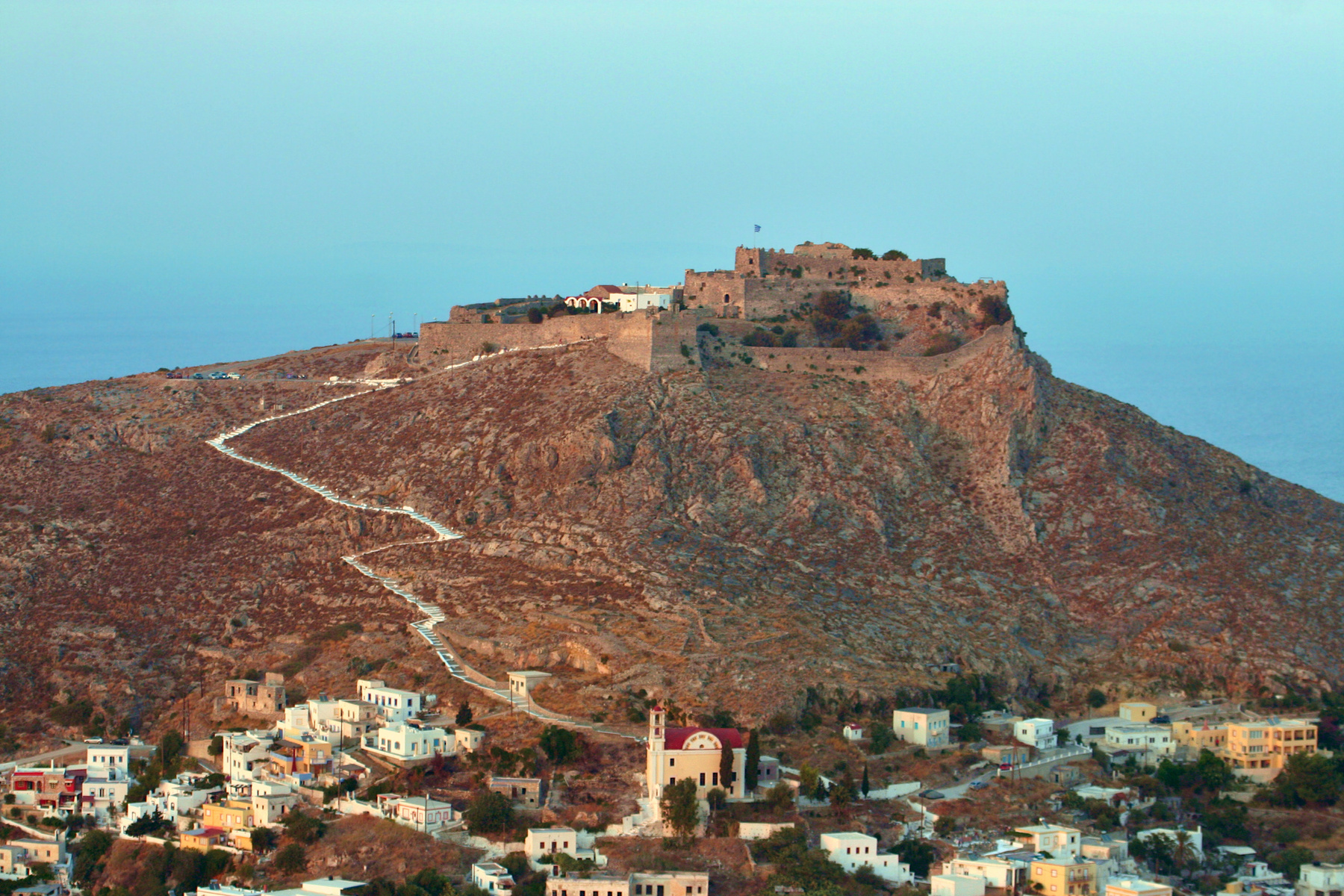
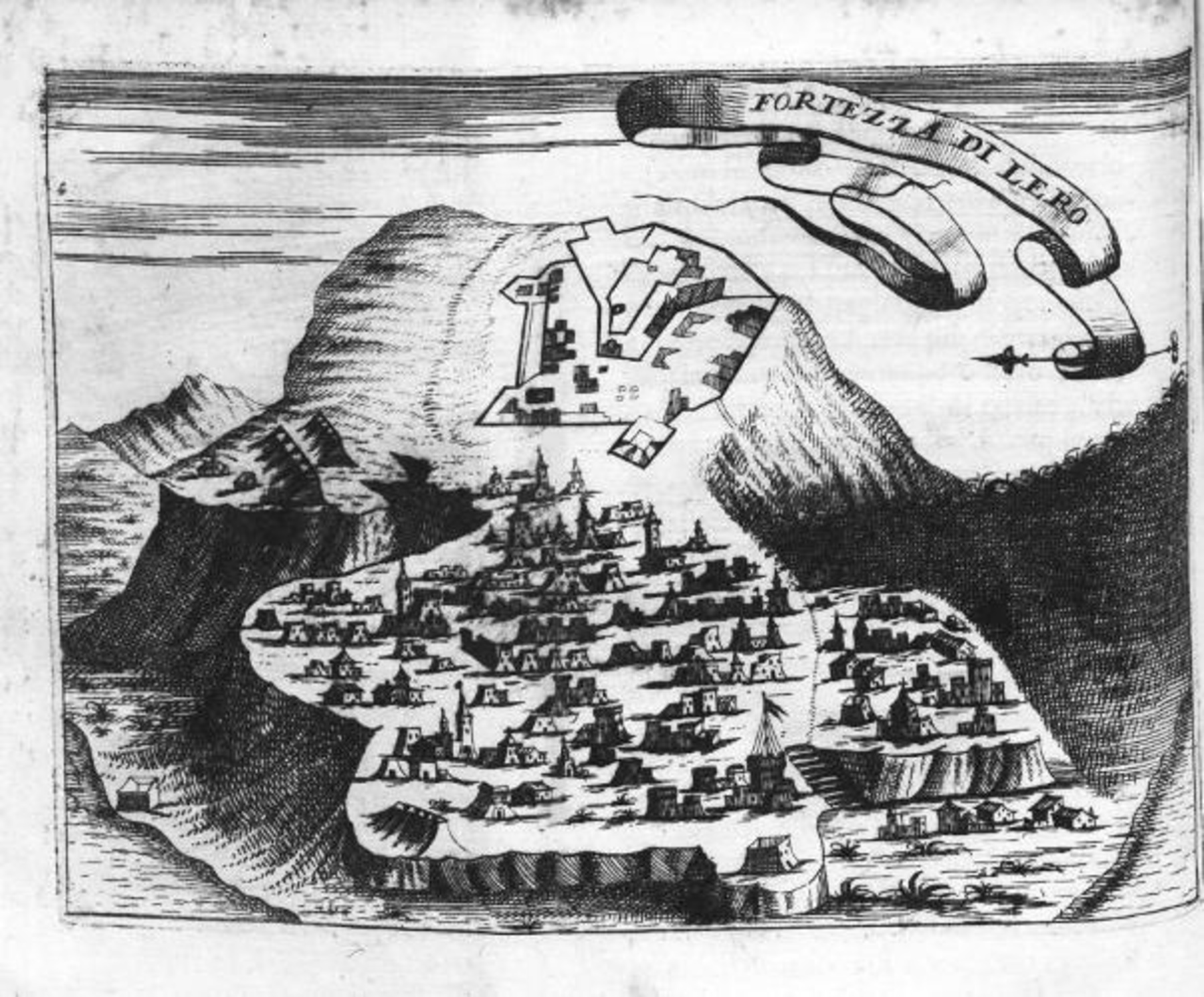
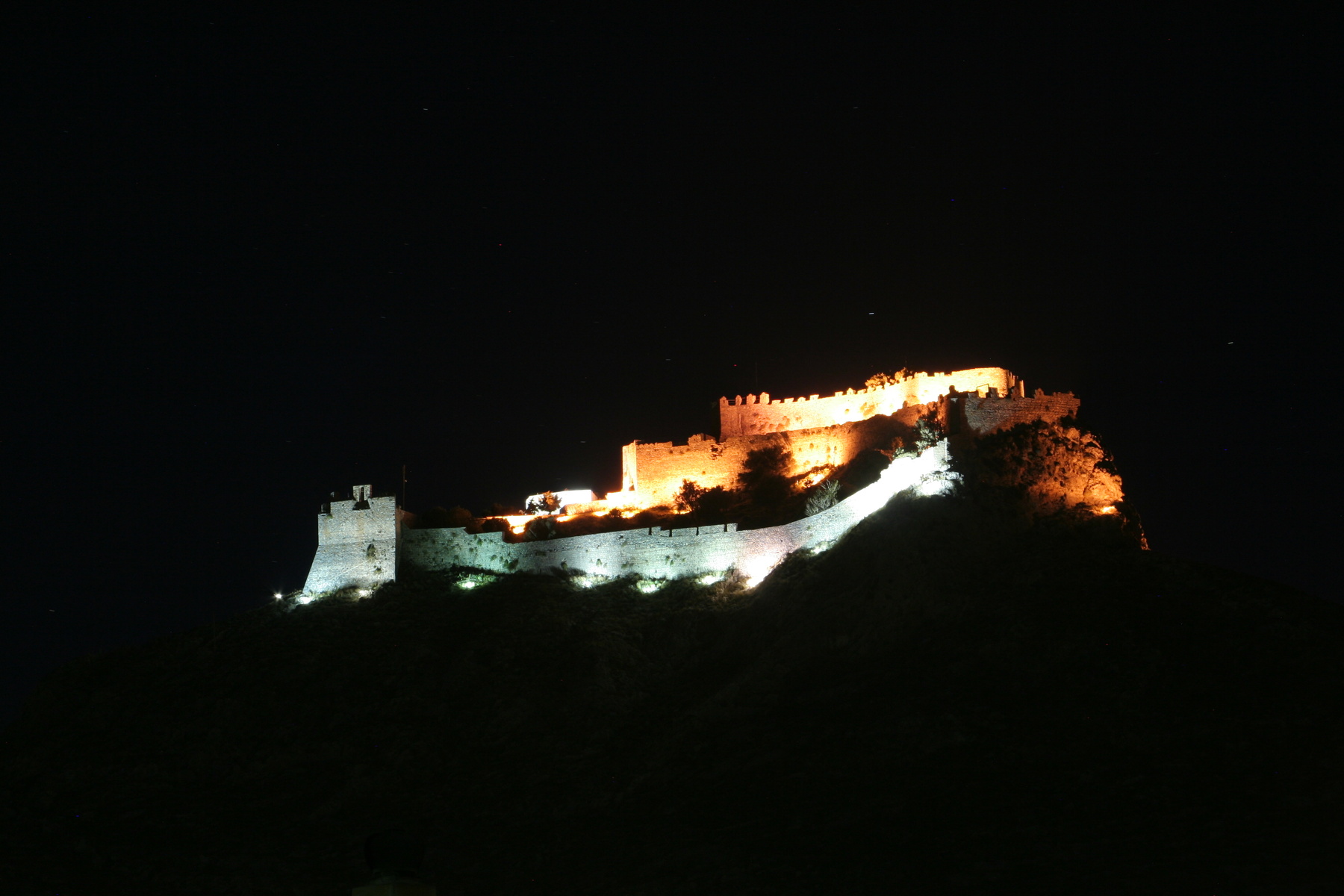
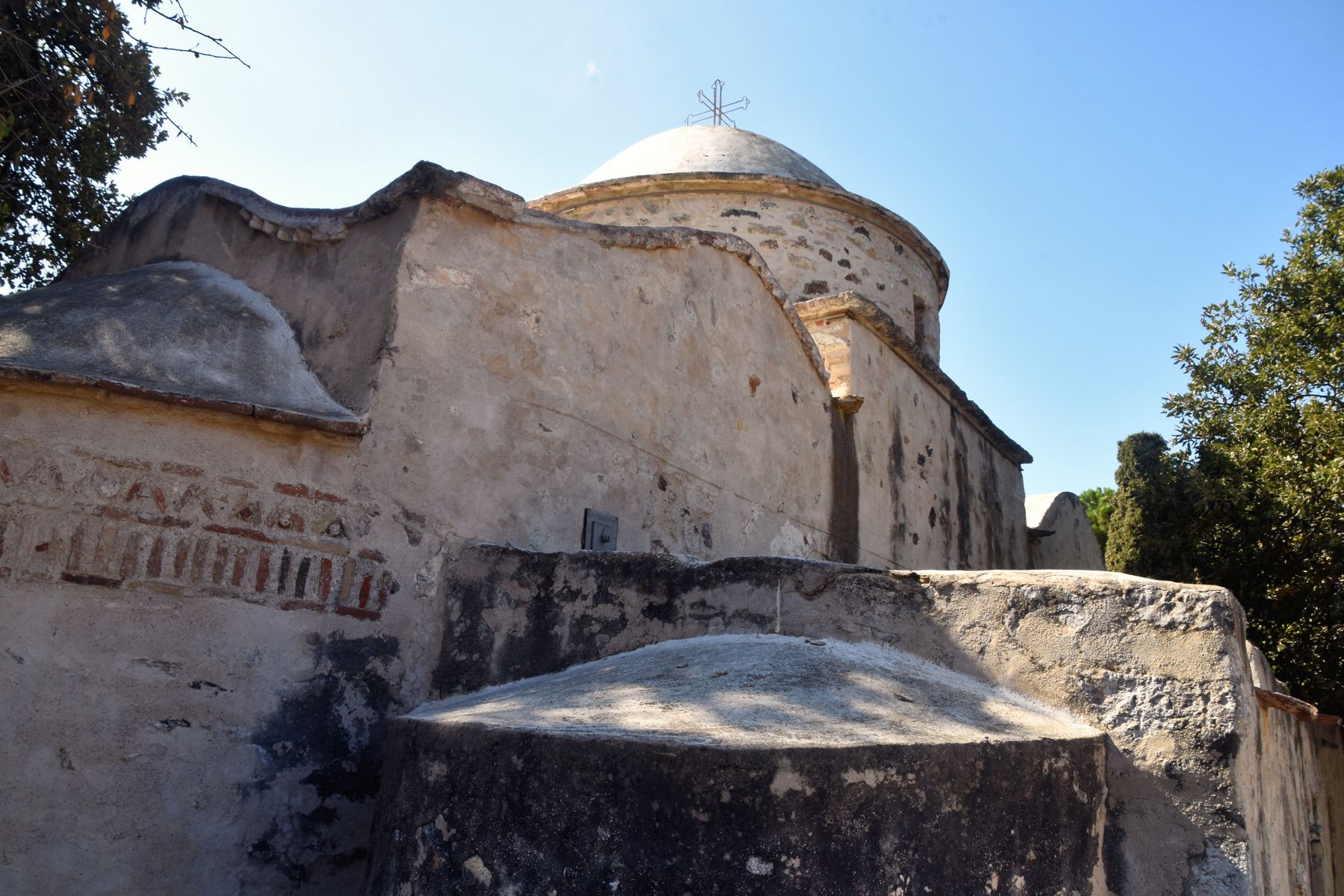
The Castle of Panagia, also known as Panteli Castle or Kastro, dominates Pitiki Hill above Platanos, Agia Marina and Panteli. The fortress developed on an older defensive site and became the principal medieval stronghold of Leros. Its walls enclose successive defensive spaces, cisterns and underground rooms, taking advantage of the steep hill and commanding views over both coasts. From the settlement below, a long stepped approach climbs toward the fortress. The castle's position made it both military center and symbol: even after its strategic importance declined, it remained visually and culturally dominant over the island's traditional capital.
Knights Hospitaller and Ottoman Leros
The Knights of St John of Rhodes took control of Leros in the early fourteenth century as part of their Dodecanese state. Municipal historical material records that they repaired and modified the island's main fortress during their rule. Leros remained within the Hospitaller defensive network until the Ottoman conquest of the Dodecanese in the early sixteenth century; the island surrendered to Ottoman authority in 1523. Under the Ottomans, Leros retained substantial local privileges and the castle continued to frame the island's administrative and religious landscape even as warfare and settlement patterns changed.
Panagia tou Kastrou: Fortress and Pilgrimage
On the western side of the castle stands the church of Panagia tou Kastrou, one of the strongest symbols of Lerian identity. Local tradition connects the sanctuary with a miraculous icon of the Virgin that repeatedly returned to the fortress after attempts to remove it. The present church was rebuilt in 1669 and altered further in the eighteenth and nineteenth centuries. The revered icon of the Virgin and Child is housed in an elaborate precious-metal covering, and an ecclesiastical museum beside the church preserves manuscripts, icons, vestments and other religious objects. The complex demonstrates how an obsolete military stronghold could remain central to community identity through pilgrimage, memory and worship.
Italian Leros and the Making of a Naval Fortress
Italy occupied Leros in May 1912 during the Italo-Turkish War and retained the Dodecanese. Leros's deep, enclosed harbor at Lakki made it particularly valuable for naval development. The Italians renamed the area Portolago and built a major naval base, seaplane facilities, barracks, workshops and extensive coastal defenses. Municipal historical material states that by 1930 the island possessed 26 permanent batteries with 115 guns, while a naval base with thousands of personnel and an airfield were established. Batteries were dispersed across headlands and high ground so that overlapping fields of fire could protect the anchorages and sea approaches. Tunnels, magazines, command posts and observation positions remain scattered across the island, turning the whole landscape into a military archaeological site.
Lakki / Portolago: Rationalism in the Dodecanese
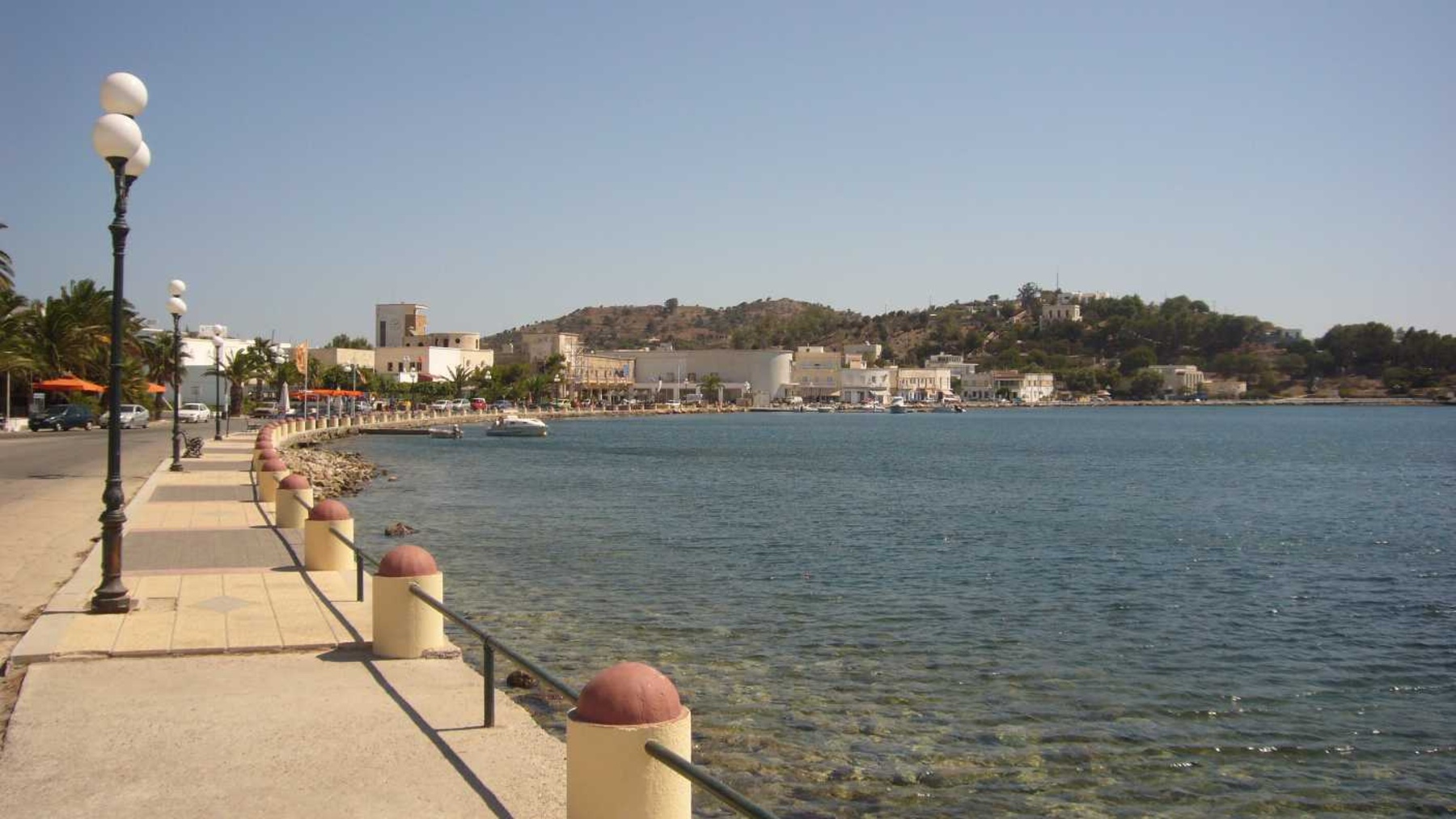
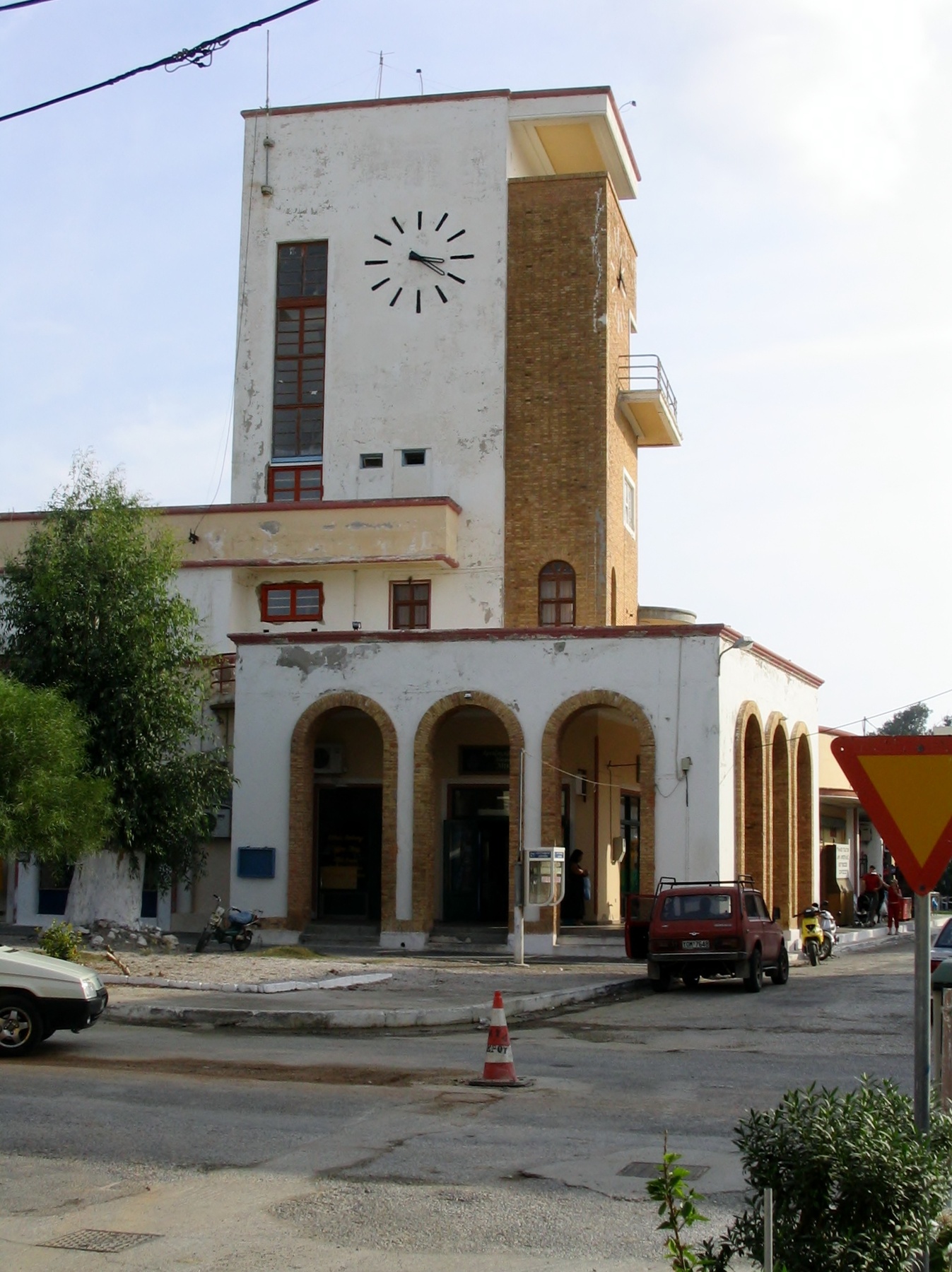
The modern town of Lakki is one of the most unusual architectural ensembles in Greece. Developed by the Italian administration as Portolago during the interwar period, it paired naval planning with a new civic center. Municipal sources associate the design with architects Rodolfo Petracco and Armando Bernabiti and describe a mixture of rationalist and related modern architectural approaches. The market and clock tower, school, hospital, naval administration buildings, barracks, former Hotel Roma and the church of St Nicholas created a deliberately modern urban landscape radically different from the whitewashed settlements elsewhere on the island. Lakki is therefore essential to understanding the Italian project on Leros: it was simultaneously naval base, colonial showcase and planned modern town.
The Battle of Leros, 1943
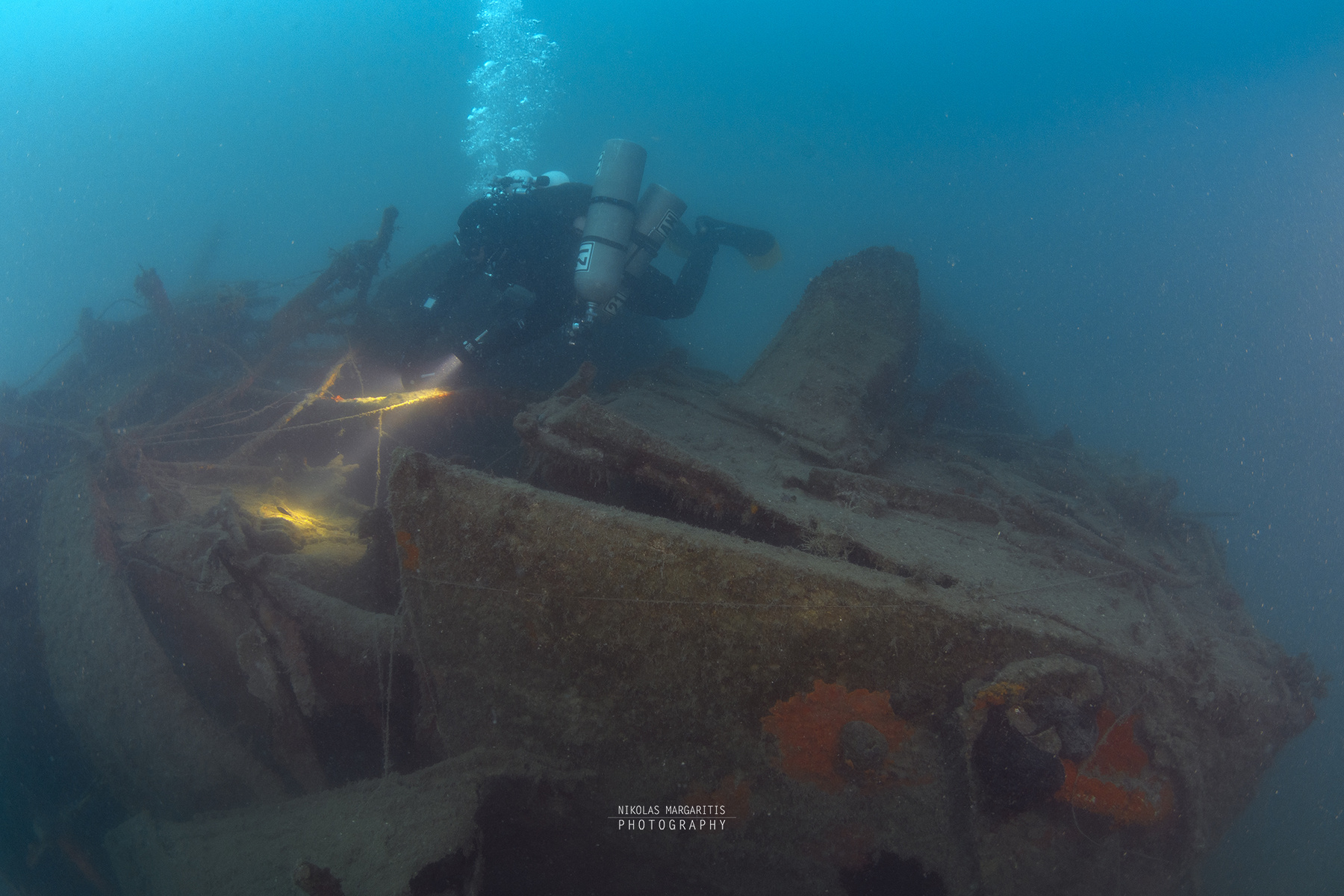
The most intense modern battle for the island followed Italy's armistice with the Allies on 3 September 1943. British forces arrived to reinforce the Italian garrison and attempted to hold Leros as part of the wider Dodecanese campaign. German aircraft subjected the island to repeated bombardment before German forces launched amphibious and airborne assaults in November. Imperial War Museums records document the German assault and the capture of Allied troops, while British regimental histories confirm the loss of units on the island. The defenders surrendered on 16 November 1943. Fighting left deep marks on the island: gun positions, wrecks, tunnels, bomb damage and battlefield sites remain unusually visible. The sinking of the Greek destroyer Vasilissa Olga in Lakki Bay on 26 September 1943 became one of the battle's most enduring Greek memorials.
The Guns, Tunnels and War Museum
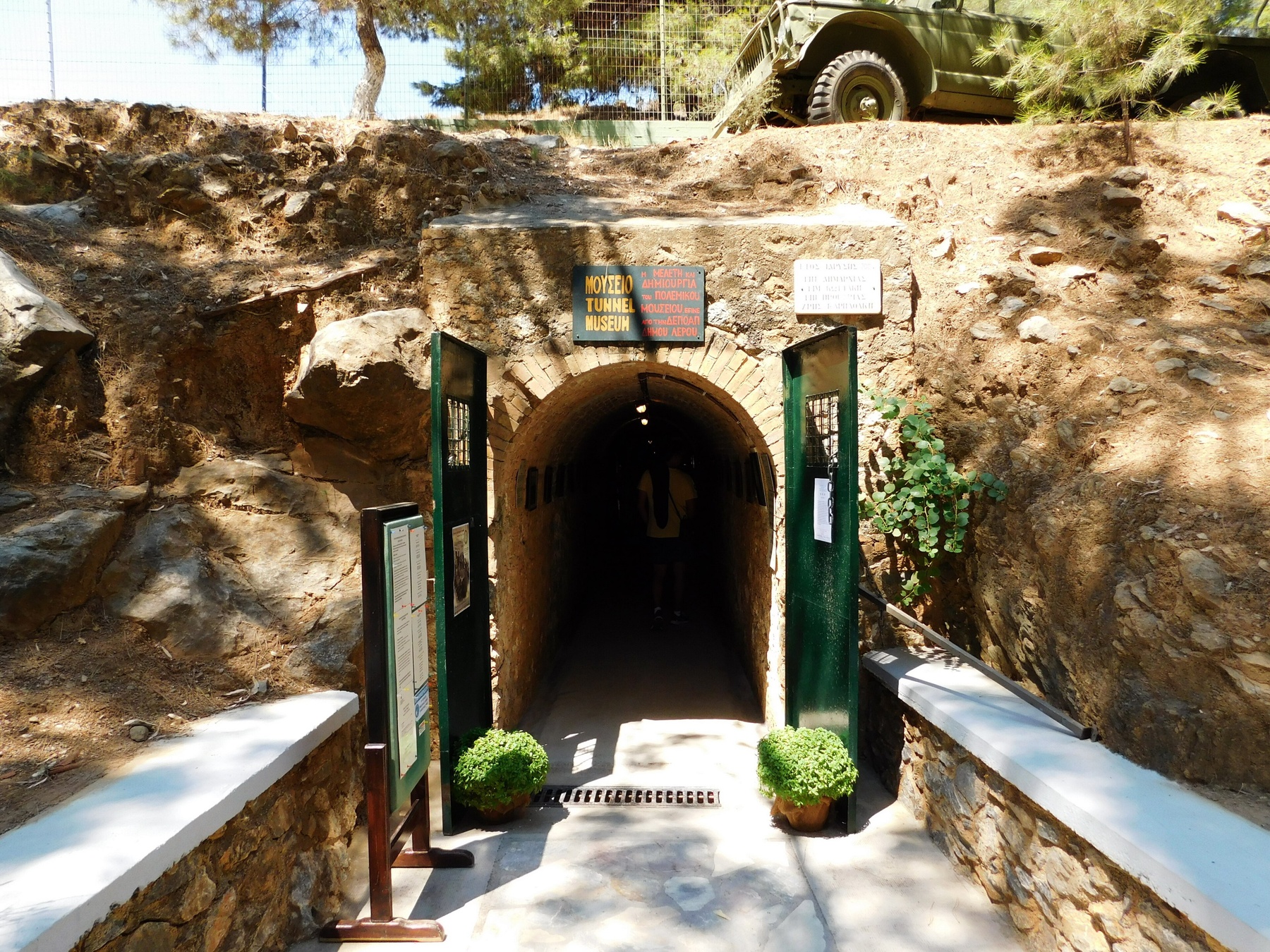
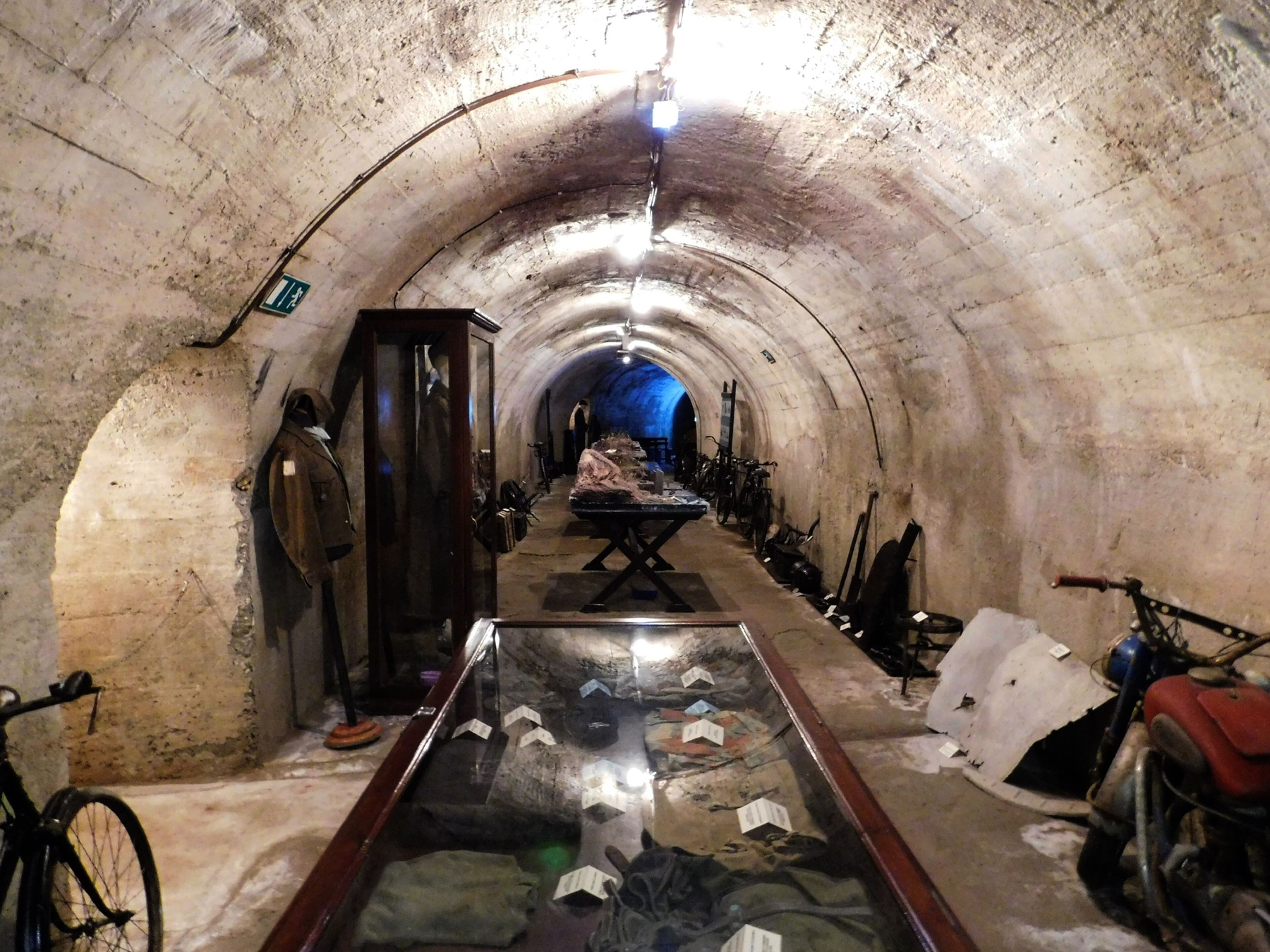
Leros's wartime landscape extends far beyond the surviving guns themselves. Batteries required observation stations, ammunition magazines, underground shelters, roads and communication networks. At Merikia near Lakki, restored military tunnels now house the Leros War Museum, where weapons, uniforms, photographs and recovered battlefield material interpret the island's role in the Second World War. Elsewhere, emplacements survive on high ground such as Vigla and around the harbor approaches. These remains allow visitors to understand the Battle of Leros spatially: the island was defended as a network, with artillery controlling sea lanes while dispersed positions attempted to survive air attack.
Partheni, Political Imprisonment and Agia Kioura
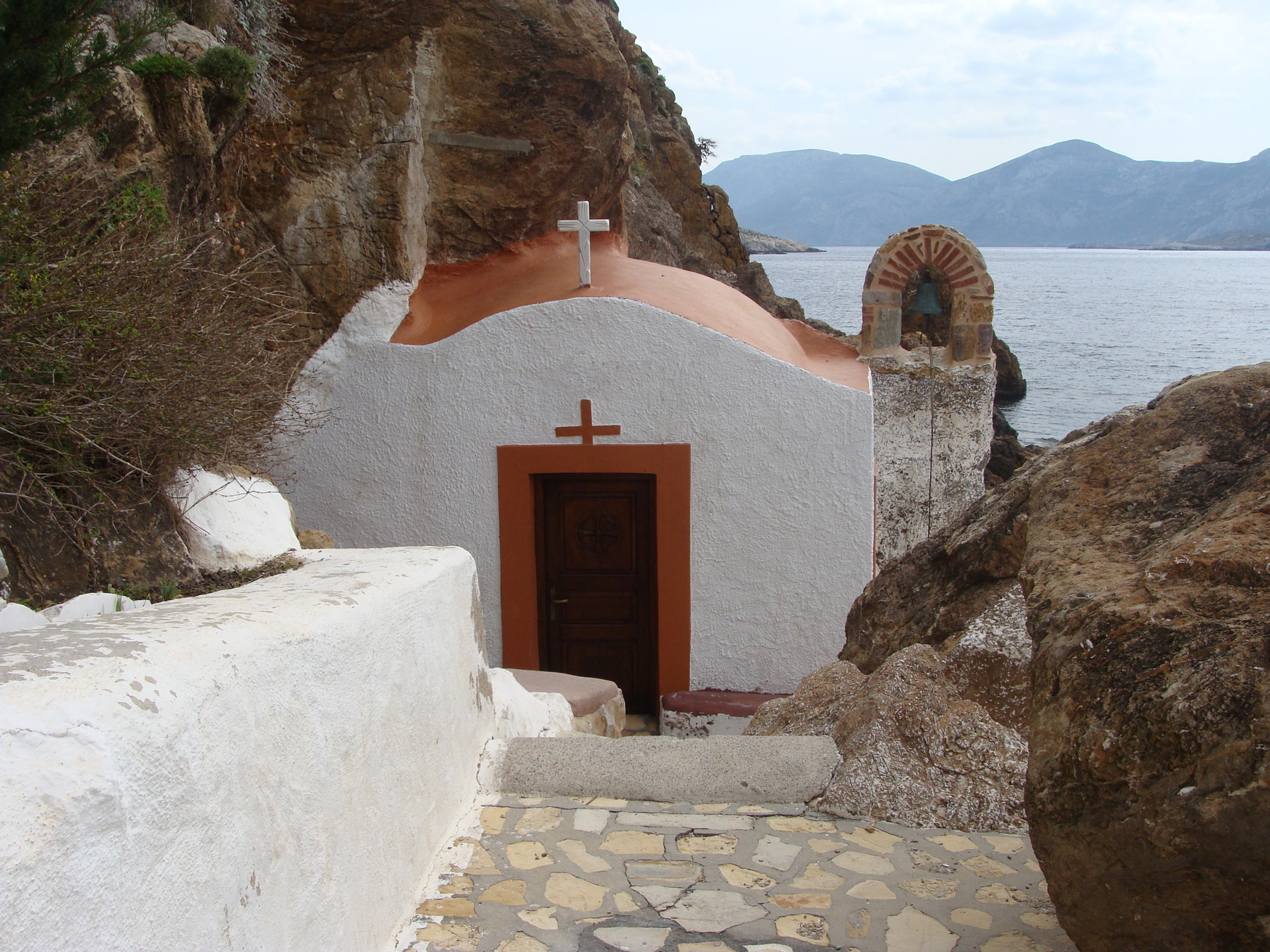
Leros's military infrastructure acquired a darker postwar role. During Greece's military dictatorship of 1967–1974, former Italian military facilities at Lakki and Partheni were used as detention camps for political prisoners. The Municipality records that thousands passed through the Partheni camp. Nearby, the small church of Agia Kioura became a remarkable monument to this period when imprisoned artists and intellectuals painted religious scenes on its walls. The paintings are now protected as objects of historical significance. These sites extend the island's history of fortification into the politics of the twentieth century, showing how military spaces can be repurposed for control long after their original strategic role ends.
Museums, Churches and Cultural Memory
The island's historical identity is preserved through institutions as well as ruins. The Archaeological Museum of Leros presents material from prehistoric, Classical, Hellenistic, Roman, Byzantine and medieval phases. The restored Beleni Tower at Alinda houses the Folkloric and Historical Museum and collections documenting local life. The ecclesiastical museum at the Castle of Panagia preserves religious manuscripts, icons and vestments. Across Leros, churches such as Agios Isidoros, Panagia Kavouradena and Agios Ioannis Theologos connect the island's military landscapes with an equally persistent religious and maritime culture. Memorials at Lakki commemorate wartime losses, including the sailors of Vasilissa Olga.
Why Visit
Leros rewards visitors who want to understand how defense evolves through time. Within a single island it is possible to move from ancient acropolis walls to a Byzantine-Hospitaller castle, from Ottoman-era religious continuity to an Italian rationalist naval town, and from massive coastal artillery positions to the battlefield of 1943. The experience is unusually immersive because the twentieth-century infrastructure survives across the landscape rather than inside one museum. Combined with the Castle of Panagia, Lakki, the War Museum, Palaiokastro, Partheni and the island's monuments of political memory, Leros offers one of the most comprehensive military-historical journeys in the Aegean.
Architecture
- Ancient acropolis and fortification remains at Xerokambos
- Prehistoric and ancient archaeological landscape at Partheni
- Byzantine and Hospitaller walls, towers, gates, cisterns and underground spaces at the Castle of Panagia
- Fortress-church complex centered on Panagia tou Kastrou
- Bourtzi/Bouzi harbor fortification at Agia Marina
- Italian coastal artillery batteries, observation posts, magazines and tunnel networks
- Lakki/Portolago rationalist civic and military architecture
- Italian naval-base and seaplane-support infrastructure
- Second World War defensive positions surviving across ridges such as Vigla and Merovigli
- Military tunnels adapted as the Leros War Museum
Timeline
- Prehistoric period Settlement is attested on Leros; archaeological finds at Partheni include prehistoric remains.
- Classical–Hellenistic periods Ancient communities occupied Leros, with important sites at Partheni and the acropolis above Xerokambos.
- Early Christian period Christian basilicas and churches reused parts of ancient sacred and fortified landscapes.
- Byzantine period The principal hilltop fortress above Platanos developed into the island's dominant medieval stronghold.
- 1309 The Knights of St John established control over Leros as part of their Dodecanese territories.
- 14th–early 16th centuries The Hospitallers repaired and modified the Castle of Leros within their regional defensive network.
- 1523 Leros submitted to Ottoman rule after the fall of Hospitaller Rhodes.
- 1669 The church of Panagia tou Kastrou was rebuilt within the castle.
- 1821–1830 Leros participated in the Greek revolutionary period and was briefly associated with the emerging Greek state before the Dodecanese returned to Ottoman sovereignty.
- 13 May 1912 Italian forces occupied Leros during the Italo-Turkish War.
- 1920s–1930s Italy developed Leros as a heavily fortified naval and air base centered on Lakki/Portolago.
- By 1930 Municipal historical records state that 26 permanent artillery batteries with 115 guns had been constructed on the island.
- 1930s Portolago was developed as a planned modern town with major rationalist civic and military architecture.
- 3 September 1943 Italy concluded an armistice with the Allies; British forces moved to reinforce the Italian garrison on Leros.
- 26 September 1943 The Greek destroyer Vasilissa Olga was sunk by German air attack in Lakki Bay.
- September–November 1943 German air attacks repeatedly struck Leros, its harbor facilities, batteries and settlements.
- 12–16 November 1943 German amphibious and airborne forces assaulted Leros; the Allied garrison surrendered on 16 November.
- 1945 German occupation ended with the final Axis defeat in the Aegean.
- 1947 Leros and the Dodecanese were formally incorporated into Greece.
- 1967–1974 Former military facilities at Partheni and Lakki were used as detention sites for political prisoners during the Greek military dictatorship.
- Late 20th–21st centuries Military tunnels, monuments and buildings were increasingly conserved and interpreted through museums, memorials and historical initiatives.
Visiting today
Leros should be explored as a network of sites rather than a single monument. The Castle of Panagia, Lakki's interwar architecture, the Tunnel War Museum at Merikia, the Palaiokastro at Xerokambos, Partheni's archaeological landscape and the island's surviving coastal batteries each reveal a different phase. Many wartime positions are outdoors, isolated or on rough terrain; access, ownership and safety vary, so visitors should use marked routes and current local guidance rather than entering unmaintained military structures independently.
Historical contexts
- Ancient Aegean Defense
- Byzantine Dodecanese
- Knights Hospitaller
- Ottoman Period
- Italian Dodecanese
- Second World War
- Dodecanese Campaign
- Modern Greek Memory
Expedition guides
Images
References
- Municipality of Leros — Leros and Culture / Cultural-Historical Environment
- Municipality of Leros — Villages and Principal Historic Sites
- Municipality of Leros — Sightseeing and Museums
- Imperial War Museums — The German Campaign in the Greek Islands: Leros
- Imperial War Museums — John Murray McSwiney oral history, Leros 1943
- Imperial War Museums — Trevor Tipping oral history, including Vasilissa Olga and Leros
- National Army Museum — The Royal Irish Fusiliers
- National Army Museum — The Queen's Own Royal West Kent Regiment
Related places
Related Stops
Topics
- Fortified Island
- Dodecanese
- Ancient Defense
- Byzantine
- Knights Hospitaller
- Ottoman
- Italian Dodecanese
- Naval Base
- Coastal Artillery
- Military Tunnels
- Rationalist Architecture
- Battle Of Leros
- World War Ii
- Dodecanese Campaign
- Political Memory
- Living Heritage