Highlights
- A town facing its bay
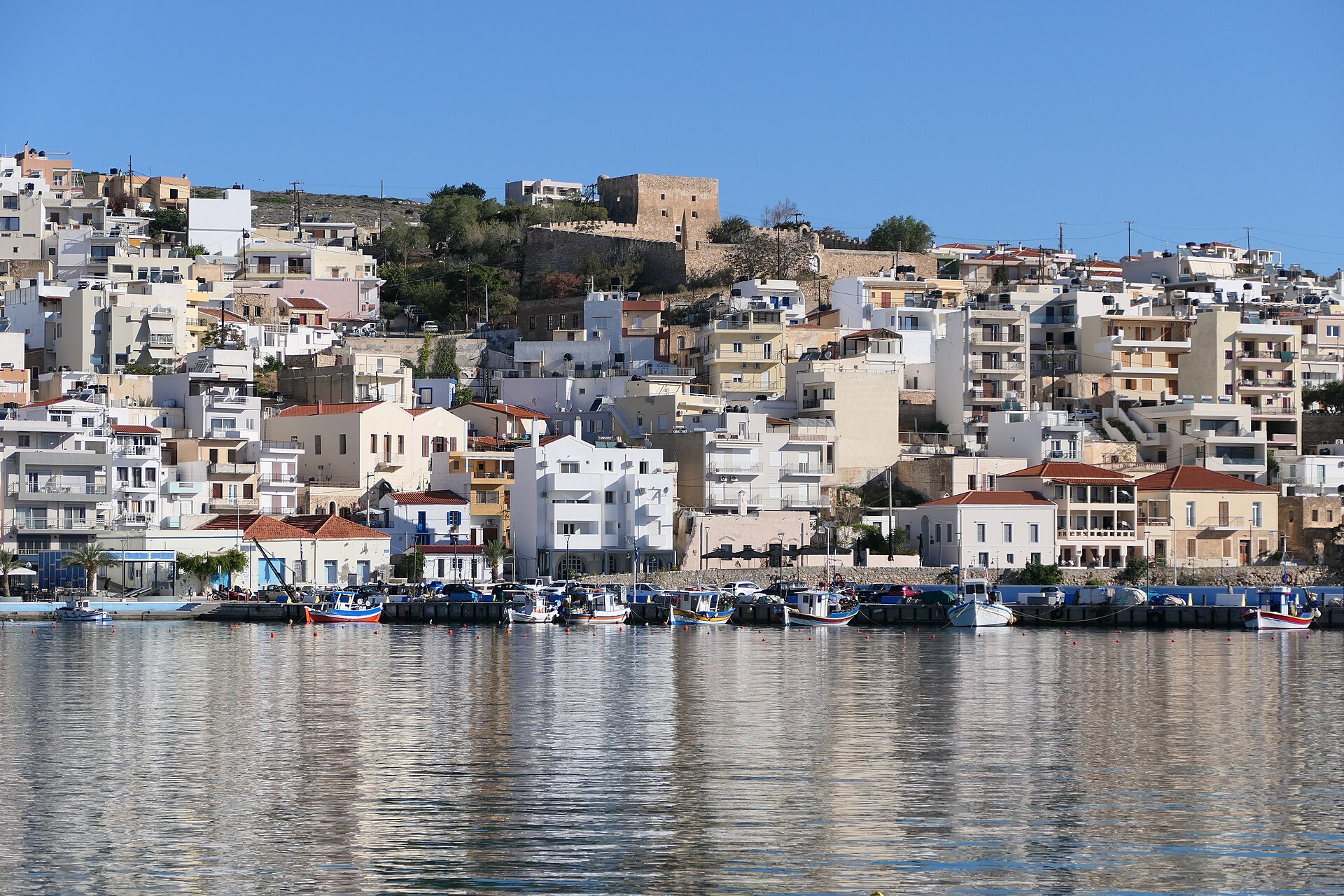
Sitia’s waterfront and the rise crowned by Kazarma establish the town’s principal spatial relationship.
- Kazarma and successive military uses
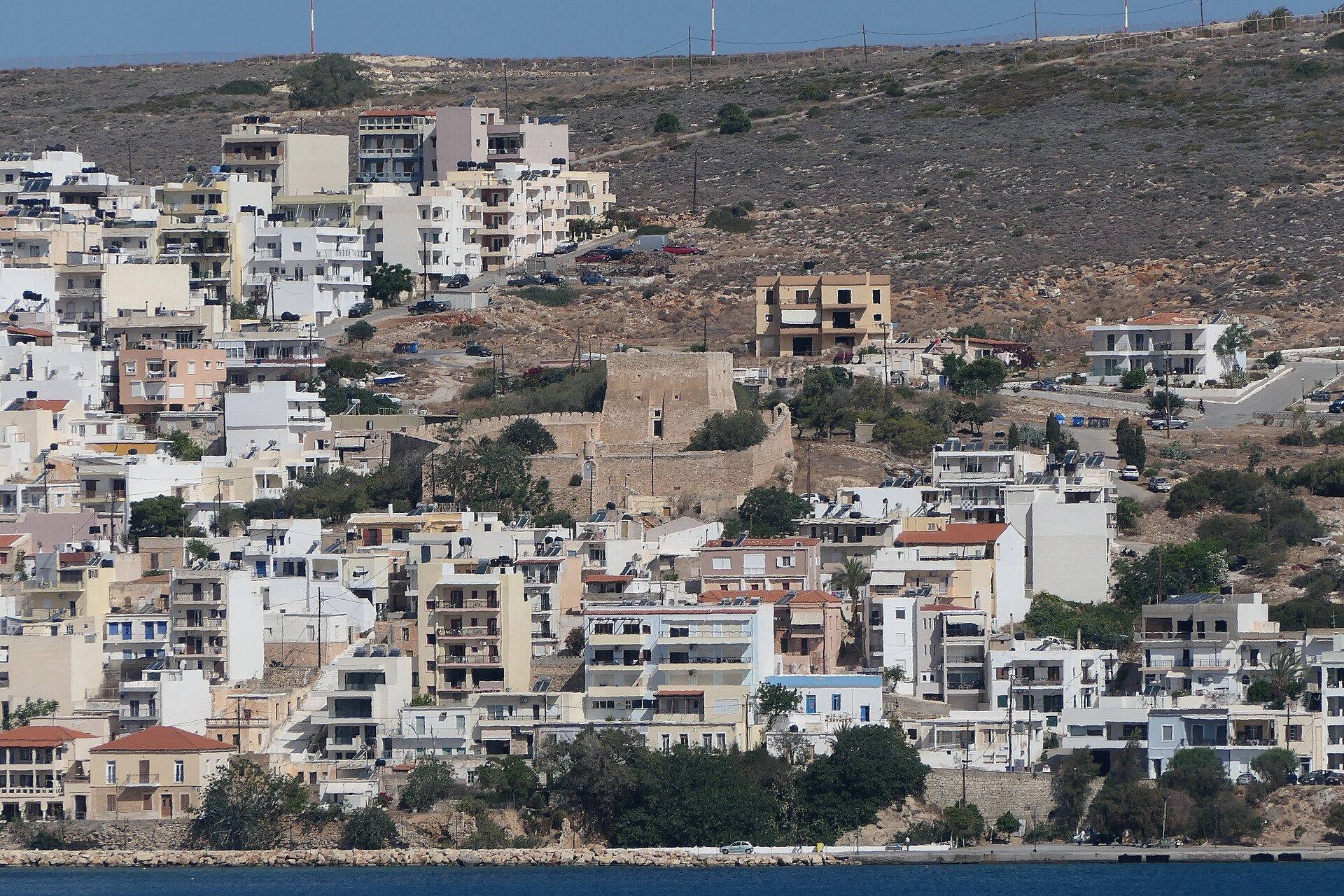
Kazarma’s name derives from the Venetian military establishment, but the surviving building also incorporates later changes.
- A town interrupted and rebuilt
The earthquake of 1508 and the raid of 1538 damaged the Venetian town.
- A regional past in the museum
The Archaeological Museum, inaugurated in 1984, presents finds from the wider eastern Cretan district over several millennia.
Strategic role
An eastern Cretan harbor town linking a rebuilt urban landscape with surviving defenses and a regional archaeological collection.
A town facing its bay
Sitia’s waterfront and the rise crowned by Kazarma establish the town’s principal spatial relationship. The fortress is a remnant of an earlier urban defense, while much of the inhabited town belongs to later rebuilding. This distinction helps explain why a conspicuous medieval landmark can stand above streets that do not preserve a complete medieval fabric. The harbor links the place with a wider eastern Cretan region, but remote archaeological sites should not be presented as if they were all within a short walk of the town center.
Kazarma and successive military uses
Kazarma’s name derives from the Venetian military establishment, but the surviving building also incorporates later changes. Hellenic Heritage describes a fortress built over Byzantine remains and altered after repeated damage. The municipal account identifies Ottoman additions, including the small domed lookout features. Look for inherited enclosure, altered upper elements and restored fabric rather than assigning the entire silhouette to one date. Its commanding place above the bay explains military and administrative authority without suggesting that all the town’s lost defenses remain visible.
A town interrupted and rebuilt
The earthquake of 1508 and the raid of 1538 damaged the Venetian town. The municipal history records the razing of remaining buildings in 1651 and a much later rebuilding around 1870, when the proposed name Avnie did not displace Sitia in local use. The long interval is central to interpreting the streets below the castle. Urban history here is not simply a list of regimes: destruction changed what could survive, and later rebuilding created another town while retaining a name and relationship with the bay.
A regional past in the museum
The Archaeological Museum, inaugurated in 1984, presents finds from the wider eastern Cretan district over several millennia. Material from Kato Zakros and the celebrated Palaikastro Kouros connect the town with major Minoan places beyond it. The small figure’s precious materials demonstrate the technical and ritual ambitions of Bronze Age craftsmanship. These collections do not prove that the same objects or institutions once occupied modern Sitia’s center. Their value is to make the regional landscape intelligible before or after visits to individual sites.
Local memory and cultural institutions
The memory of Vitsentzos Kornaros gives Sitia another cultural focus. Kazarma has hosted summer performances within the Kornareia program, adapting an old military space for public cultural gatherings. The town’s folklore and historical collections offer a different perspective from the archaeological museum, concentrating on later local life. These institutions should be distinguished rather than merged into a single museum visit. Together they show how a rebuilt town constructs connections with both ancient material heritage and more recent communal memory.
Castle, museum and waterfront have separate rhythms
Begin with the waterfront and the relationship of the town to Kazarma, then visit managed institutions according to their own arrangements. As checked on 22 November 2026, Hellenic Heritage lists Kazarma as closed during the winter period from November through March; the archaeological museum has a separate winter schedule. Confirm any later changes before travel. An open seafront and a visible fortress exterior do not imply access to the enclosure. Distant sites in the Sitia region require their own journeys and access checks.
Architecture
- Kazarma fortress above the harbor town
- Inherited fortification with Ottoman additions and modern restoration
- Urban streets substantially shaped by later rebuilding
- Regional archaeological and local cultural collections
Timeline
- Byzantine period A predecessor urban settlement occupied the area later fortified under Venice.
- 1508 A severe earthquake damaged the town.
- 1538 A raid associated with Barbarossa brought further destruction.
- 1651 Municipal history records the razing of the remaining town.
- Around 1870 The town was rebuilt on its earlier site.
- 1984 The Archaeological Museum opened with collections from the wider region.
Visiting today
Begin with the waterfront and the relationship of the town to Kazarma, then visit managed institutions according to their own arrangements. As checked on 22 November 2026, Hellenic Heritage lists Kazarma as closed during the winter period from November through March; the archaeological museum has a separate winter schedule. Confirm any later changes before travel. An open seafront and a visible fortress exterior do not imply access to the enclosure. Distant sites in the Sitia region require their own journeys and access checks.
Historical contexts
- Venetian Maritime Empire
- Ottoman Period
- Rise of Modern Greece
- Harbor Defense and Sea-Lane Control
Expeditions
- Expedition I
Images
References
Related places
Topics
- Sitia
- Historical Landscape
- Material Culture
- Visitor Context