Overview
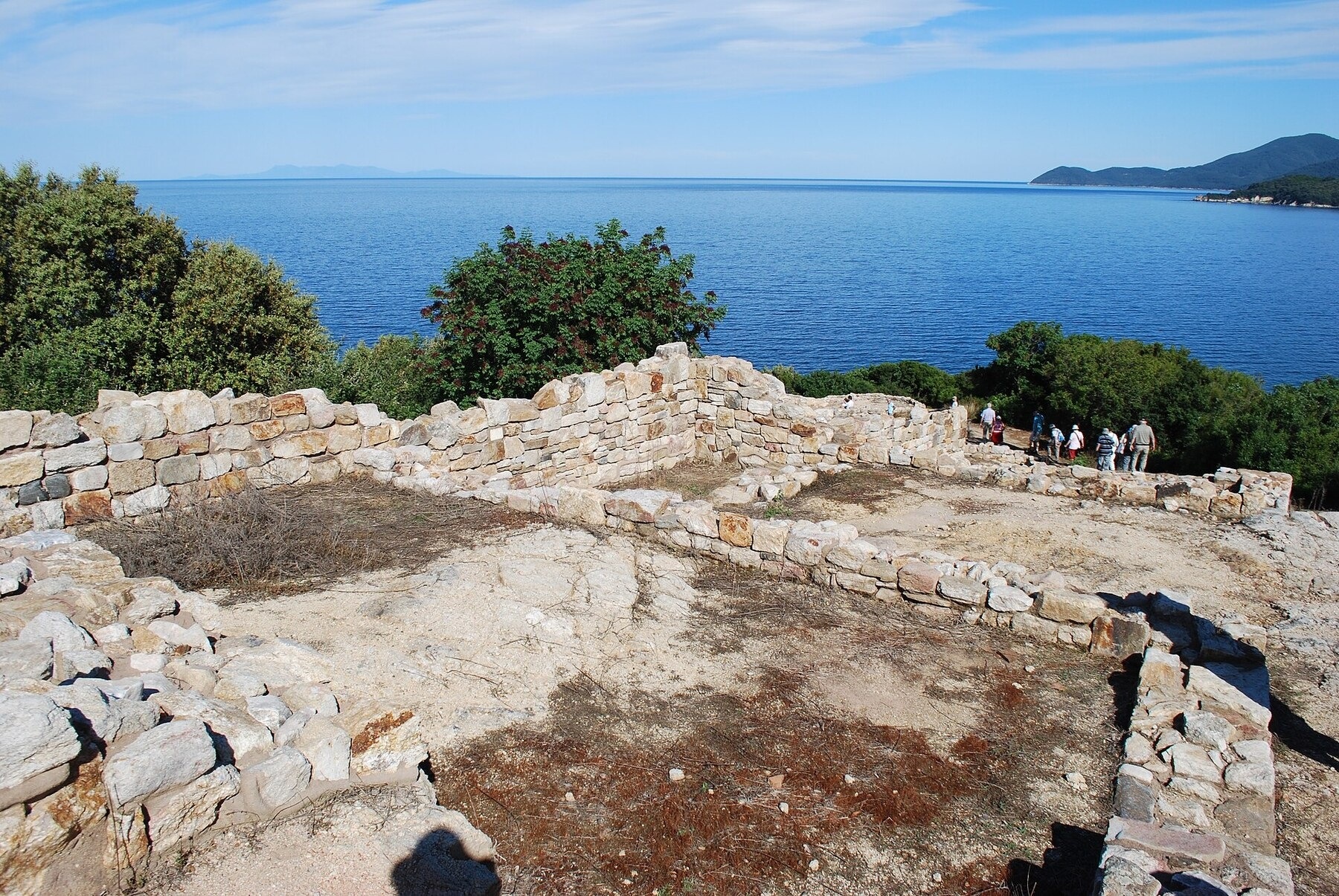
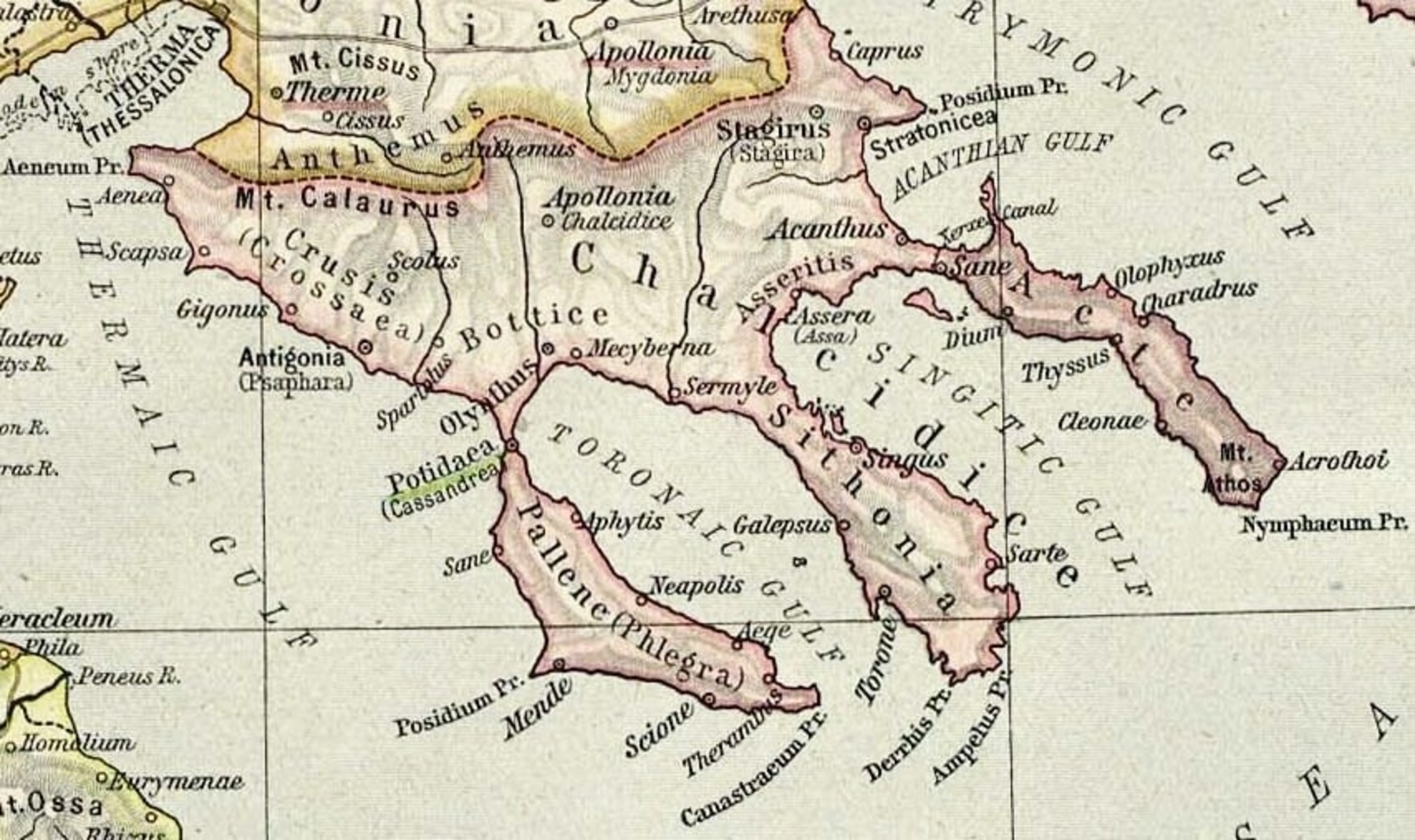
Ancient Stagira belongs to the fortified archaeological landscape of eastern Chalkidiki. Its position controlled a small harbor, nearby agricultural land, and maritime approaches along the Strymonic Gulf. Excavation has revealed substantial stretches of fortification, gates, an agora, public architecture, houses, waterworks, and cult buildings. The surviving remains allow the visitor to read Stagira not simply as Aristotle’s birthplace, but as a functioning polis shaped by colonization, inter-city rivalry, Macedonian expansion, and civic memory.
Highlights
- Fortification walls extending across two coastal hills
- Main gates, towers, and defensive approaches
- Agora and remains of public stoas
- Residential quarters, streets, and water-management works
- Sanctuaries and cult buildings from successive phases
- Possible civic monument associated with Aristotle
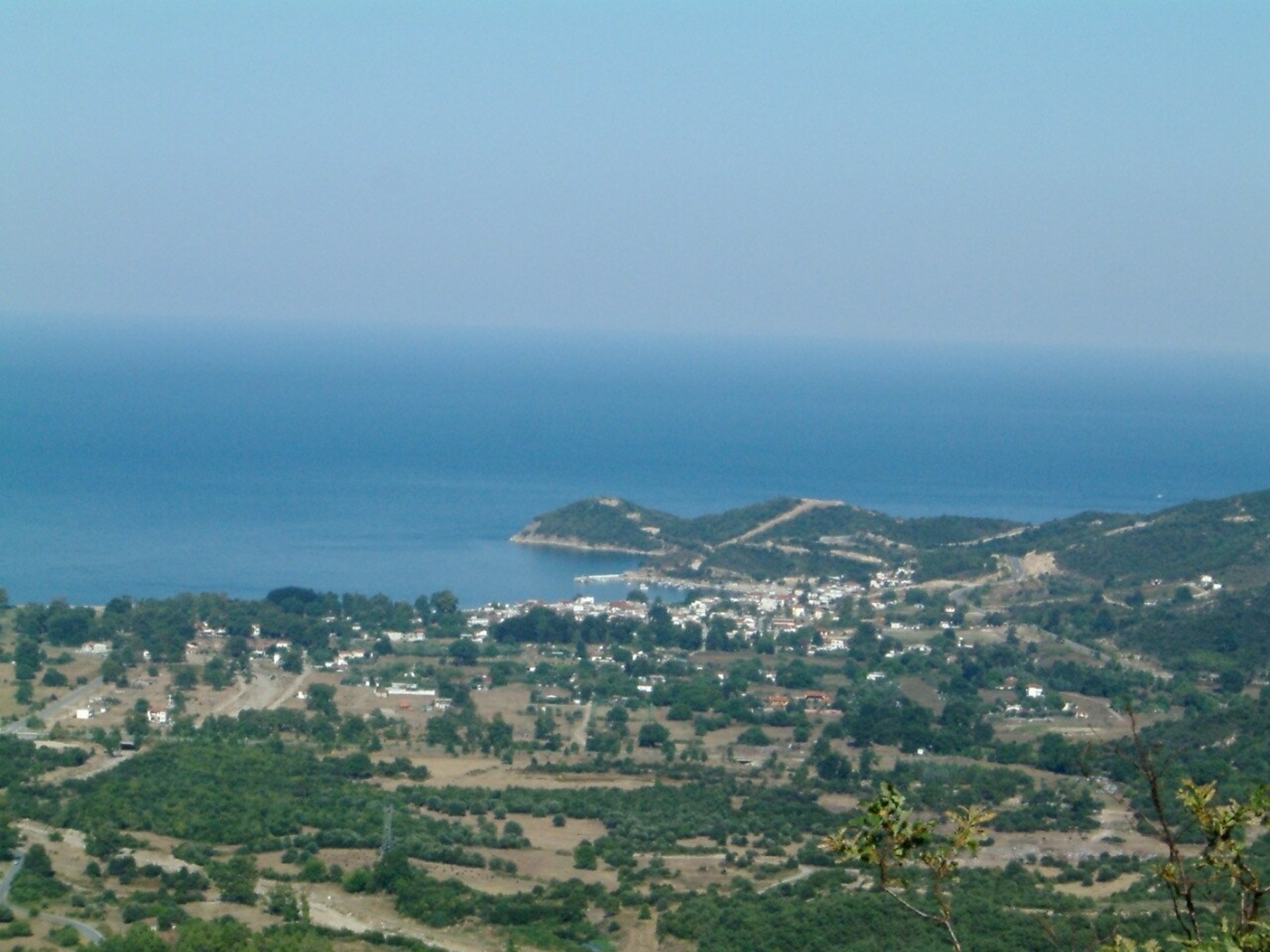
- Views across Olympiada, the harbor, and the Strymonic Gulf
- The relationship between the walled city and its maritime setting
A colonial foundation on the northern Aegean
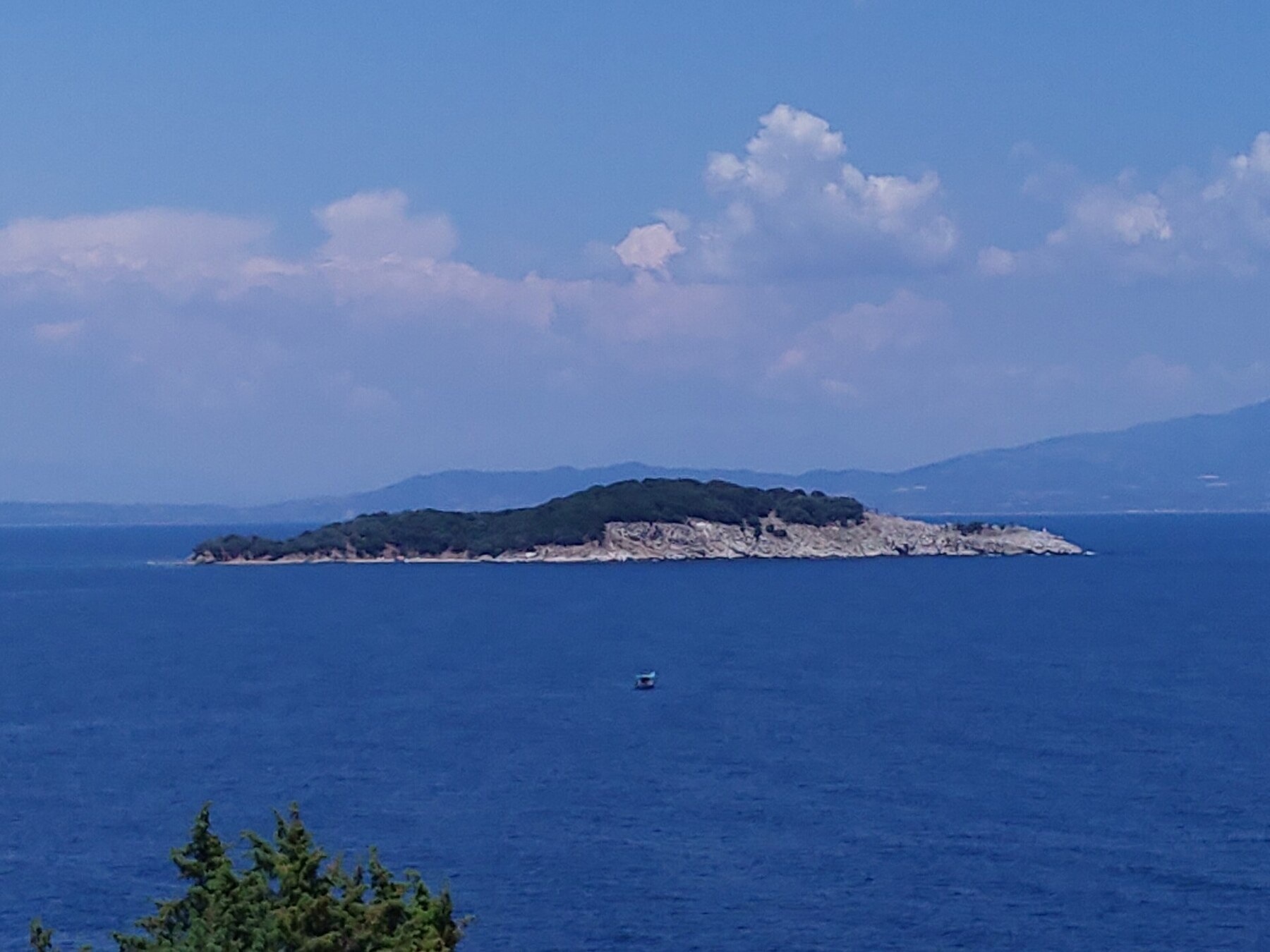
Ancient Stagira was founded in the seventh century BC, traditionally around 655 BC, by settlers from the Cycladic island of Andros; later literary traditions also associate Chalcidian settlers with its early population. The choice of site was strategic. Two defensible hills overlook a small harbor and a broken coastline facing the Strymonic Gulf, while inland routes linked the settlement with the mineral-rich and agriculturally productive landscapes of eastern Chalkidiki. From the beginning, Stagira belonged to the network of maritime colonies through which island and Euboean communities established commercial and political footholds along the northern Aegean.
Walls, gates, and the organization of the city
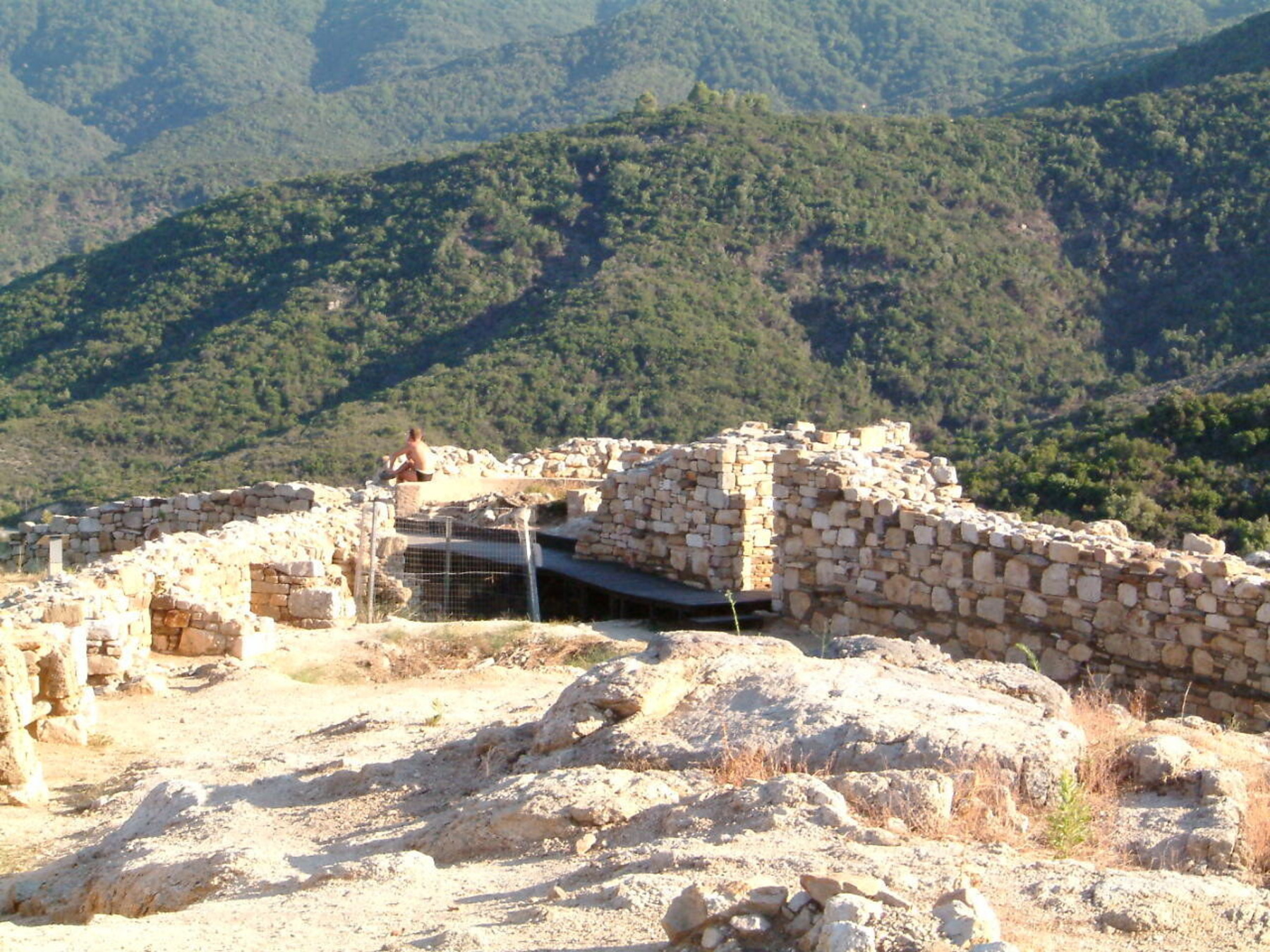
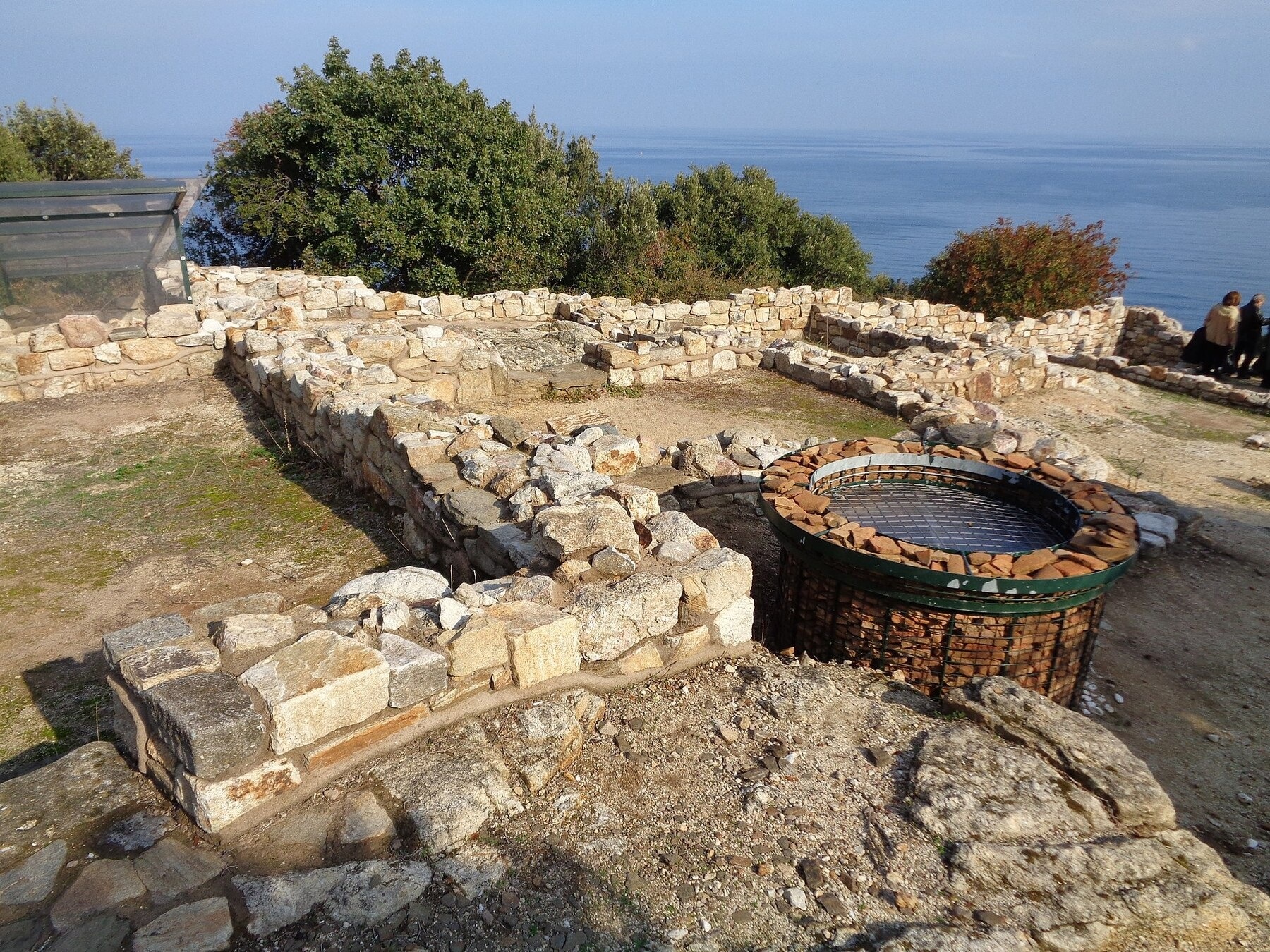
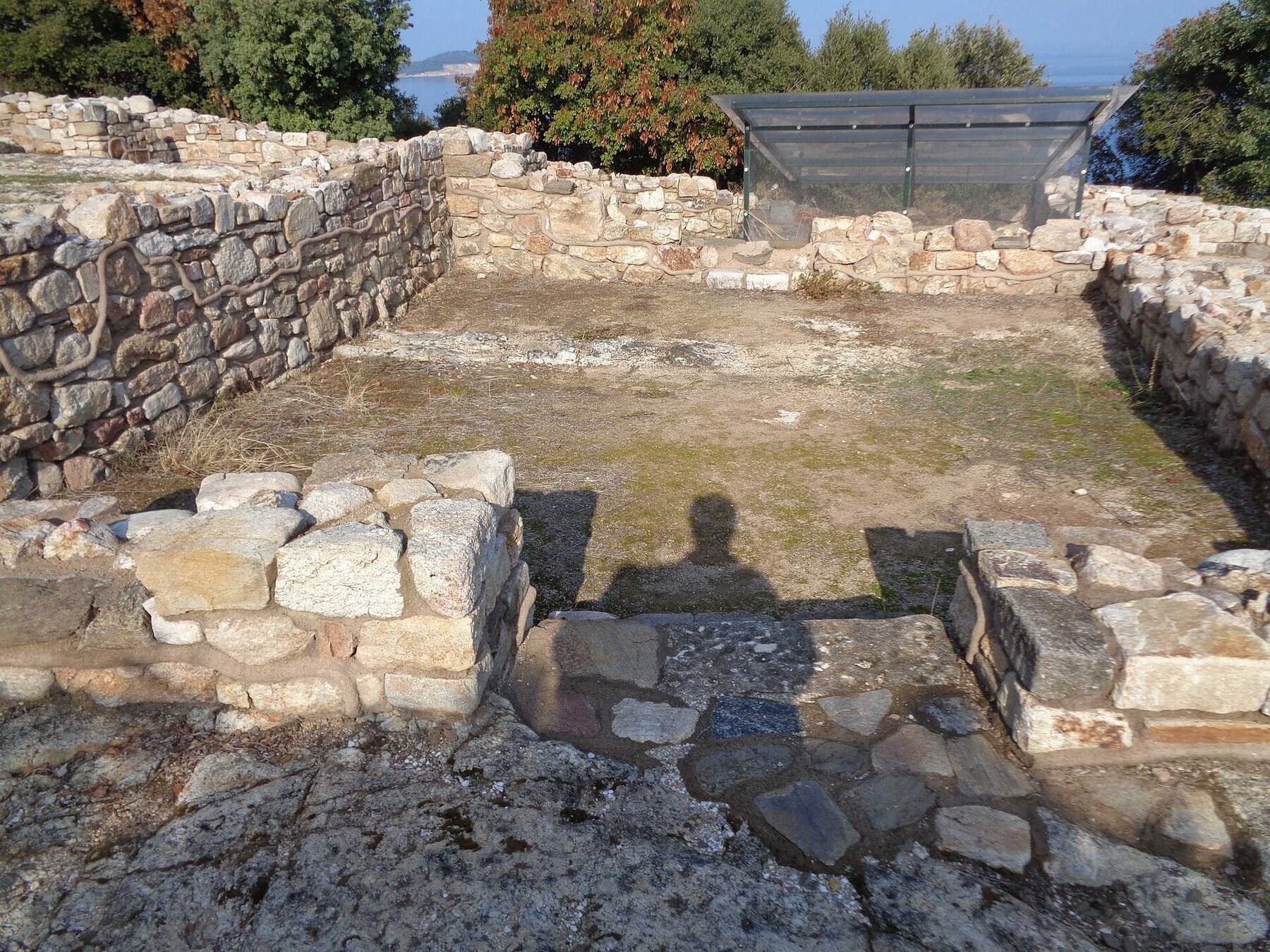
The most immediately visible remains are the fortifications enclosing the two hills of the ancient city. Their masonry belongs to more than one phase, reflecting repair, enlargement, and adaptation over several centuries. Towers, gates, and carefully placed wall lines used the steep terrain to strengthen vulnerable approaches while maintaining access to the harbor and surrounding countryside. Within the defenses, streets followed the contours of the hills and connected residential quarters with public and sacred areas. Excavation has identified houses, water channels, cisterns, workshops, an agora, stoas, and religious buildings, revealing a complex urban community rather than an isolated stronghold.
Between Persia, Athens, and Sparta
Stagira’s history was repeatedly shaped by larger powers. Persian forces occupied the region during Xerxes’ invasion of Greece in 480 BC. In the decades that followed, Stagira entered the Athenian-led Delian League, but it revolted during the Peloponnesian War and aligned with Sparta. The Athenian commander Cleon attacked the city in 422 BC during his campaign in the north, yet failed to take it. This episode shows both Stagira’s strategic importance and the effectiveness of its defenses. The city’s political choices placed it within the wider struggle for control of the approaches to Amphipolis, the Strymon valley, and the resources of the northern Aegean.
Philip II, destruction, and restoration
Macedonian expansion transformed Stagira in the fourth century BC. Philip II captured and destroyed the city in 349 or 348 BC during his campaigns in Chalkidiki. Ancient and later traditions hold that he subsequently restored Stagira, recalled its displaced inhabitants, and rebuilt civic structures in honor of Aristotle, who had become tutor to Philip’s son Alexander. The precise details of this restoration are difficult to reconstruct, but archaeological evidence confirms a substantial later phase of building and reorganization. Stagira thus became part of the Macedonian political order while retaining a distinct civic identity rooted in its older colonial and Classical past.
Aristotle and the memory of the Stagirite
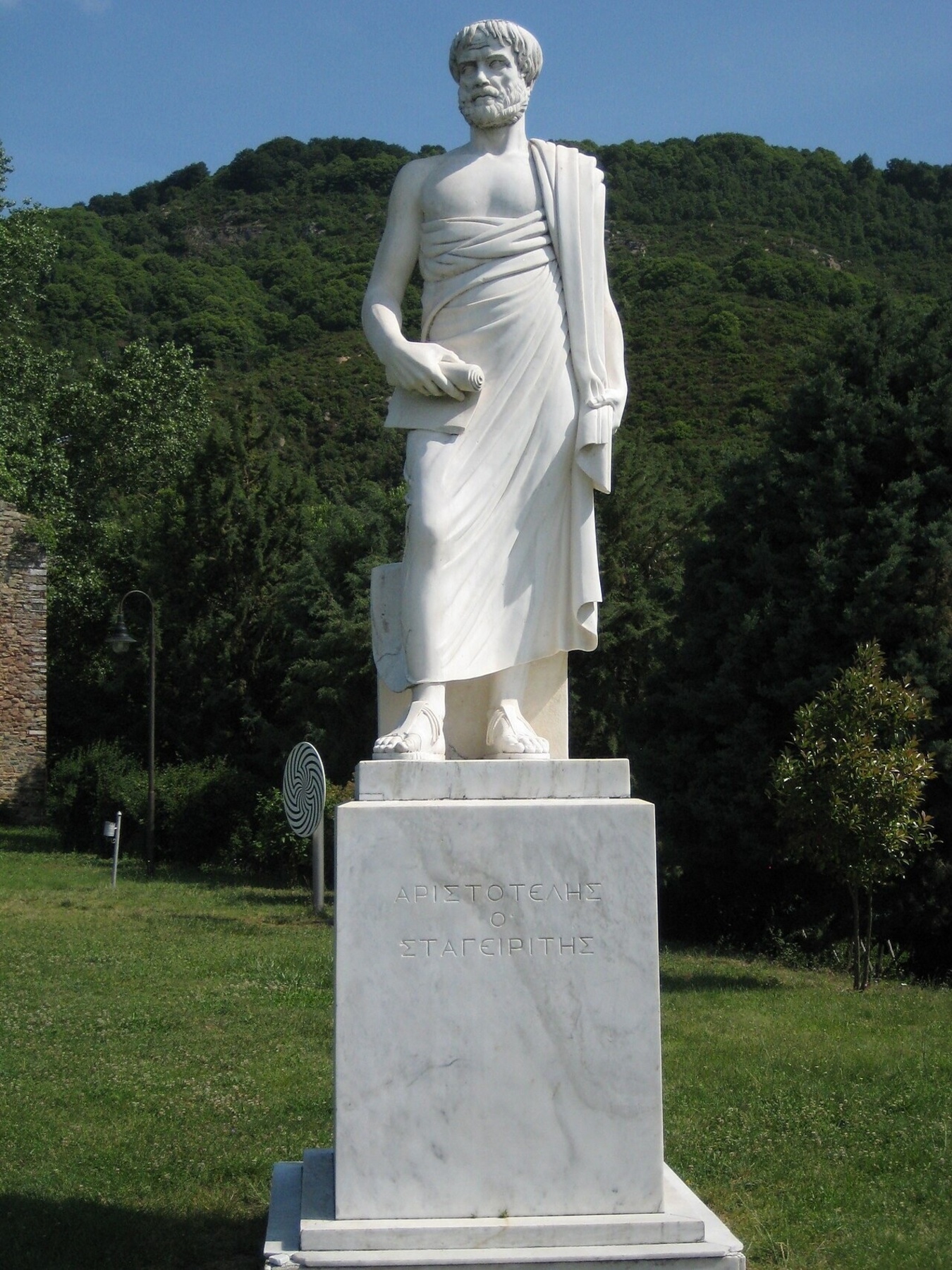
Aristotle was born at Stagira in 384 BC into a family connected with the Macedonian court; his father Nicomachus served as a physician to King Amyntas III. Although Aristotle spent much of his life elsewhere, his birthplace remained central to his identity, and ancient authors regularly called him the Stagirite. A structure uncovered near the city’s agora has been proposed by the excavator as a monument associated with Aristotle’s ashes and civic cult. That interpretation is important but not universally accepted, so the remains are best understood as a possible Aristotelian memorial rather than a securely identified tomb. The association nevertheless illustrates how strongly the restored city cultivated the philosopher’s memory.
Reading the archaeological landscape
Ancient Stagira is unusually evocative because its ruins remain embedded in a wooded coastal landscape rather than beneath a modern town. The route through the site moves between fortified ridges, public spaces, domestic remains, and long views toward Olympiada and the sea. The setting makes clear why the city prospered and why it required strong defenses: Stagira was simultaneously a harbor, a civic center, and a frontier community exposed to regional competition. Its importance therefore extends beyond Aristotle. The site preserves the physical structure of a northern Greek polis and the successive marks of Archaic colonization, Classical warfare, and Macedonian reconstruction.
Architecture
- Archaic and Classical fortification walls adapted to steep coastal terrain
- Defensive towers and gates controlling landward and harbor approaches
- Terraced streets and residential quarters following the contours of the hills
- Agora, stoas, and other public buildings forming the civic center
- Domestic structures, workshops, cisterns, drains, and water channels
- Sanctuaries and cult buildings representing several phases of urban life
- Macedonian-period rebuilding and reorganization after the destruction by Philip II
Timeline
- c. 655 BC Stagira is traditionally founded by colonists from Andros on a fortified coastal site in eastern Chalkidiki.
- 480 BC The city and surrounding region come under Persian control during Xerxes’ invasion of Greece.
- 5th century BC Stagira participates in the Athenian-led Delian League.
- 424 BC Stagira revolts from Athens during the Peloponnesian War and aligns with Sparta.
- 422 BC The Athenian commander Cleon attacks Stagira but fails to capture the fortified city.
- 384 BC Aristotle is born at Stagira.
- 349/348 BC Philip II of Macedon captures and destroys Stagira during his campaigns in Chalkidiki.
- Later 4th century BC The city is restored and resettled under Macedonian rule, traditionally in connection with Aristotle.
- Hellenistic and Roman periods Stagira continues on a reduced scale before the ancient urban center is eventually abandoned.
- 20th–21st centuries Systematic excavation and conservation reveal the fortifications, civic buildings, houses, sanctuaries, and water systems of the ancient city.
Images
References
Related places
Topics
- Fortified Archaeological Site
- Expedition Vii
- Ancient Stagira
- Chalkidiki
- Archaic
- Classical
- Macedonian
- Aristotle
- Polis
- Coastal Defense