Overview
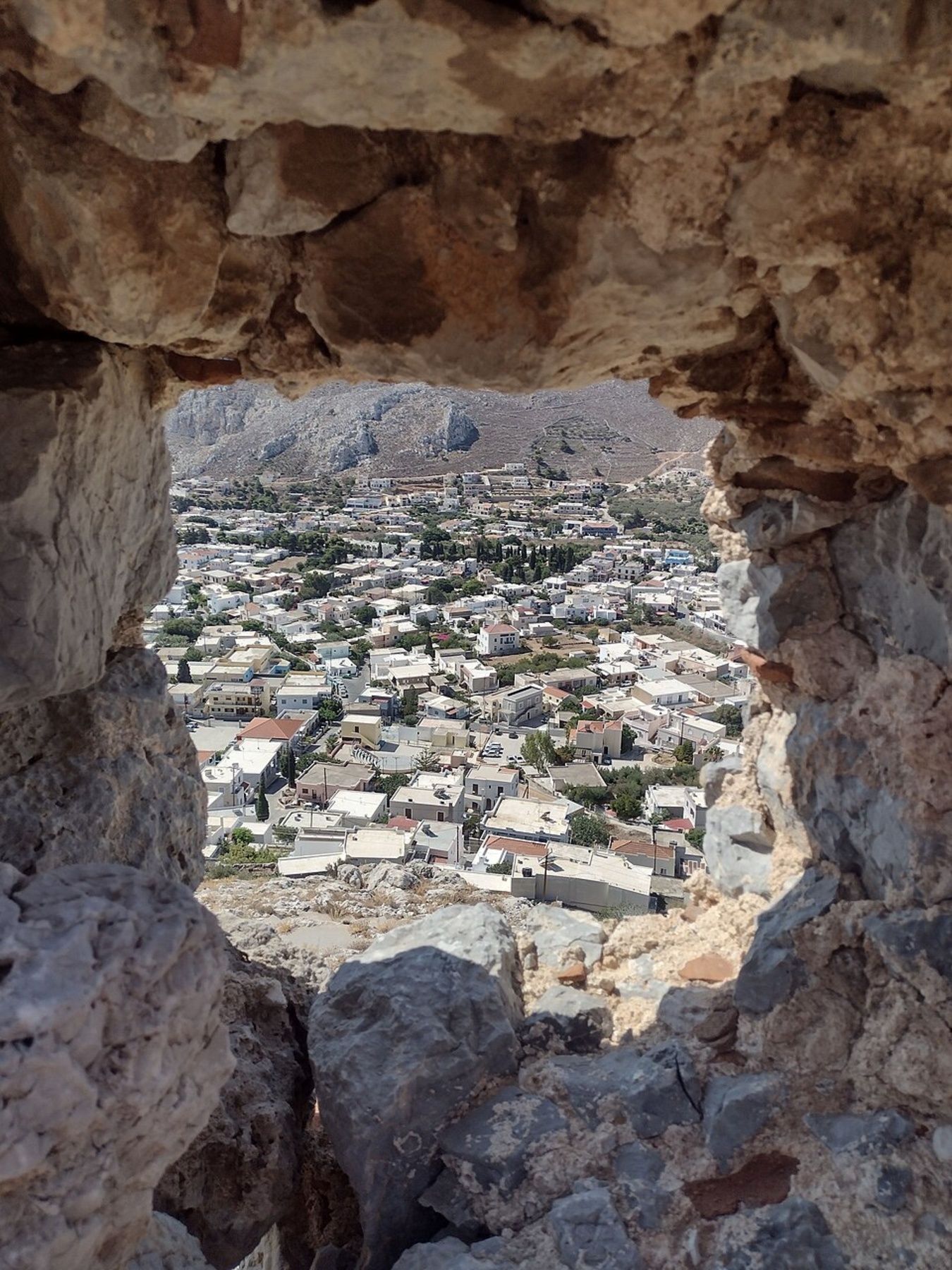
Kalymnos is best understood as a landscape where defense, seafaring and adaptation repeatedly intersect. Ancient religious and political life centered on the sanctuary of Delian Apollo, while prehistoric and Mycenaean finds attest to much earlier occupation. In the Middle Ages the population concentrated in defensible positions above the coast. The Castle of Chora became the principal fortified town, housing perhaps 1,200–1,500 people behind powerful walls; the Knights of St John later reconstructed and adapted it for gunpowder warfare. Nearby Chrysocheria Castle was created in the fifteenth century as a Hospitaller administrative and defensive stronghold. Ottoman and then Italian rule changed the island's political framework, but Kalymnian society remained profoundly maritime. Sponge harvesting became the island's defining economy and cultural tradition, remembered today in Pothia's Maritime and Folklore Museum and in the stories of divers who ranged across the Mediterranean. In the late twentieth century, the same rugged limestone terrain that once constrained settlement became a new resource: sport climbing developed rapidly from 1997 onward and now attracts climbers from around the world.
Highlights
- Castle of Chora
A walled medieval town capable of sheltering more than a thousand inhabitants, with churches, cisterns and houses packed inside its fortifications.
- Chrysocheria Castle
A fifteenth-century Hospitaller fortress whose construction triggered a documented dispute between Kalymnians and their knightly governor.
- Sanctuary of Delian Apollo
The principal religious and political center of ancient Kalymnos, later transformed into an Early Christian sacred landscape.
- Sponge-Diving Heritage
Centuries of sponge harvesting shaped Kalymnos's economy, migration, family life and maritime identity.
- The Skandalopetra
The heavy descent stone used by free-diving sponge fishermen survives as one of the most distinctive tools of Kalymnian maritime culture.
- Maritime and Folklore Museum
Pothia's museum preserves equipment, photographs, charts and tools connected with sponge fishing and processing.
- Archaeological Museum
The museum brings together prehistoric, Classical, Hellenistic, Byzantine and underwater finds, including important ancient bronzes.
- Pothia
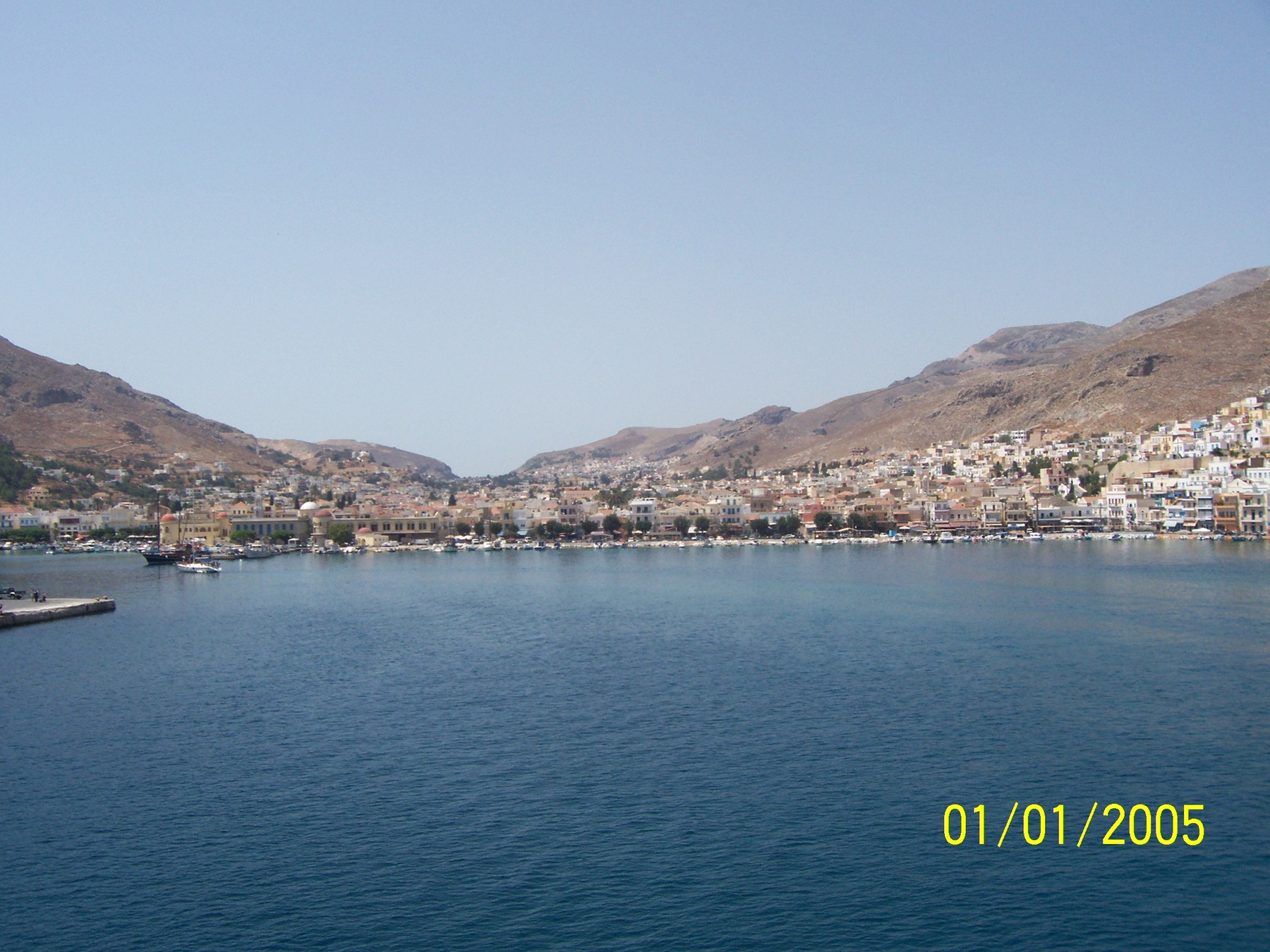
The amphitheatrical harbor capital combines sponge-trading heritage, museums, churches and later Italianate civic architecture.
- World-Class Sport Climbing
Since the late 1990s, Kalymnos has become one of the best-known limestone sport-climbing destinations in the world.
- Tufa and Stalactite Climbing
The island's steep limestone caves and flowstone formations create a style of climbing strongly associated with Kalymnos.
- Climbing Festivals
International events beginning in 2000 helped turn the island into a global meeting place for elite and recreational climbers.
- Landscape of Adaptation
The same rugged rock and sea that shaped medieval defense and sponge diving now underpin the island's modern outdoor identity.
Strategic role
A rugged maritime island whose settlements and fortifications protected communities exposed to piracy and invasion, and whose economy and identity were later shaped by sponge diving and, in recent decades, international sport climbing.
Overview: Fortified Island, Maritime Society
Kalymnos is not defined by a single castle. Its history is distributed across an ancient sanctuary, medieval fortified towns, Hospitaller strongholds, coastal watch points, harbors and a maritime economy that pushed islanders far beyond local waters. The rugged limestone terrain made agriculture difficult but favored naturally defensible settlement and commanding observation points. In the Middle Ages these advantages were formalized in the Castle of Chora and the later Castle of Chrysocheria. In modern times the sea rather than the walls became the island's defining frontier through sponge diving, while the limestone cliffs have created a new international identity through sport climbing.
Ancient Kalymnos and the Sanctuary of Delian Apollo
The Archaeological Museum of Kalymnos documents human activity from the Late/Final Neolithic through the Mycenaean period, with finds from caves and other sites across the island. In historical times, the sanctuary of Apollo Dalios became the principal religious and political center of ancient Kalymnos. Inscriptions and sculpture attest to a complex civic life, while the site also included the cult of Asklepios, a theatre, gymnasium and council building. The later Early Christian basilica known as Christ of Jerusalem was constructed over the sanctuary, reusing ancient architectural blocks. This continuity makes the site one of the clearest places on Kalymnos where pagan civic identity, Christian transformation and later memory overlap.
The Castle of Chora: A Medieval Town Behind Walls
The Castle of Chora, or Great Castle, rises above the old inland capital at about 255 meters elevation. According to the Municipality of Kalymnos, the fortified area covers roughly 30,000 square meters and could accommodate an estimated 1,200–1,500 inhabitants. The earliest fortifications probably date to the eleventh century. Houses were packed tightly within the walls, often incorporating the fortification itself, while private cisterns, two large public water tanks and two olive presses allowed the community to function during siege or isolation. Ten churches survive inside the enclosure, many preserving late medieval wall paintings. The site therefore represents not merely a fortress but the principal urban center of medieval Kalymnos.
The Knights of St John and the Gunpowder Age
Kalymnos came under the Knights of St John in the early fourteenth century as part of their Dodecanese state. The Hospitallers rebuilt the Castle of Chora on a large scale under the commander Fantino Quirini in the fifteenth century. After the destructive earthquake of 1492/93, Grand Master Pierre d'Aubusson ordered major reinforcement, completed by 1495. In the early sixteenth century Grand Master Fabrizio del Carretto added a polygonal tower in the eastern wall designed for firearms, reflecting the transition from medieval defense to artillery warfare. Hospitaller coats of arms survive on towers and cisterns, making the castle an unusually legible record of institutional military investment.
Chrysocheria Castle: A Contested Hospitaller Project
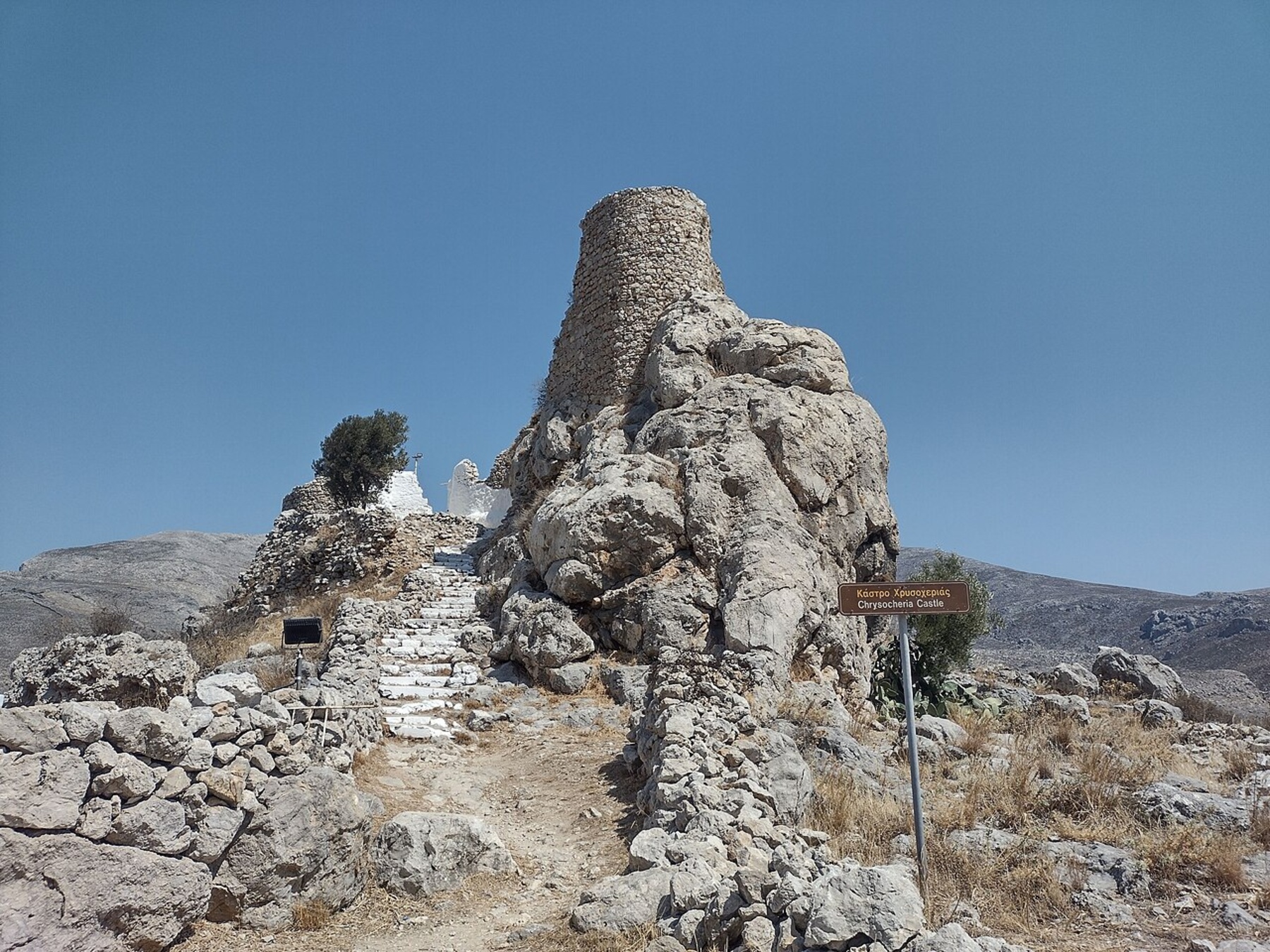
Chrysocheria Castle, also called Pera Kastro, stands between Chora and Pothia and was built in the middle of the fifteenth century by the Order of St John. Its history is unusually well documented. In 1444 Fantino Quirini required Kalymnians to provide labor for the new fortress; island representatives resisted, arguing that the existing Castle of Chora made another fortification unnecessary. The dispute reached the court at Rhodes in 1445, which ruled in Quirini's favor. Heraldic shields of Quirini and later commanders survive at the entrance. The castle contains remains of medieval buildings, underground grain storage, the church of St George and the church of Panagia Chrysocheria. Continuous raids contributed to its abandonment by the late fifteenth century.
Ottoman and Italian Kalymnos
After the Hospitaller period, Kalymnos passed under Ottoman rule in the early sixteenth century. The Castle of Chora remained the island's built-up center into the early eighteenth century, even housing the Ottoman agha, before settlement expanded into Chorio below. Italy occupied Kalymnos in May 1912 during the Italo-Turkish War and retained control of the Dodecanese through the Second World War. Pothia's public buildings and urban fabric preserve traces of the Italian period. Kalymnos was liberated in 1947 and, with the rest of the Dodecanese, formally incorporated into Greece in 1948.
Sponge Harvesting: The Island's Maritime Vocation
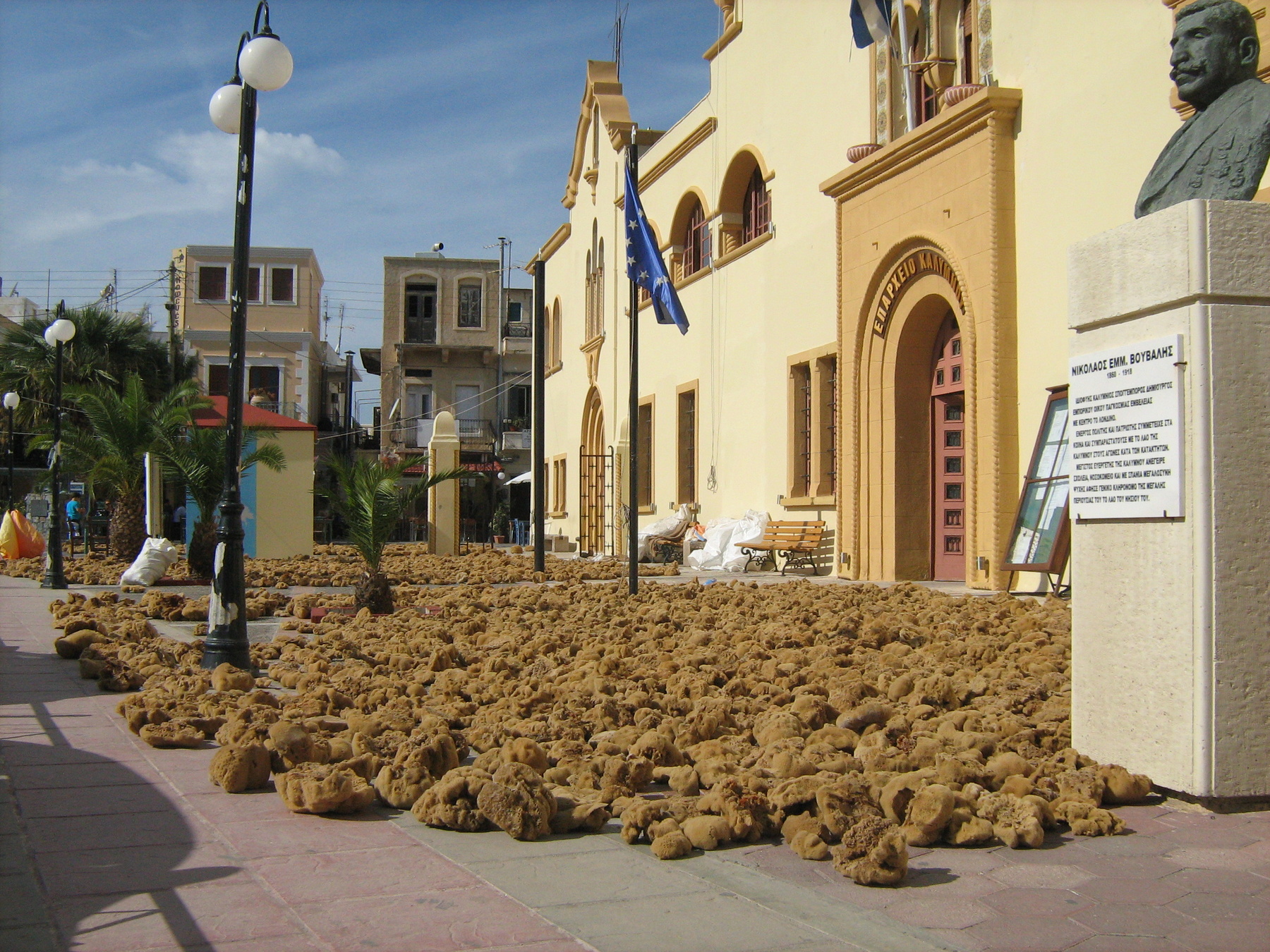
For generations Kalymnos was internationally known as the island of sponge divers. The island's official tourism authority describes sponge diving as a practice rooted deeply in Kalymnian life and identifies it as one of the defining professions of the community. Early sponge fishermen free-dived, using simple tools such as the skandalopetra, a heavy stone that helped divers descend quickly. Later technologies increased depth and duration but also exposed divers to decompression sickness and other hazards. Kalymnian sponge fleets traveled widely through the Mediterranean and toward North Africa, turning a difficult maritime occupation into the basis of island wealth, migration and identity.
Danger, Disease and the Decline of the Sponge Fleet
Sponge diving brought prosperity but also repeated tragedy. Divers working at depth faced decompression sickness, disability and death; the Kalymnian folk dance known as the Mihanikos preserves cultural memory of those injuries. In the twentieth century synthetic substitutes and changing markets weakened the trade, and a destructive disease affecting Mediterranean sponge colonies in the 1980s further reduced the resource. Although commercial sponge harvesting declined sharply, the tradition remains central to Kalymnian identity and survives through smaller-scale activity, family memory, museums and the continued display and processing of natural sponges in Pothia.
Museums and Maritime Memory
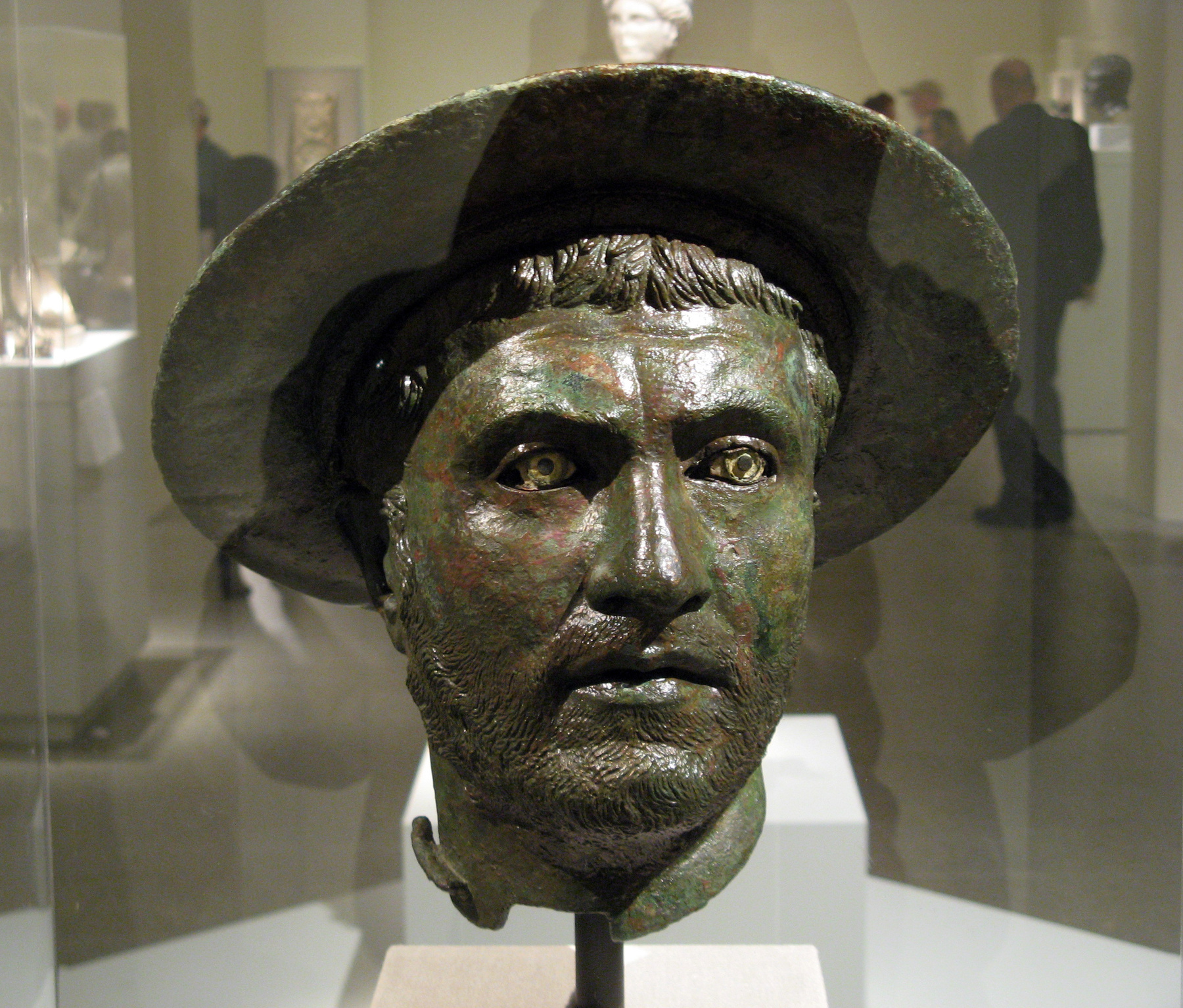
Pothia preserves the island's maritime story through several complementary collections. The Maritime and Folklore Museum, founded in 1994, presents the methods and history of sponge fishing, including photographs, nautical charts, diving equipment, tools for sponge processing and the skandalopetra. The Valsamidis Museum of Marine Life and Findings includes sponges, shells, corals, diving suits, underwater finds and extensive photographic documentation of sponge fishing. The Archaeological Museum, inaugurated in 2009, adds the deeper chronology of Kalymnos, including prehistoric finds, material from the sanctuary of Apollo Dalios, funerary treasures and important bronzes recovered from the sea such as the celebrated 'Lady of Kalymnos.'
From Sponge Divers to Sport Climbers
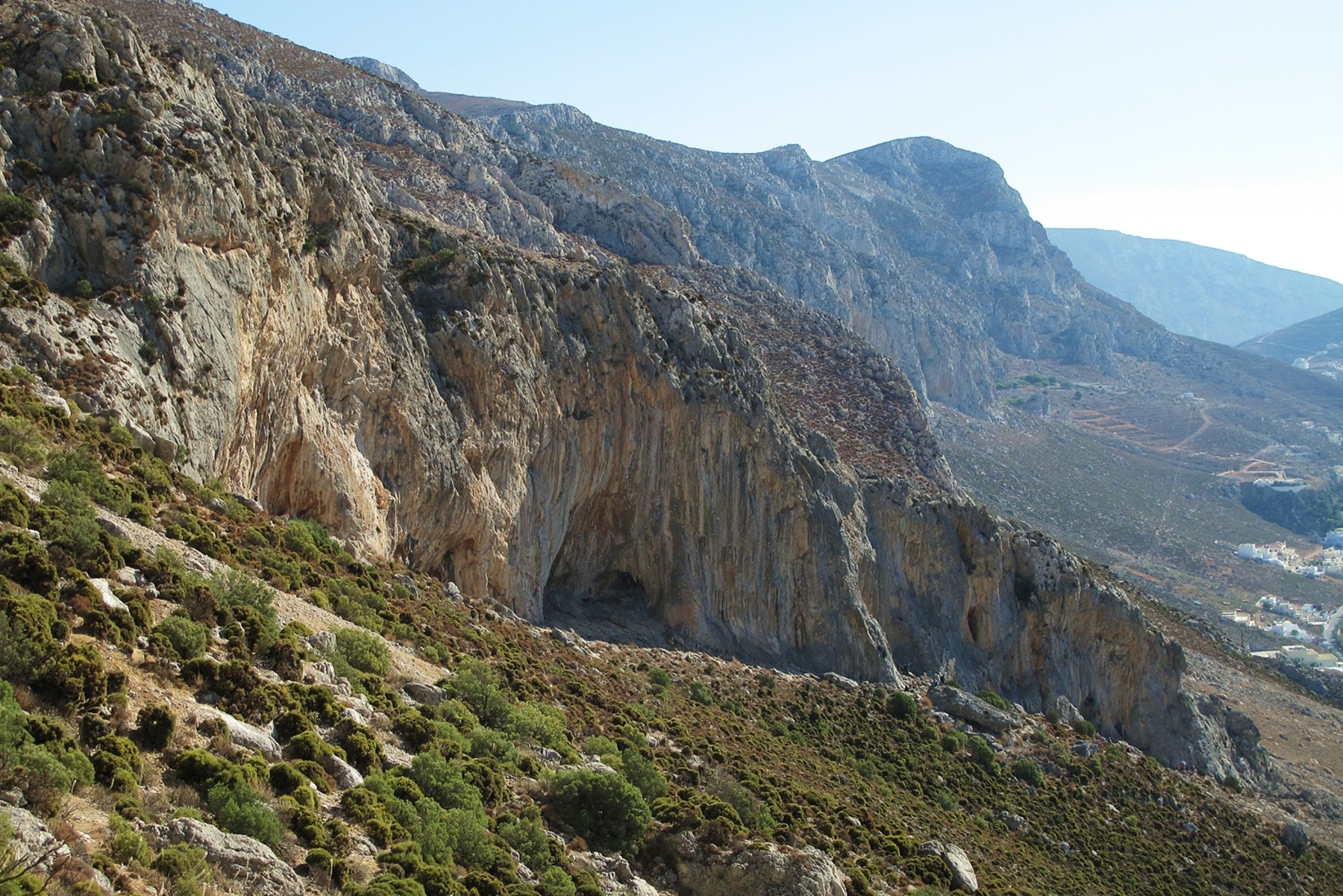
Kalymnos's modern transformation into a sport-climbing destination began almost by accident. The specialist Kalymnos climbing history records that Italian climber Andrea di Bari visited in 1996, recognized the quality of the limestone and returned in 1997 with companions to establish 43 routes in sectors including Arhi, Odyssey and Poets. Articles in European climbing magazines helped spread the reputation of the island, and the first international climbing event followed in 2000. The Municipality now describes Kalymnos as having roughly 2,500 equipped sport routes, ranging from easy slabs to extreme overhangs, tufas and stalactites. Visit Greece likewise presents Kalymnos as a world-renowned climbing destination.
A World-Class Climbing Landscape
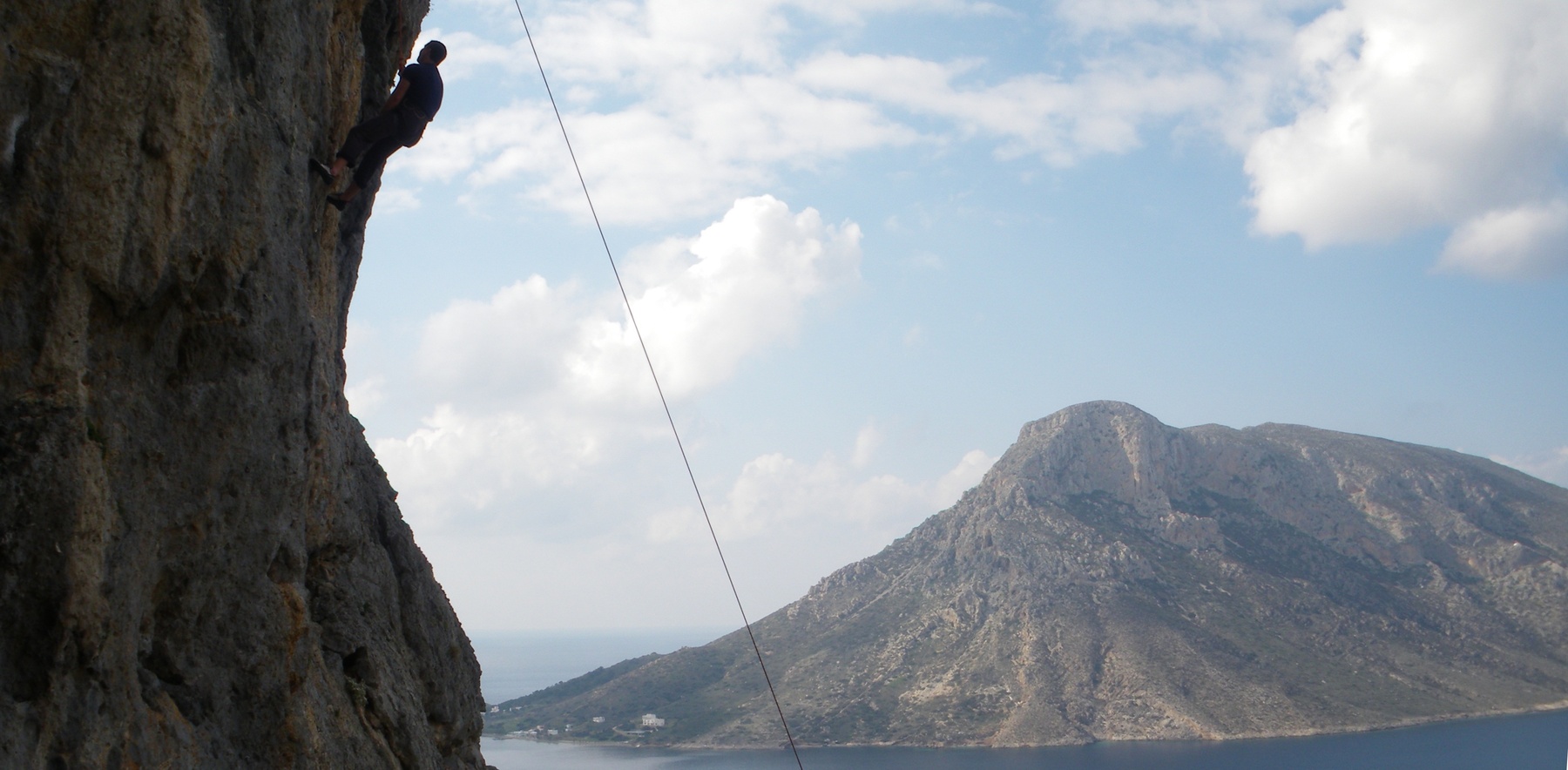
The same limestone geology that gives Kalymnos its stark appearance has produced cliffs of exceptional variety. Western sectors around Massouri and Myrties overlook Telendos, while other crags spread toward Arginonta, Emporios and inland valleys. Routes include vertical pocketed walls, steep overhangs, caves and long tufa formations, with both single-pitch and bolted multipitch climbing. International festivals from 2000 onward brought leading climbers to the island and established Kalymnos firmly on the global climbing map. Climbing has also become an important part of the modern island economy, particularly in shoulder seasons when climbers fill accommodation, restaurants and shops outside the conventional summer tourism peak.
Why Visit
Kalymnos offers a rare combination of fortress history, archaeology, maritime culture and living outdoor tradition. The Castle of Chora preserves the scale of a medieval island town; Chrysocheria captures Hospitaller administration and conflict; the sanctuary of Delian Apollo links the island to the ancient Aegean; and Pothia's museums explain why sponge diving shaped Kalymnian identity for centuries. Modern climbing adds another layer rather than replacing the old one: the island's difficult rock and sea, once obstacles that produced defensive settlements and daring divers, have become the basis of an international climbing culture. Few Aegean islands make the continuity between landscape and human adaptation so visible.
Architecture
- Castle of Chora with massive perimeter walls enclosing a medieval town
- Hospitaller reconstruction phases and early gunpowder tower adaptations
- Large public cisterns and private household cisterns within the Castle of Chora
- Ten surviving churches within the medieval castle, many preserving late-15th- and early-16th-century wall paintings
- Castle of Chrysocheria with Hospitaller heraldry, churches, granaries and defensive walls
- Kastelli coastal fortress remains
- Early Christian basilica at Christ of Jerusalem built over the sanctuary of Delian Apollo
- Dense historic fabric of Chorio, developed below the medieval castle after the early 18th century
- Neoclassical and Italianate civic architecture in Pothia
- Traditional sponge-diver houses and captains' houses around Pothia
Timeline
- Late/Final Neolithic–Mycenaean period Archaeological finds document early occupation of Kalymnos, including material from caves and settlements now represented in the Archaeological Museum.
- 7th–6th centuries BCE The sanctuary of Apollo Dalios was already receiving substantial offerings and functioning as a major religious center.
- 4th–2nd centuries BCE The sanctuary of Apollo and Asklepios flourished as the political and religious center of ancient Kalymnos; inscriptions record aspects of civic life.
- 5th century CE The Early Christian basilica known as Christ of Jerusalem was constructed over the ancient sanctuary, reusing classical architectural material.
- Mid-6th century The basilica complex was damaged by earthquake and subsequently rebuilt.
- 7th century The basilica area was abandoned amid wider instability and Arab raids in the Aegean.
- 11th century The first major medieval fortifications of the Castle of Chora were probably established.
- 1309–1523 Kalymnos formed part of the Dodecanese territories ruled by the Knights of St John.
- 1433–1453 Commander Fantino Quirini carried out major reconstruction at the Castle of Chora.
- 1444–1445 Kalymnians resisted Quirini's demand for labor on the new Castle of Chrysocheria; the dispute went to the court at Rhodes, which upheld the commander's position.
- Mid-15th century Chrysocheria Castle was constructed between Chora and Pothia as a Hospitaller fortress.
- 1492/93–1495 After a destructive earthquake, Grand Master Pierre d'Aubusson ordered the Castle of Chora reinforced; work was complete by 1495.
- Early 16th century A polygonal artillery tower and major cisterns were added to the Castle of Chora under Grand Master Fabrizio del Carretto.
- Early 16th century Kalymnos passed under Ottoman authority after the fall of the Hospitaller Dodecanese.
- Early 18th century The Castle of Chora ceased to be the island's principal built-up center as settlement expanded into Chorio below.
- 19th–20th centuries Sponge diving developed into the defining maritime profession of Kalymnos, with fleets operating across the Mediterranean.
- 12 May 1912 Italian forces occupied Kalymnos during the Italo-Turkish War.
- 1947–1948 Kalymnos was liberated and incorporated into the Greek state with the rest of the Dodecanese.
- 1980s Disease affecting Mediterranean sponge colonies severely damaged the traditional sponge-fishing economy.
- 1994 The Maritime Museum of Kalymnos was founded in Pothia.
- 1996–1997 Andrea di Bari recognized Kalymnos's climbing potential and returned with companions in 1997 to establish the first major group of modern sport routes.
- 2000 The first international climbing event on Kalymnos helped establish the island on the international sport-climbing map.
- 2009 The Archaeological Museum of Kalymnos opened in Pothia.
- 21st century Climbing developed into a major international tourism sector while local initiatives increasingly focused on route maintenance, rescue and long-term stewardship.
Visiting today
Kalymnos rewards a multi-site visit. The Castle of Chora and Chrysocheria should be paired with the Archaeological Museum and the sanctuary/basilica complex at Christ of Jerusalem to understand the island's long defensive history. Pothia's Maritime and Folklore Museum is essential for the sponge-diving story. Climbing sectors are spread mainly across the western and northern limestone cliffs; visitors should use current route information, respect local access rules, and remember that climbing hardware in the marine environment requires continuous maintenance.
Historical contexts
- Ancient Dodecanese
- Byzantine Dodecanese
- Knights Hospitaller
- Ottoman Period
- Italian Dodecanese
- Sponge Diving
- Maritime Economy
- Sport Climbing
- Living Island Heritage
Expedition guides
Images
References
- Municipality of Kalymnos — Castle of Chora or Great Castle
- Municipality of Kalymnos — Castle of Chrysocheria
- Municipality of Kalymnos — Temple of Delian Apollo
- Municipality of Kalymnos — History of Kalymnos
- Municipality of Kalymnos — Sponge Diving
- Municipality of Kalymnos — Maritime and Folklore Museum
- Municipality of Kalymnos — Archaeological Museum
- Hellenic Ministry of Culture — Ephorate of Antiquities of the Dodecanese
- Visit Greece — Kalymnos: The island of sponge divers and climbers
- Municipality of Kalymnos — Climbing on Kalymnos
- Climb Kalymnos — History and development of sport climbing
- Zafeiropoulos & Drinia — Kalymnos Island, SE Aegean Sea: From Fishing Sponges and Rock Climbing to Geotourism Perspective
Related places
Related Stops
Topics
- Fortified Island
- Dodecanese
- Ancient Kalymnos
- Delian Apollo
- Byzantine
- Knights Hospitaller
- Castle Of Chora
- Chrysocheria
- Ottoman
- Italian Dodecanese
- Sponge Diving
- Maritime Heritage
- Skandalopetra
- Archaeological Museum
- Sport Climbing
- Limestone Climbing
- Living Heritage