Highlights
- Dapia
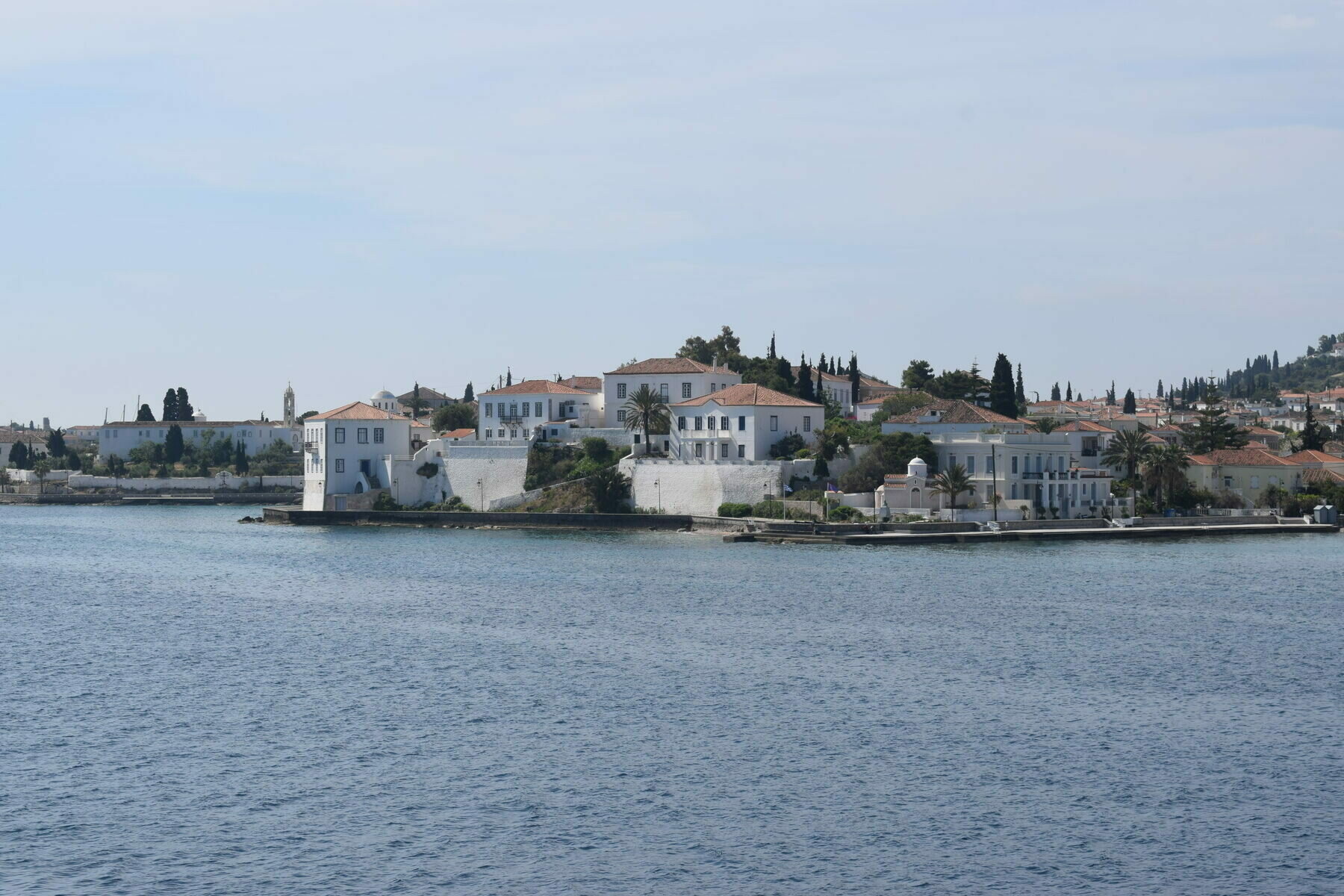
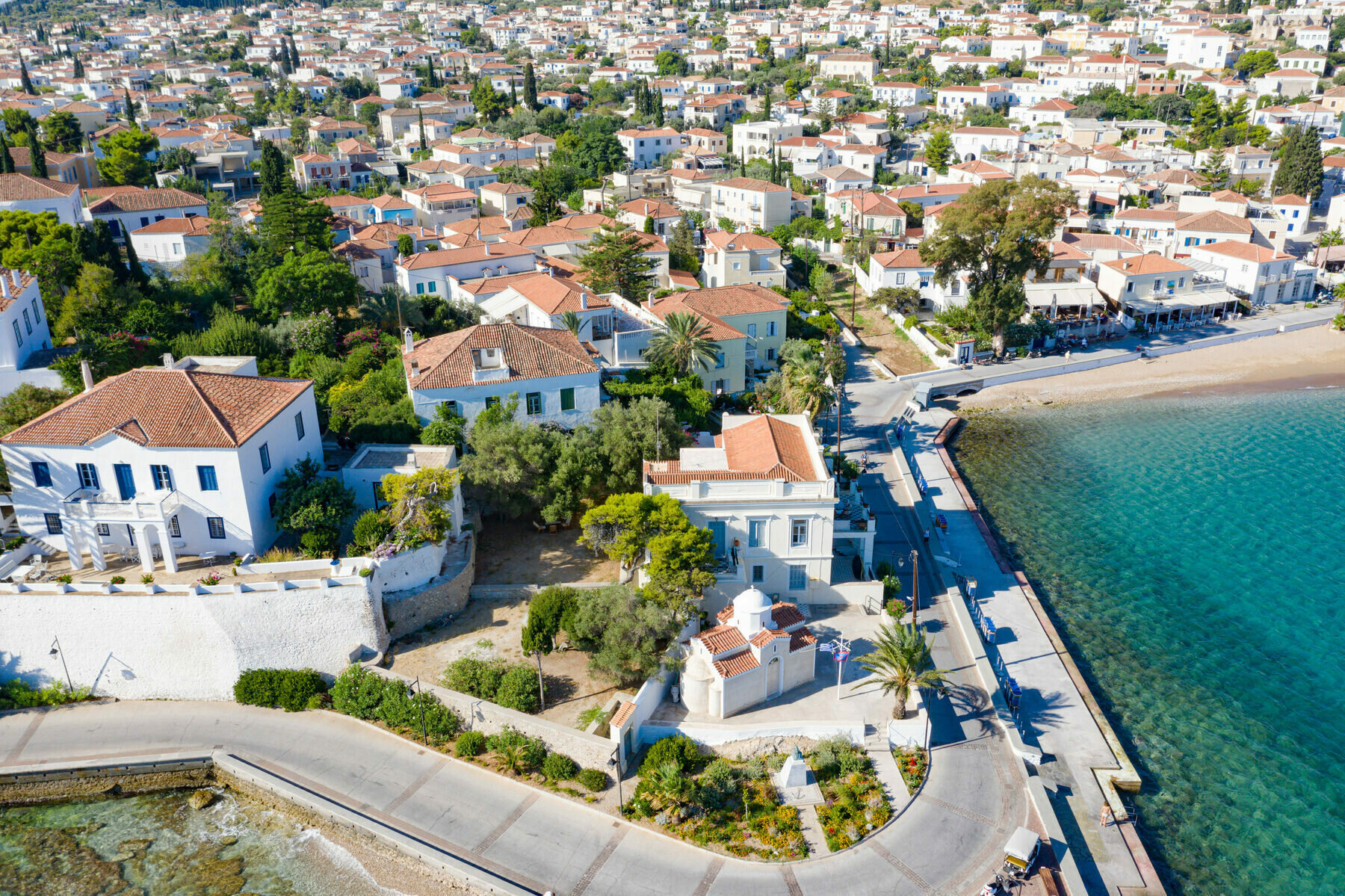
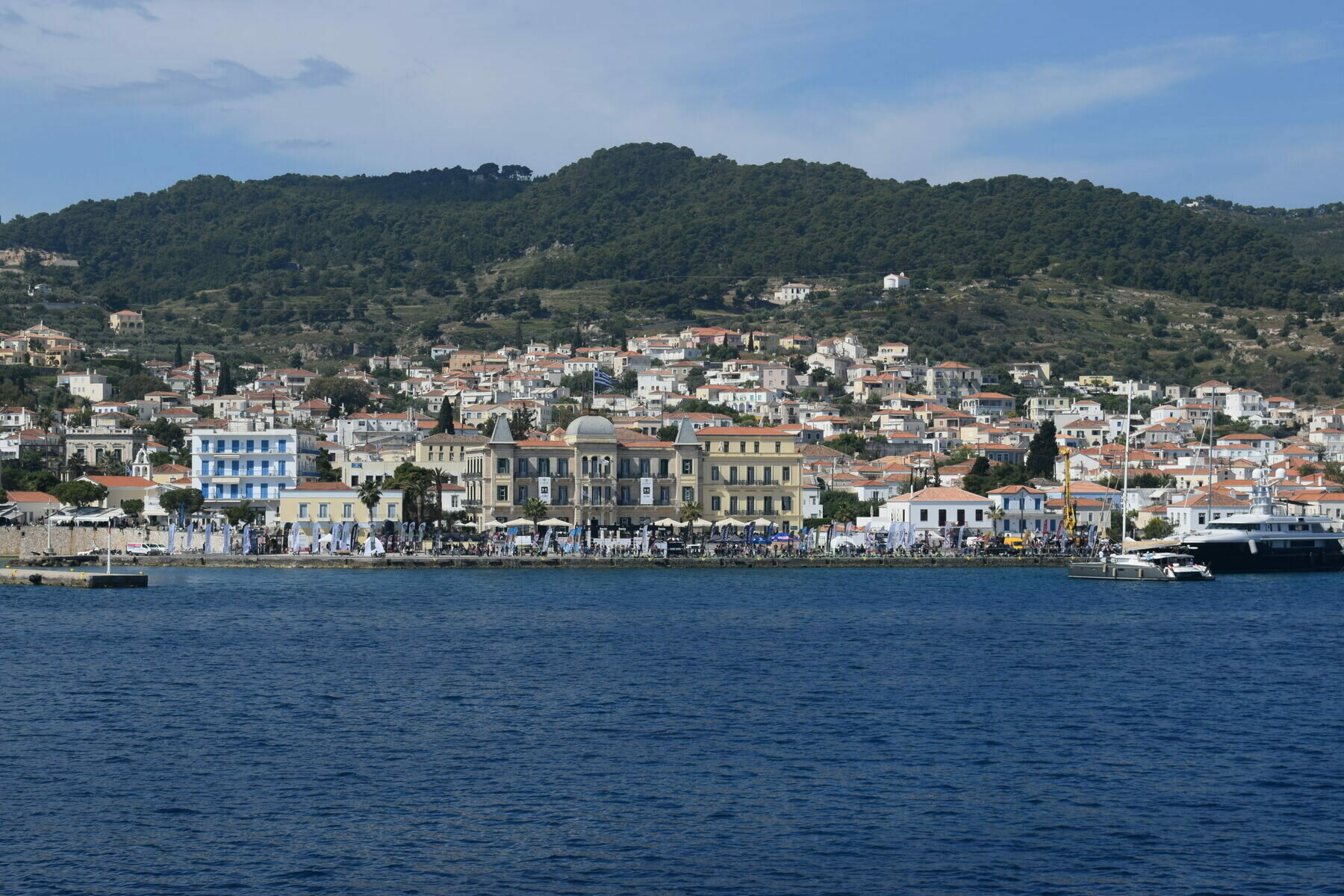
The main waterfront and arrival area, lined with cafés, historic buildings, cannon, and views across the channel.
- Old Harbor
A historic maritime district with boatyards, waterfront houses, churches, and a strong sense of Spetses' seafaring identity.
- Bouboulina Museum
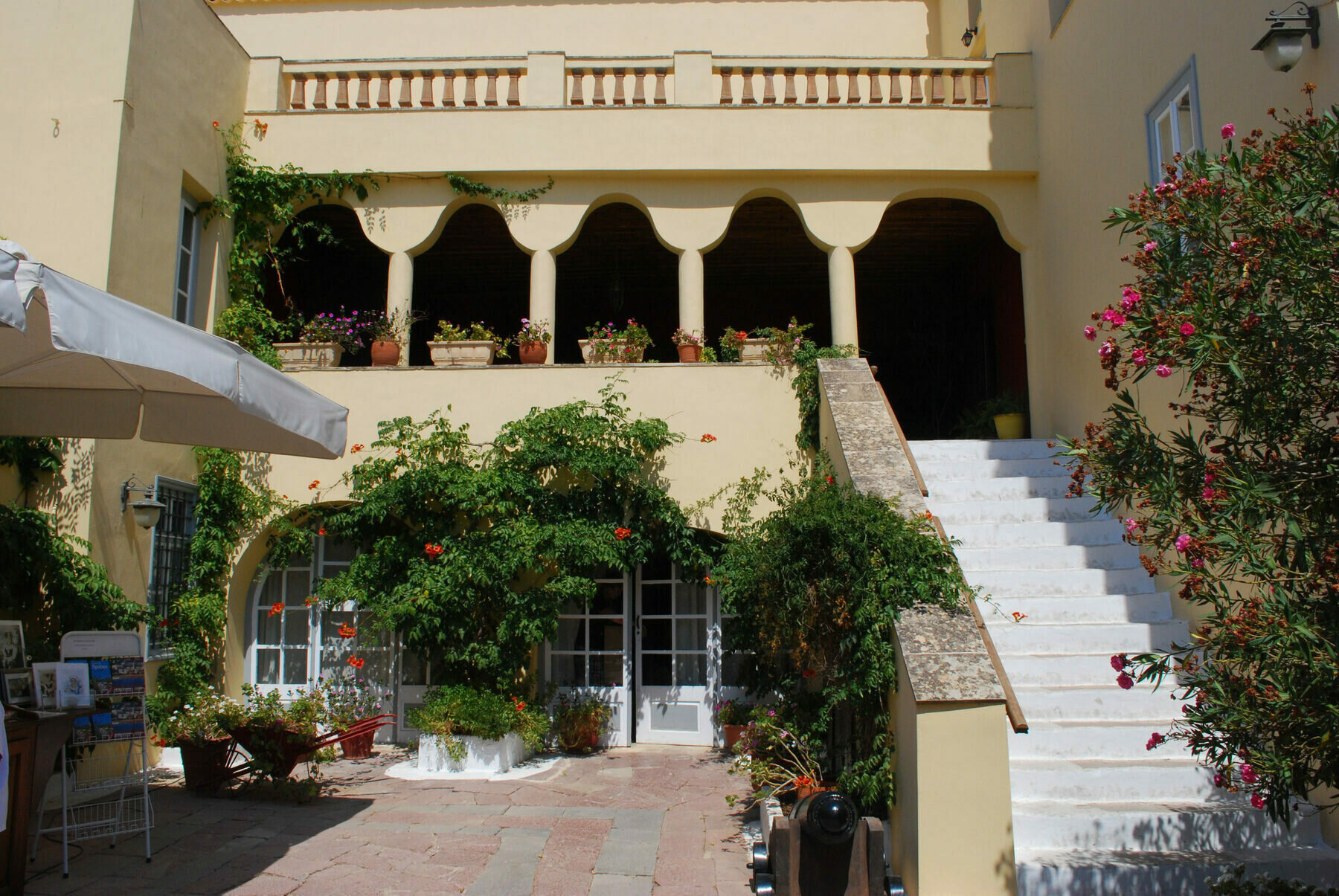
The preserved mansion of Laskarina Bouboulina, presenting her life, collections, and the island's role in the Greek War of Independence.
- Spetses Museum
Museum housed in the Hadjiyannis-Mexis mansion, presenting the island's long cultural and historical development.
- Poseidonion Grand Hotel
A landmark of the modern waterfront and a visual marker of Spetses' cosmopolitan island identity.
Overview and Maritime Heritage
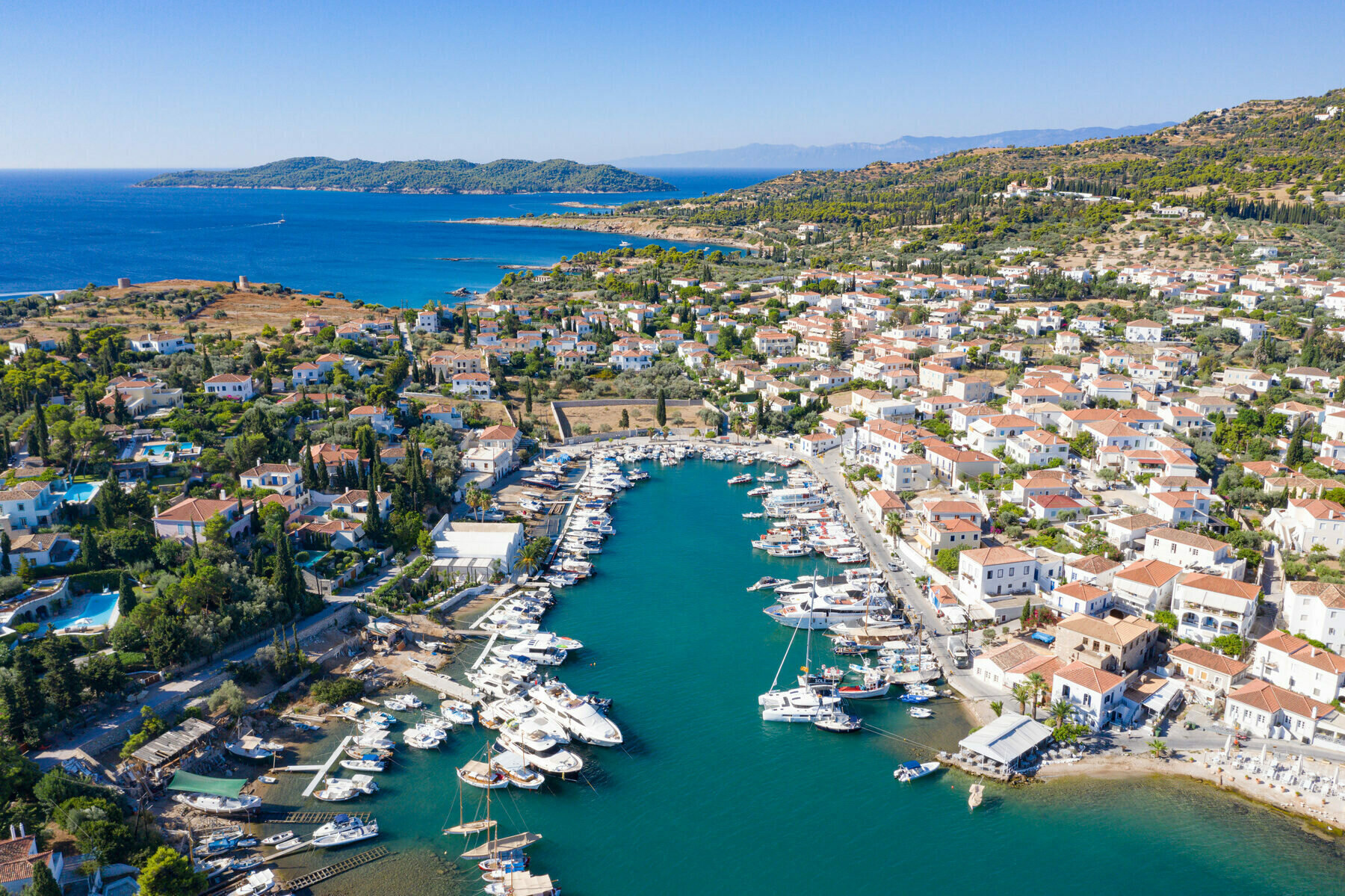
Spetses occupies a strategic position at the entrance to the Argolic Gulf where routes linking the Saronic Gulf, the Peloponnese, and the southern Aegean converged. Its importance rests on maritime commerce, shipbuilding, and naval enterprise. During the eighteenth century the island developed one of Greece's largest merchant fleets, and prosperous ship-owning families endowed the town with elegant mansions, churches, and civic buildings that still define its waterfront.
Historic Town, Dapia, and the Old Harbor
The historic settlement extends between Dapia and the quieter Old Harbor where traditional boatyards preserve Spetses' maritime identity. Captain's houses, Agios Mamas Church, waterfront promenades, and neoclassical architecture illustrate the evolution of a prosperous seafaring community closely connected with its natural harbors.
Bouboulina and the War of Independence
Laskarina Bouboulina and other Spetsiot captains transformed the island's merchant fleet into a revolutionary naval force. Her preserved mansion offers insight into both her remarkable life and the wider maritime society that supported the struggle for Greek independence.
Museums and Cultural Legacy
The Bouboulina Museum and the Spetses Museum together interpret the island's development from antiquity through the Ottoman period, the Revolution, and modern Greece. Annual commemorations such as the Armata Festival continue to celebrate this maritime heritage.
Why Spetses Matters
Spetses complements Greece's castles by illustrating the maritime dimension of Greek history. Together with Hydra and Psara it represents one of the great naval islands whose merchant fleets and naval leadership helped shape the modern Greek state.
Timeline
- Antiquity Spetses is inhabited from prehistoric times and participates in the maritime networks of the Argolic Gulf.
- 15th–17th centuries Albanian settlers repopulate the island following periods of depopulation during Ottoman expansion.
- 18th century Spetses prospers as a commercial and shipbuilding center, developing one of the largest merchant fleets in the Aegean.
- 1821 Spetses becomes one of the first islands to raise the flag of the Greek War of Independence.
- 1821–1827 The island's fleet, led by captains including Laskarina Bouboulina, plays a major role in naval operations against the Ottoman Empire.
- 1830 Following Greek independence, Spetses gradually transitions from naval center to commercial island community.
- 20th century Tourism develops while the island preserves its maritime architecture, captain's mansions and naval heritage.
- Present Spetses remains one of Greece's most important historic maritime towns and cultural destinations.
Expedition guides
Images
References
Related places
Related Stops
Topics
- Spetses
- Saronic
- Maritime
- Shipbuilding
- Bouboulina
- War Of Independence
- Neoclassical
- Historic Town