Overview
Anafi lies at the southeastern edge of the Cyclades, east of Santorini, and has preserved its ancient name with remarkable continuity. Greek myth connected the island with the Argonauts: after Jason appealed to Apollo during a violent night storm, the god's radiance was said to have caused the island to 'appear' from the darkness, giving rise to the cult titles Apollo Anafaios and Aiglitis. Archaeology places the ancient city on the fortified hill of Kastelli, probably established as a Dorian settlement in the eighth century BC. By the Hellenistic period Anafi minted its own coinage showing Apollo Aiglitis and, on the reverse, a krater and bee associated with local honey production. The city prospered into Roman times; necropoleis, portrait sculpture, inscriptions and an elaborate marble sarcophagus show a community tied to wider Mediterranean artistic and commercial networks. Southeast of Kastelli a sacred road, lined with monuments and altars, led to the imposing sanctuary of Apollo Aiglitis at the eastern end of the island. The city's defensive system extended beyond its walls to towers at Pyrgi and on the islet of Pachia, while occupation is also documented on Megala Ftena. Early Christian settlement continued around Katalymatsa into the sixth century. Medieval Anafi is less well documented until the island passed into the Venetian sphere in 1207. Chora's first major fortified occupation belongs to the Foscolo period in the thirteenth century; its defenses were renewed in the early fifteenth century, while another castle was created around the summit of Kalamos. The Byzantine church of Agios Antonios, with the island's only surviving monumental fresco painting, dates to the early fourteenth century. Ottoman conquest followed in 1537. Post-Byzantine Anafi developed a dense network of churches and two monasteries associated with Panagia Kalamiotissa: the lower monastery of Zoodochos Pigi occupies the ancient sanctuary of Apollo, while the upper Kalamiotissa crowns the immense rock of Kalamos. Chora's compact whitewashed architecture, rural stone houses, vaulted interiors, ovens and family ossuaries preserve a distinctive local building tradition. In the nineteenth century Anafiot craftsmen migrated to Athens and helped rebuild the new capital, creating the famous Anafiotika quarter beneath the Acropolis. Modern Anafi remains comparatively lightly developed, and its cultural identity is still defined by walking routes, pilgrimage, traditional architecture, archaeology and the dramatic landscape of Kalamos.
Highlights
- Kalamos
A vast limestone monolith whose summit combines medieval castle remains, Upper Kalamiotissa and one of the Cyclades' most dramatic pilgrimage landscapes.
- Ancient Anafe
The fortified city at Kastelli preserves the island's principal ancient civic center, necropoleis and evidence for prosperity into Roman times.
- Zoodochos Pigi
The lower Kalamiotissa monastery occupies the ancient sanctuary of Apollo Aiglitis, making it one of Anafi's clearest examples of sacred continuity.
- Kalamiotissa
Upper Panagia Kalamiotissa crowns Kalamos and remains the destination of the island's major September pilgrimage.
- Chora
A compact Venetian-founded hill settlement where Kastro, vaulted houses, churches and narrow lanes preserve Anafi's defensive and vernacular architecture.
Strategic role
A remote southeastern Cycladic island whose ancient fortified city, sanctuary of Apollo Aiglitis, sacred road, defensive towers, Venetian Chora, Kalamos fortress and monastic landscape preserve a distinctive history of religion, seafaring, defense and architectural adaptation.
Ancient Anafe
The ancient city occupied Kastelli, where strong fortifications, an acropolis and extensive funerary remains survive. The Ephorate of Antiquities considers the settlement probably Dorian in origin and dates its foundation to around the eighth century BC. Anafi later entered the Athenian alliance system and paid tribute, while from about 300 BC it minted its own coinage. The obverse carried the head of Apollo Aiglitis; the reverse combined a krater and bee, the latter plausibly referring to the island's honey production. The city reached particular prosperity under Rome. On the southeastern slope, cemeteries included both built and rock-cut chamber tombs, many approached by stairways. Funerary sculpture, portrait busts, inscriptions and imported marble attest participation in the artistic conventions of the Roman Mediterranean. A richly carved marble sarcophagus near Panagia at Dokari bears reliefs of Erotes, griffins, Sirens, Bellerophon and Pegasus.
Apollo Aiglitis
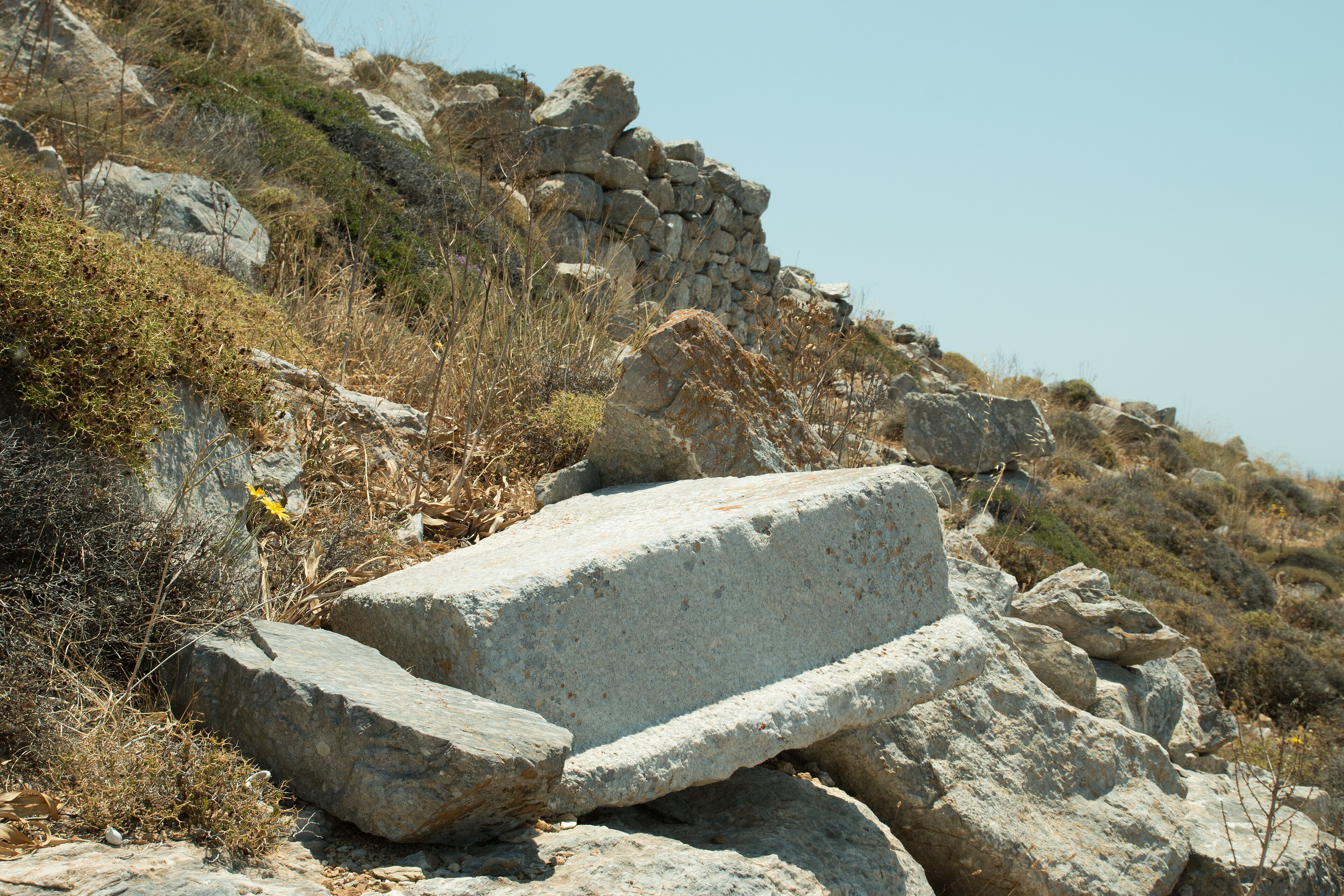
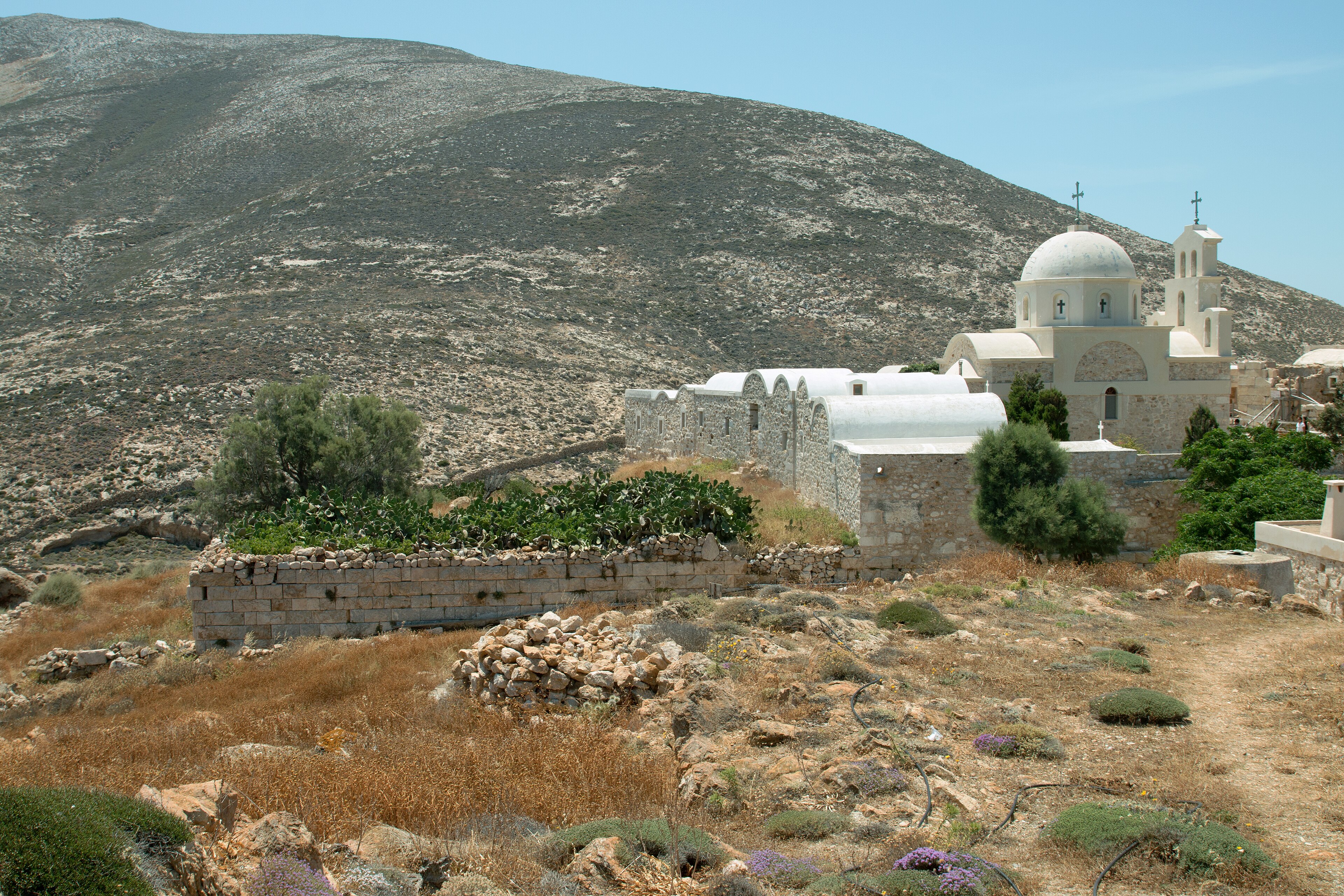
The sanctuary of Apollo Aiglitis was one of the defining sacred places of ancient Anafi. According to the island's foundation myth, Apollo saved the Argonauts during a night storm by causing a radiant light to reveal the island; the epithet Aiglitis derives from aiglē, 'radiance' or 'gleam'. The historical sanctuary lay southeast of the city at the eastern end of a sacred road. The Ephorate describes an impressive precinct enclosed by a large, high peribolos. At its center stood the ancient temple, on whose foundations a Christian church was later built. Architectural blocks and ruins around the enclosure indicate additional sacred or service buildings. The continuity of worship is one of Anafi's most important historical themes: the ancient Apollonian sanctuary became the setting of the lower Kalamiotissa monastery and remains a living religious landscape.
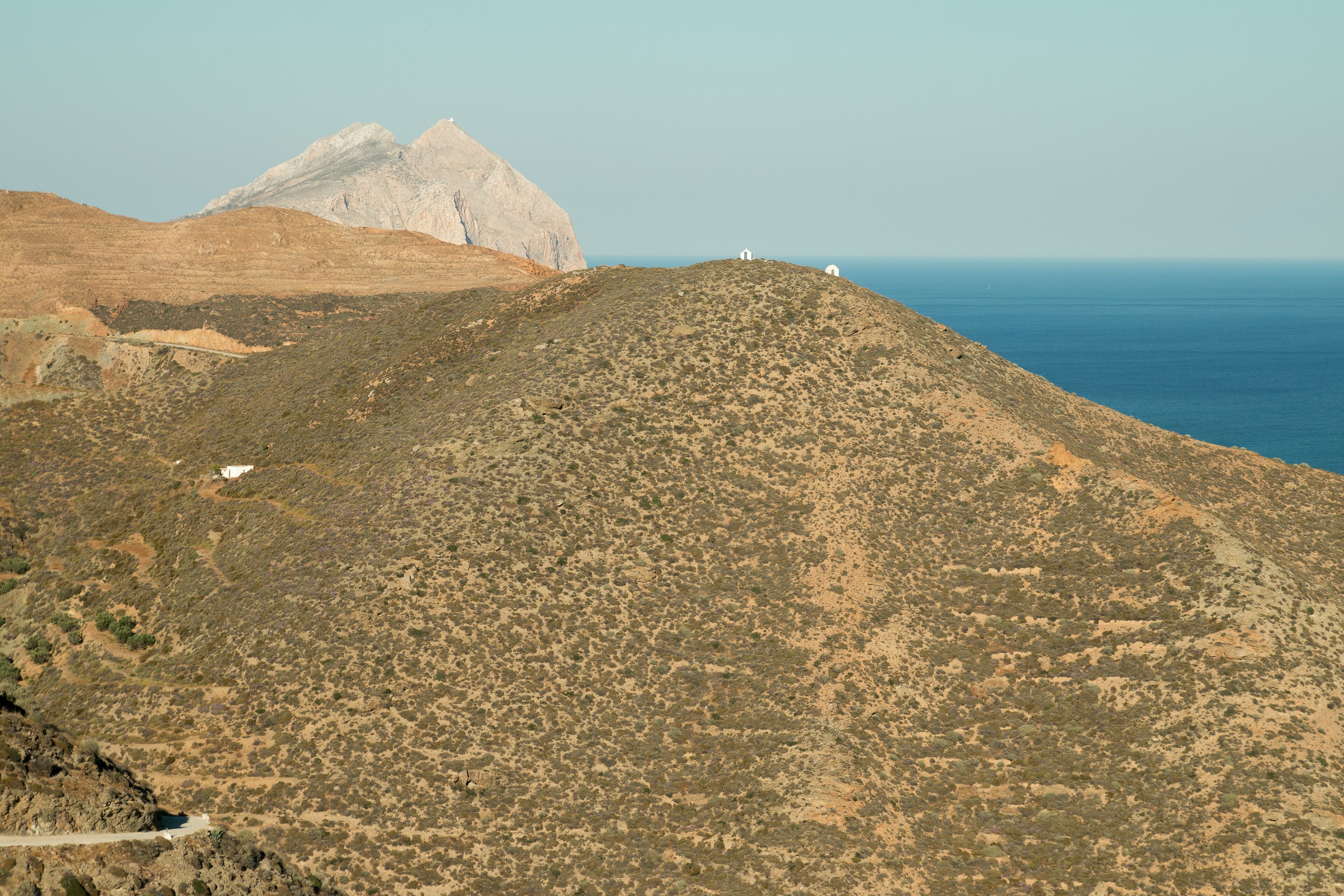
Kalamos
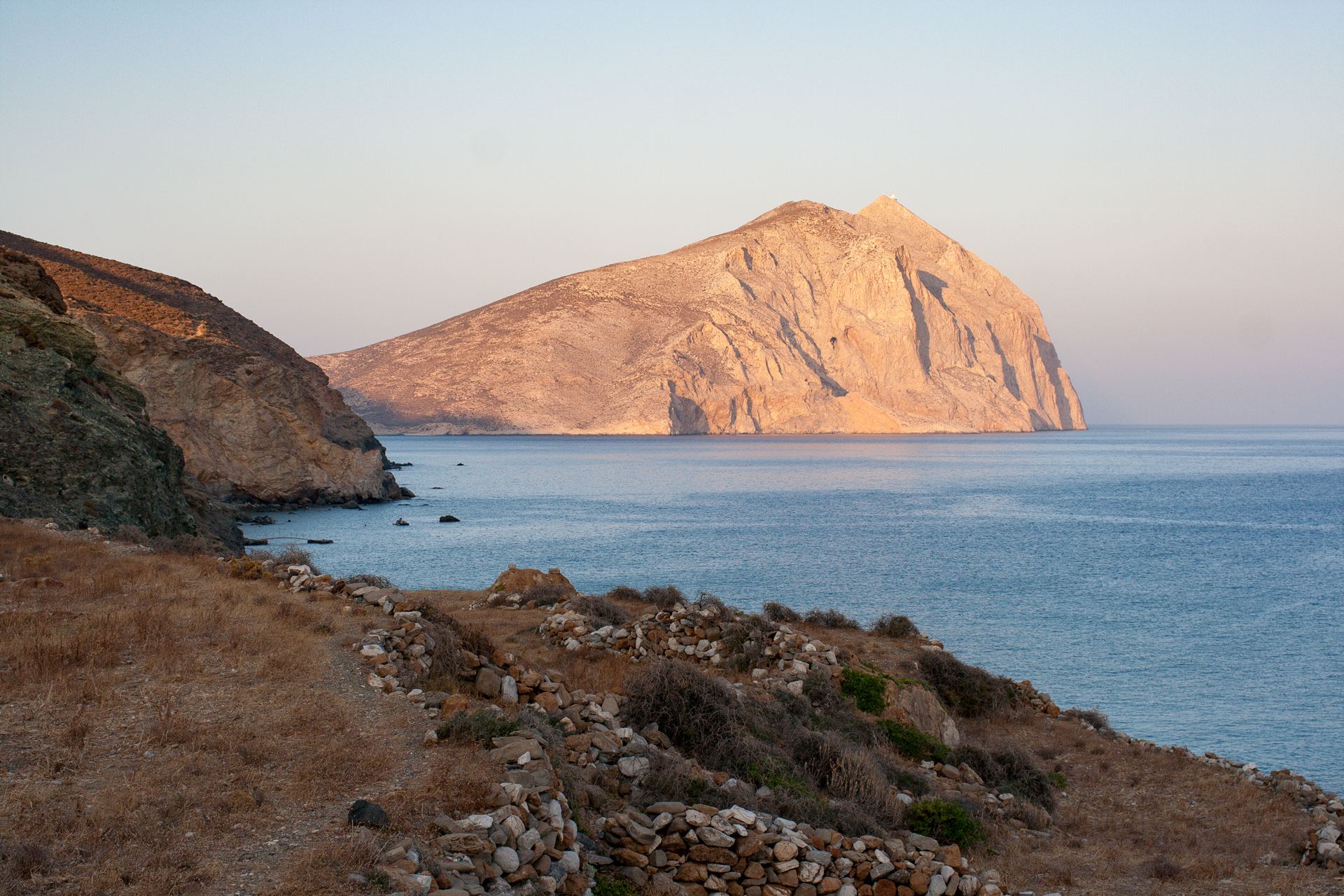
Kalamos dominates southeastern Anafi as a vast limestone monolith rising abruptly above the sea. The Greek National Tourism Organisation describes it as the second-highest monolithic limestone mass after Gibraltar. The rock is not merely a natural spectacle: castle remains survive around its summit, while the monastery of Upper Panagia Kalamiotissa occupies the highest sacred point. The physical difficulty of the site shaped both defense and devotion. Its sheer faces offered refuge and surveillance in the medieval period; later the exposed summit became the destination of one of the Cyclades' most demanding pilgrimages. The combination of geology, fortification, sacred architecture and panoramic maritime visibility makes Kalamos the island's defining cultural landscape.
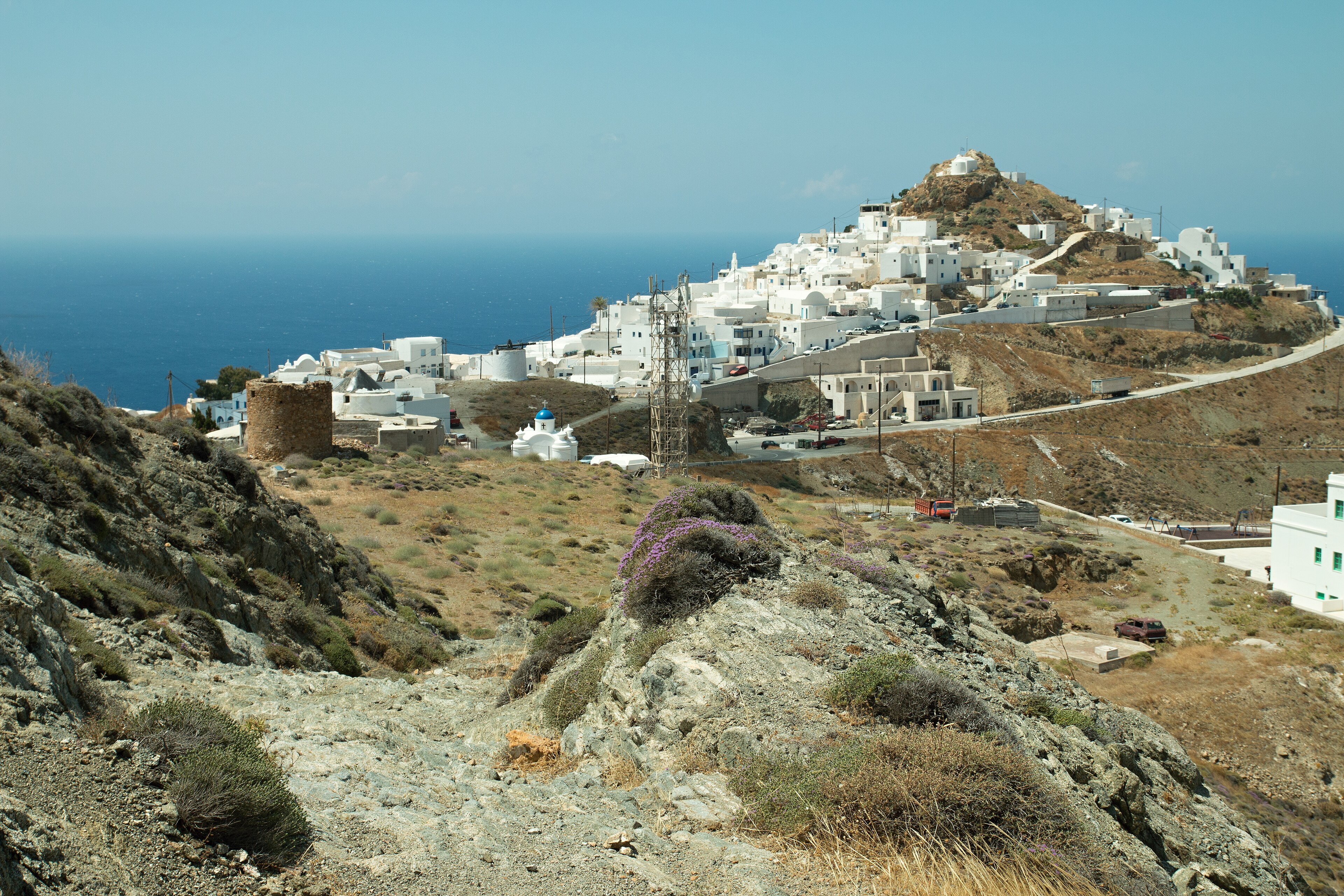
Chora
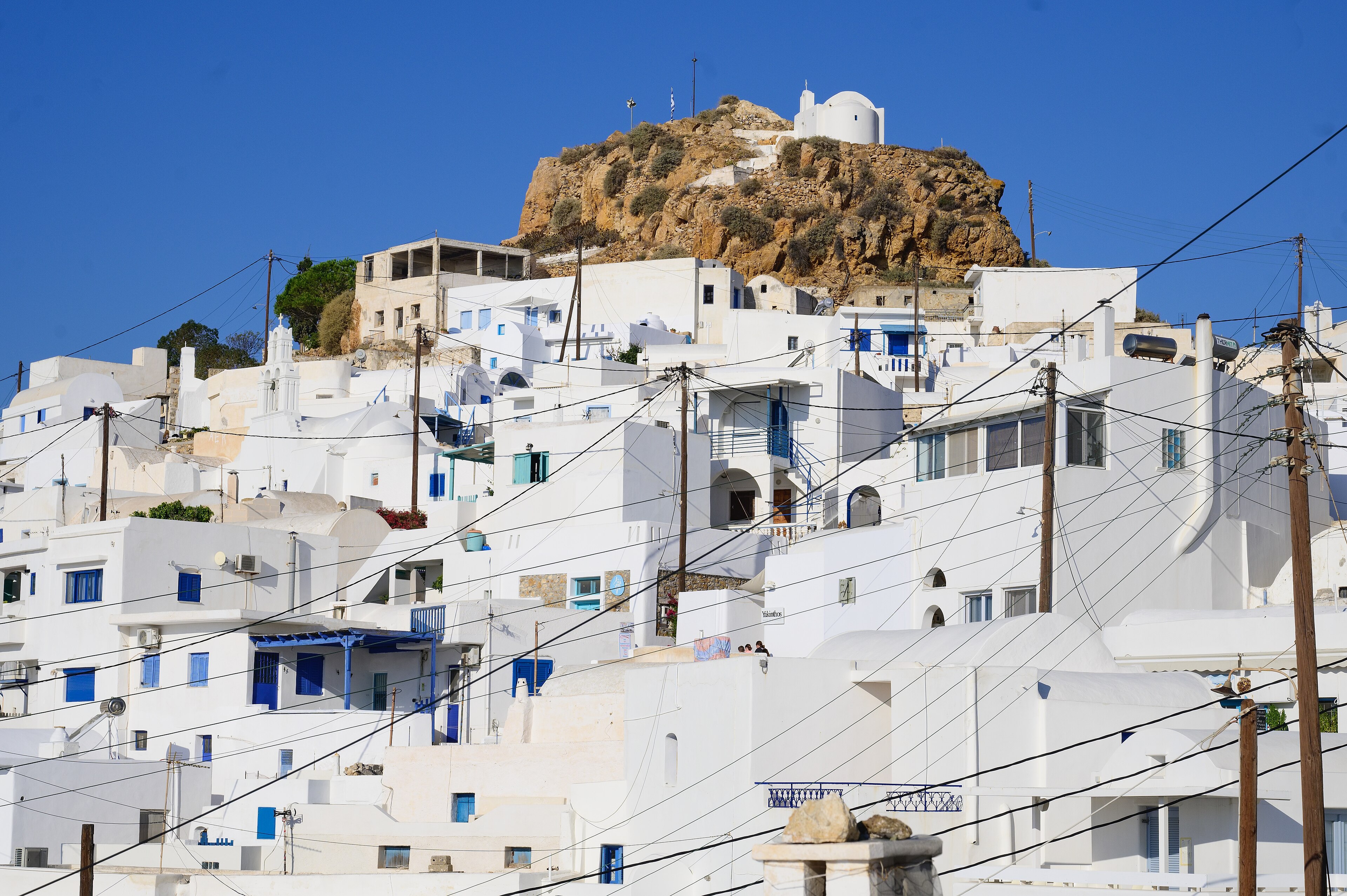
Anafi Chora is a compact settlement whose morphology reflects steep terrain, limited building space and centuries of insecurity. The Ephorate dates the initial fortified occupation of the hill to the first period of Venetian rule under the Foscolo family in the thirteenth century. In the early fifteenth century a new enceinte was constructed and the Kastro repaired as protection against growing Ottoman pressure. Modern Chora spread around this fortified nucleus. Houses are closely packed, whitewashed and linked by narrow lanes, stairs and small open spaces. Unlike some better-known Cycladic towns, Anafi retains particularly strong evidence for vaulted domestic interiors supported by thick masonry walls. The settlement is therefore important not simply for its visual character but for its relationship to the medieval Kastro and a specialized local building tradition.
Monastic Landscape
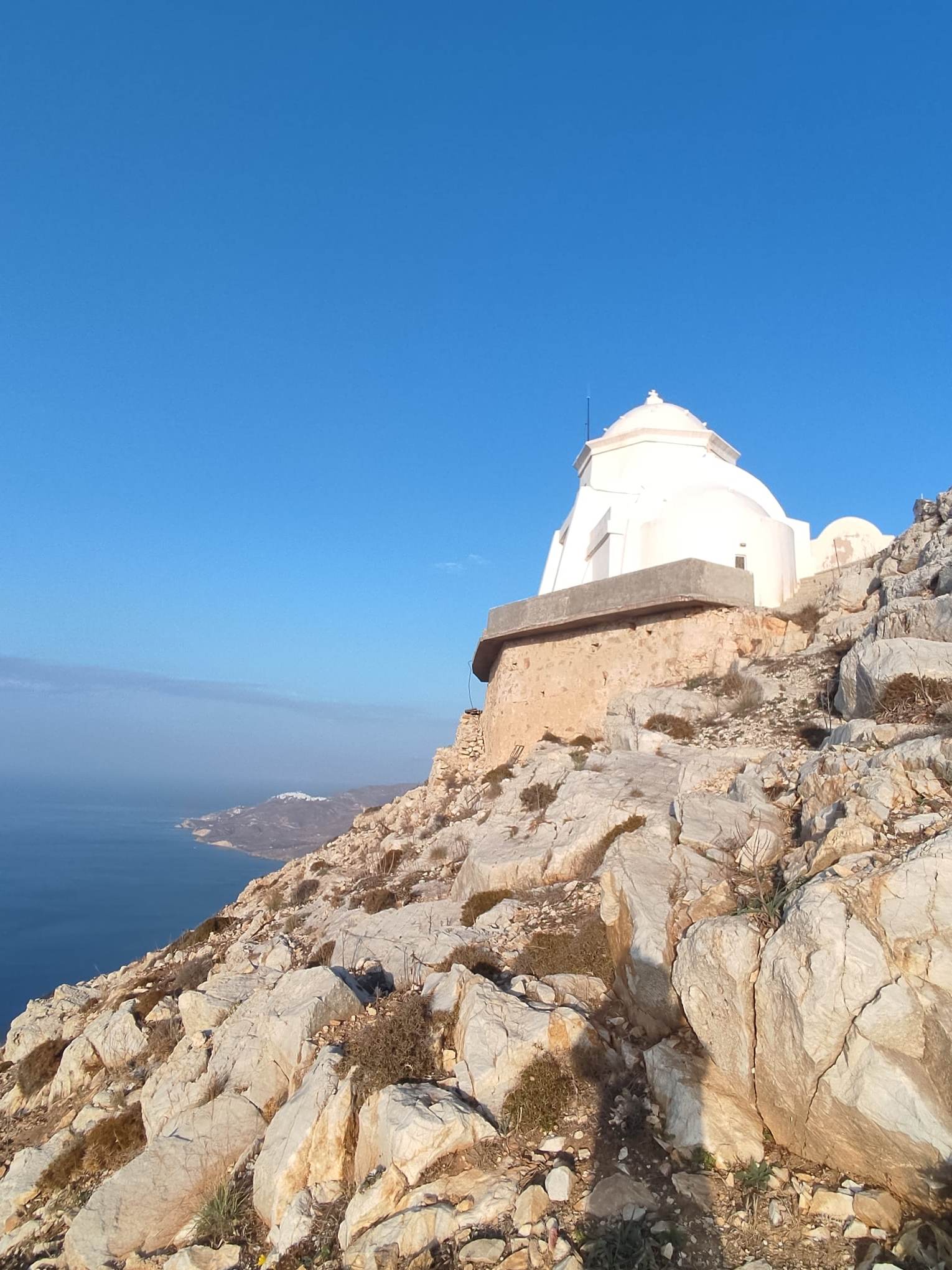
The lower and upper Kalamiotissa monasteries connect ancient sacred geography with post-Byzantine Orthodox life. The lower complex, usually identified with Zoodochos Pigi or Kato Kalamiotissa, occupies the sanctuary of Apollo Aiglitis and incorporates ancient material. The upper monastery stands at the summit of Kalamos and is dedicated to the Nativity of the Virgin. Its katholikon is a single-aisled domed church with a semicircular eastern apse and a two-arched neoclassical bell tower; four cells and a cistern also survive. The two sites operate as a linked sacred system. For the feast of the Nativity of the Virgin on 8 September, the icon is carried to Upper Kalamiotissa for an overnight vigil and returned the next morning to the lower monastery.
The Sacred Road
The ancient city's sacred road began southeast of Kastelli and crossed the island toward the sanctuary of Apollo Aiglitis. The Ephorate records altars and monuments along its course, demonstrating that movement itself formed part of ritual. This was not merely a practical route between city and temple but a processional landscape. The road linked civic identity, myth and geography: worshippers left the fortified city, crossed the rural interior and approached the eastern sanctuary beneath Kalamos. The later Christian pilgrimage between the Kalamiotissa monasteries echoes this older tradition of sacred movement across the island, even though the rituals and theology are entirely different.
Ancient Defense Beyond the City Walls
The defenses of ancient Anafi extended beyond Kastelli. In addition to the strong wall surrounding the city, the Ephorate identifies at least two ancient towers: one at Pyrgi and another on the islet of Pachia. Archaeological traces are also visible on Megala Ftena. Such sites suggest surveillance of maritime approaches, agricultural territory and nearby islets rather than defense confined to a single urban enclosure. Anafi's position near major eastern Aegean routes made early warning and control of anchorages especially valuable. The system anticipates the later medieval pattern in which Chora and Kalamos formed separate but complementary defensive nodes.
Katalymatsa: Harbor of the Ancient and Roman City
The bay of Katalymatsa on the south coast served as the epineion, or harbor settlement, of ancient and Roman Anafi. Its relationship to Kastelli illustrates the island's classic defensive pattern: the civic center occupied defensible high ground, while maritime activity took place below on the coast. Archaeological and architectural remains show continuing occupation into the sixth century AD. Early Christian sculpture and building fragments, probably including a basilica, demonstrate that the harbor zone remained active after the ancient civic system had begun to change.
Roman Anafi and Funerary Culture
Roman-period Anafi is unusually visible through funerary monuments. The Archaeological Collection preserves life-size draped male and female statue bodies from Kastelli, several designed to receive separately carved portrait heads. Such statues belonged to a Mediterranean-wide language of elite commemoration but were adapted to local families and burial contexts. The imported marble indicates continued trade connections. The Dokari sarcophagus and numerous inscriptions add a more personal dimension, showing how prominent Anafiots marked status, memory and family identity during the Roman imperial era.
Early Christianity and the Byzantine Gap
Evidence for the earliest Christian centuries is limited but significant. Katalymatsa remained inhabited until at least the sixth century, and scattered architectural sculpture suggests a Christian basilica. Knowledge becomes much thinner between the sixth century and the Venetian takeover in 1207. A useful exception is an eighth-century lead seal referring to a royal kommerkiarios who collected revenues from Anafi together with Milos, Ios, Andros and Amorgos. The seal provides indirect evidence that the island still participated in Byzantine fiscal and commercial administration even when archaeological remains are sparse.
Venetian Chora and the Kastro
After 1207 Anafi entered the Venetian political world of the Cyclades. The first major fortification and habitation of the Chora hill belongs to the Foscolo period in the thirteenth century. In the early fifteenth century, as Ottoman pressure increased across the Aegean, Chora's defenses were renewed and a new perimeter wall constructed. Surviving remains do not form a monumental castle comparable with Naxos or Rhodes; rather, the defensive logic is embedded in the hill settlement itself. Kastro and houses together created a protected core whose location reduced exposure to raids from the sea.
The Castle of Kalamos
Around the summit of Kalamos survive remains of another medieval fortification, broadly dated by the Ephorate to the same period as the early-fifteenth-century strengthening of Chora or perhaps slightly earlier. Its extraordinary position created a natural redoubt with commanding views over the southeastern approaches. Later monastic occupation obscured parts of the castle, but the ruins demonstrate that Anafi's medieval defense was distributed between the inhabited capital and a remote high refuge. The upper Kalamiotissa therefore occupies not only a sacred summit but a former fortified landscape.
Agios Antonios and Medieval Painting
The church of Agios Antonios was built in the early fourteenth century and preserves the only surviving example of monumental medieval wall painting on Anafi. Its significance is therefore disproportionate to its small scale. The frescoes provide rare direct evidence for religious art on an island whose medieval architectural record is otherwise dominated by fortifications and later churches. Agios Antonios also confirms continuing Orthodox religious life during Latin political rule.
Ottoman Conquest and Post-Byzantine Renewal
Anafi was captured by Ottoman forces in 1537. Travelers of the Ottoman period describe Chora and both Kalamiotissa monasteries, demonstrating the persistence of the island's principal sacred and residential centers. In the countryside, churches such as Agios Mamas and Panagia at Dokari belong to the post-Byzantine period; within Chora, churches received carved and painted iconostases, icons and other furnishings. The architectural record therefore shows substantial Orthodox continuity under Ottoman rule rather than cultural interruption.
Traditional Architecture
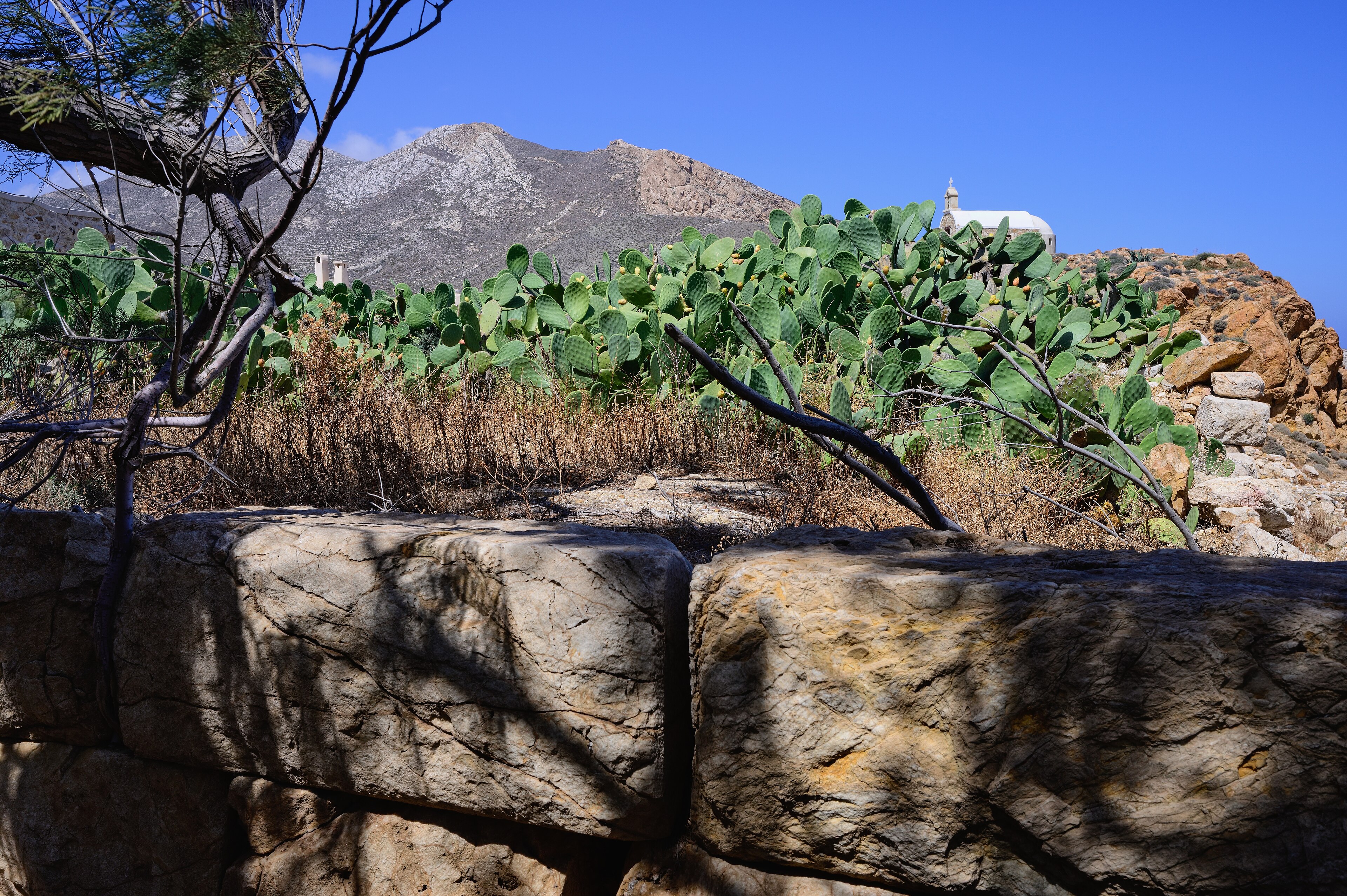
Anafi developed a vernacular architecture distinctive enough to be documented separately by the Ephorate. Rural houses are rectangular stone buildings with flat roofs, traditionally constructed from local stone and integrated closely into the landscape. Many were accompanied by large or small outdoor ovens known as fournia. In Chora, domestic buildings more often used vaulted roofs supported on thick masonry walls. Ovens also appear within domestic courtyards. These forms were practical responses to materials, wind, fuel and household production, and they help explain why Anafiot craftsmen later developed a strong reputation as builders.
Fournia and Mnēmoria
Two small architectural forms give Anafi's rural landscape unusual character. The fournia are circular ovens divided vertically into two chambers: brushwood and other fuel burned below, while food was placed in the upper space before openings were sealed with stone and clay. Family ossuaries known as mnēmoria form another distinctive tradition. Often shaped like miniature churches, they house the bones of deceased family members and are scattered through the countryside in locations chosen by living relatives. Together these modest structures reveal how domestic production, memory and landscape were physically organized.
Anafiot Builders and Anafiotika in Athens
Anafi's architectural influence extended far beyond the island. In the mid-nineteenth century Anafiot craftsmen were recruited to Athens during the reconstruction of the new Greek capital and the building of King Otto's palace. They became renowned as masons and carpenters and created homes for themselves beneath the Acropolis. The district became known as Anafiotika. Both the Ephorate and the Region of Attica connect the neighborhood directly with migrant builders from Anafi. Its compact white houses and narrow stepped lanes translated Cycladic building practices into the center of Athens, making Anafi's vernacular tradition part of the architectural history of the modern Greek capital.
Upper Kalamiotissa and the September Pilgrimage
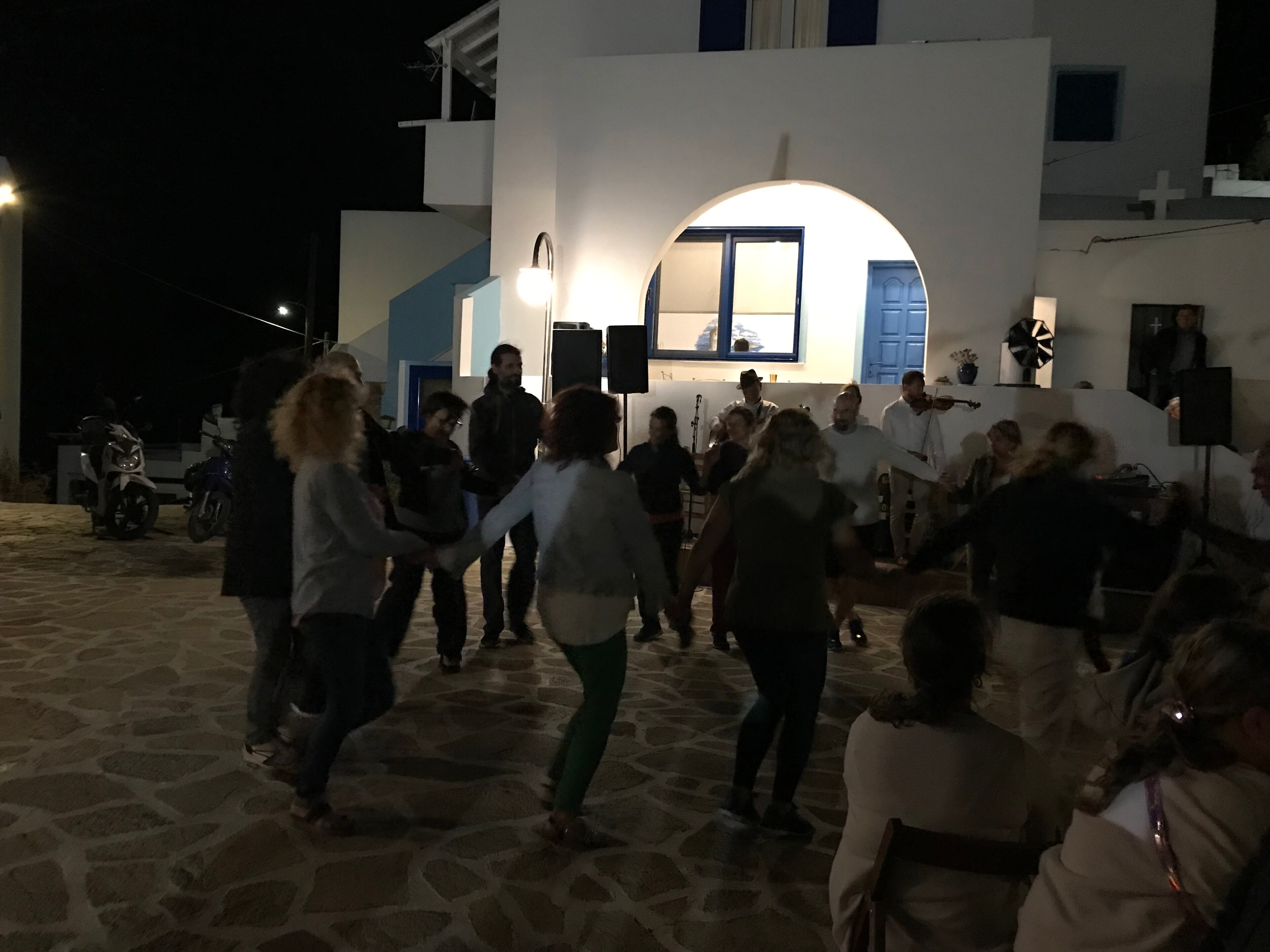
Upper Kalamiotissa is not simply an abandoned historic monastery. It remains central to the island's largest annual religious celebration. On the eve of 8 September, residents carry the icon of the Virgin from the lower monastery to the summit of Kalamos. An all-night liturgy is held, and the icon returns the following morning. The pilgrimage transforms the difficult mountain path into a living sacred route and reinforces the relationship among Chora, lower sanctuary, Kalamos and island community. Modern photographs of the celebration show that the event includes both formal worship and communal festivities.
Archaeological Collection of Anafi
Anafi's small Archaeological Collection in Chora occupies only about twenty square metres but is important because the island's monuments are so widely dispersed. It was created after a large fire in 1997 exposed archaeological material and prompted systematic surface collection. The display includes Roman draped statues from Kastelli, inscriptions, sarcophagus fragments and a bronze coin of Anafi. The collection provides the best introduction to the island's ancient city before visiting the more difficult outdoor sites.
Kalamos, Nature and the Eastern Landscape
Kalamos is also a major natural monument. Its limestone mass rises abruptly above an otherwise rugged island of mountain ridges, green valleys and sandy southern beaches. The east end of Anafi and surrounding islets form a landscape of high ecological and visual value. Exposure to strong Aegean winds, scarce shade and steep terrain has always shaped human movement and architecture. The monasteries, ancient sanctuary and medieval castle make this natural setting inseparable from cultural history.
What to Visit Today
For a first visit, begin with Chora, the Archaeological Collection and Kastro district, then walk through the traditional streets and note vaulted houses, churches and the relationship between settlement and hilltop defense. The ancient city at Kastelli and the Dokari funerary landscape should follow for visitors comfortable with rough paths. The lower monastery at Zoodochos Pigi is essential because it preserves visible remains of Apollo Aiglitis's sanctuary. Kalamos and Upper Kalamiotissa form the island's most dramatic excursion but require fitness, early departure, water and stable weather. Katalymatsa, rural chapels and historic paths reward a longer stay.
Why Anafi Matters
Anafi matters because isolation preserved a sequence of cultural landscapes that elsewhere have often been fragmented. Kastelli and its towers reveal an ancient fortified island community; Apollo Aiglitis's sanctuary links mythology with archaeology; Roman tombs and sculpture show wider Mediterranean participation; Chora and Kalamos preserve a two-part Venetian defensive system; the Kalamiotissa monasteries demonstrate sacred continuity across the ancient and Christian eras; and vernacular builders carried Anafi's architectural traditions into modern Athens. The island is small, but its historical reach is unusually broad.
Architecture
- Fortified ancient city at Kastelli with strong enceinte, acropolis and necropoleis
- Sacred road from ancient Anafe to the sanctuary of Apollo Aiglitis, formerly lined with altars and monuments
- Apollo Aiglitis sanctuary with massive high peribolos and temple foundations incorporated into later Christian construction
- Ancient defensive towers at Pyrgi and on the islet of Pachia
- Roman rock-cut and built tombs, portrait sculpture and decorated marble sarcophagus at Dokari
- Early Christian remains at Katalymatsa, probably including a basilica
- Venetian-period Kastro of Chora, first fortified in the 13th century and re-walled in the early 15th century
- Medieval castle remains around the summit of Kalamos
- Early-14th-century church of Agios Antonios with surviving monumental fresco decoration
- Lower Kalamiotissa / Zoodochos Pigi monastery built within the remains of the ancient sanctuary
- Upper Kalamiotissa monastery on Kalamos, with single-aisled domed katholikon, semicircular apse, four surviving cells and cistern
- Compact whitewashed houses of Chora, including vaulted interiors carried on thick masonry walls
- Rural rectangular stone houses with flat roofs and associated outdoor ovens known as fournia
- Family ossuaries known as mnēmoria, often built in small temple-like forms across the landscape
Timeline
- 8th century BC, probable The ancient city at Kastelli is established, probably by Dorian settlers.
- Classical period Anafi participates in the Athenian alliance system and pays tribute.
- c. 300 BC onward Anafi mints coinage depicting Apollo Aiglitis and a krater with a bee.
- Hellenistic period The fortified city, sacred road, Apollo sanctuary and island tower network remain active.
- Roman period Ancient Anafi prospers; elaborate tombs, portrait sculpture, inscriptions and the Dokari sarcophagus attest wealthy families and wider Mediterranean connections.
- up to 6th century AD Katalymatsa remains occupied and includes Early Christian architectural remains, probably including a basilica.
- 8th century AD A Byzantine lead seal records fiscal administration involving Anafi and neighboring Cycladic islands.
- 1207 Anafi passes into the Venetian political sphere.
- 13th century The Chora hill is fortified and inhabited during the Foscolo period.
- early 14th century The church of Agios Antonios is built and decorated with the island's only surviving monumental medieval frescoes.
- early 15th century A new defensive enceinte is constructed at Chora and the Kastro repaired; the Kalamos castle belongs broadly to the same defensive phase.
- 1537 Ottoman forces capture Anafi.
- post-Byzantine period Churches, monasteries and domestic religious furnishings expand across Chora and the countryside.
- 19th century Anafiot builders migrate to Athens and contribute to rebuilding the new capital; their settlement beneath the Acropolis becomes Anafiotika.
- 1997 A major fire exposes archaeological material and stimulates systematic surface collection that leads to the Archaeological Collection of Anafi.
- 21st century Archaeological research, pilgrimage, hiking and low-density tourism increasingly define Anafi's heritage economy.
Visiting today
A historically focused visit should begin in Chora with the small Archaeological Collection, Kastro district and surviving traditional architecture. The ancient city at Kastelli, nearby funerary remains and the Dokari sarcophagus reward a dedicated walking excursion. The lower monastery of Zoodochos Pigi is essential because it preserves the sanctuary landscape of Apollo Aiglitis; visible ancient masonry and architectural members should be read together with the Christian complex. Kalamos and the upper Kalamiotissa require a strenuous exposed hike with little shade; start early, carry ample water and avoid strong wind or extreme heat. The ascent is not appropriate in poor weather. Current access and opening hours for the Archaeological Collection and ecclesiastical sites should be checked locally. The September pilgrimage to Upper Kalamiotissa is one of the island's most important living traditions.
Expedition guides
Images
References
- Ephorate of Antiquities of the Cyclades — Anafi: Island History
- Ephorate of Antiquities of the Cyclades — Anafi and Traditional Architecture
- Ephorate of Antiquities of the Cyclades — Archaeological Collection of Anafi
- Ephorate of Antiquities of the Cyclades — Upper Kalamiotissa Monastery
- Greek National Tourism Organisation — Anafi
- Region of Attica — Anafiotika
Related Stops
Topics
- Cyclades
- Historic Island
- Ancient Greek
- Apollo Aiglitis
- Sacred Road
- Roman
- Venetian
- Kastro
- Kalamos
- Fortified Island
- Kalamiotissa
- Monastic Heritage
- Vernacular Architecture
- Anafiotika
- Historic Paths
- Pilgrimage
- Rural Architecture