The surviving city boundary
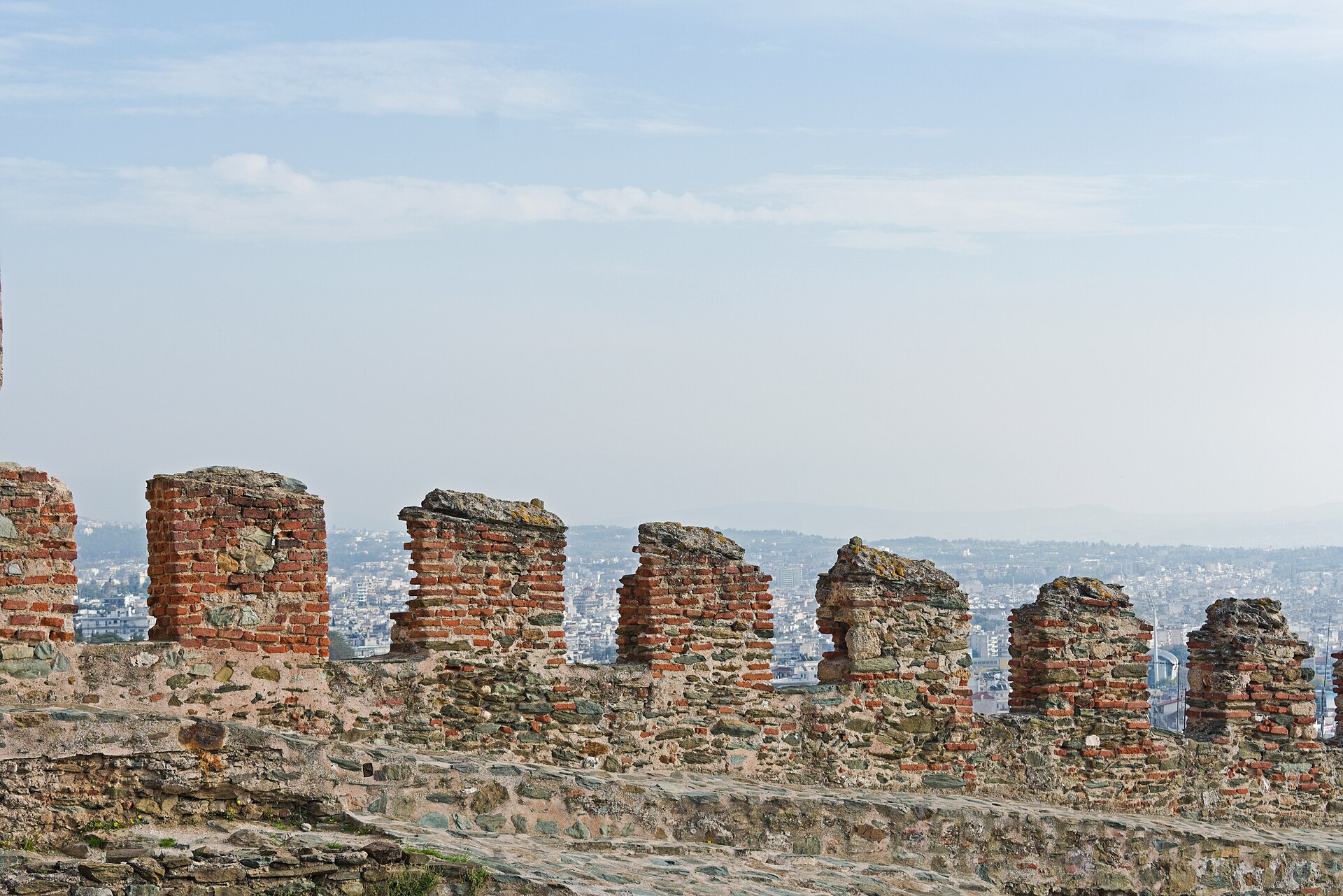
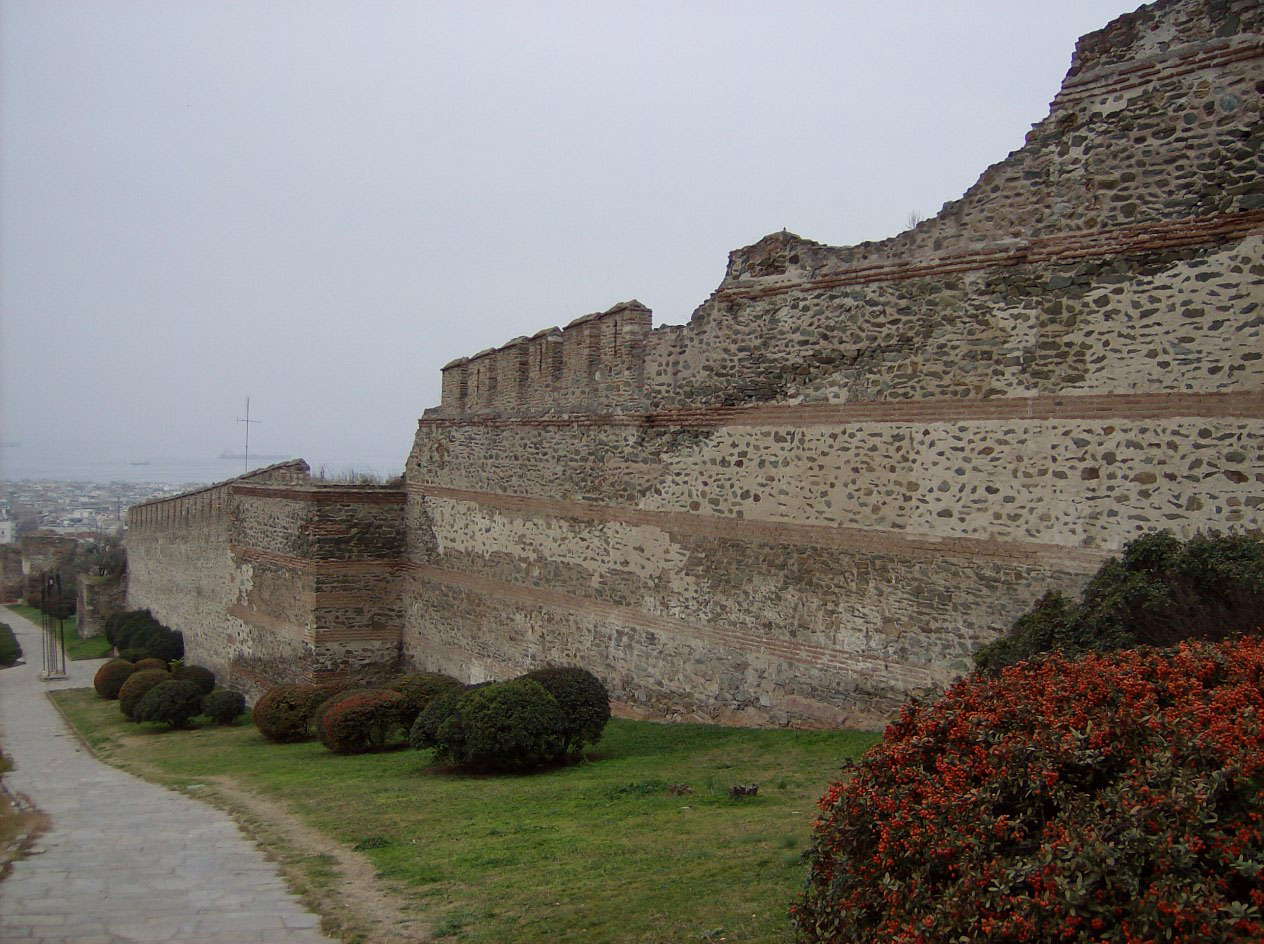
The fortifications separated the inhabited city from its approaches and countryside, with gates connecting major routes. Much of the surviving form belongs to late Roman and Byzantine rebuilding, followed by further repairs and Ottoman adaptation. Stone, brick and reused architectural material make that long life visible, but individual patches cannot reliably be dated by a quick glance.
Northwestern and eastern stretches
The northwestern walls meet the steep, densely occupied city edge, while the eastern stretches lead the eye toward the Upper City and the Trigonion area. Notice how towers project beyond curtains and how changes of ground affect the defensive line. Public streets offer several viewpoints; some stretches abut private property or protected work areas, so their presence on a map does not establish public access along the whole circuit.
The Acropolis and its inner divisions
The Acropolis is the higher defended zone, with an intermediate wall separating it from the town below. The Heptapyrgion forms a distinct fortress at its northeastern height rather than a name for the whole upper enclosure. Reading these successive boundaries explains defense in depth: reaching one wall did not necessarily give an attacker control of everything behind it.
The missing maritime side
The formerly enclosed waterfront was transformed by demolition and modern urban growth. The White Tower survives where land and sea defenses met, and archaeological investigations have identified remnants of lost stretches elsewhere. The open promenade should therefore be understood as a later city landscape. Pairing surviving upper walls with the waterfront helps recover the scale of the former circuit without pretending that the missing portions remain visible.
A walk and a dated conservation snapshot
Choose a manageable group of stretches, gates and viewpoints and use the city’s museums to put the fabric in context. Slopes, stairs and ordinary road crossings are part of the visit. In November 2026, conservation of northern, northwestern and western stretches and architectural-lighting projects have separate official records. The announced January 2027 lighting target and the separate eastern-wall/Egnatia project target of March 2028 are future milestones, not evidence that a complete illuminated circuit is already available.
Images