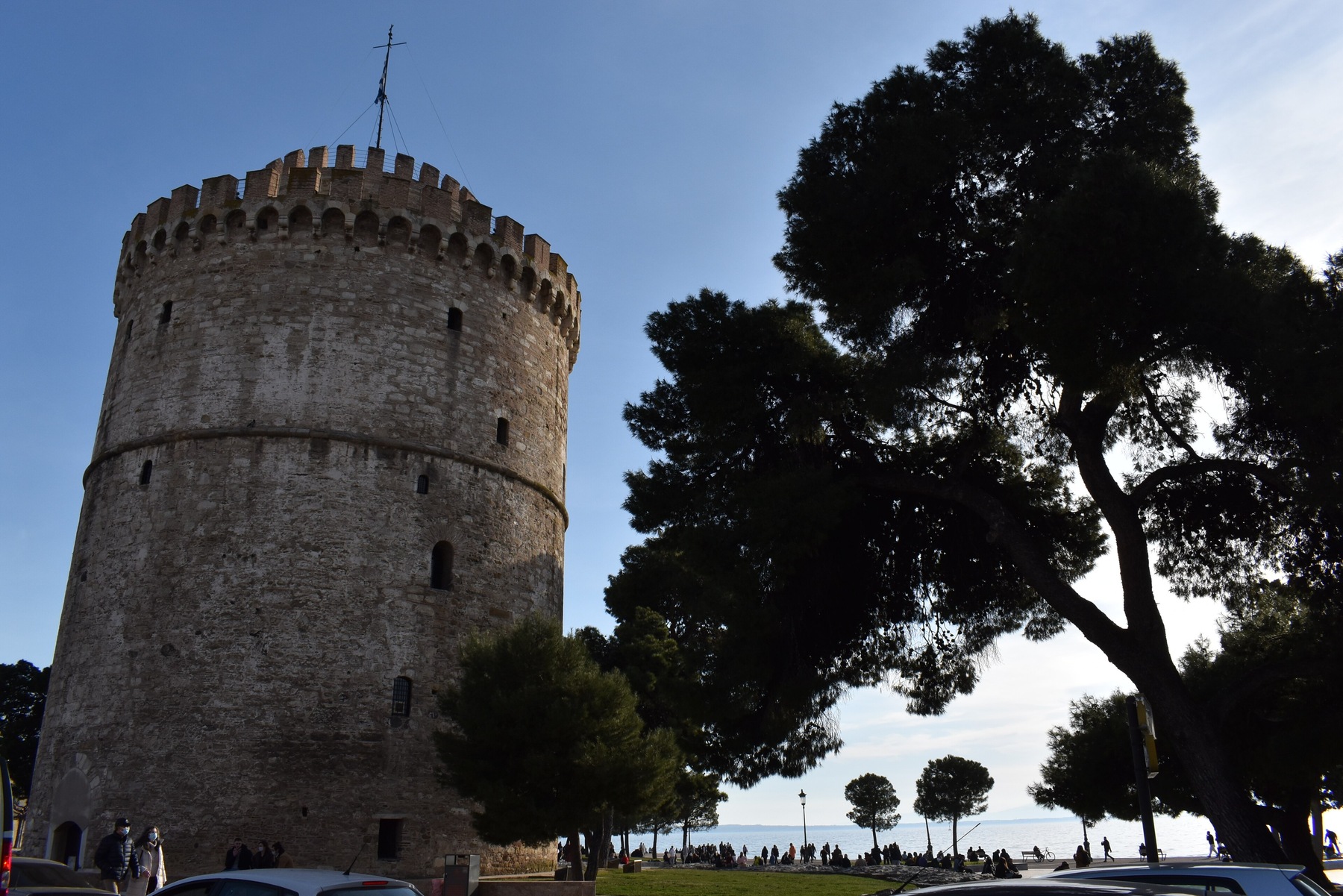
A tower at the edge of the defended city
The waterfront around the tower was once a fortified boundary, rather than the open promenade seen today. The tower formed part of an Ottoman defensive complex with an enclosing low wall; traces of that outer arrangement help explain why it originally occupied more ground than its circular shell suggests. Much of the maritime circuit was removed as the modern city expanded toward the sea.
Fortification, imprisonment and a changing name
The tower belongs to Ottoman military rebuilding, even though a Byzantine predecessor occupied this position. Its later prison use gives the monument a history of coercion and execution as well as defense. The familiar name followed whitewashing in the nineteenth century. That change of appearance should not erase the harsher memories attached to the building.
Inside the city’s museum
The permanent exhibition follows Thessaloniki from its foundation to modern times through successive floors. The tower is therefore more than an observation point: geography, urban change and the life of different communities provide a wider context for the streets outside. Leave time to follow the displays rather than climbing directly to the terrace, and connect what you see with the Roman monuments, churches, baths and museums in the city guide.
What the building reveals
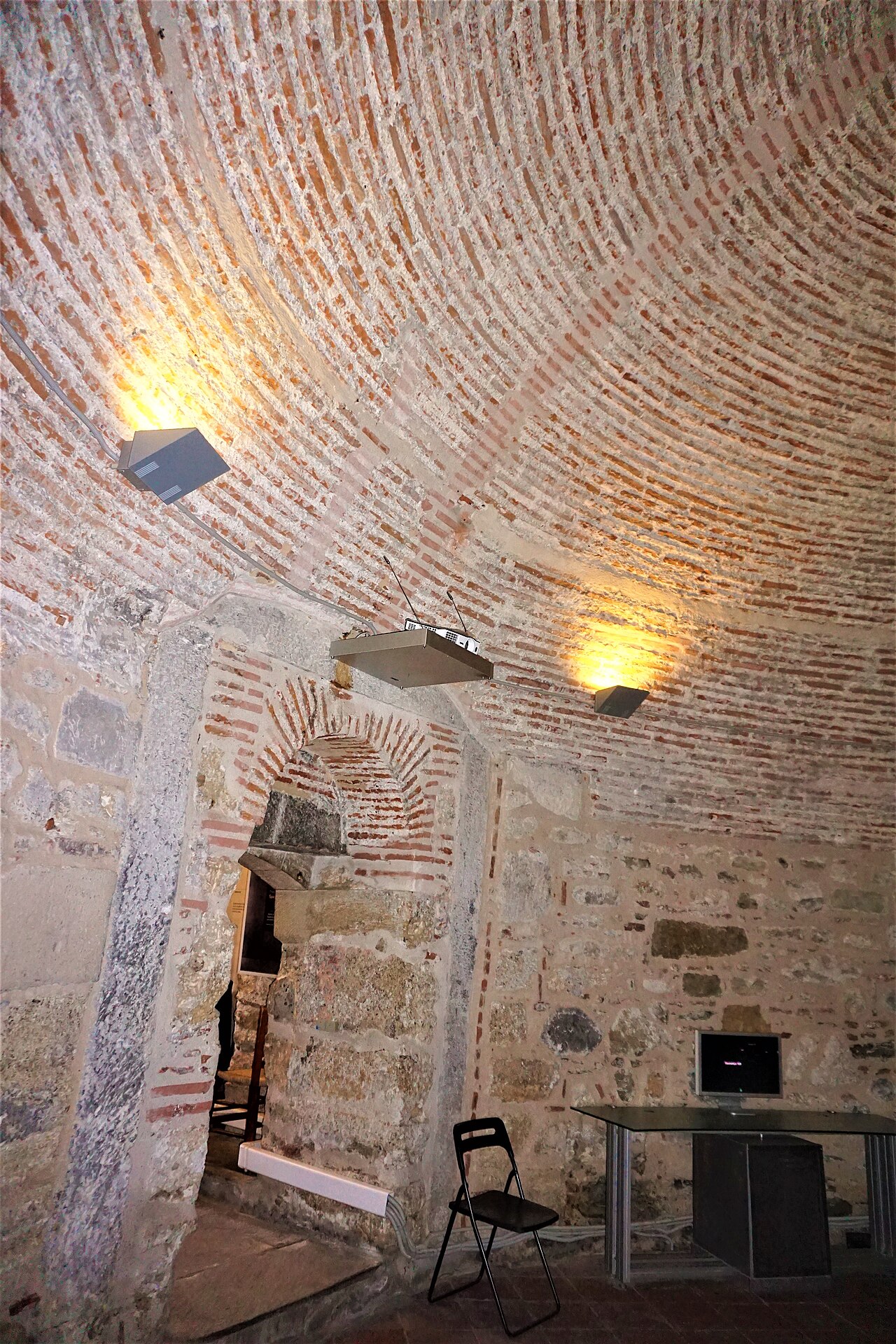
Look at the thick enclosure, vaulted rooms and movement between levels. These are spaces designed within a defensive structure, not a modern museum building. The upper outlook reconnects the exhibition to the harbor and the Thermaic Gulf. The tower is a distinct monument from both the distant Heptapyrgion and the Trigonion Tower in the Upper City.
Visiting and illumination — November 2026
The museum currently lists winter visits to the White Tower. Its upper floors involve an ascent; the museum describes ground-floor digital interpretation for visitors unable to climb. Ask about current access arrangements rather than assuming that every level is accessible. Architectural illumination was completed in October 2026. The tower’s night-time presentation is distinct from the continuing lighting programme for other parts of the city’s defenses.
Images