From Byzantine town to Venetian stronghold
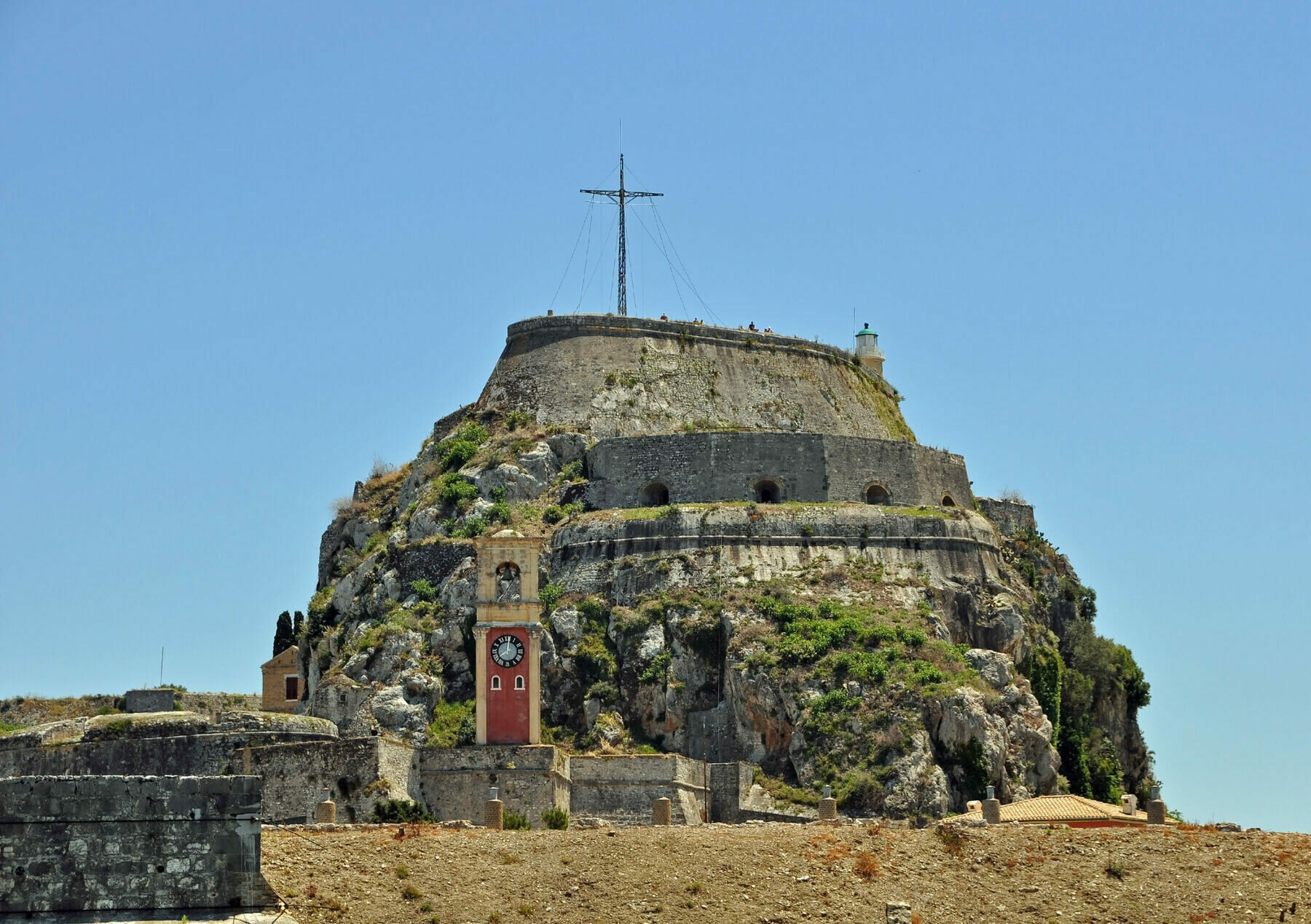
The peninsula’s twin heights offered refuge and defense before the great Venetian works. They also help explain the name Corfu, associated with the Greek word for peaks. The later city spread outside this older nucleus, making the fortress both an origin point and an edge of the growing town. Its position belongs to the history of a strategic Ionian island, not just to the story of one isolated castle.
Read the moat, gates and heights
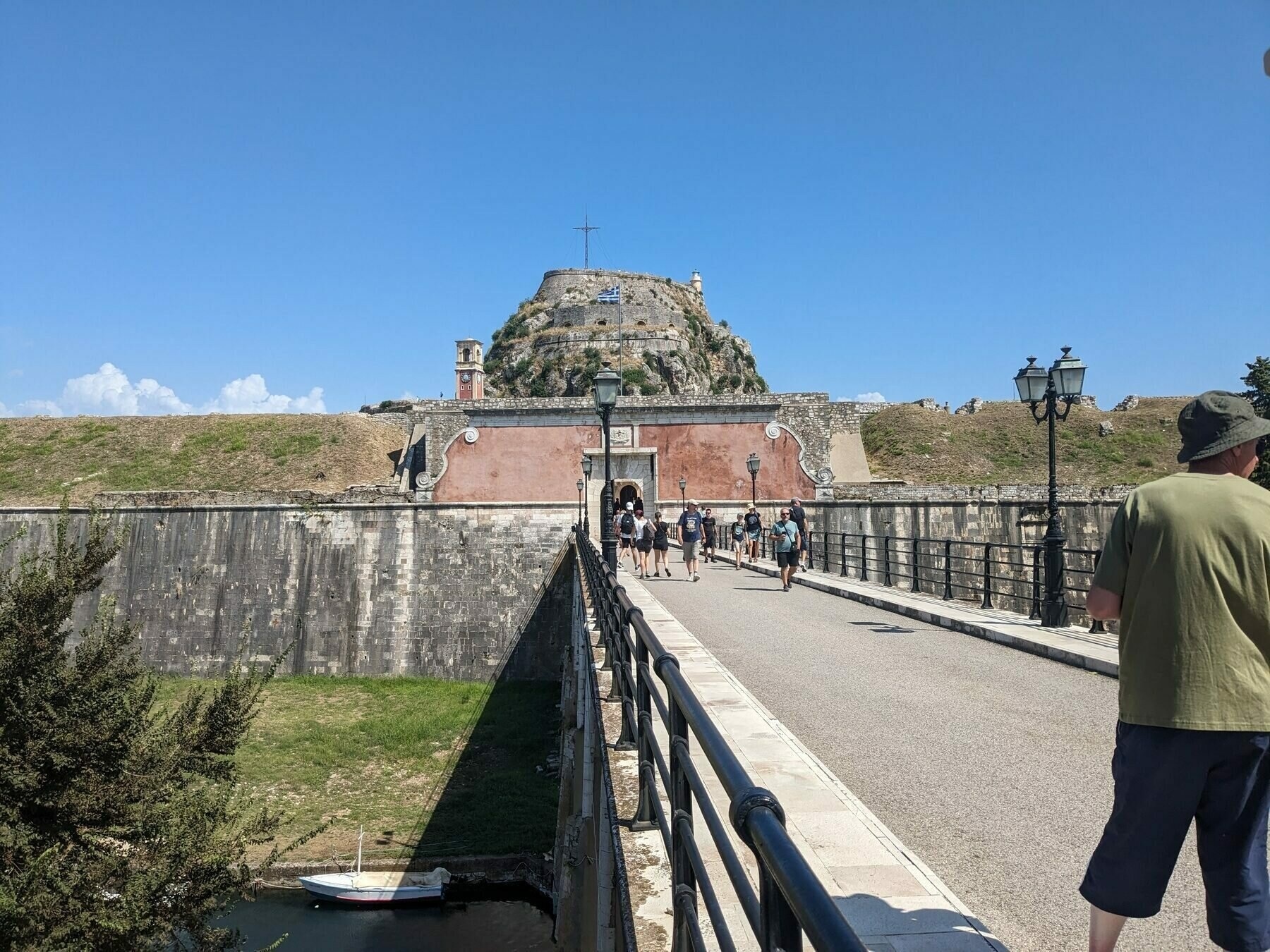
The Venetians transformed the approach with the sea moat and successive defensive works. Notice how a visitor is directed across a controlled crossing and through the entrance before reaching the interior slopes. The rocky heights and lower defensive ground perform different tasks. Their relationship is easier to understand from a walk through the enclosure than from a distant photograph alone.
Buildings from later chapters
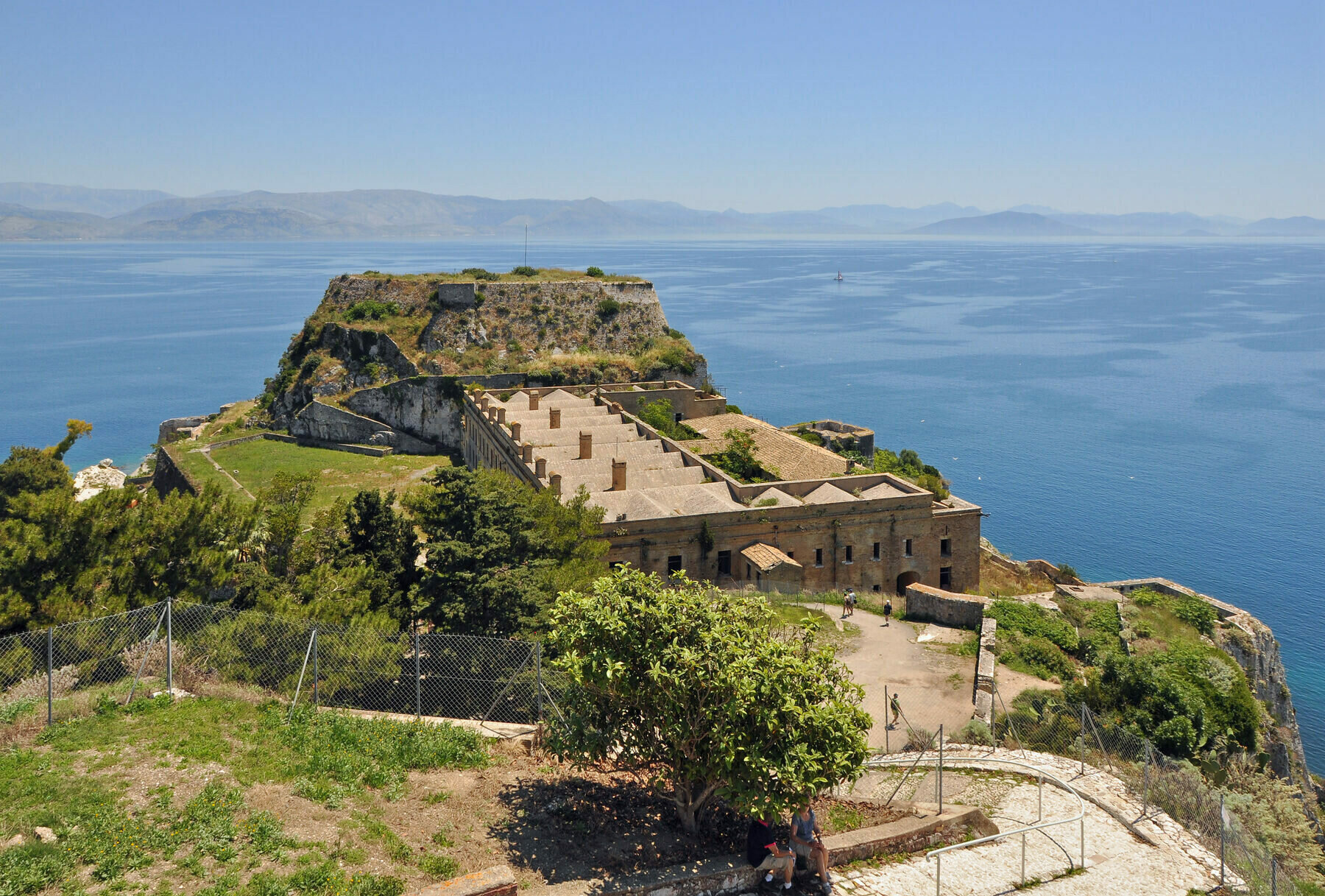
The prominent church of St George belongs to British rule, as do important barracks. Other spaces have accommodated archives, collections and university activities. Military architecture was repeatedly adapted rather than simply abandoned when Venetian rule ended. The church’s temple-like exterior is therefore not an ancient Greek ruin, and institutional occupation is part of the continuing life of the site.
A fortress within a living island
From the higher paths, views connect the enclosure to the old town, harbor approaches and surrounding sea. Pair the visit with Corfu’s museums, streets and churches, then explore beyond the capital. The New Fortress answers a different defensive problem on the landward side; it should not be mistaken for the western height within this older enclosure.
Visiting — November 2026
The operator lists a winter visiting season for the Old Fortress. Confirm the current timetable and which collections or interior buildings are accessible; entry to the enclosure is not a guarantee that every institutional space is open. Expect slopes and changes of level. This is a separate visit from the New Fortress, whose seasonal arrangements differ.
Images